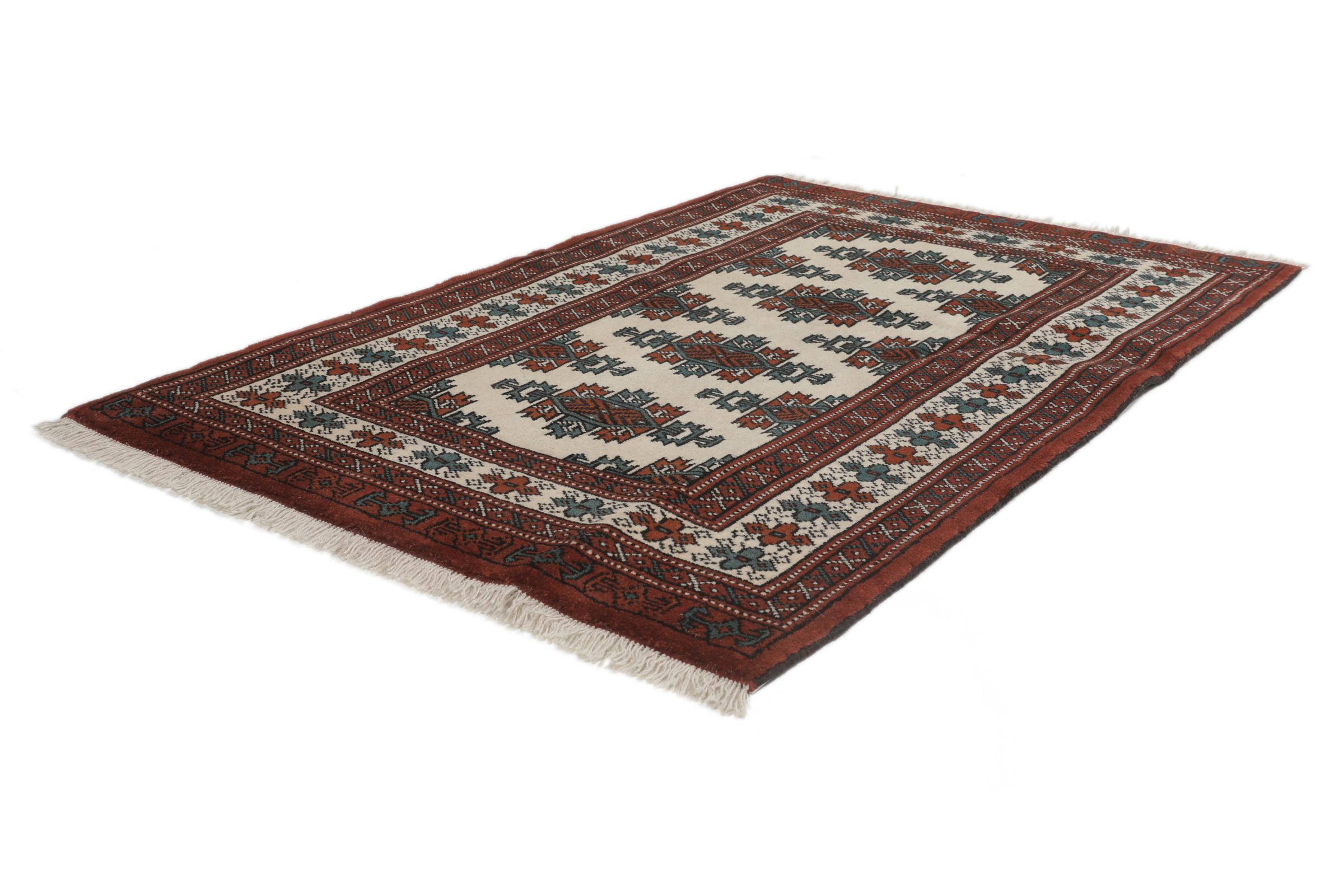
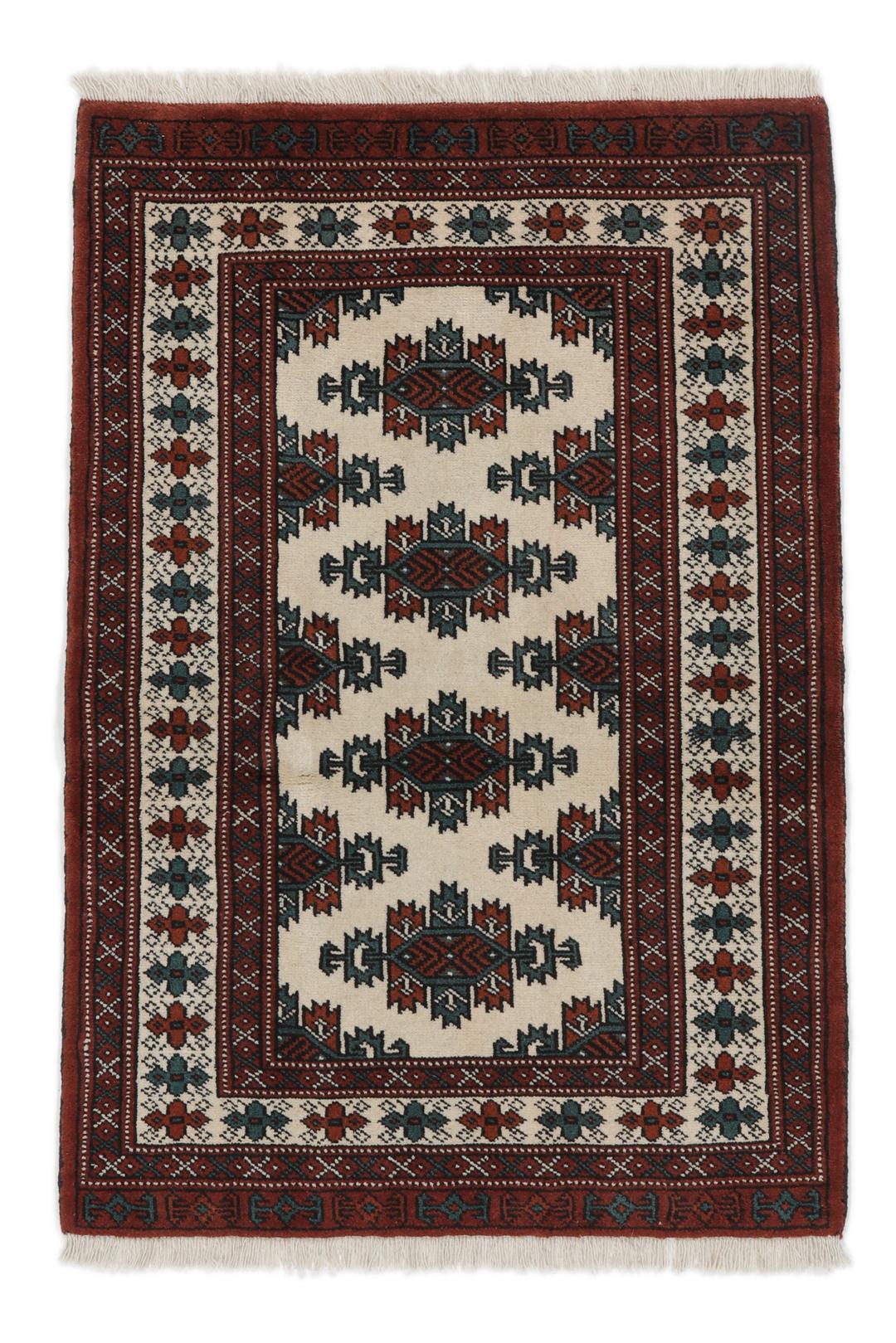
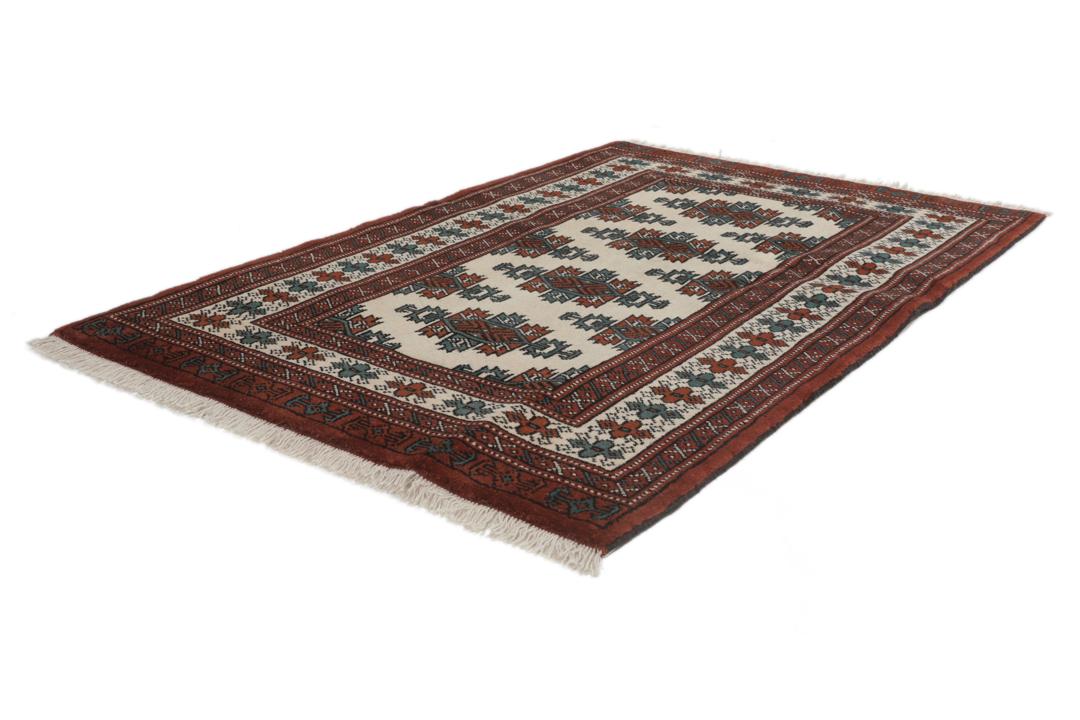
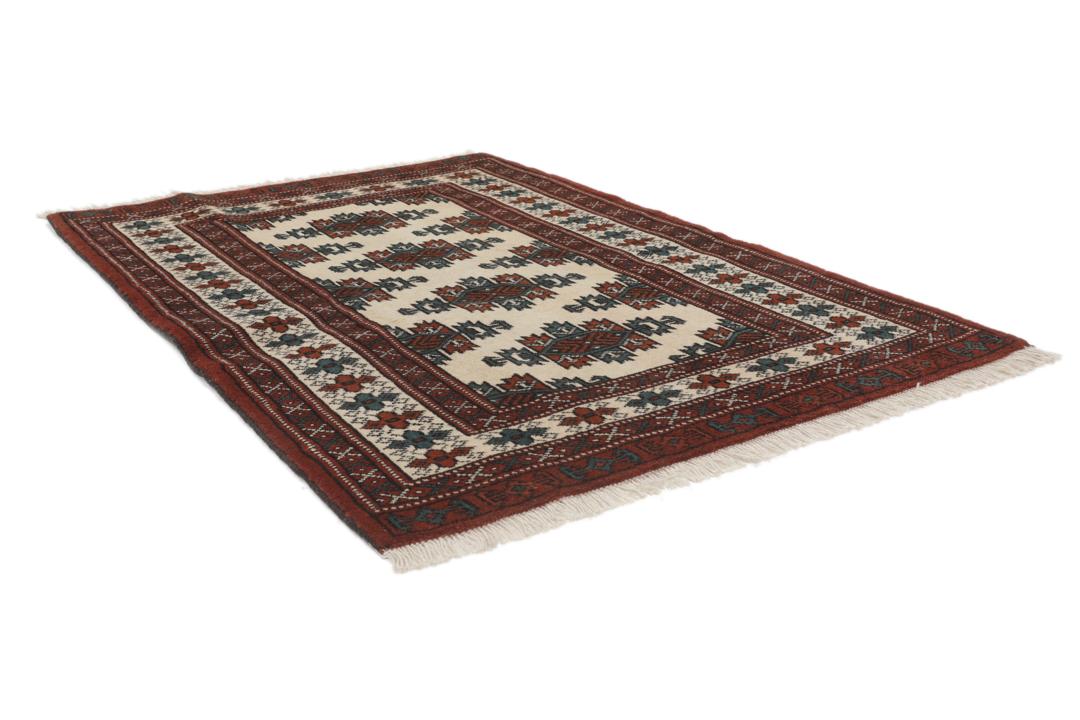
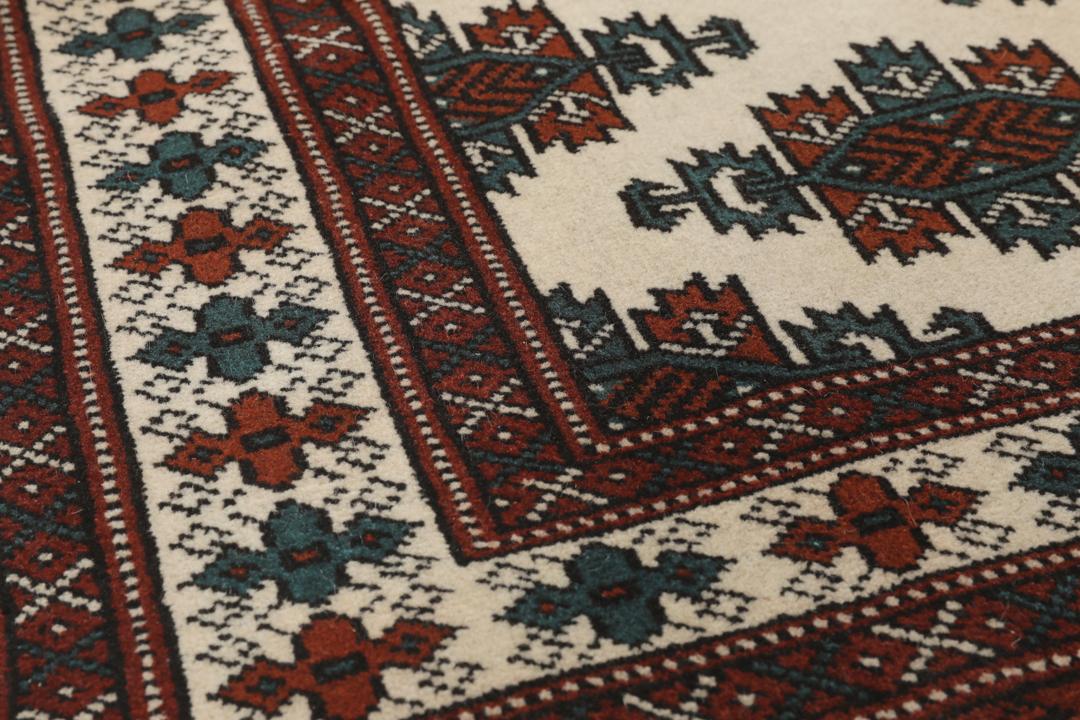
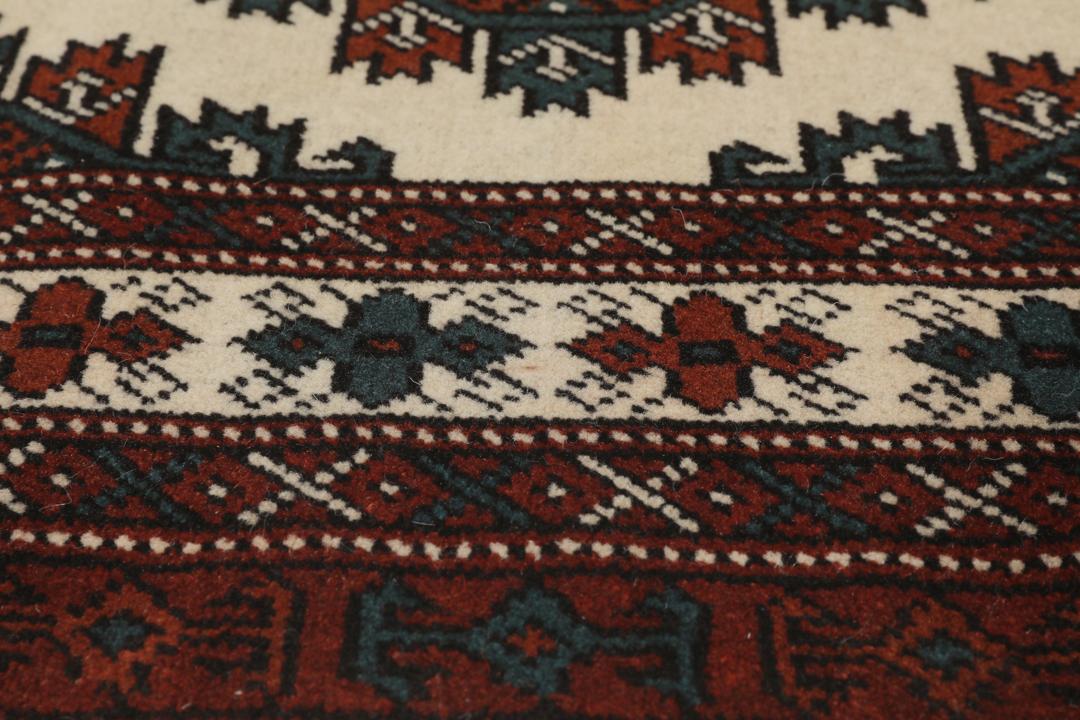
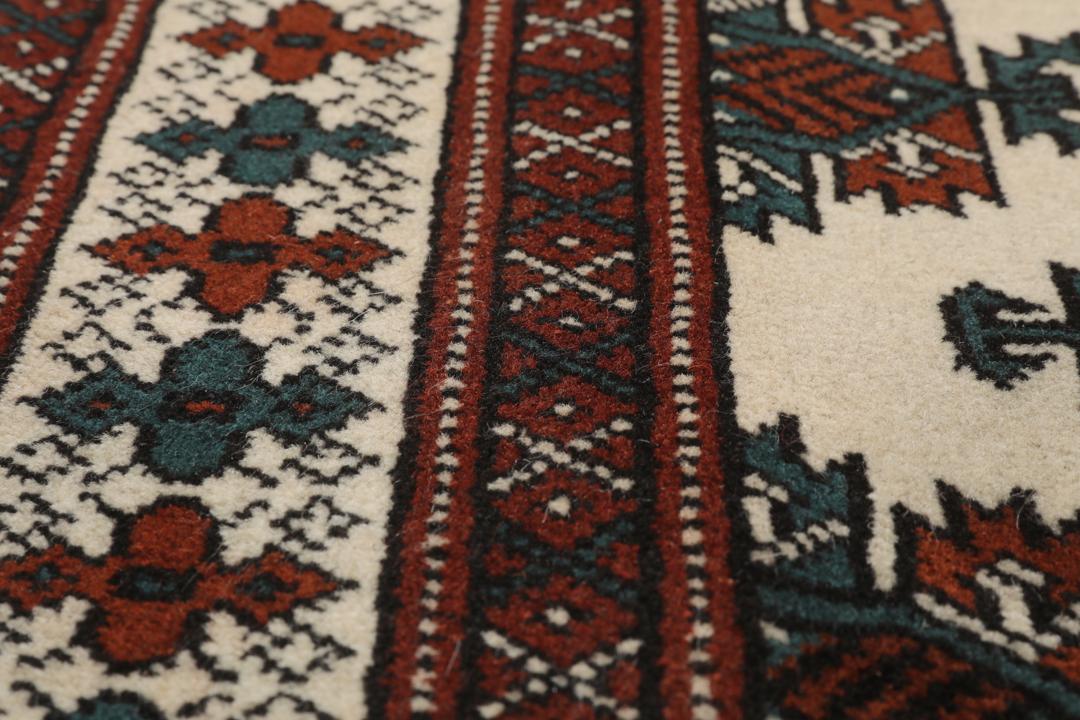
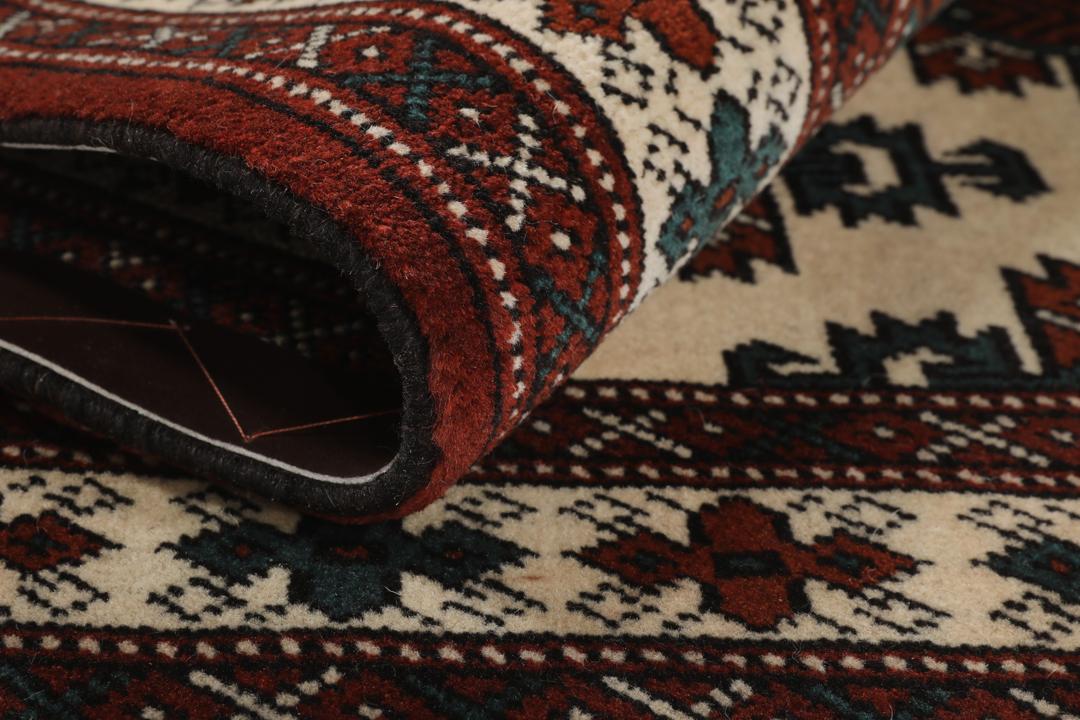
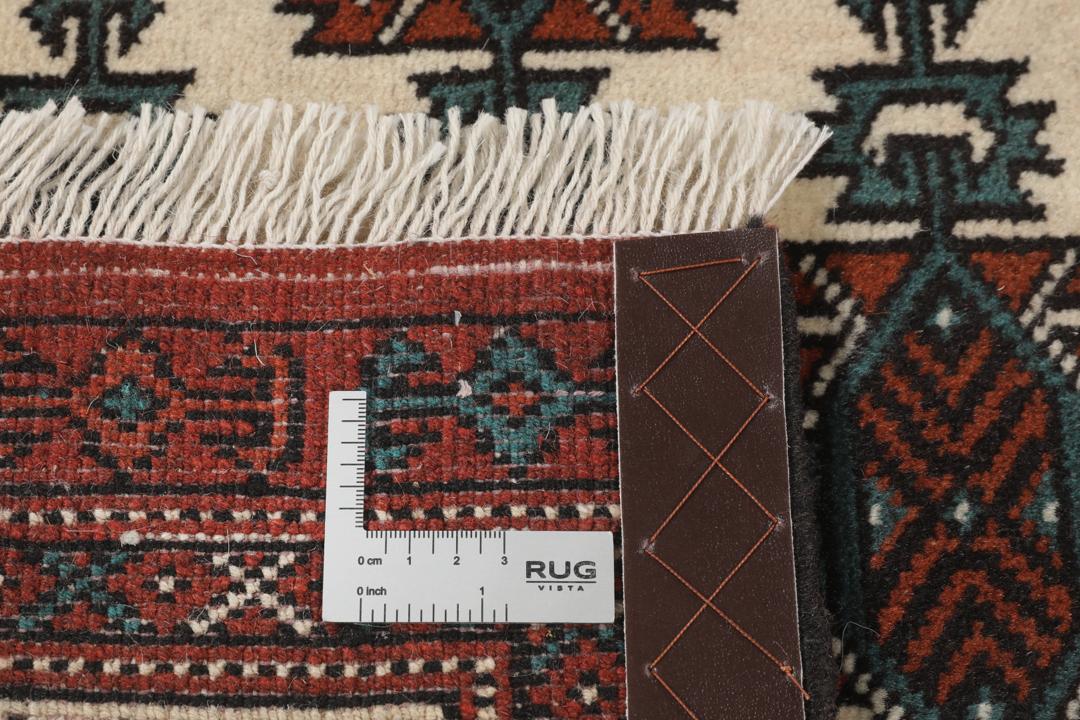
Turkaman rugs originate from the nomadic tribes of the Middle East, a region with a long and storied history of weaving. These carpets were historically created for practical use in tribal life, serving as floor coverings, tent decorations, and transport bags, which necessitated a construction that was both durable and aesthetically significant.
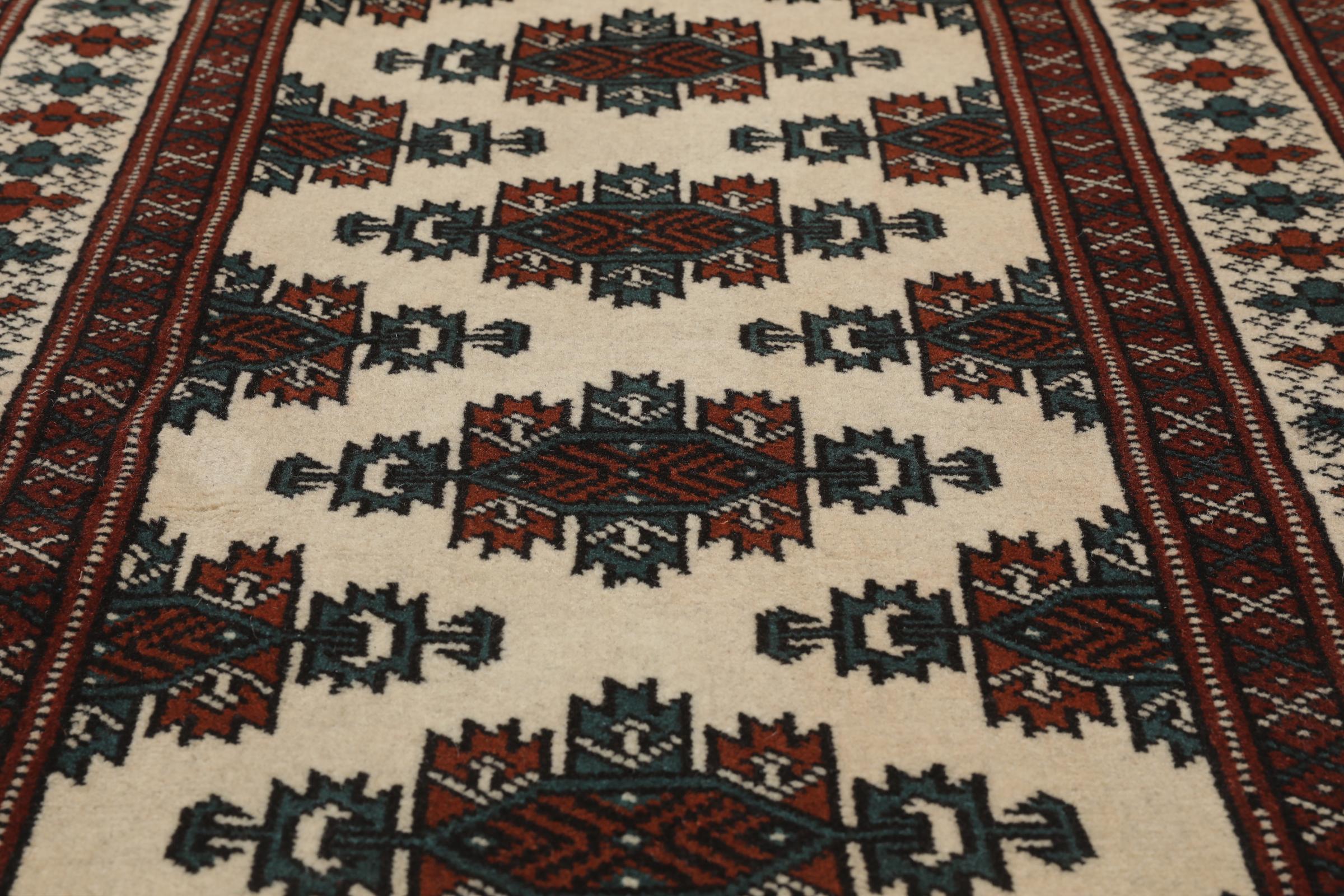
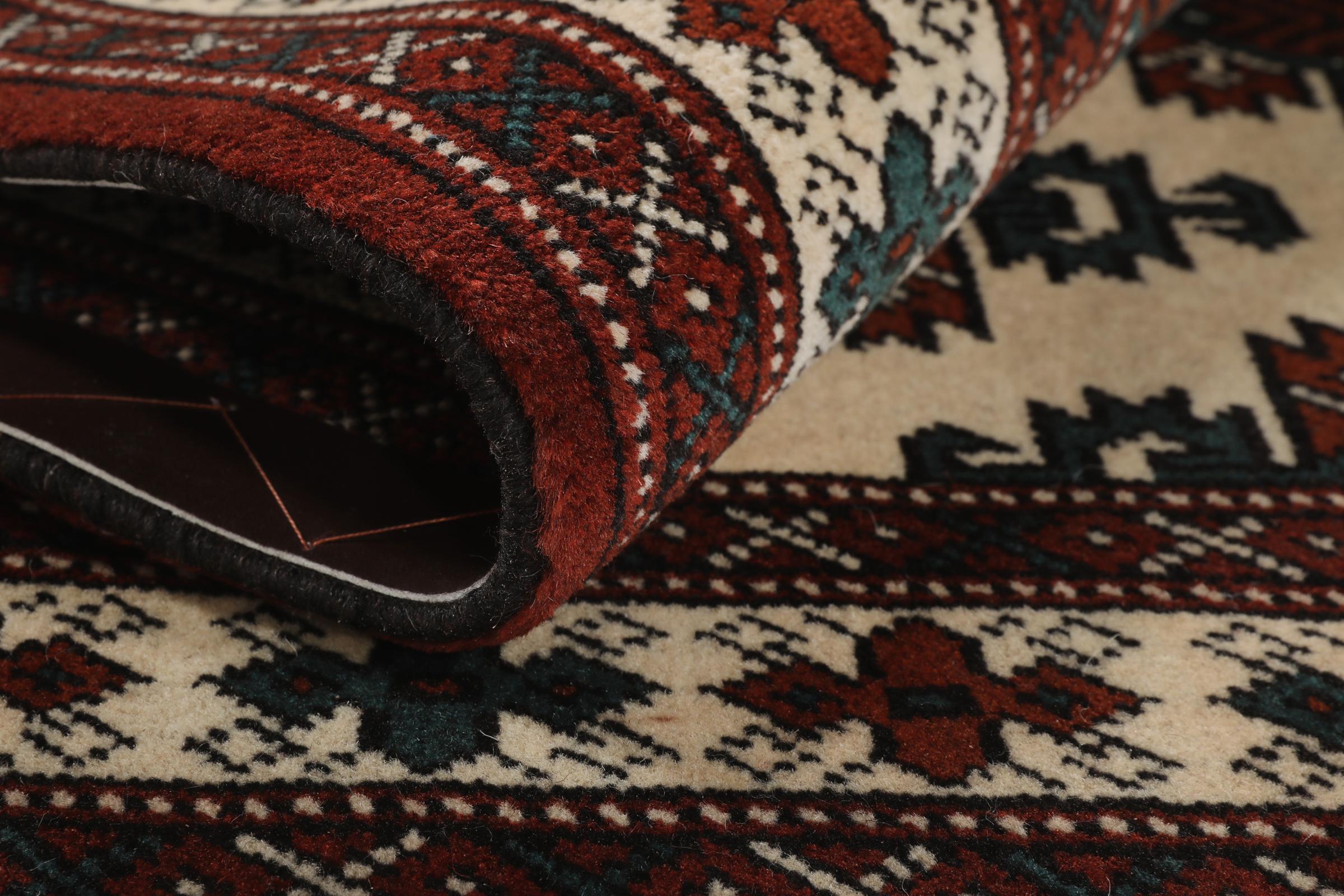
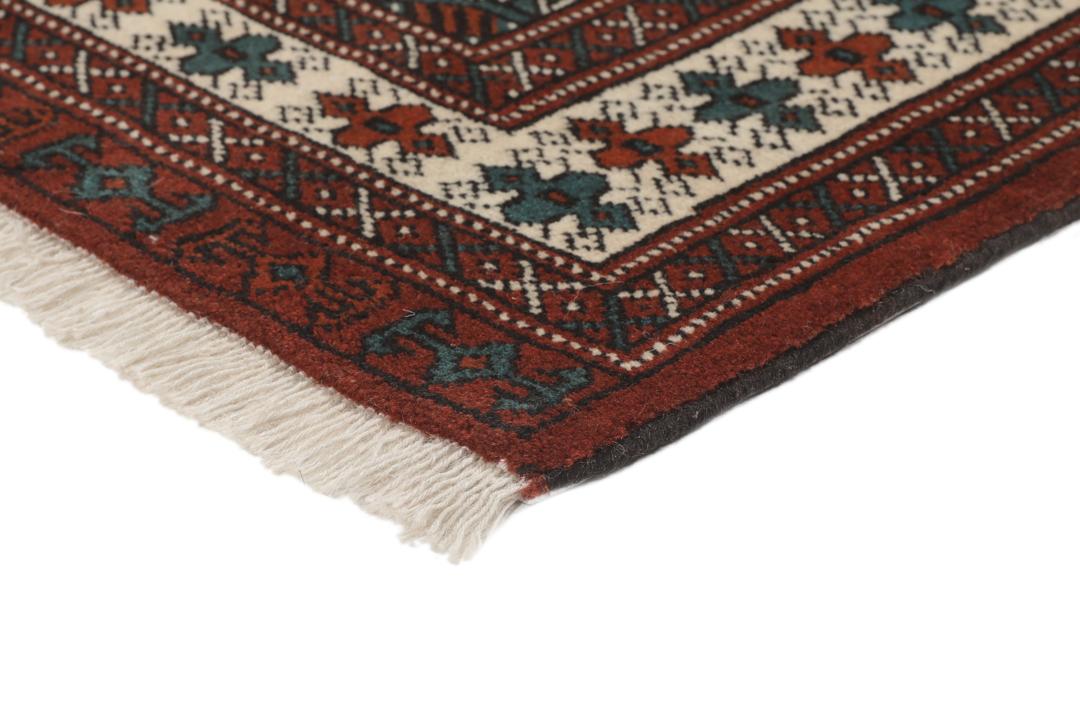
The term Turkaman refers to the specific tribal weaving traditions that emphasise a deep, warm colour palette, often dominated by shades of red. The construction typically involves a foundation that provides a sturdy, reliable base, allowing for the dense, lustrous pile that characterises these rugs and ensures they age gracefully over time.
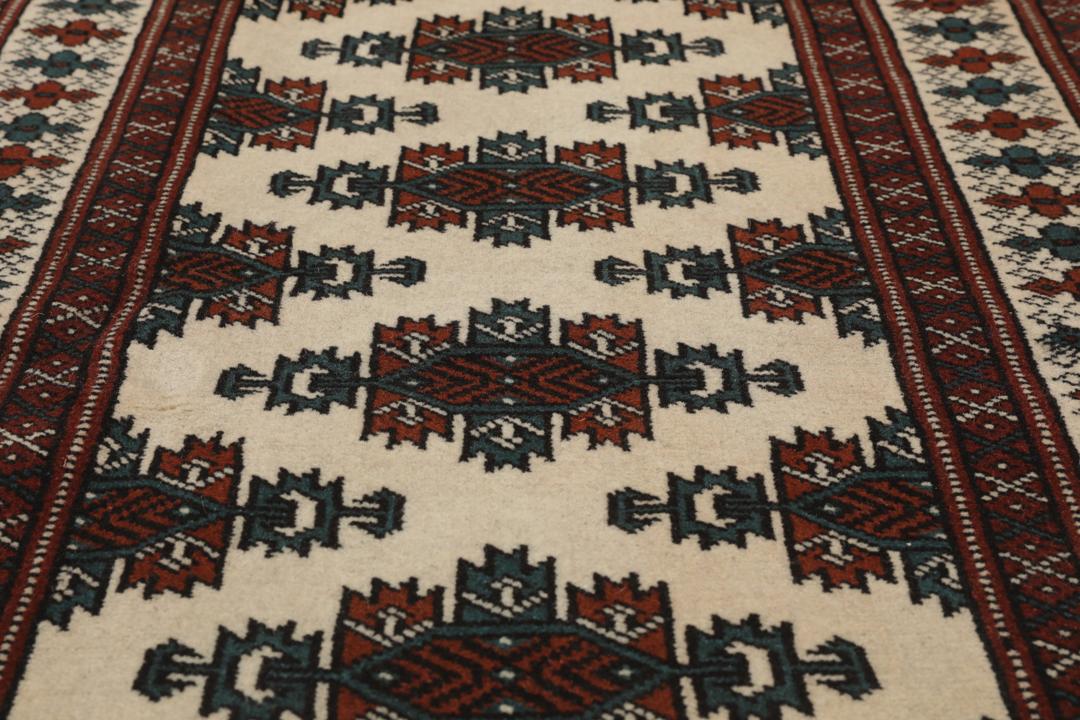
Signature design elements often include the repeating gul motif, which is an octagonal or medallion shape representing the tribal identity of the weavers. These medallions are typically arranged in formal, organised rows and enclosed by complex, geometric borders that frame the field, providing a sense of balance and harmony.
Today, these rugs are highly valued by collectors and enthusiasts for their cultural weight and the skill required to produce them. Owning a Turkaman rug is an opportunity to connect with a legacy of craftsmanship, bringing a piece of living history into your home that celebrates the beauty of traditional tribal artistry.