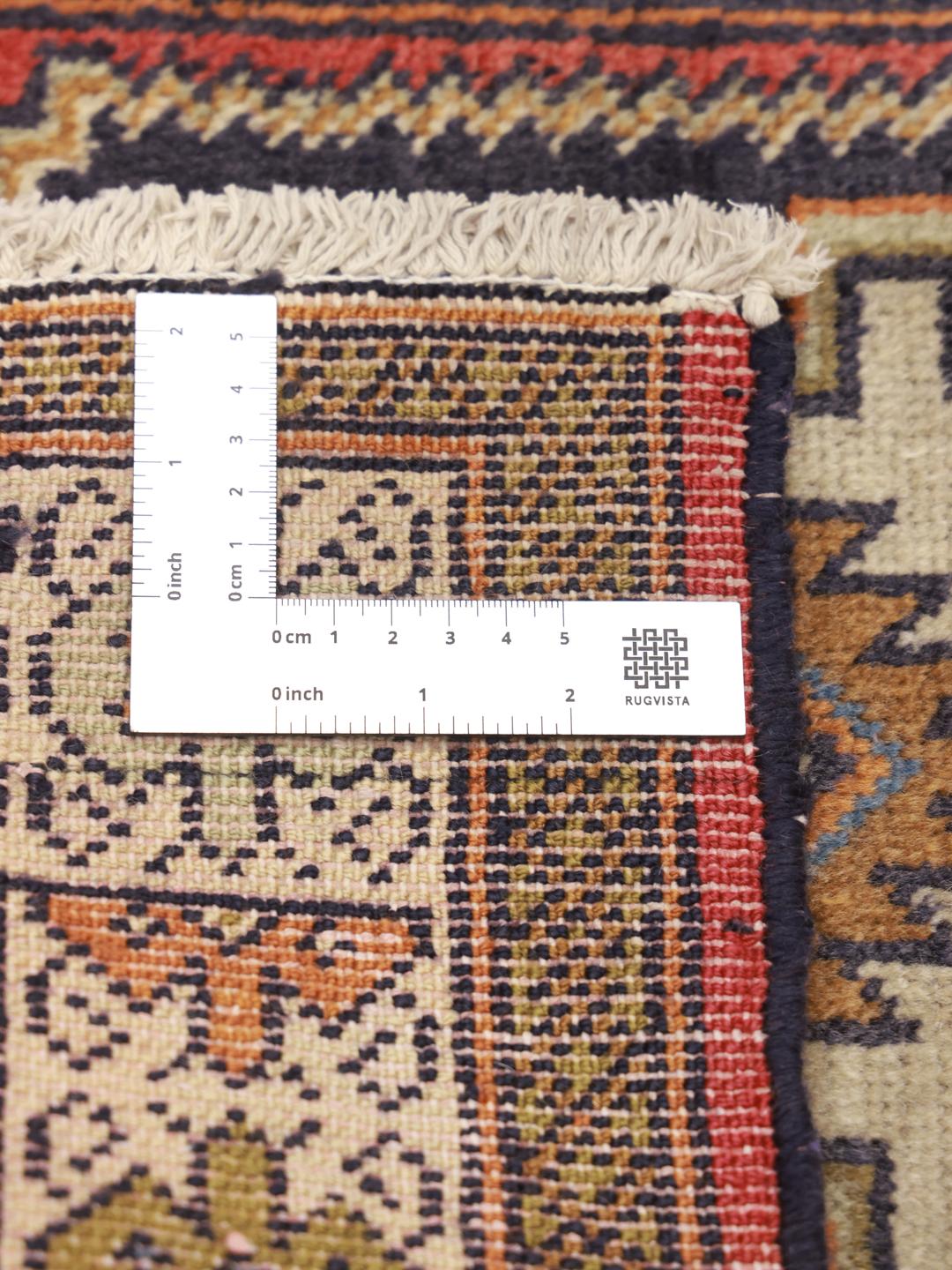
The Turkaman rug tradition is rooted in the nomadic heritage of Central Asia and the wider Middle Eastern regions. Historically woven by various Turkmen tribes, these rugs served as essential, portable elements of daily life, used as floor coverings, tent door hangings, and storage bags. Over centuries, these tribal weavers developed a highly sophisticated design language that has been passed down through generations.
The name Turkaman represents more than just a geographic origin; it signifies a specific standard of tribal weaving. These rugs are celebrated for their geometric clarity and the clever use of repeating patterns. The compact size of this specific piece reflects the traditional nomadic format, where smaller looms were preferred for their portability during seasonal migrations.
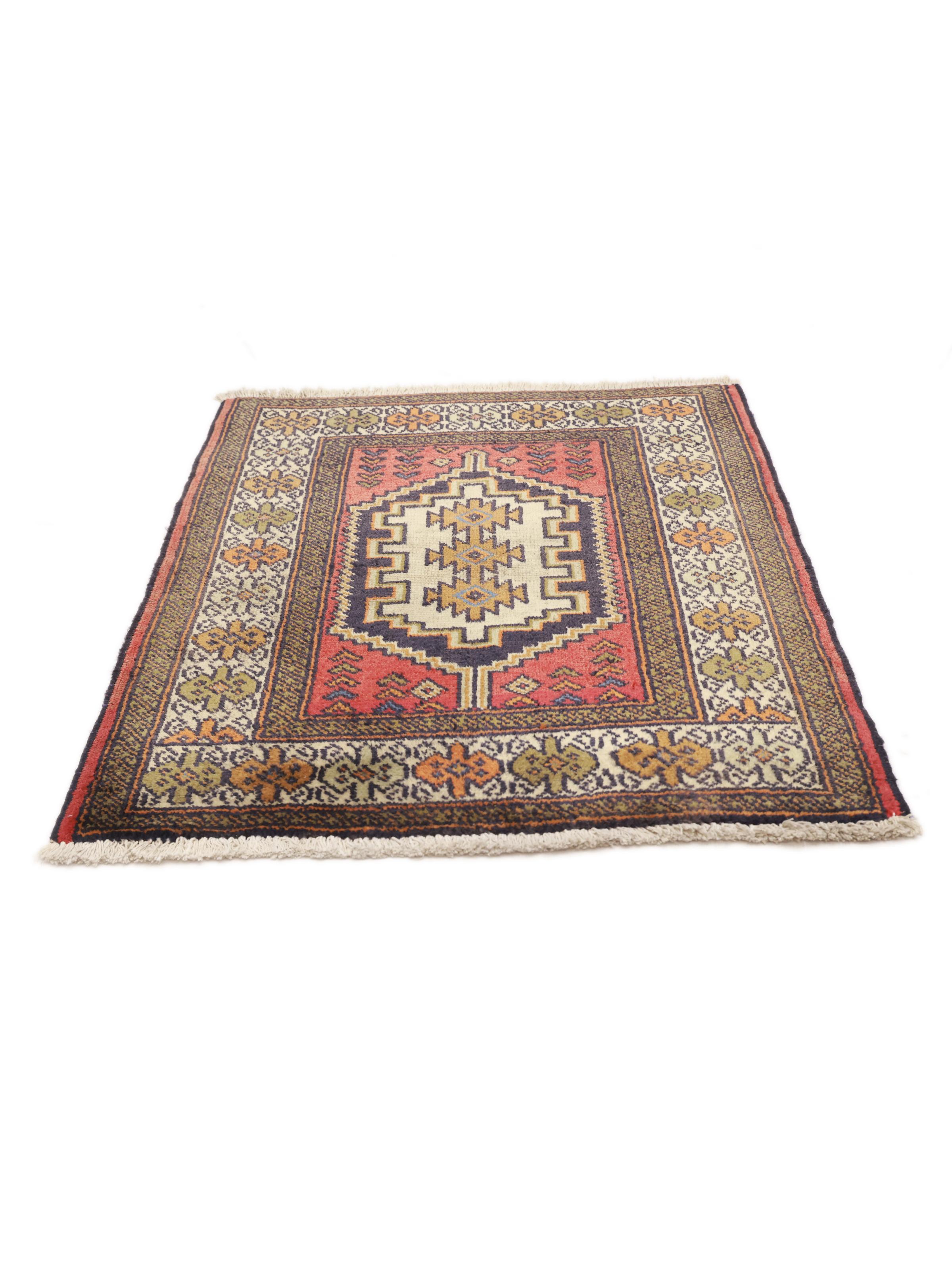
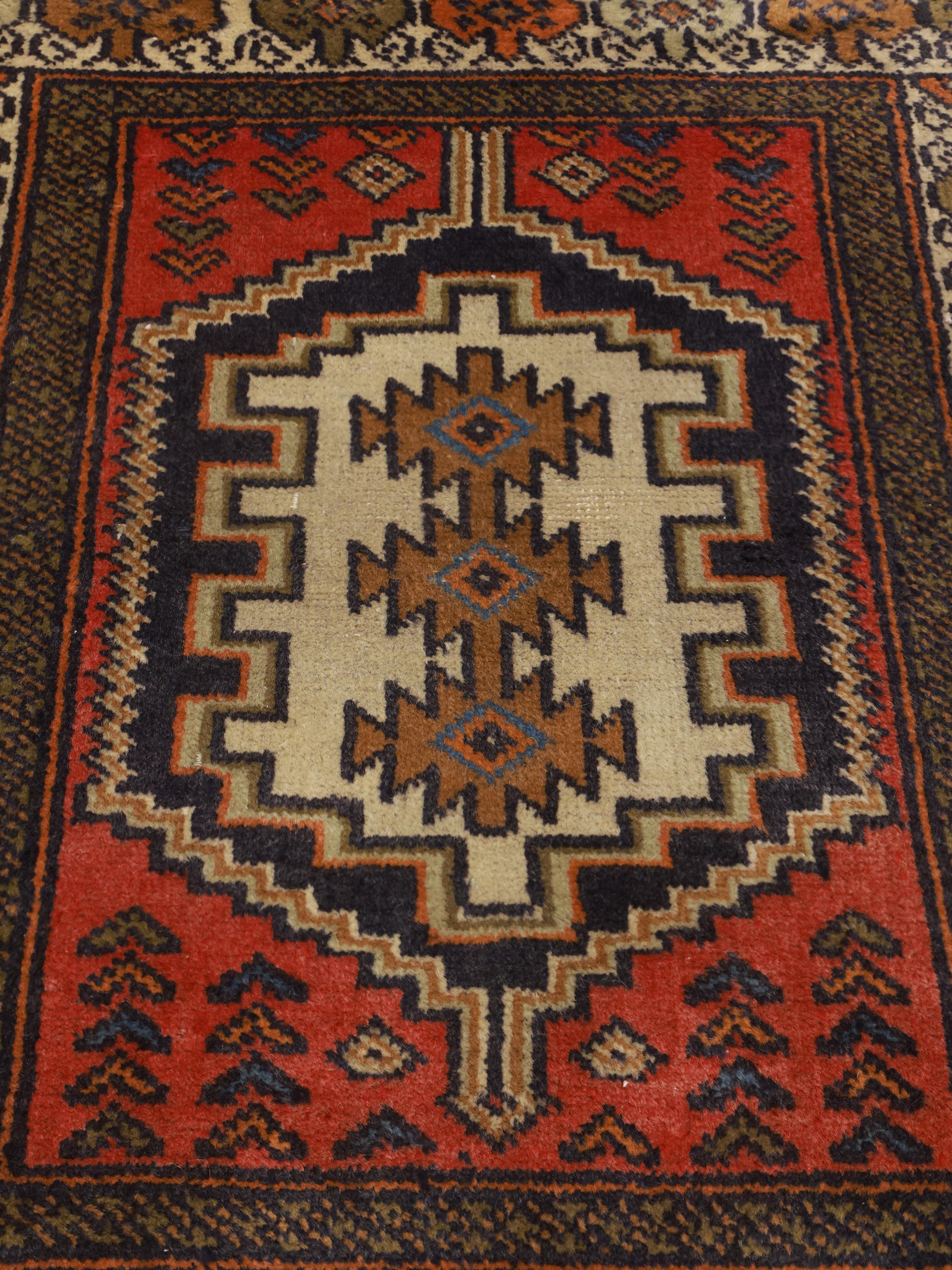
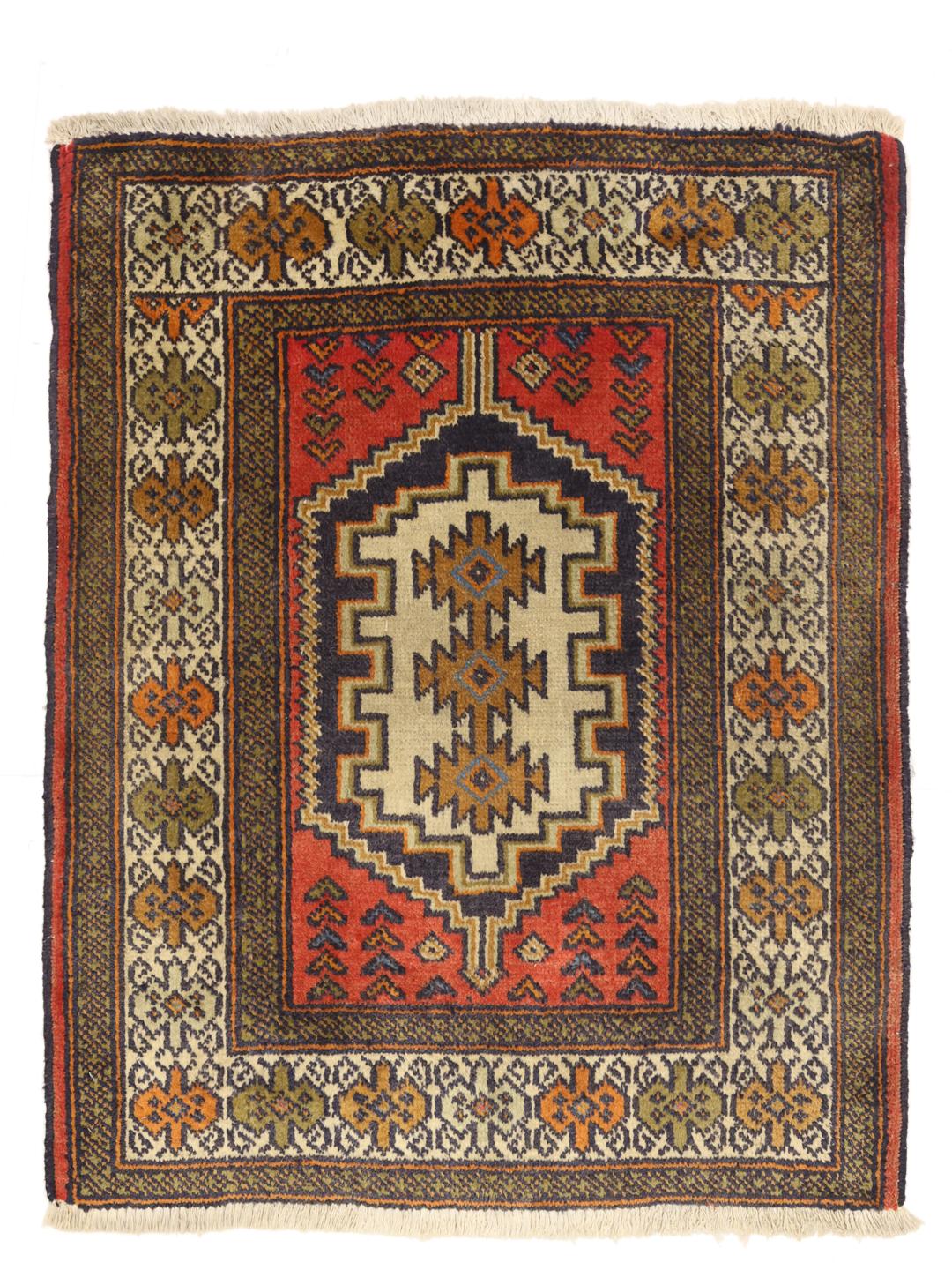
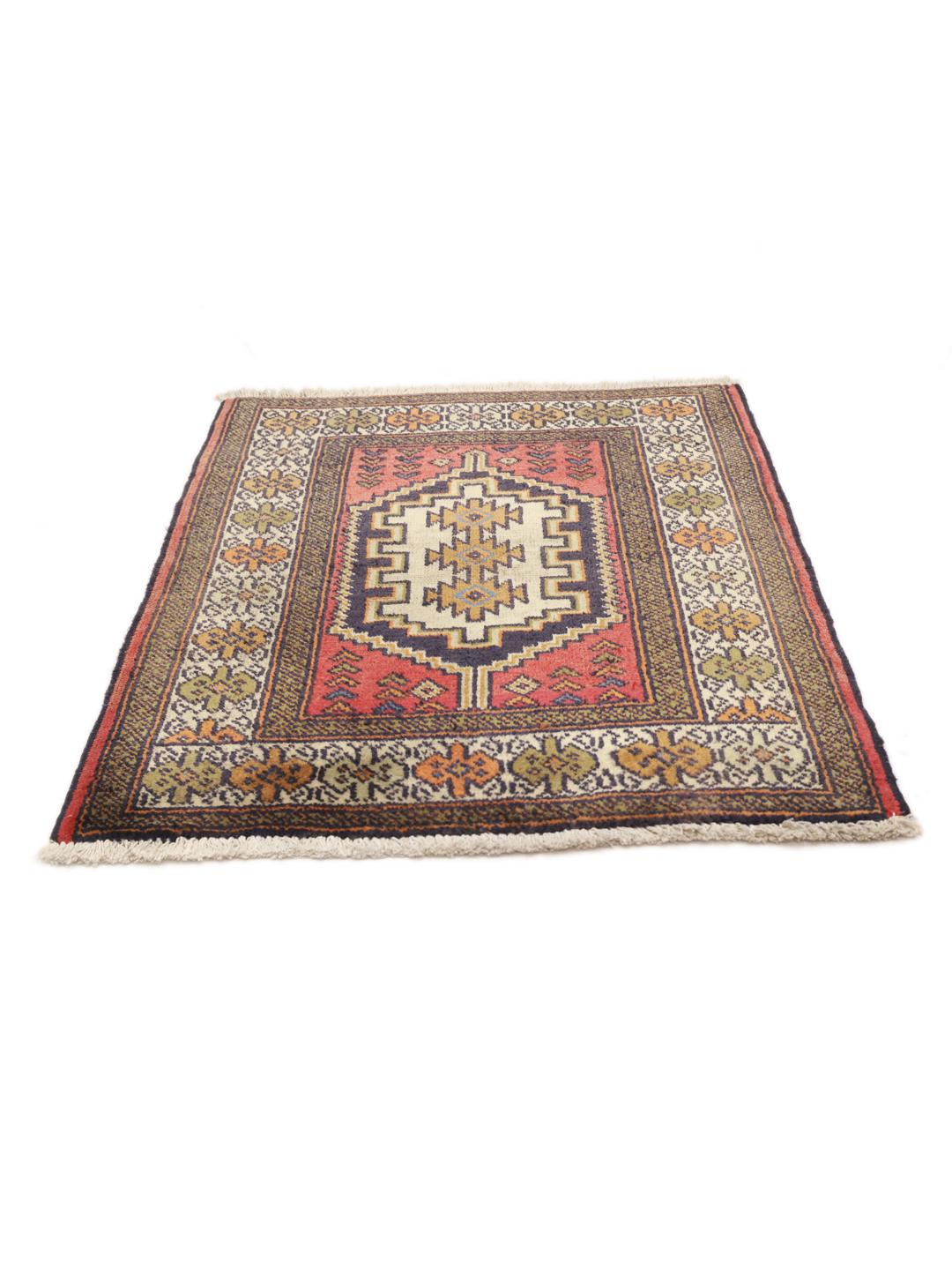
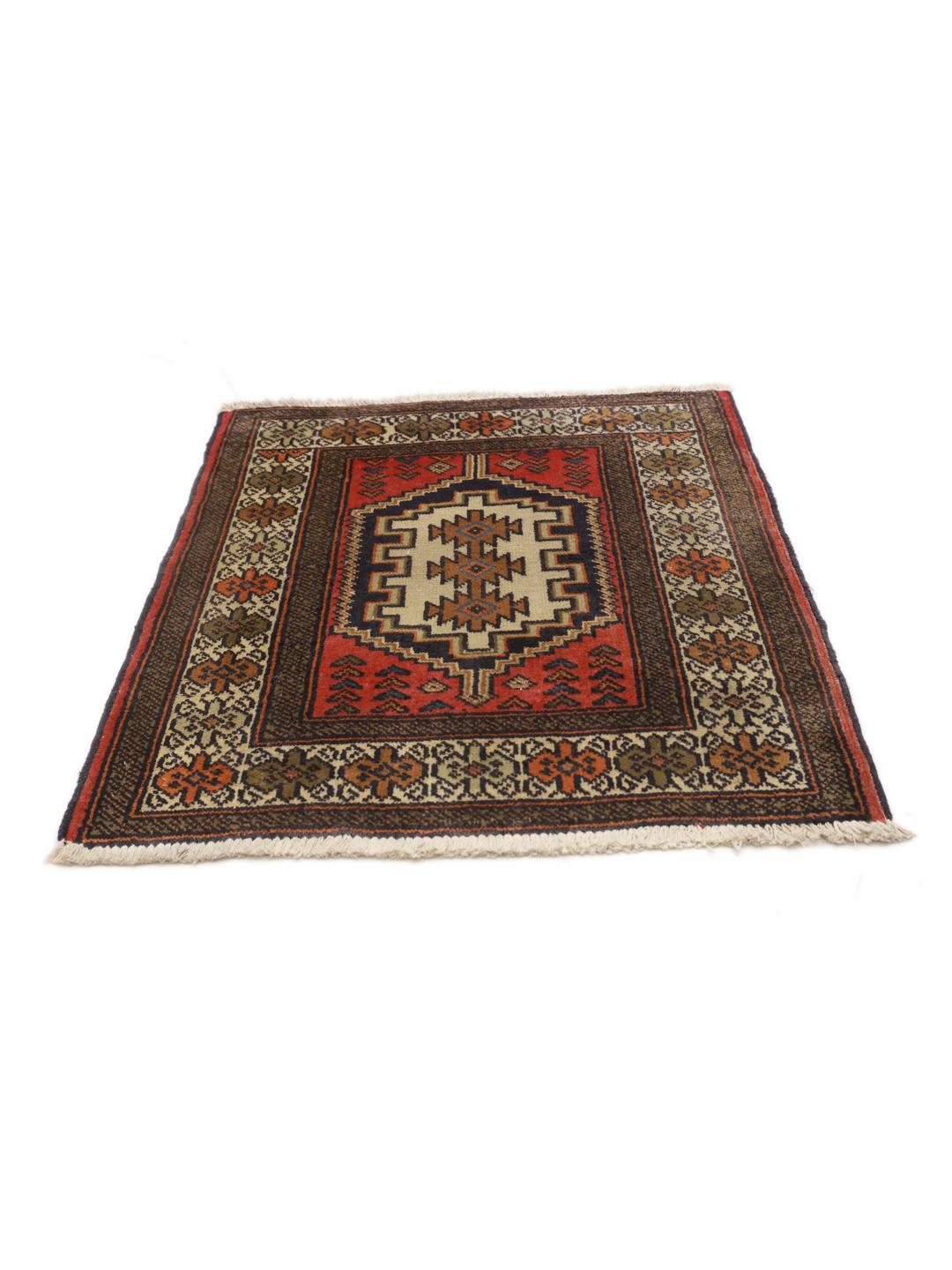
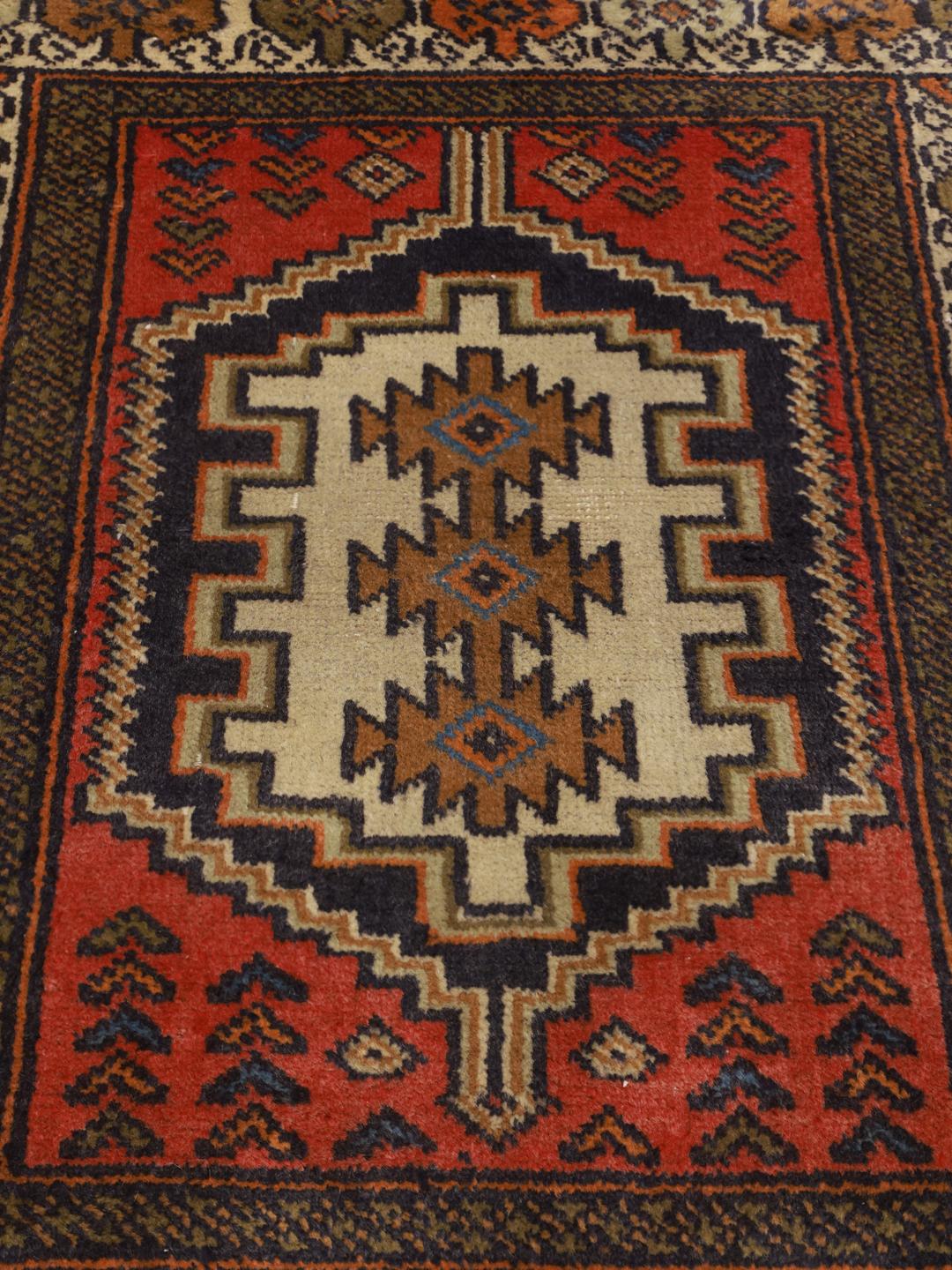
Visually, this piece features a classic central medallion layout surrounded by detailed borders. The geometric motifs, often referred to as guls, are characteristic of the region's tribal iconography, representing different clans or families. The deep red and dark blue tones are achieved through traditional colour palettes, balanced by lighter accents that make the geometric patterns stand out clearly.
Today, Turkaman rugs are highly valued by collectors and homeowners alike for their authentic character and historical depth. Acquiring a piece from this tradition is not merely buying a home accessory, but obtaining a slice of living history. The enduring appeal of these designs ensures they remain highly sought after, fitting comfortably into both traditional and contemporary settings.