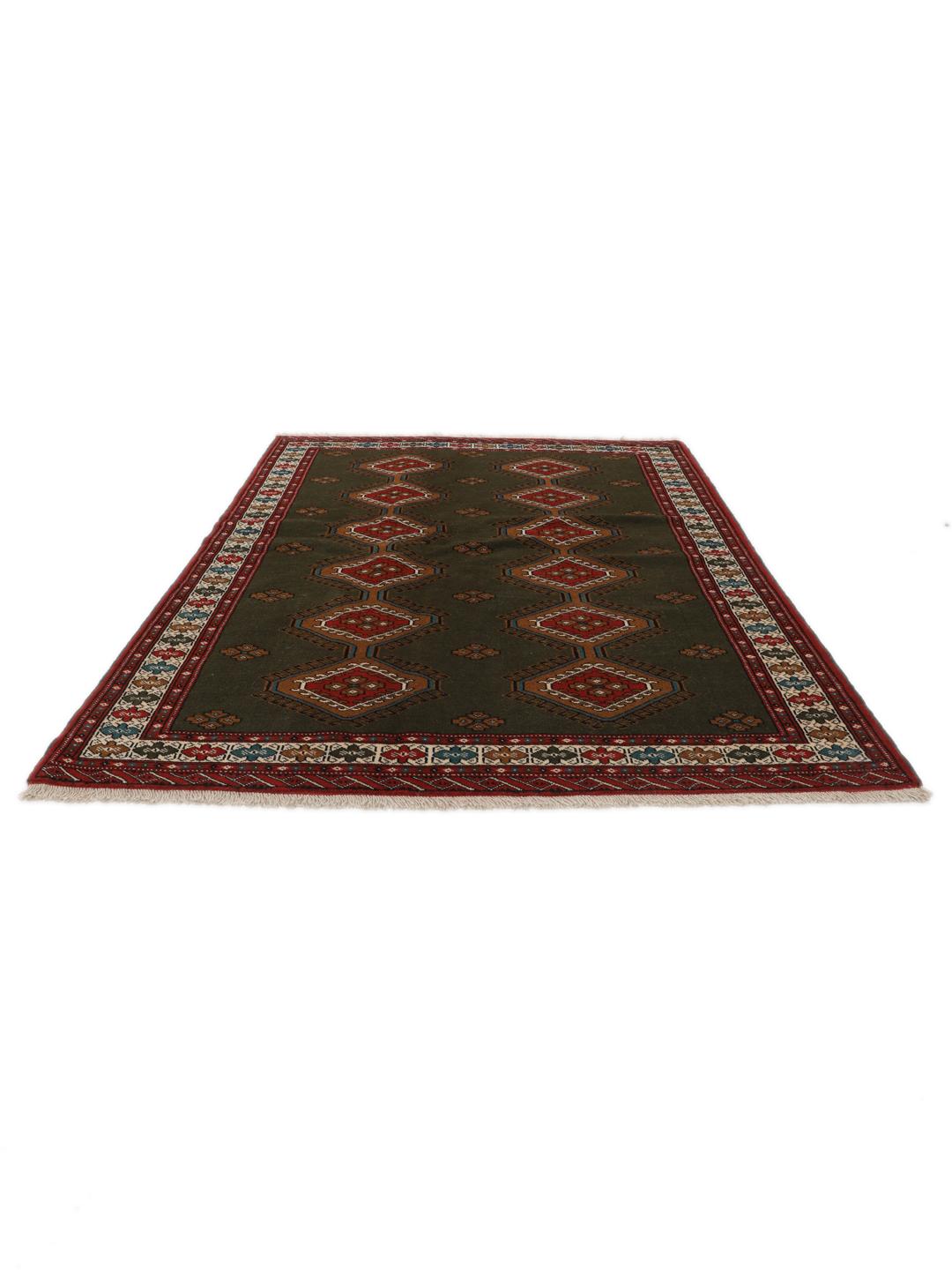
The Turkaman tradition originates from the nomadic tribes of Central Asia, whose weaving styles have evolved over centuries to become some of the most recognisable in the world. While these designs are deeply rooted in the history of the Middle East, they have been refined and perfected by generations of artisans. The evolution of these rugs reflects a migration of culture and skill, where traditional motifs were preserved and adapted to meet the demand for high-quality, durable floor coverings.
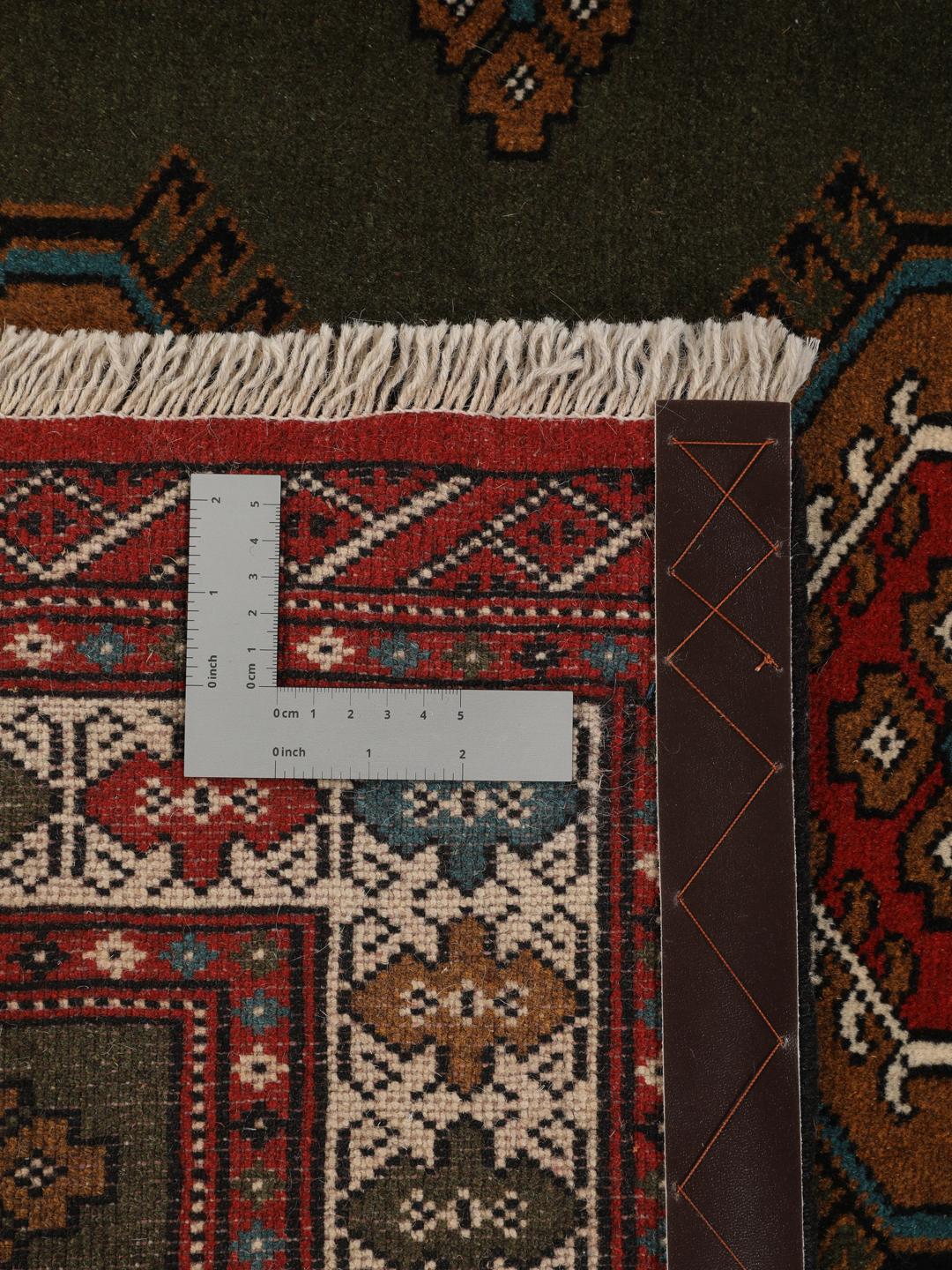
The terminology used to describe these rugs often centres on the precise, repetitive nature of their construction. These pieces are renowned for their incredible technical discipline, where the choice of materials and the tension of the weave are managed to create a stable, lustrous surface. Understanding the craft behind a Turkaman rug involves appreciating the consistency of the knotting, which transforms simple raw materials into a structured, long-lasting textile.
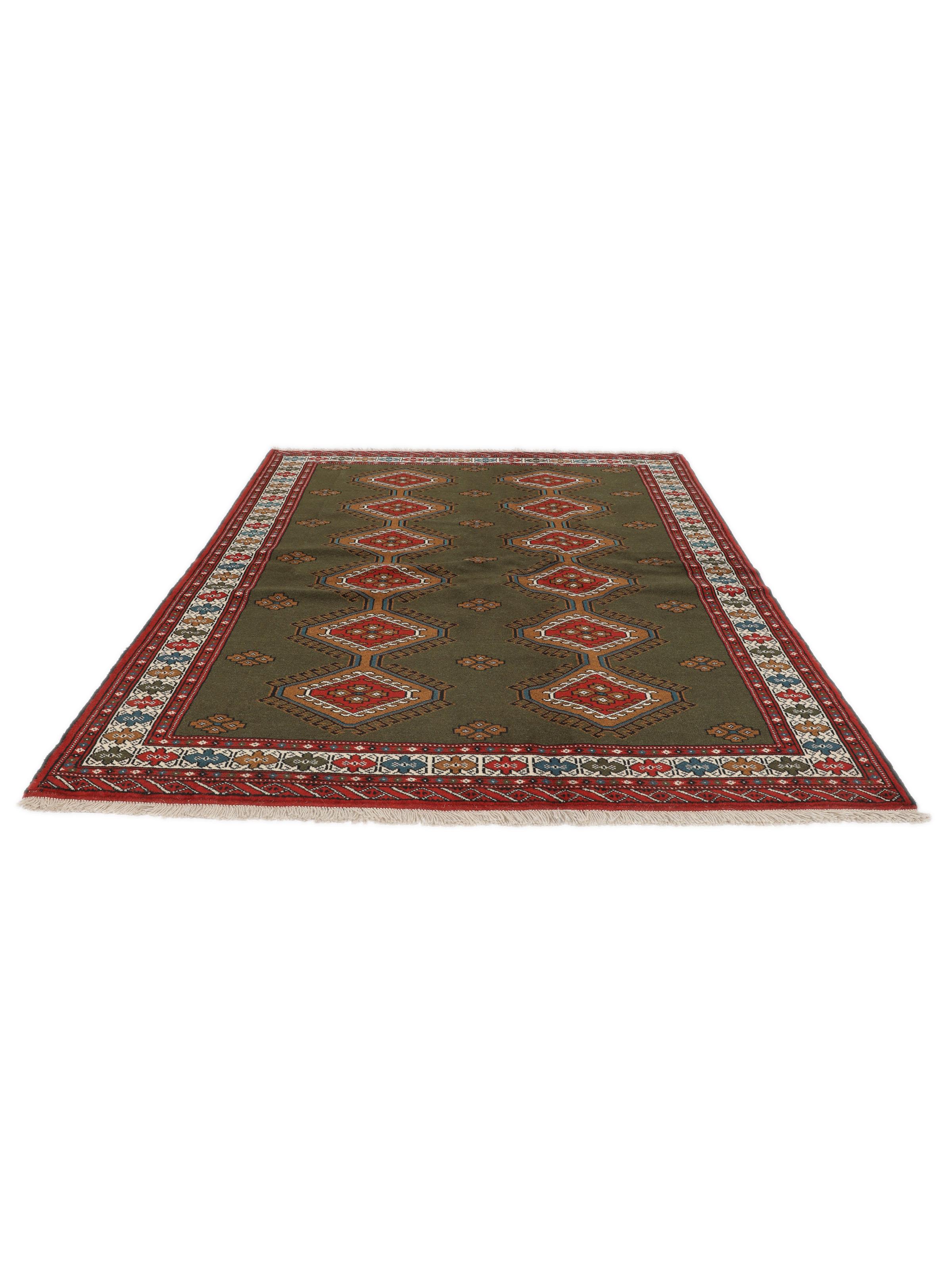
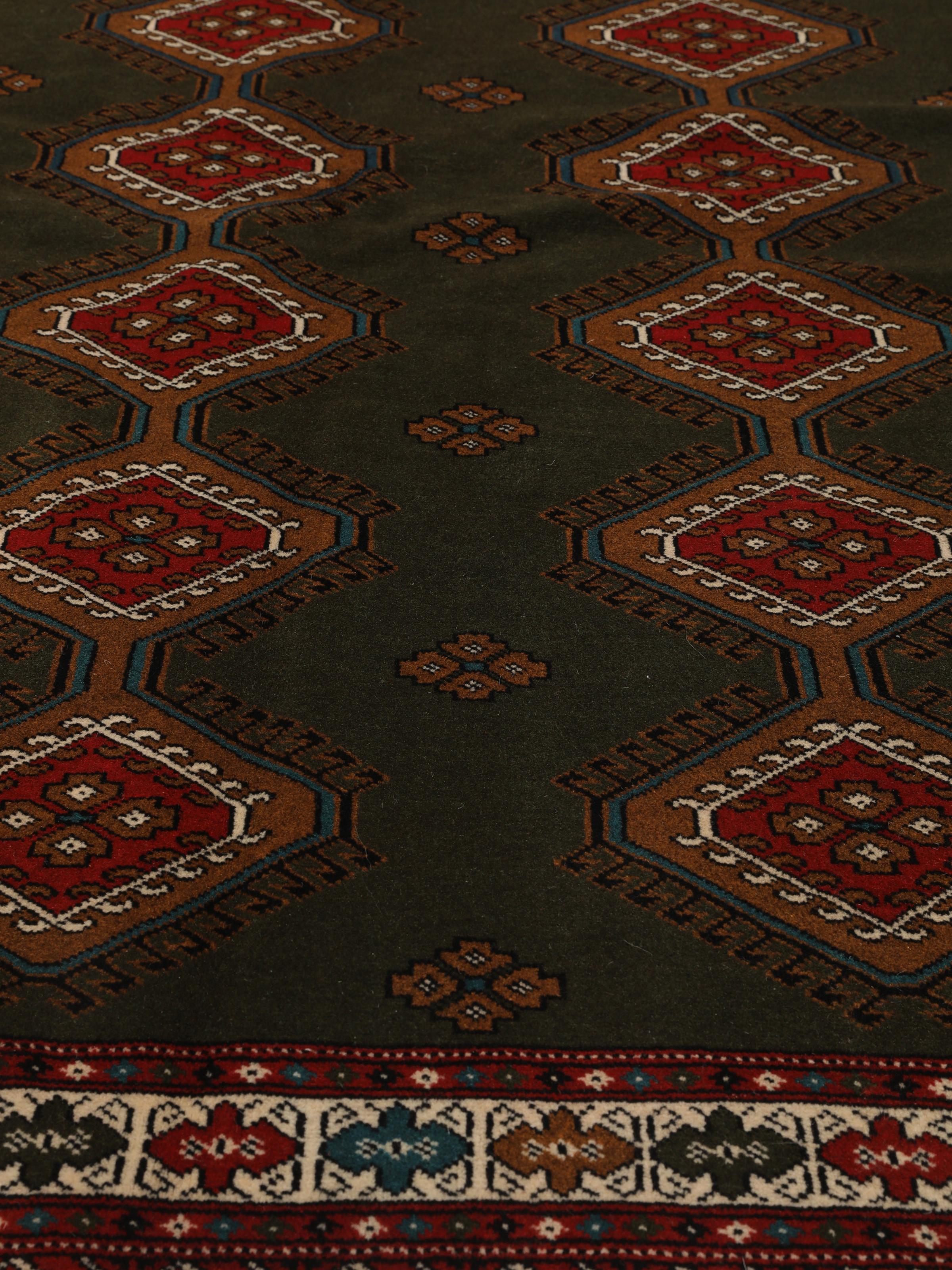
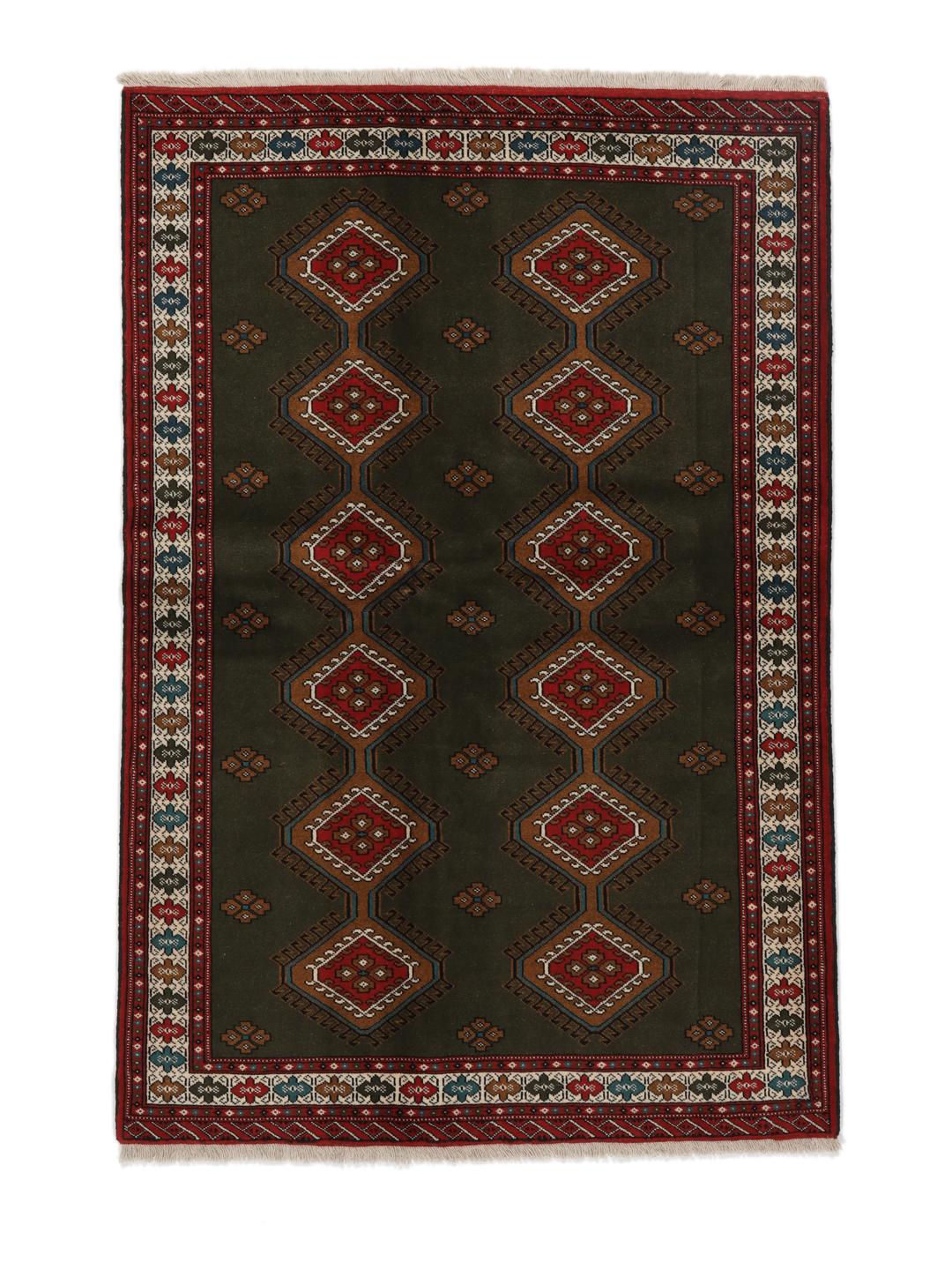
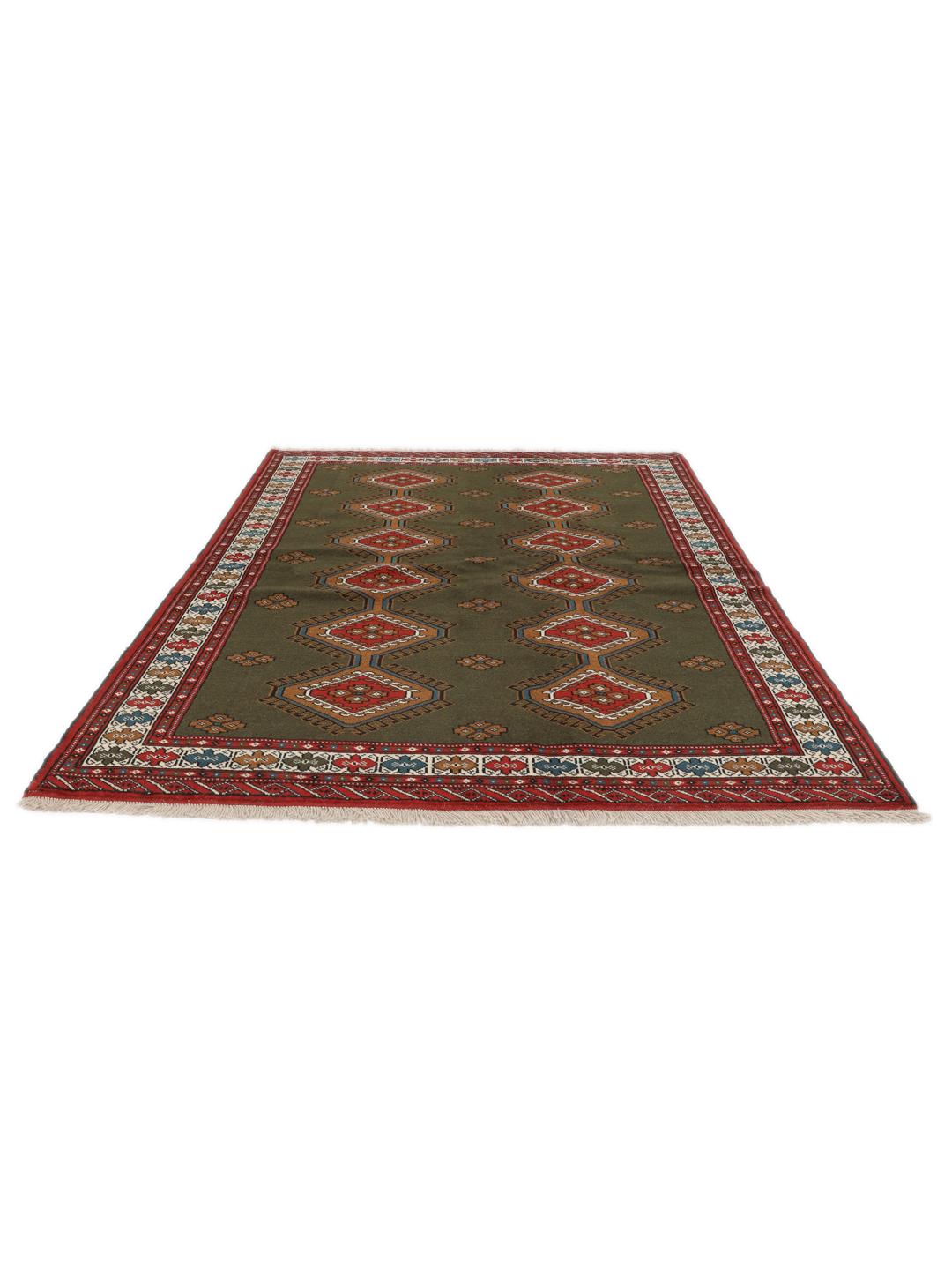
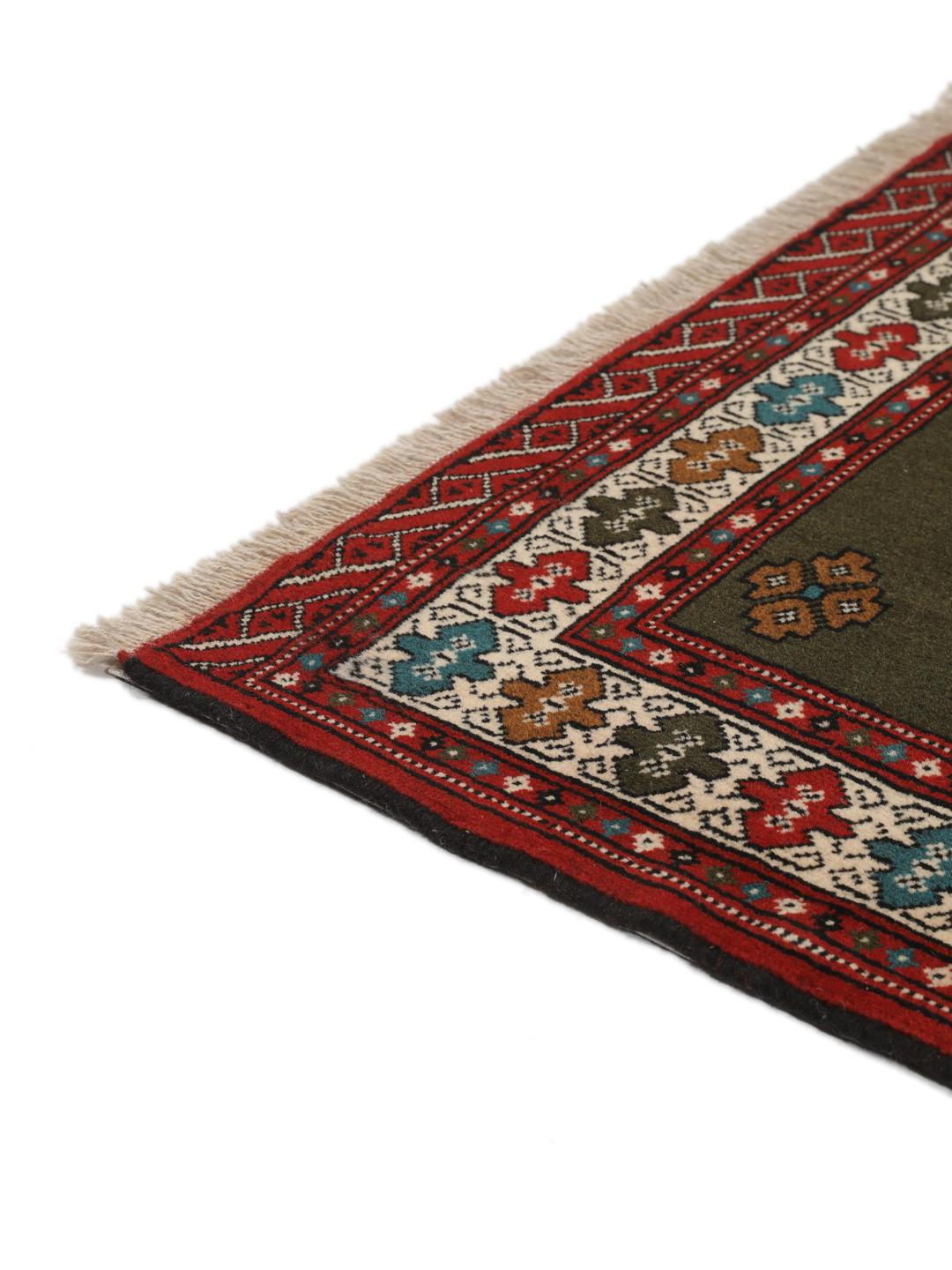
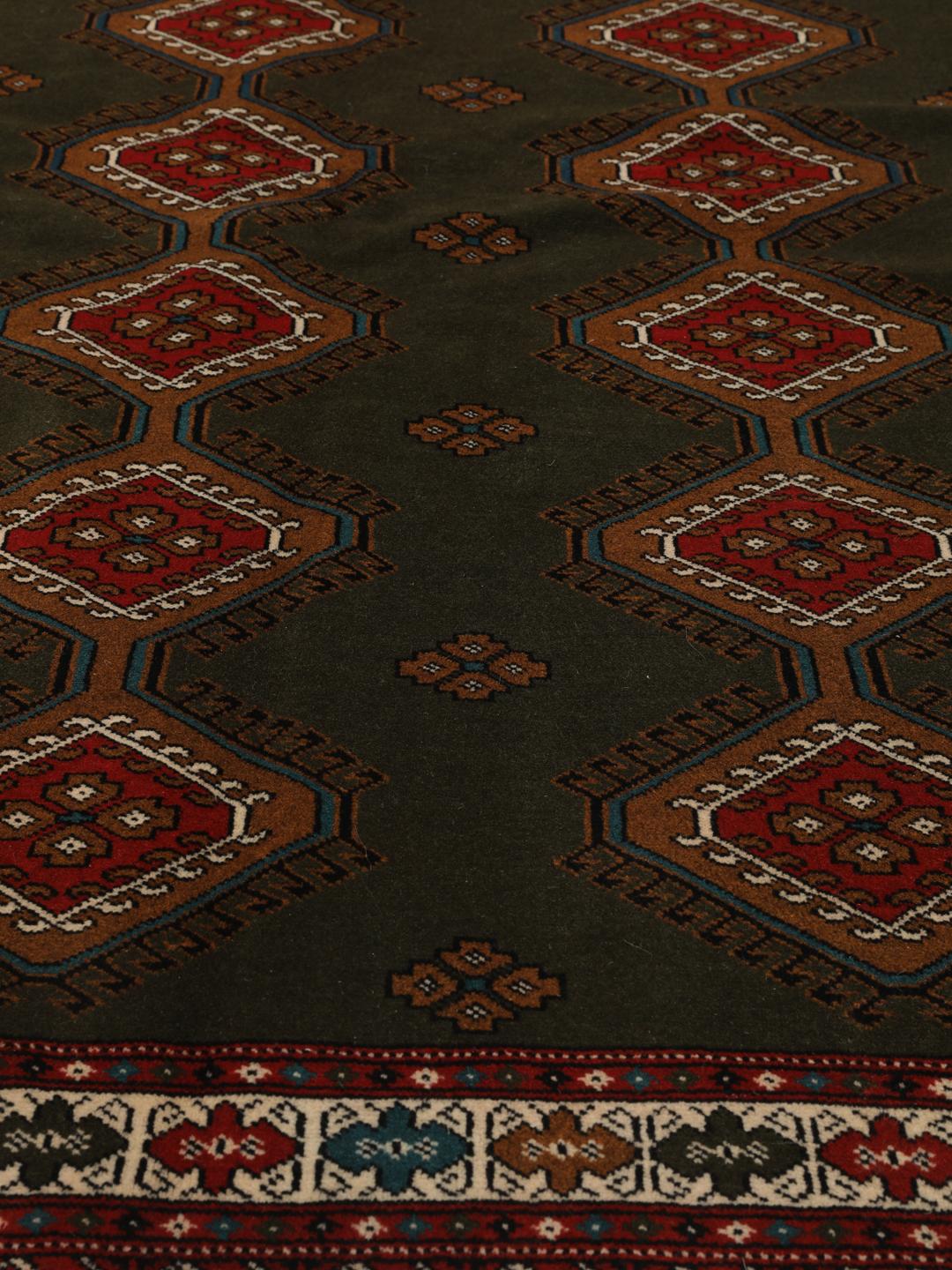
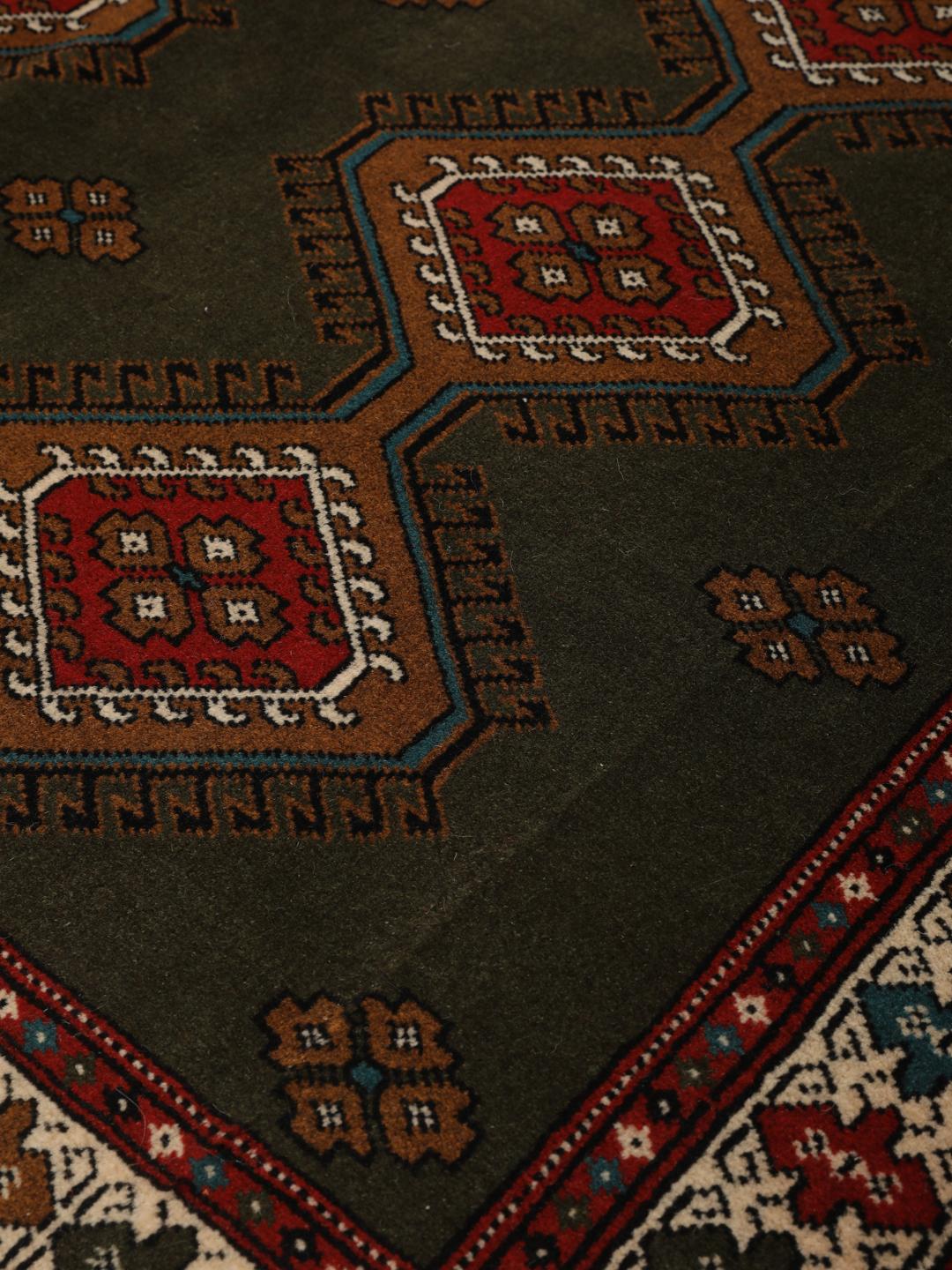
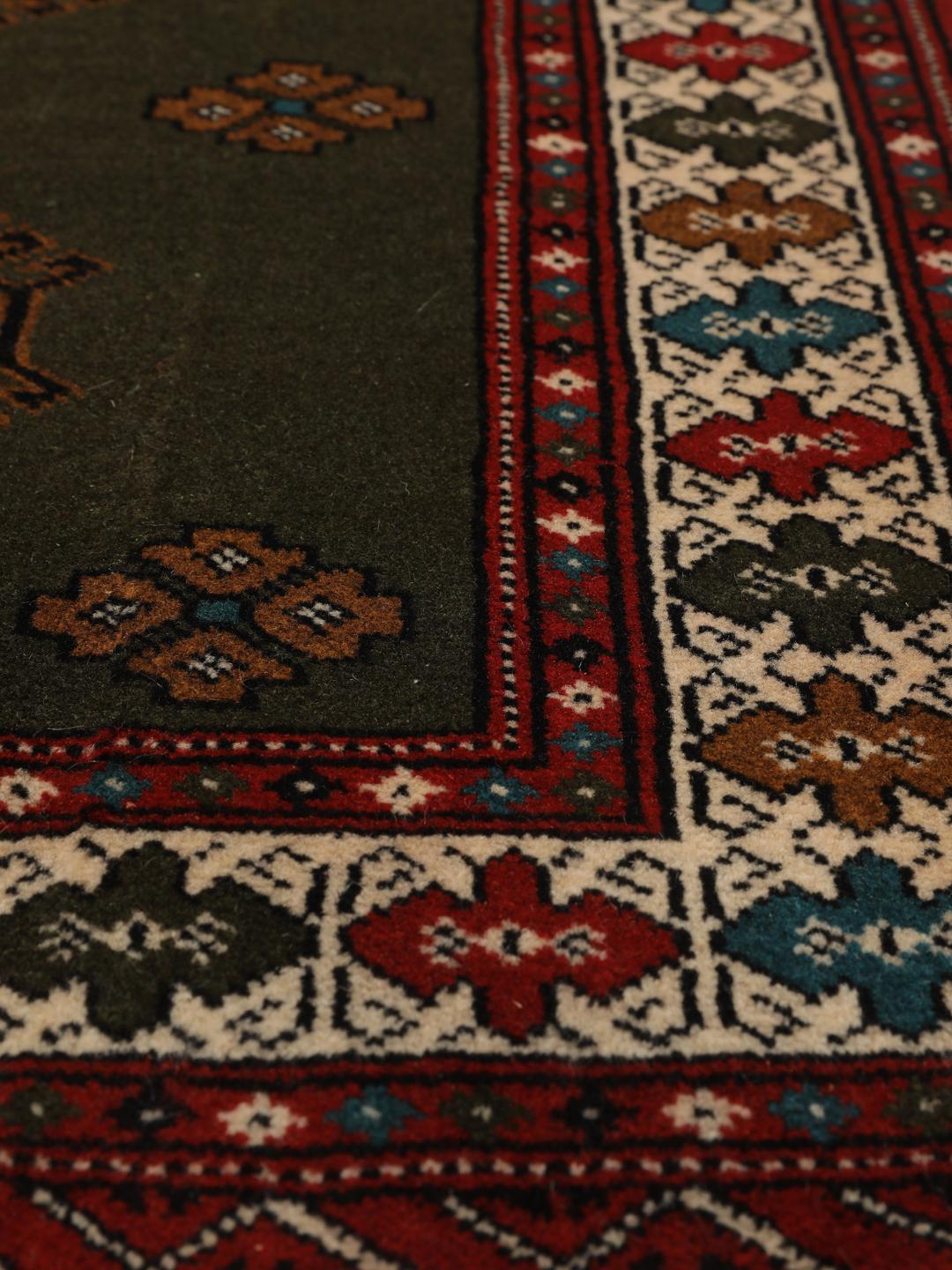
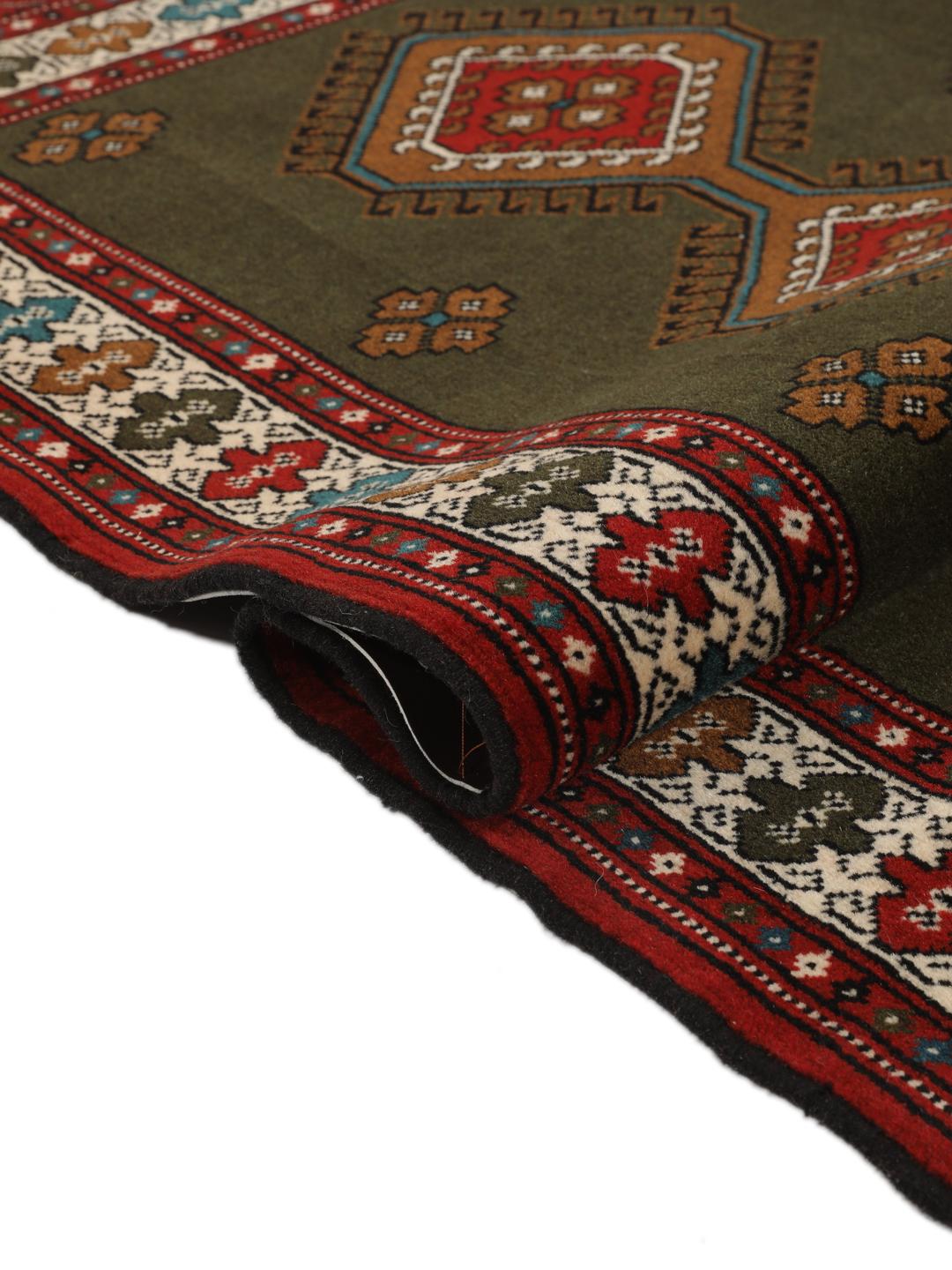
Signature design elements of the Turkaman tradition include the use of repeating geometric motifs, often referred to as guls. These medallions are typically arranged in a structured grid, enclosed by elaborate, multi-layered borders that frame the central field perfectly. While red is a traditional colour, variations such as this deep olive field are highly sought after by collectors for their ability to offer a fresh, refined take on a classic aesthetic.
These rugs are valued not just for their visual appeal, but for the cultural heritage they carry. Owning a piece from this tradition is an investment in a craft that relies on human skill rather than industrial speed. Collectors prize these rugs for their endurance and the way they age gracefully, gaining character over the years. By acquiring this piece, you are preserving a legacy of artistry and bringing a genuine piece of history into your home.