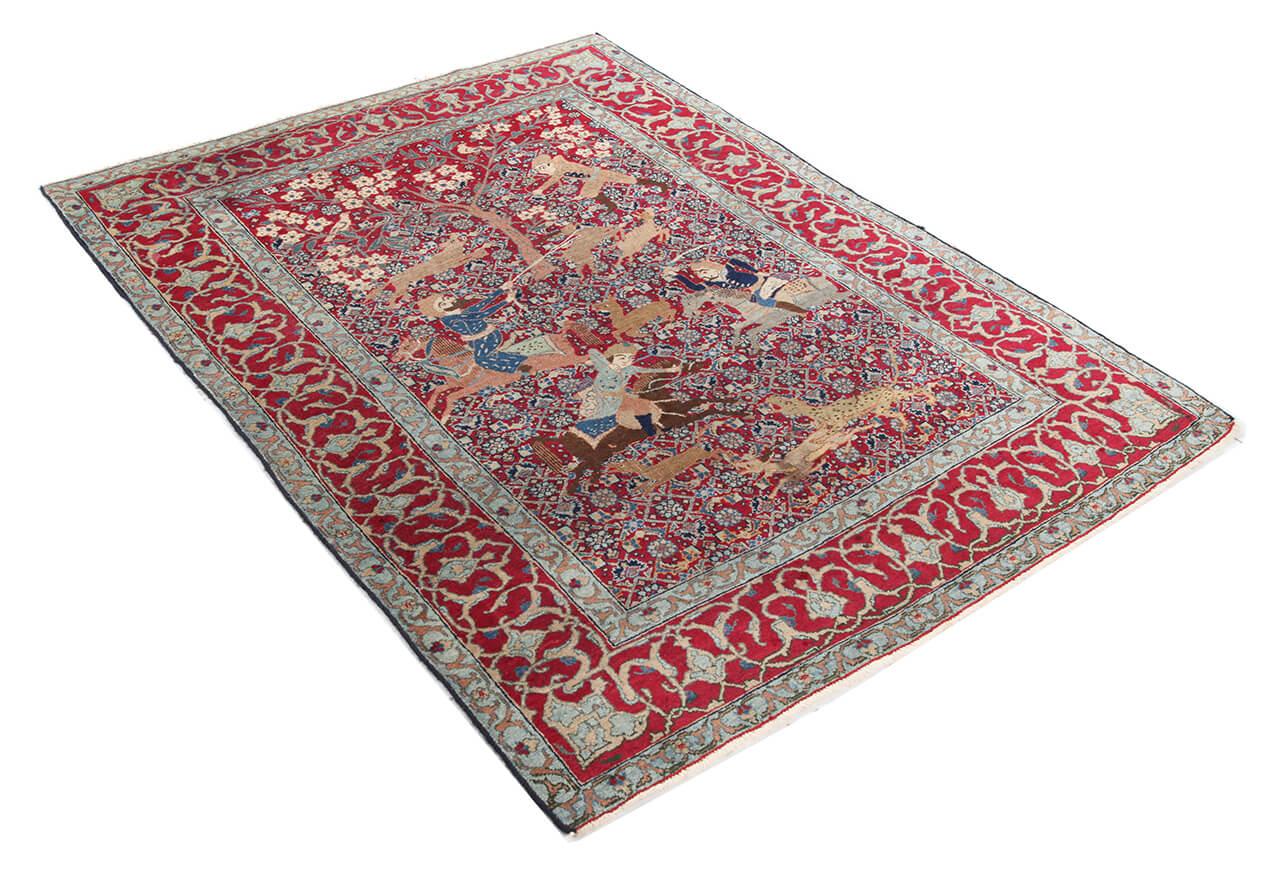
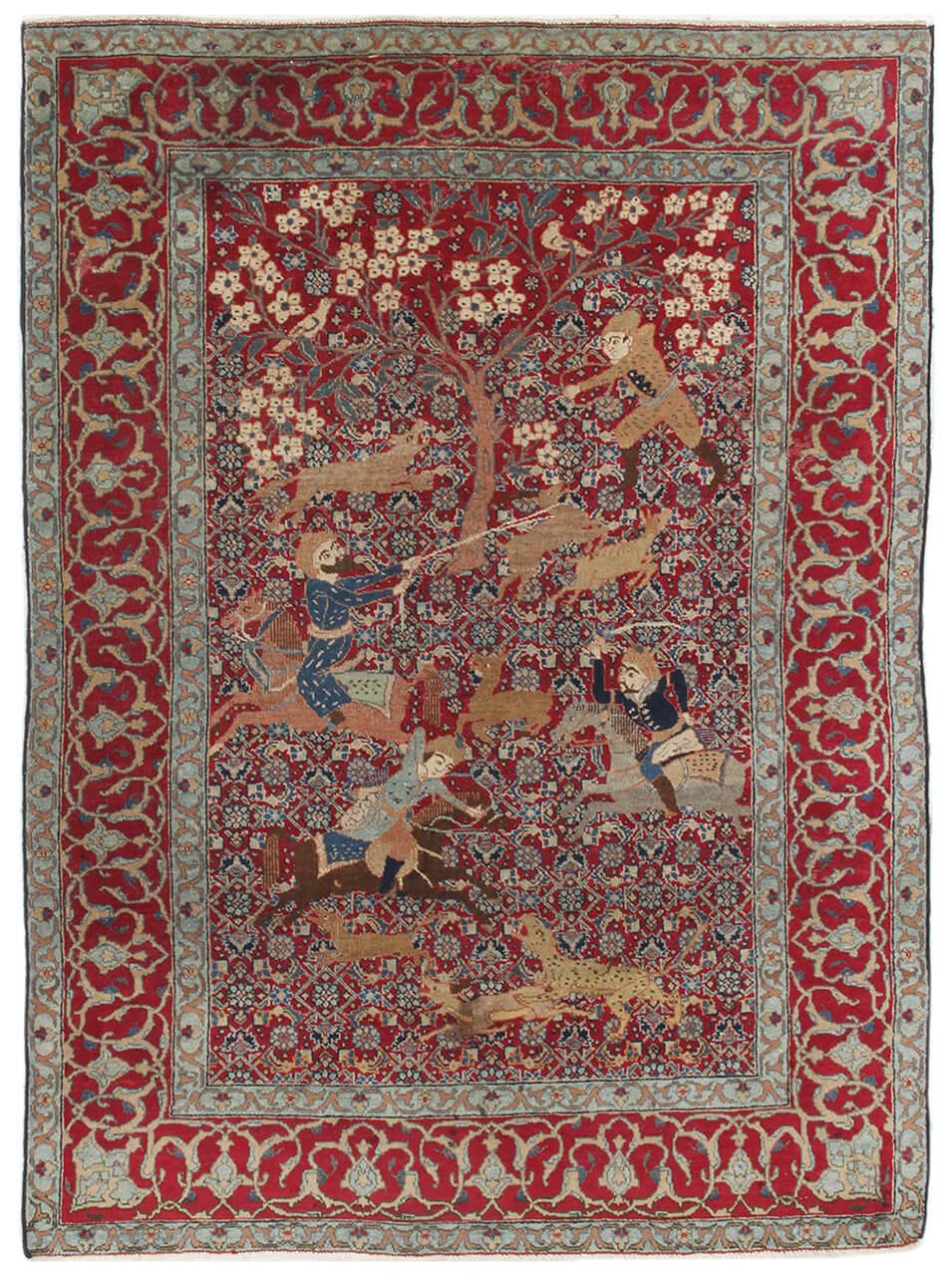
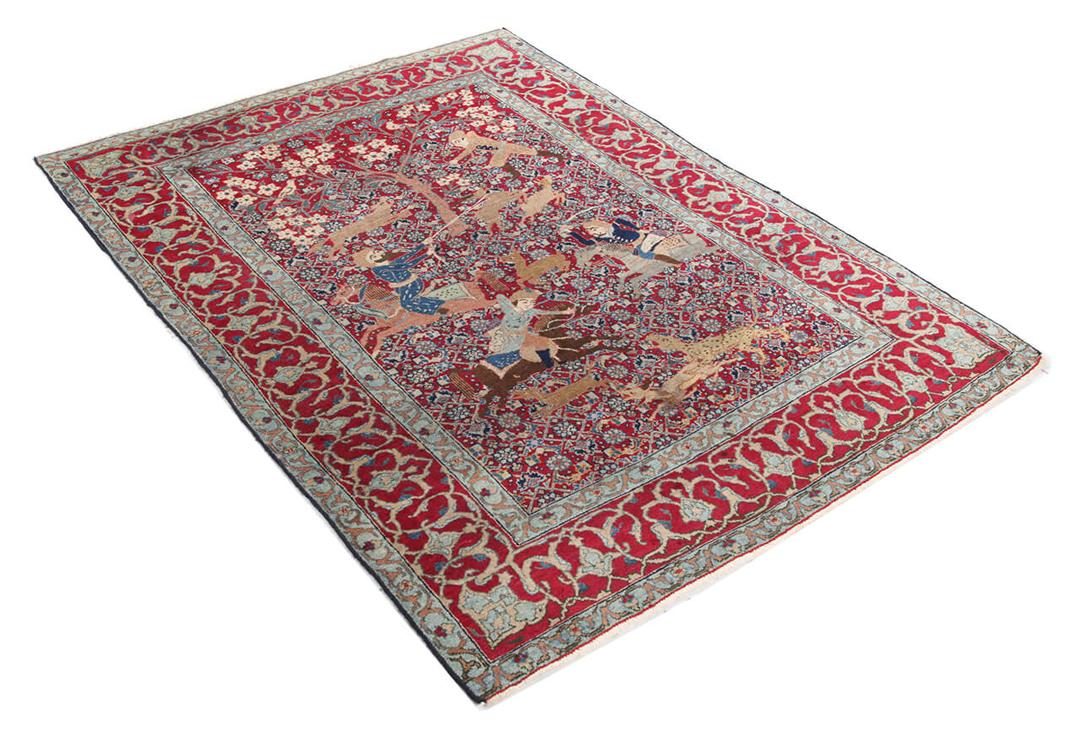
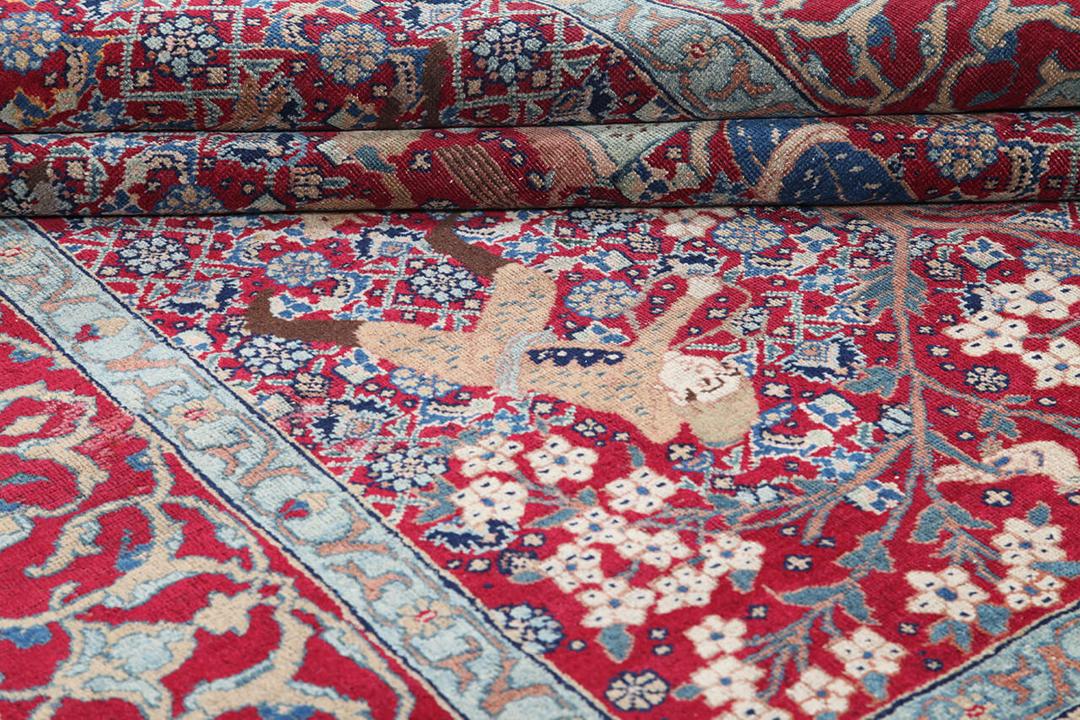
The Tabriz rug tradition hails from one of the oldest weaving centres in the Middle East. Located in the historic city of Tabriz, this region has long been a crossroads of culture and trade, fostering a unique style that draws from both nomadic traditions and the refined aesthetics of royal courts. The city is renowned for its ability to produce some of the most sophisticated rugs in the world, often characterised by a high level of technical mastery.
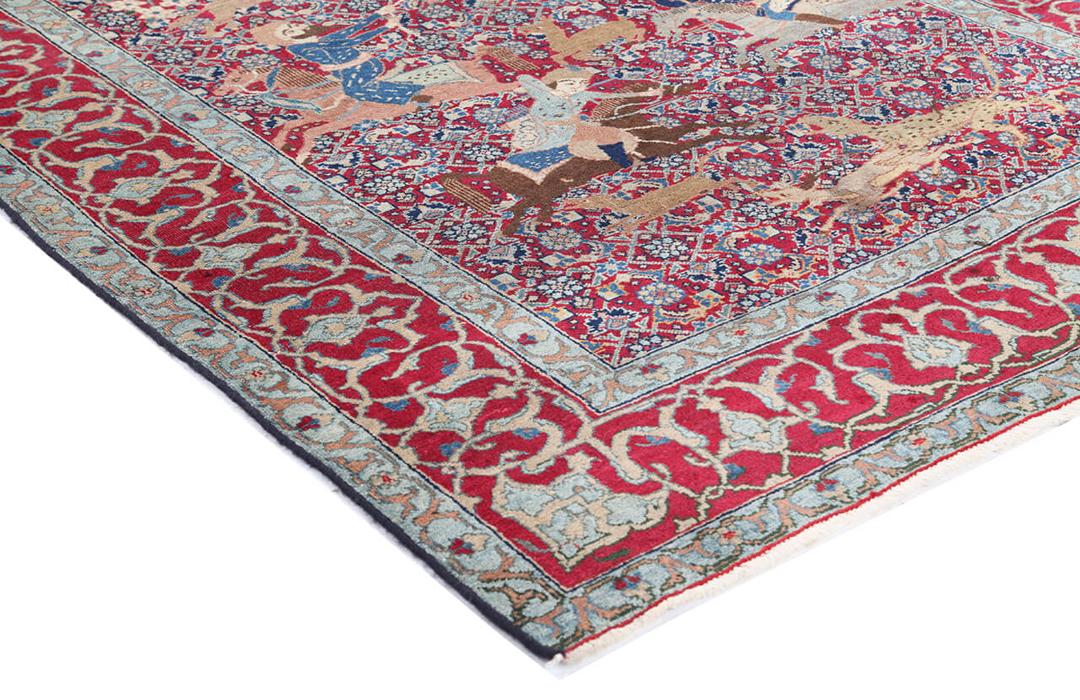
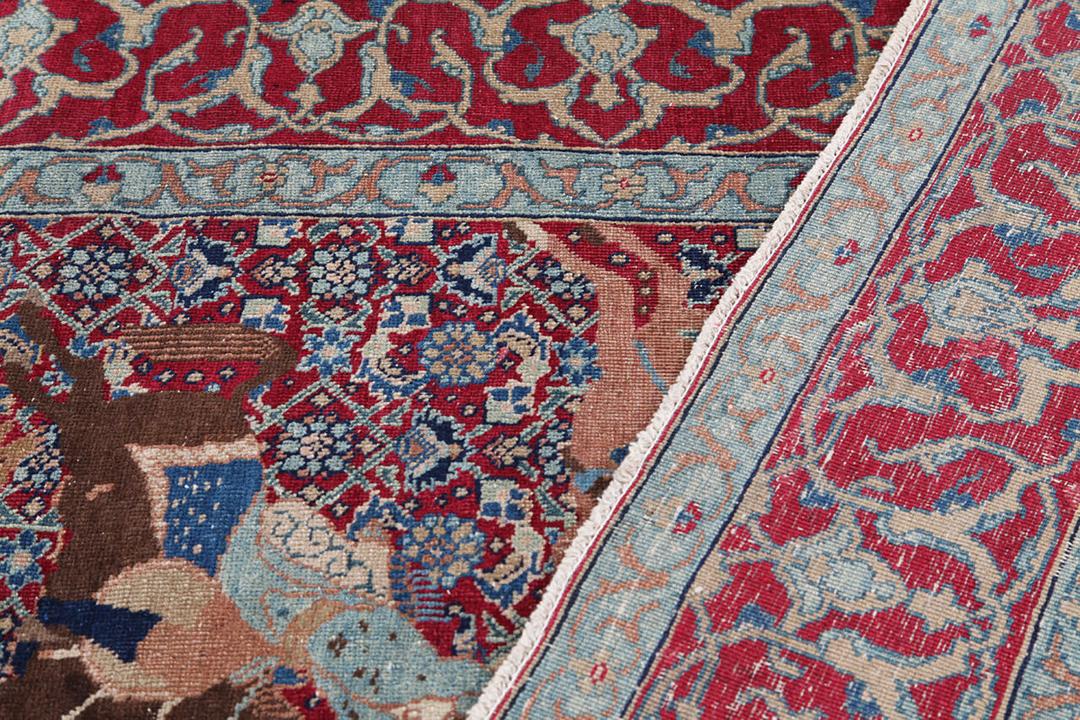
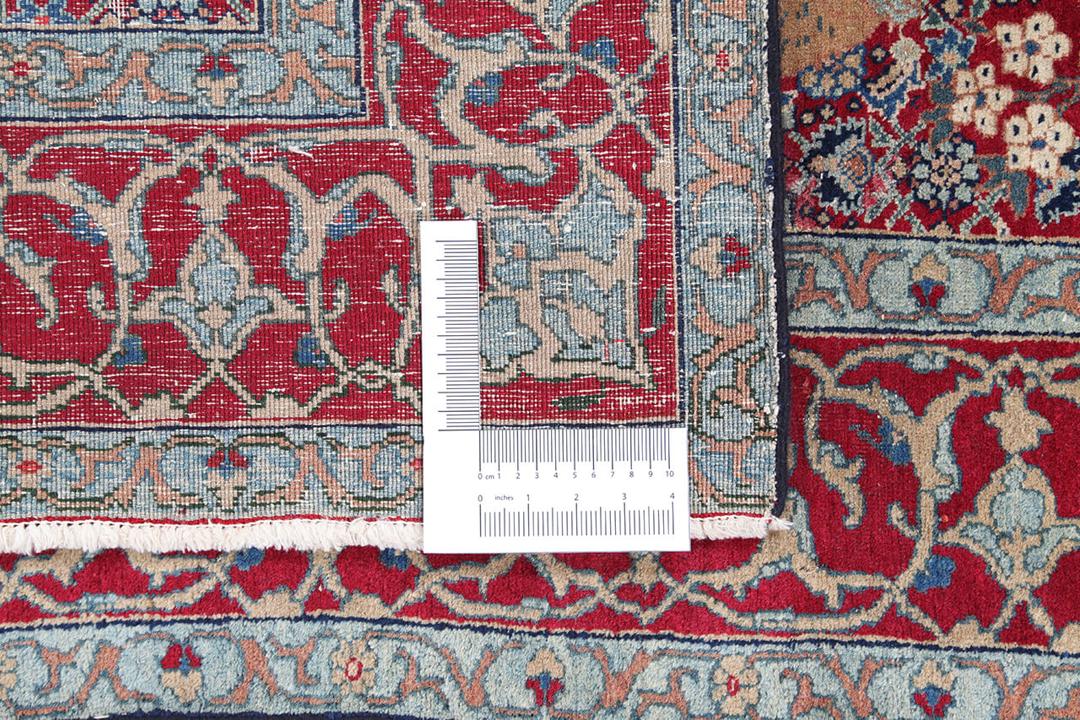
The term 50 Raj is a specific technical designation that refers to the knotting density, which is fundamental to the quality of a Tabriz rug. This measurement denotes a high number of knots per 7 cm of warp, ensuring a tight, robust, and extremely detailed pile. For the collector, this means a rug with exceptional durability and a crispness of design that is rarely achieved in coarser weaving traditions.
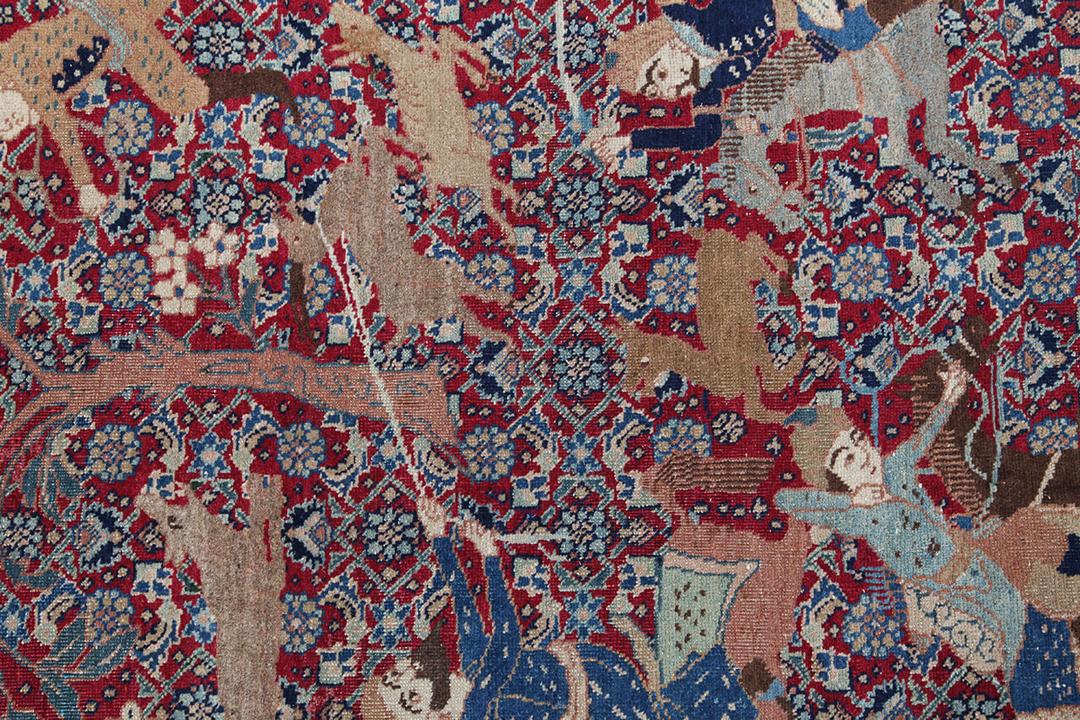
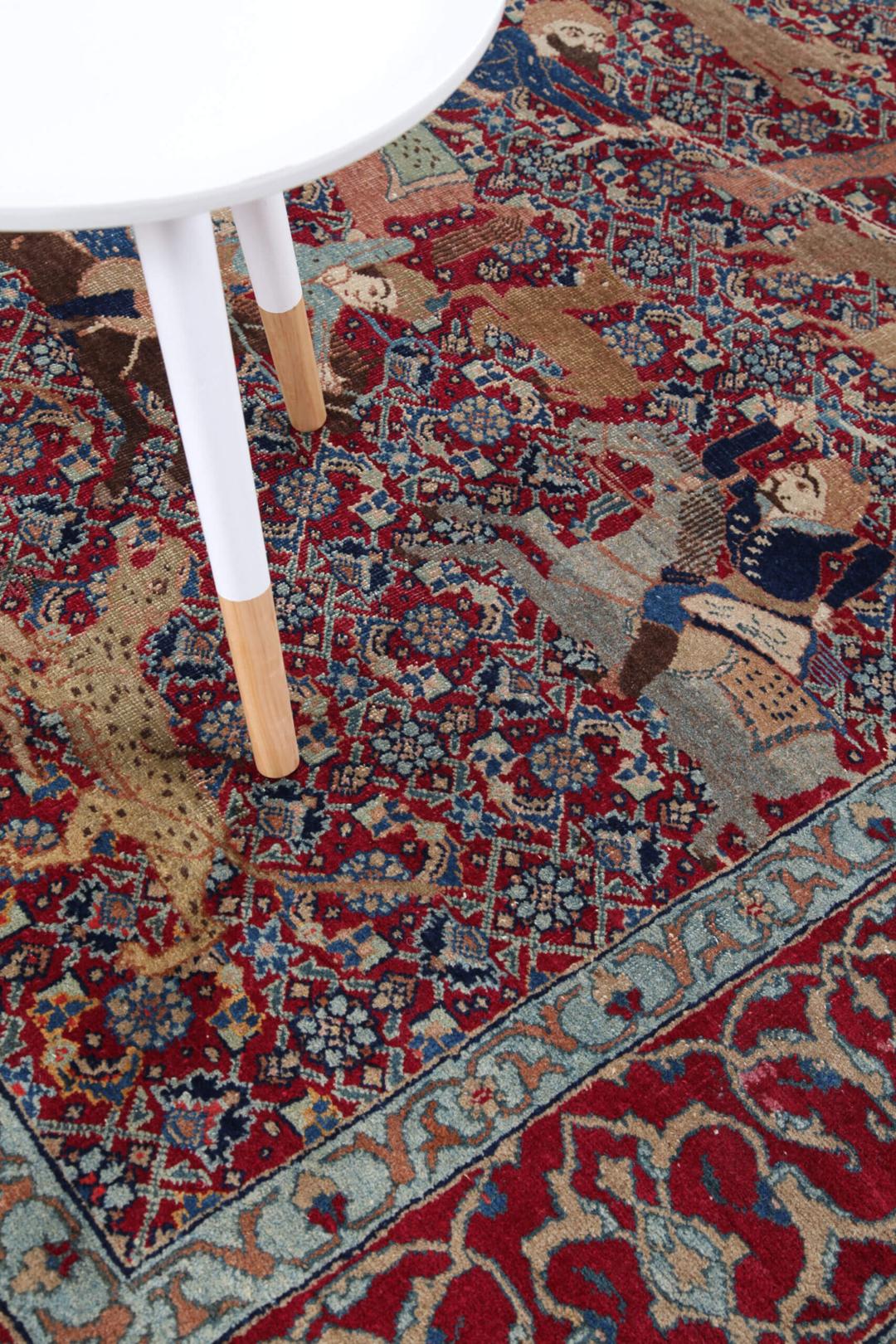
Visually, Tabriz rugs are known for their immense variety, ranging from classical medallions to intricate pictorial scenes like the hunting motif found here. These hunting scenes are deeply rooted in Middle Eastern art history, often symbolising power, nature, and the cycle of life. The inclusion of such complex figurative work requires immense skill, as the weaver must translate painterly concepts into the structured, geometric language of the loom.
Collecting a piece from this tradition is an investment in human artistry. These rugs are highly valued for their ability to bridge the gap between functional floor covering and fine art. By maintaining these centuries-old techniques, Tabriz weavers have created a legacy of excellence that is celebrated by rug enthusiasts worldwide for its lasting quality and cultural depth.