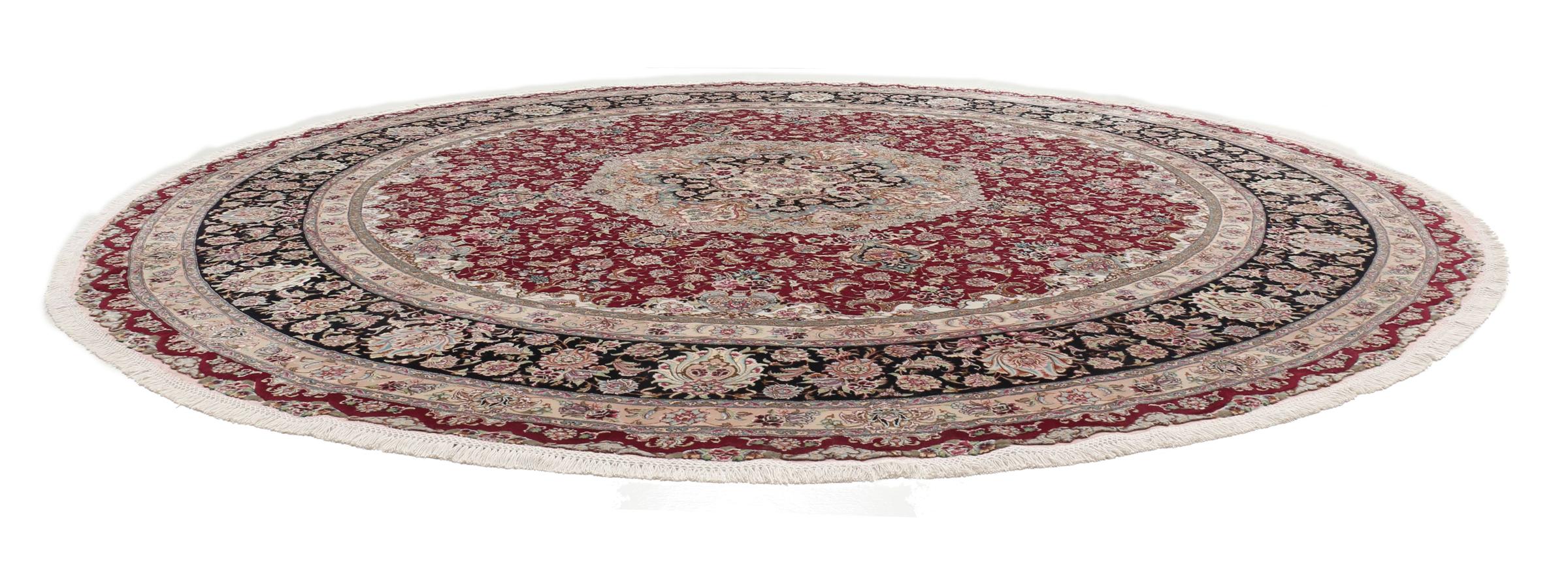
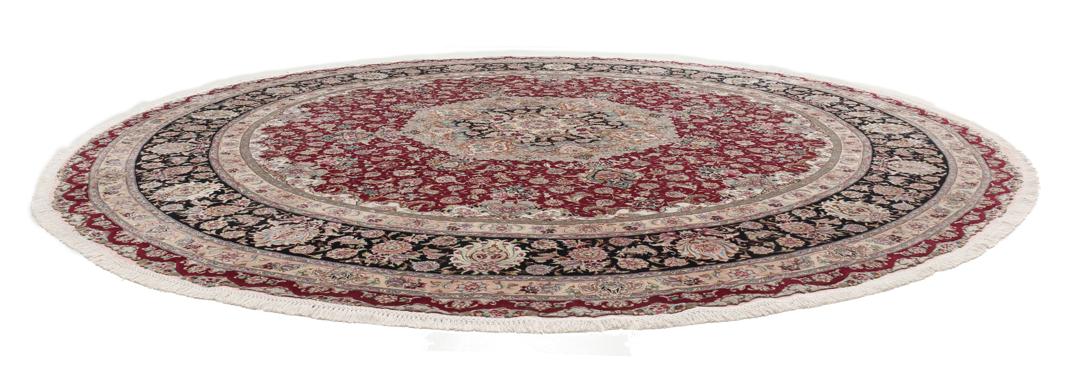
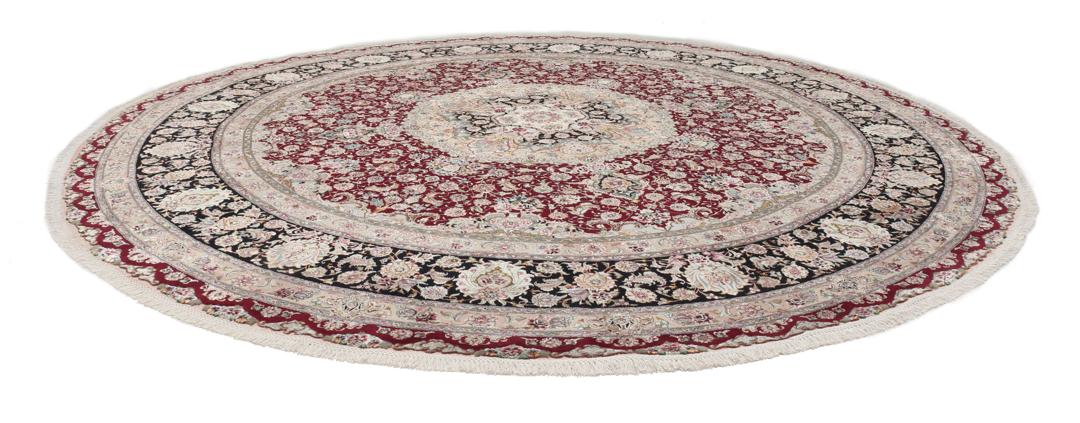
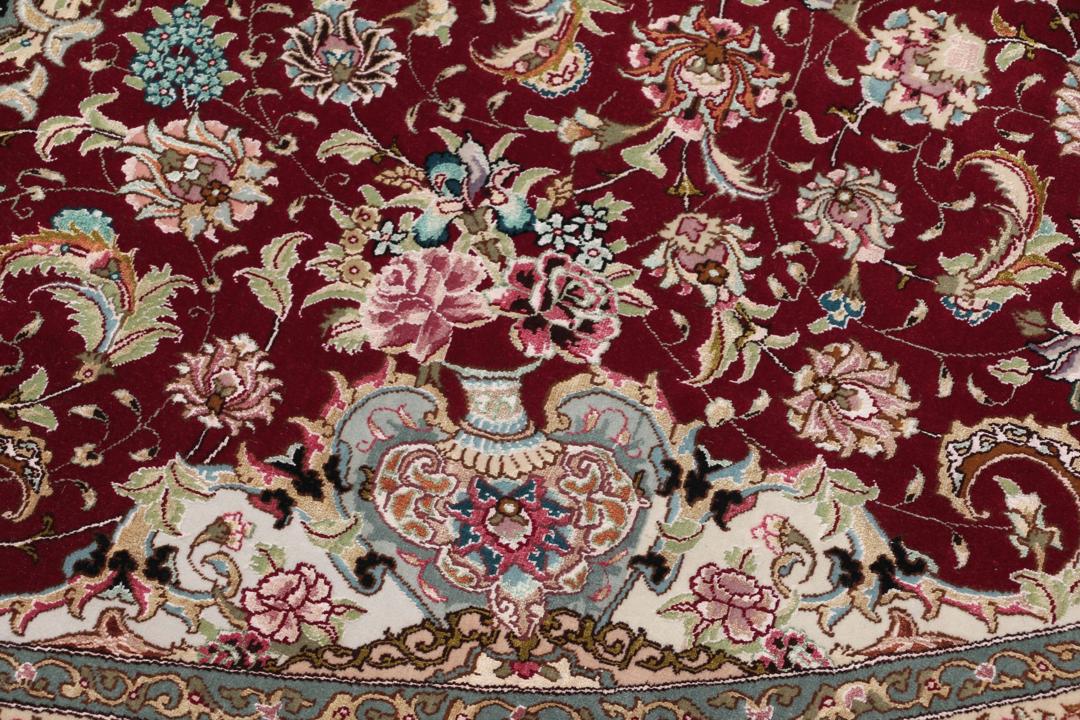
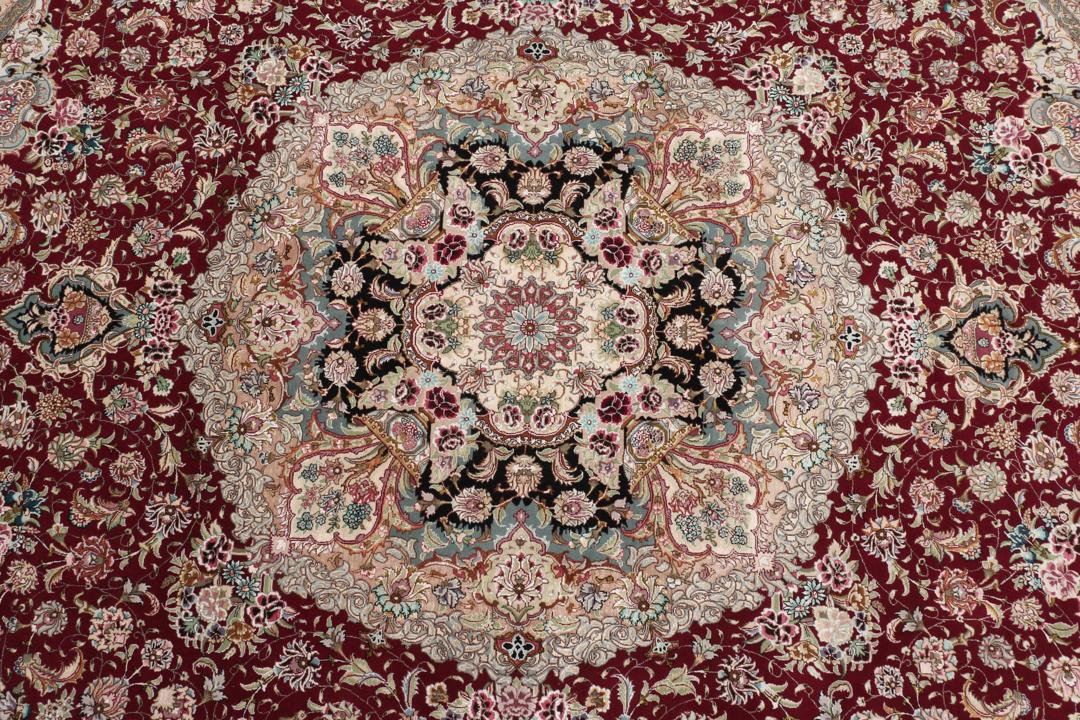
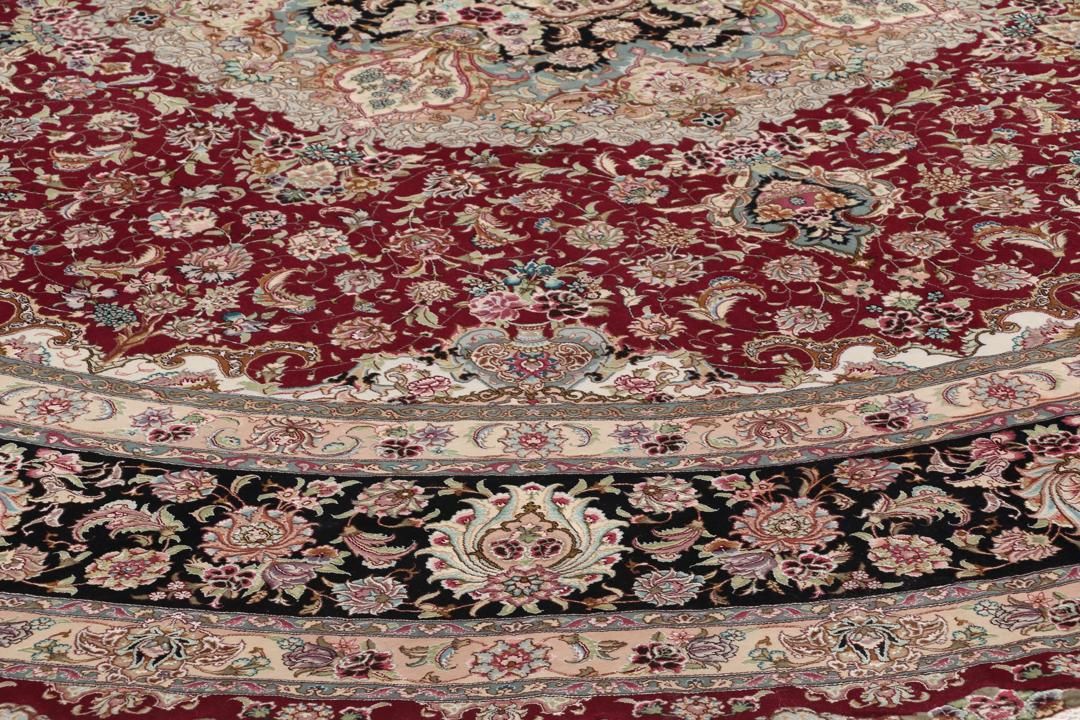
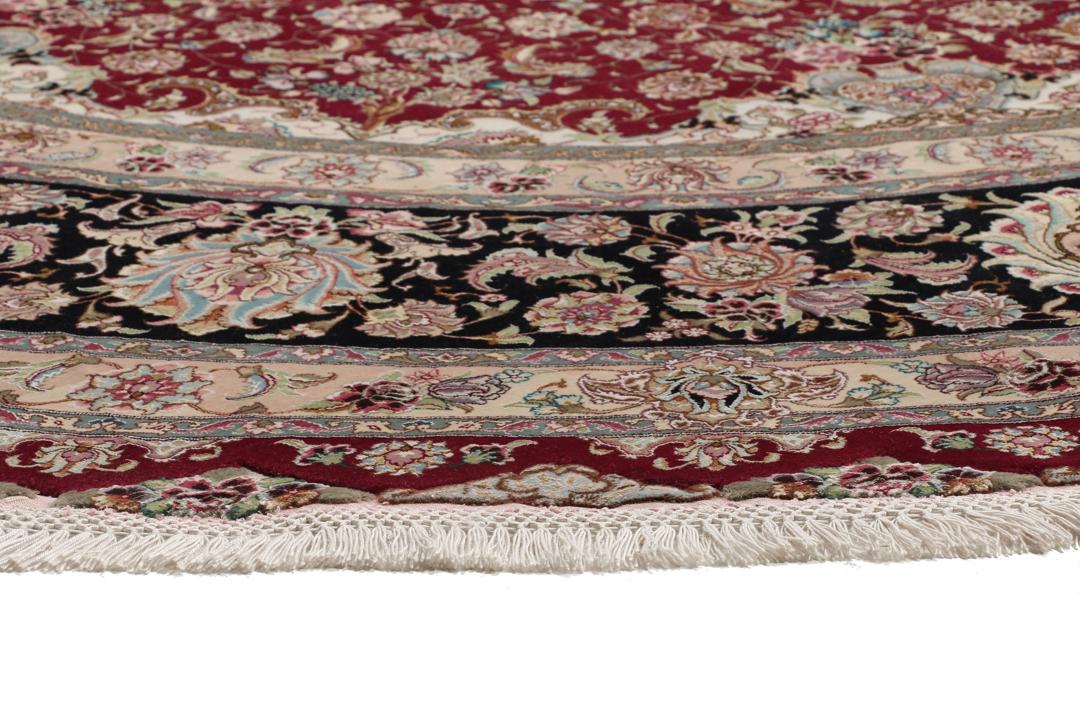
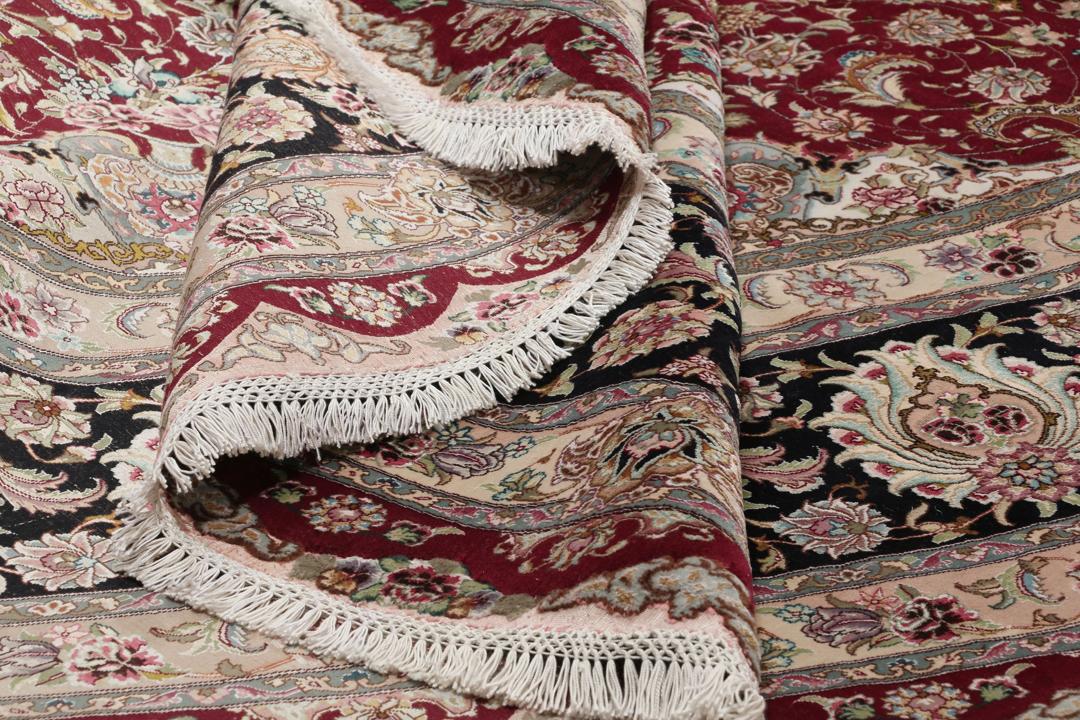
Tabriz rugs originate from the city of Tabriz, one of the oldest rug-weaving centres in the Middle East. Located on the historic Silk Road, the city has long been a hub of cultural exchange, where artistic influences from across the region have converged to refine the craft of rug making over several centuries.
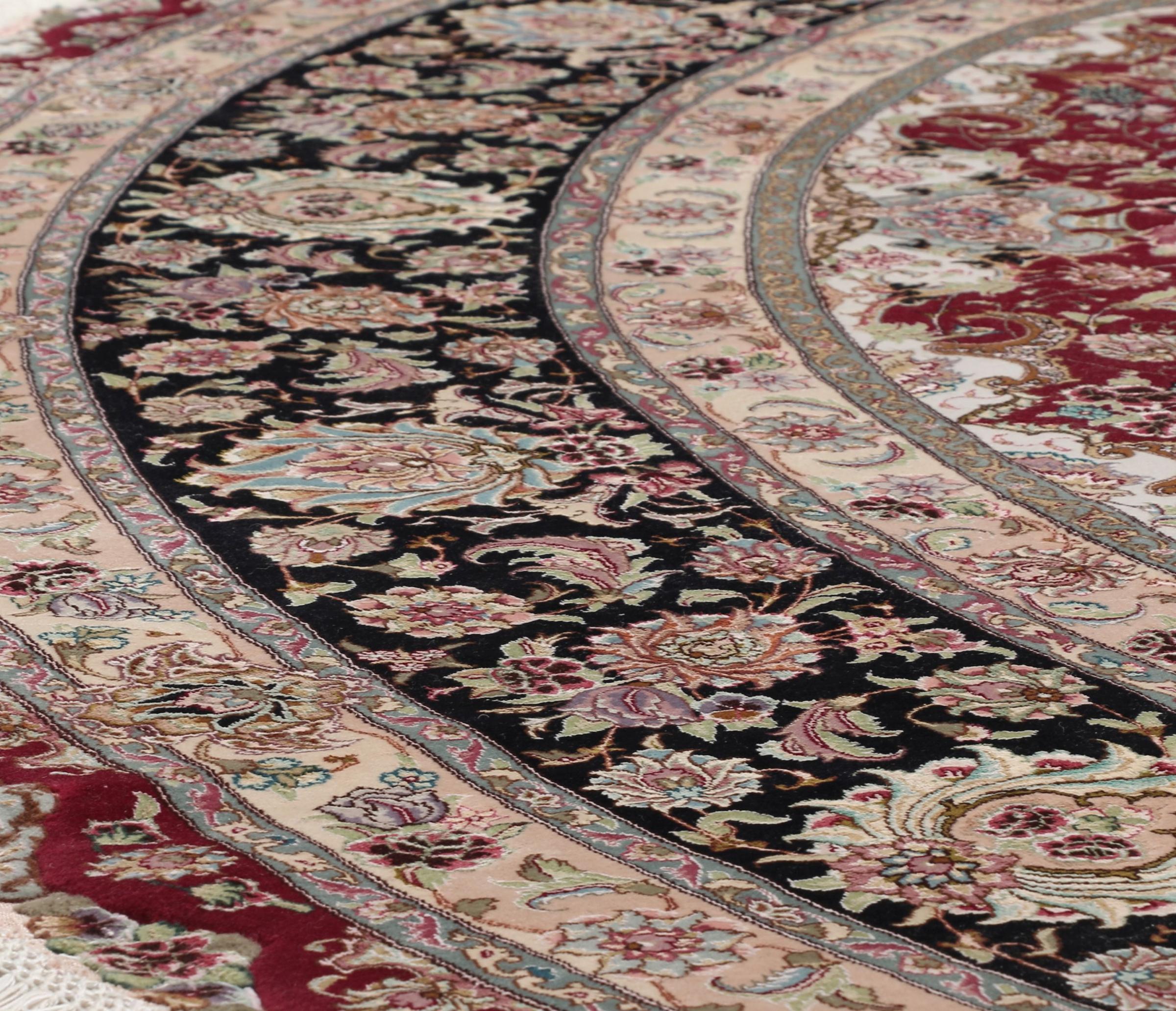
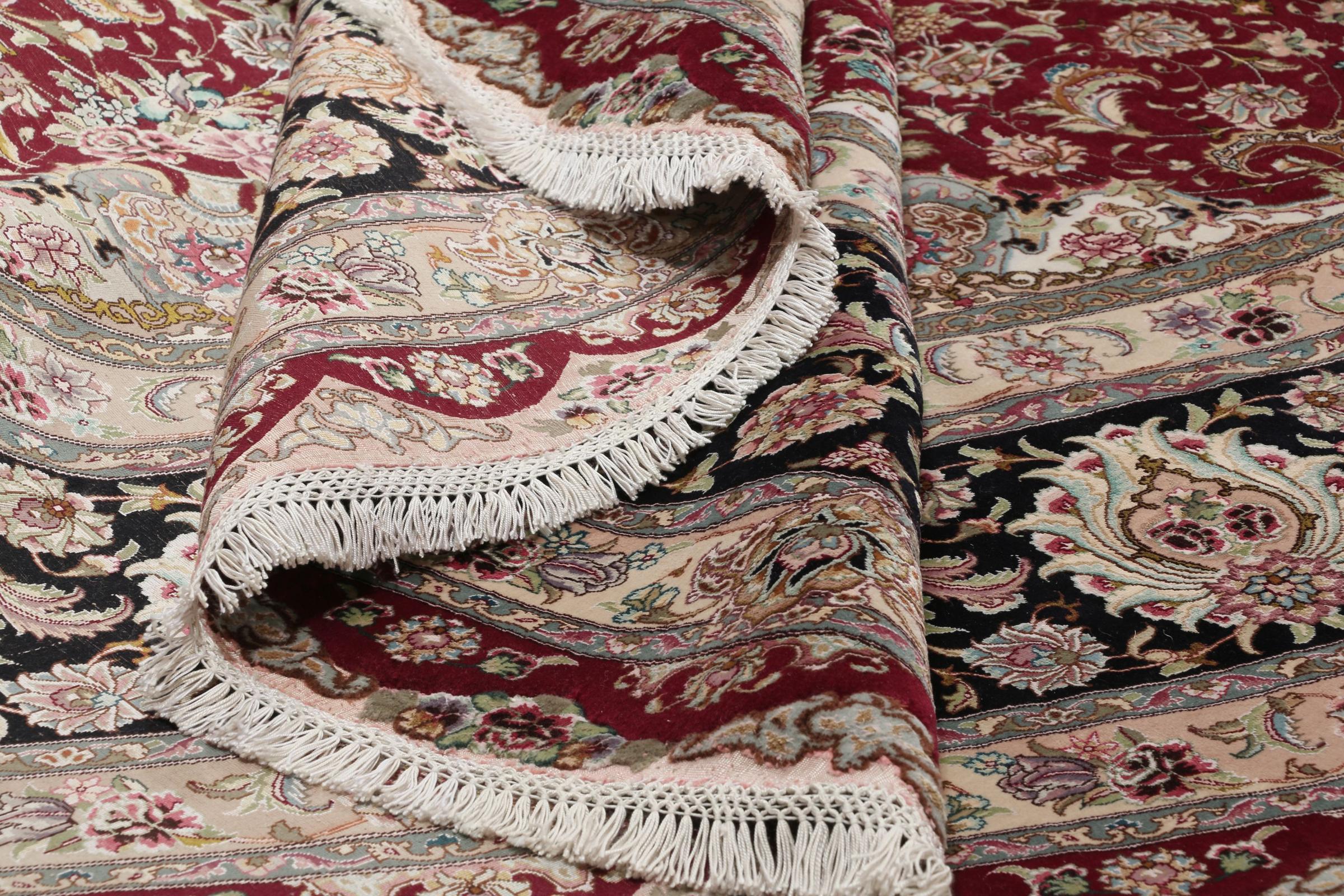
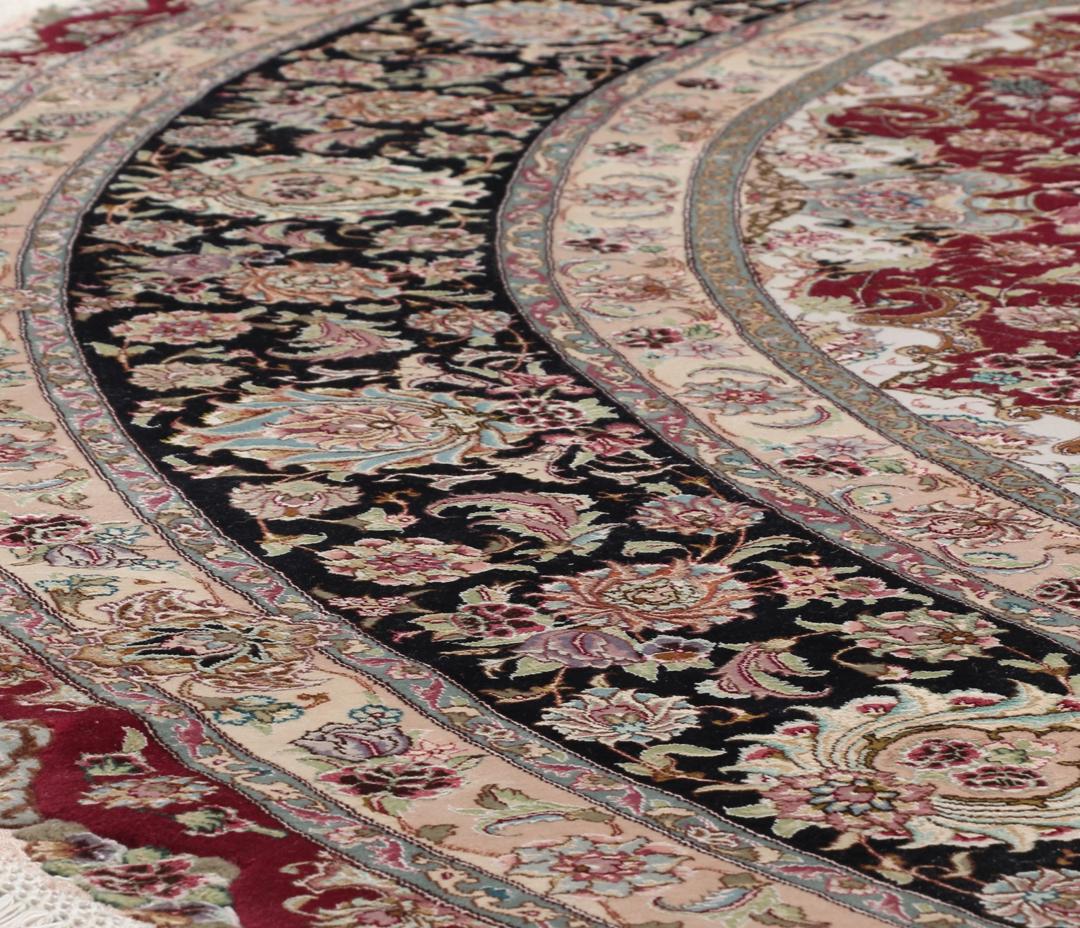
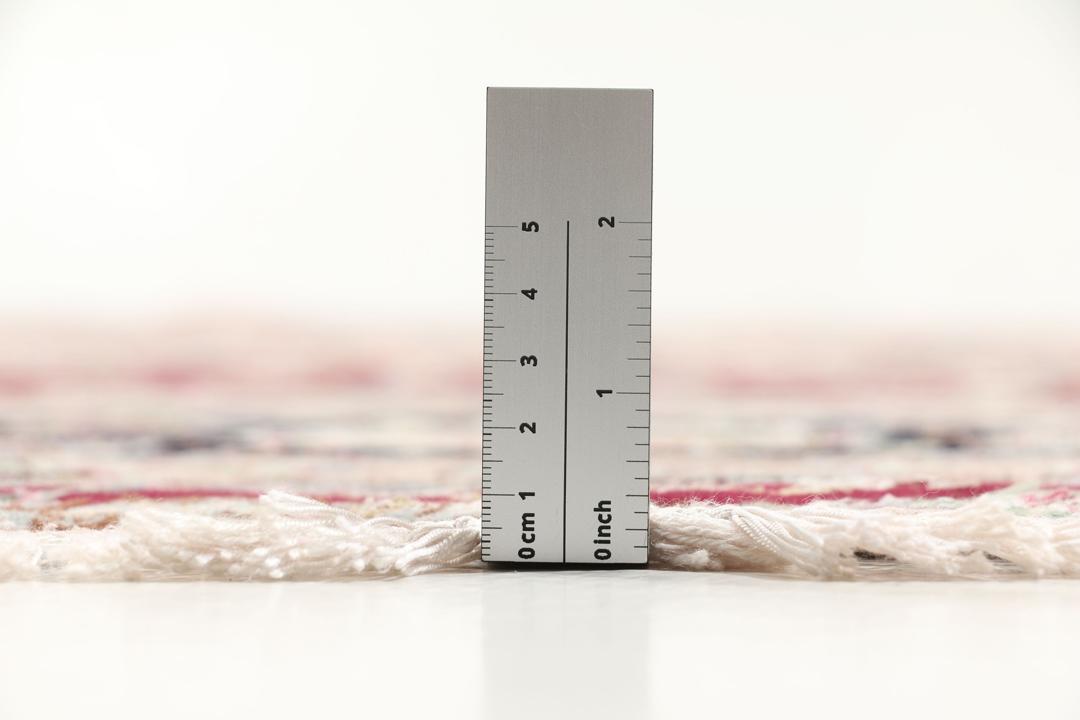
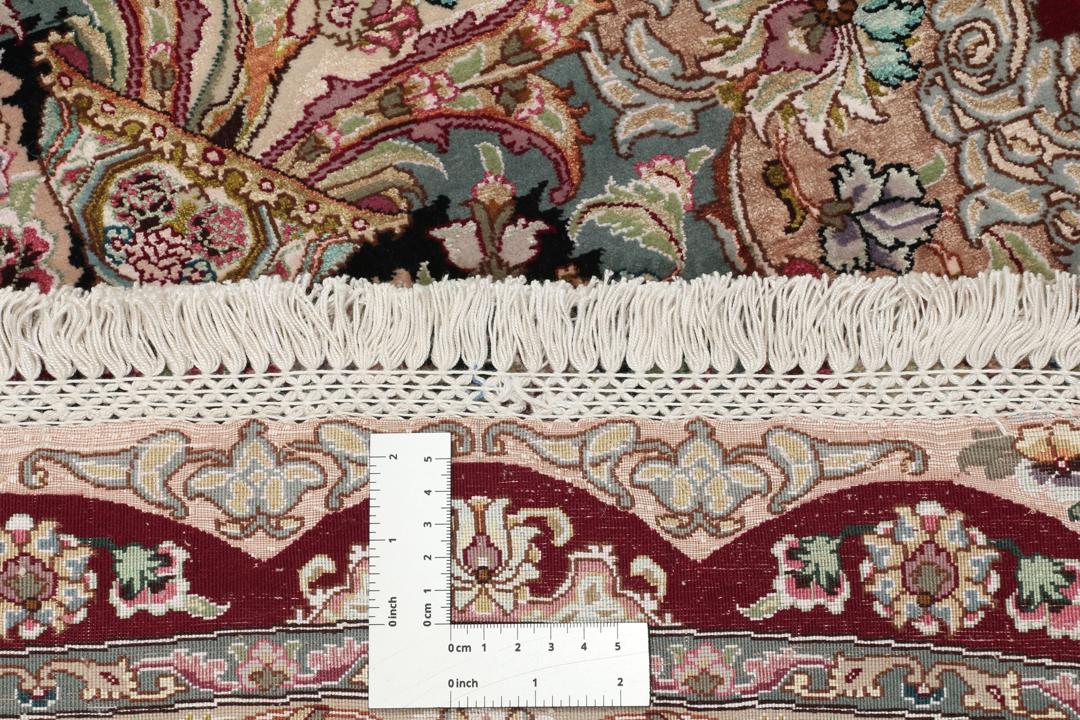
The designation '70 Raj' refers to the technical precision of the weave. 'Raj' is a traditional unit of measurement for knot density, and a count of 70 indicates a very high level of complexity. This high density allows for the creation of incredibly detailed, curvilinear patterns that would be impossible to achieve with coarser weaving methods.
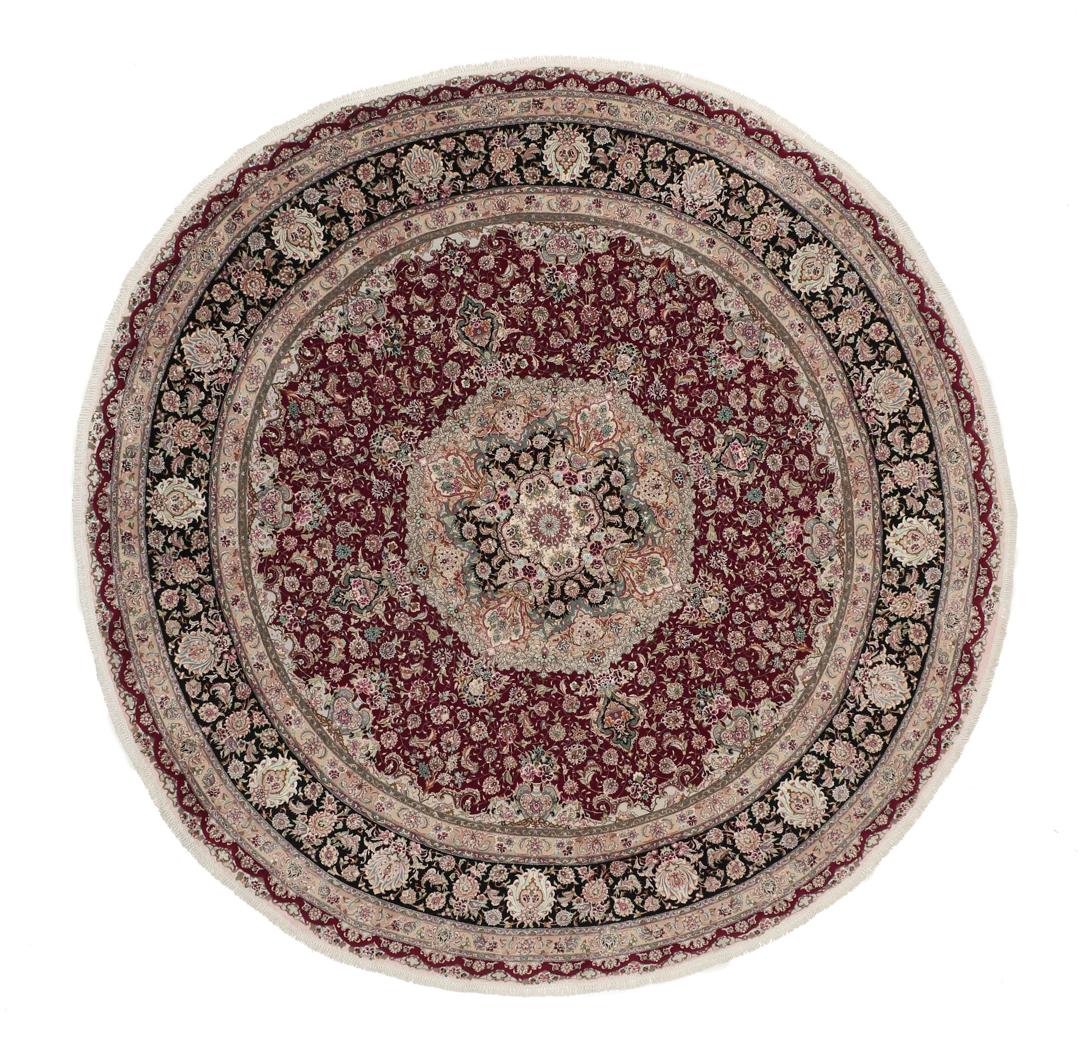
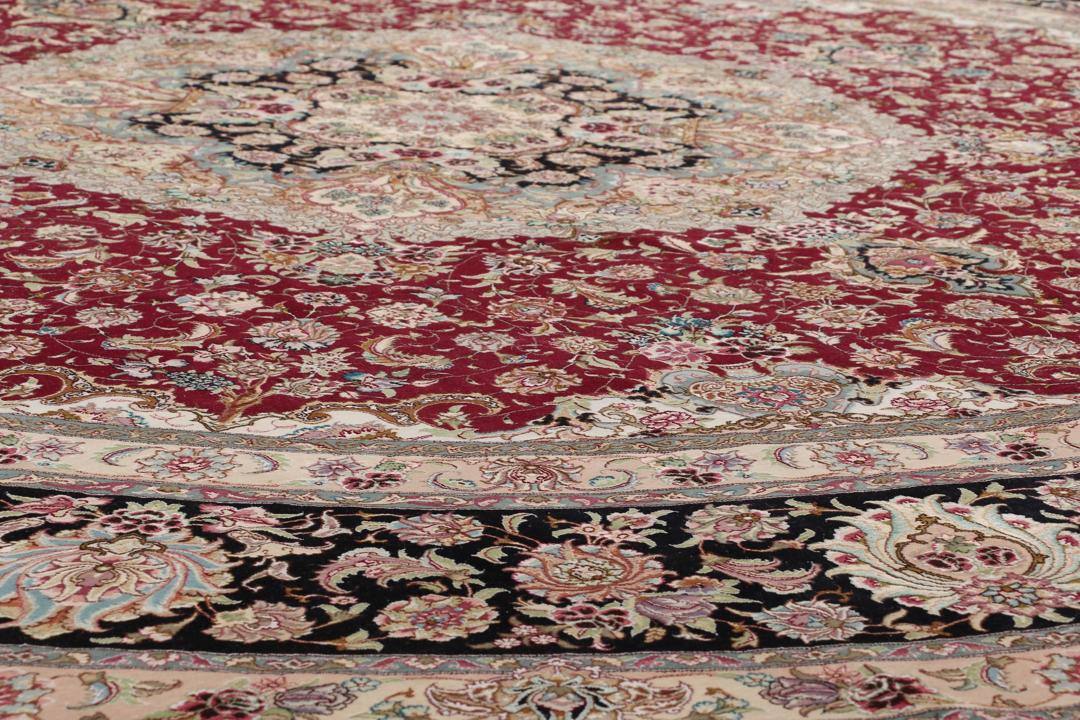
Signature design elements of the Tabriz tradition include formal floral patterns, central medallions, and intricate borders. Often inspired by classic garden motifs, these designs are balanced and symmetrical. The use of a round format is a testament to the weaver's skill, requiring advanced geometric planning to ensure the pattern remains consistent and beautiful from every angle.
Owning a 70 Raj Tabriz rug is considered a significant acquisition for collectors and enthusiasts alike. It represents a pinnacle of weaving skill, where heritage techniques are preserved through the dedication of the artisan. These rugs are valued not just for their aesthetic beauty, but for their status as cultural artefacts that embody a deep, long-standing tradition of excellence.