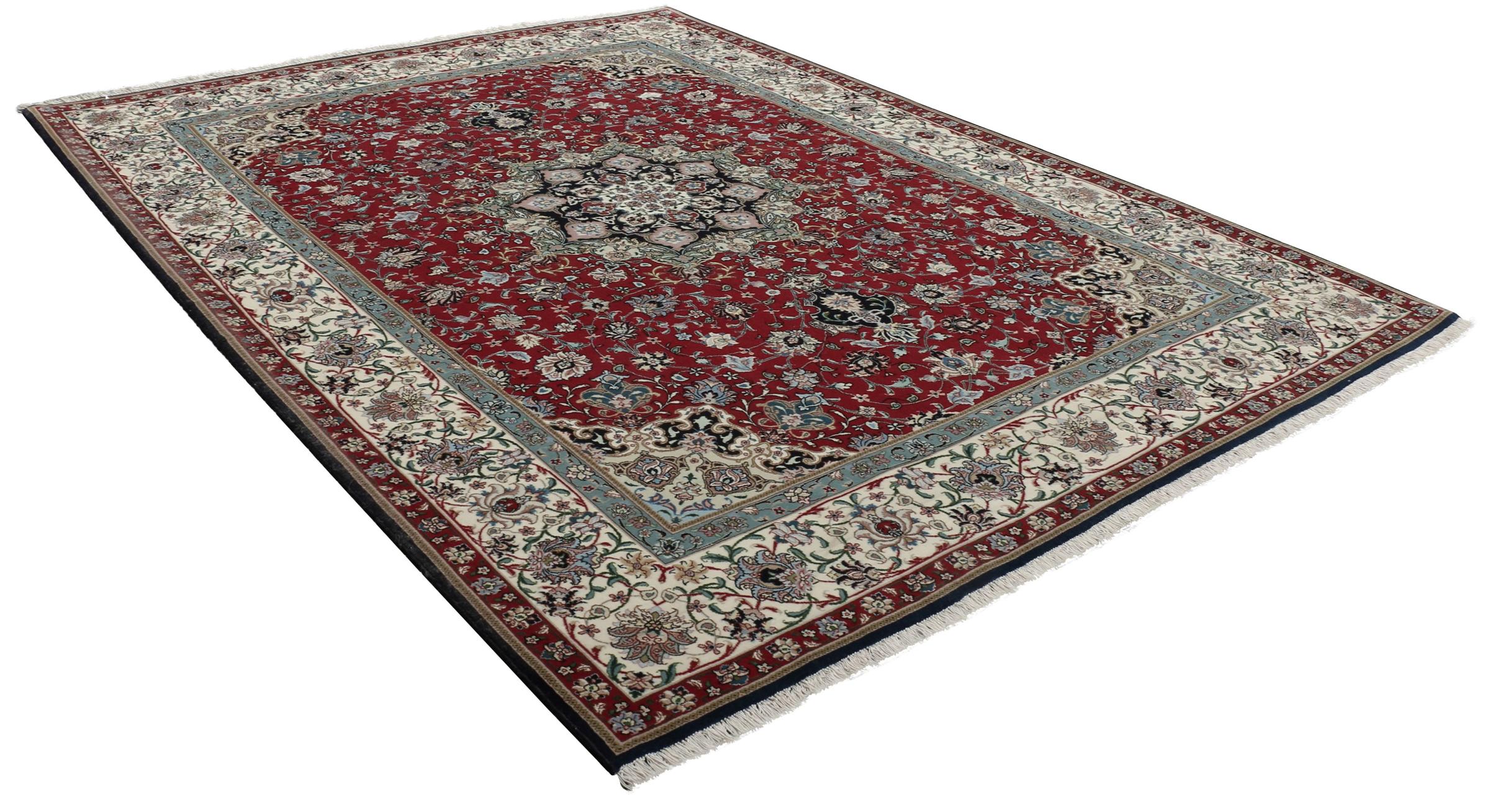
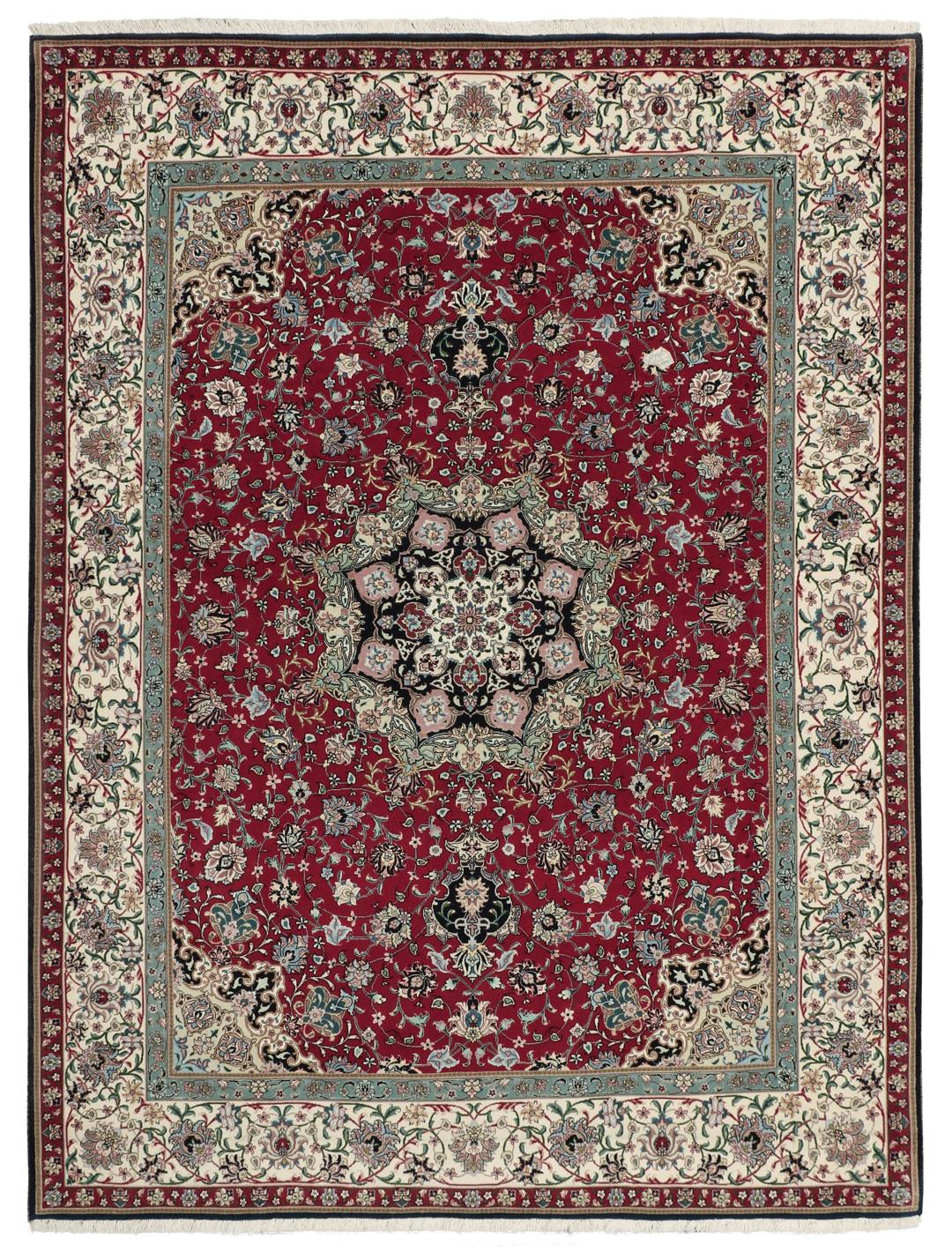
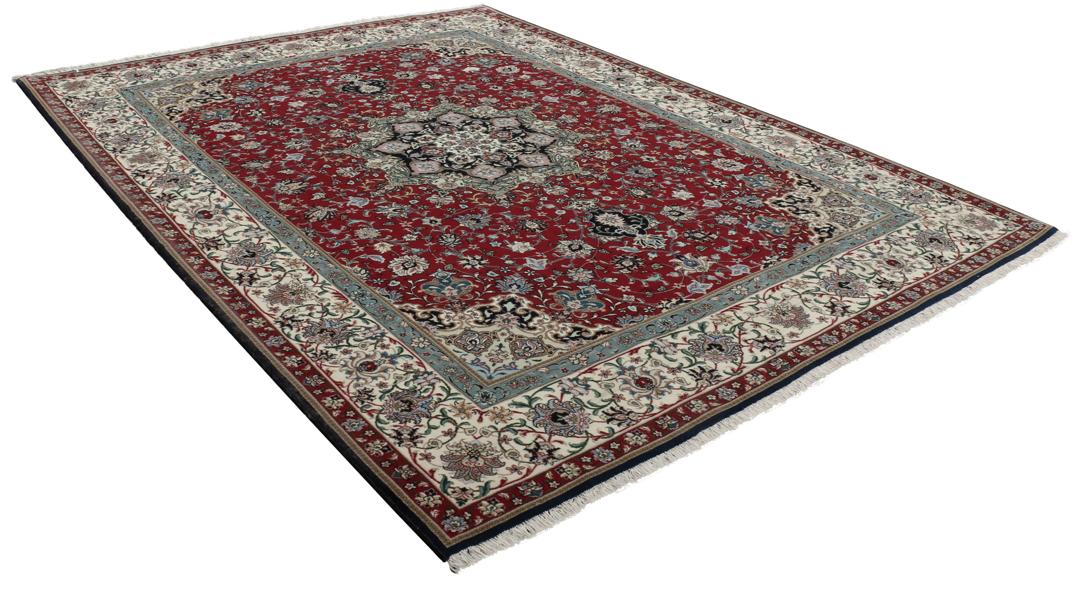
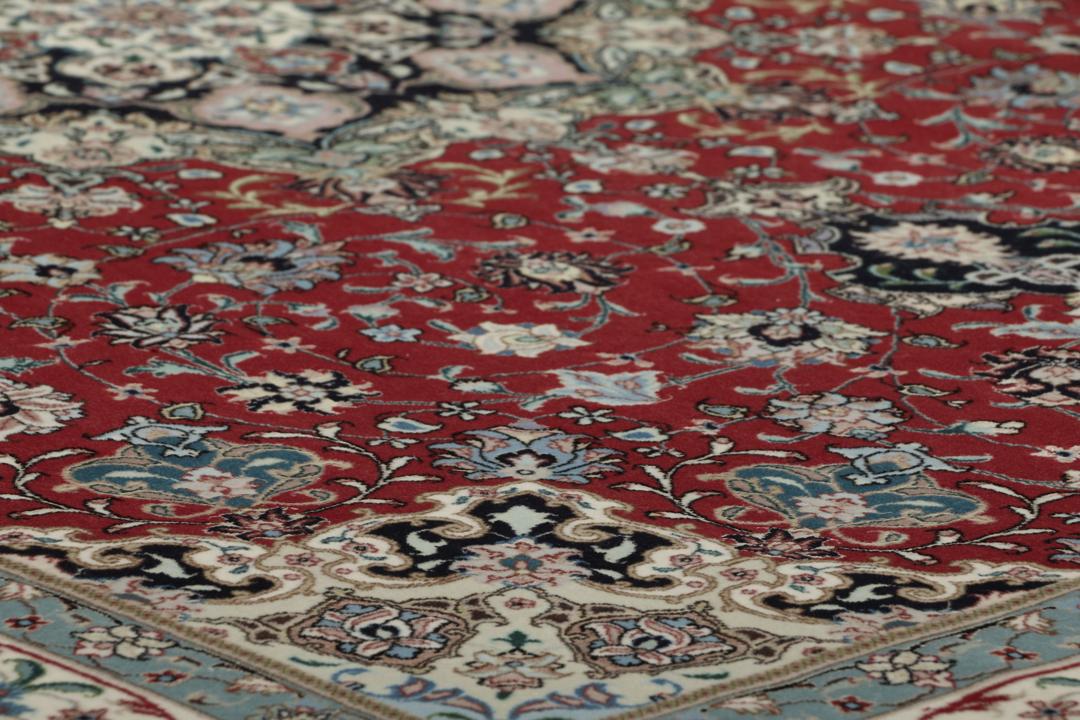
Tabriz rugs originate from the historic city of Tabriz in the Middle East, a location that has served as a vital hub for trade and artistry for centuries. As one of the oldest weaving centres in the region, Tabriz has long been synonymous with the highest standards of the craft, influenced by the convergence of diverse cultures along ancient trade routes. The evolution of these rugs reflects a rich history of artistic innovation, where weavers constantly pushed the boundaries of what could be achieved with wool and colour.
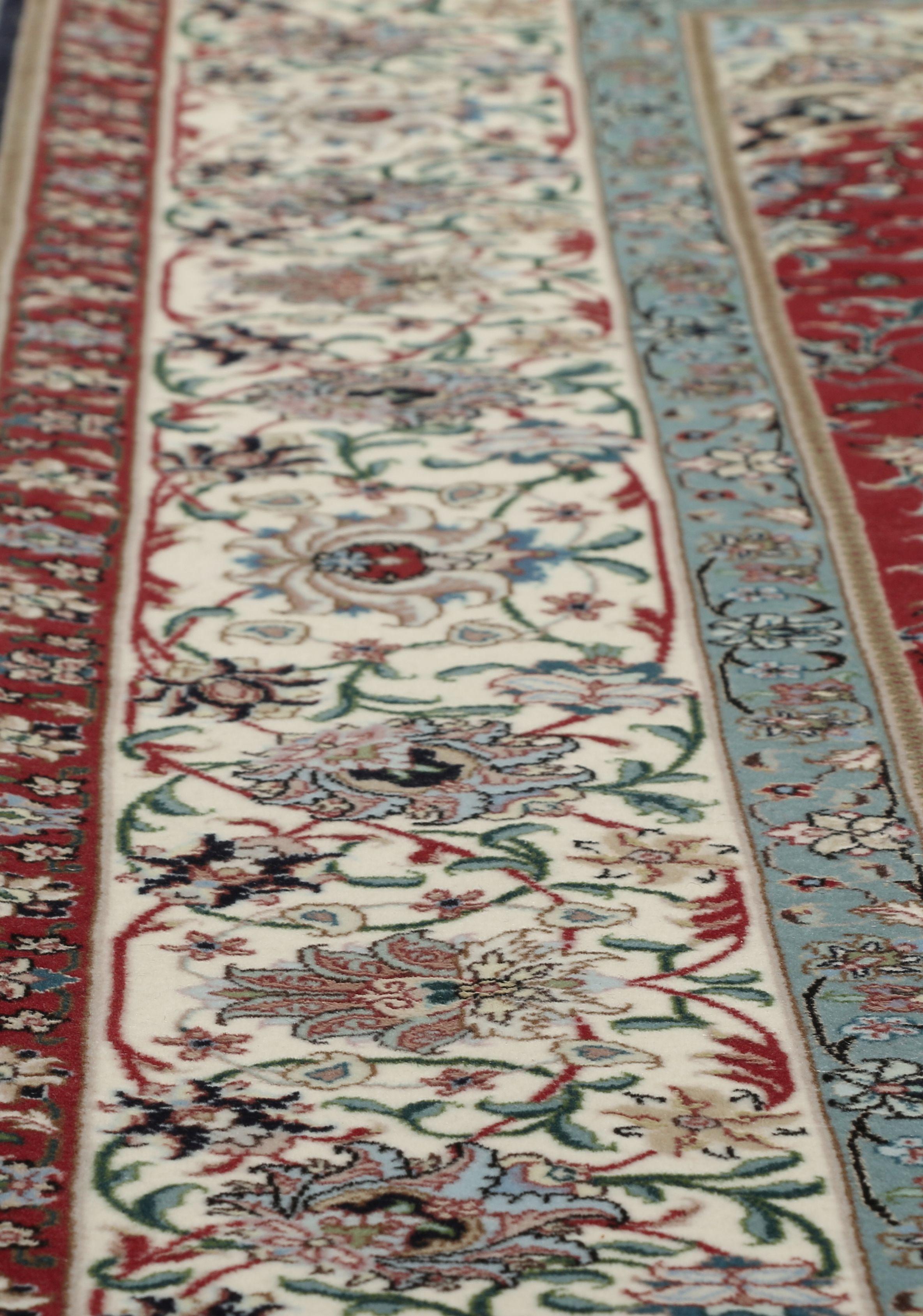
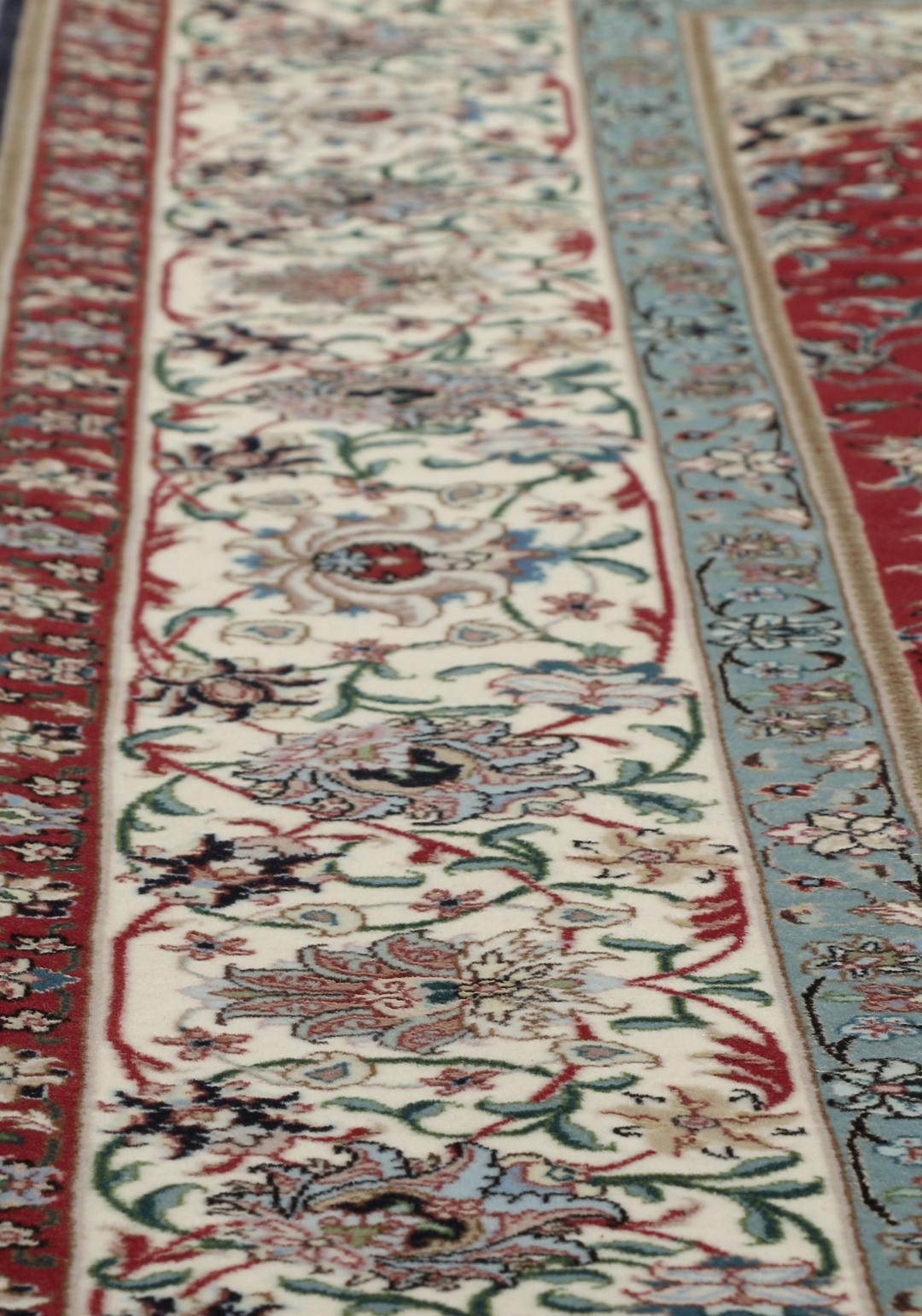
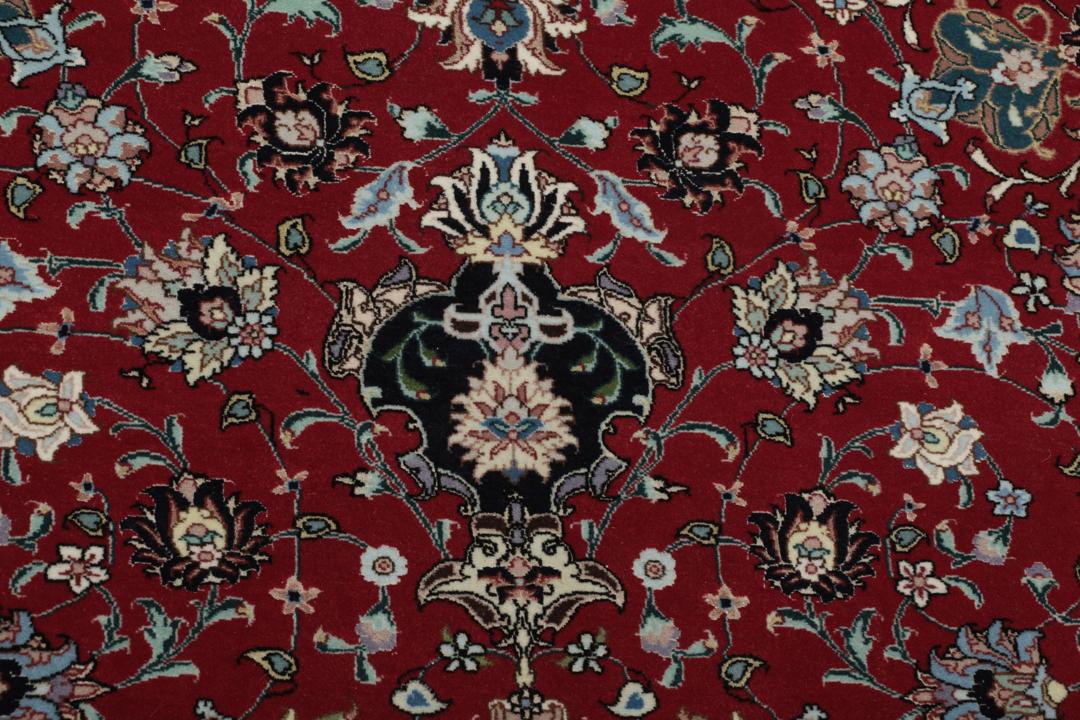
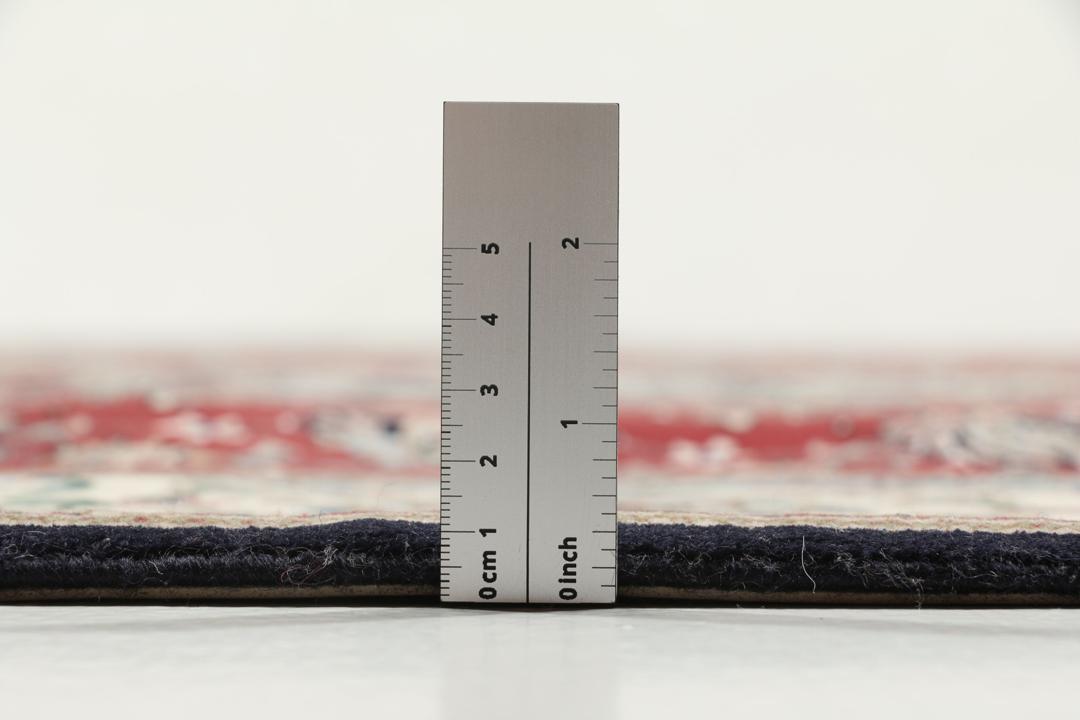
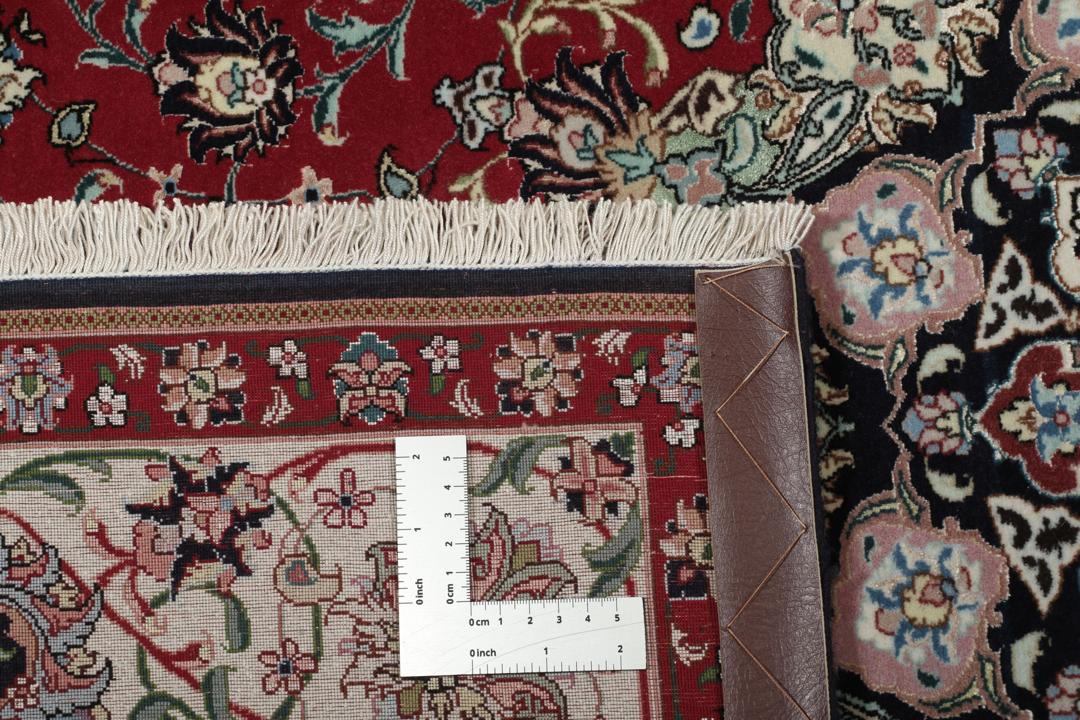
The term '70 Raj' is a specific technical designation that refers to the fineness of the weave, indicating a very high number of knots per unit of measurement. This classification is a hallmark of quality, signalling that the rug has been created with an extraordinary level of detail. Achieving a 70 Raj density requires immense skill, as the weaver must manage a very high number of individual knots to maintain the clarity of the intricate designs, resulting in a thinner, more refined, and more durable pile.
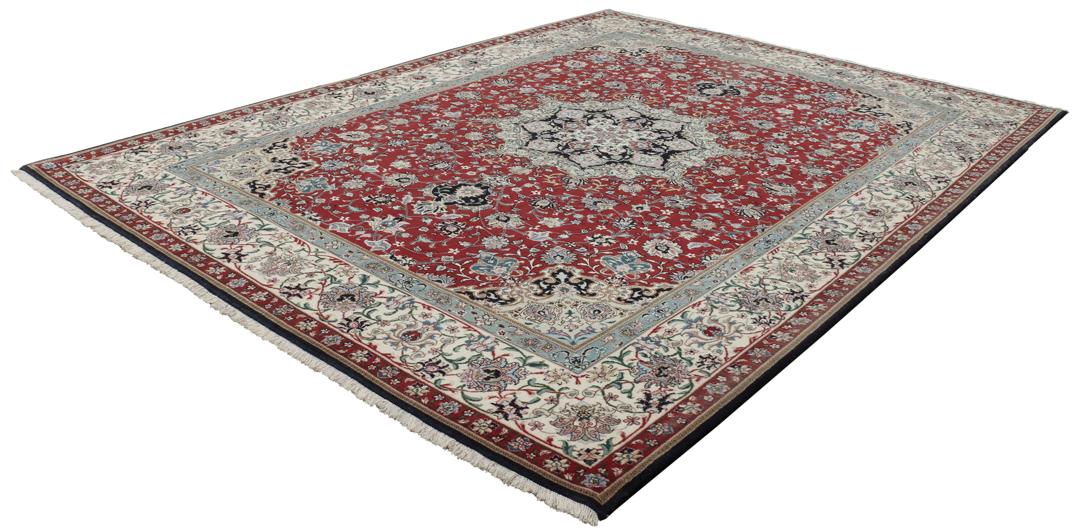
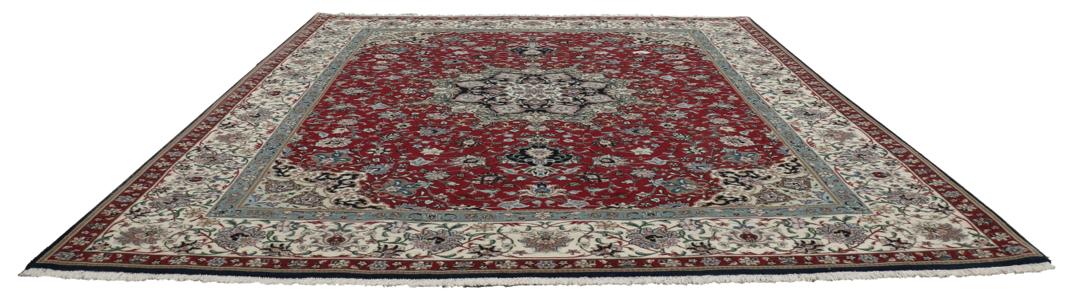
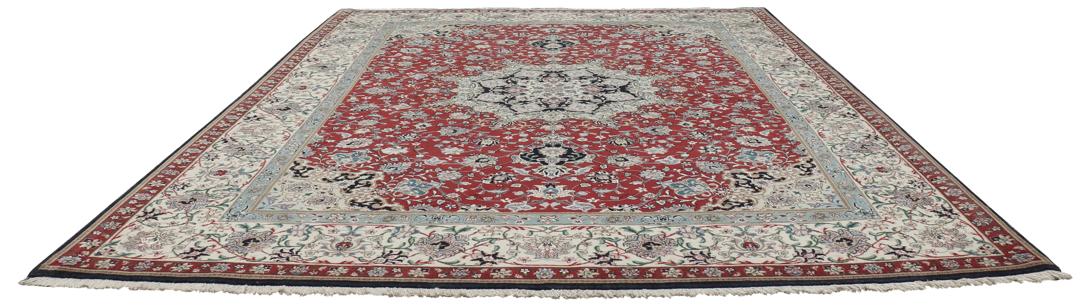
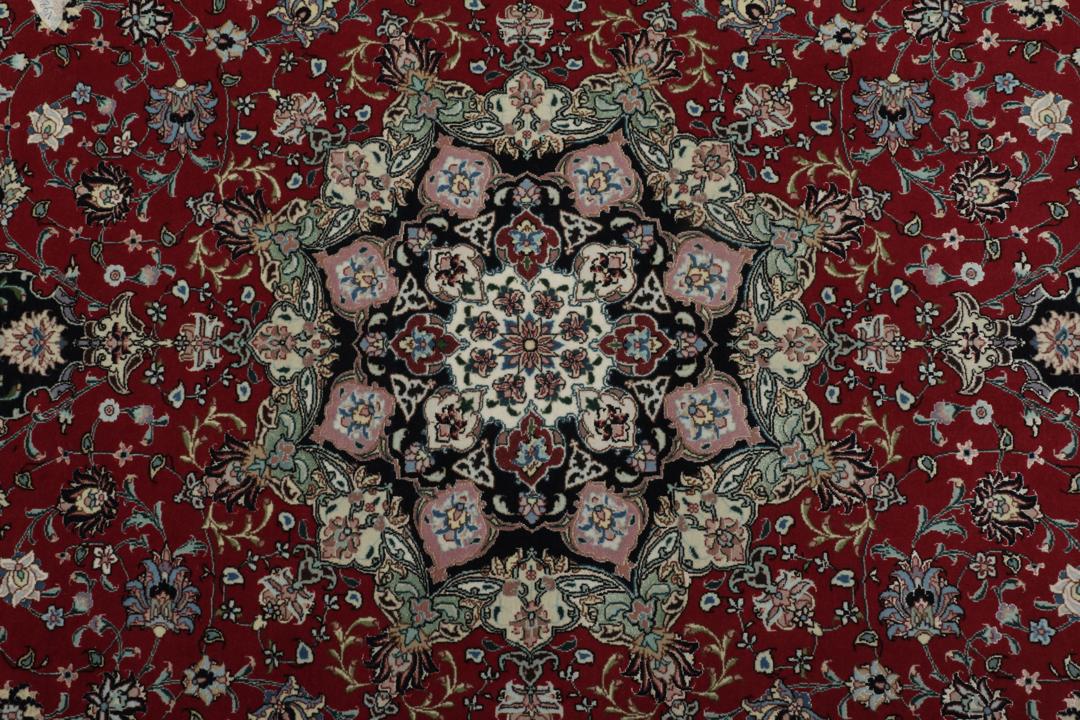
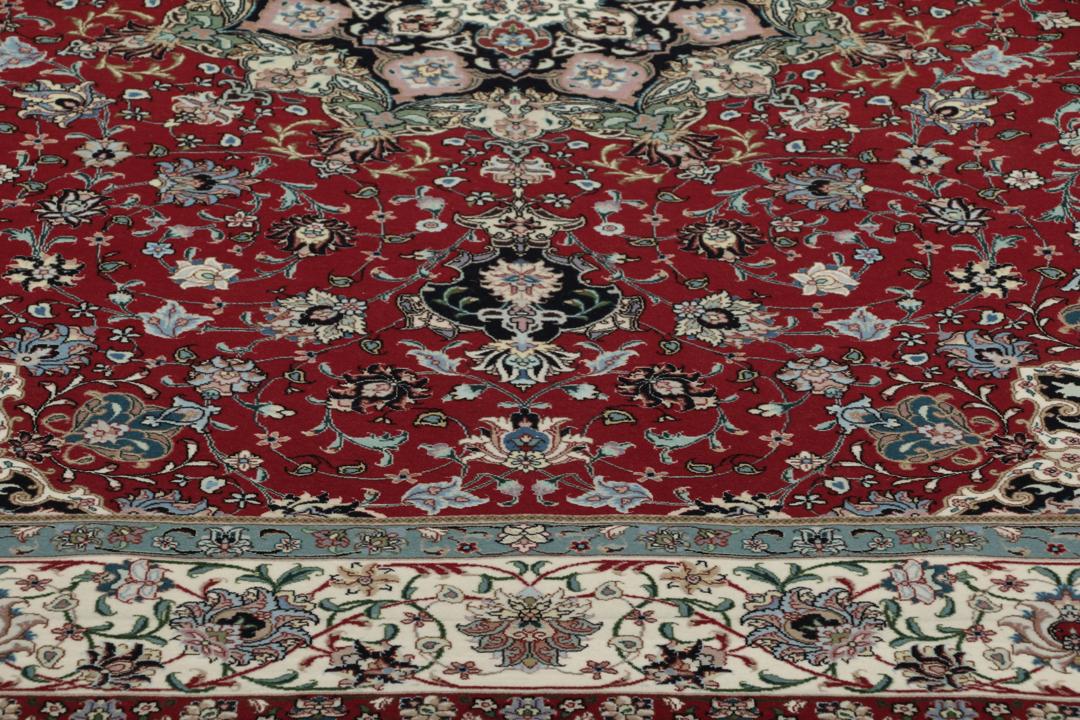
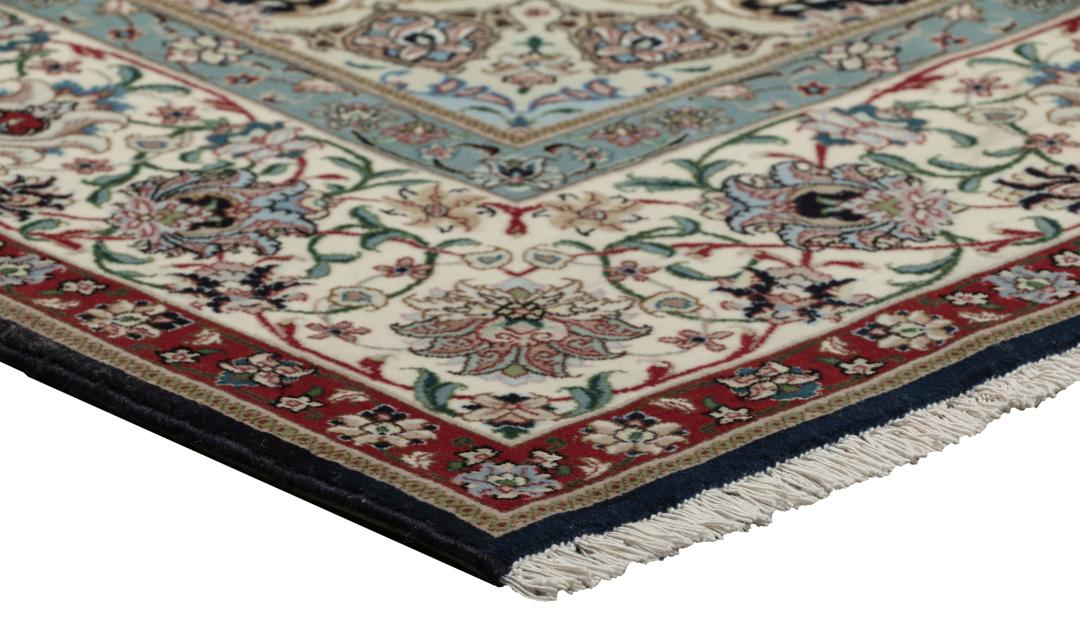
Design-wise, Tabriz rugs are famous for their sophisticated use of medallions, floral scrolls, and complex, repeating patterns. While the central medallion is a classic feature, the surrounding field is often a tapestry of delicate botanical motifs, reflecting the garden-like aesthetic that is highly prized in Middle Eastern art. The borders are typically multi-layered and formal, serving to frame the central composition and provide a balanced, harmonious look that is both ornate and disciplined.
Collecting a rug from the Tabriz tradition is an investment in cultural heritage. These pieces are valued not only for their aesthetic beauty but for the immense human effort and technical mastery they represent. Owning such a rug signifies an appreciation for a craft that has been honed over hundreds of years, offering the owner a permanent connection to a sophisticated design tradition that continues to be celebrated by collectors and art lovers worldwide.