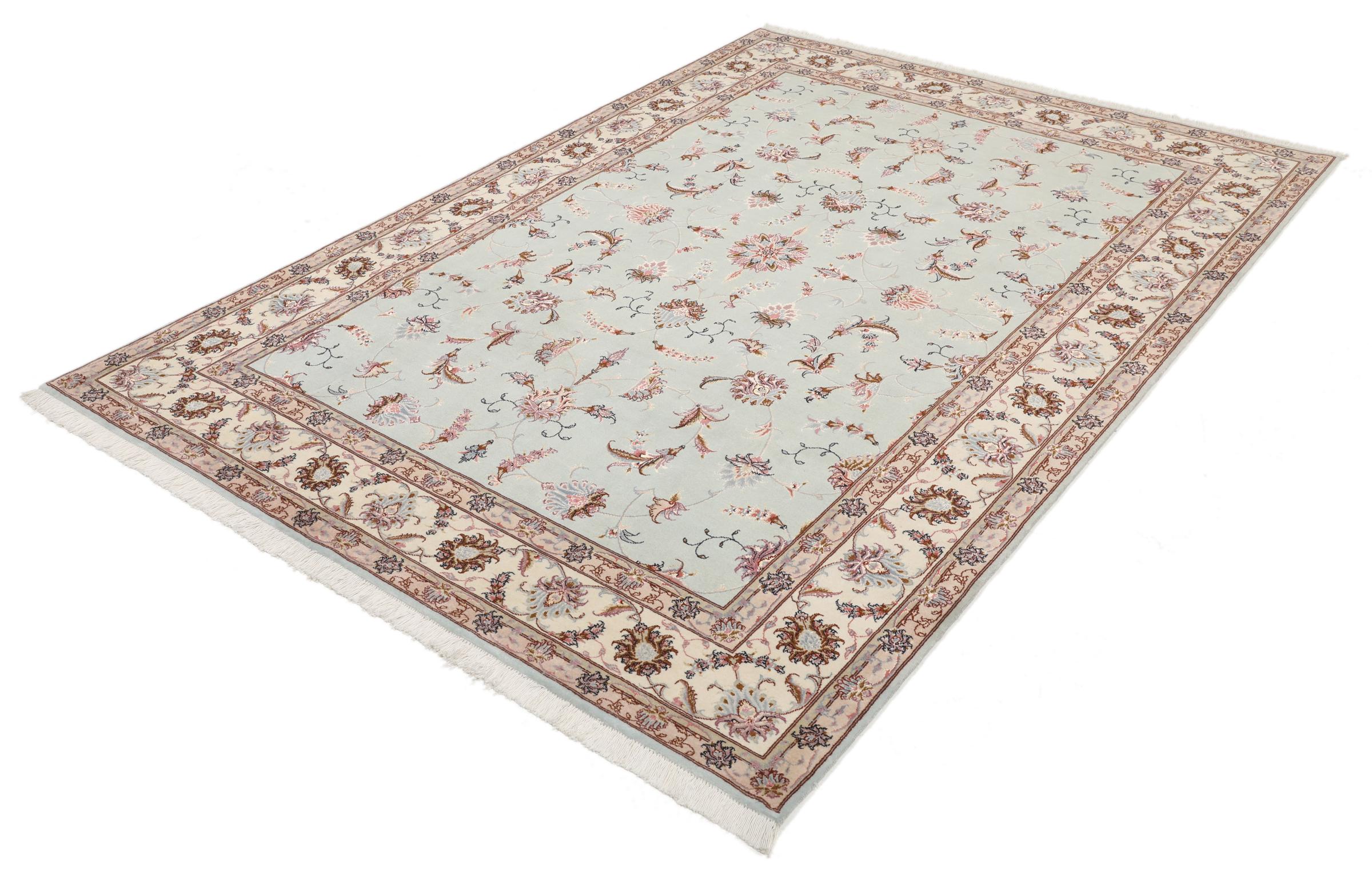
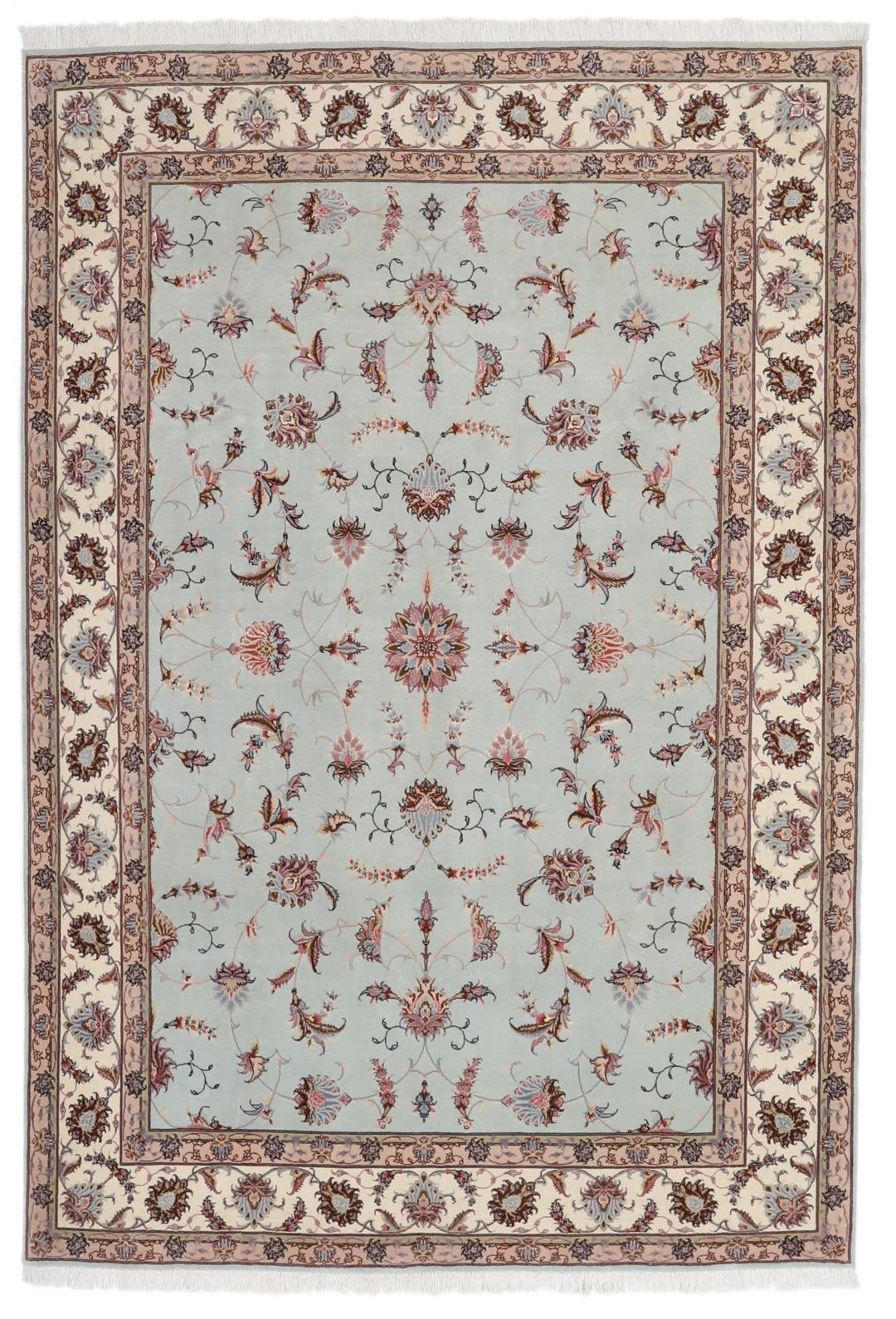
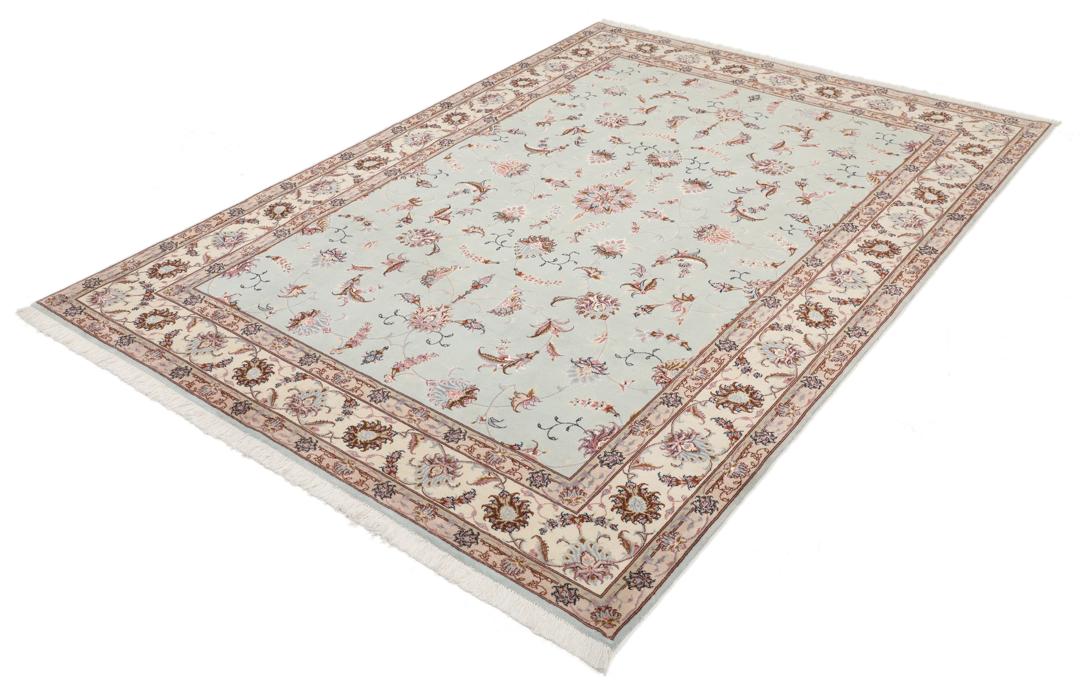
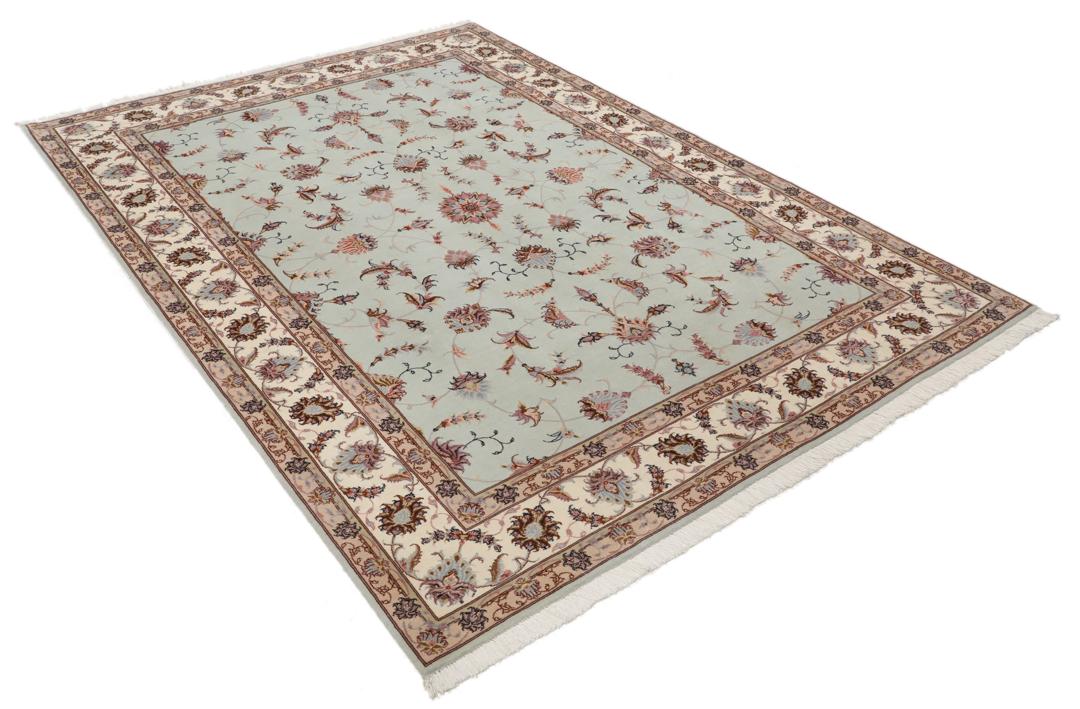
The city of Tabriz, located in northwestern Middle East, is one of the oldest and most significant centres of rug production in the world. With a history spanning centuries, Tabriz has long been a hub for master weavers who have refined their craft to produce some of the most sought-after rugs, known for their incredible diversity in design and superior construction.
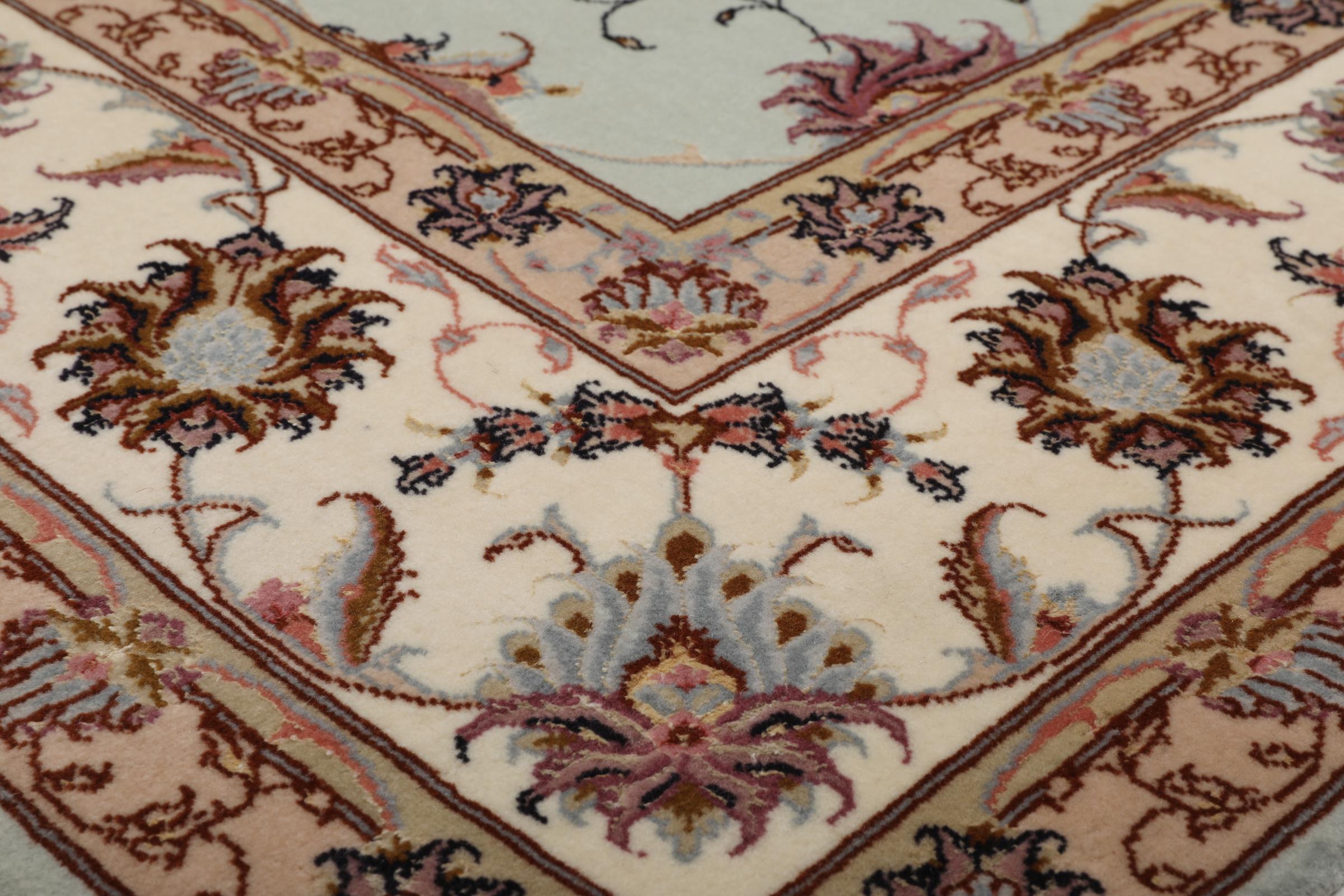
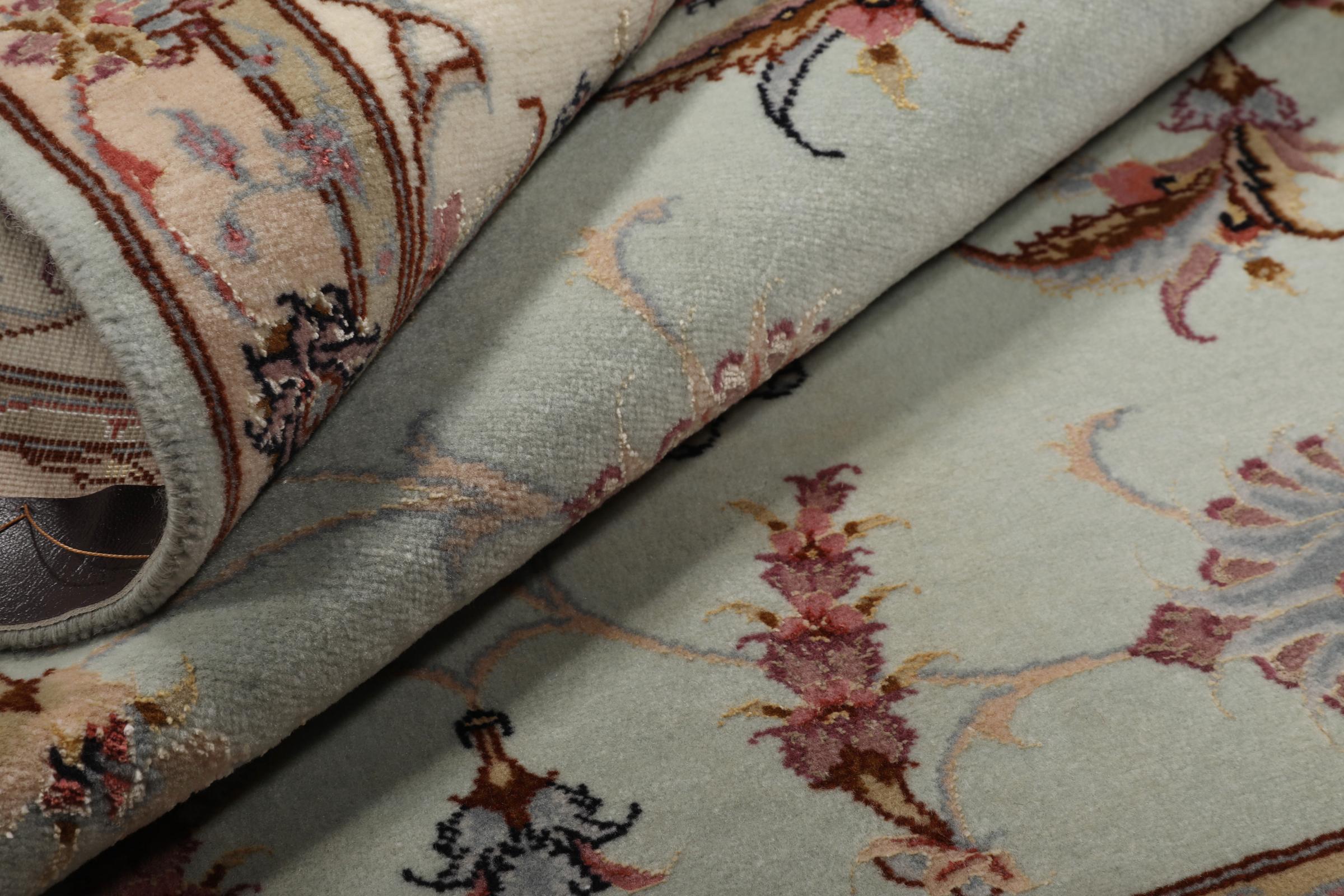
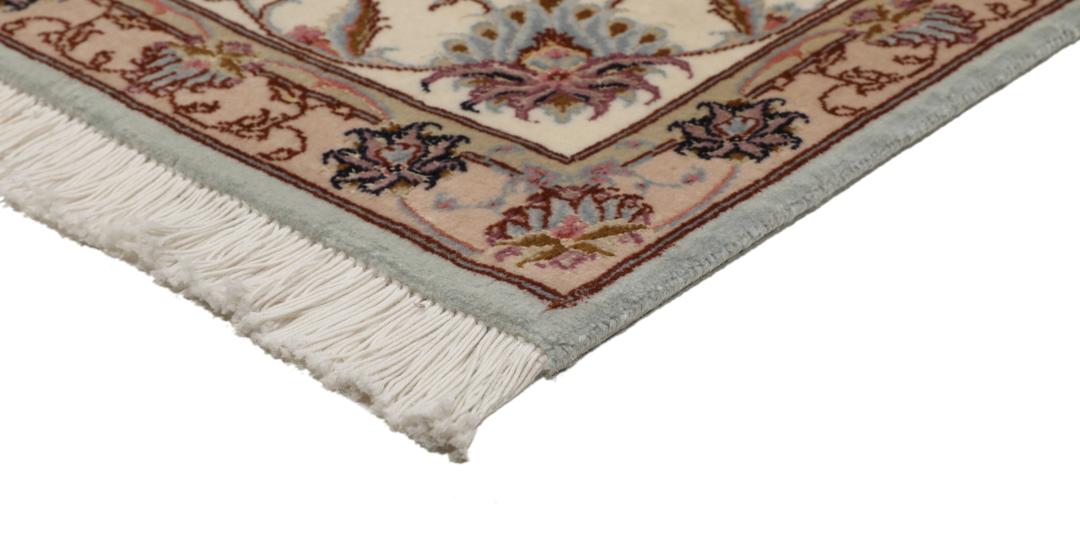
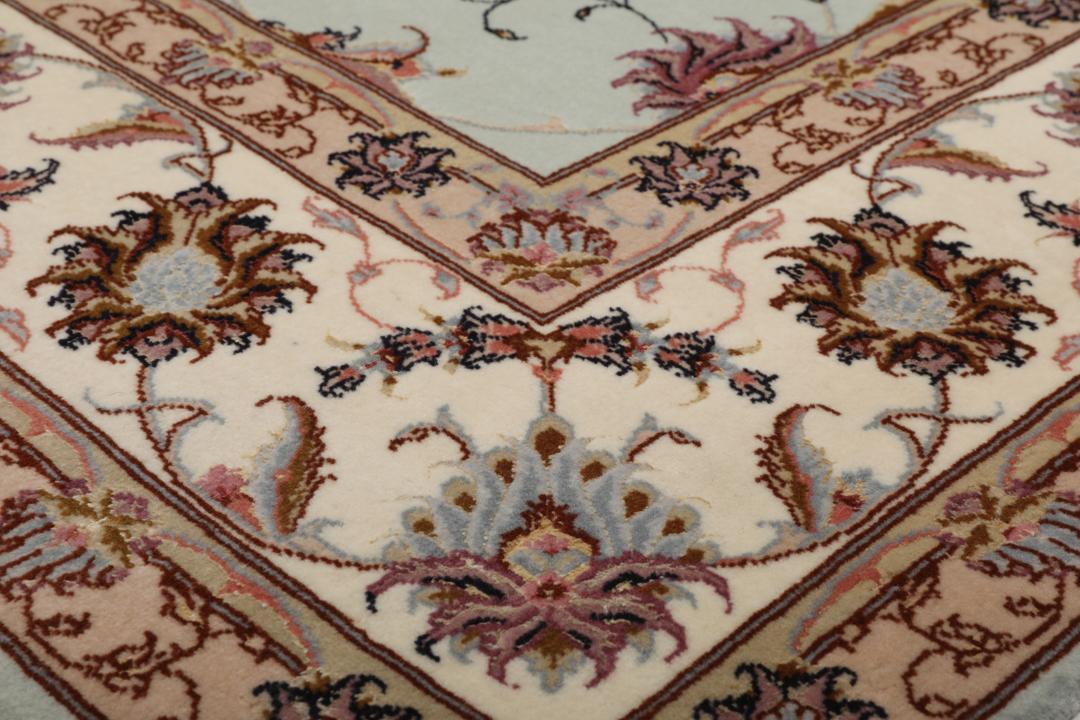
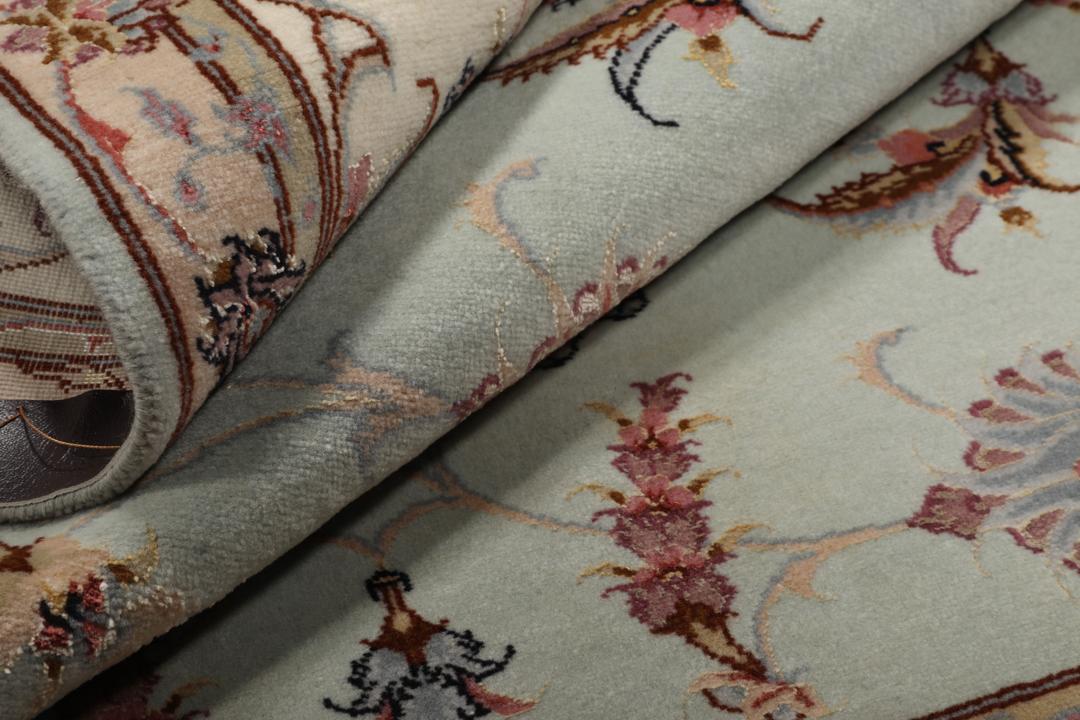
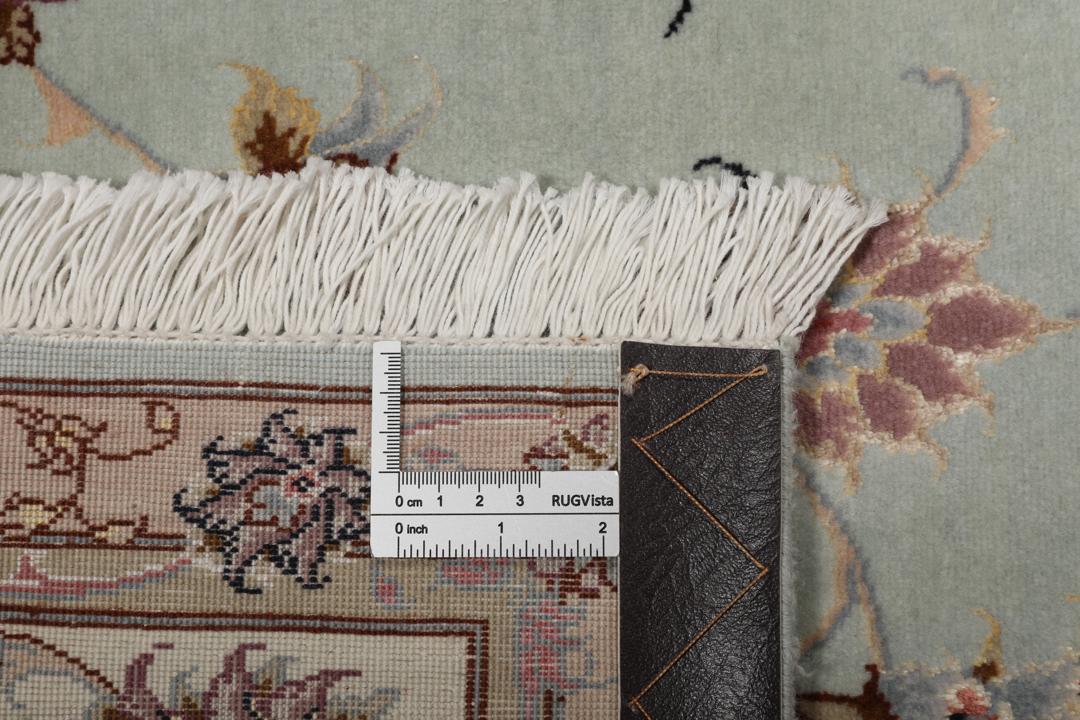
The '60 Raj' designation is a specific technical term that refers to the knot density of the rug. In the Tabriz tradition, the 'Raj' system is used to measure the number of knots across a specific width. A 60 Raj rug signifies a very high knot count, which allows for the fluid, painterly designs and fine detail that distinguish these rugs from simpler, coarser weaves.
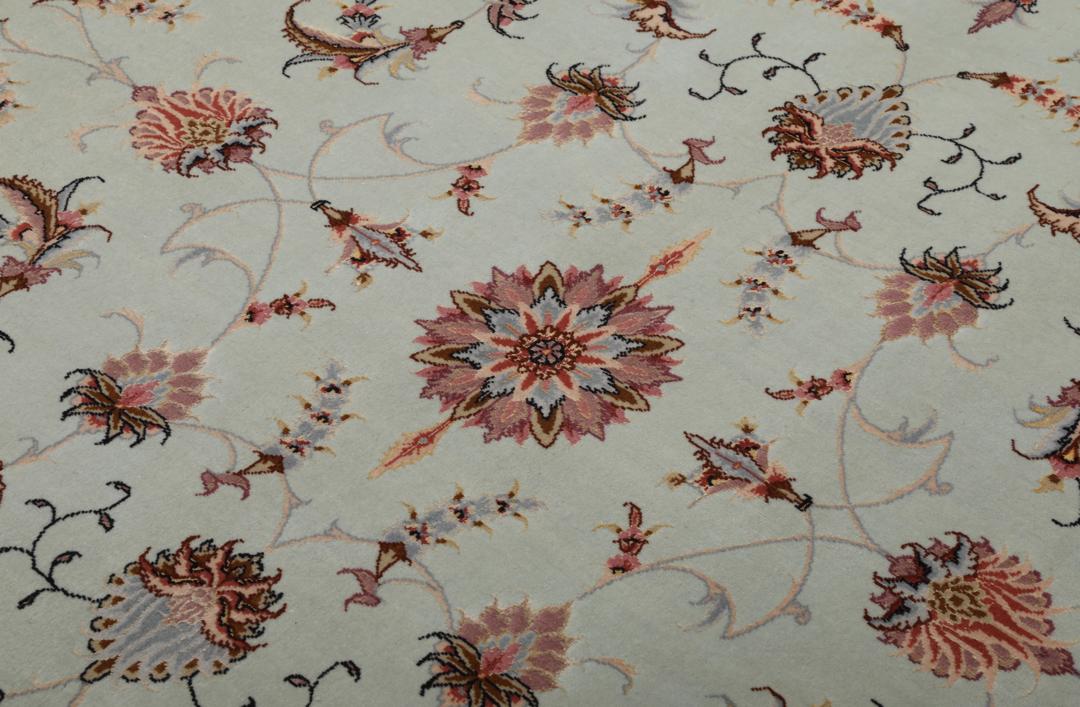
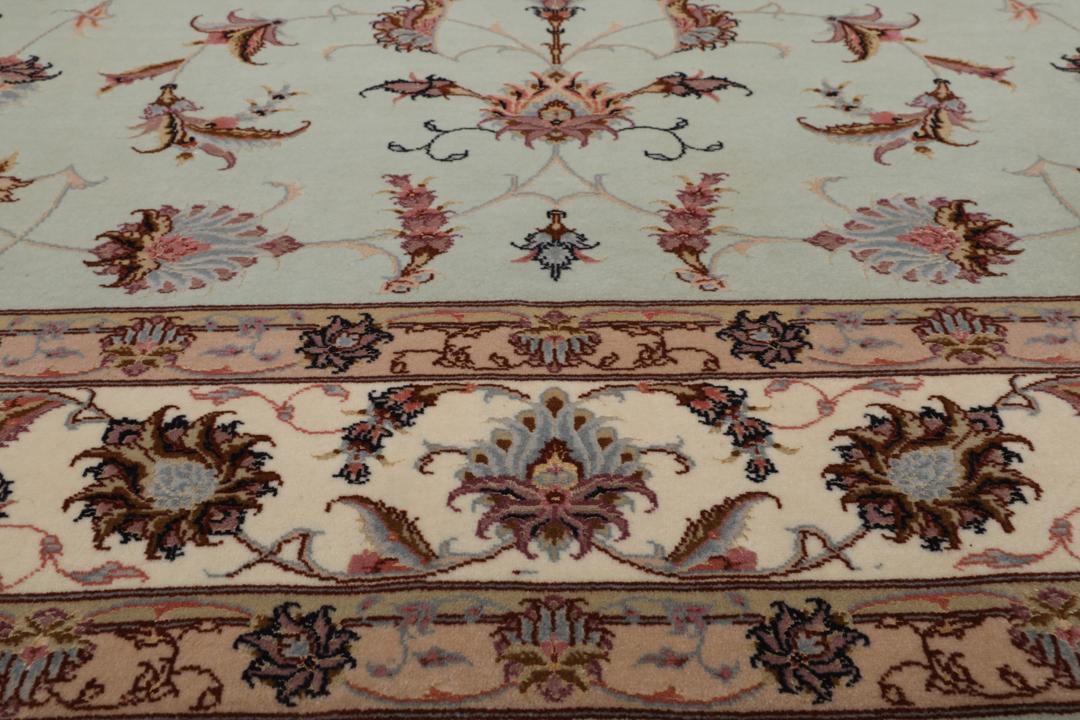
Visually, Tabriz rugs are celebrated for their sophisticated floral compositions. While they can range from medallions to complex garden scenes, the influence of classical court designs is often evident. This specific piece showcases a refined floral vocabulary, where delicate vines and blossoms are balanced against a soothing field colour, demonstrating the hallmark elegance of the tradition.
Collecting a Tabriz rug is an investment in a legacy of skill that has been passed down through generations of families. These rugs are highly valued not only for their aesthetic beauty but for the immense discipline and technical mastery required to produce them. Owning one is a way to connect with a storied tradition of artistry that remains relevant and cherished today.