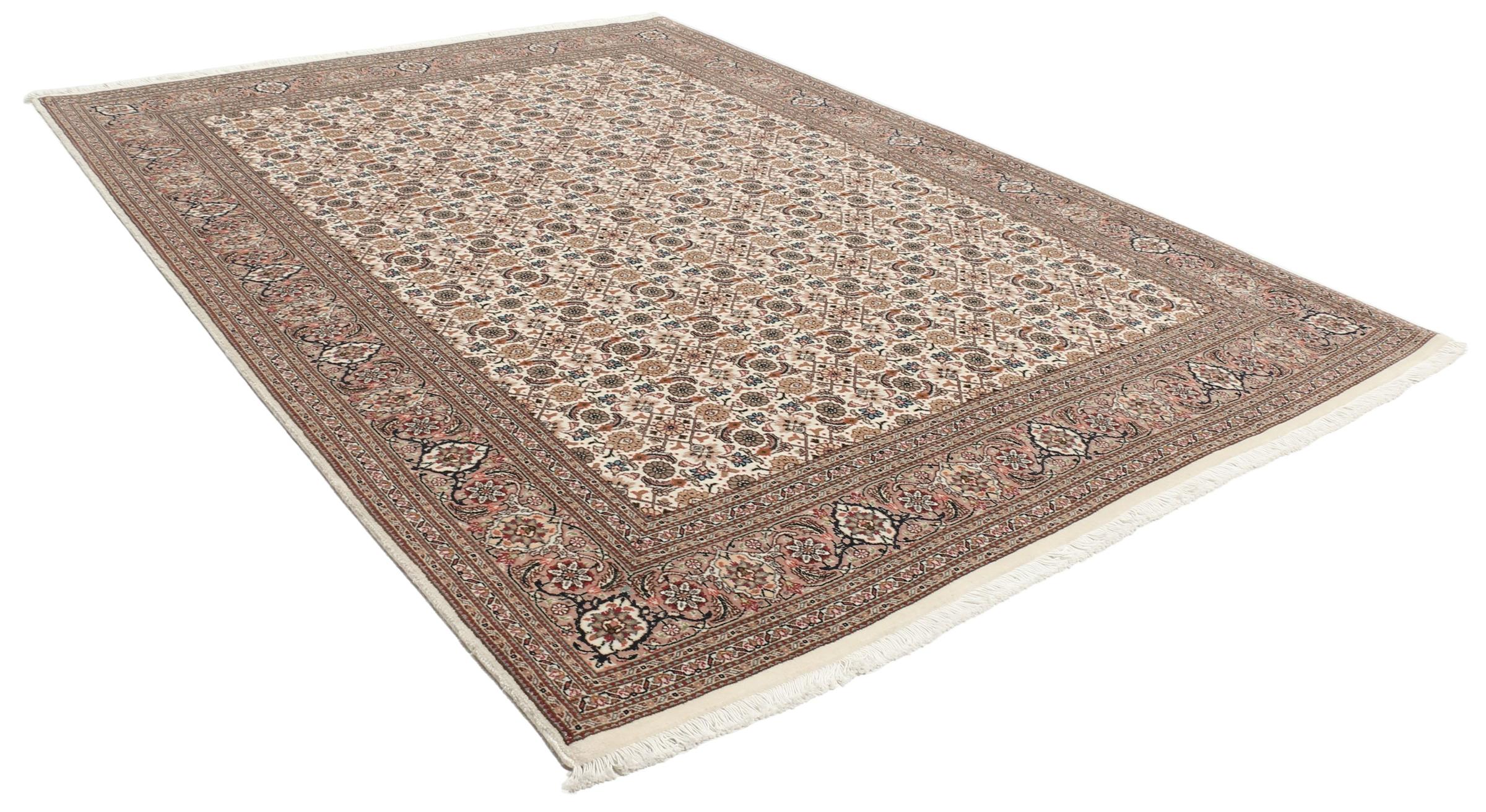
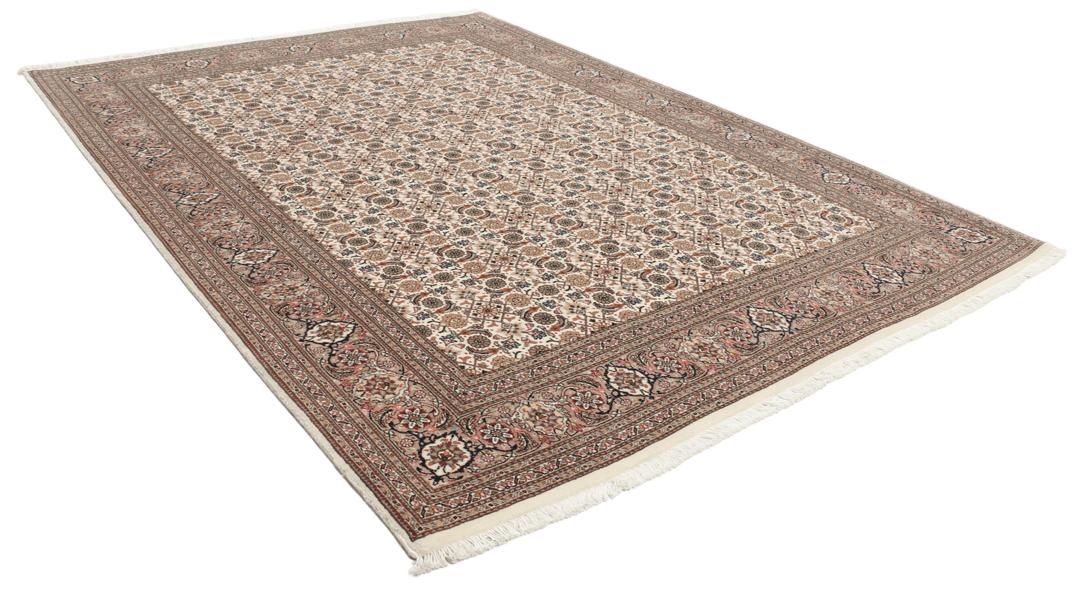
The Tabriz tradition originates from one of the oldest and most significant weaving centres in the Middle East. Located on the historic Silk Road, the city of Tabriz has long been a nexus for artistic exchange, allowing its weavers to integrate diverse influences into their work. This rich cultural heritage has fostered a tradition of excellence, where the focus remains on creating rugs that are as technically sound as they are visually striking.
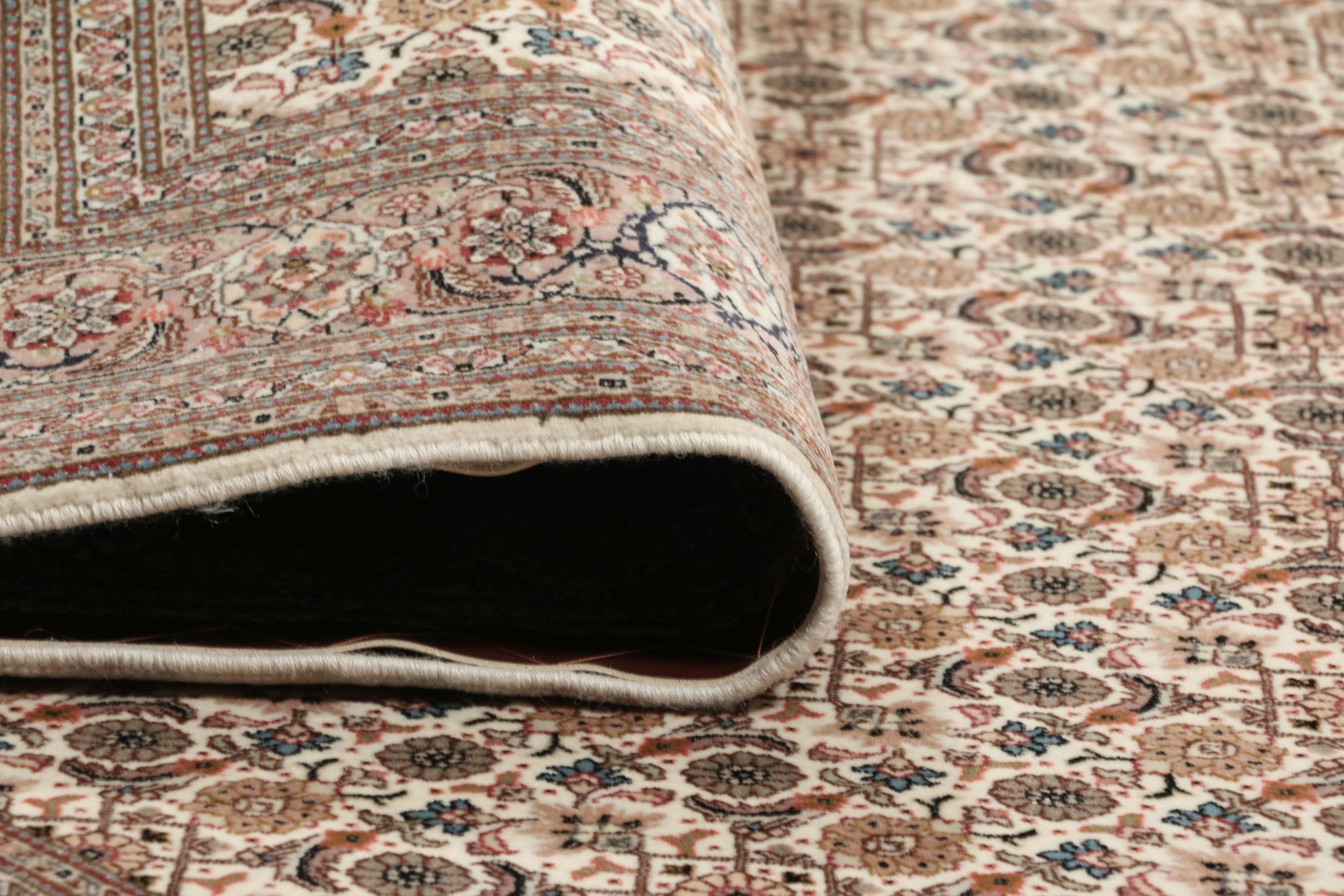
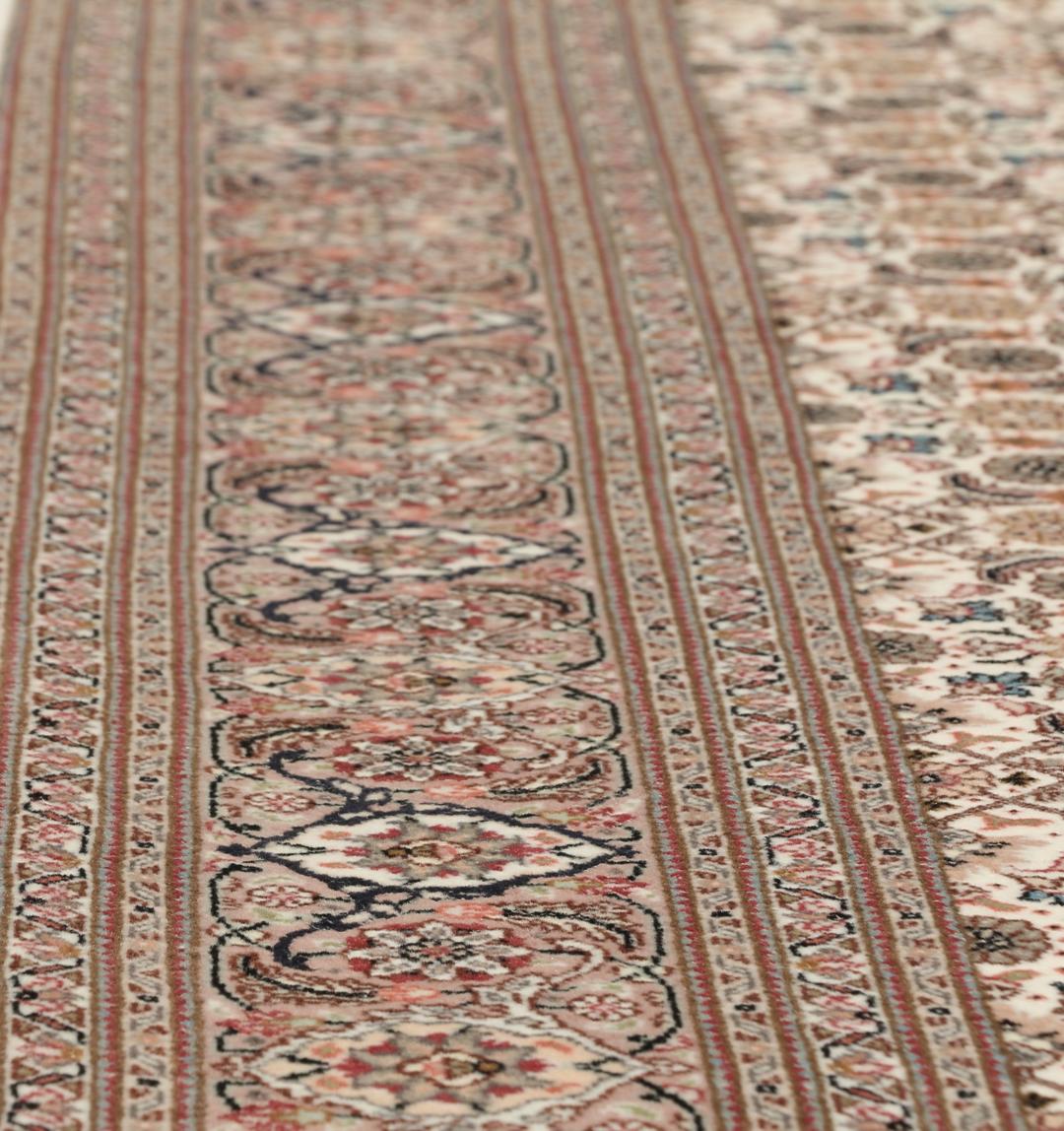
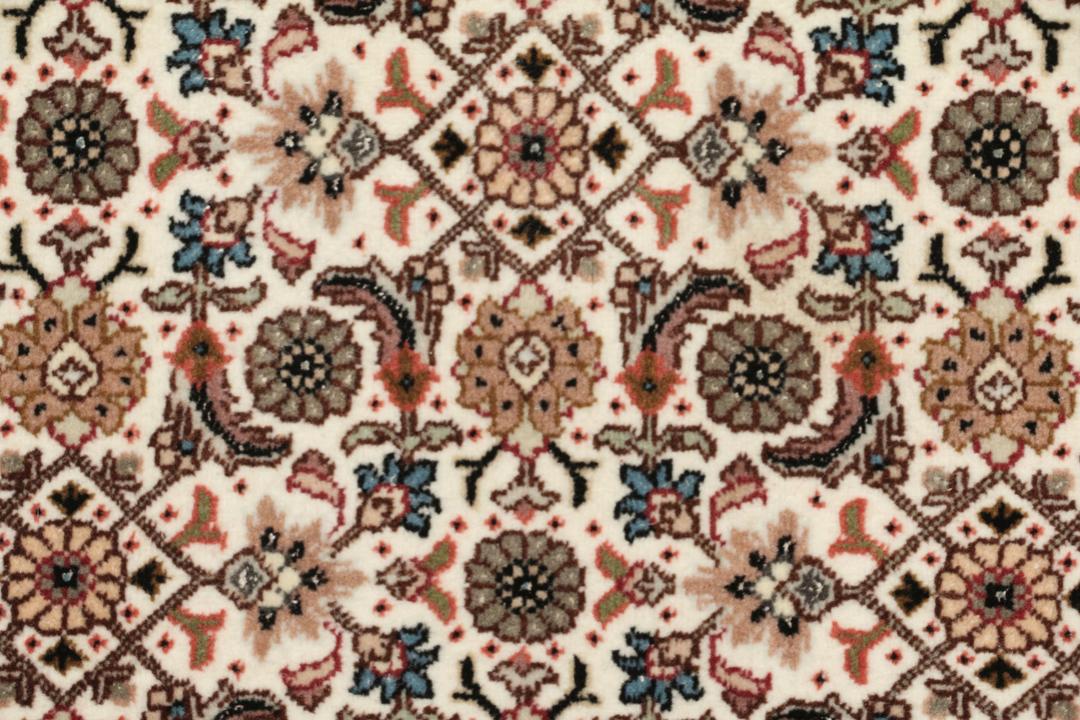
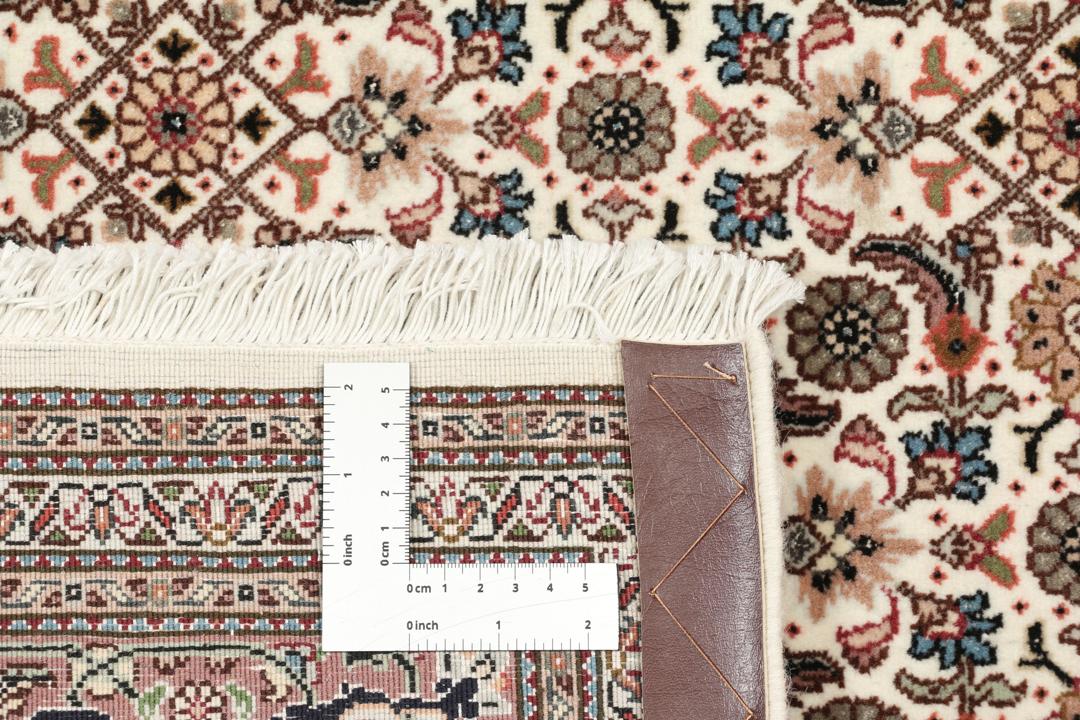
The term 50 Raj refers to the traditional system of measuring knot density, which is a critical indicator of quality in this region. A higher Raj count signifies a finer, more tightly woven foundation, allowing for more detailed and elaborate motifs. This technical specification is what enables weavers to achieve the sharp lines and complex floral arrangements that define the Tabriz style, making the rug both a functional item and a piece of fine art.
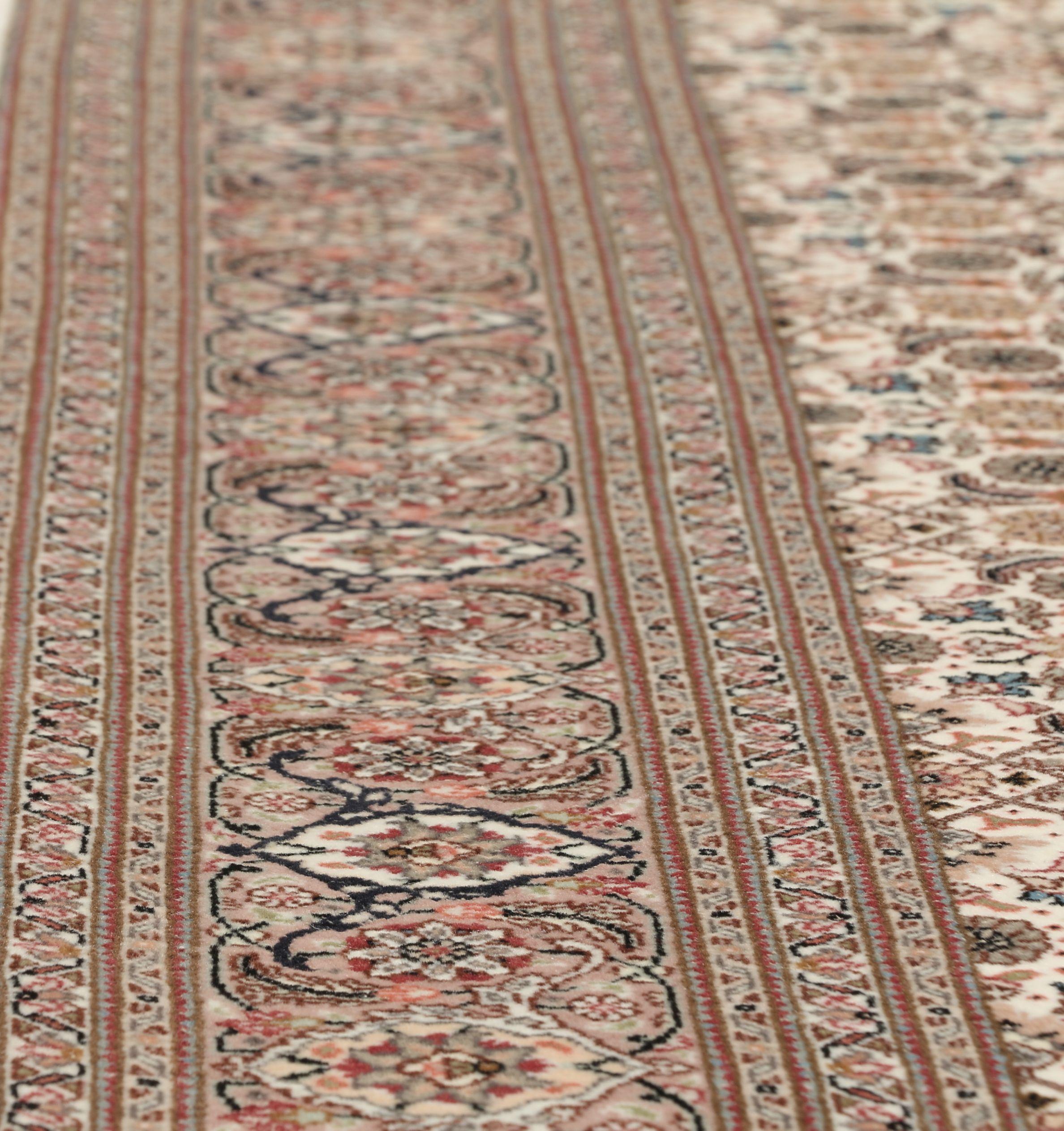
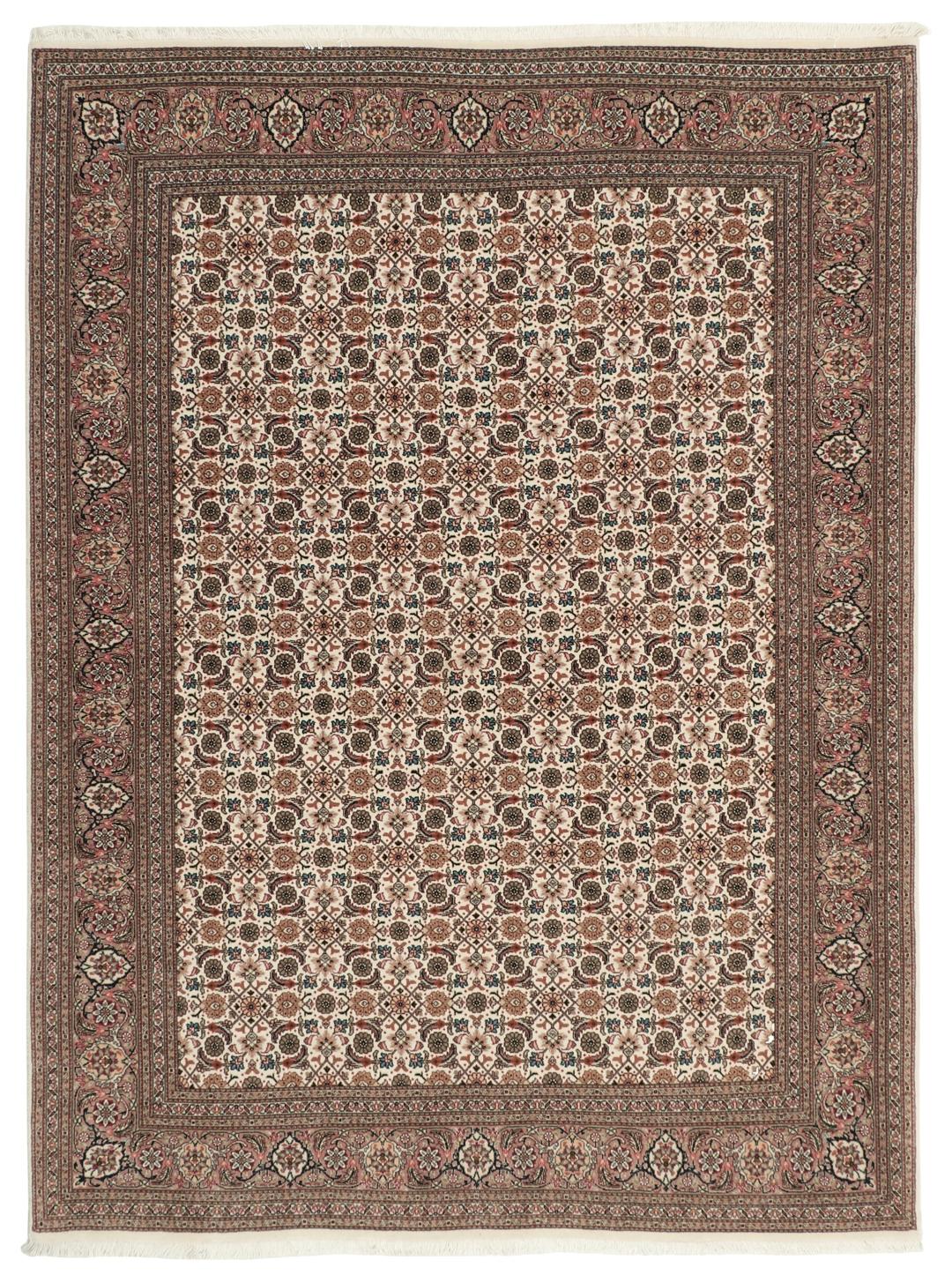
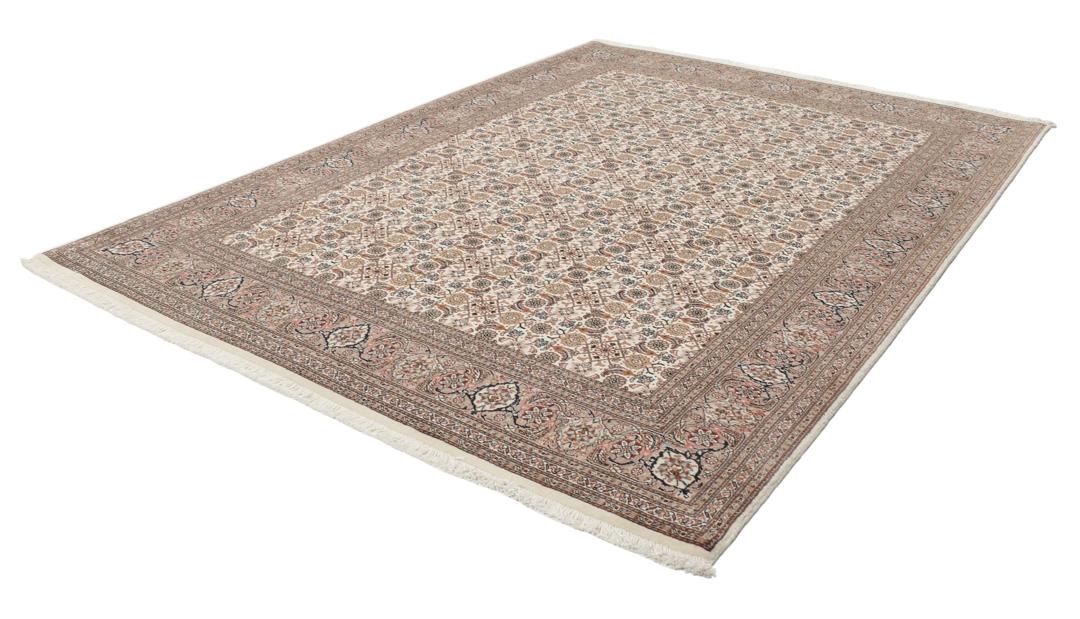
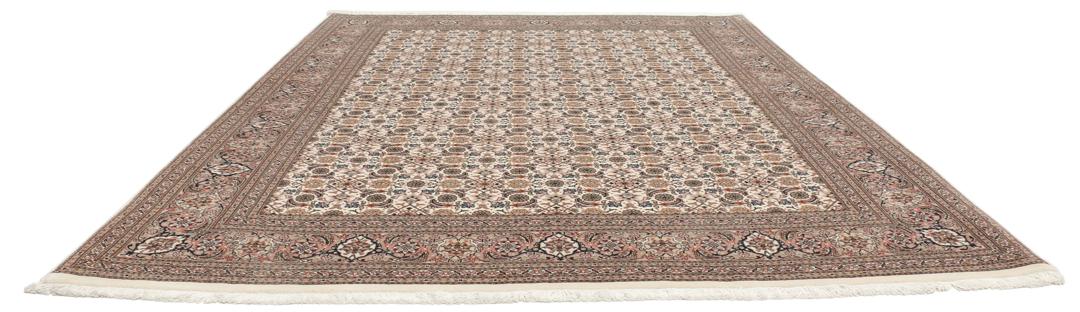
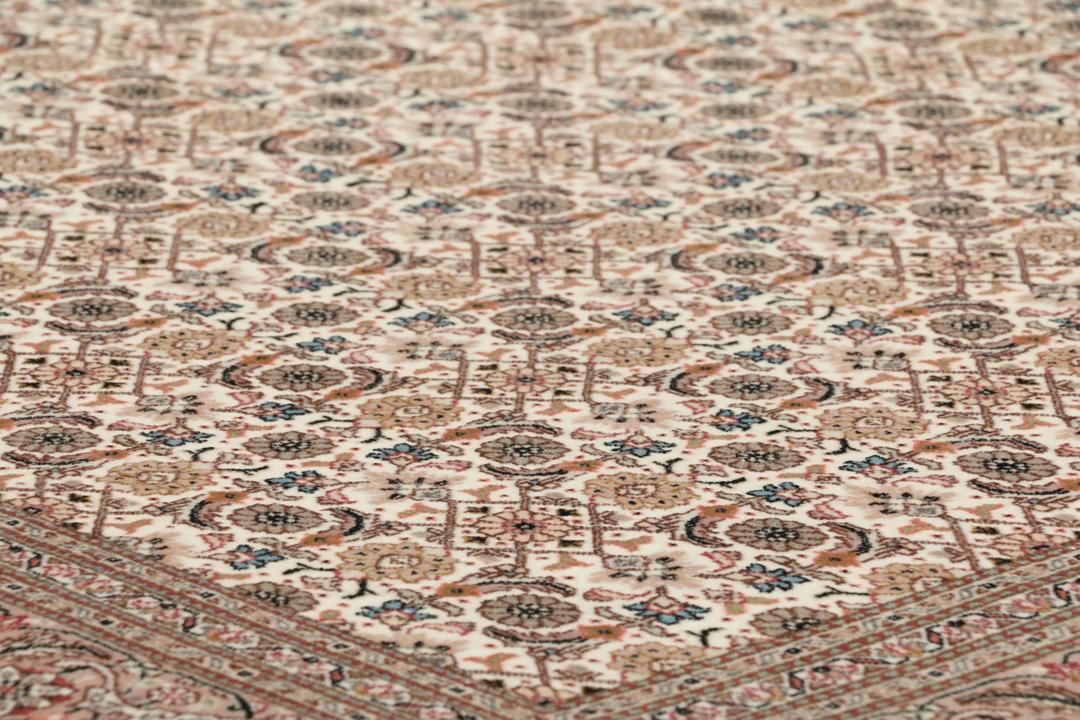
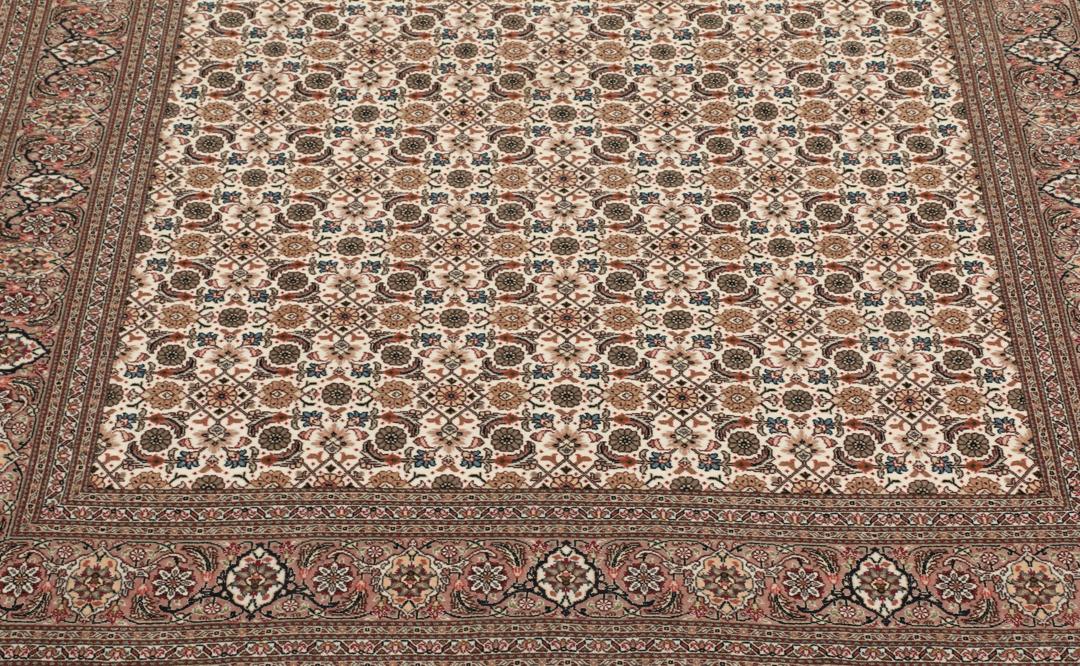
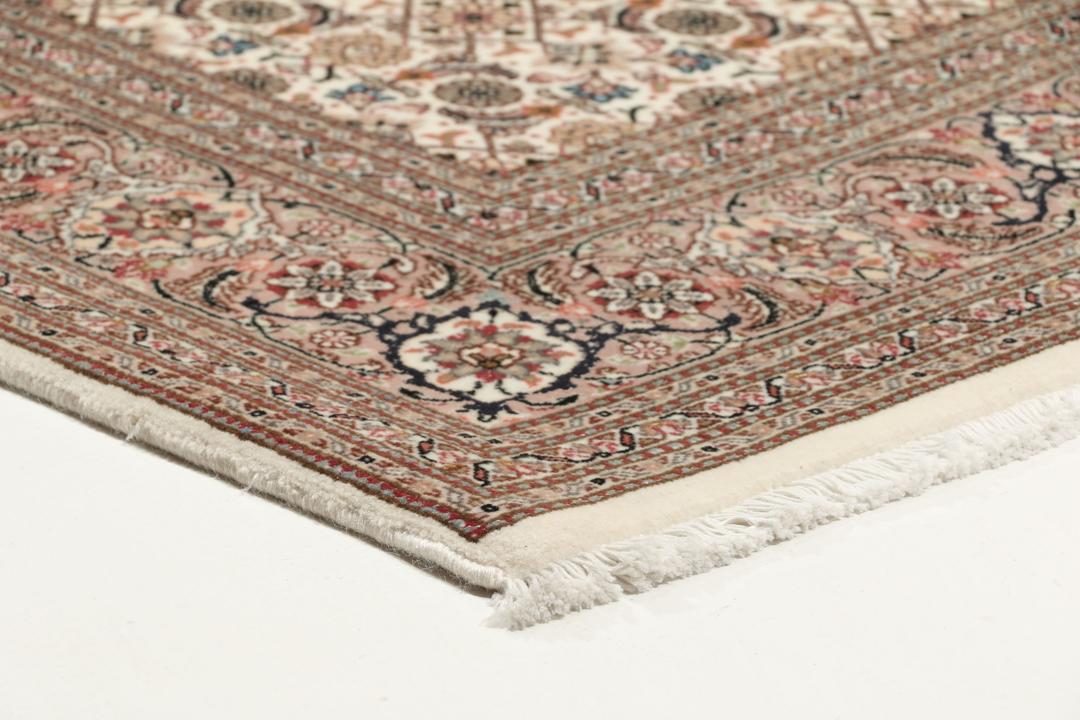
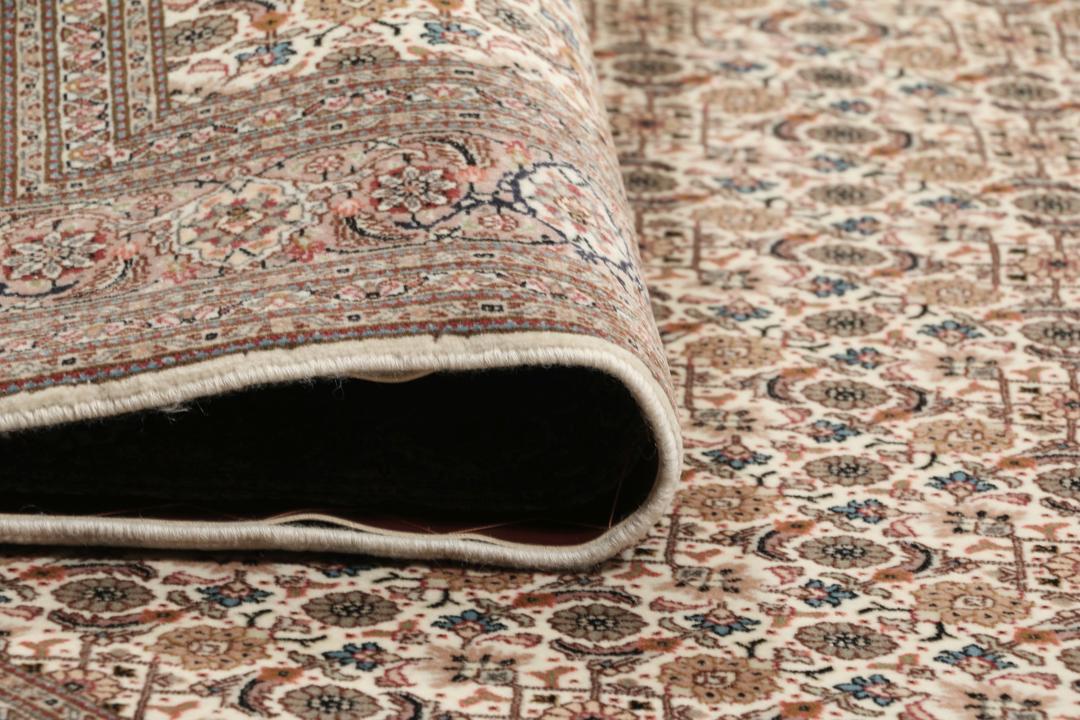
Signature design elements of these rugs often include central medallions, intricate corner spandrels, and dense floral vines that cover the entire field. The colour palette is typically sophisticated and balanced, often utilising natural dyes to achieve deep, lasting tones that mellow beautifully over time. This particular piece displays the hallmark characteristics of the style, with its balanced composition and refined ornamental borders.
Owning a piece from this tradition is an investment in heritage and human skill. These rugs are highly valued by collectors not just for their aesthetic beauty, but for the legacy of craftsmanship they represent. Each rug serves as a tangible link to a centuries-old craft, offering a sense of permanence and cultural depth that mass-produced items cannot replicate.