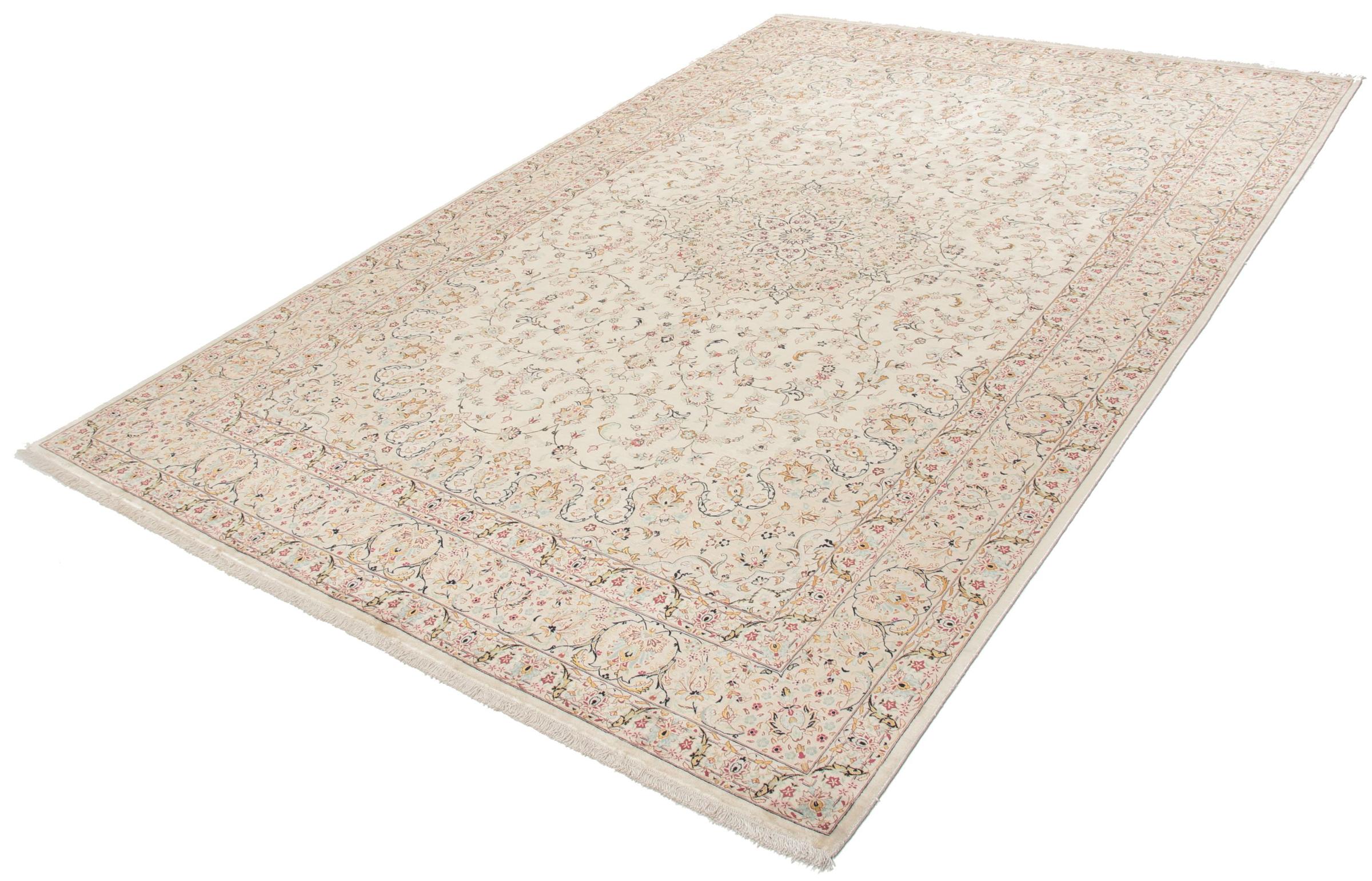
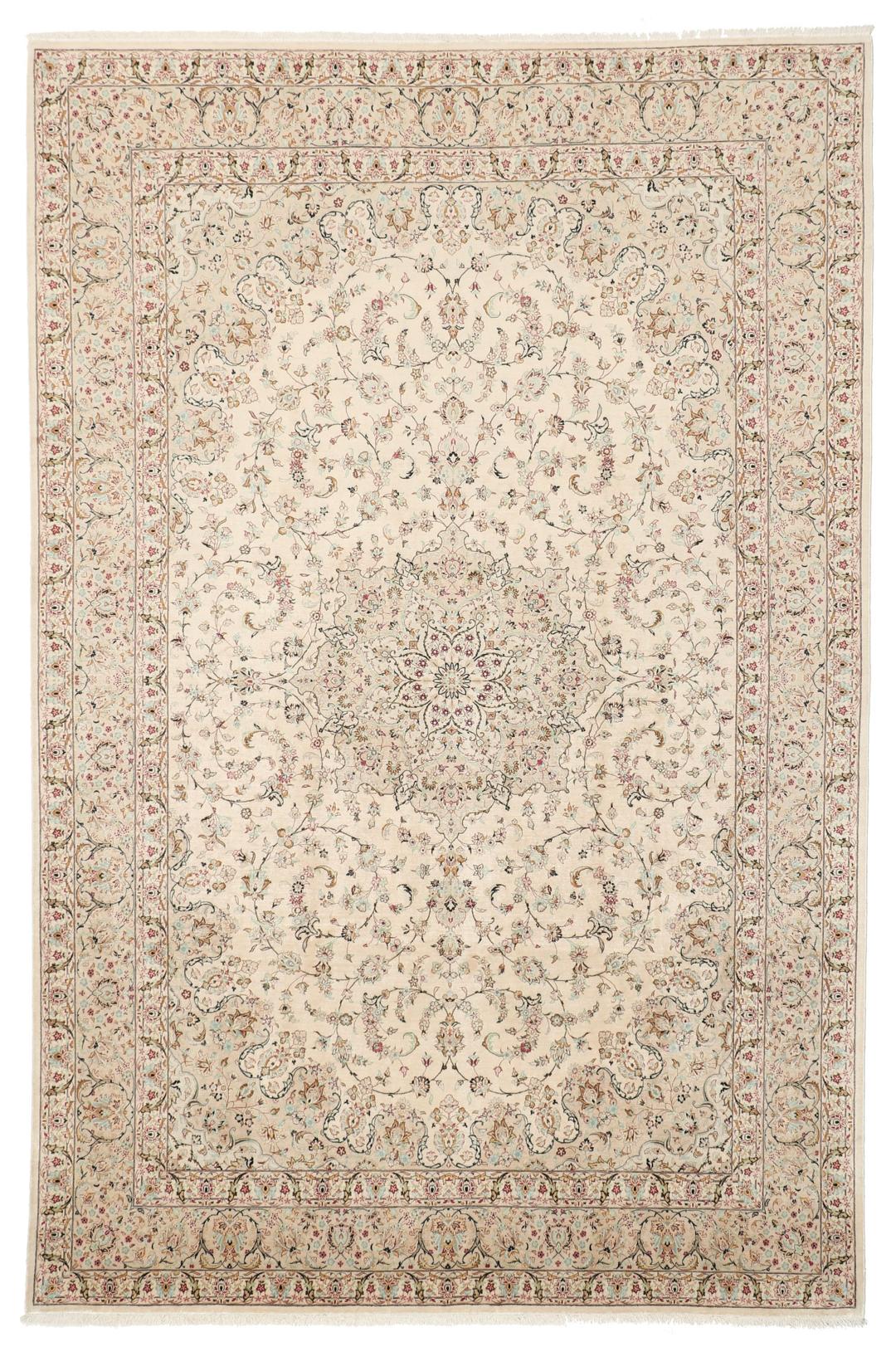
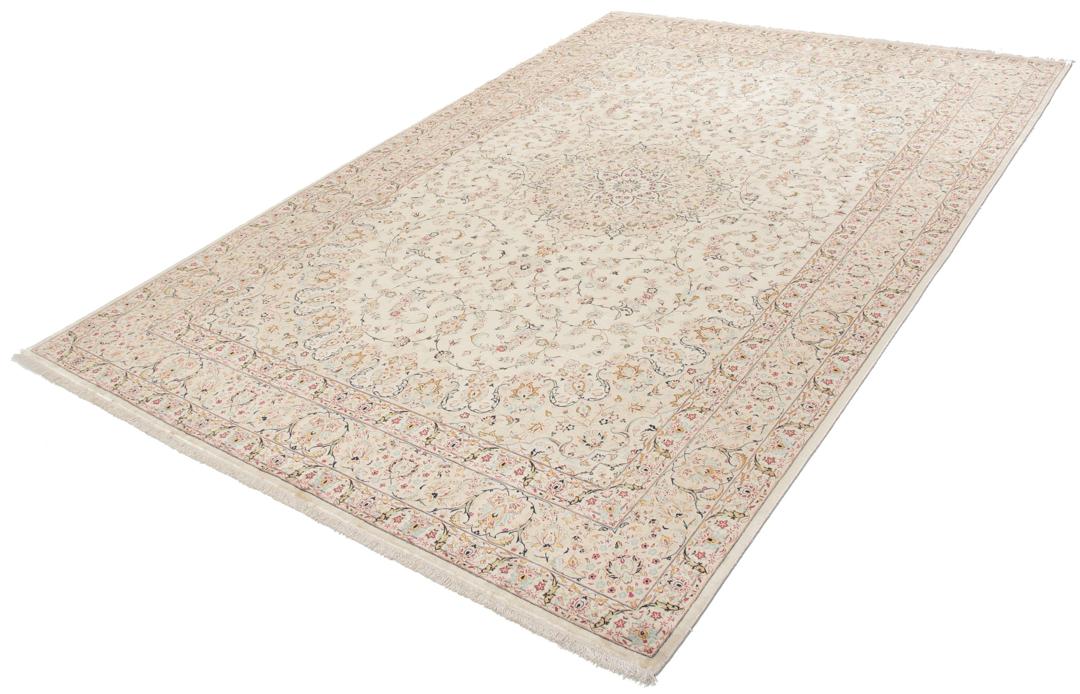
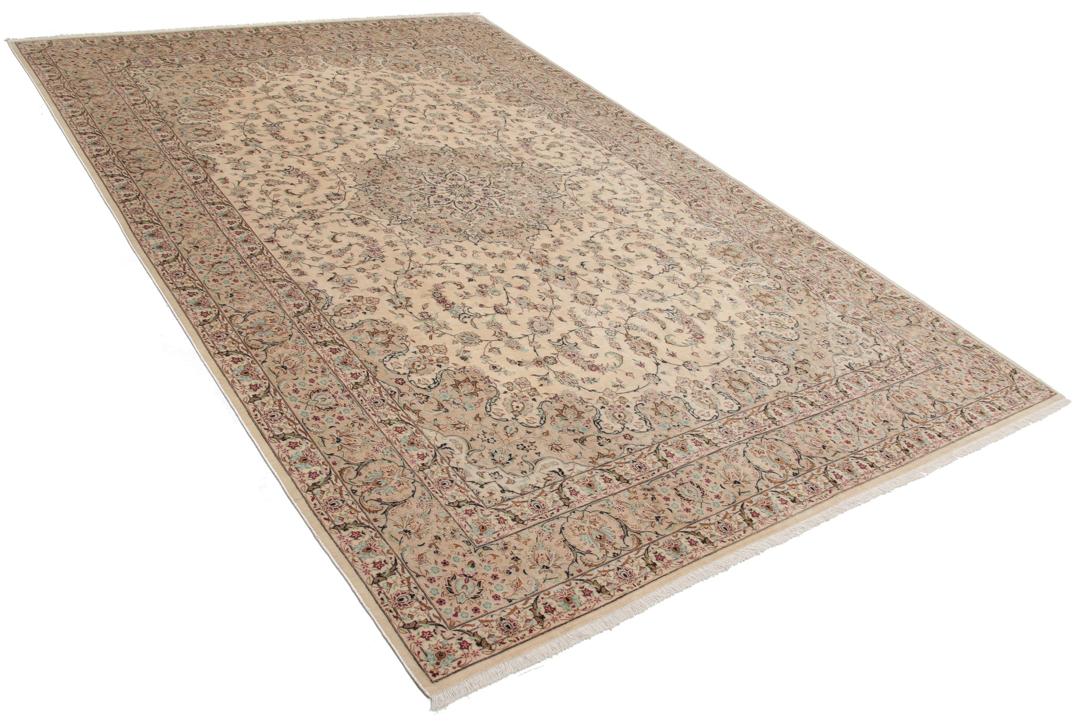
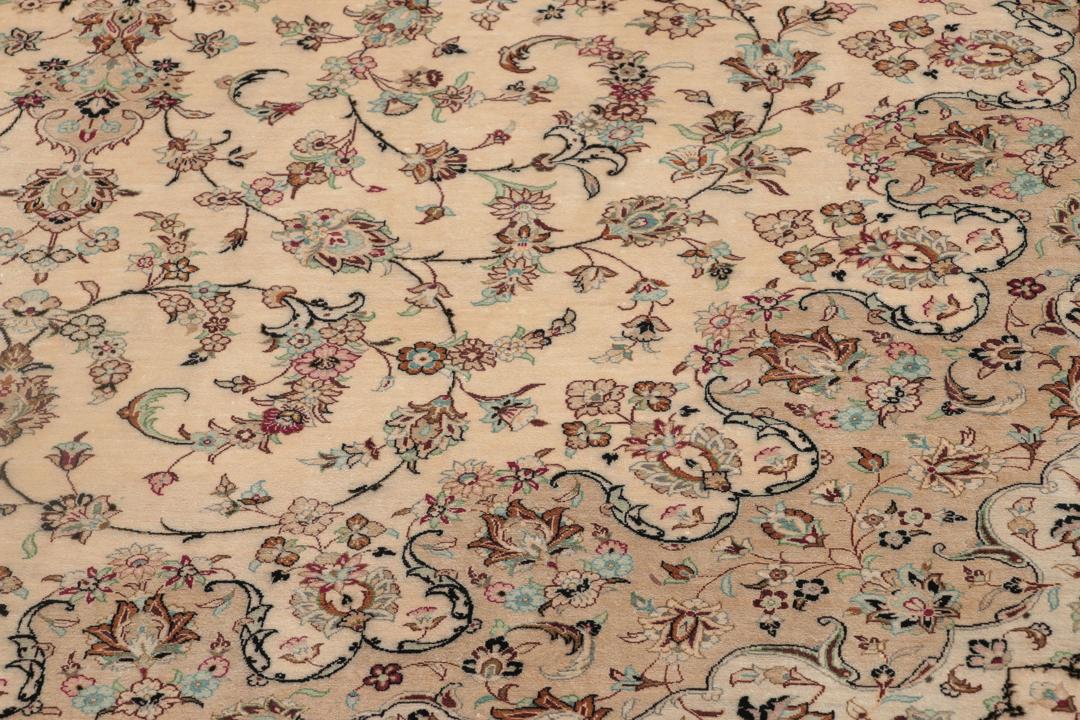
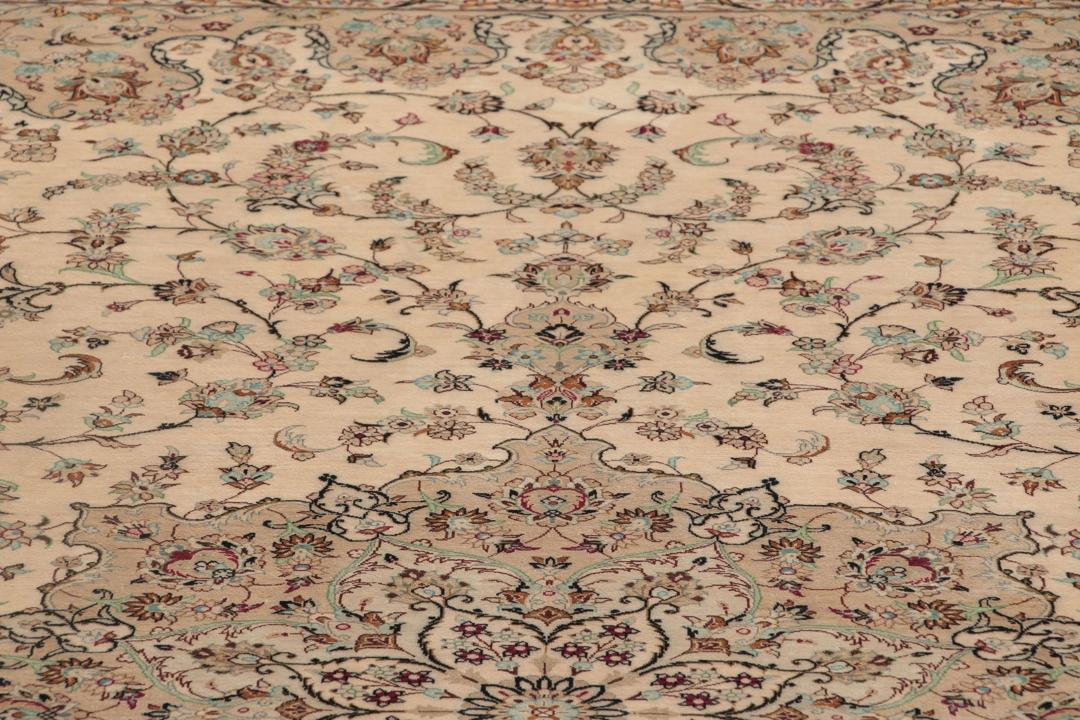
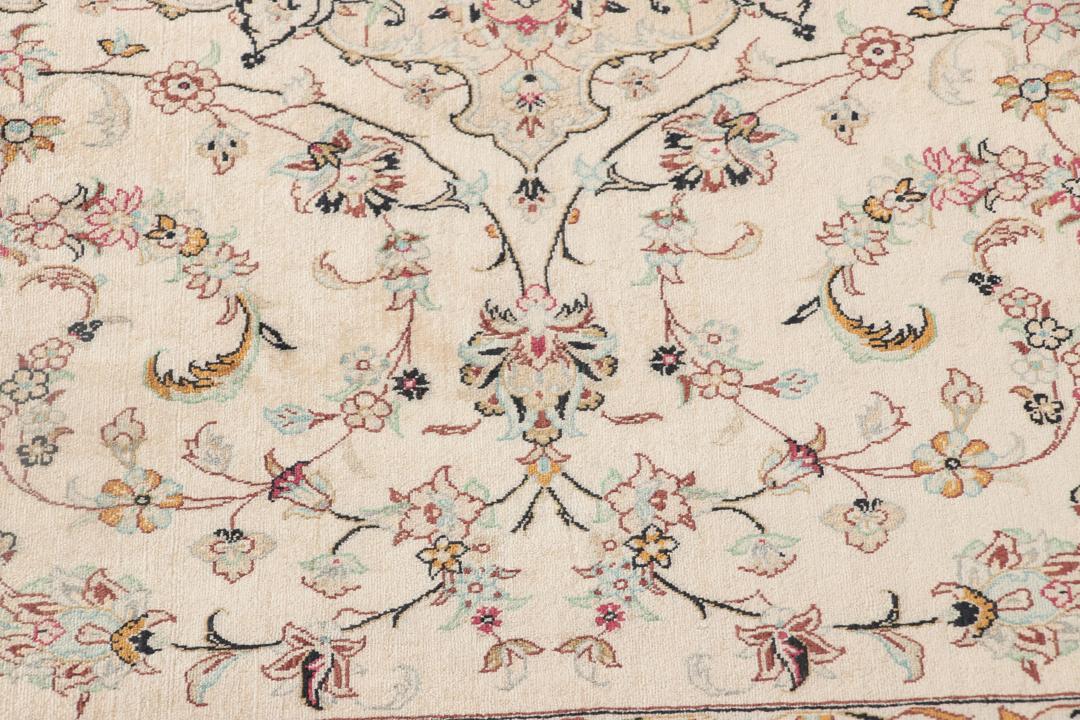
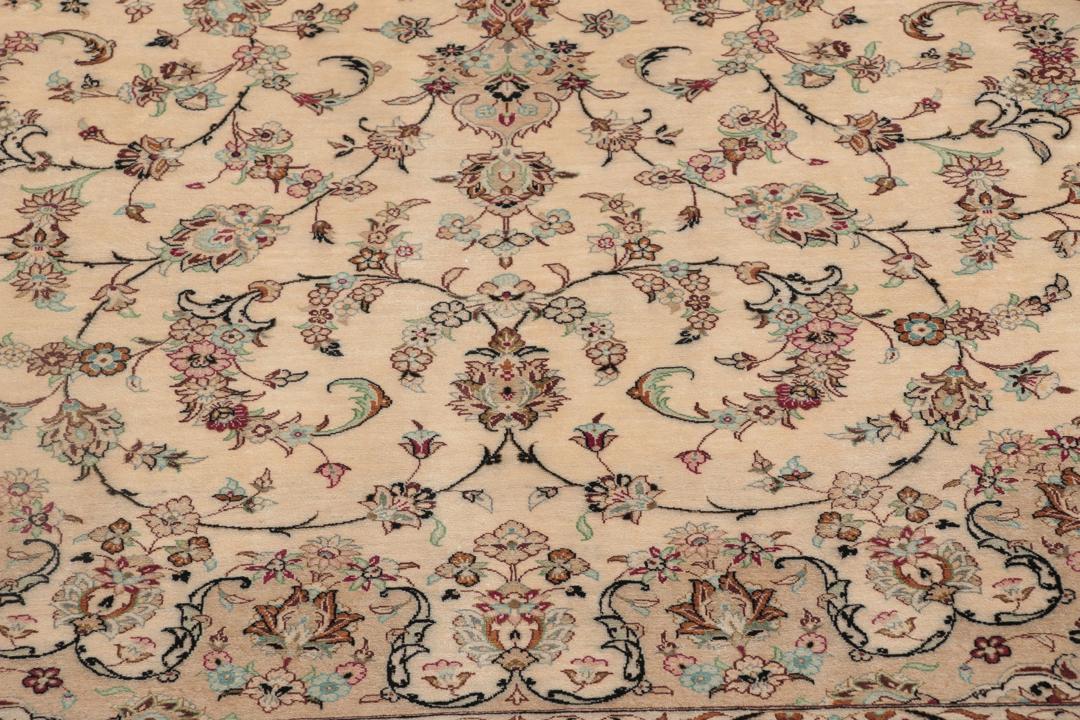
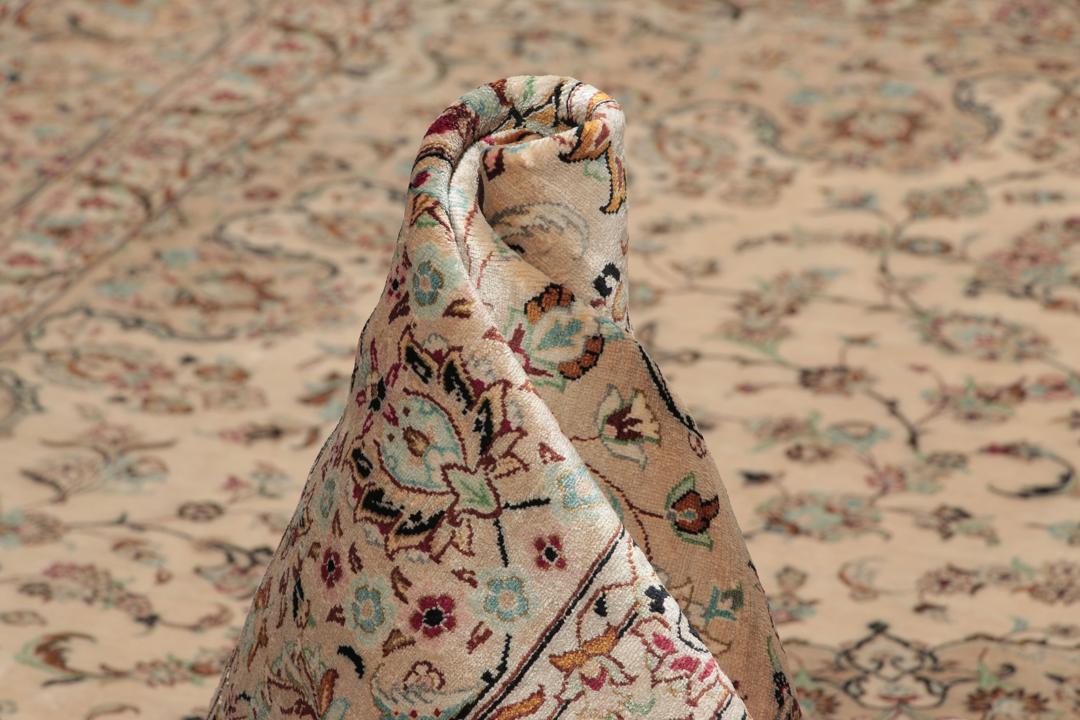
The weaving tradition of Ghom, also known as Qum, is relatively modern compared to other ancient Middle Eastern centres, beginning in the early twentieth century. Despite its younger history, Ghom quickly established a global reputation for producing some of the most detailed and luxurious rugs in the world, famous for their creative designs and exceptional materials.
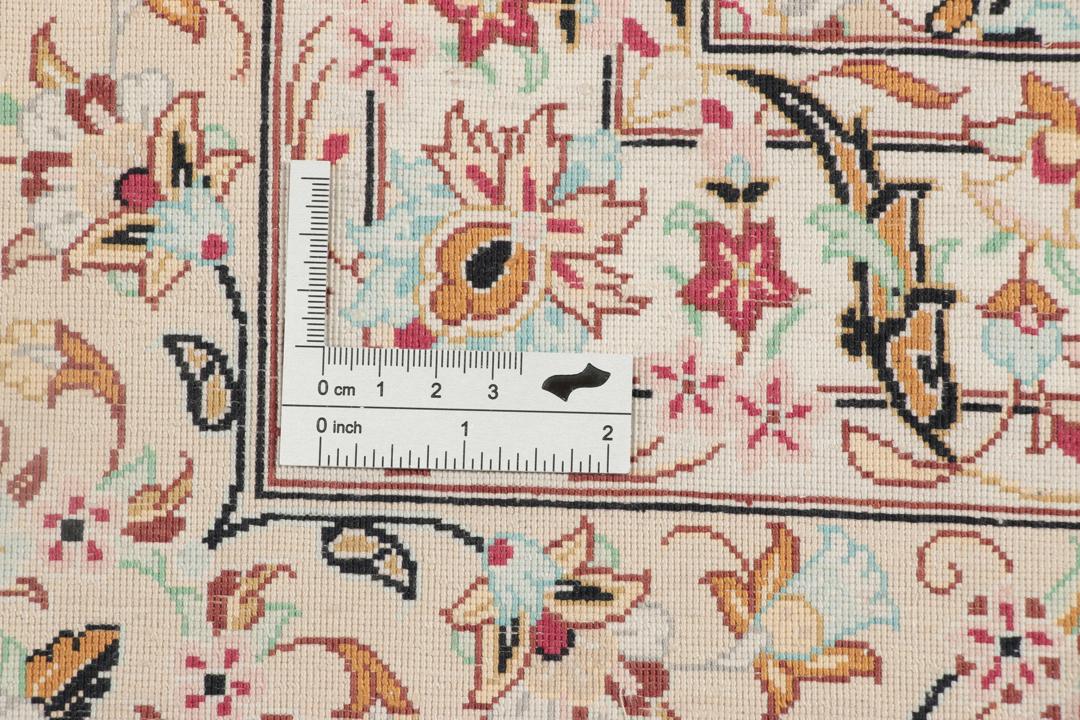
Working with silk requires extraordinary skill, as the fine threads allow weavers to achieve a level of detail that is impossible with wool. This material choice results in a thin, flexible rug with a dense surface that highlights the complexity of the pattern, making it highly prized by collectors who appreciate fine craftsmanship.
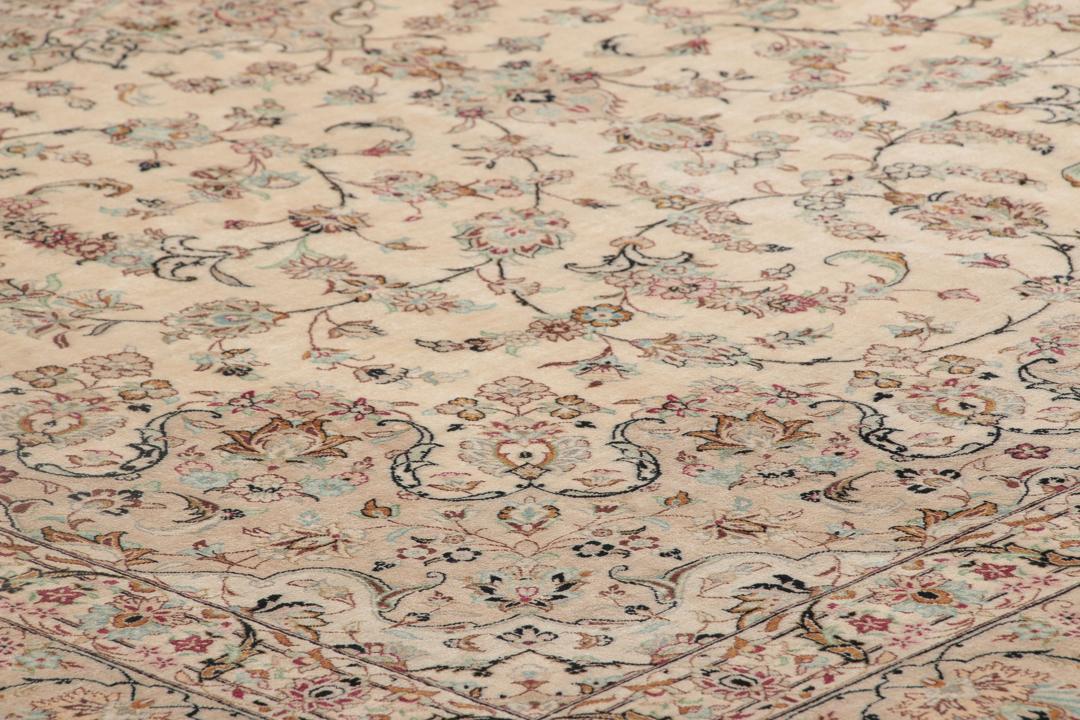
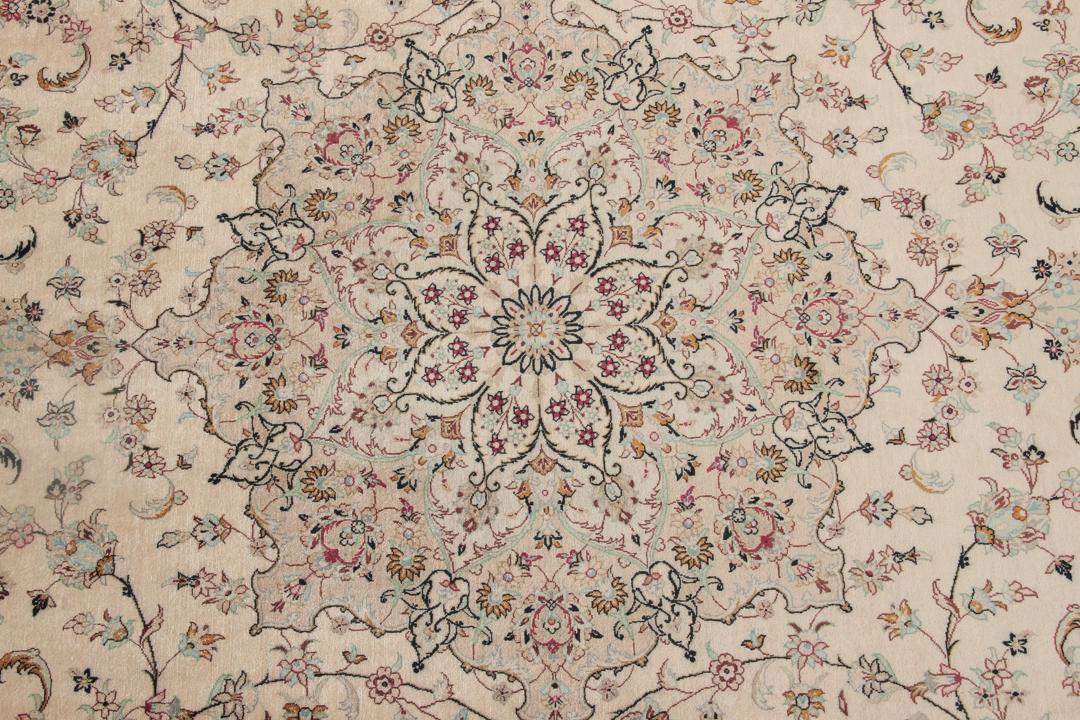
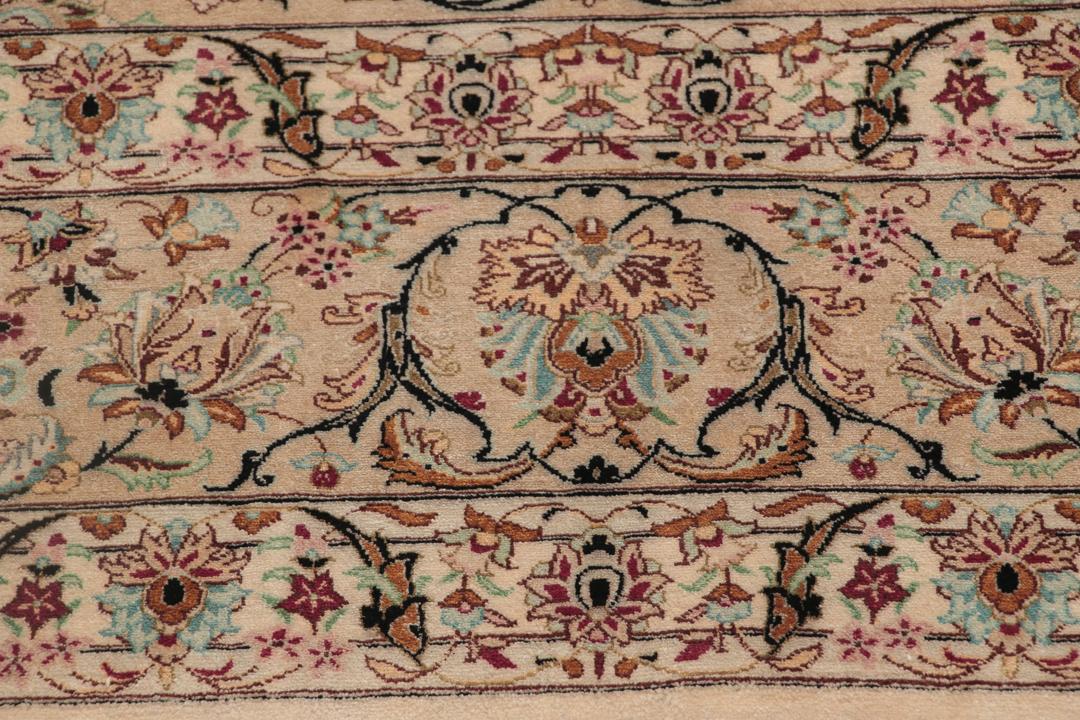
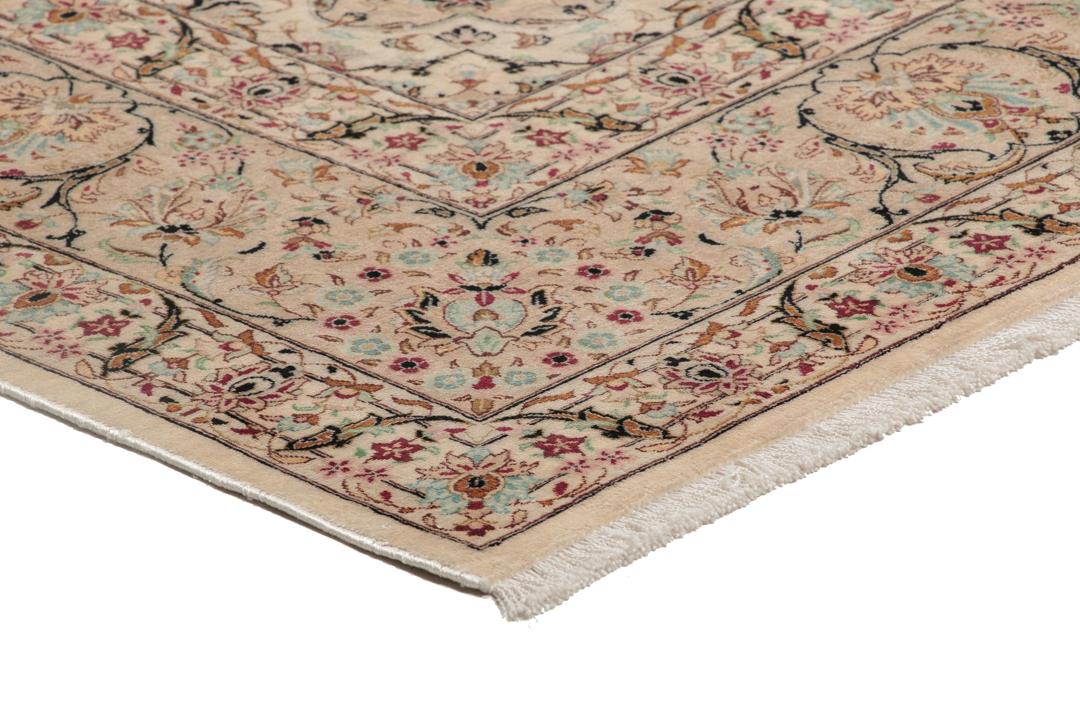
The visual language of Ghom rugs is characterised by its variety, often featuring intricate floral motifs, delicate hunting scenes, or elaborate central medallions like the one seen here. The borders are carefully structured to frame the central field, creating a balanced composition that draws the eye inward and showcases the harmonious balance of soft, natural colours.
Owning a Ghom silk rug is widely considered a mark of appreciation for fine textile art, as these pieces are celebrated for their artistic merit and lasting value. They are not merely floor coverings but heritage pieces that carry the cultural weight of a dedicated craft tradition, designed to be appreciated for generations.