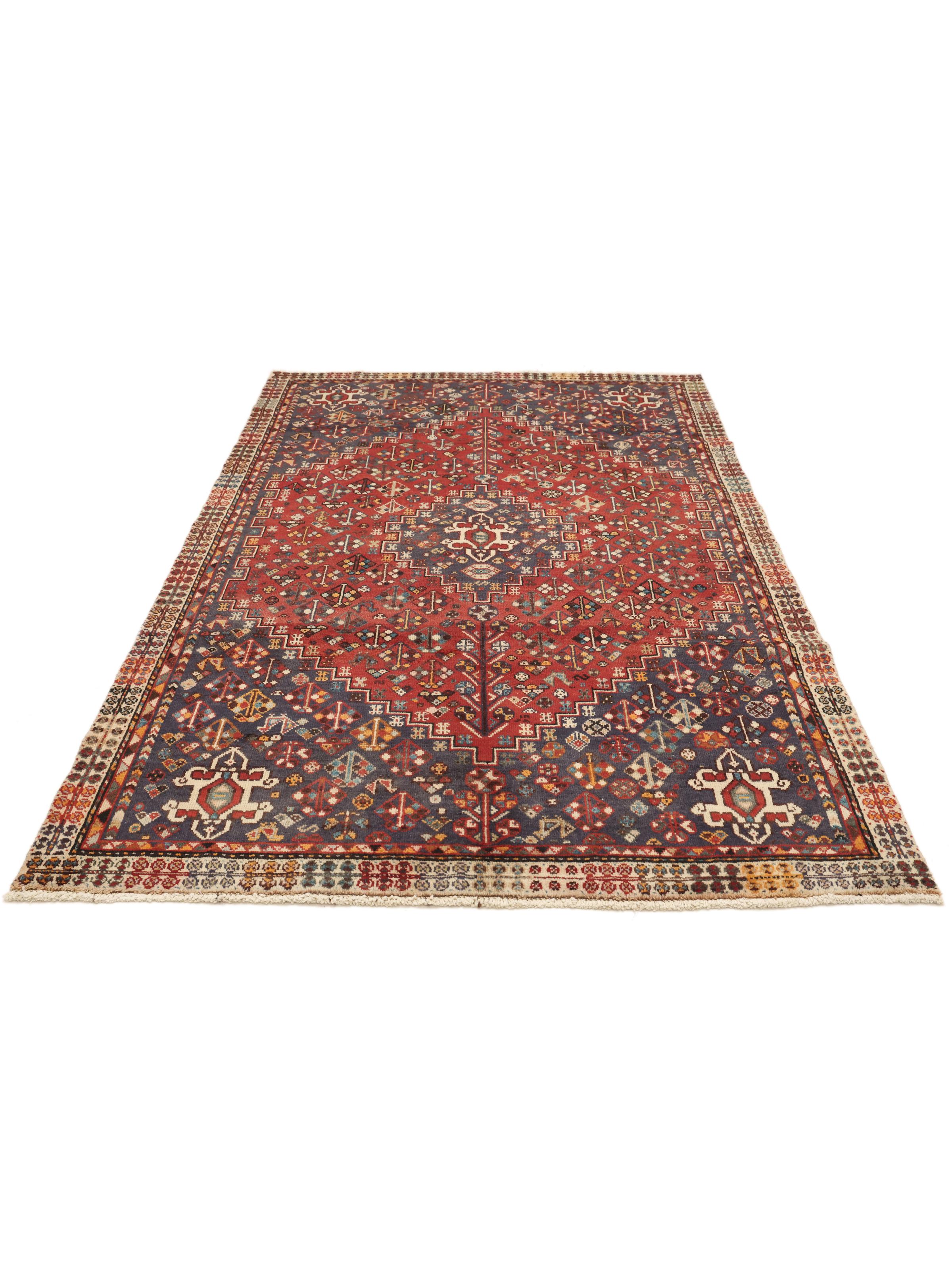
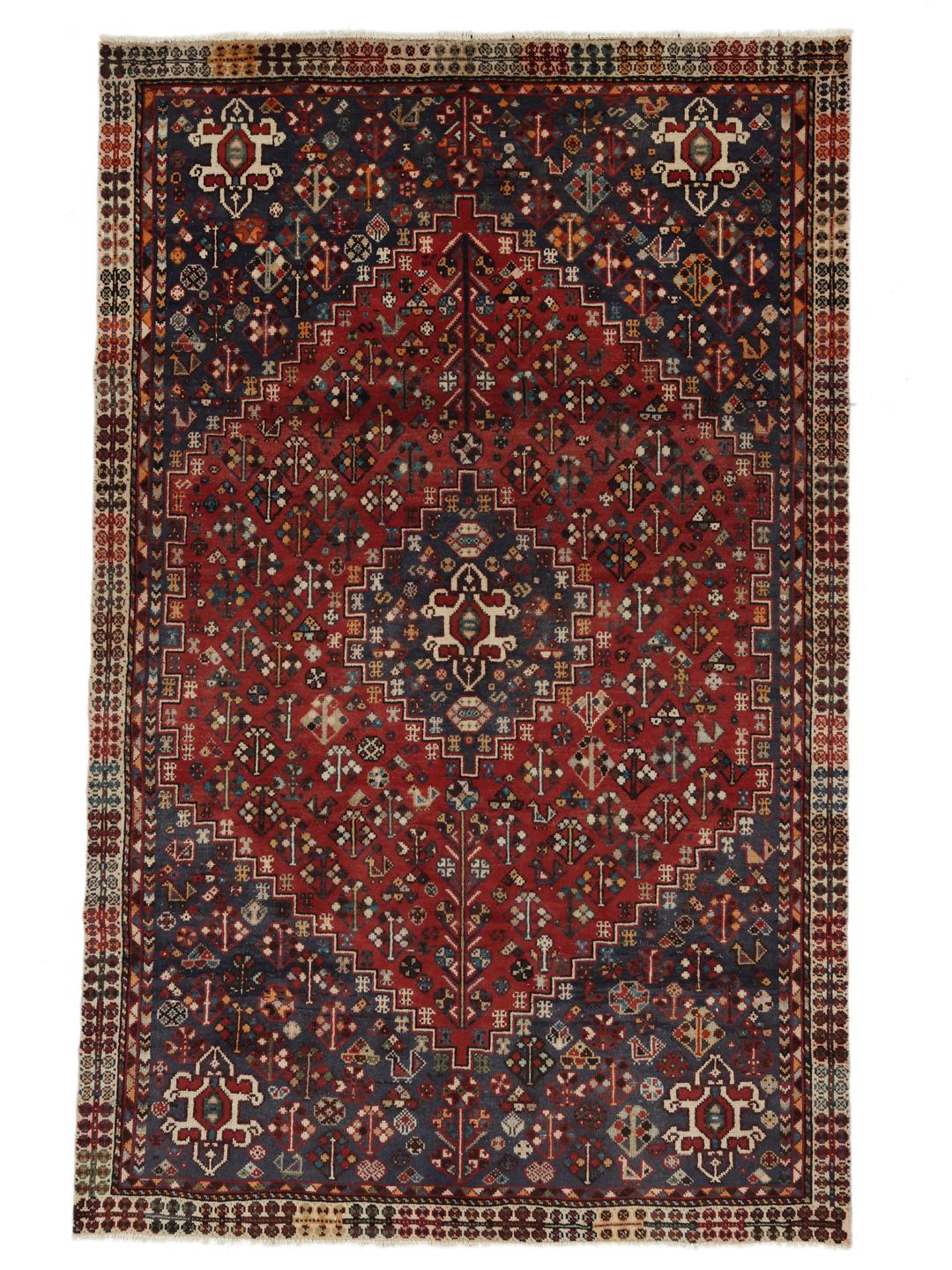
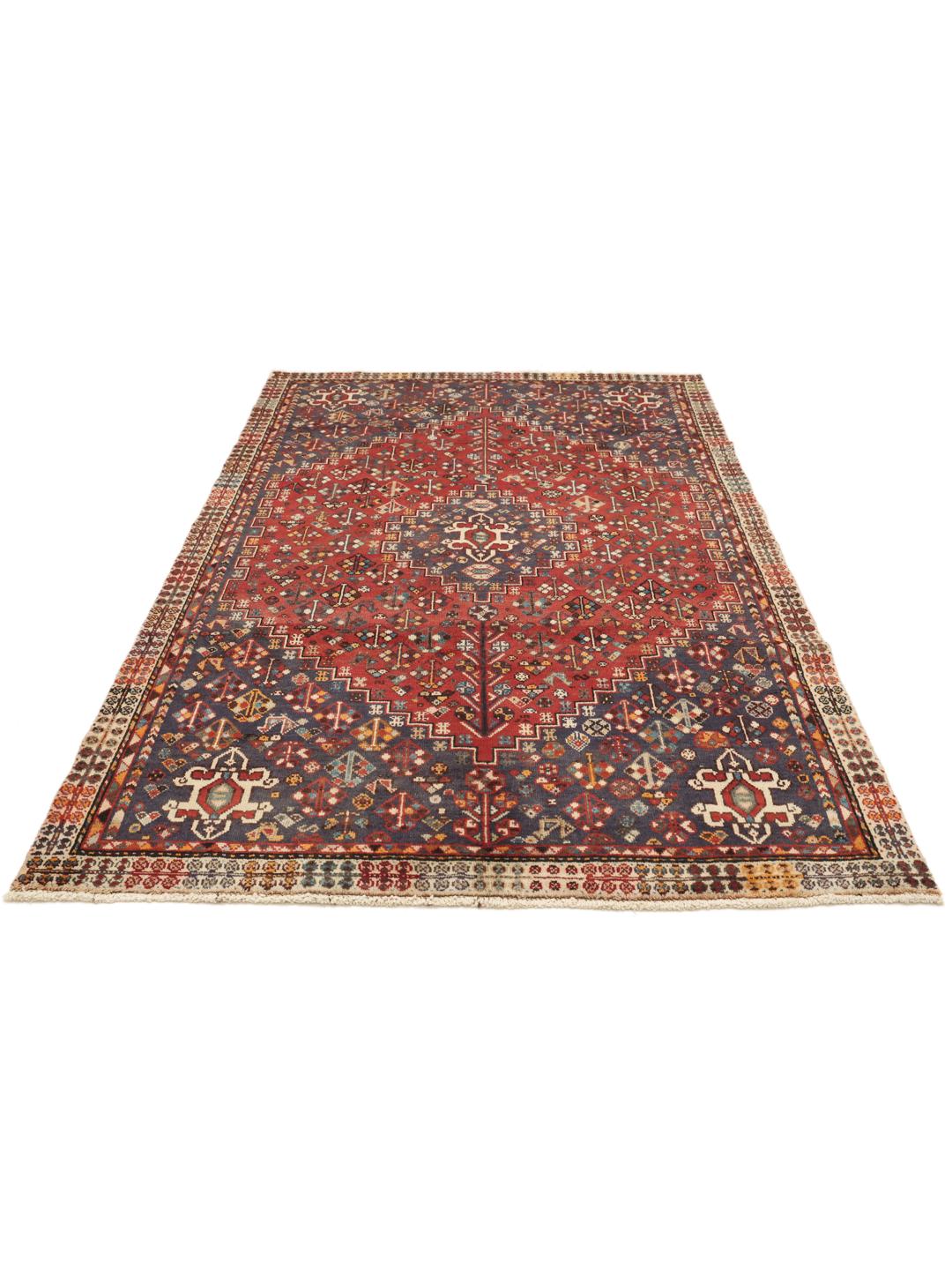
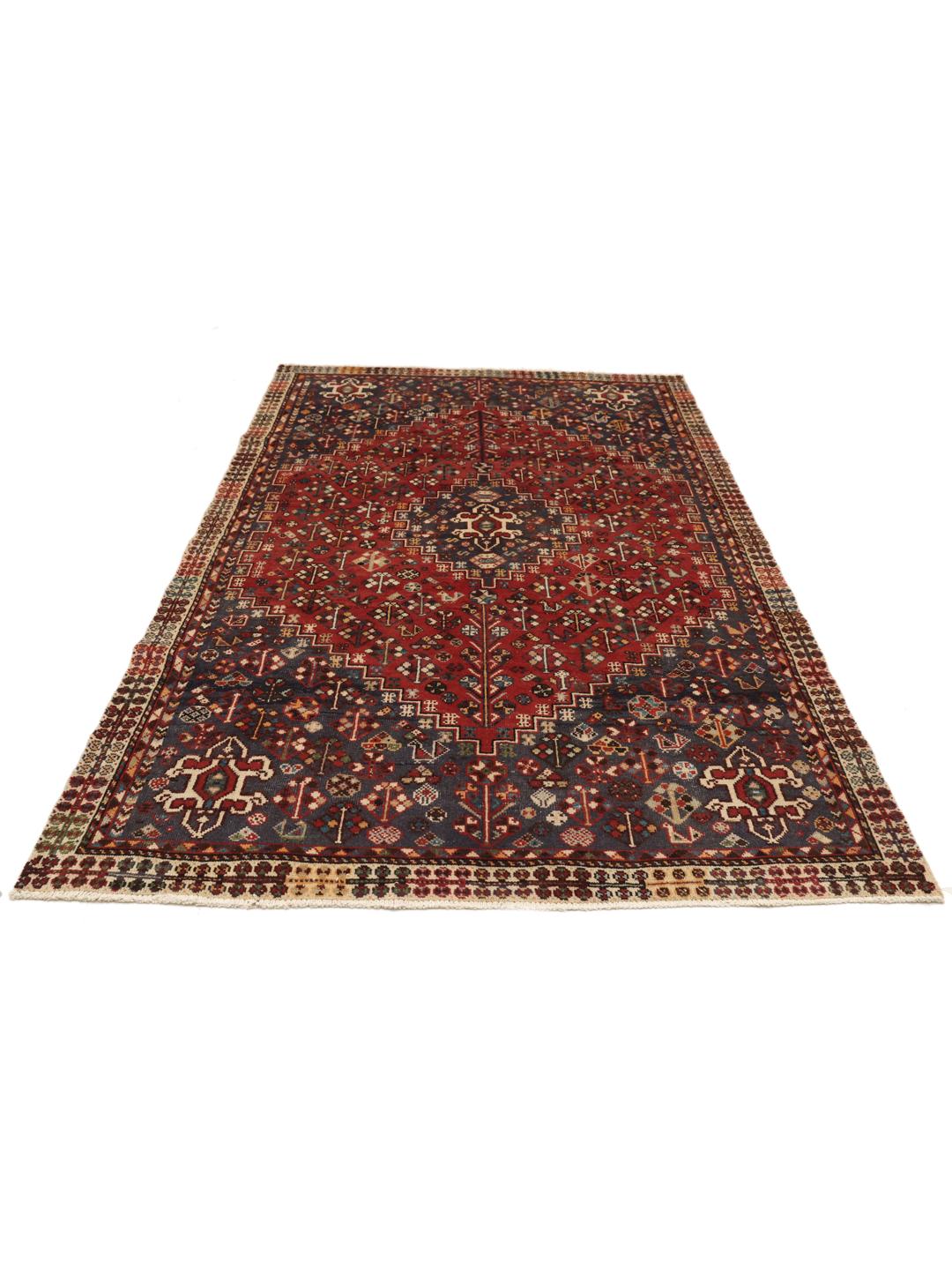
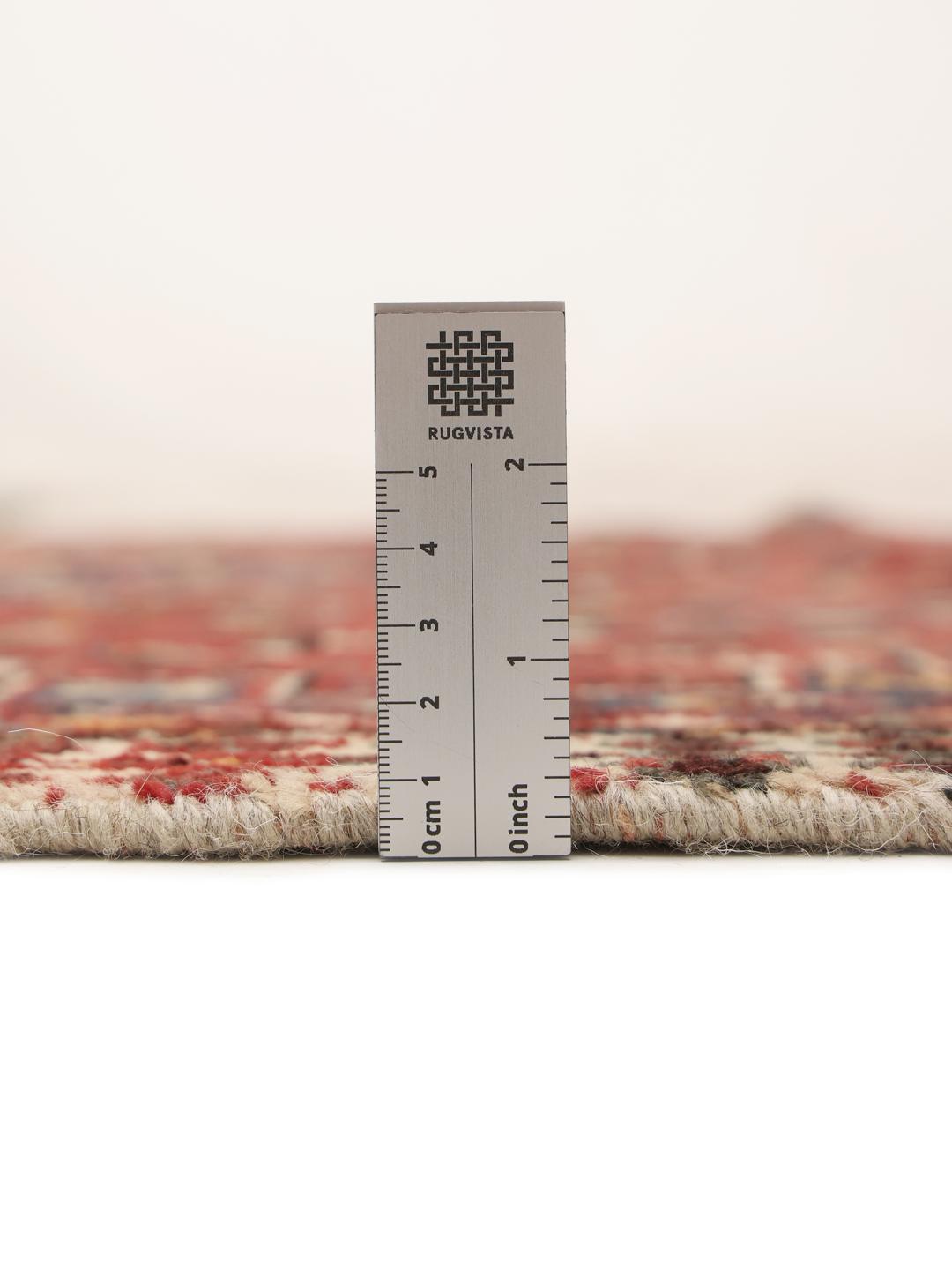
The Ghashghai people are nomadic tribes from the mountainous regions of the Middle East, known for their deep-rooted weaving traditions that have been passed down through generations. These rugs are born from a culture that values movement and storytelling, with weavers often drawing inspiration from their natural surroundings, local flora, and tribal history. This nomadic heritage gives Ghashghai rugs a unique, spontaneous energy that distinguishes them from more formal, city-made counterparts.
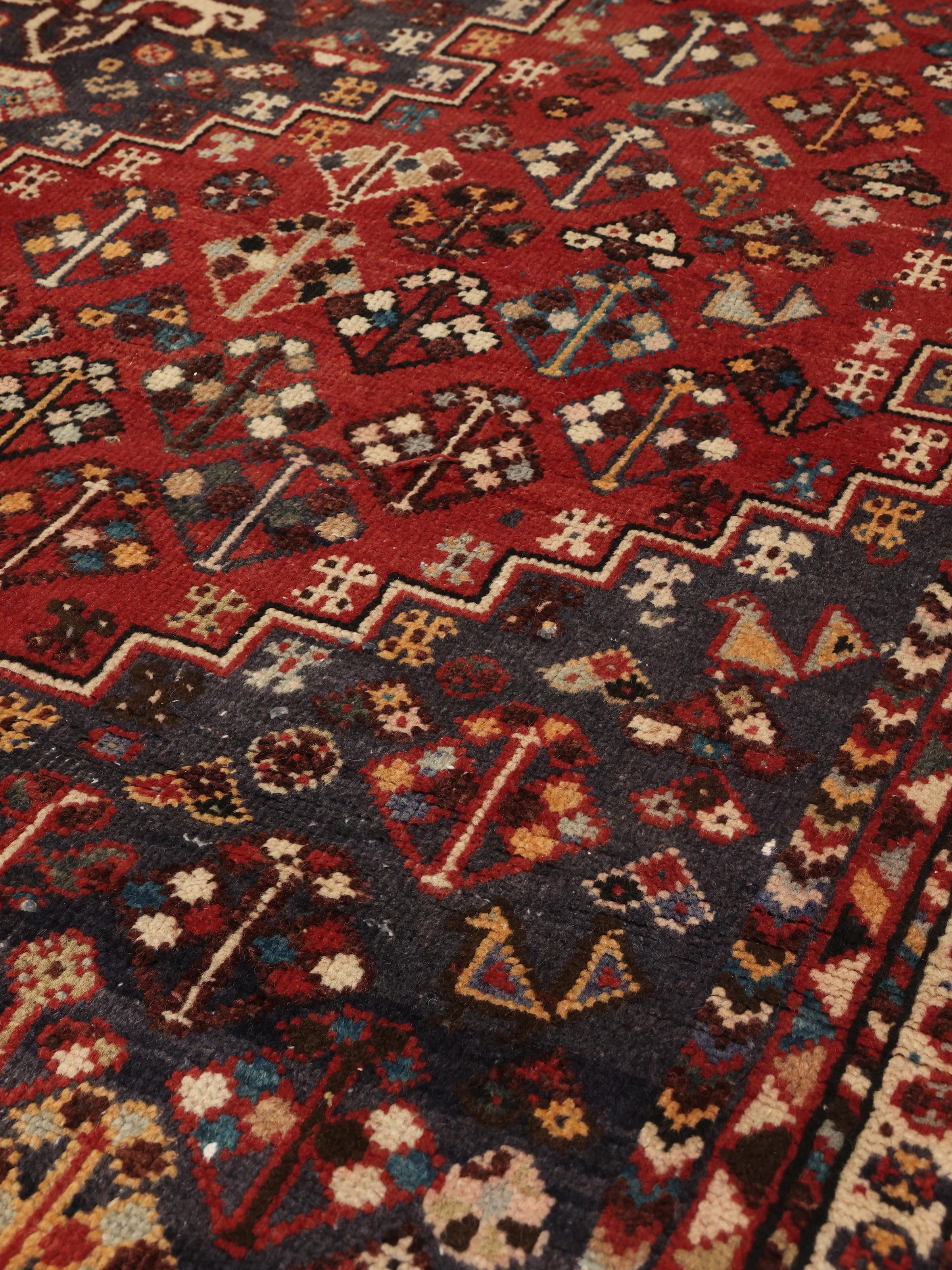
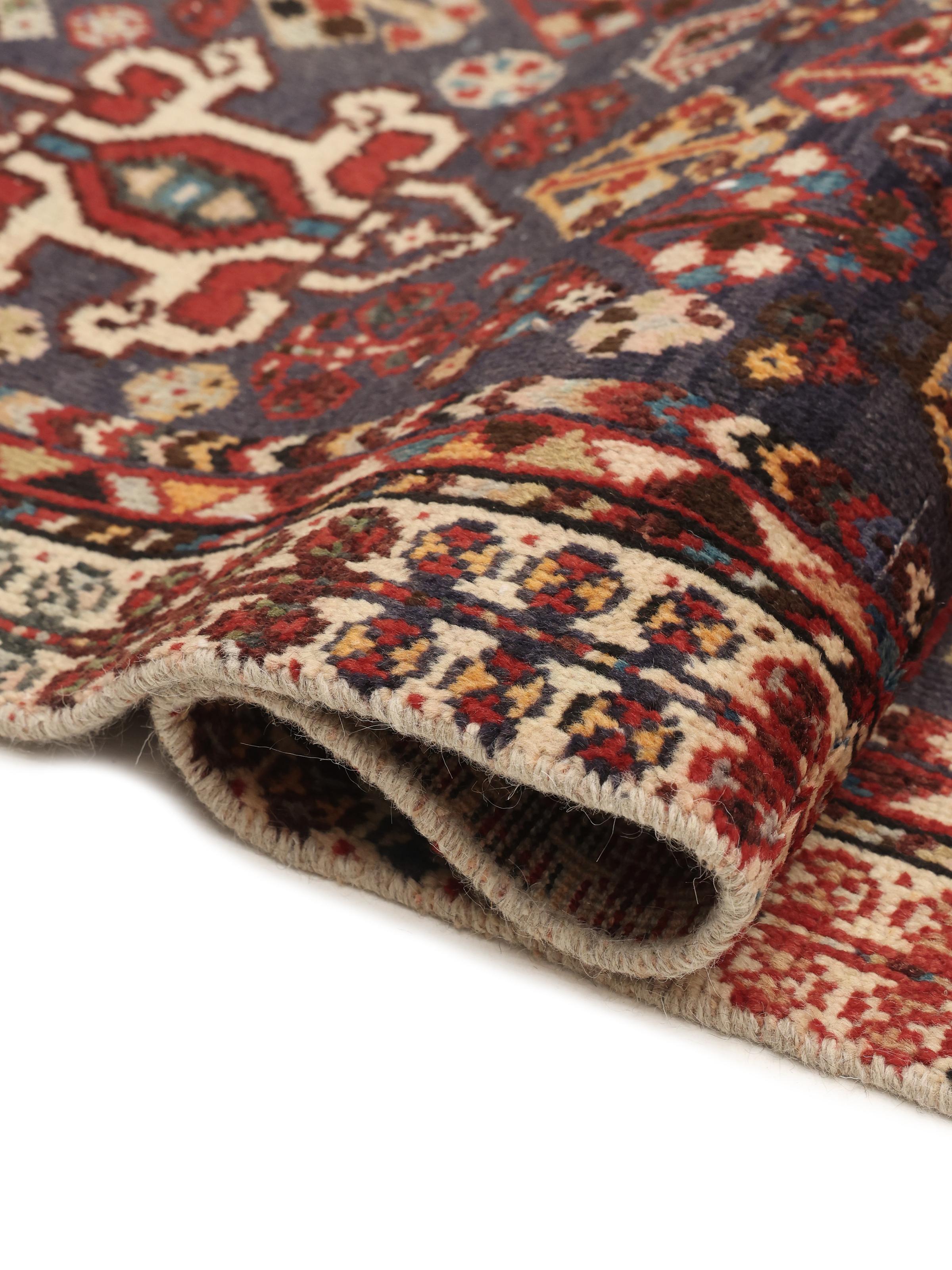
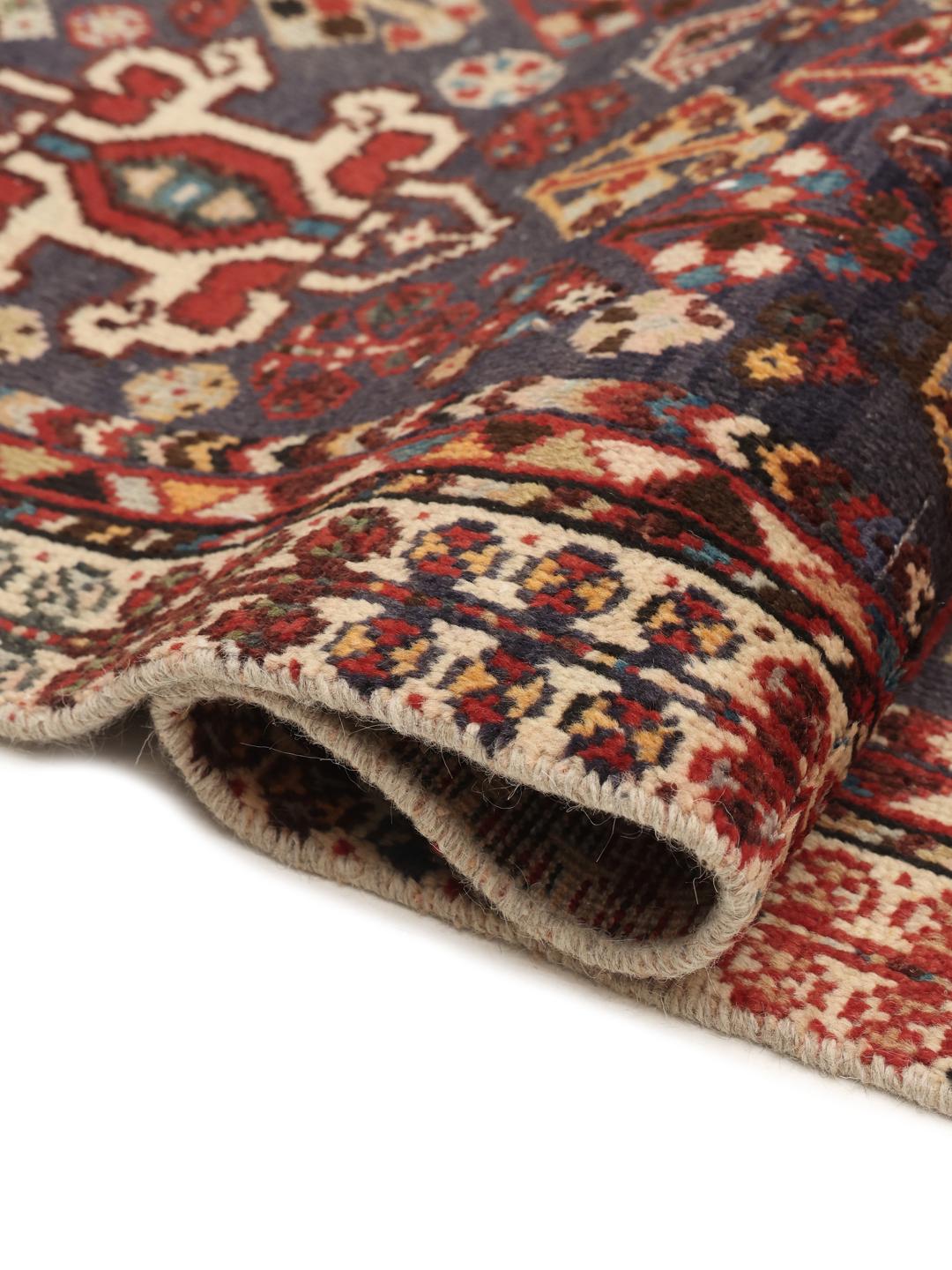
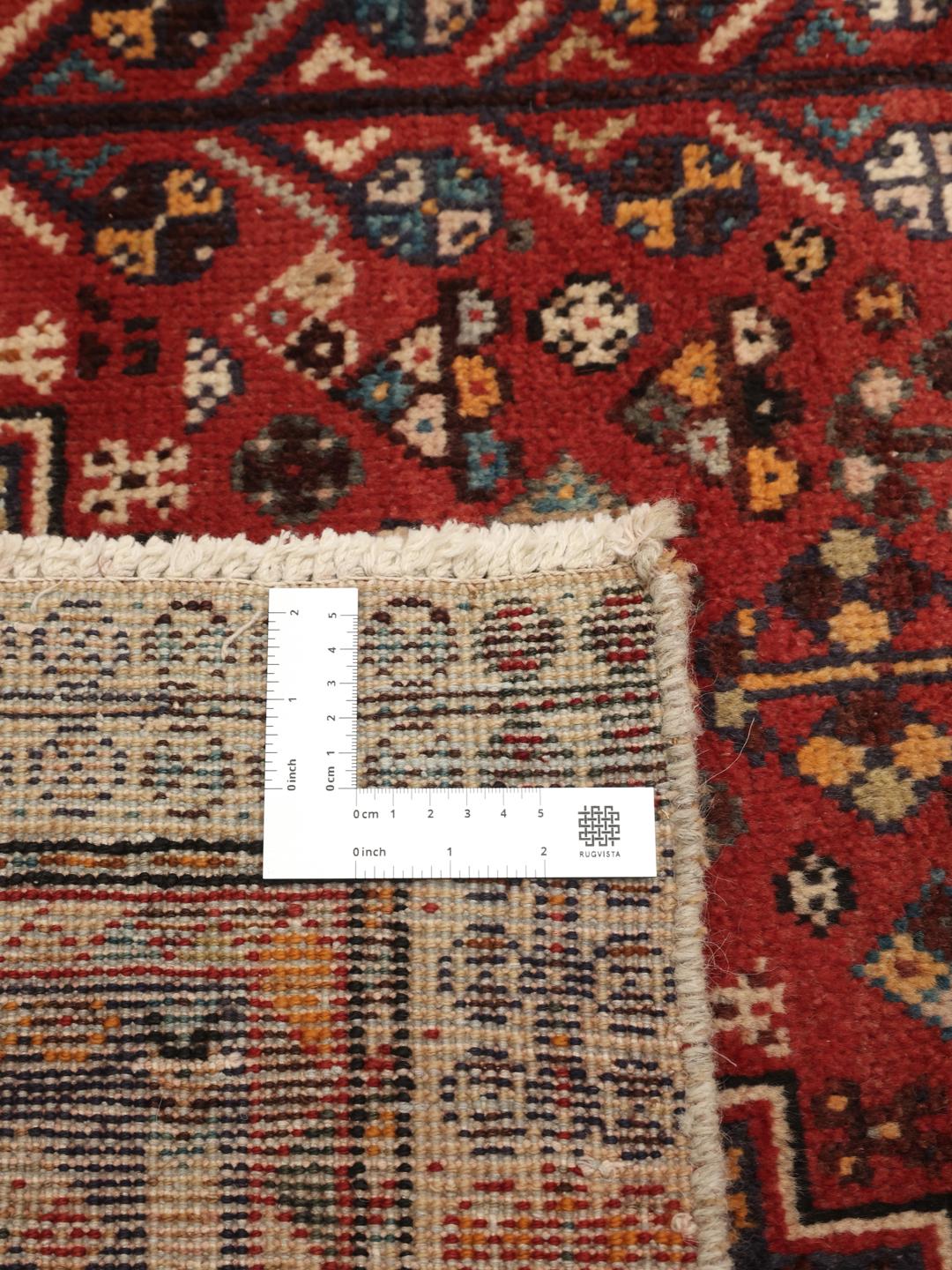
Technically, the hand-knotted nature of these rugs is a testament to the skill required to maintain consistent tension and pattern accuracy without the use of modern machinery. The Wool used is often sourced from the tribe's own flocks, reflecting a commitment to natural materials that are both sustainable and incredibly hard-wearing. The quality of the Wool, combined with the traditional knotting techniques, ensures that these rugs develop a beautiful patina over time, which only enhances their character as they age.
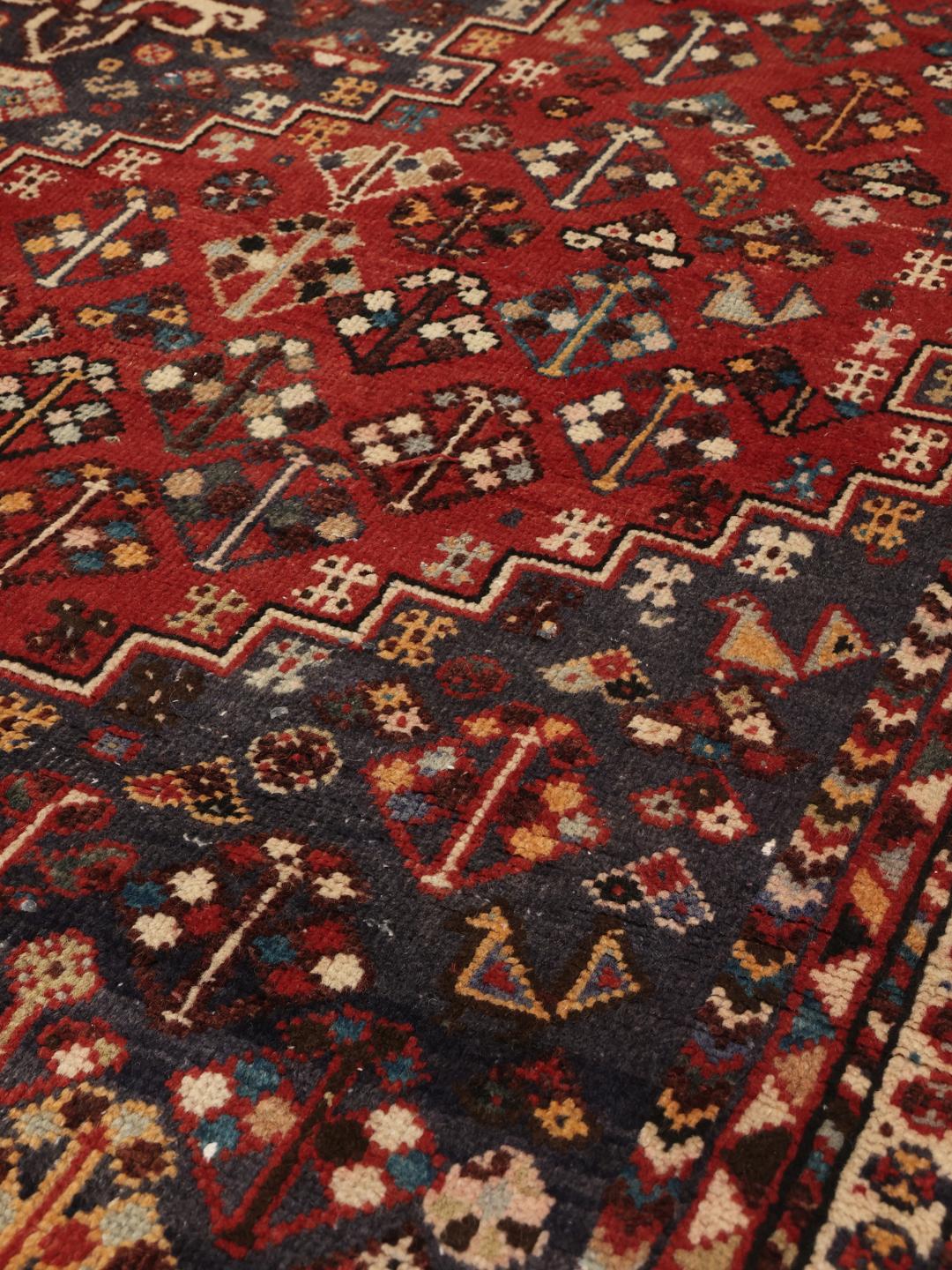
Visually, Ghashghai rugs are celebrated for their bold geometric language. You will often find stylised medallions, tribal animals, and intricate latch-hook motifs filling the central field, all framed by protective, symbolic borders. This specific rug showcases a vibrant colour palette, likely derived from natural dyes like madder root for reds and indigo for blues, which create a deep, saturated look that glows with time. The inclusion of small, pictorial motifs throughout the field adds a layer of narrative depth, turning the rug into a visual tapestry of tribal life.
Collecting a Ghashghai rug is an opportunity to preserve a piece of living history. These rugs are not merely decorative items but are functional art that carries the identity of the weavers. Because they are made in small batches or as individual commissions, they are highly sought after by those who appreciate the skill, cultural weight, and the authentic, human touch present in every fibre. Owning one is a way to bridge the gap between ancient nomadic traditions and modern interior spaces.