The tradition of rug weaving in China is an ancient craft that evolved independently from the weaving centres of the Middle East, characterised by a unique focus on silk and Wool artistry. Historically, these rugs were often commissioned for imperial palaces and temples, featuring motifs rooted in Buddhist and Taoist symbolism. Over centuries, the aesthetic transitioned from purely symbolic narratives to the sophisticated, often abstract or graphic designs seen in modern interpretations.
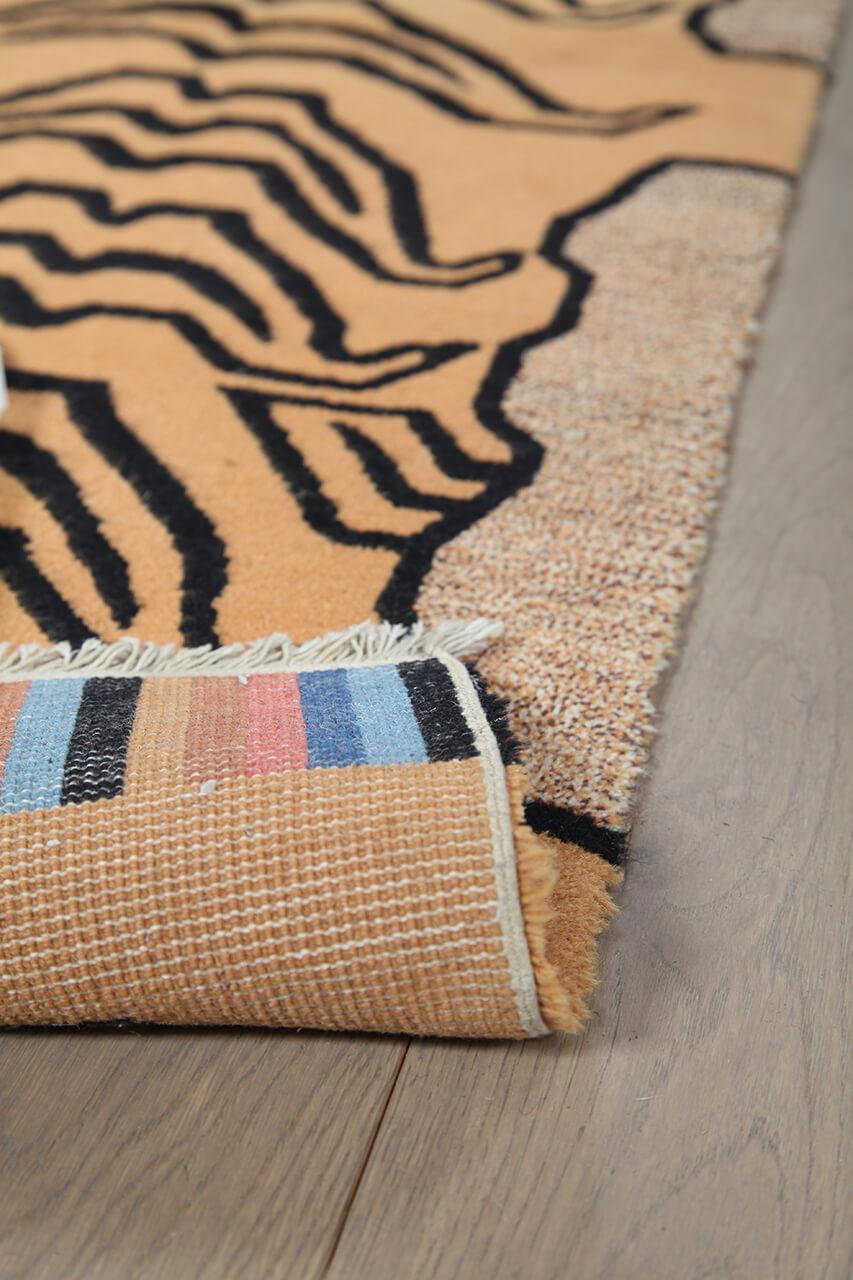
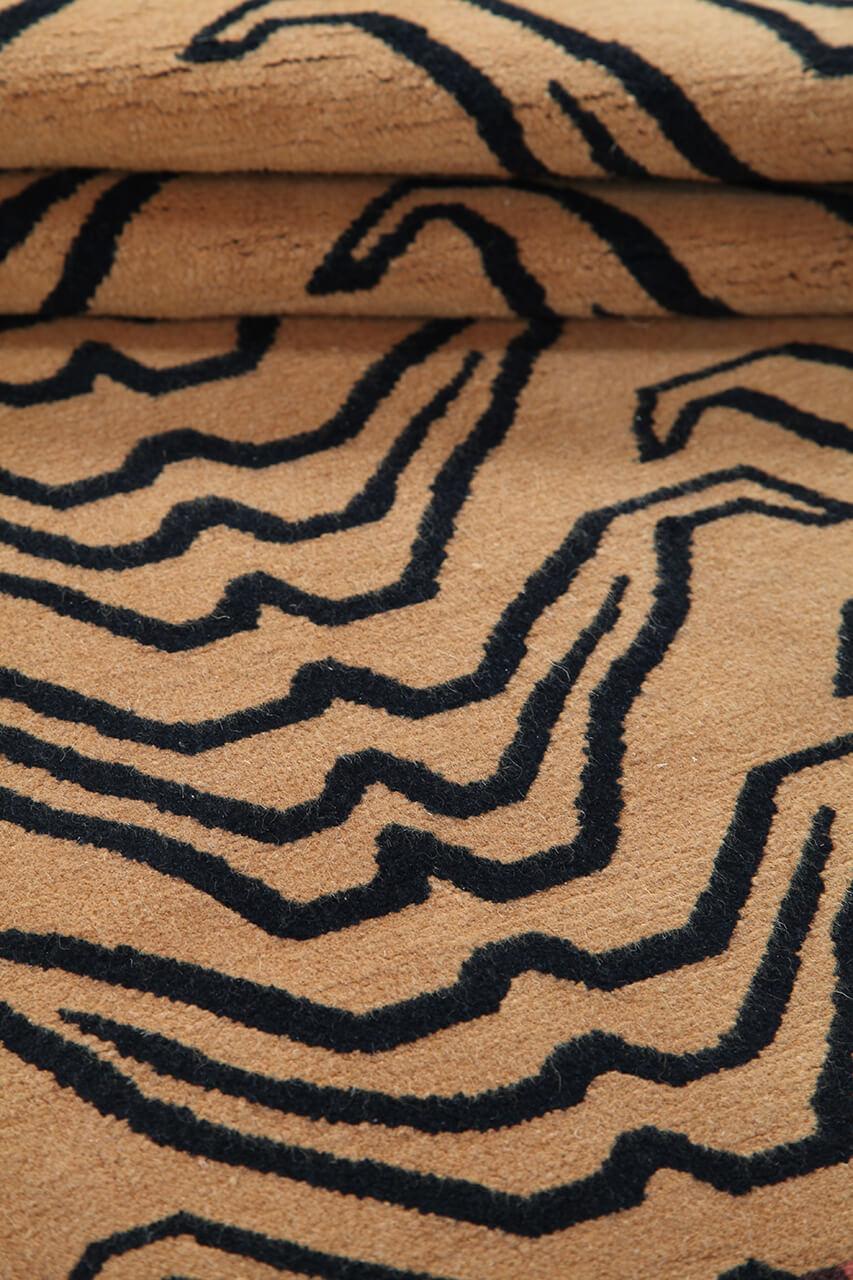
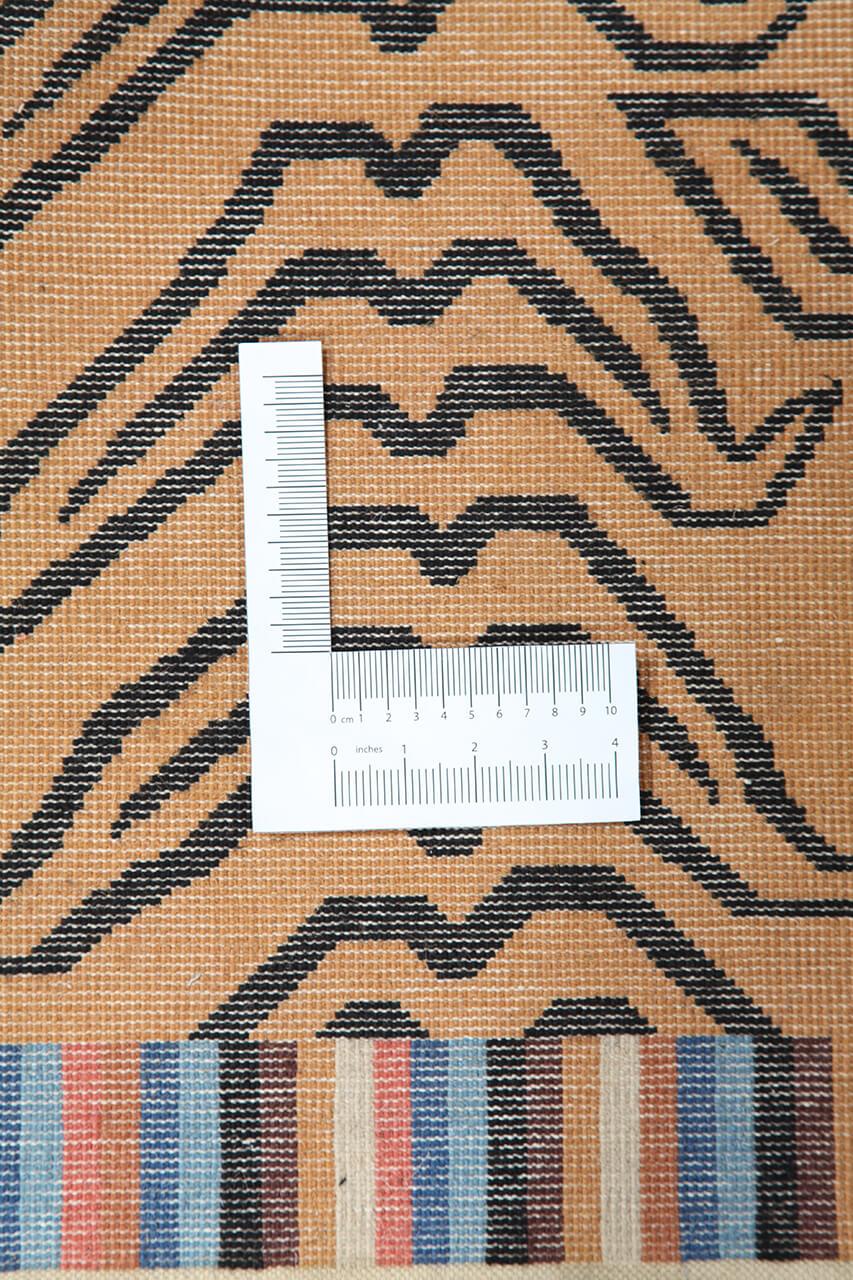
The term hand-knotted refers to the laborious technique where individual yarn segments are tied around the warp threads of the rug's foundation. This process is the gold standard for quality, as it allows for intricate patterns and a dense, resilient pile. The resulting structure is far more durable than mass-produced alternatives, as the physical connection of each knot creates a cohesive, heavy, and long-lasting textile that resists wear and compression.
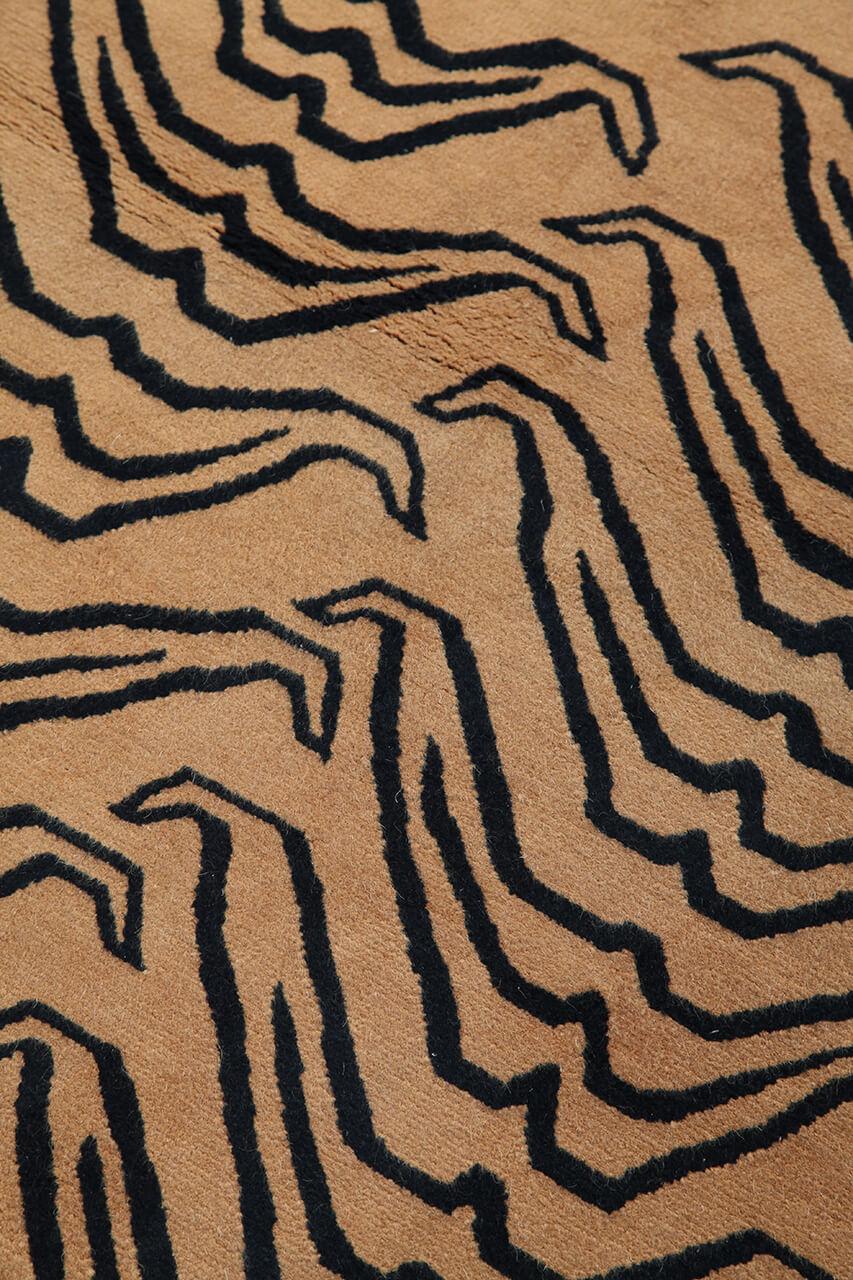
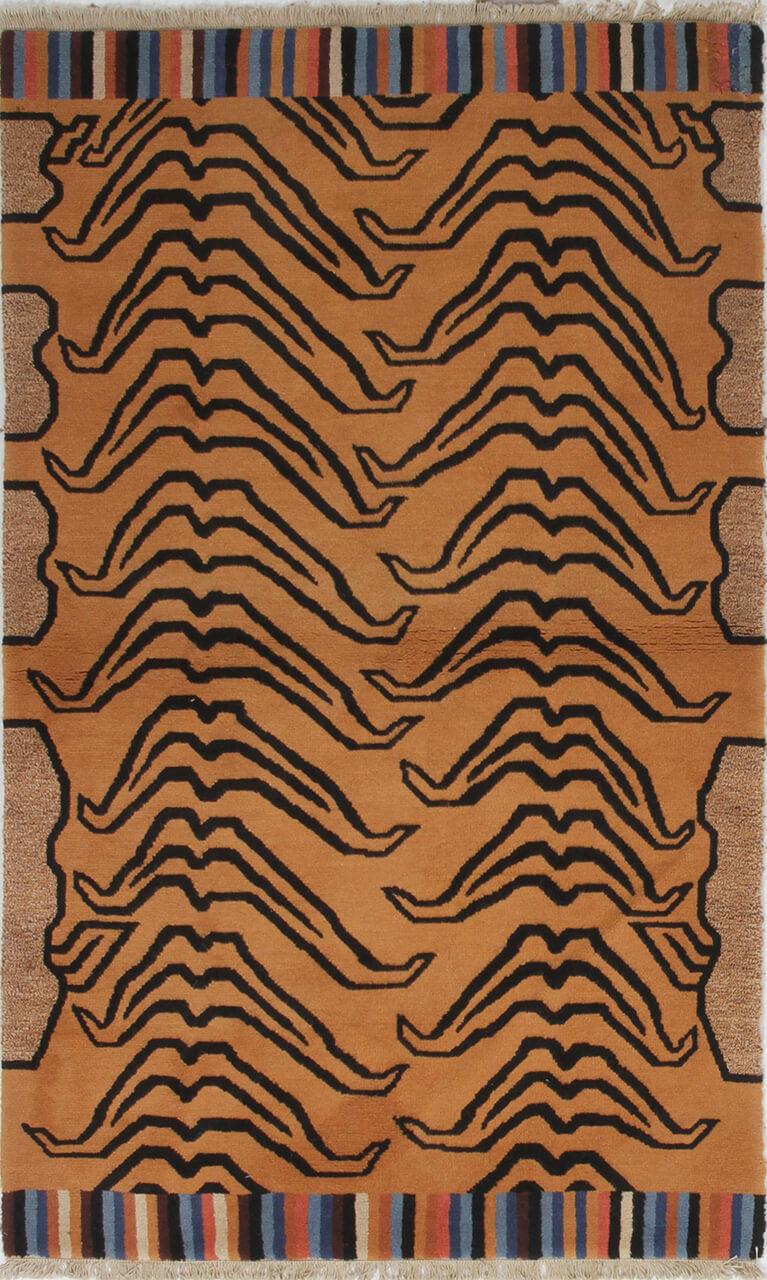
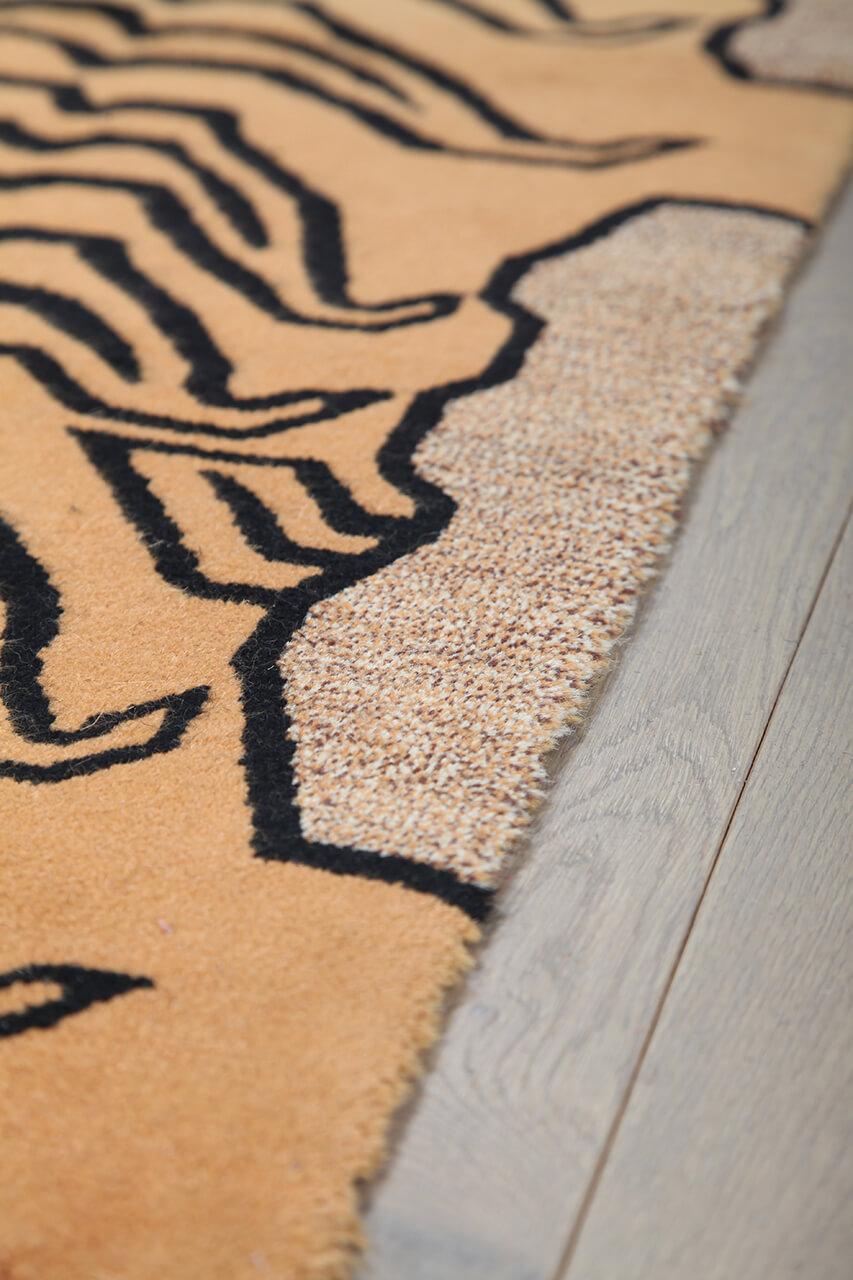
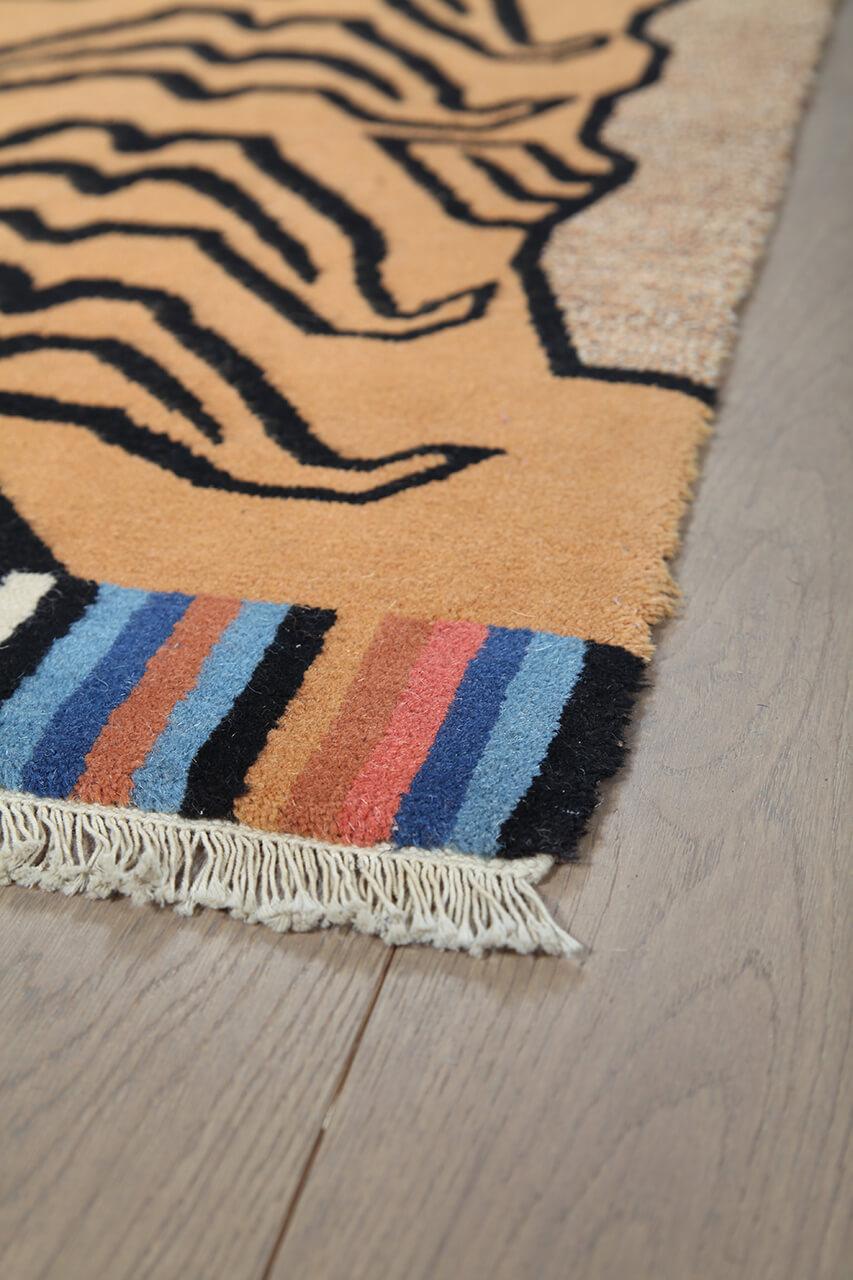
The design of this piece draws inspiration from the bold, stylised animal motifs that have long been a hallmark of avant-garde Chinese textile art. By transforming natural forms into rhythmic, geometric patterns, the weaver creates a visual language that feels both primal and highly sophisticated. The inclusion of a multi-coloured border provides a playful contrast to the central field, demonstrating the artisan's ability to balance complex colour palettes within a singular composition.
Collectors value these rugs not only for their aesthetic impact but for the tangible evidence of human effort woven into every square inch. To own a hand-knotted rug is to participate in a cultural tradition that prizes patience, skill, and the pursuit of beauty. These pieces are more than simple floor coverings; they are historical artefacts of a living craft that continues to inspire and define the character of the homes they inhabit.