Chinese rug weaving traditions are some of the oldest in the world, with a lineage that stretches back centuries. Unlike many other traditions, Chinese rugs historically focused on a unique aesthetic language that favoured open spaces and symbolic, nature-inspired motifs over the dense, geometric patterns often found in other regions.
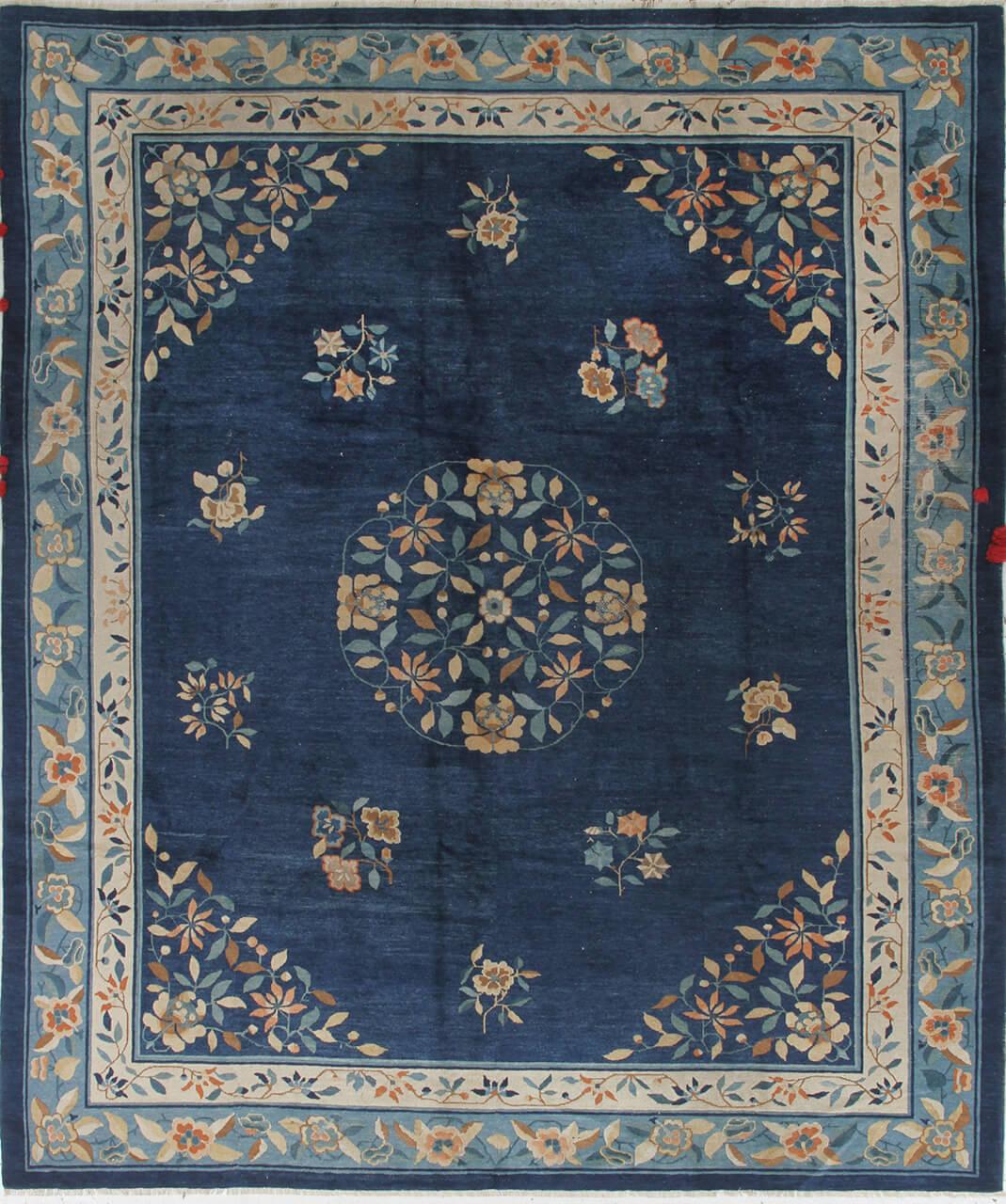
The craftsmanship behind these pieces is defined by a deep understanding of natural fibres and a commitment to patience. Artisans traditionally worked with a focus on creating a balance between the field and the border, often using motifs that held specific cultural meanings, such as flowers representing different seasons or virtues.
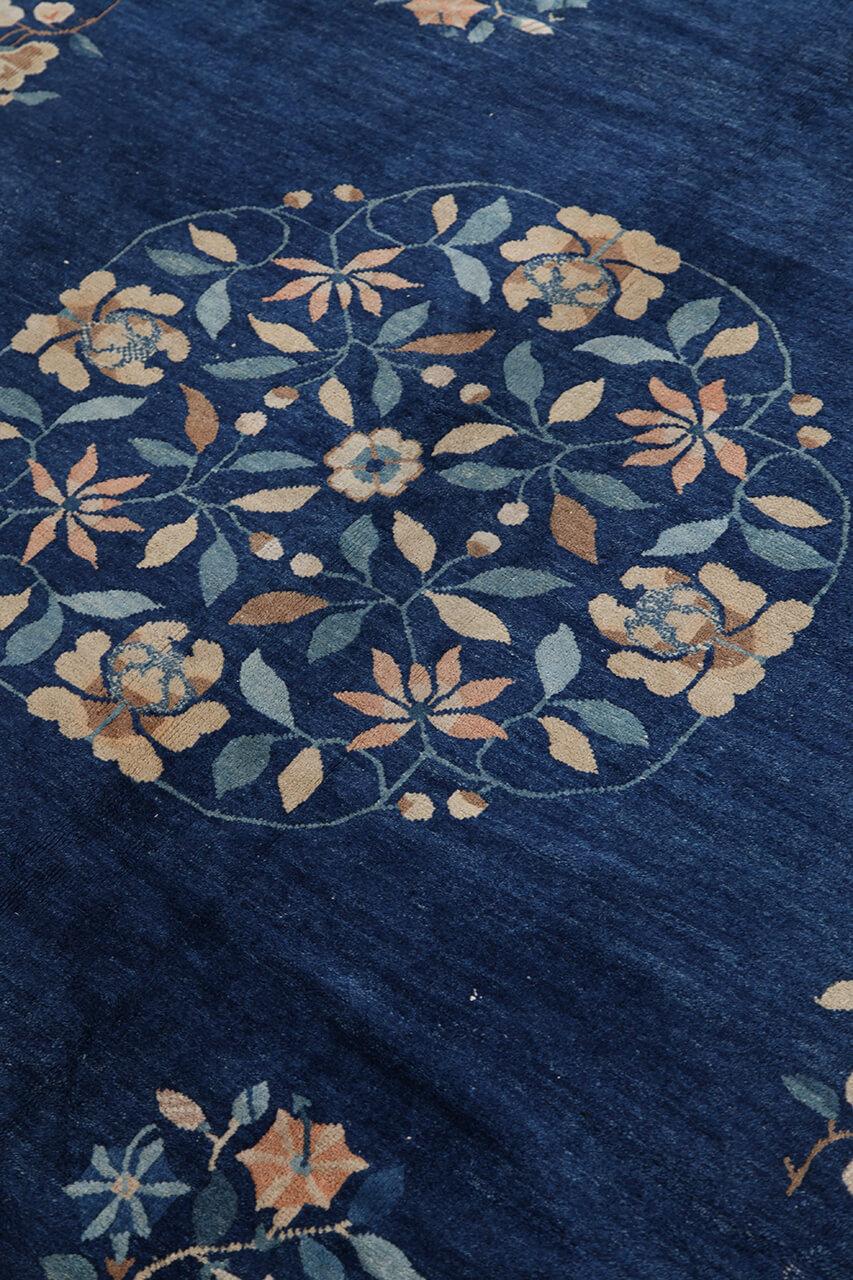
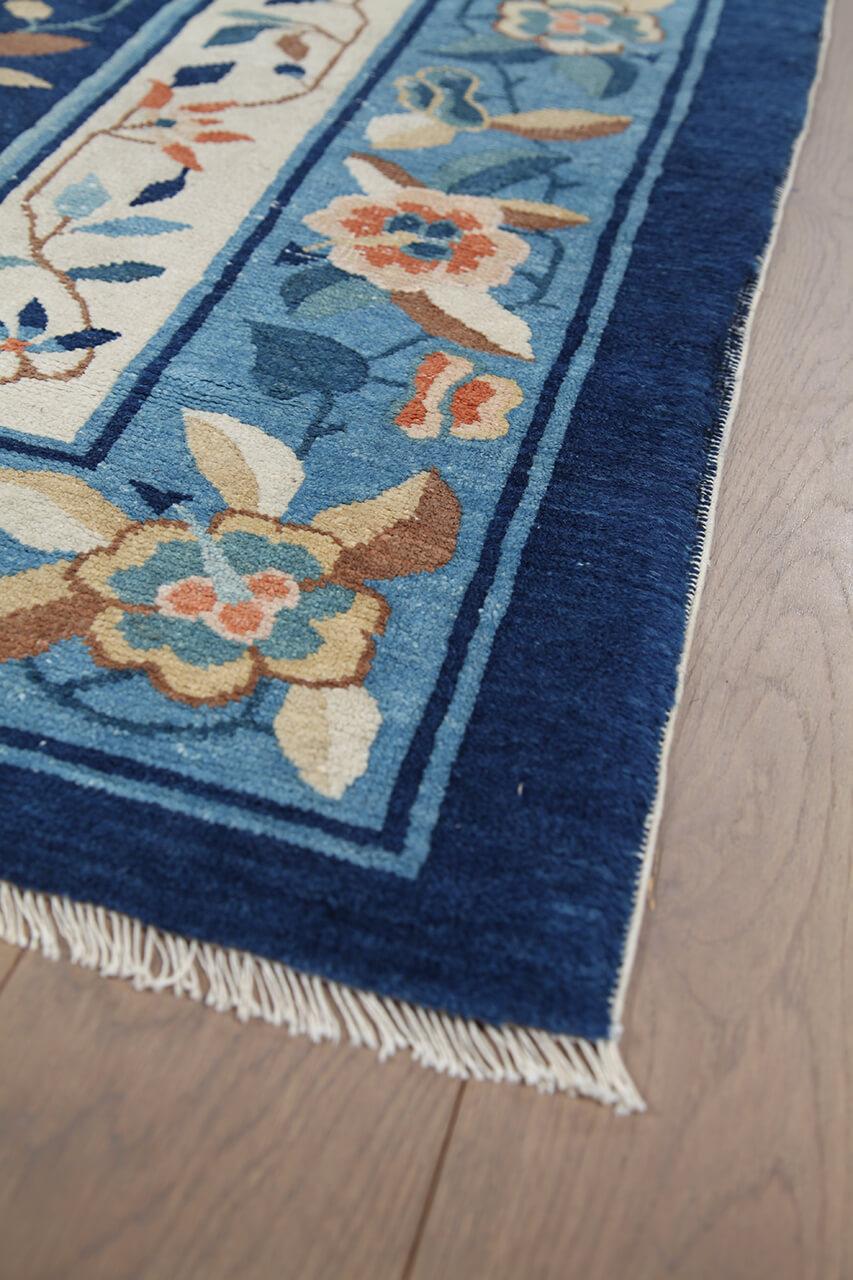
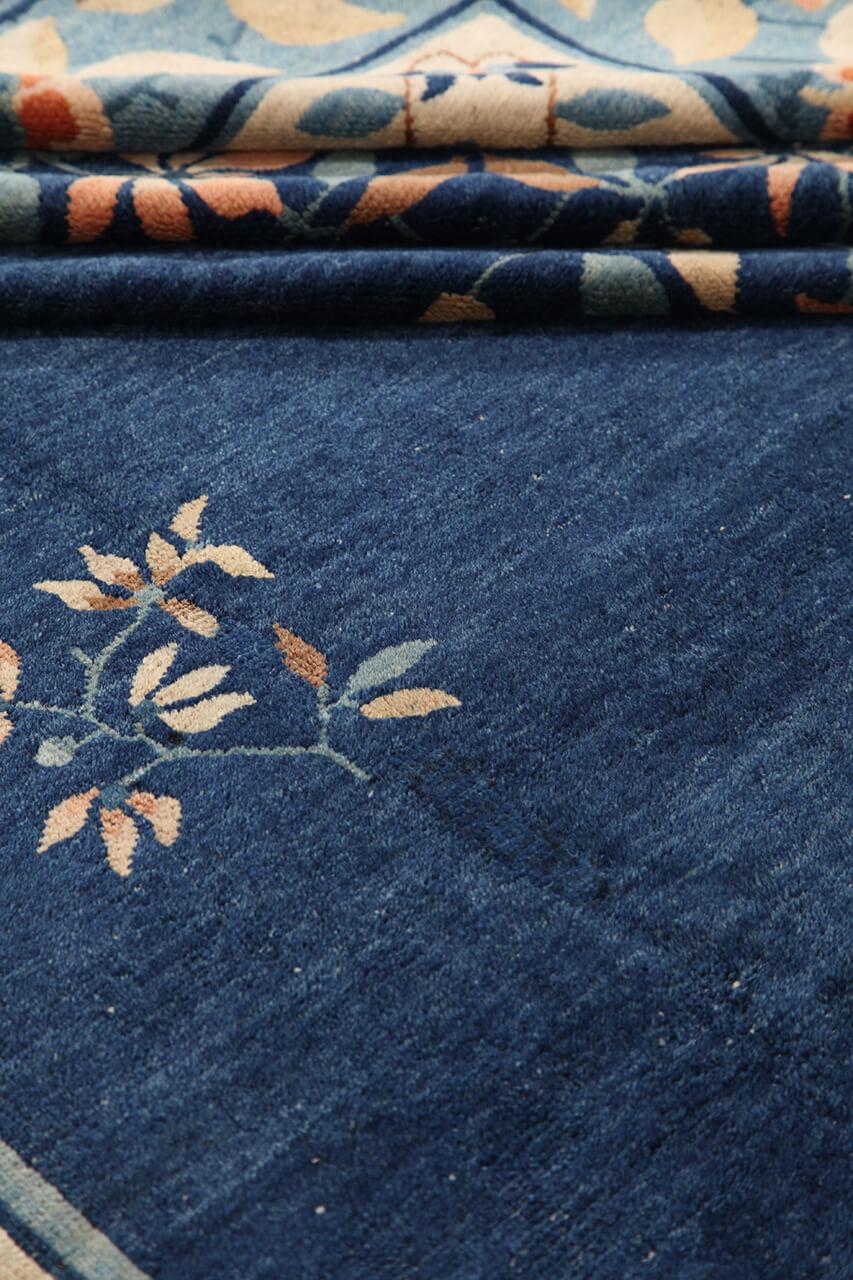
Signature elements of this tradition include the use of sophisticated, often understated colour palettes and asymmetrical compositions. The floral elements seen here are a classic hallmark of the style, where the design is treated almost like a painting on silk or paper, allowing the motifs to breathe within the central field of the rug.
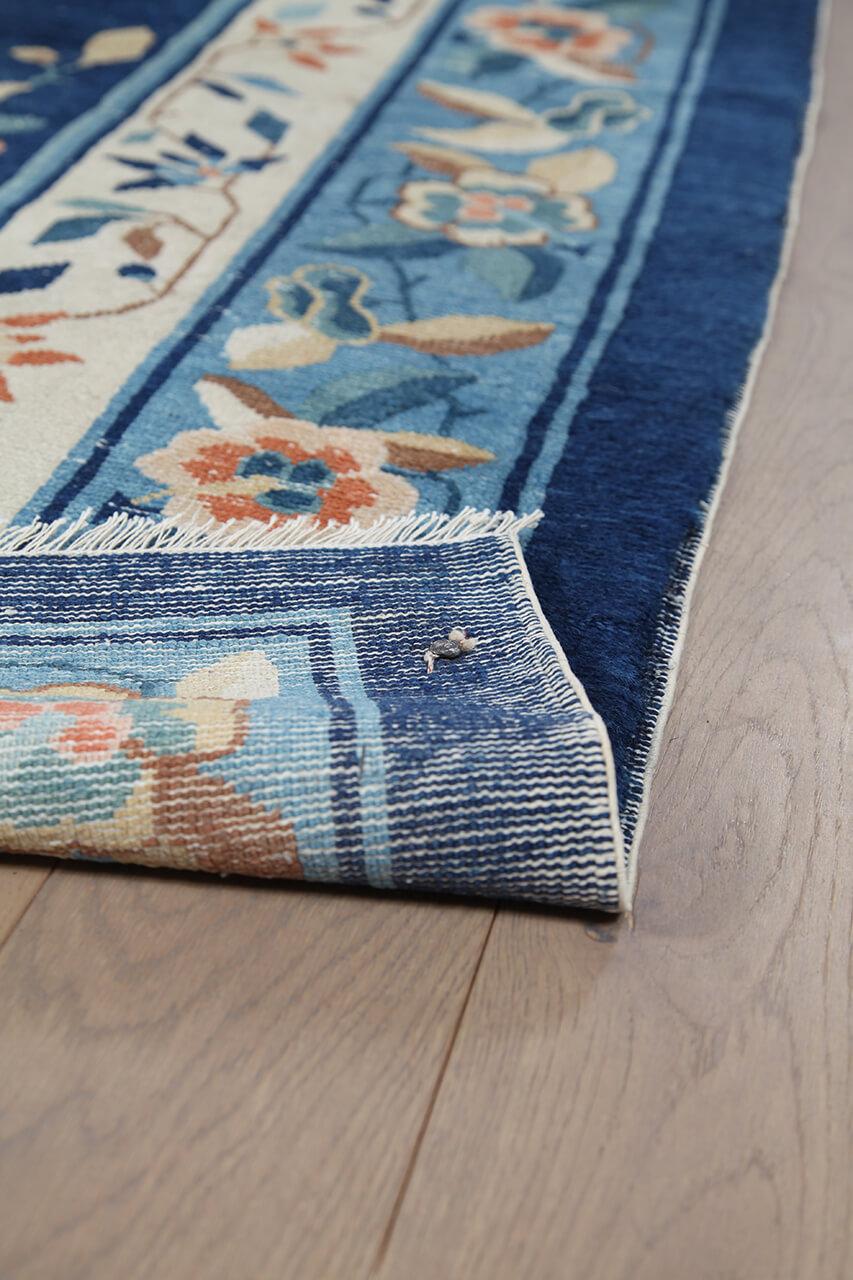
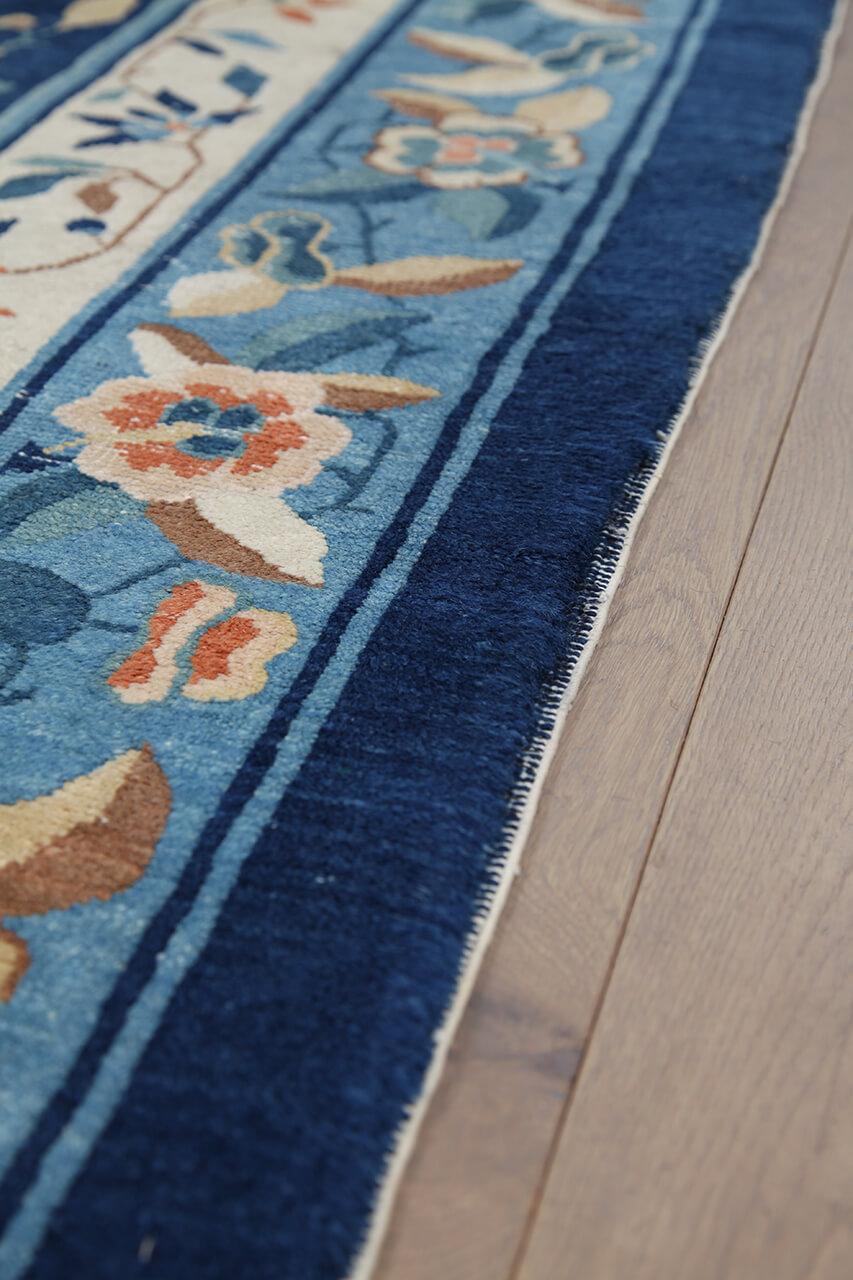
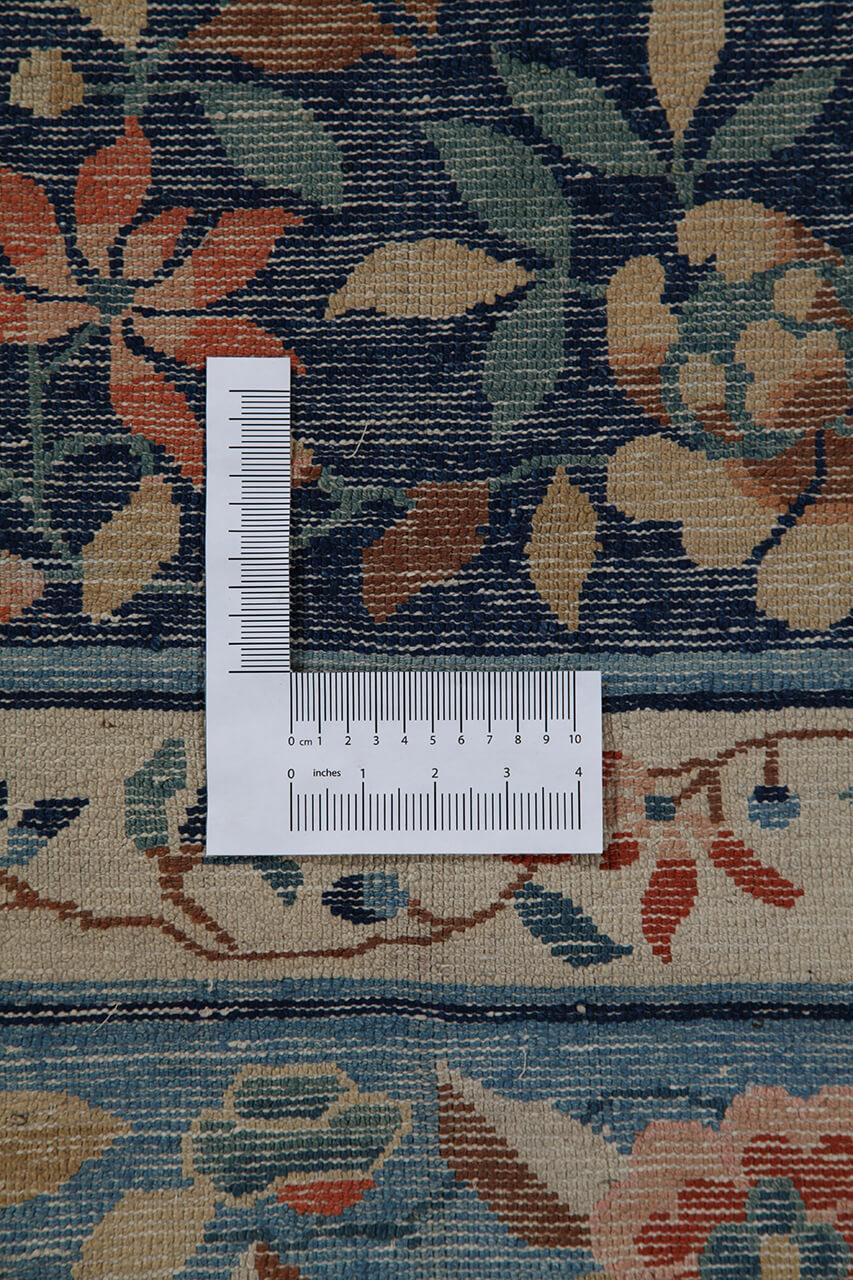
Collecting antique Chinese rugs is a way to preserve a specific chapter of global craft history. These pieces are highly valued not only for their beauty but for the skill required to translate such delicate, fluid designs into a knotted pile. Owning this rug is an investment in a legacy of patience, detail, and cultural expression.