Chinese rug weaving traditions date back centuries, with a unique aesthetic that evolved quite differently from the traditions of the Middle East. While Middle Eastern rugs often feature dense, all-over floral or geometric patterns, Chinese rugs are celebrated for their use of negative space, asymmetrical compositions, and symbolic motifs drawn from nature and folklore.
The term 'Pechino' or Beijing-style rugs refers to a refined tradition that gained international prominence in the early 20th century. These rugs were often commissioned for export but remained deeply rooted in the artistic conventions of the Imperial court, focusing on themes such as longevity, prosperity, and the natural elements, rendered in a distinctive, sculptural pile.
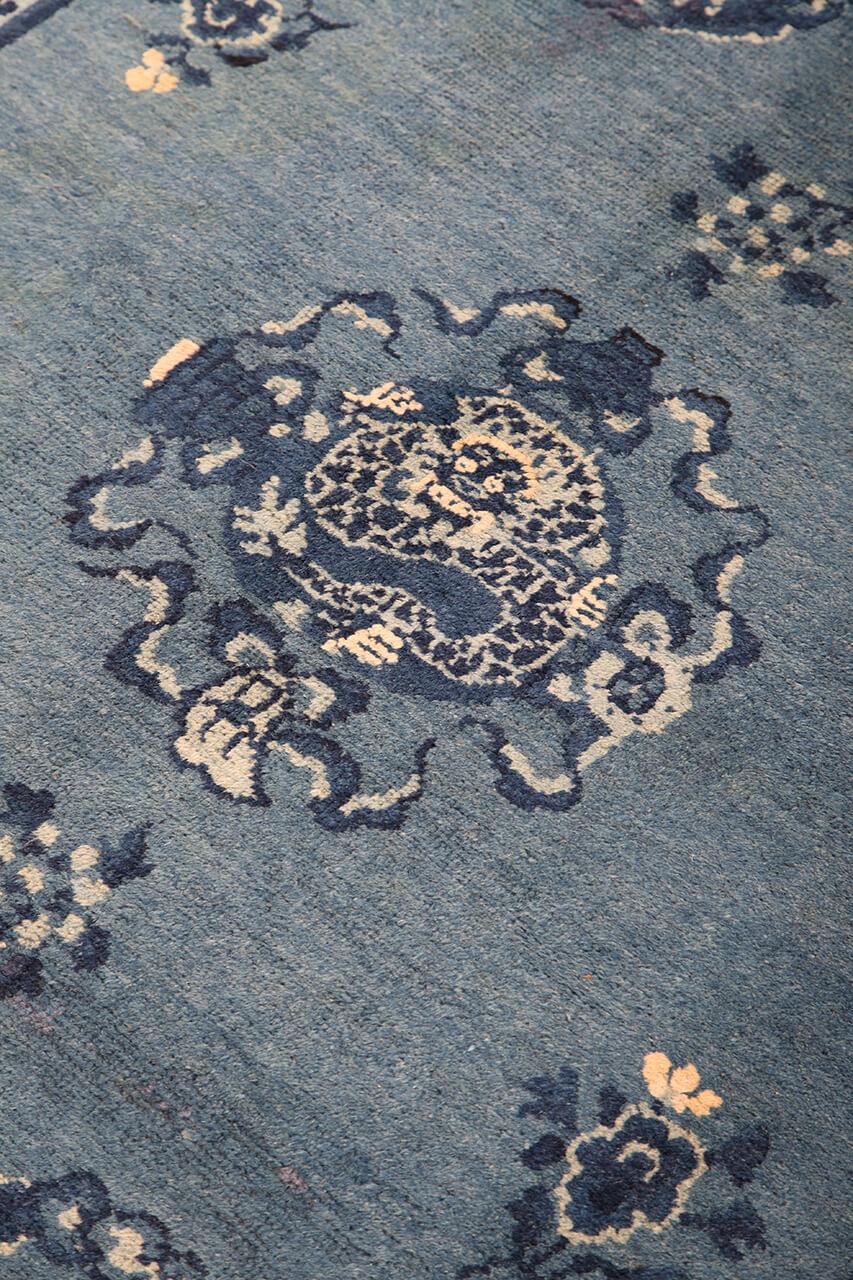
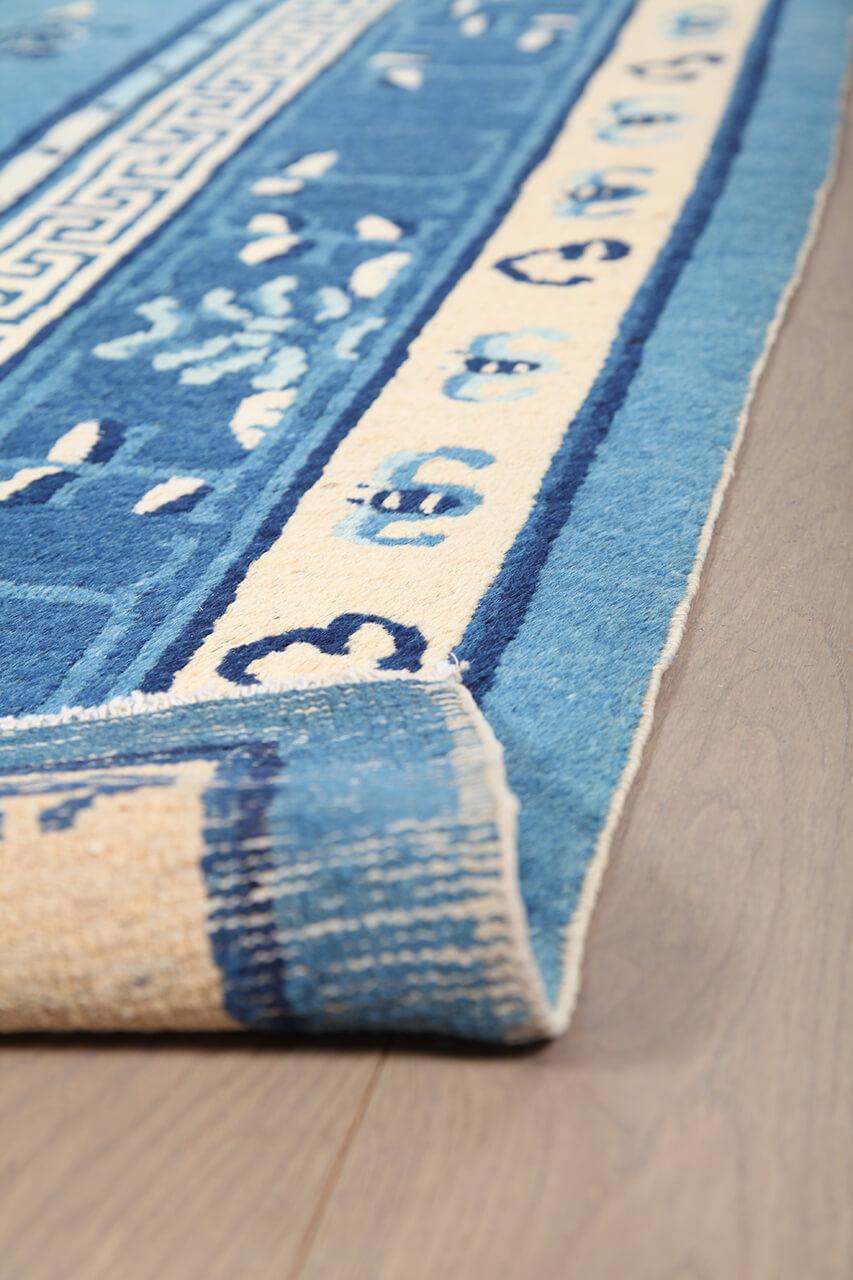
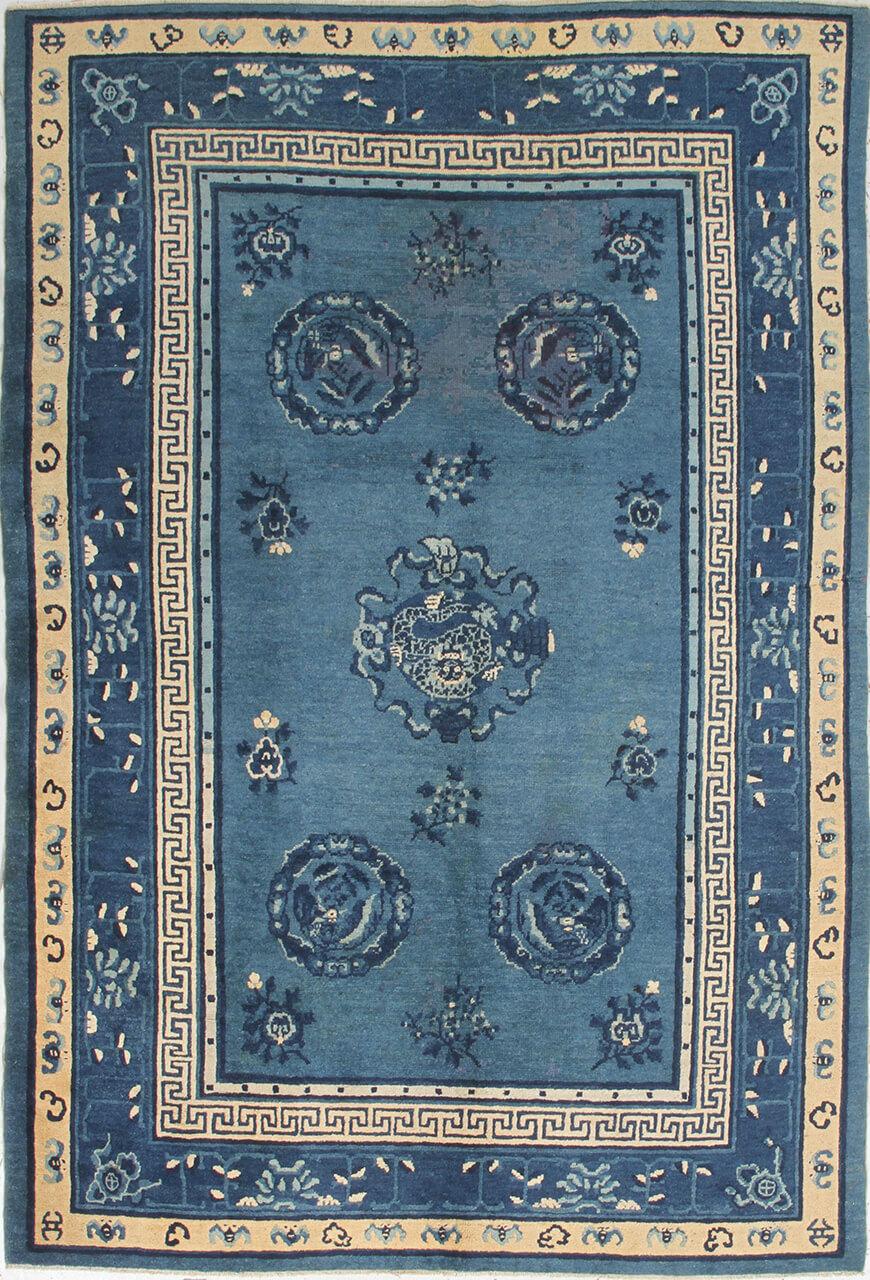
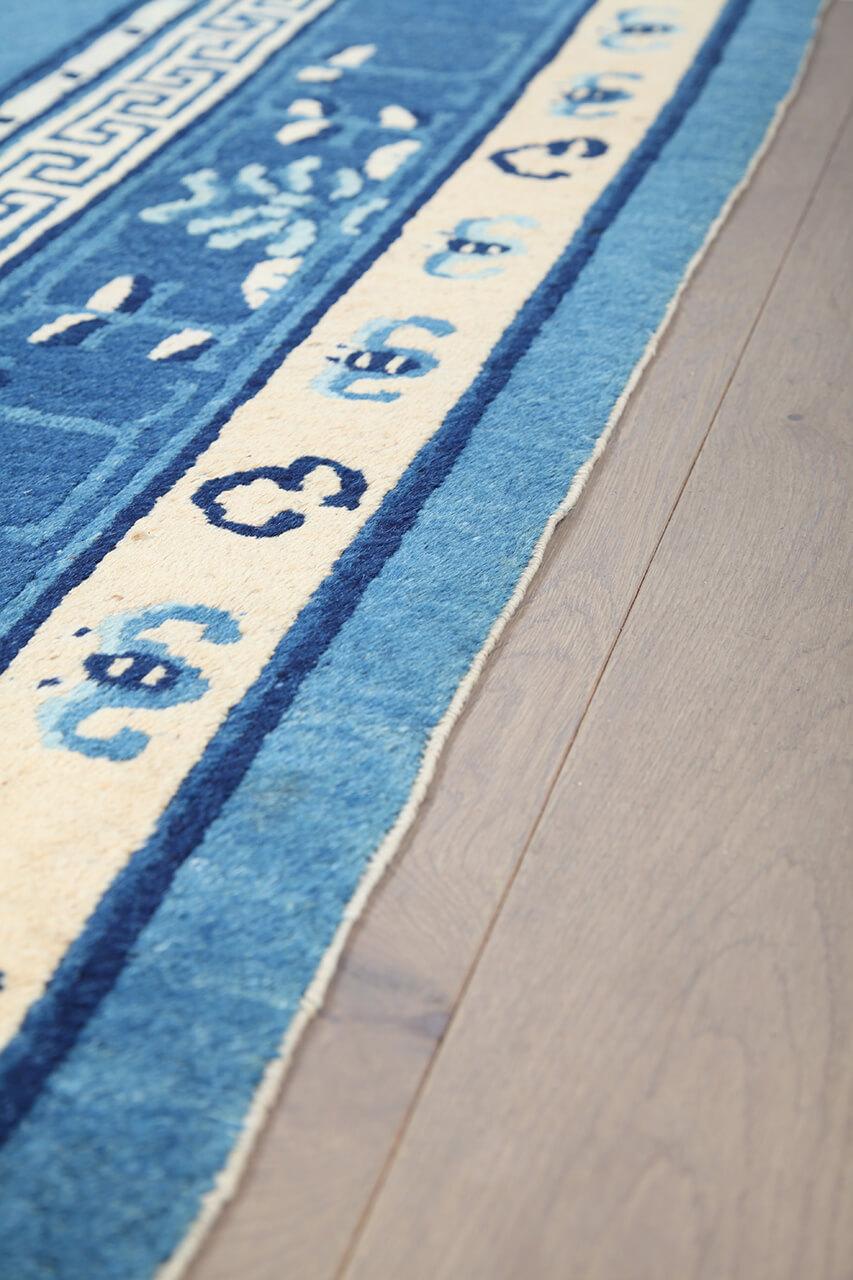
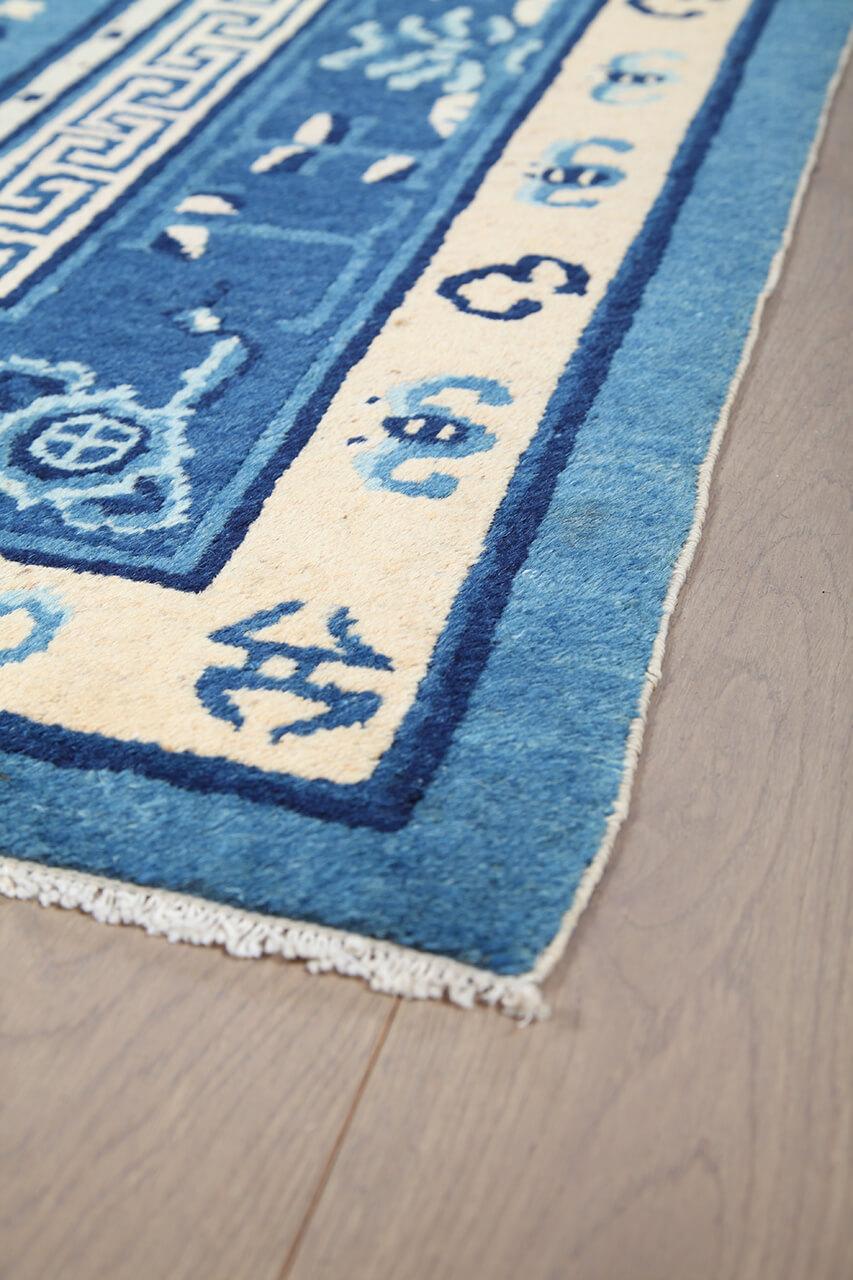
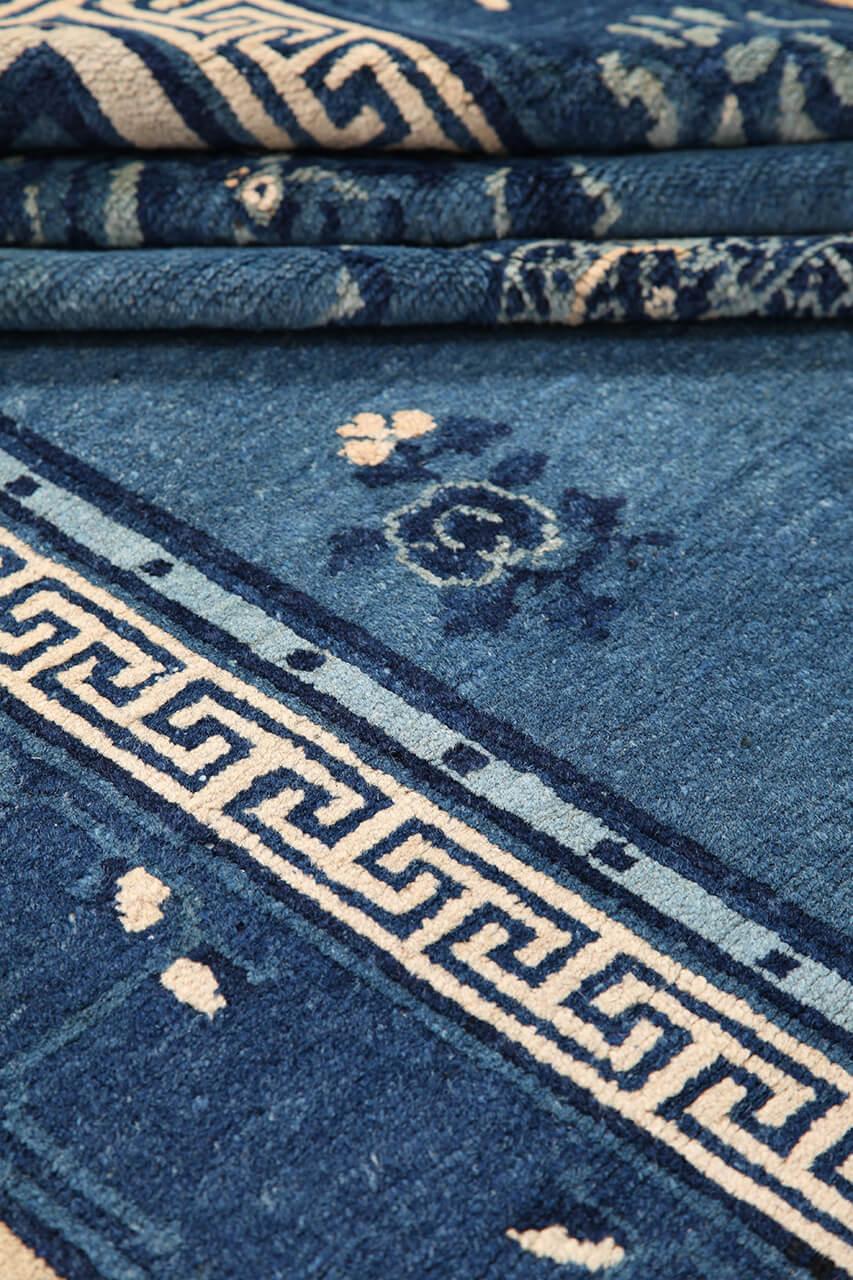
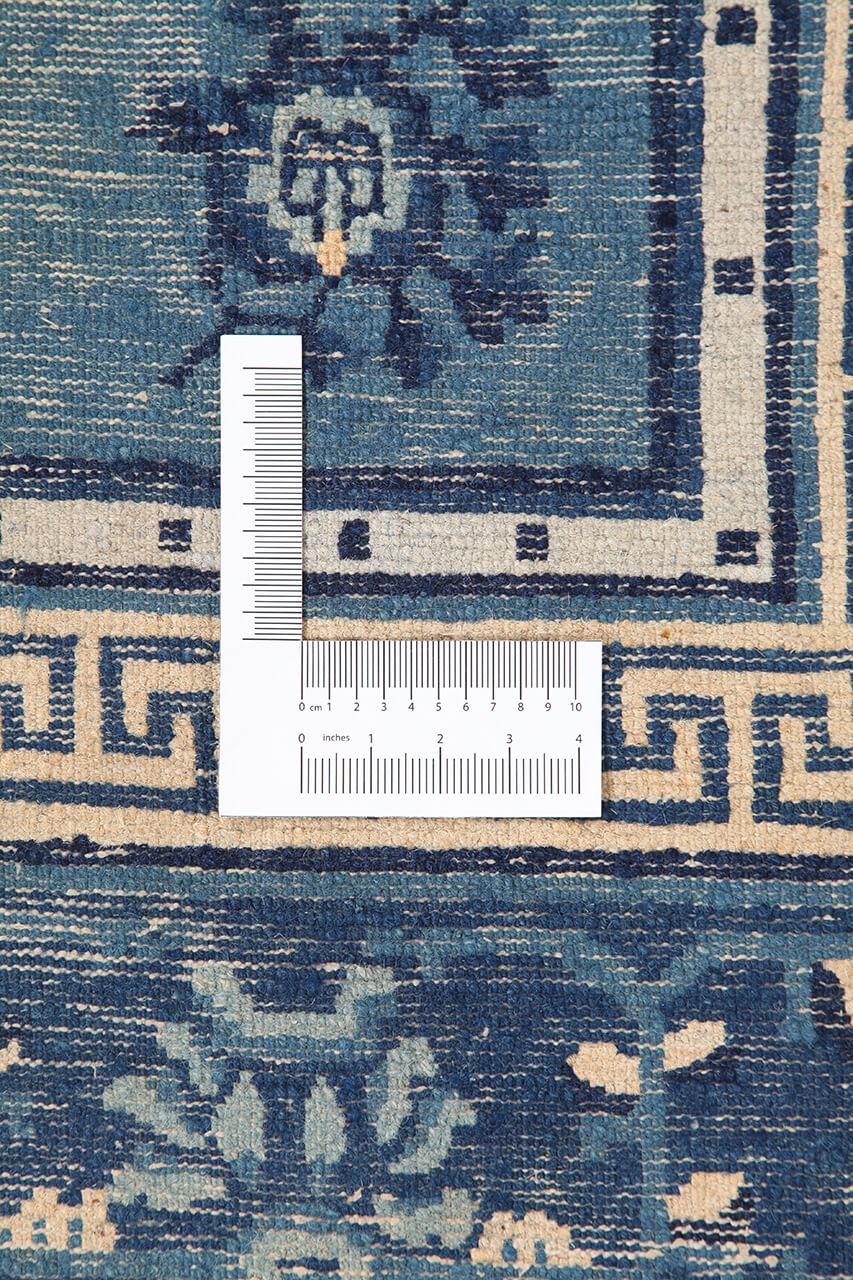
Signature design elements of this tradition include the use of borders that frame the central field, often adorned with fretwork or floral swags. The medallions seen in this piece are classic examples of the Chinese focus on balance and centered composition, with each motif carefully placed to draw the eye toward the center of the rug, creating a harmonious and serene visual flow.
Owning an antique rug from this tradition is akin to preserving a piece of cultural history. These rugs were not merely floor coverings but were designed to reflect the philosophical and aesthetic values of their time. Collectors prize them for their unique blend of artistry and durability, viewing them as significant artefacts that tell the story of a bygone era through their intricate and thoughtful designs.