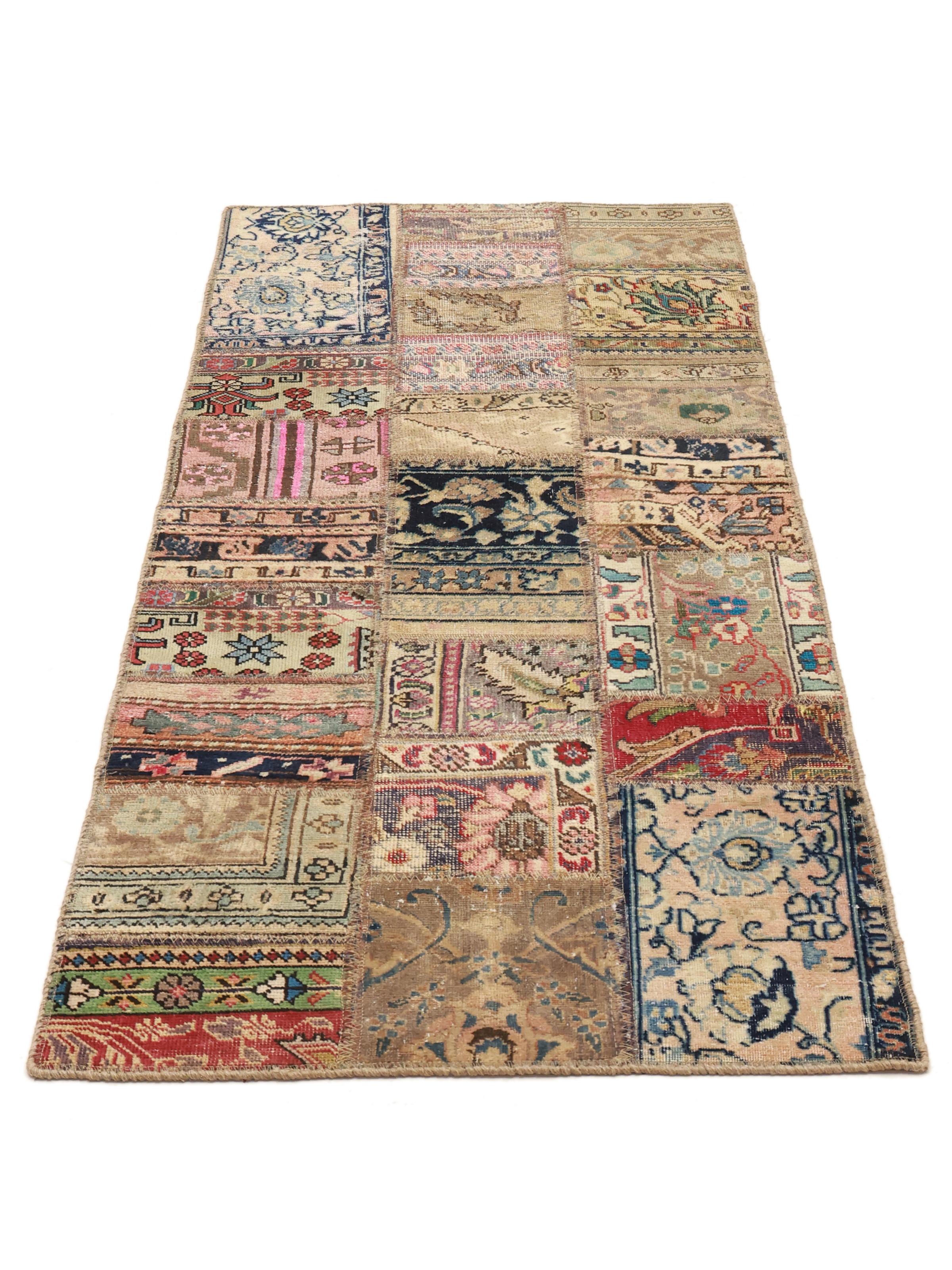
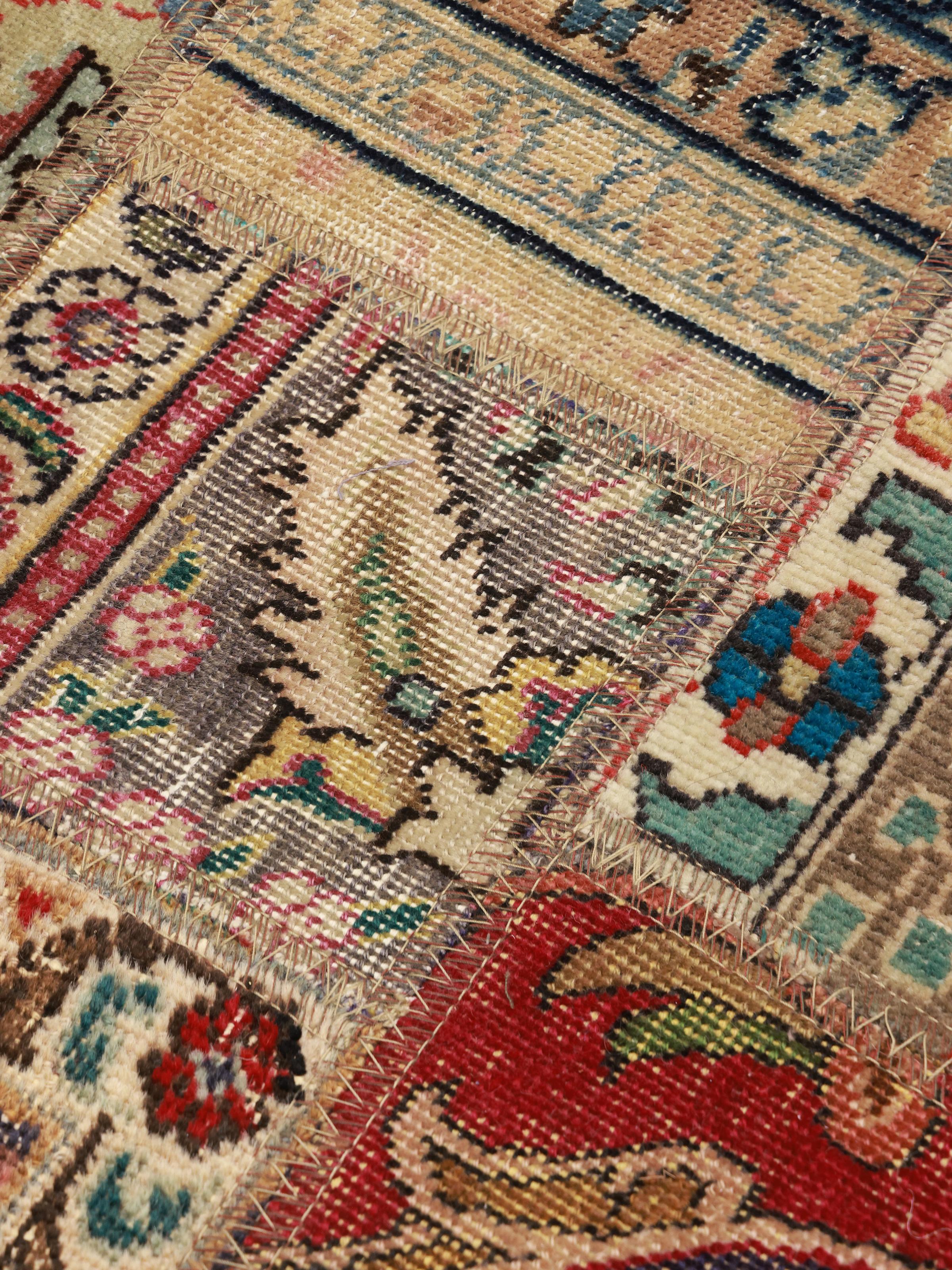
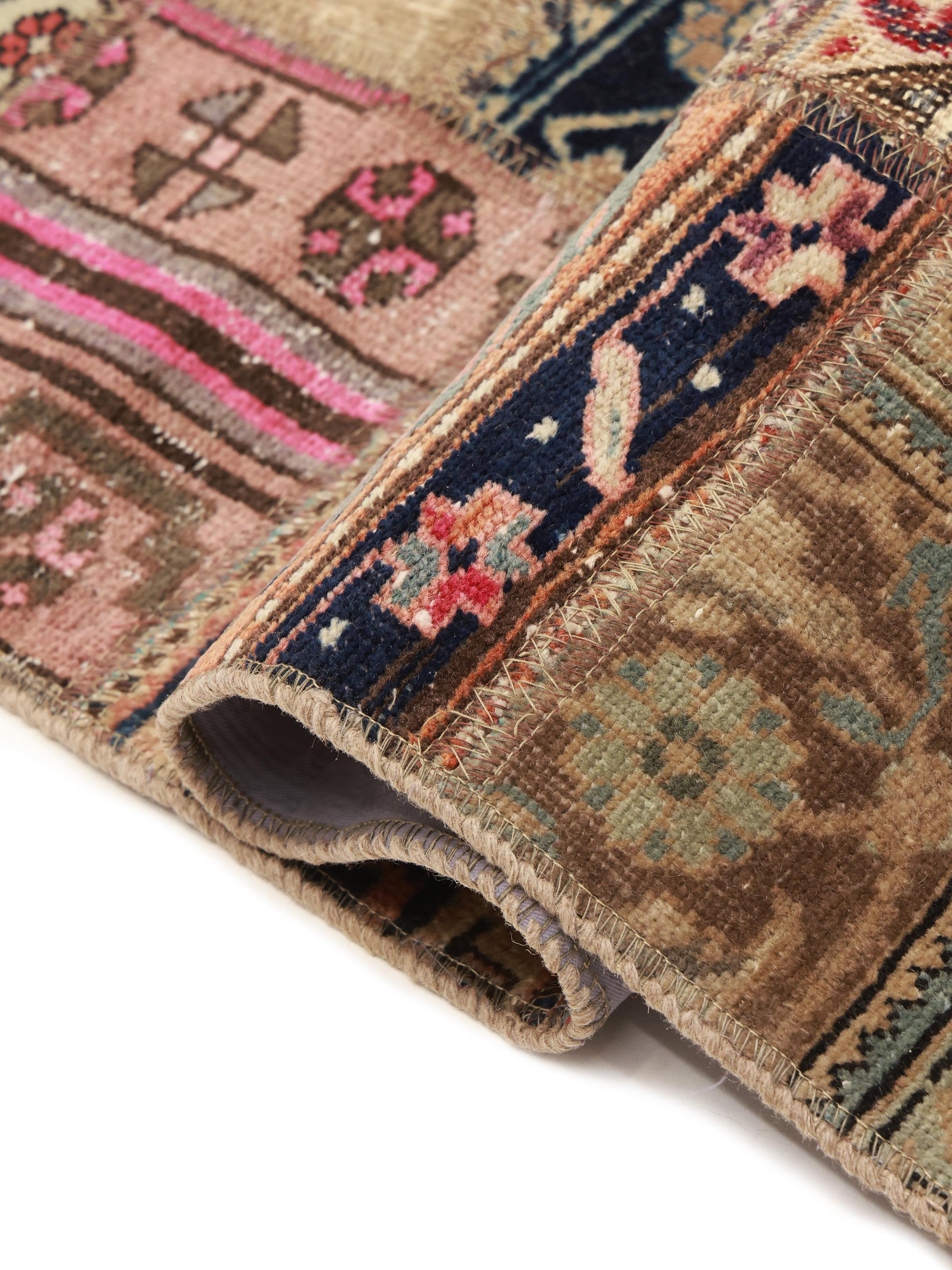
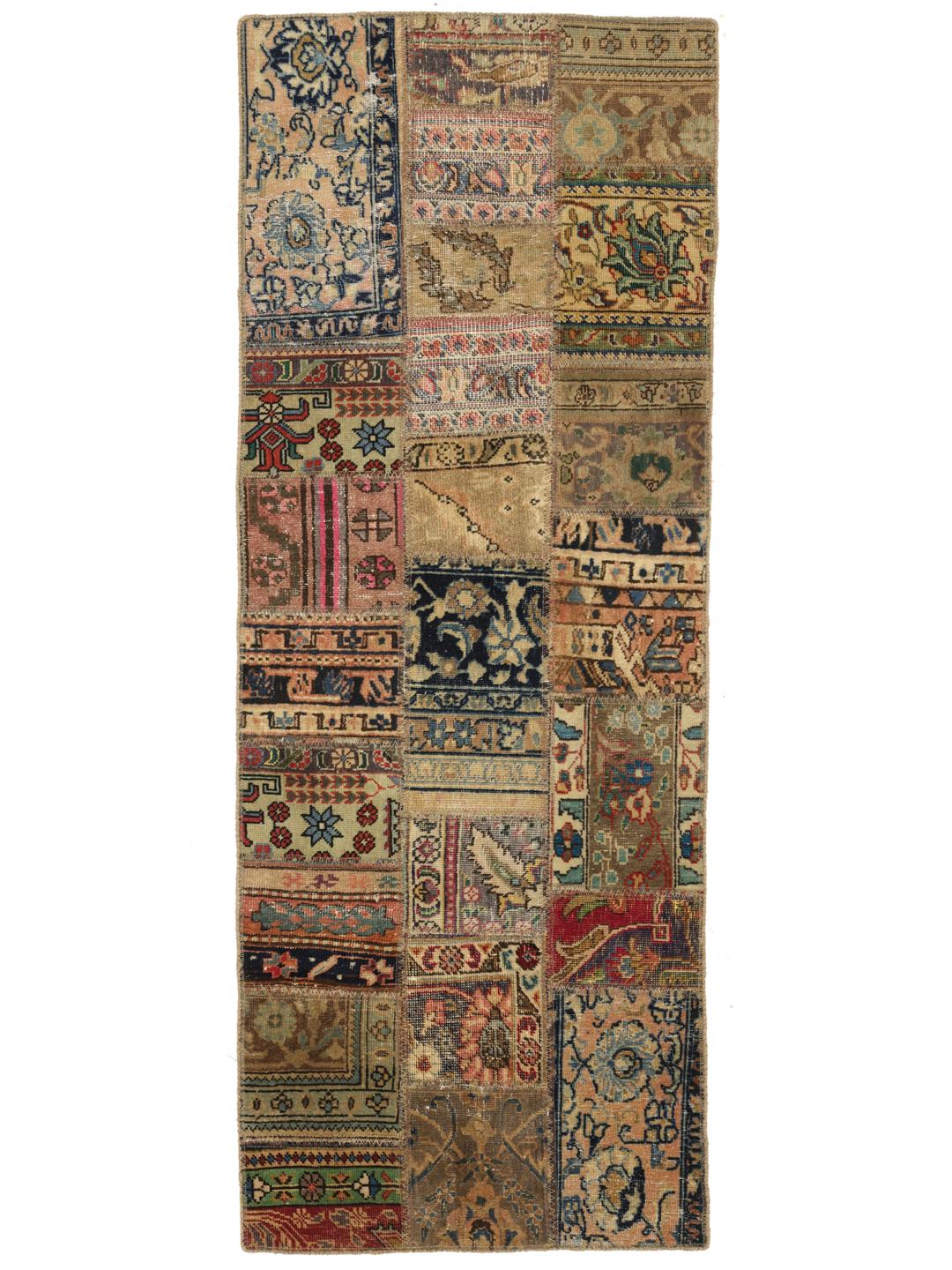
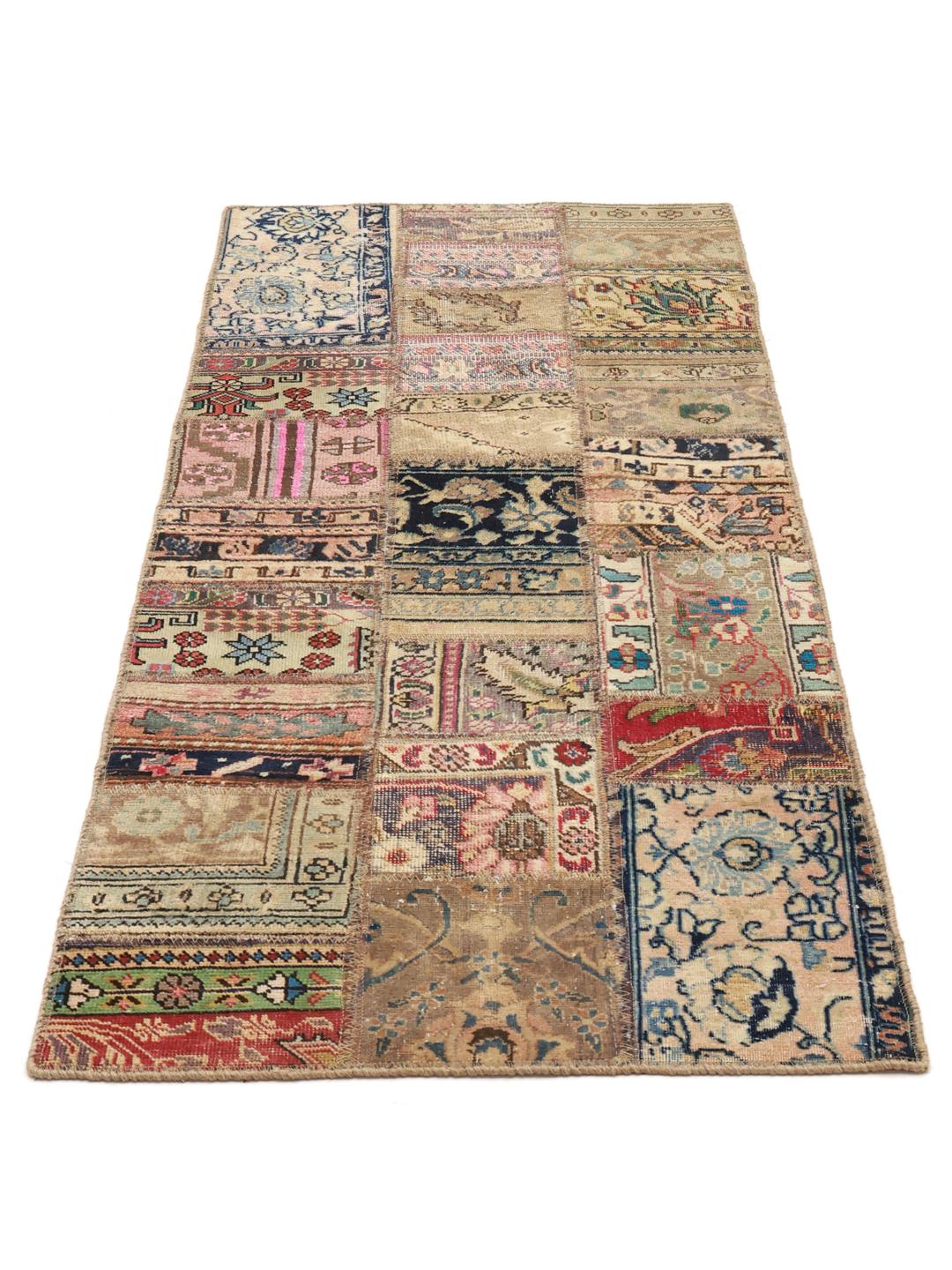
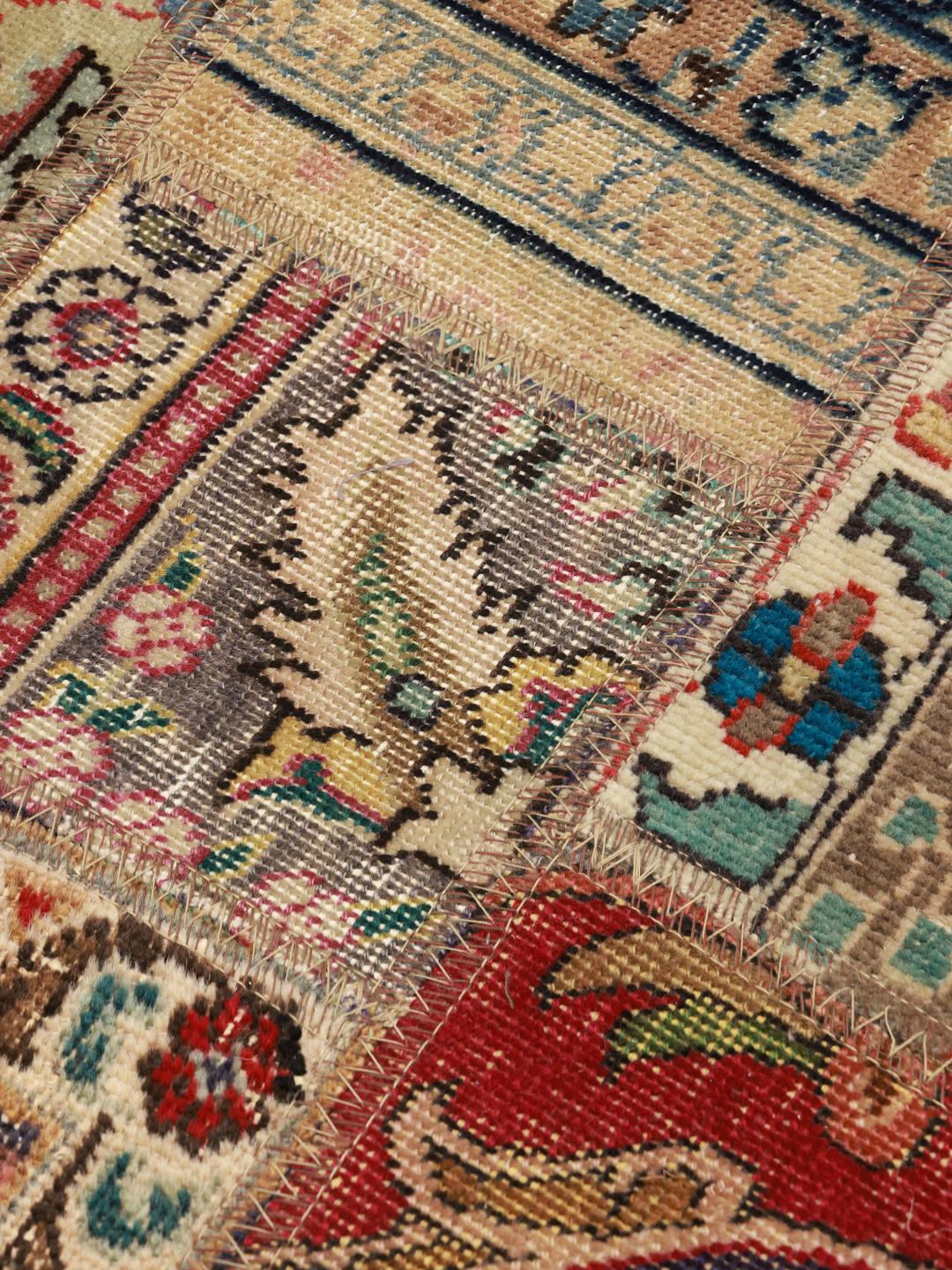
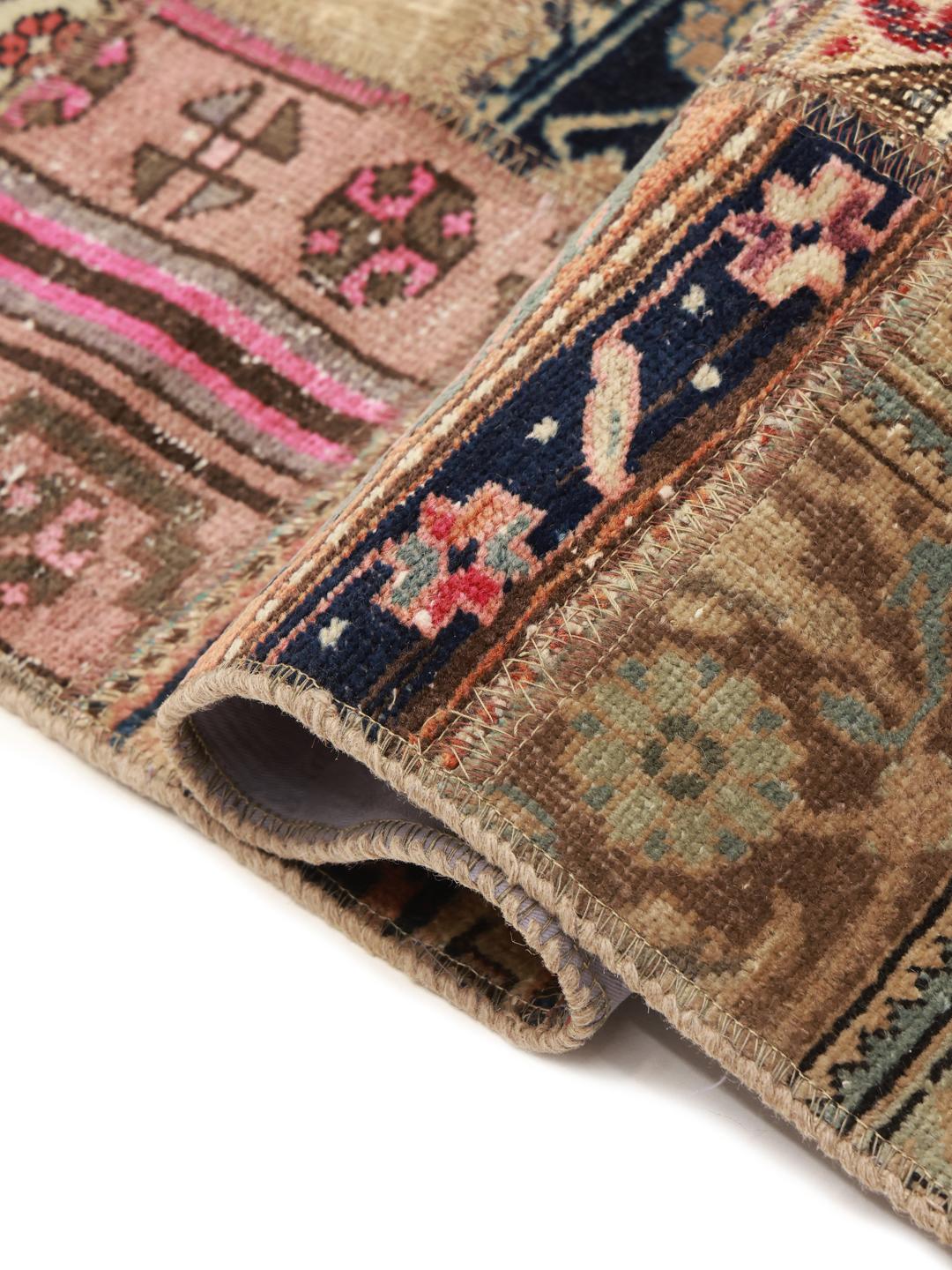
The tradition of Turkish Patchwork rugs is a creative celebration of textile history, where older hand-knotted rugs are given a second life. This art form began as a way to preserve and repurpose beautiful fragments of semi-antique rugs that had experienced uneven wear over decades. By carefully selecting, washing, and hand-stitching these pieces together, artisans create a cohesive new textile that honours the original weavers while offering a modern design perspective.
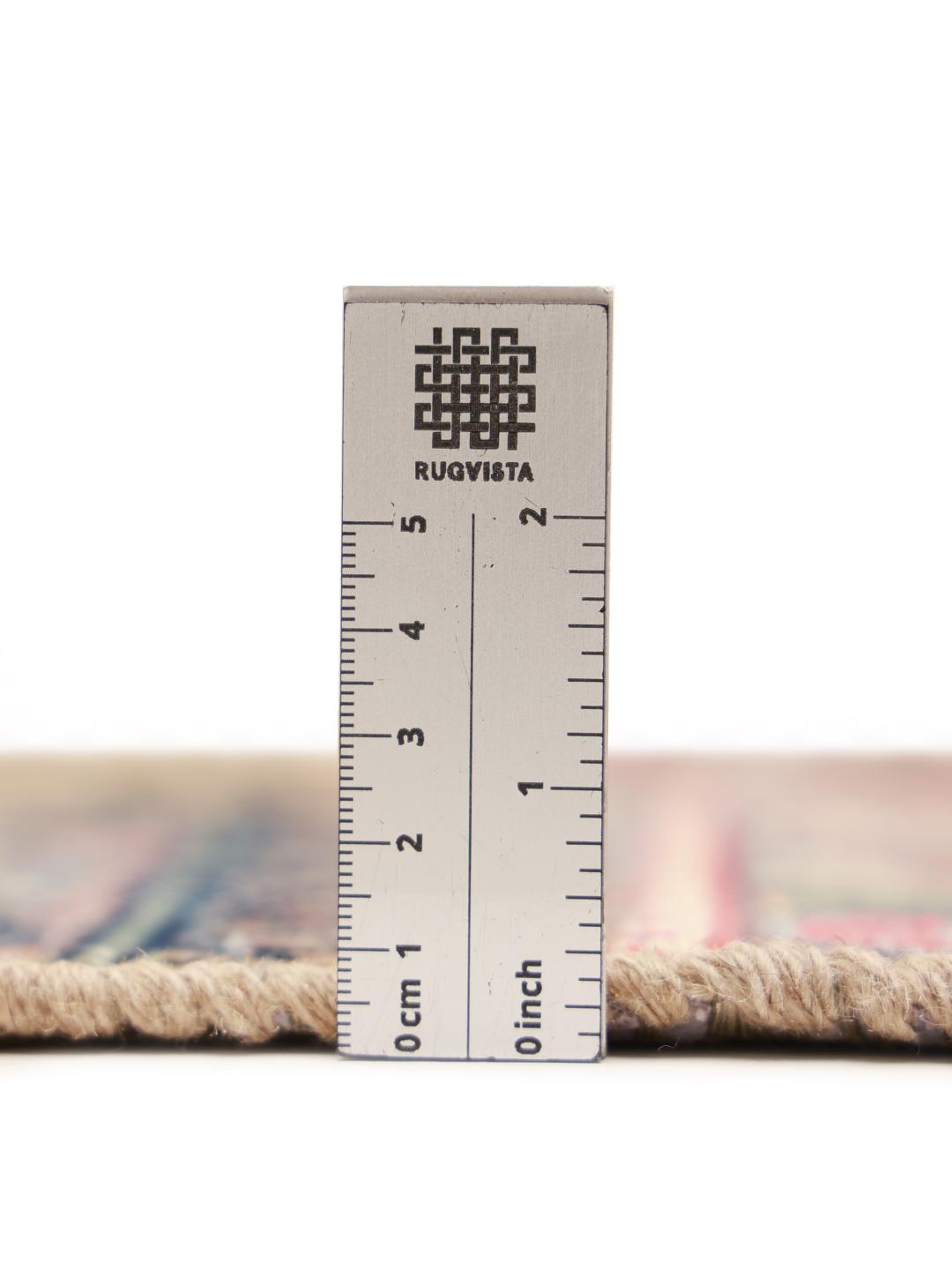
Each fragment used in this runner represents a distinct hand-knotted rug, meaning the final piece is a collage of different weaving techniques and regional styles. The process of creating a patchwork rug requires a highly skilled eye to balance the varying thicknesses, textures, and dye lots of the vintage panels. This careful assembly results in a structurally sound, heavy-duty runner that combines the strength of multiple historic carpets into a single, durable floor covering.
The visual language of this Patchwork runner is defined by its eclectic mix of ornate and geometric motifs, showcasing fragments of traditional Turkish designs. The combination of beige and multicolor panels creates a rich visual texture, where floral borders sit alongside geometric medallions. The natural, distressed look of the semi-antique wool panels gives the rug a soft, lived-in character, with beautiful tonal variations that only time and gentle wear can produce.
Owning a semi-antique Turkish Patchwork rug is a way to connect with the diverse weaving cultures of Anatolia. Each patch tells its own story, originating from different villages and eras, making the runner a living archive of regional craftsmanship. For collectors and design enthusiasts alike, these rugs are highly valued for their ability to bridge traditional heritage and contemporary style, offering a sustainable way to bring authentic history into the home.