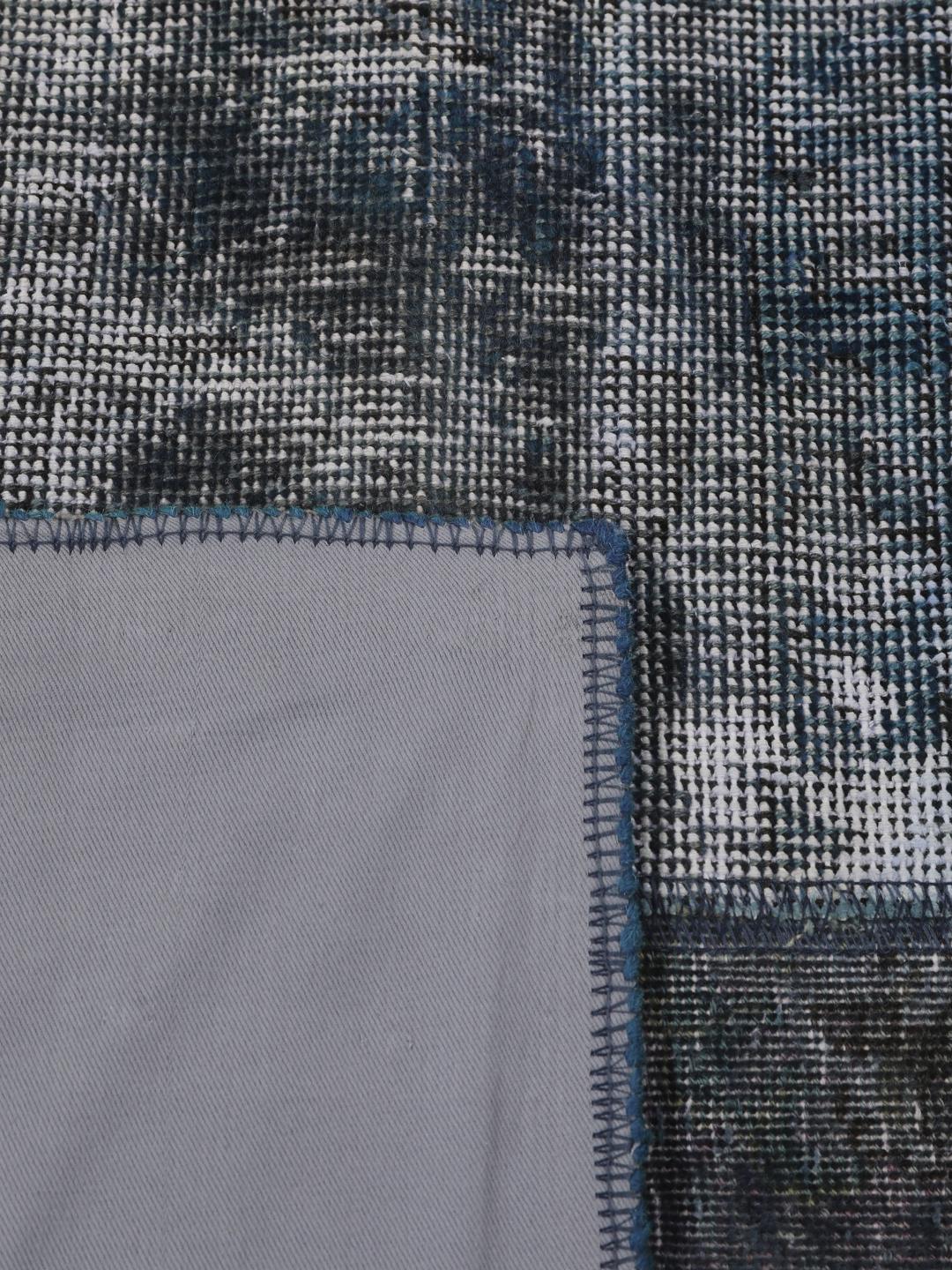
Patchwork rugs represent a fascinating evolution in the history of Middle Eastern textile craft. While the region is historically renowned for its complete, large-scale woven carpets, the patchwork tradition emerged as a creative way to honour and preserve pieces of older, cherished rugs that had sustained wear over time. This practice celebrates the longevity of high-quality wool, ensuring that the history woven into every knot remains part of the domestic landscape.
The terminology surrounding these rugs often refers to the 're-purposing' of vintage textiles. By taking sections of traditional designs and re-assembling them, artisans create a new narrative. This requires deep knowledge of how different weaving styles, knot densities, and colour palettes interact. It is not merely about stitching pieces together, but about composing a new visual language from the remnants of the past.
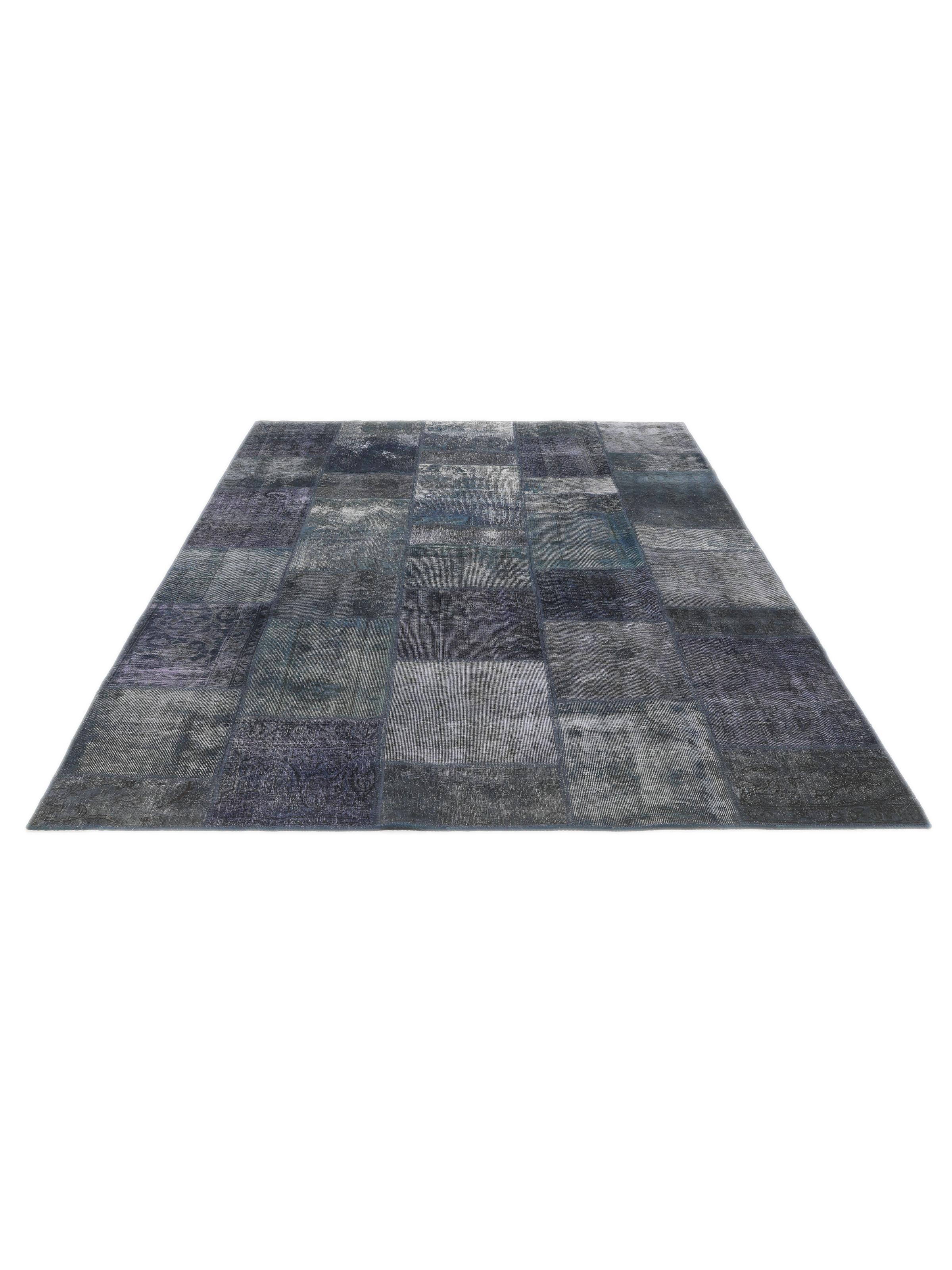
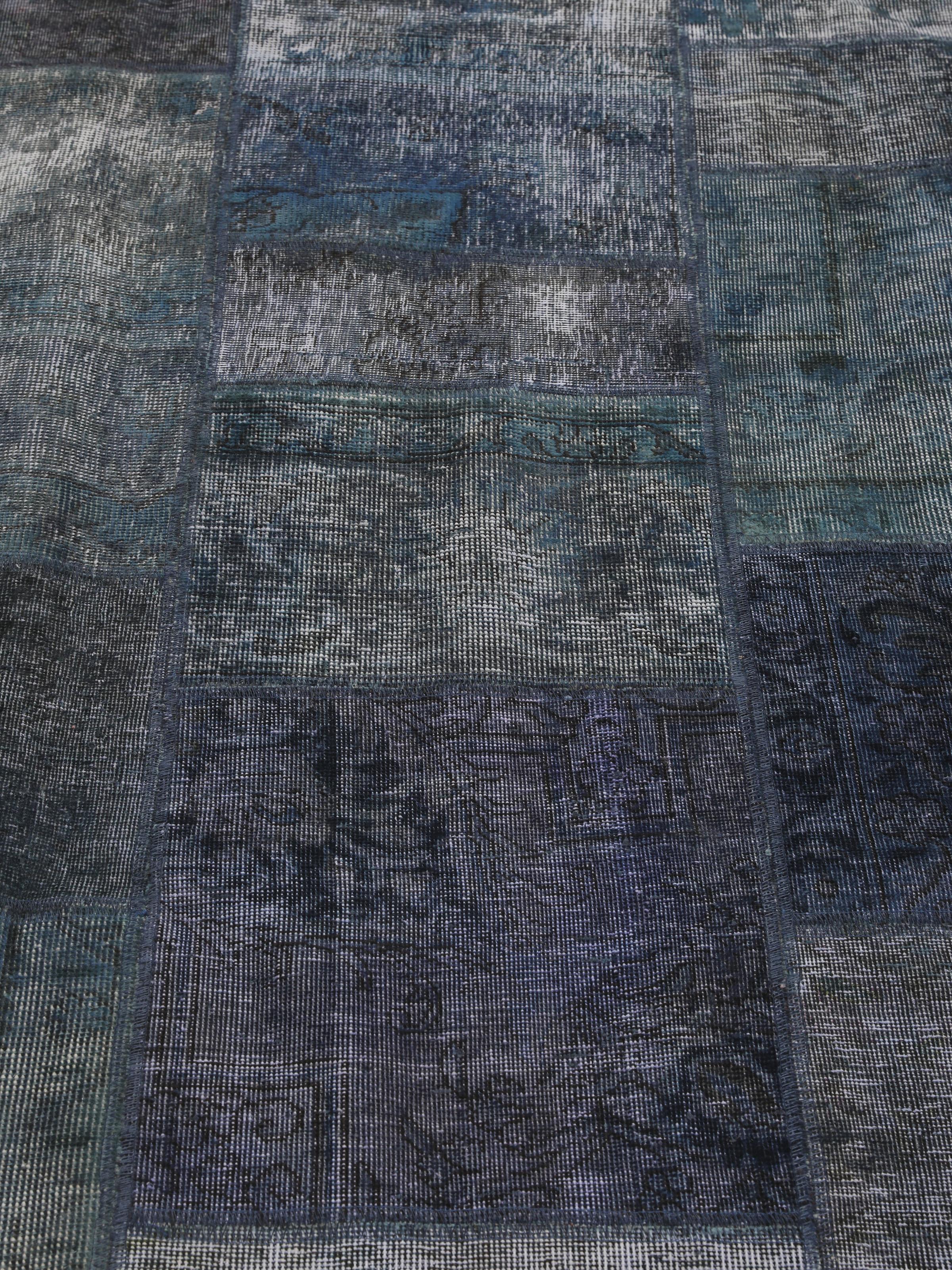
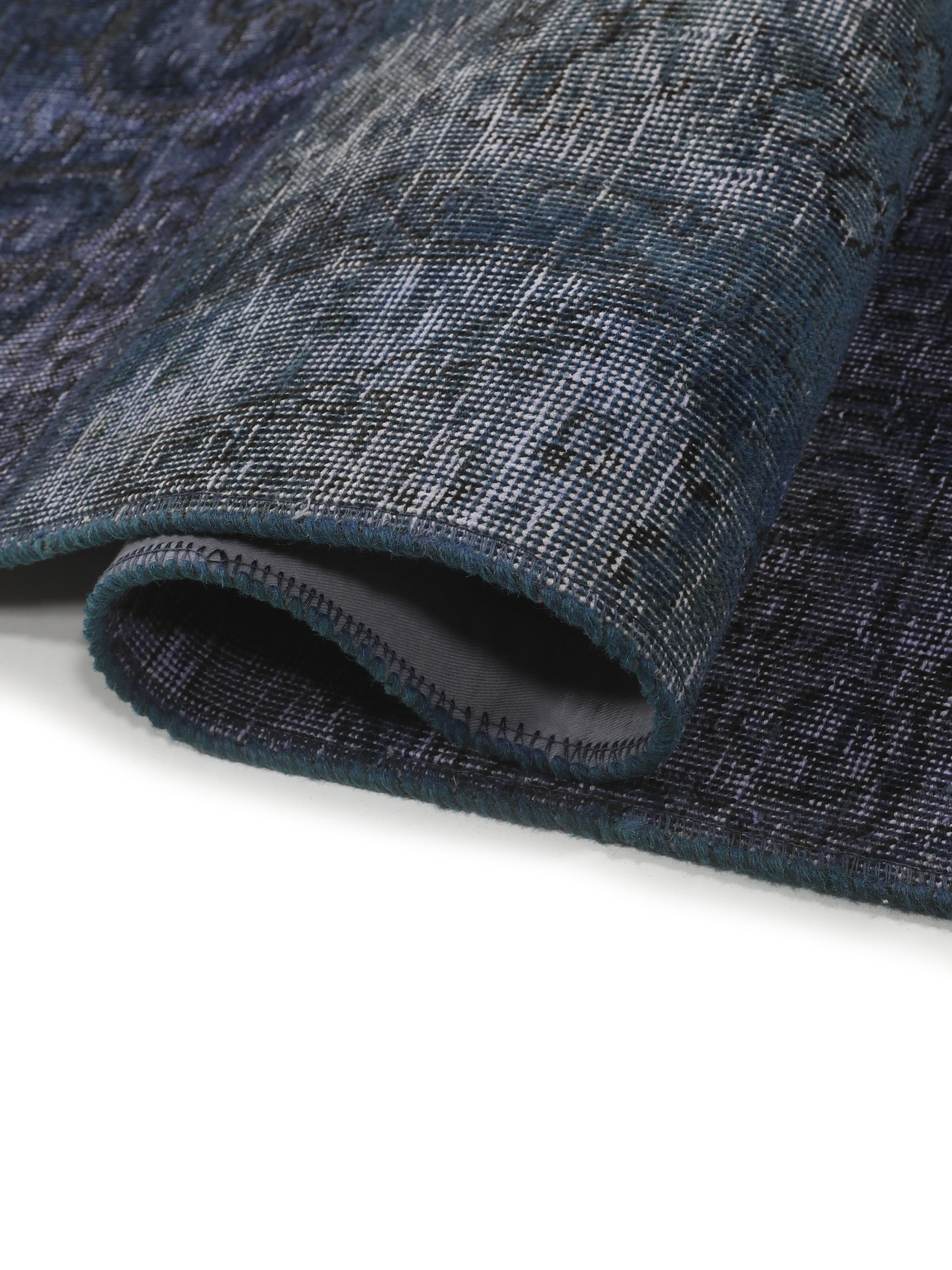
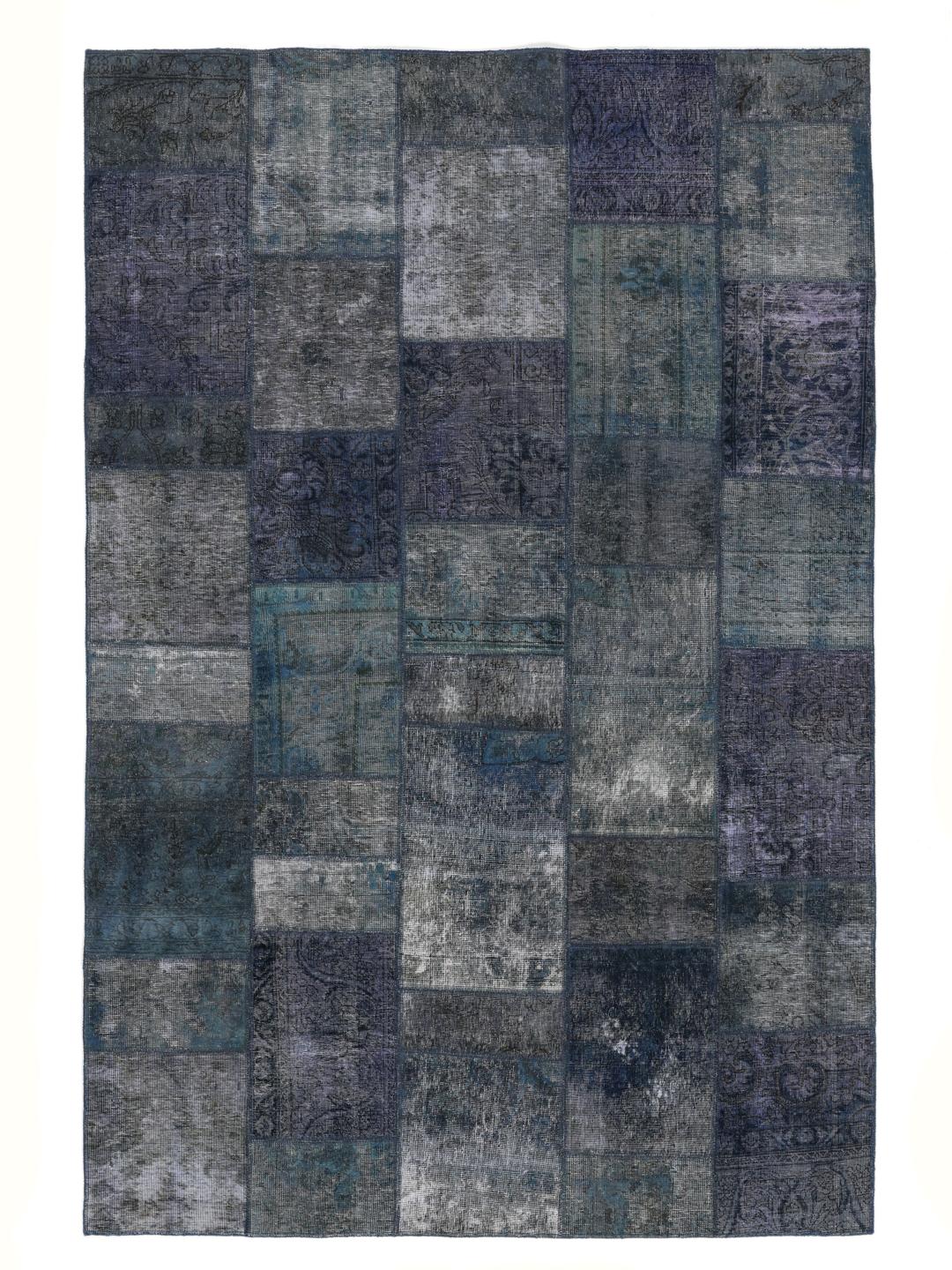
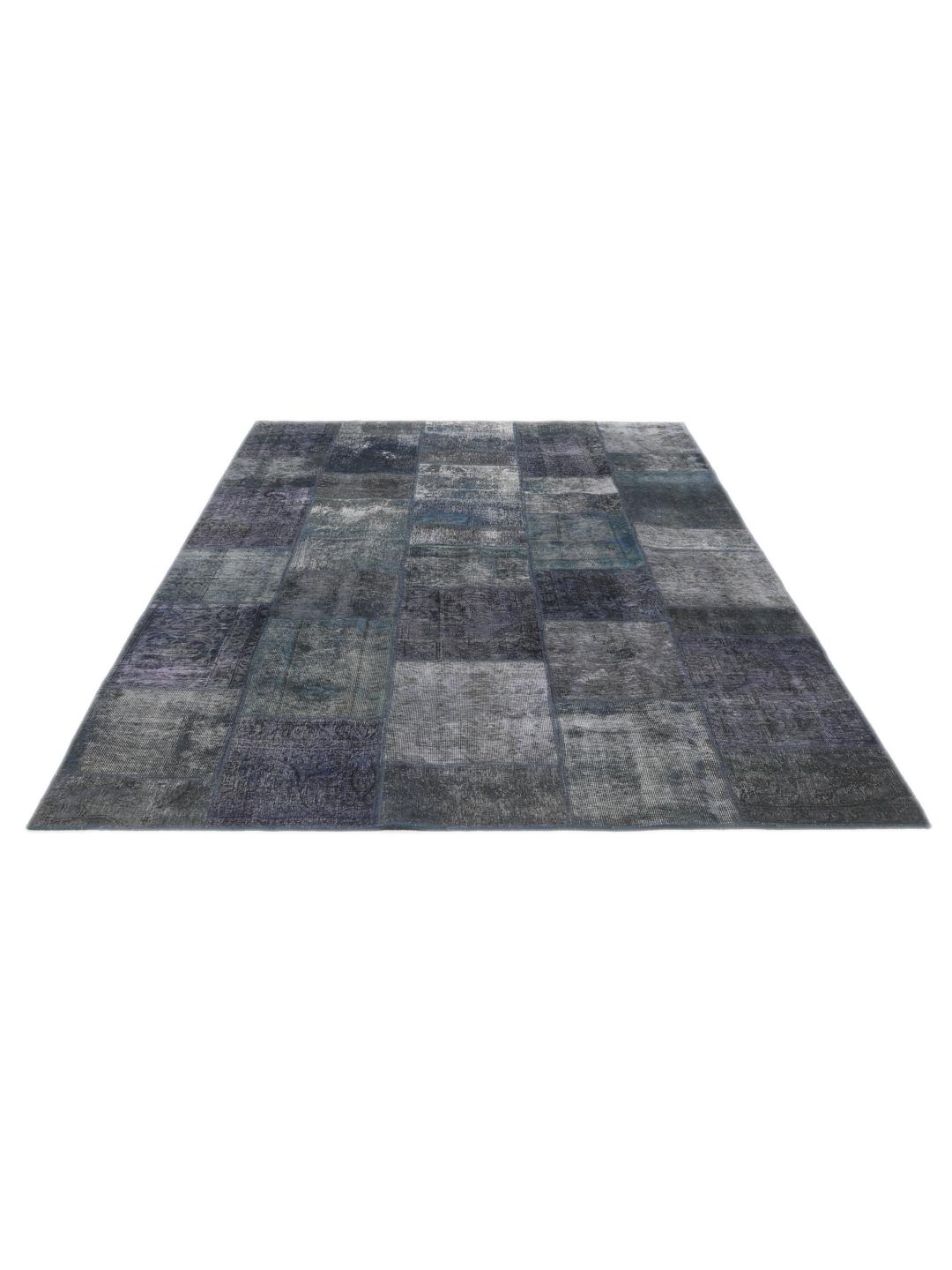
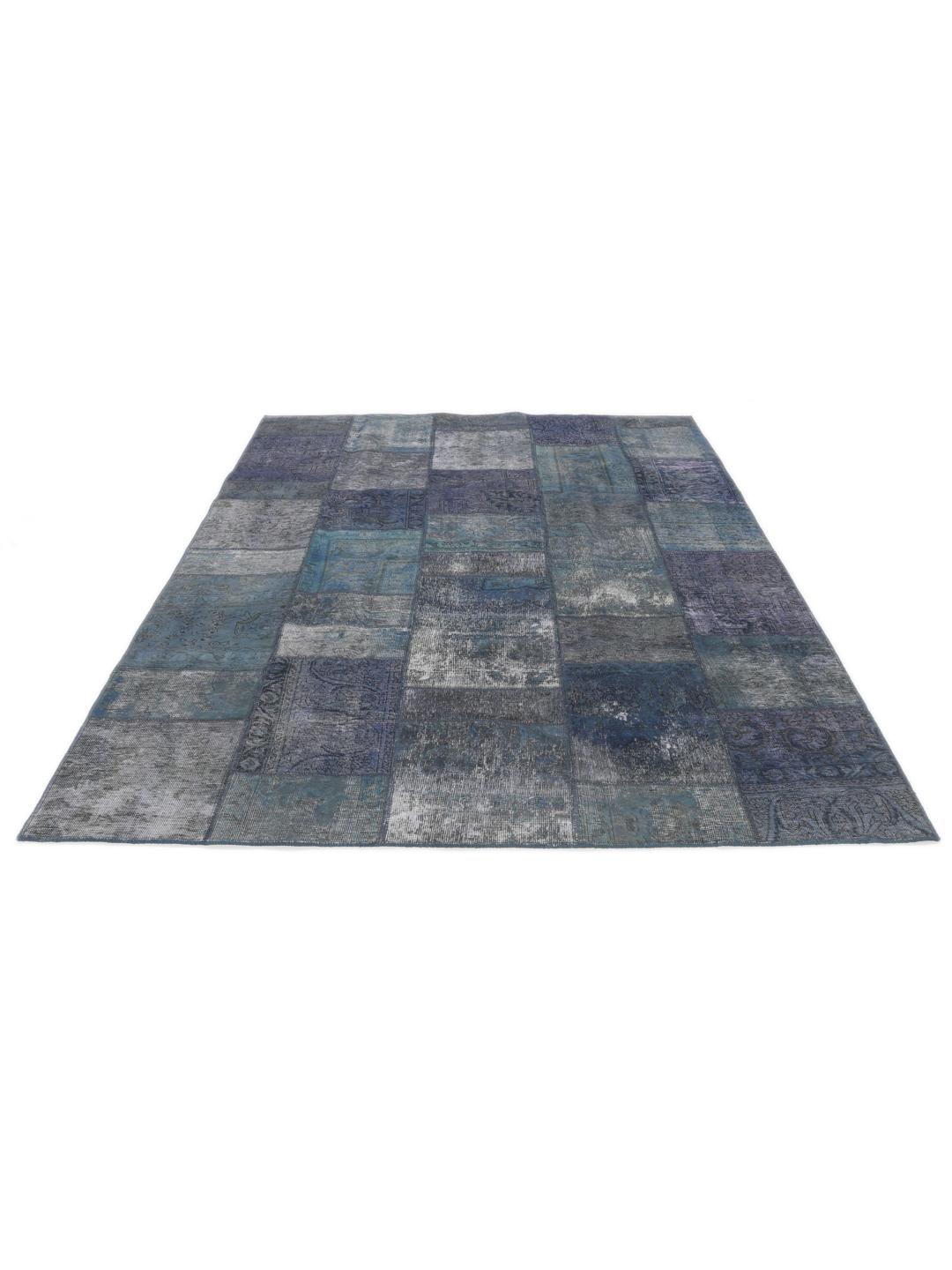
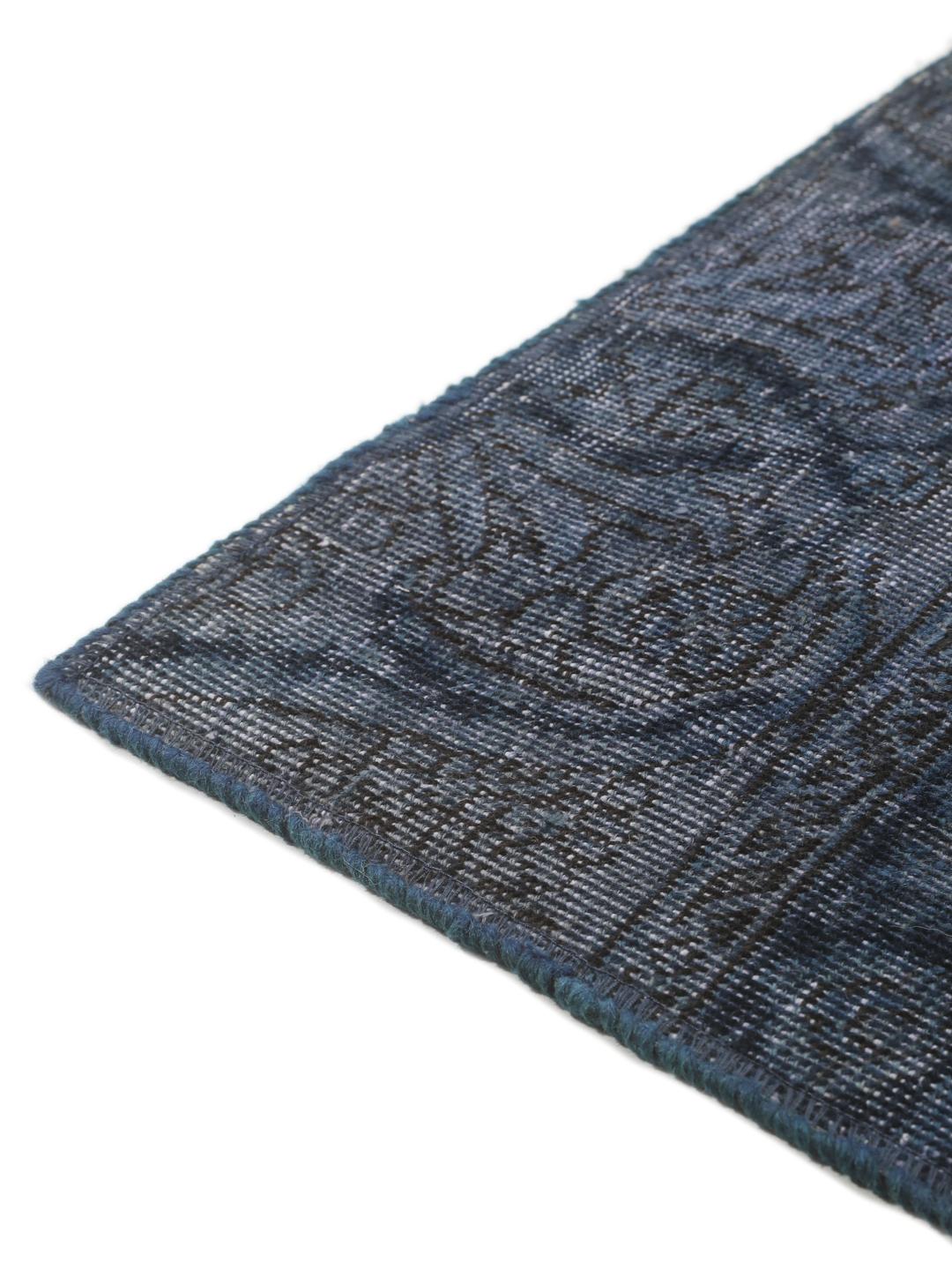
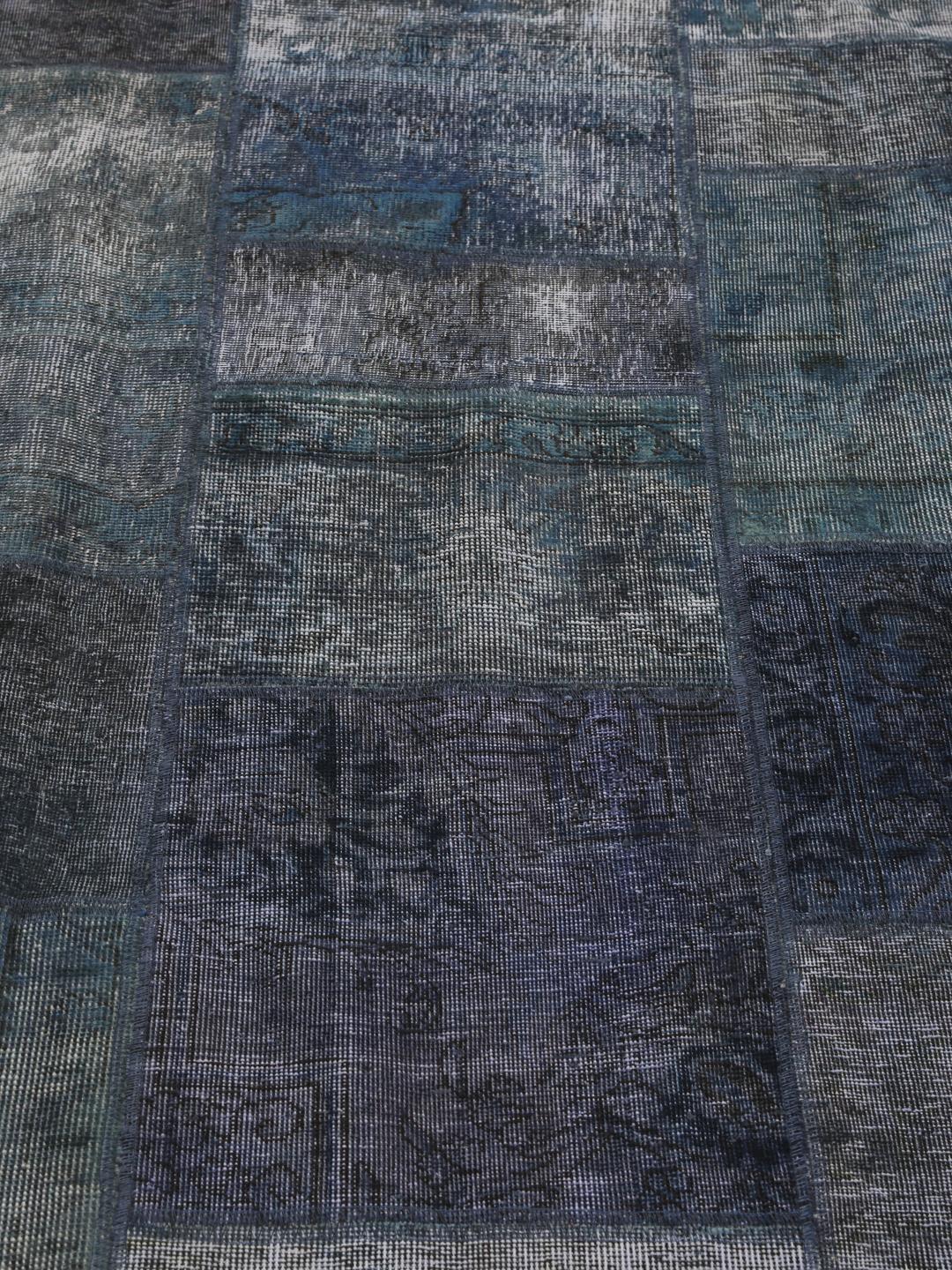
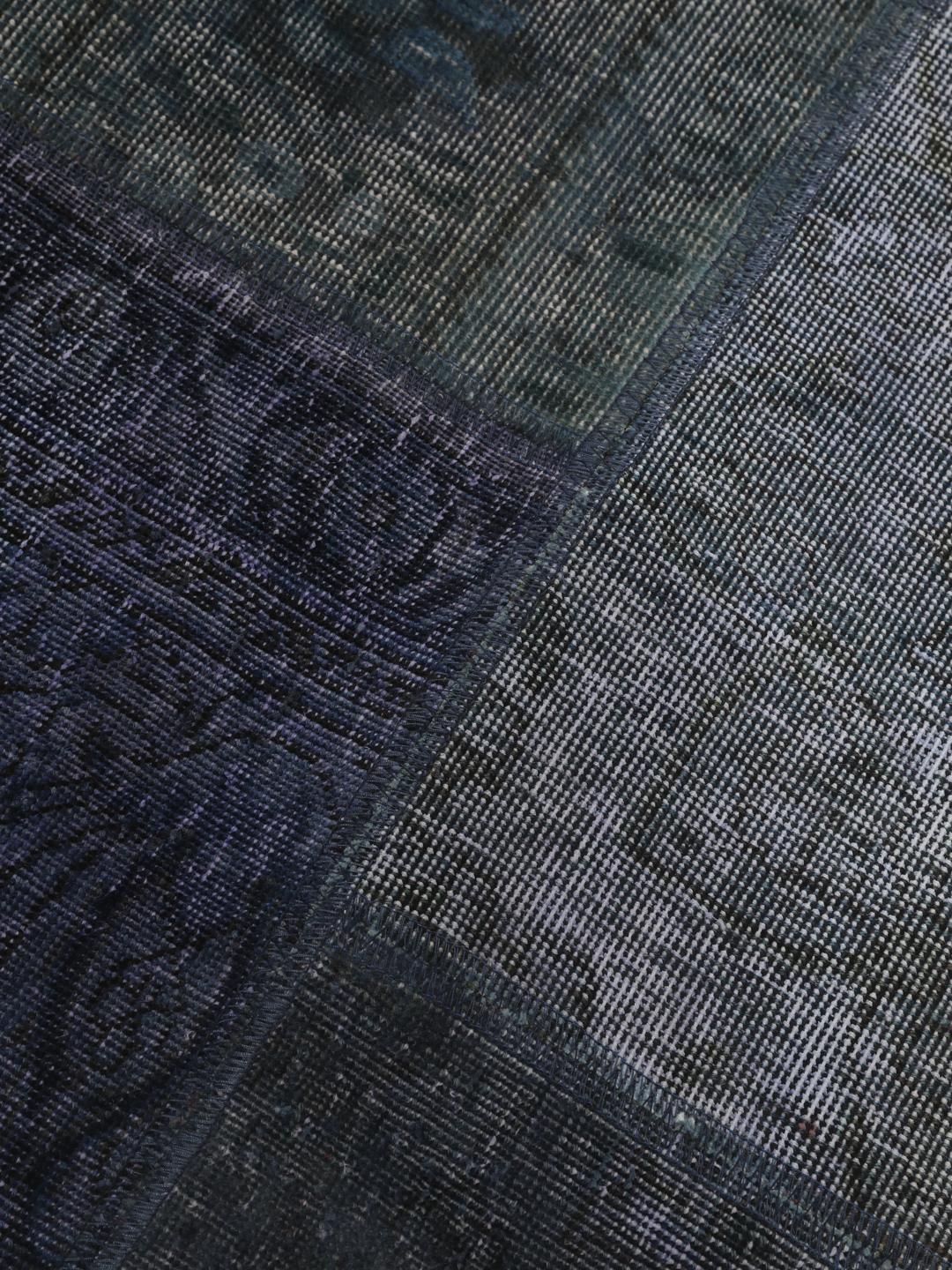
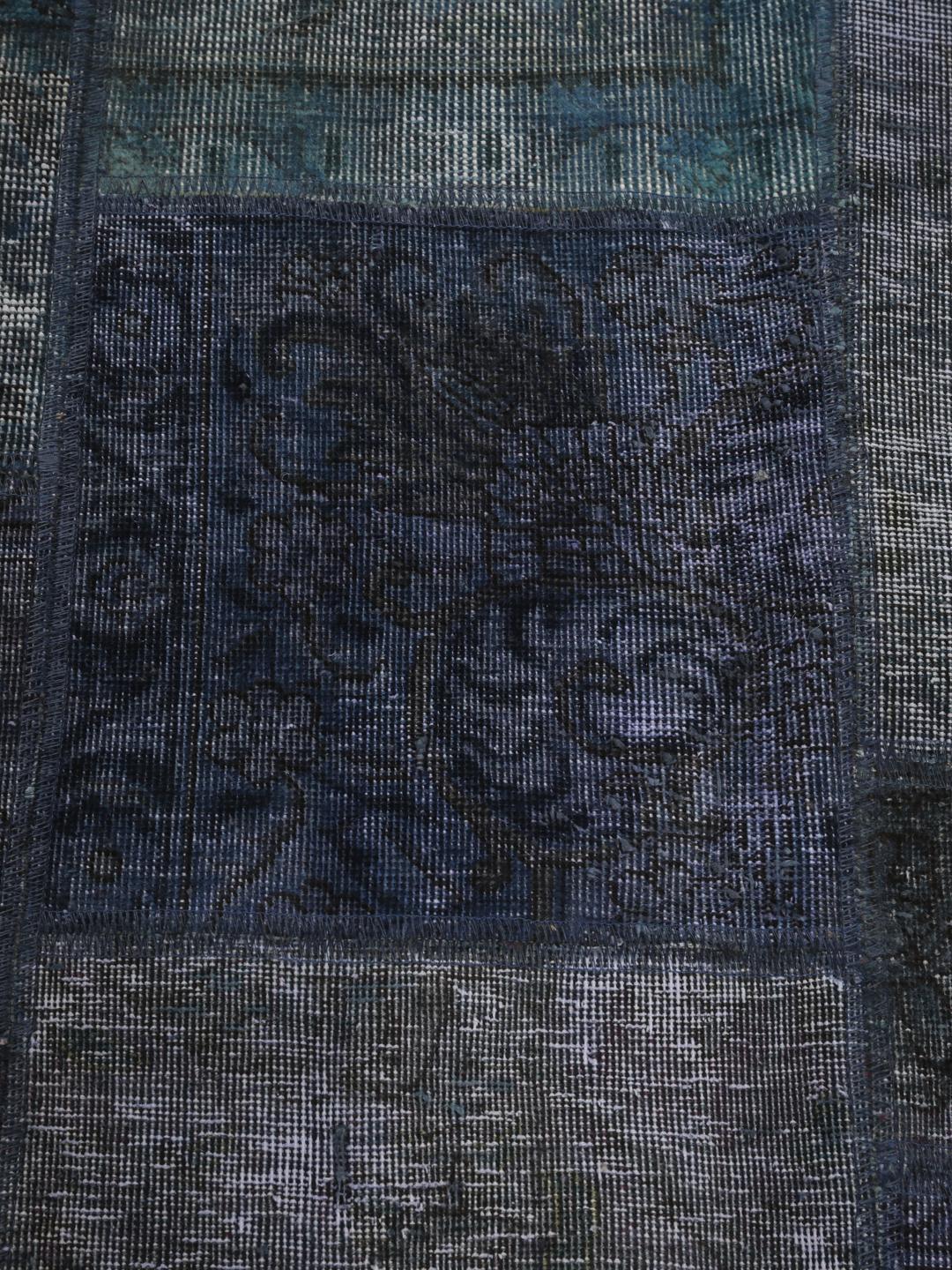
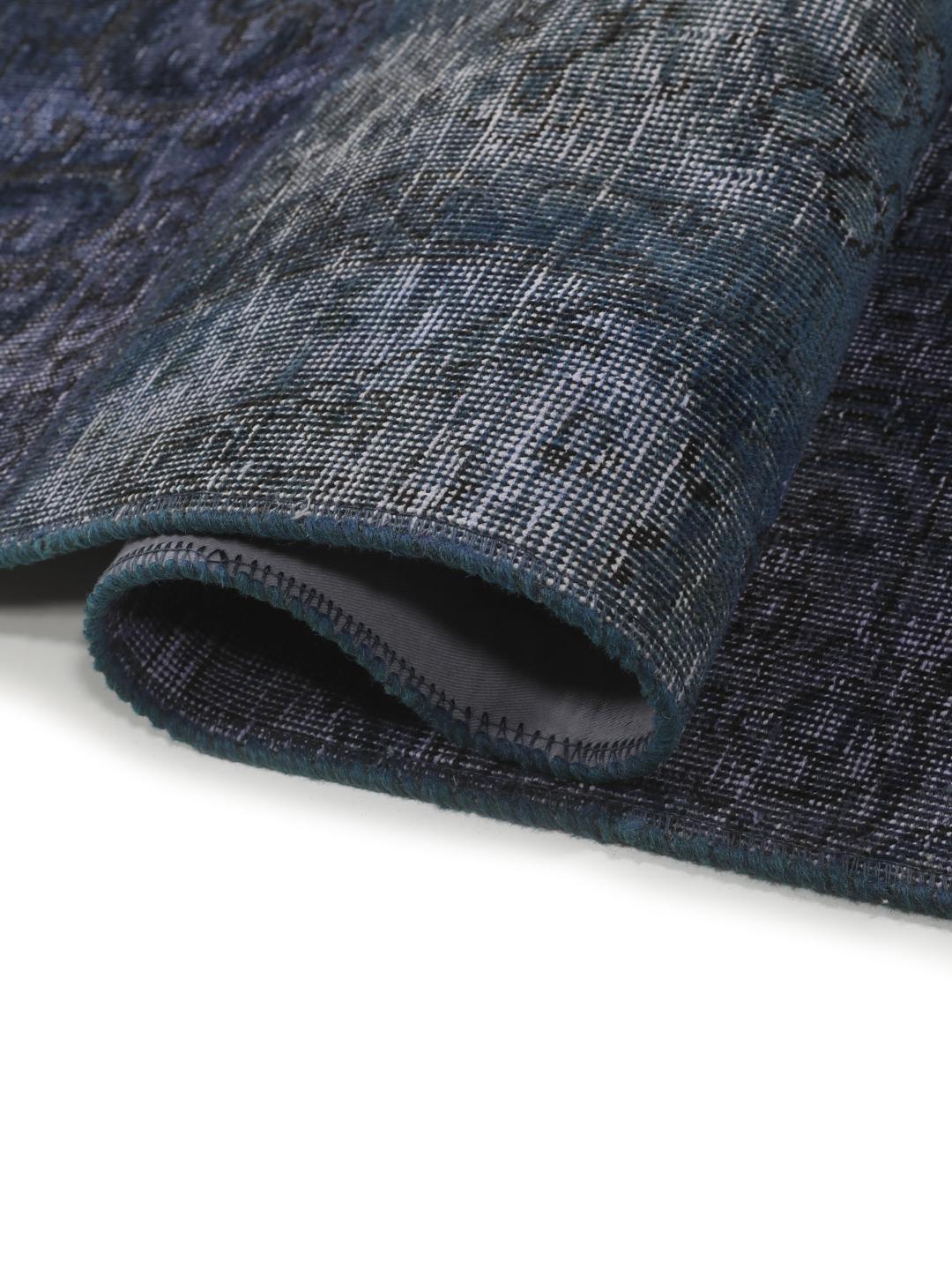
Signature design elements in these patchwork pieces are as diverse as the source rugs themselves. You will often find remnants of classic floral motifs, geometric medallions, or intricate borders, all blended into a cohesive layout. In this particular piece, the dark-blue and grey colour palette creates a sophisticated, moody aesthetic that highlights the textures and patterns of the individual segments, making the overall design feel both modern and deeply rooted in tradition.
Owning a patchwork rug is an act of supporting sustainable craft and preserving cultural heritage. It allows the collector to enjoy the soul of a vintage rug while benefiting from a design that fits seamlessly into contemporary homes. These rugs are highly valued for their individuality; they serve as a bridge between the generations of weavers who created the original fragments and the modern owner who appreciates their continued beauty.