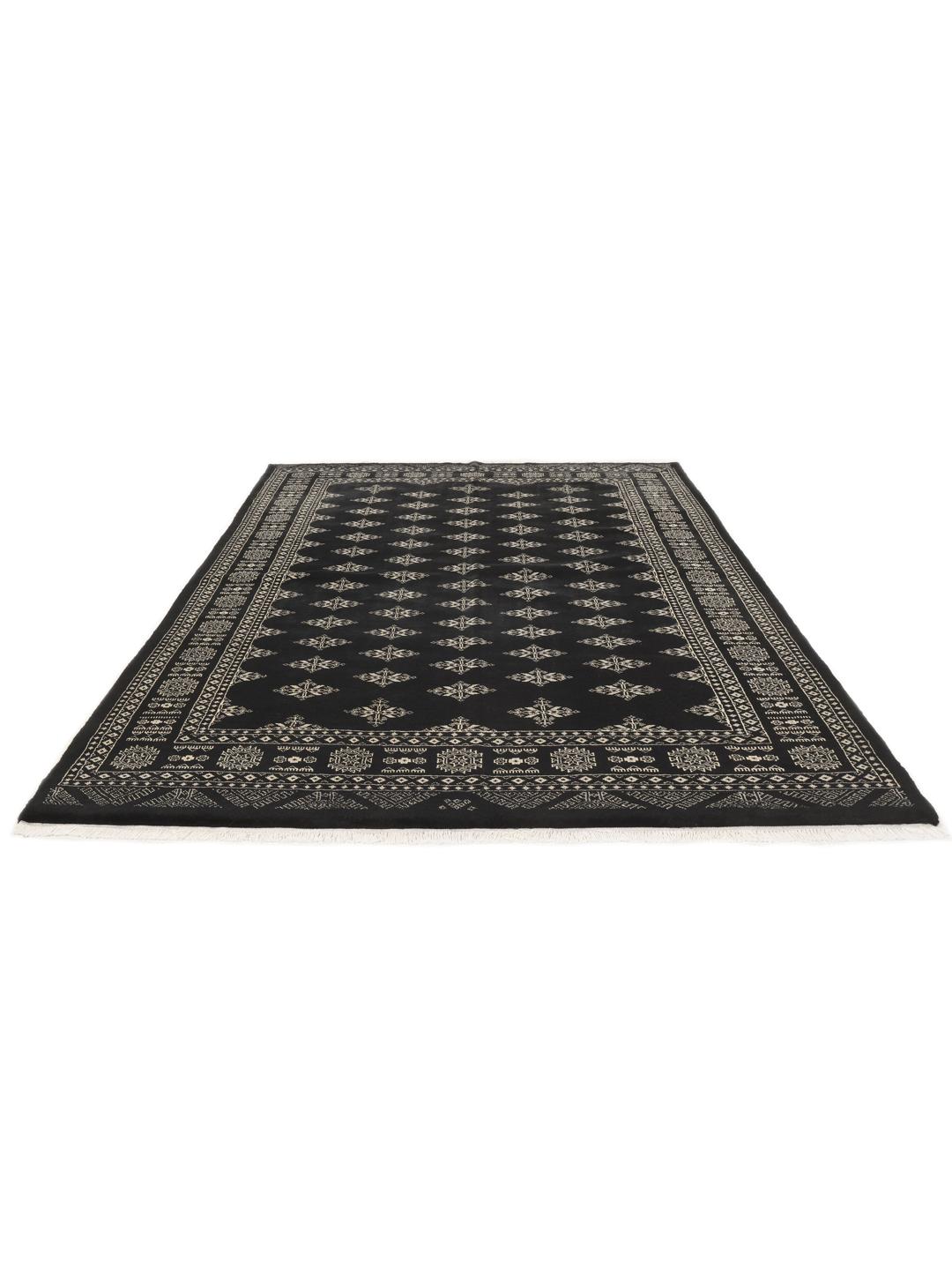
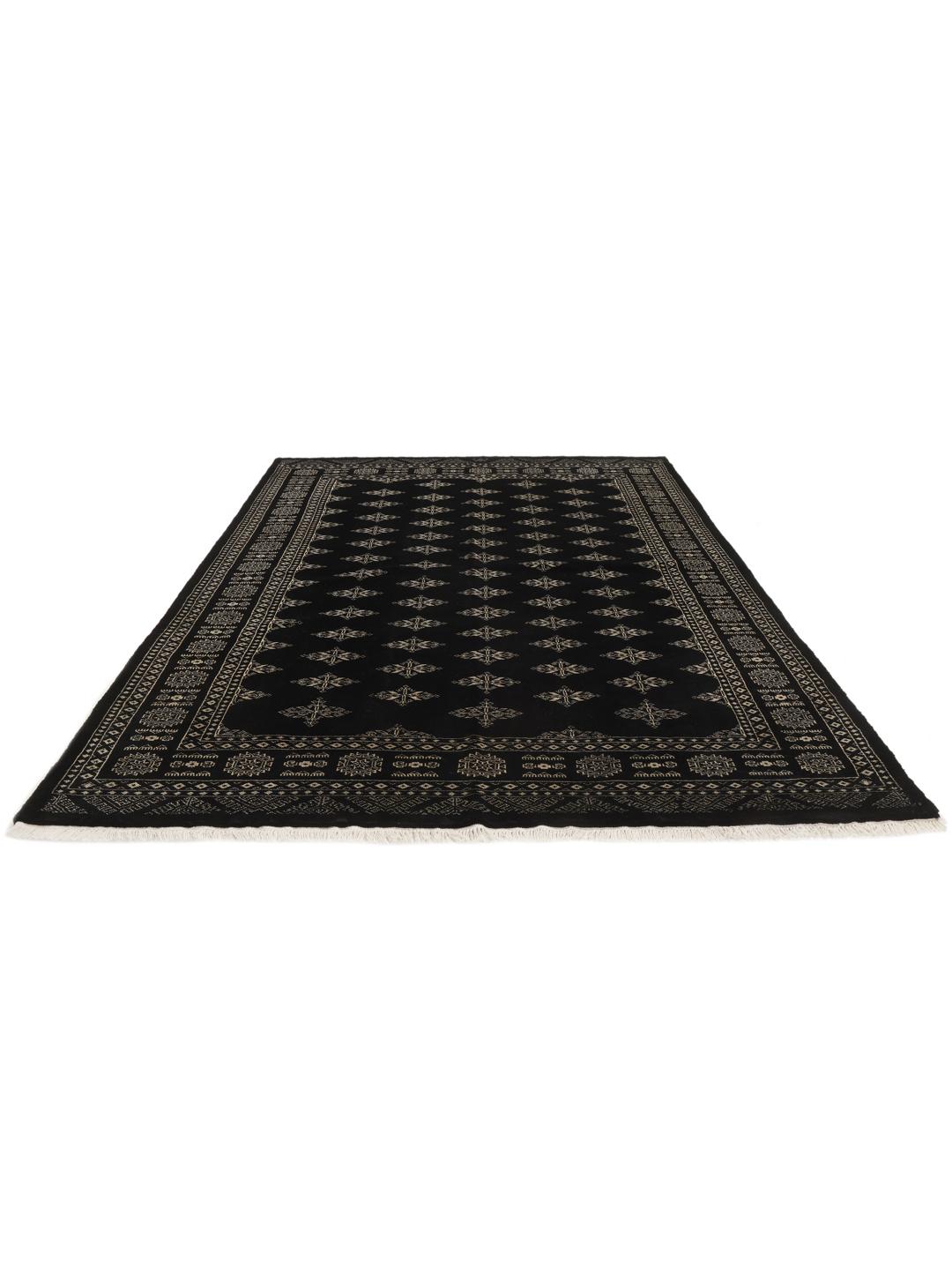
The Bokhara rug tradition is deeply rooted in the history of Central Asia, taking its name from the ancient Silk Road city of Bukhara, which served as a vital hub for trade and cultural exchange. While the motifs have their origins in the nomadic tribes of the region, the finest examples of these rugs are today expertly woven in Pakistan. This evolution has allowed the tradition to flourish, blending ancient design languages with modern standards of precision.
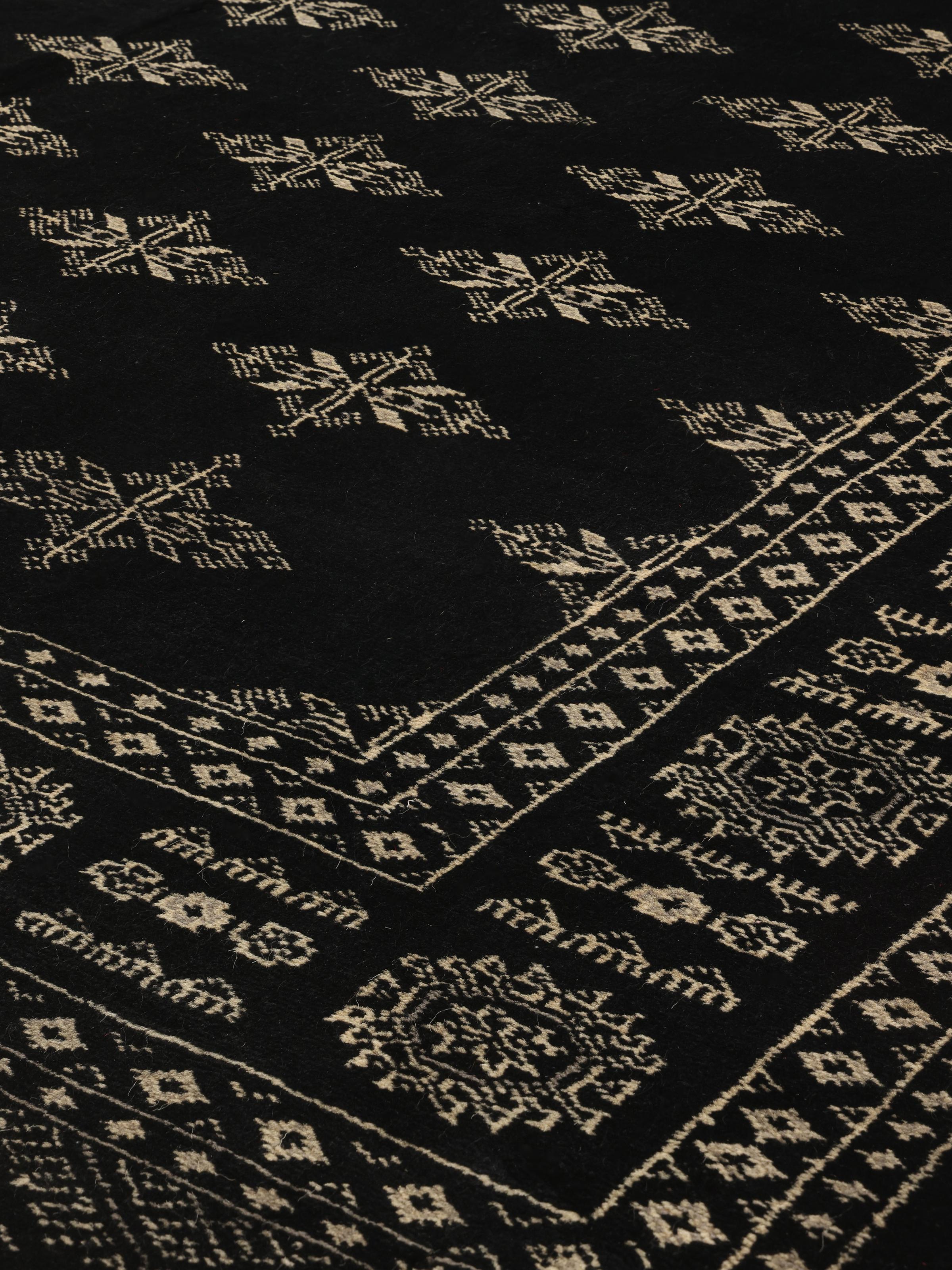
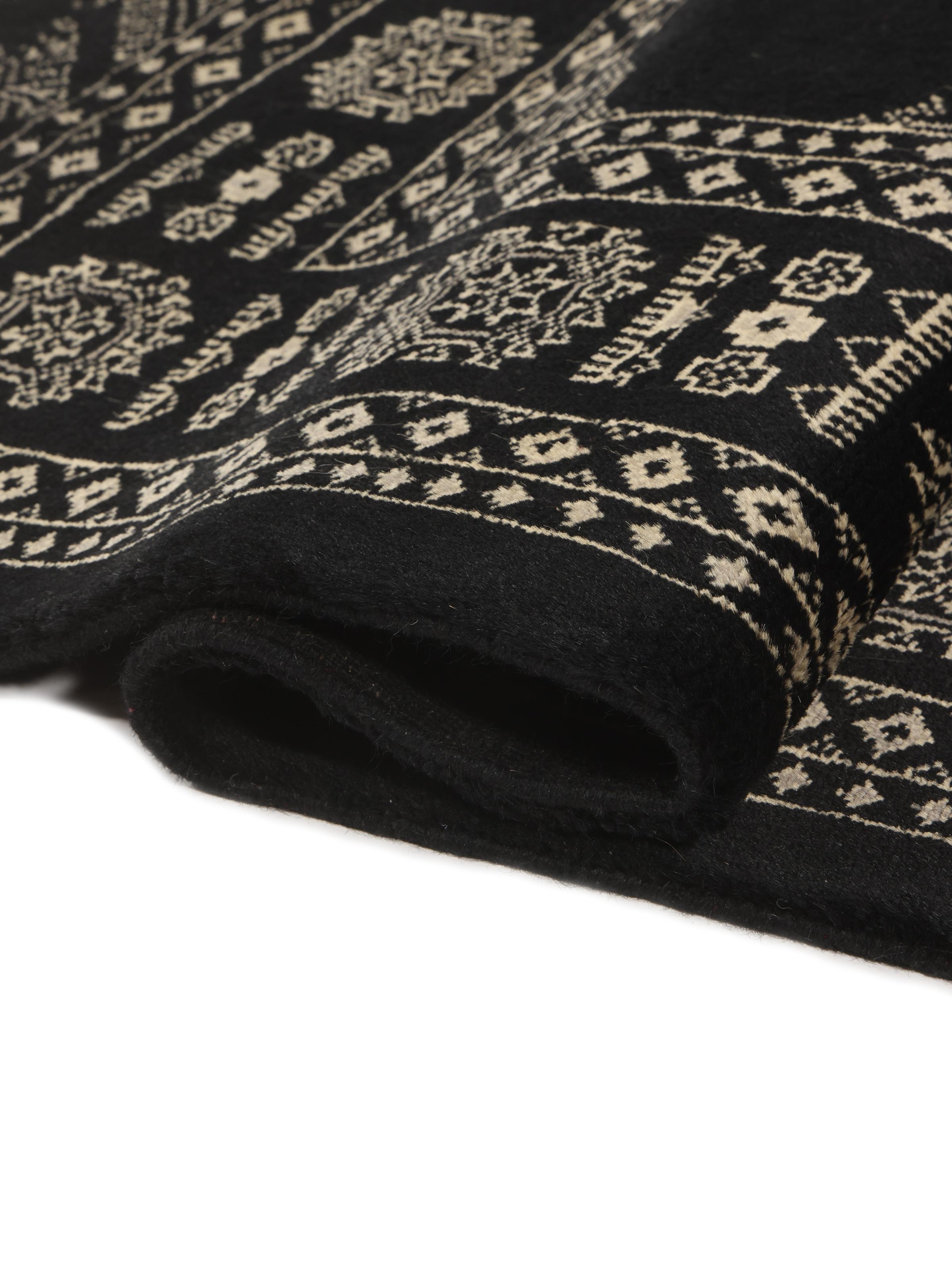
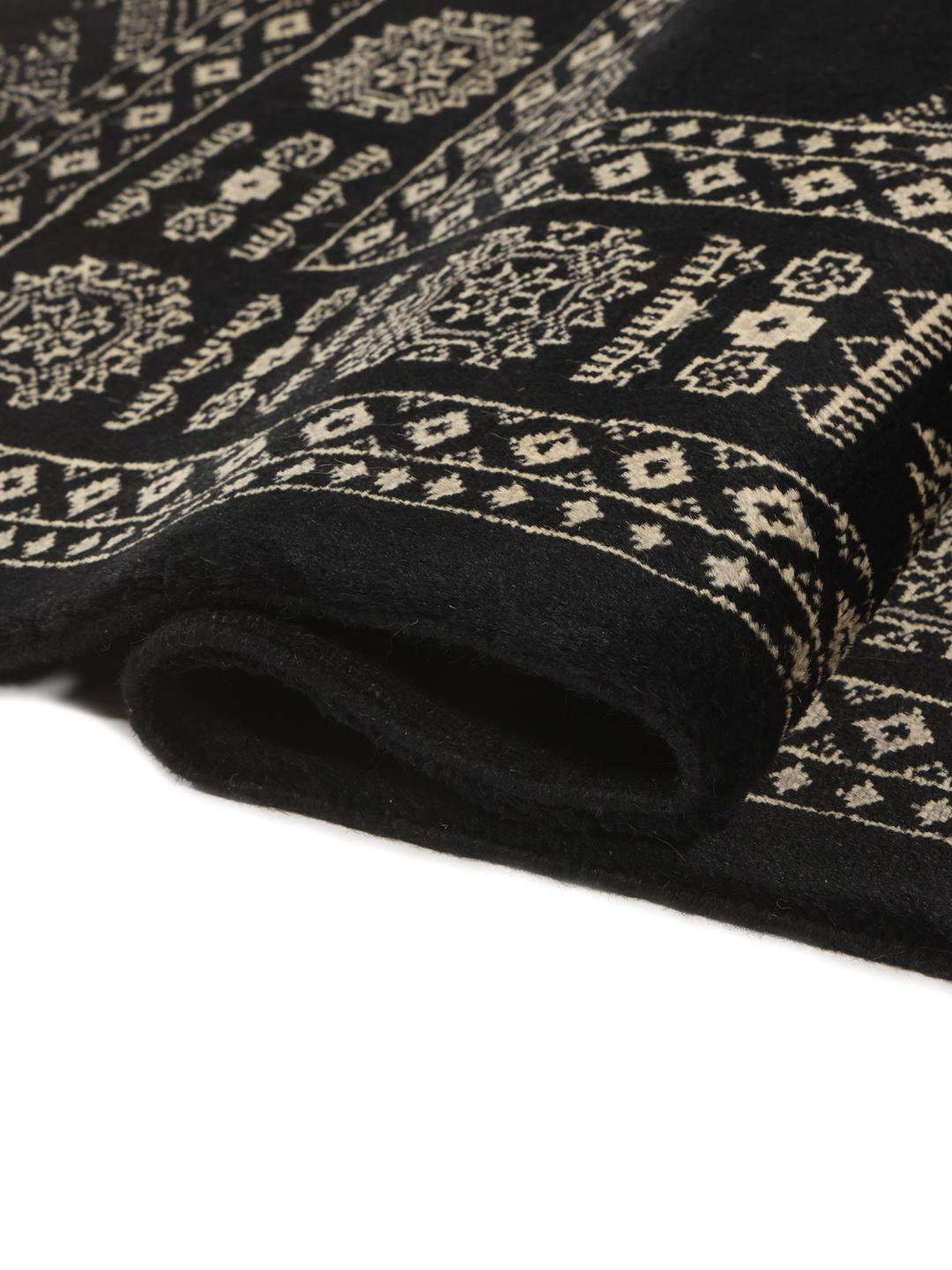
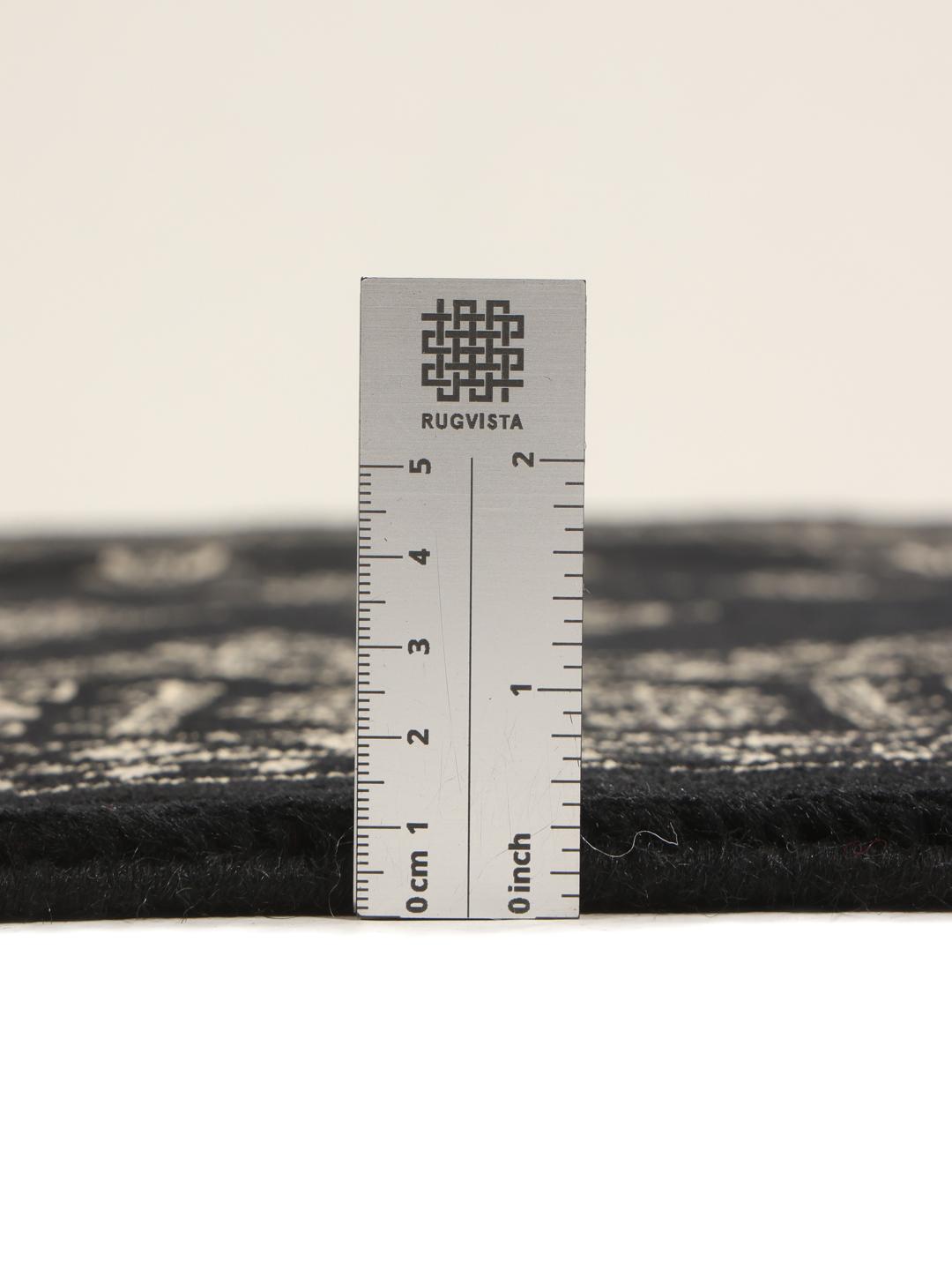
The '3ply' designation refers to the construction of the yarn, where three individual strands of wool are twisted together before being knotted into the rug. This specific technique is highly valued because it creates a more substantial, lustrous, and durable pile compared to single or double-ply alternatives. For the owner, this means a rug that not only feels thicker and more luxurious but also offers superior wear resistance over time.
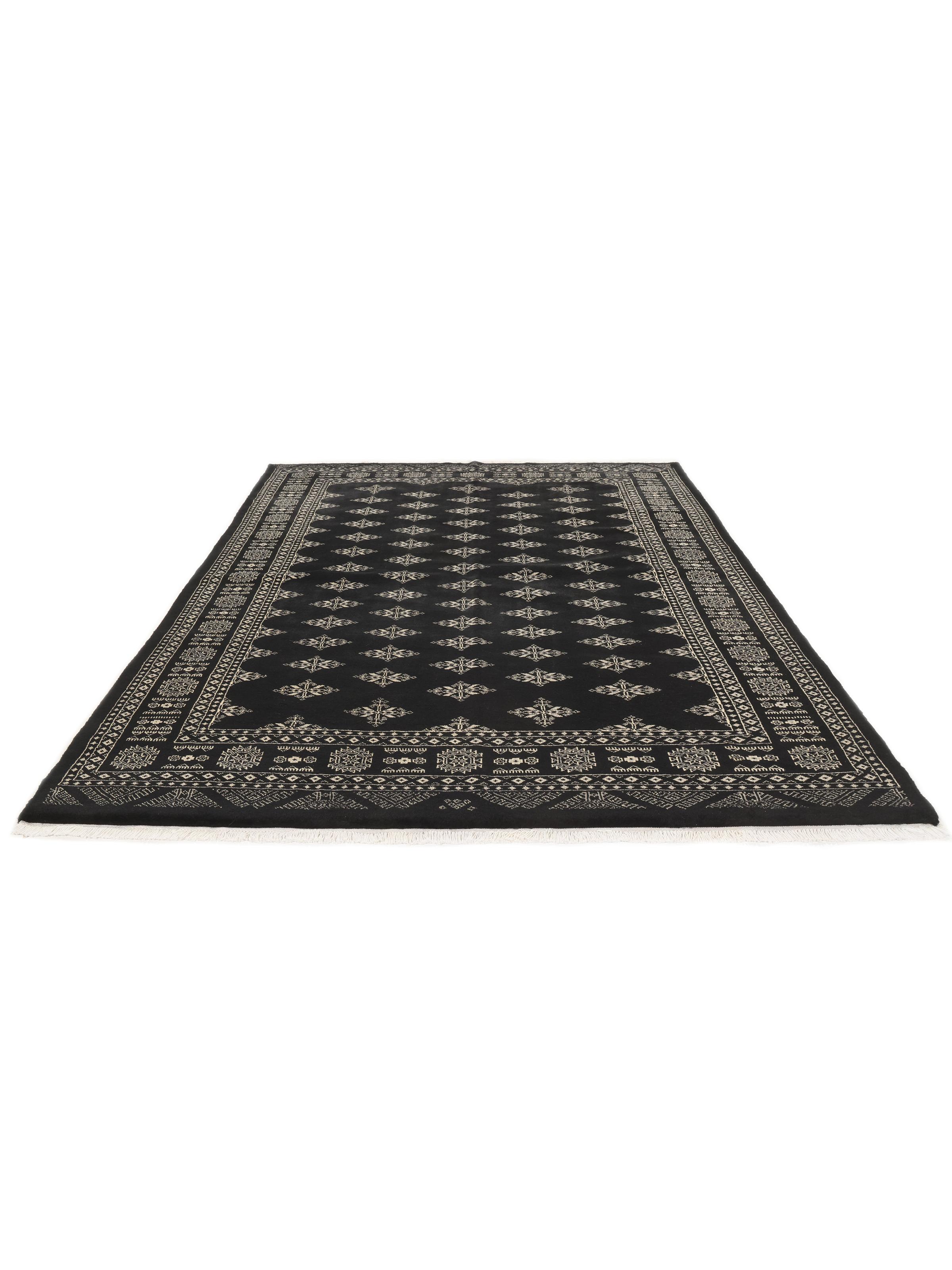
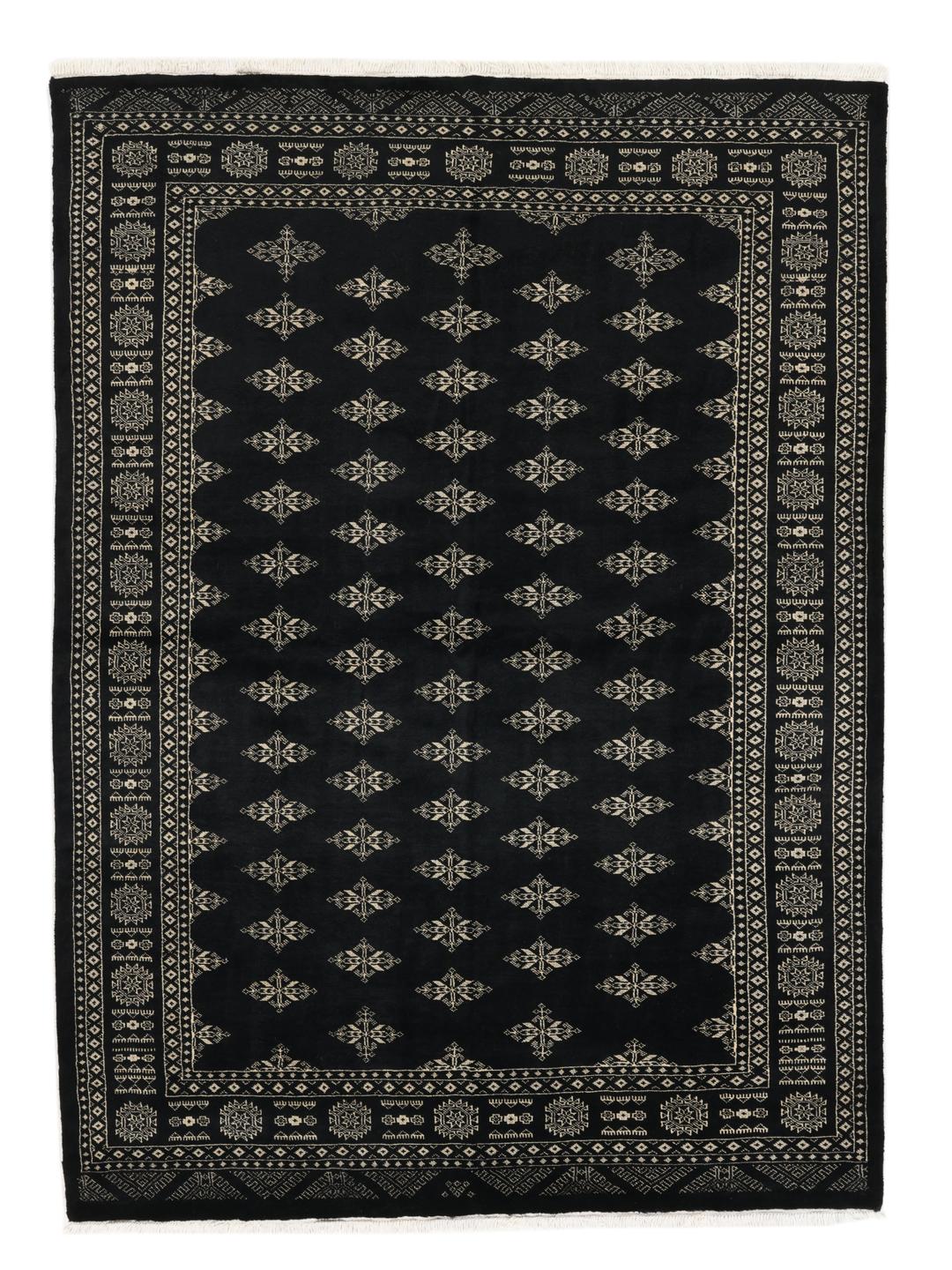
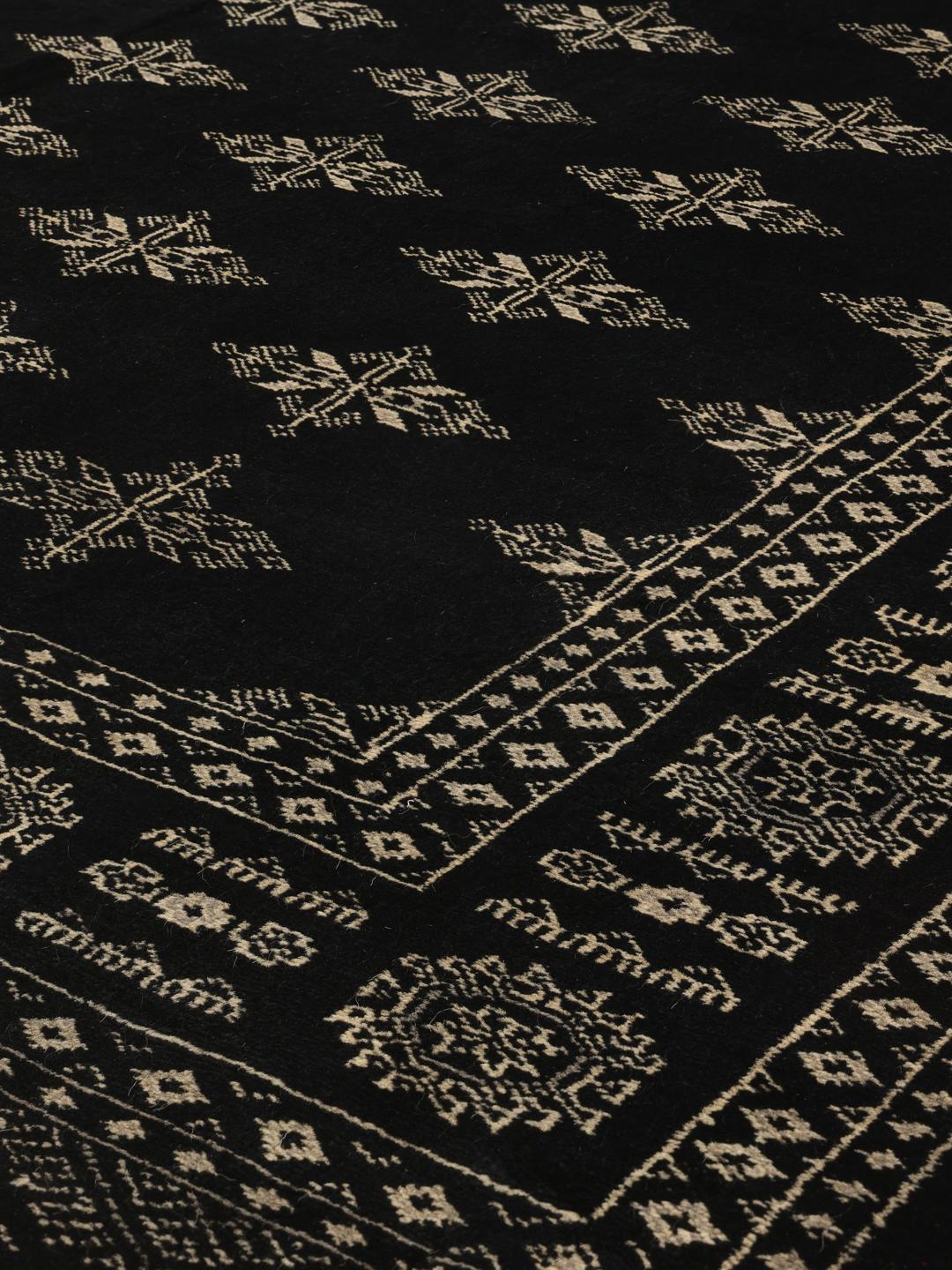
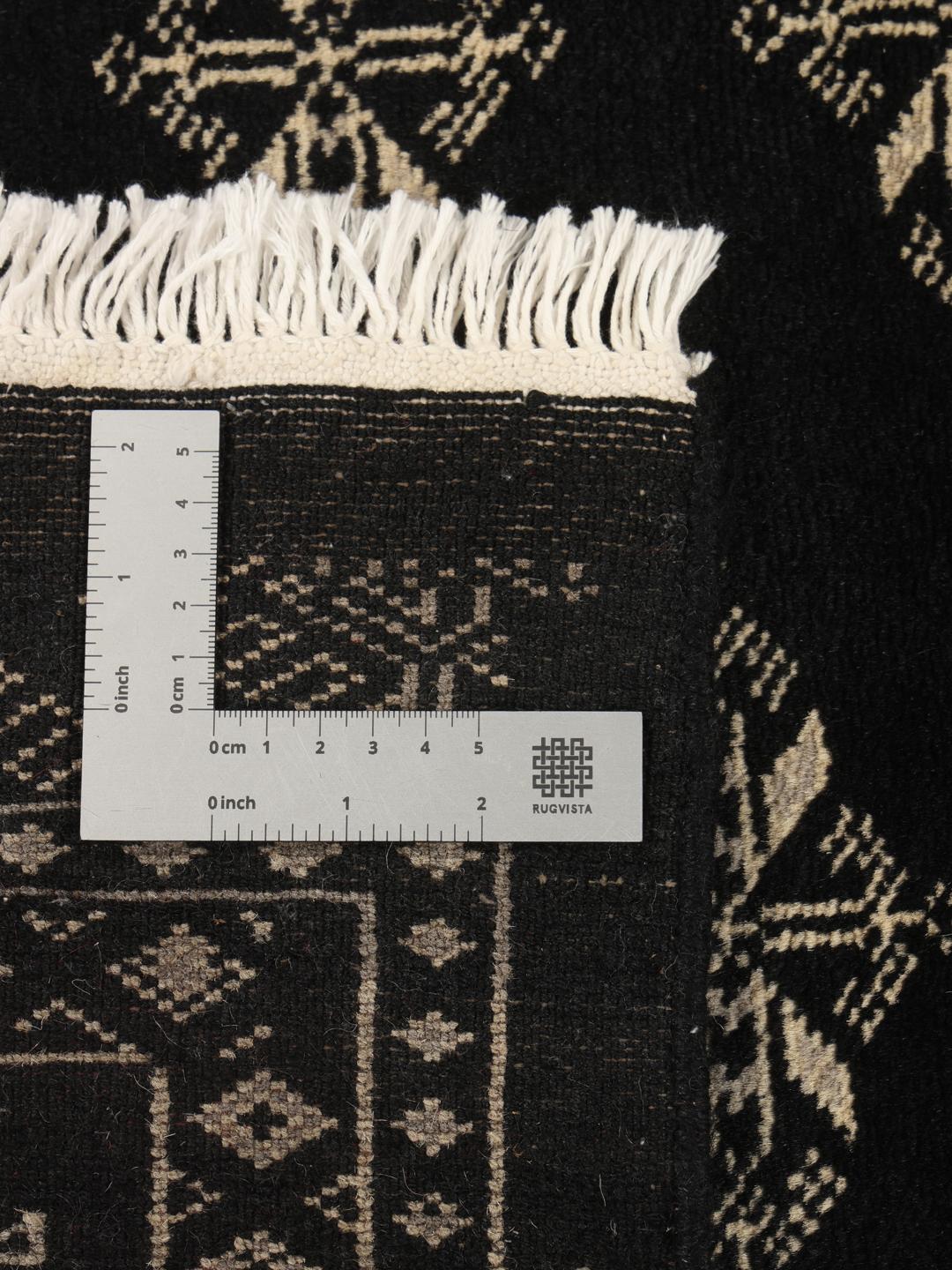
Visually, these rugs are defined by their repetitive 'gul' motifs, which are stylized, geometric medallions that march across the field in perfect symmetry. While traditional Bokhara rugs often feature warm, earthy red tones, this piece is distinctively modern with its bold black background. This choice of colour highlights the intricate cream-toned geometric patterns, making the traditional motifs stand out with a contemporary edge.
Owning a hand-knotted rug of this tradition is more than just a decor choice; it is an act of preserving a centuries-old craft. These rugs are highly sought after by collectors who value the marriage of mathematical precision and artistic intuition. By bringing this rug into your home, you are acquiring a piece that carries the weight of cultural heritage and the skill of generations of artisans, ensuring your space is grounded in authentic, lasting quality.