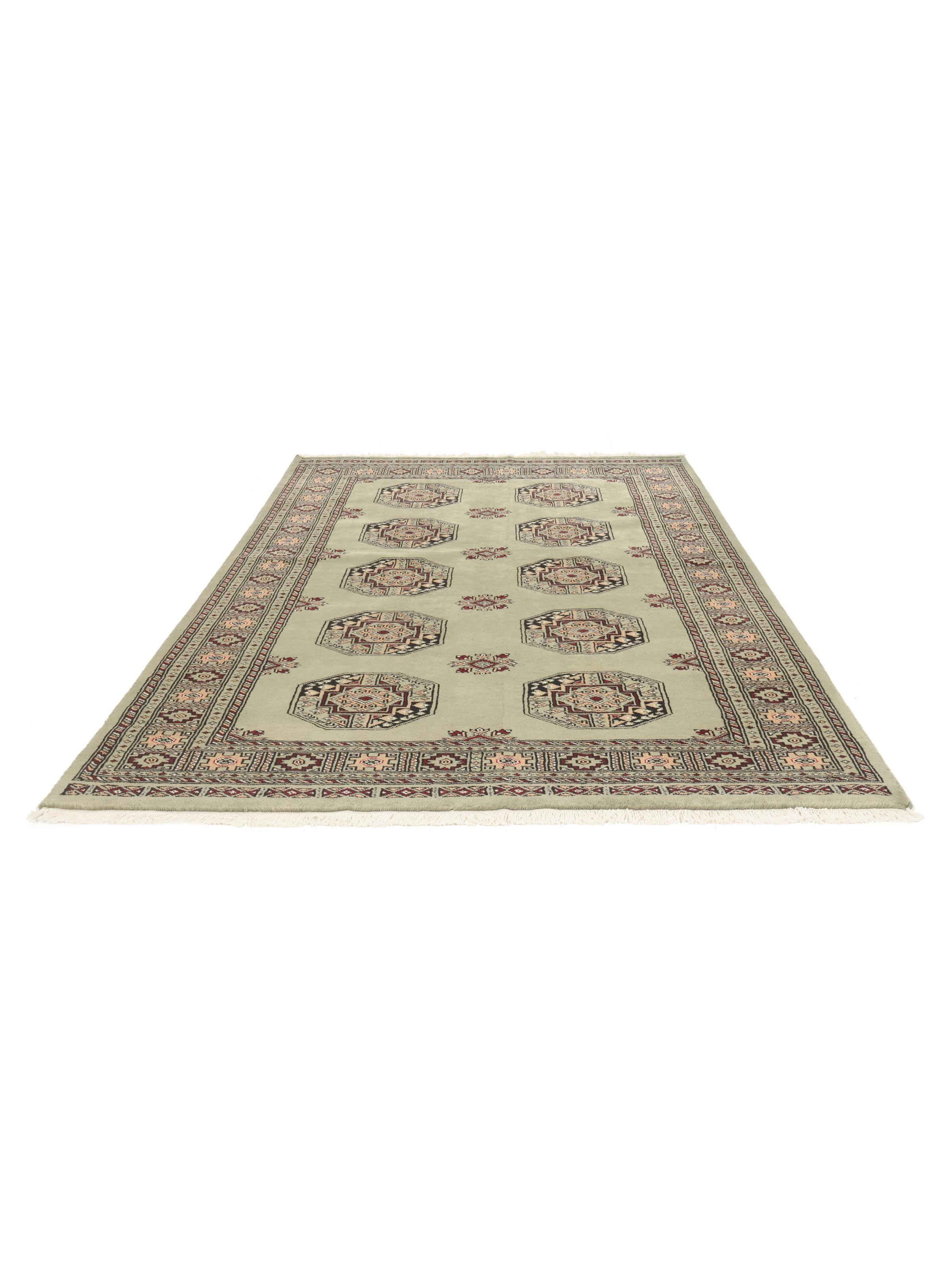
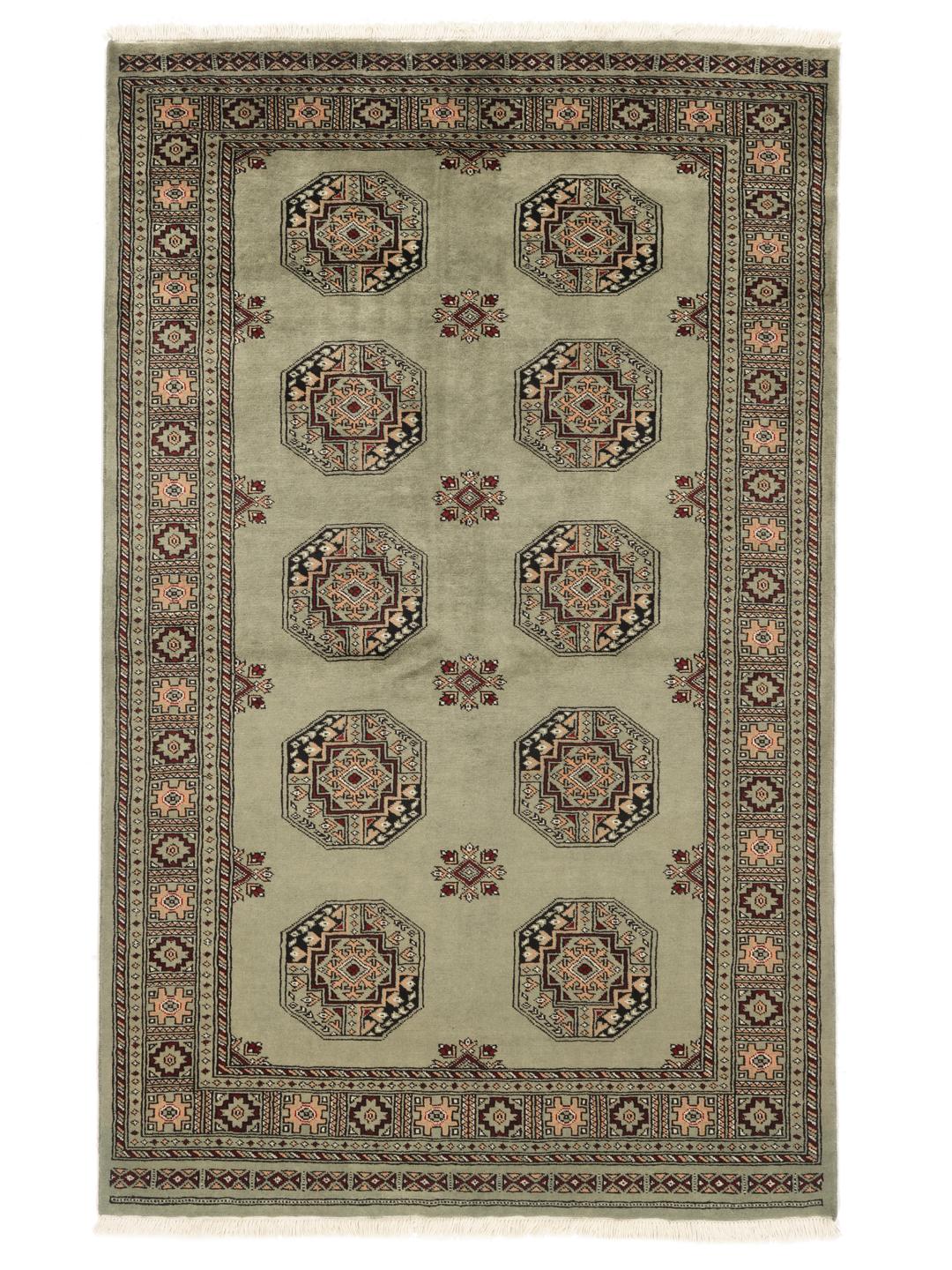
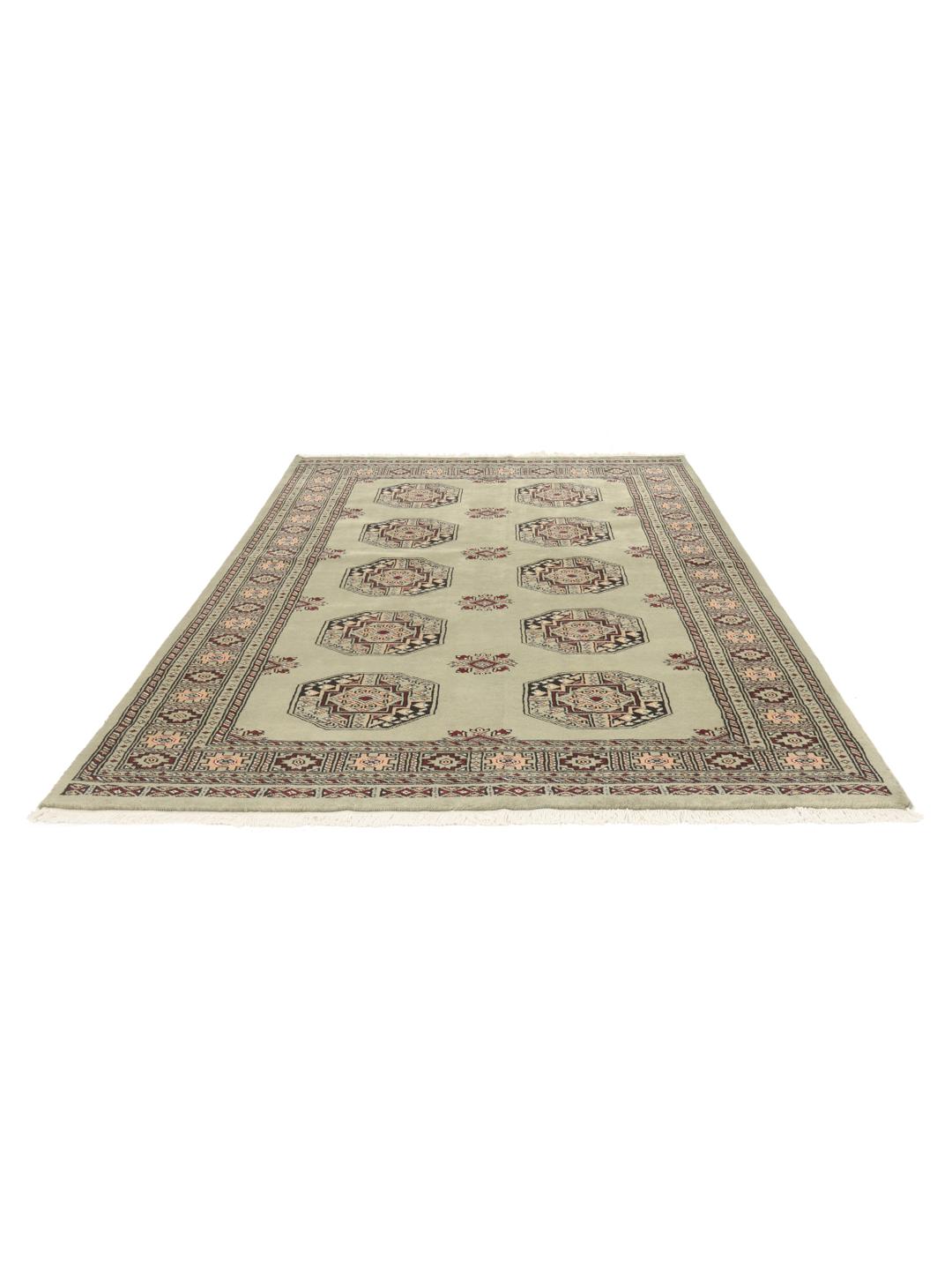
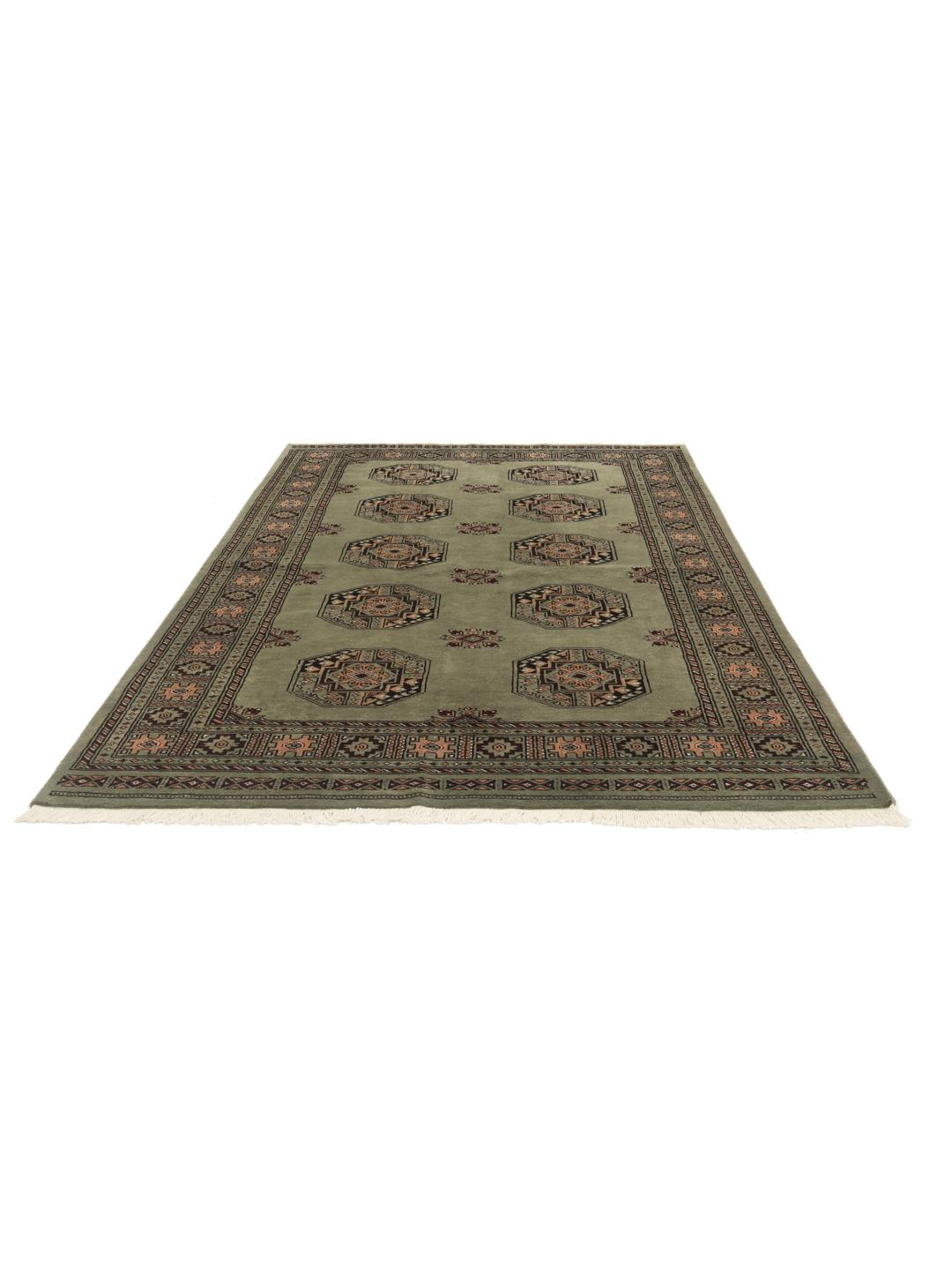
The Bokhara style finds its roots in the ancient traditions of the Silk Road, specifically the nomadic tribes of Central Asia. While the name pays homage to the historic city of Bukhara, the finest examples of this style today are masterfully crafted in Pakistan, where the tradition has been preserved and refined over generations.
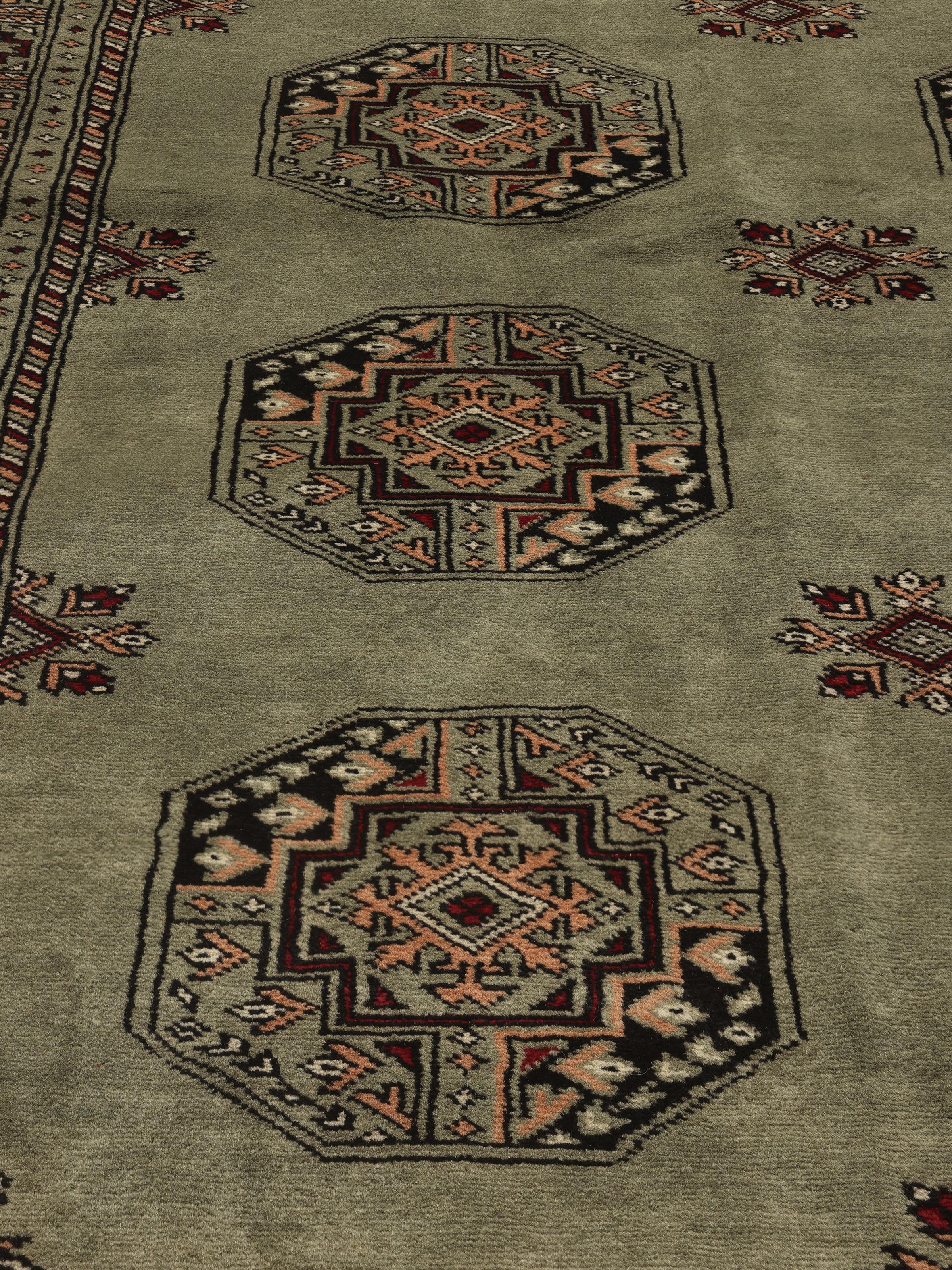
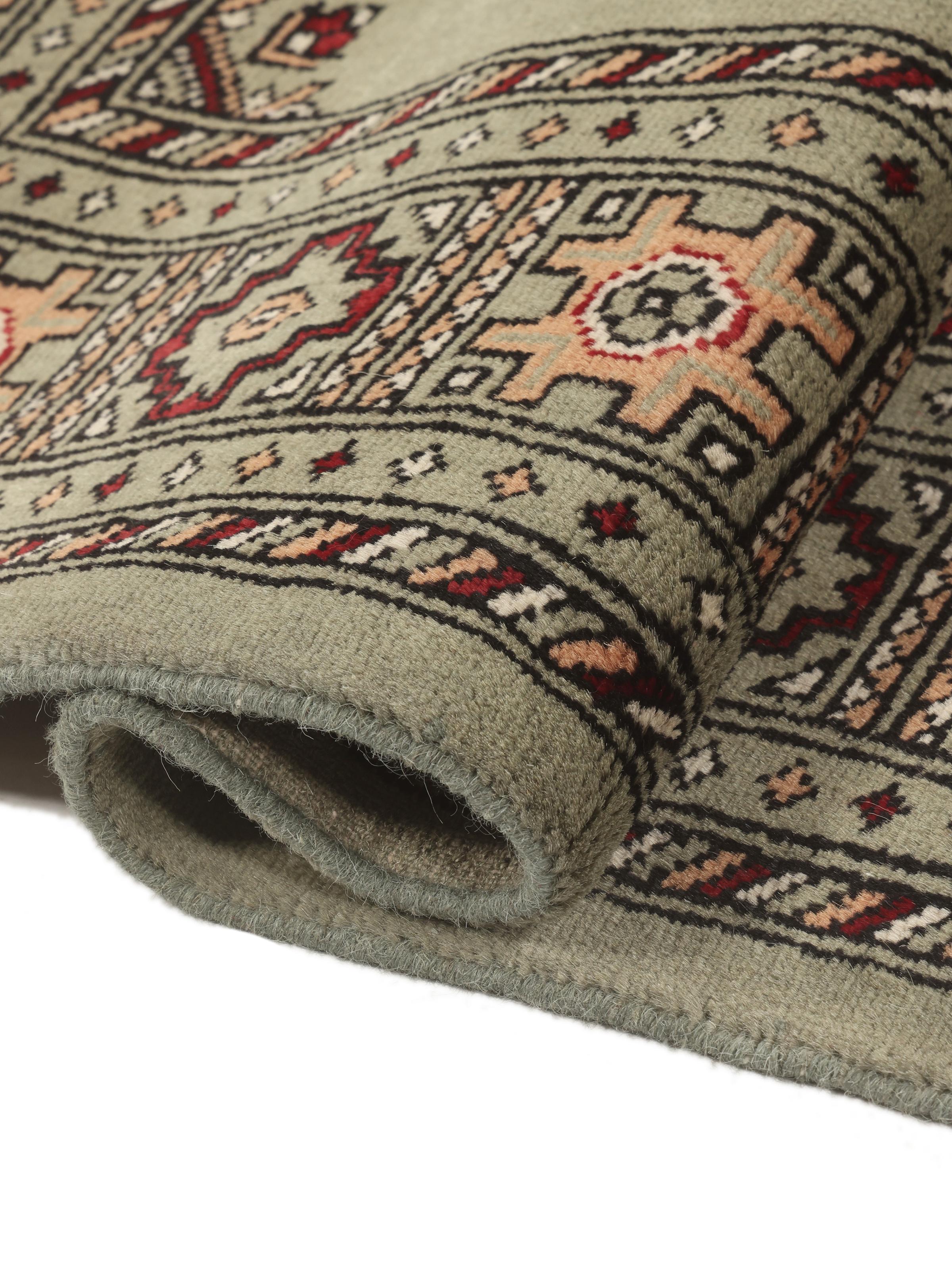
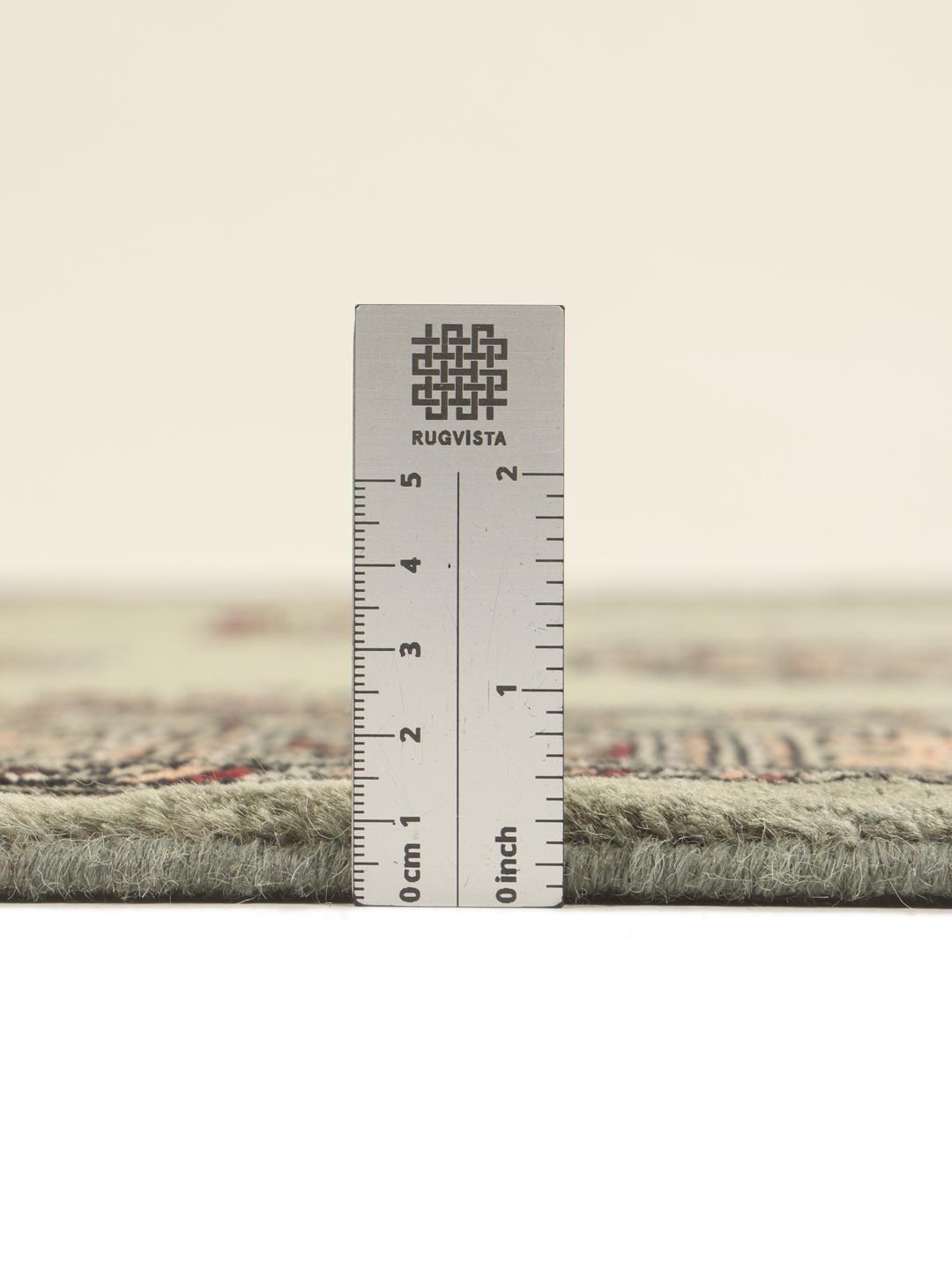
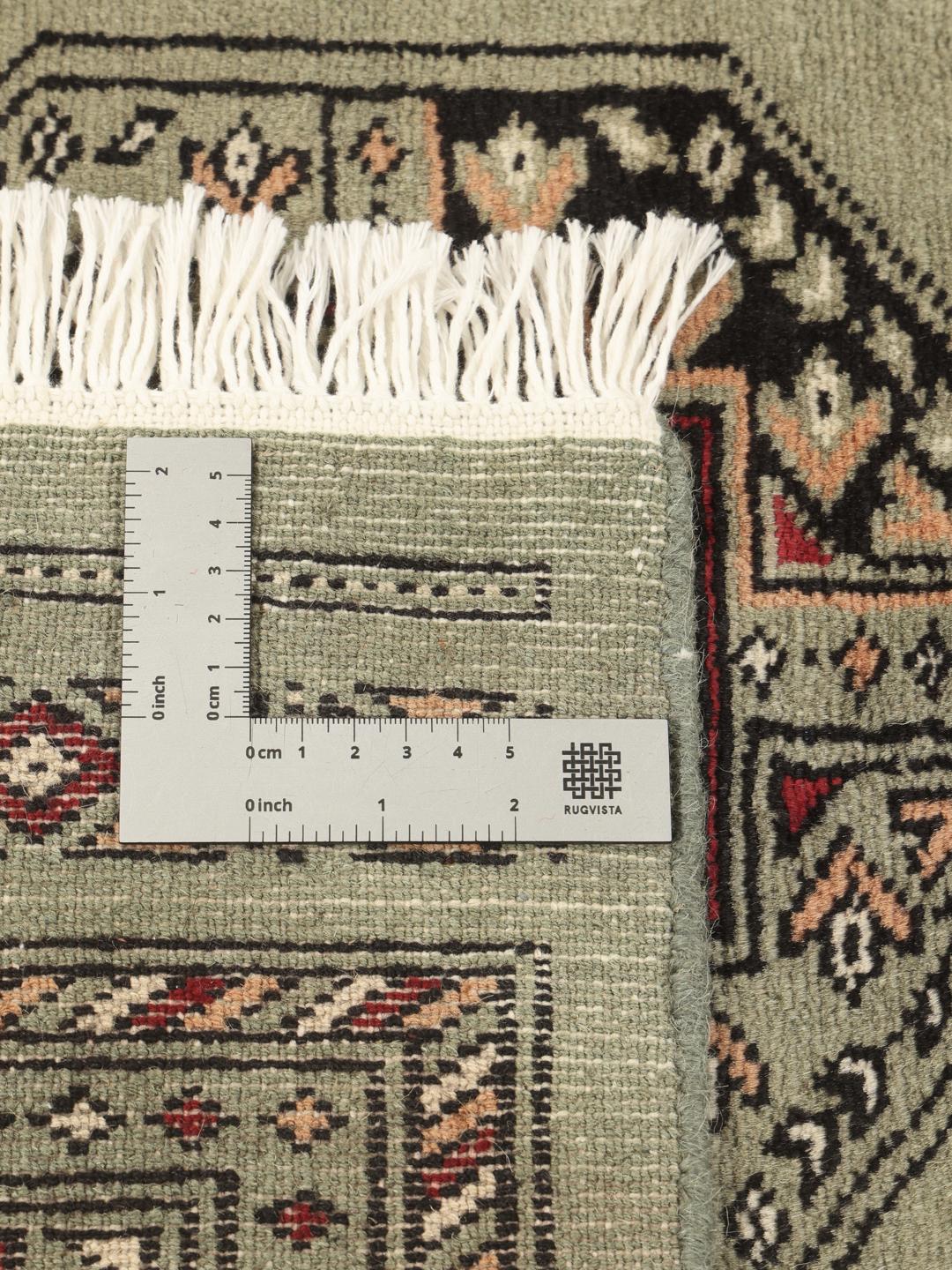
The term 3ply refers to the specific way the wool is prepared, where three individual strands are twisted together before being knotted. This technical choice is significant because it results in a thicker, more lustrous, and remarkably durable pile that feels exceptionally soft and stands up well to foot traffic.
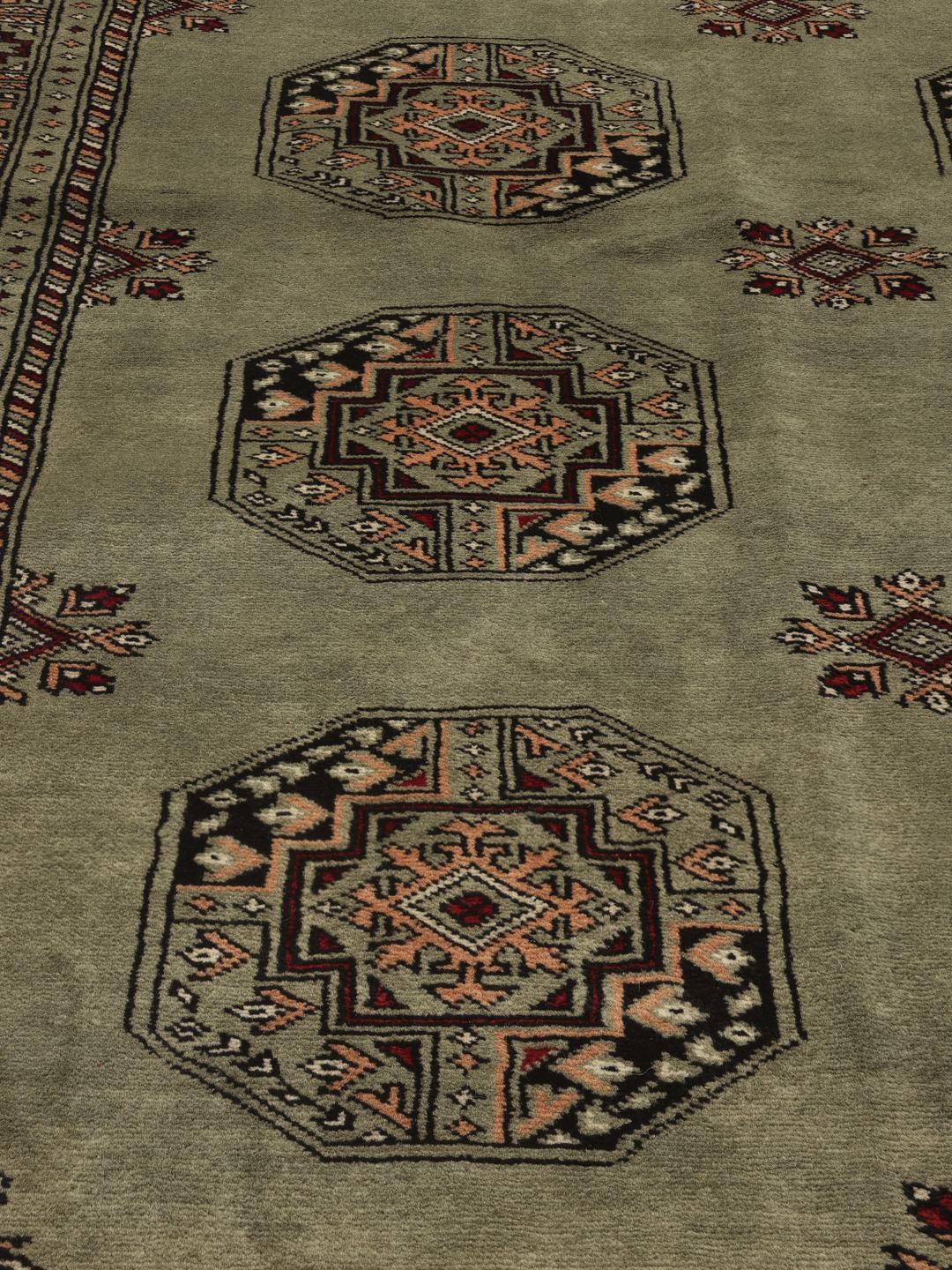
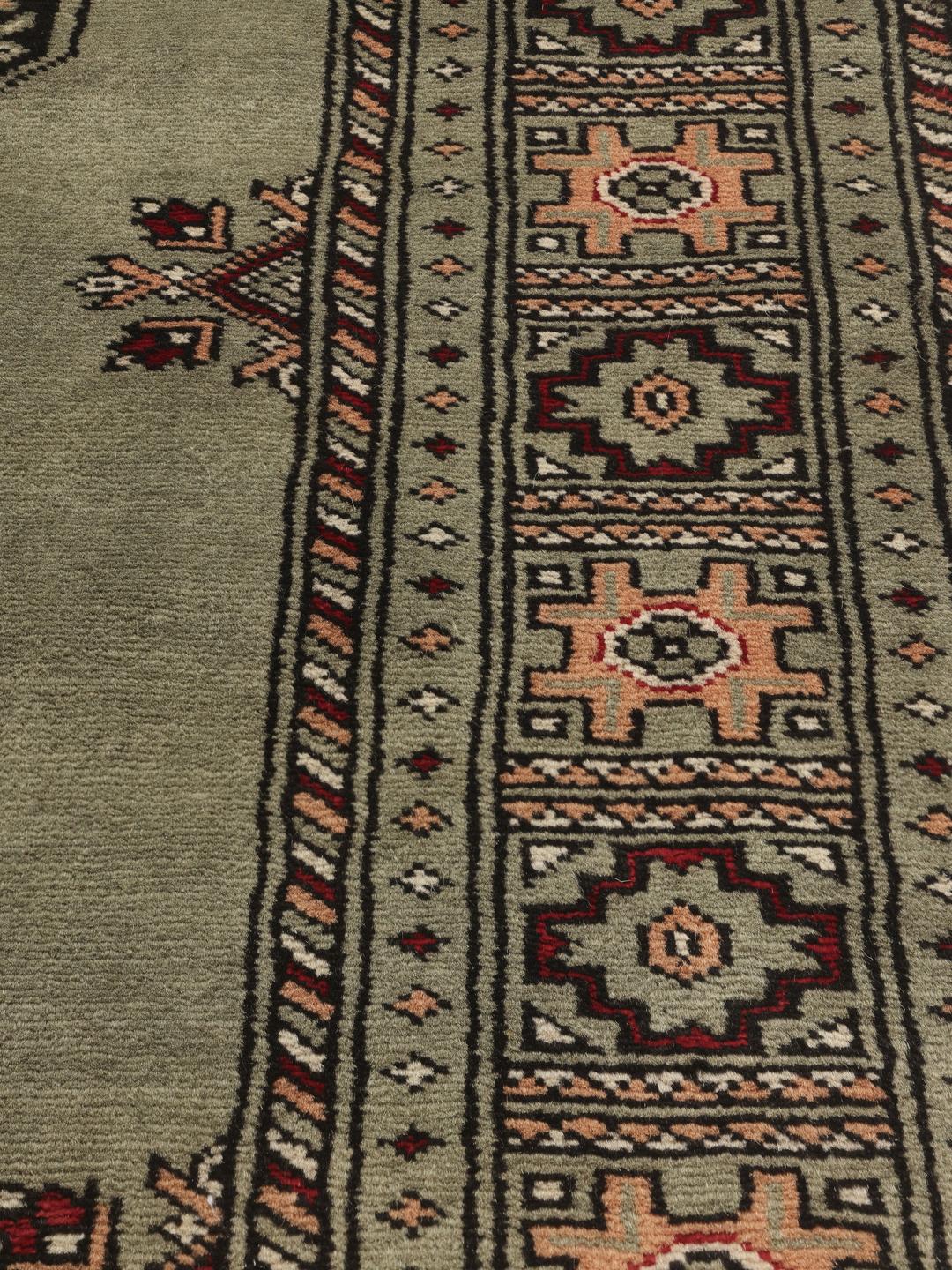
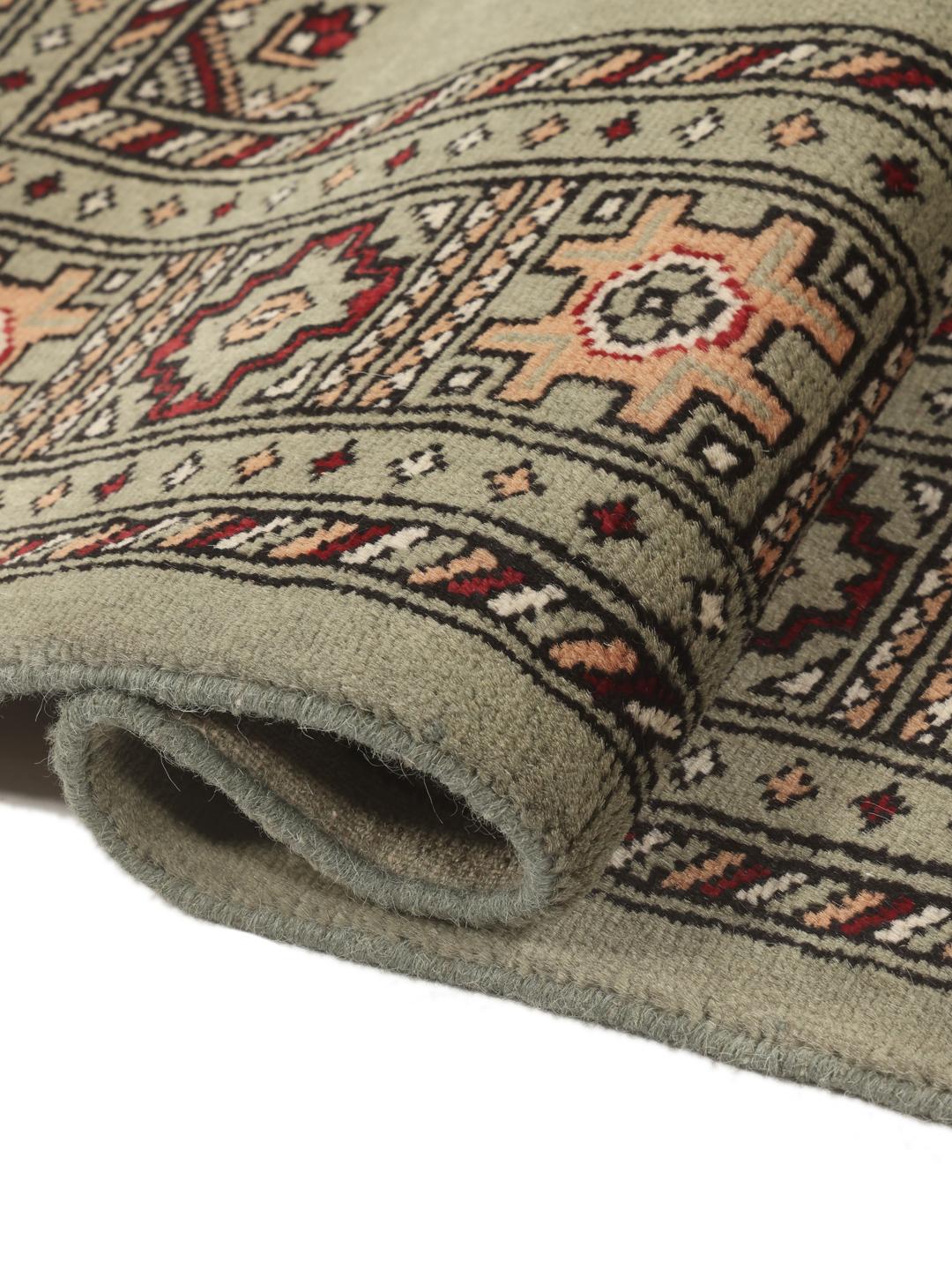
Visually, these rugs are recognised by their field of repeating gul motifs, which are stylised, octagonal medallions. These shapes are often arranged in orderly rows and enclosed by complex, geometric borders. The use of a sage green field in this particular piece is a sophisticated variation on the classic deep red tones, offering a more tranquil and understated look.
Owning a hand-knotted rug from this tradition is an investment in human skill and cultural history. These rugs are valued by collectors and homeowners alike for their combination of enduring quality, symbolic design, and the immense amount of labour required to produce them, ensuring that each piece remains a lasting legacy of its craft.