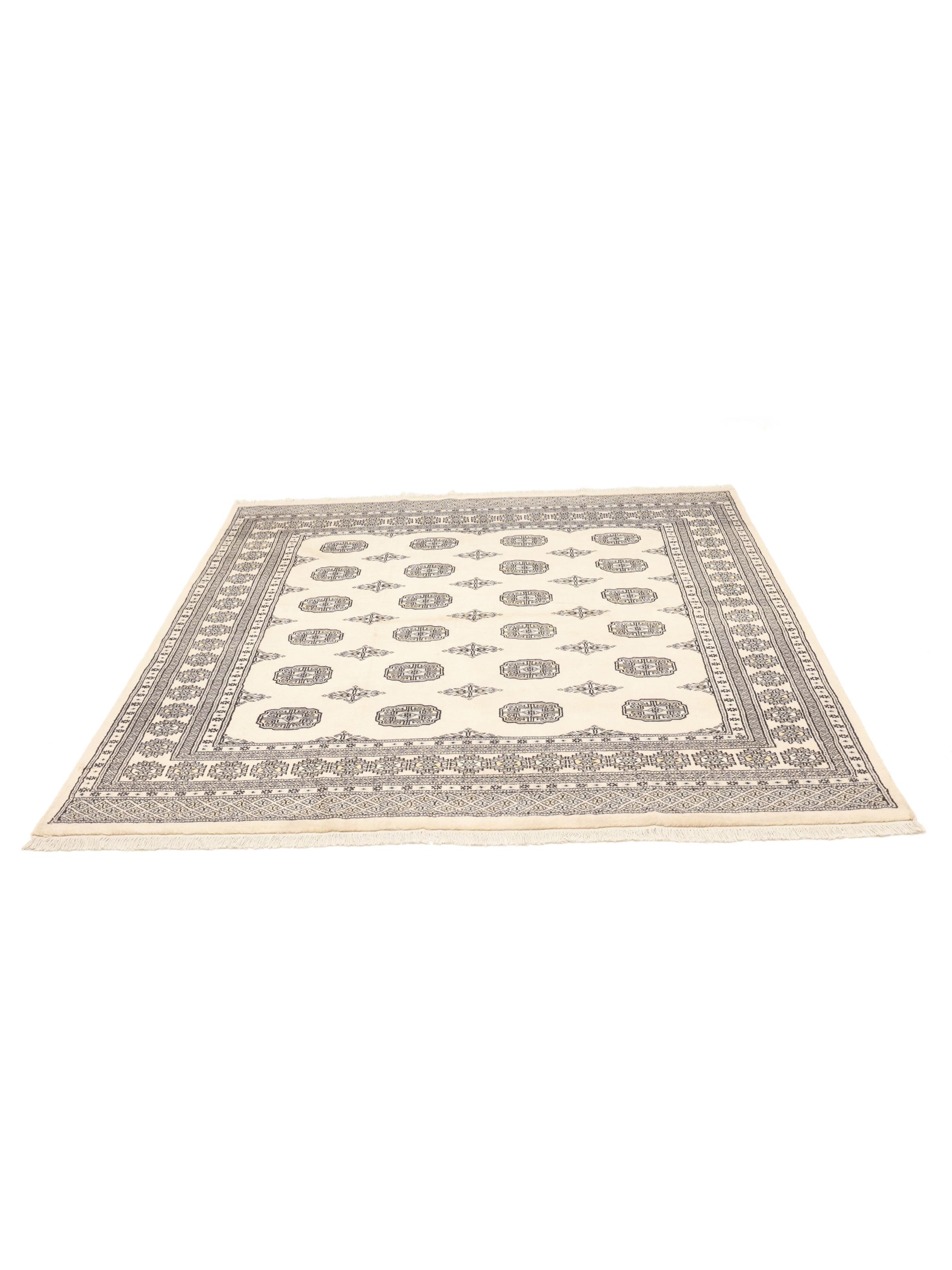
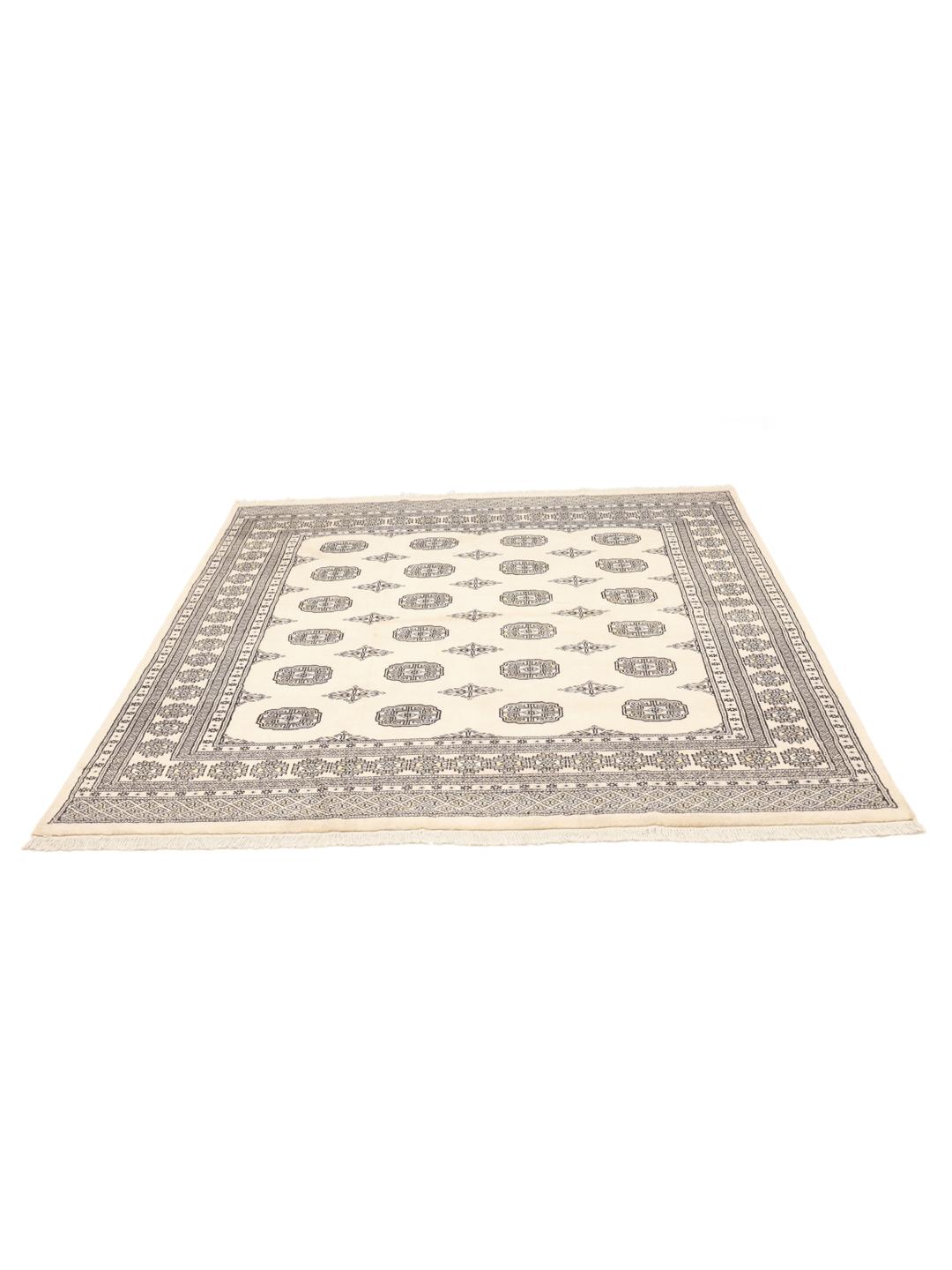
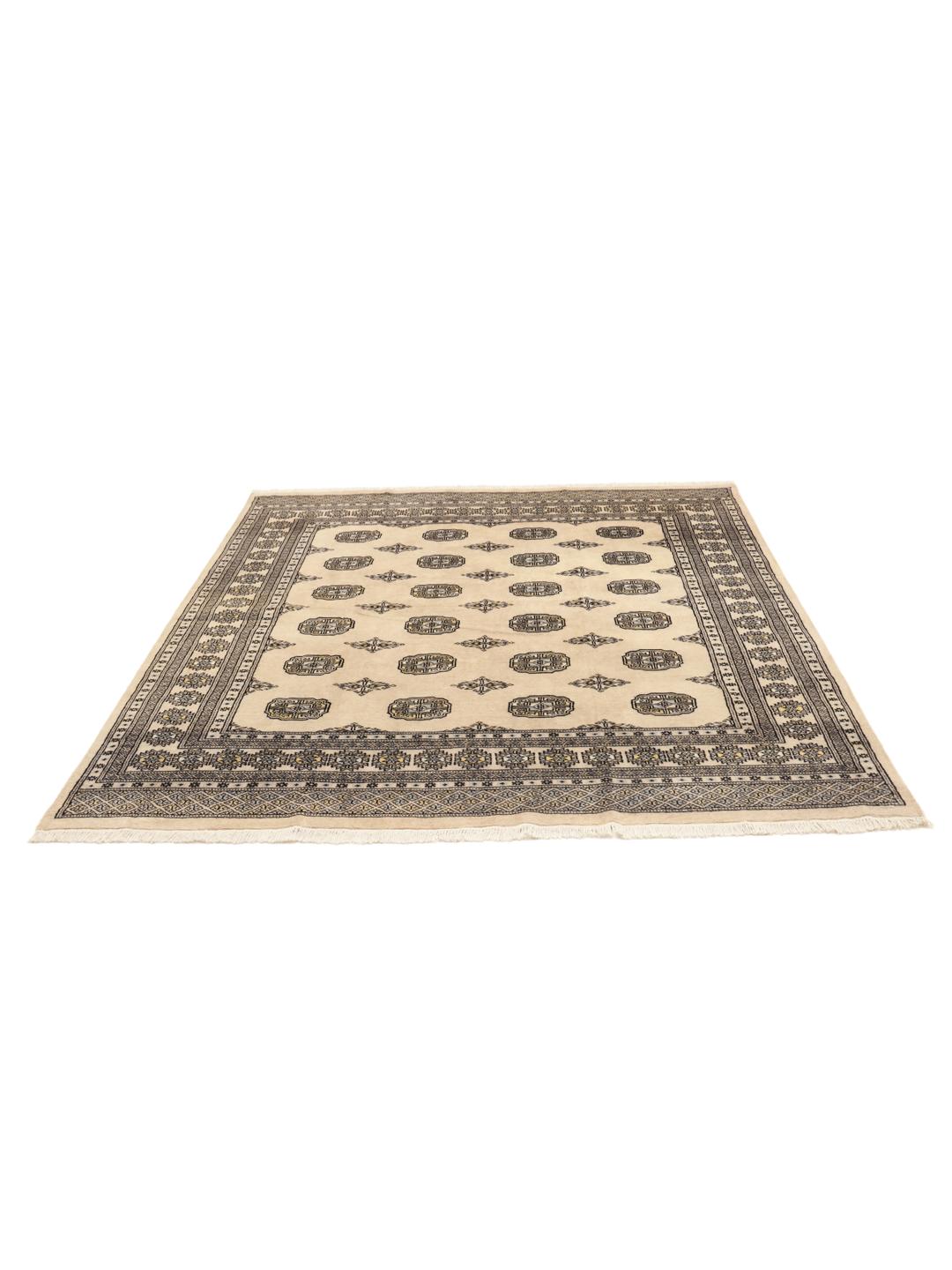
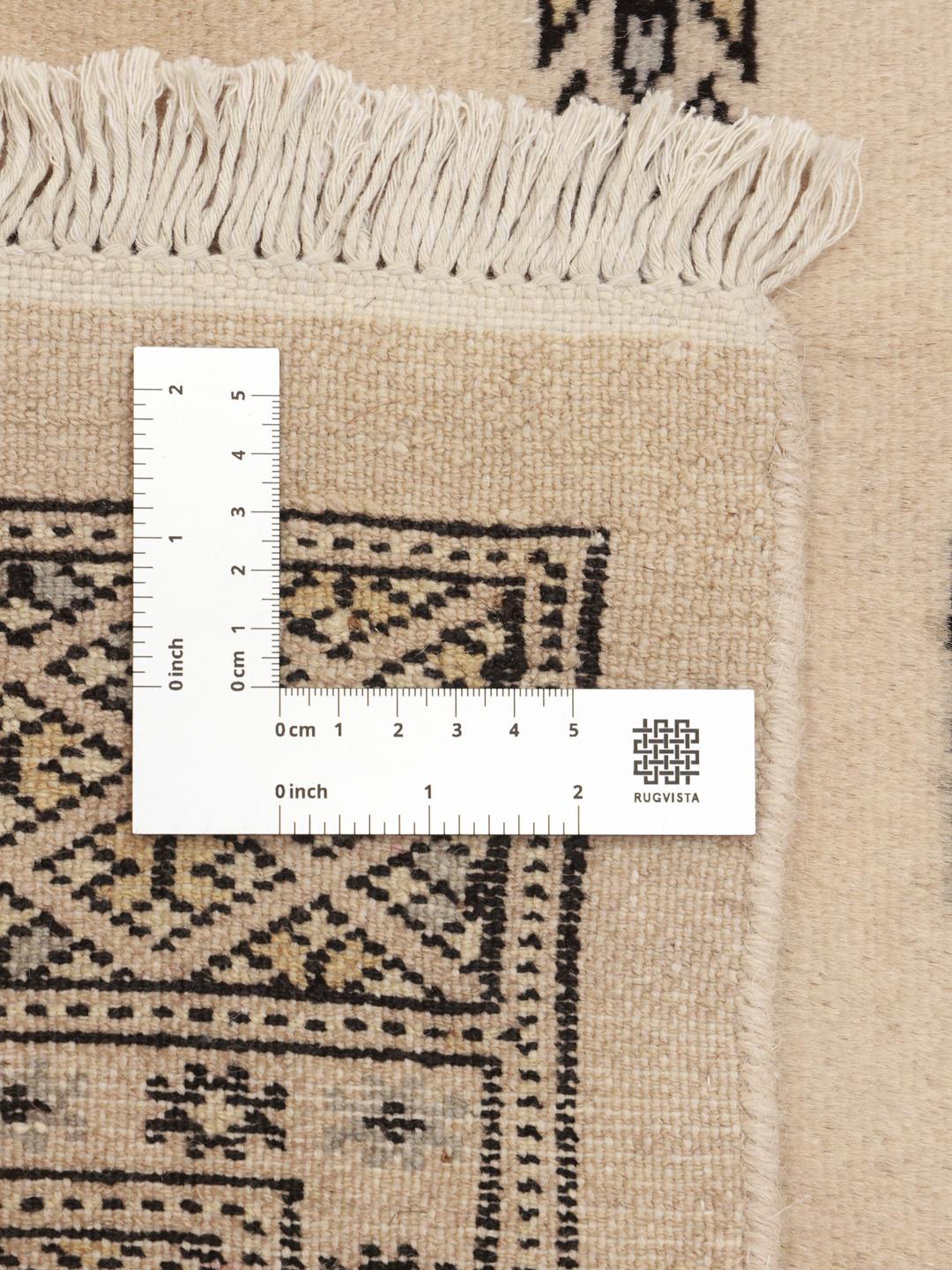
The Bokhara rug tradition is deeply rooted in the history of the ancient Silk Road, taking its name from the historic city of Bukhara in Central Asia. While these rugs were originally crafted by nomadic tribes, the tradition evolved over centuries as weavers migrated and shared techniques across the region. Today, some of the finest examples of this style are masterfully created in Pakistan, where artisans have refined the craft to achieve exceptional consistency and detail.
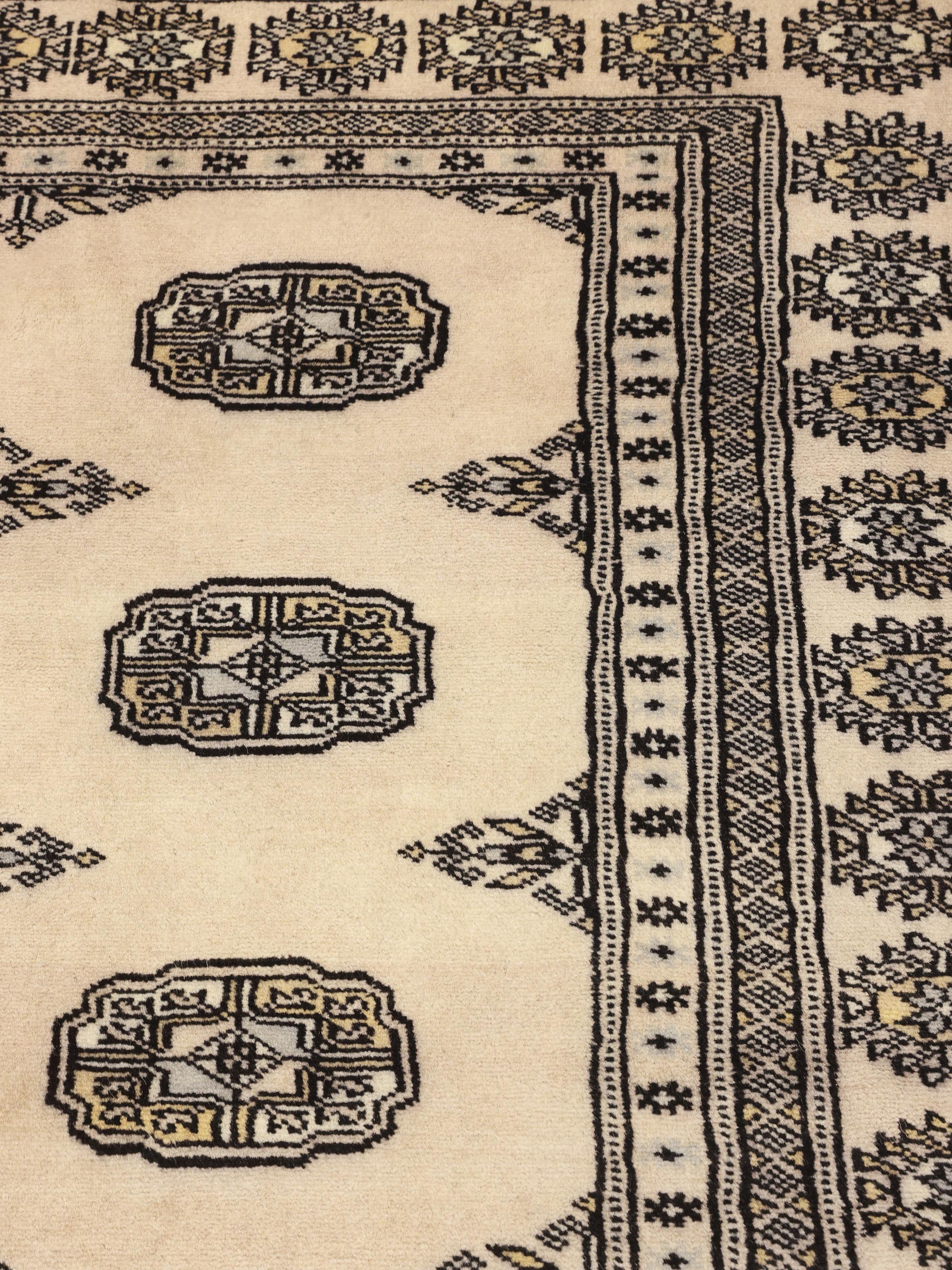
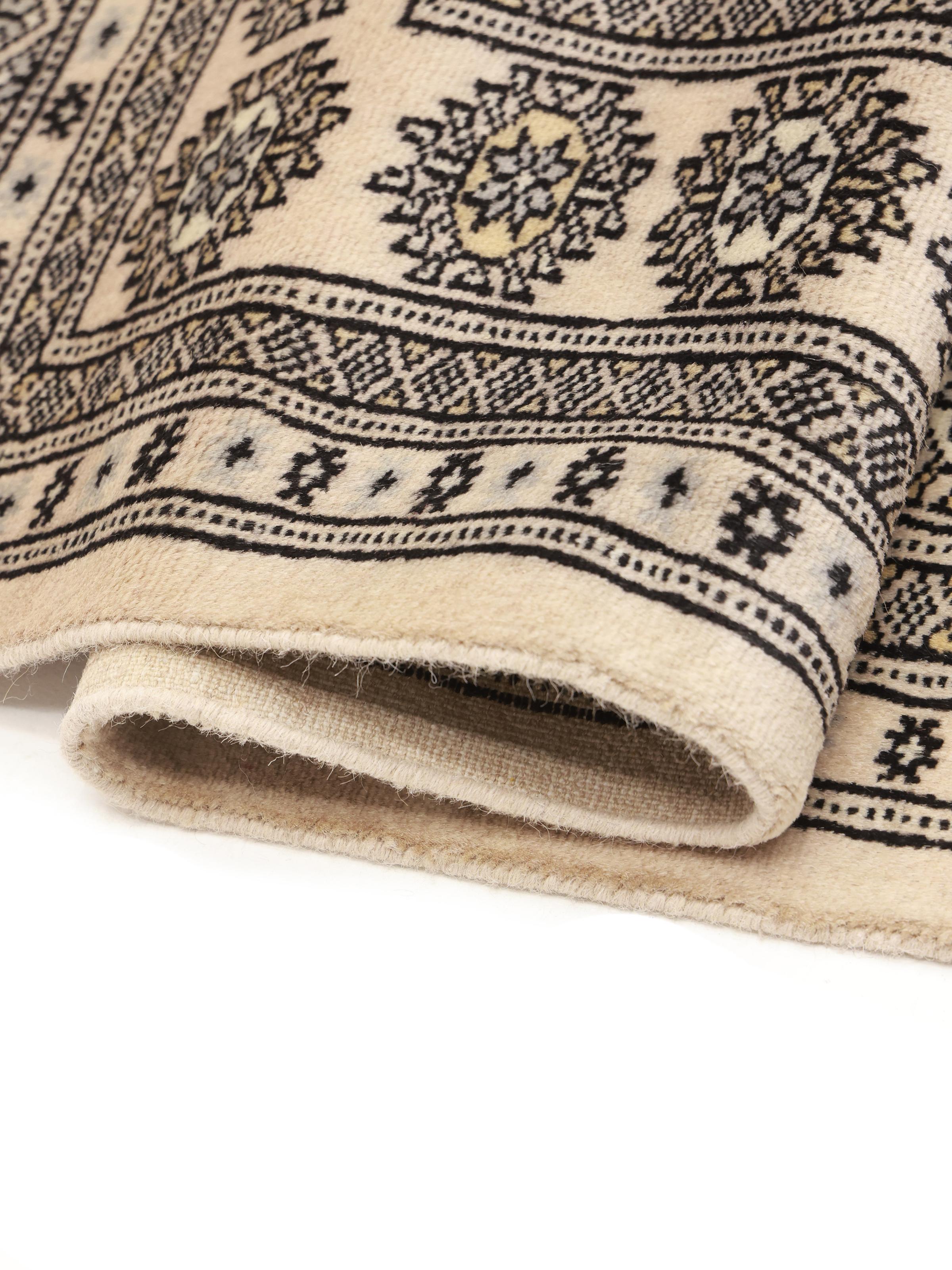
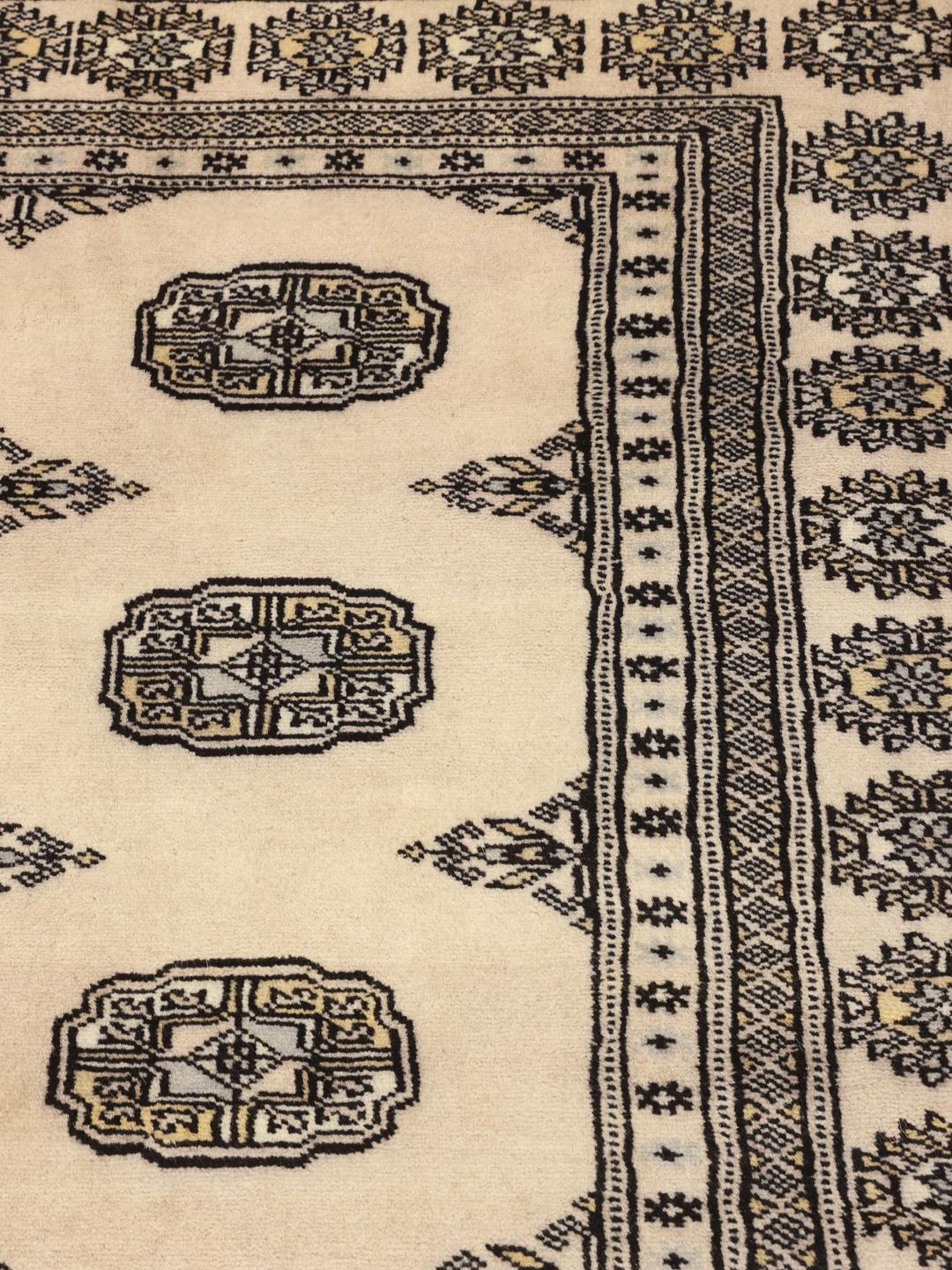
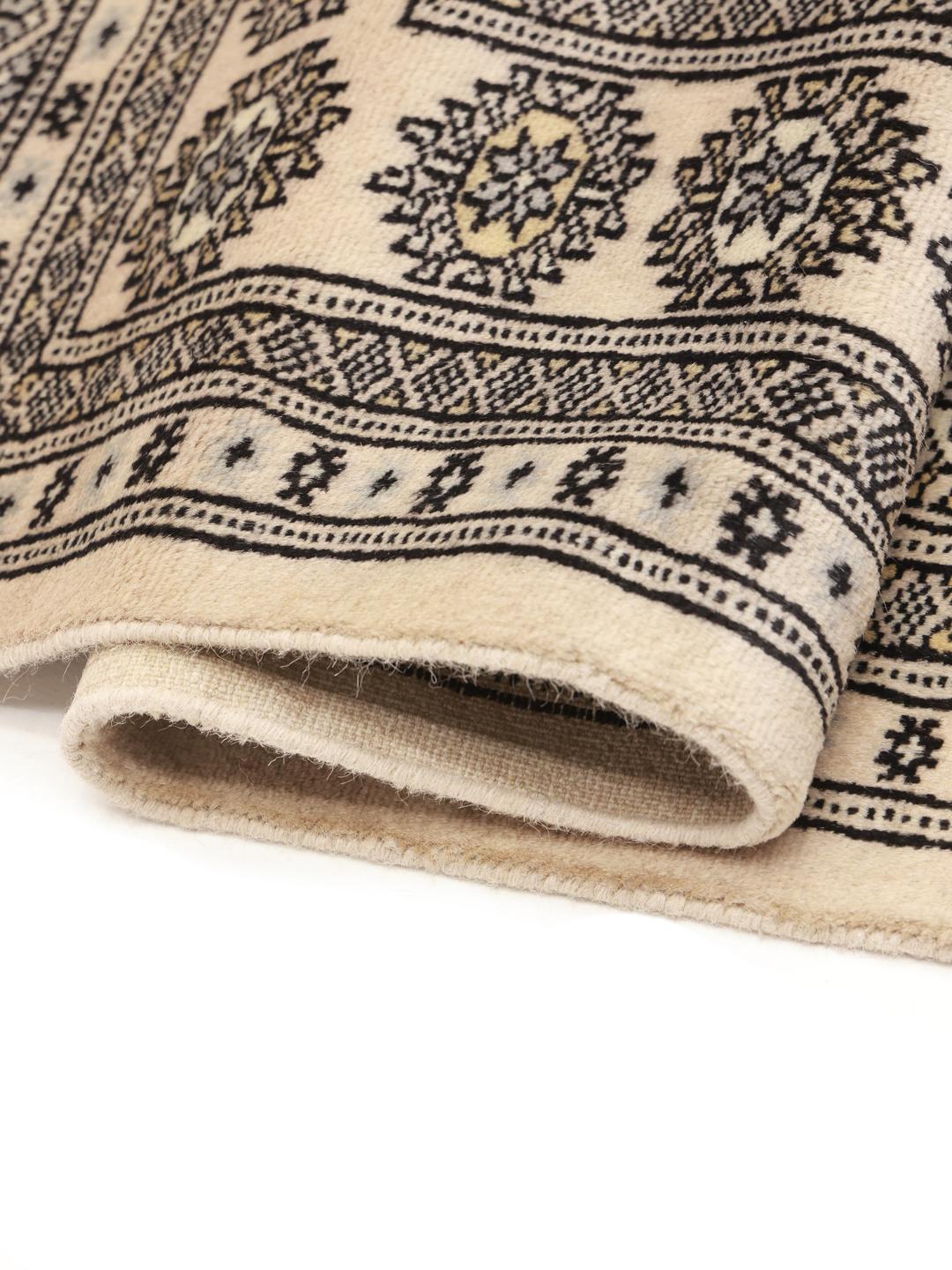
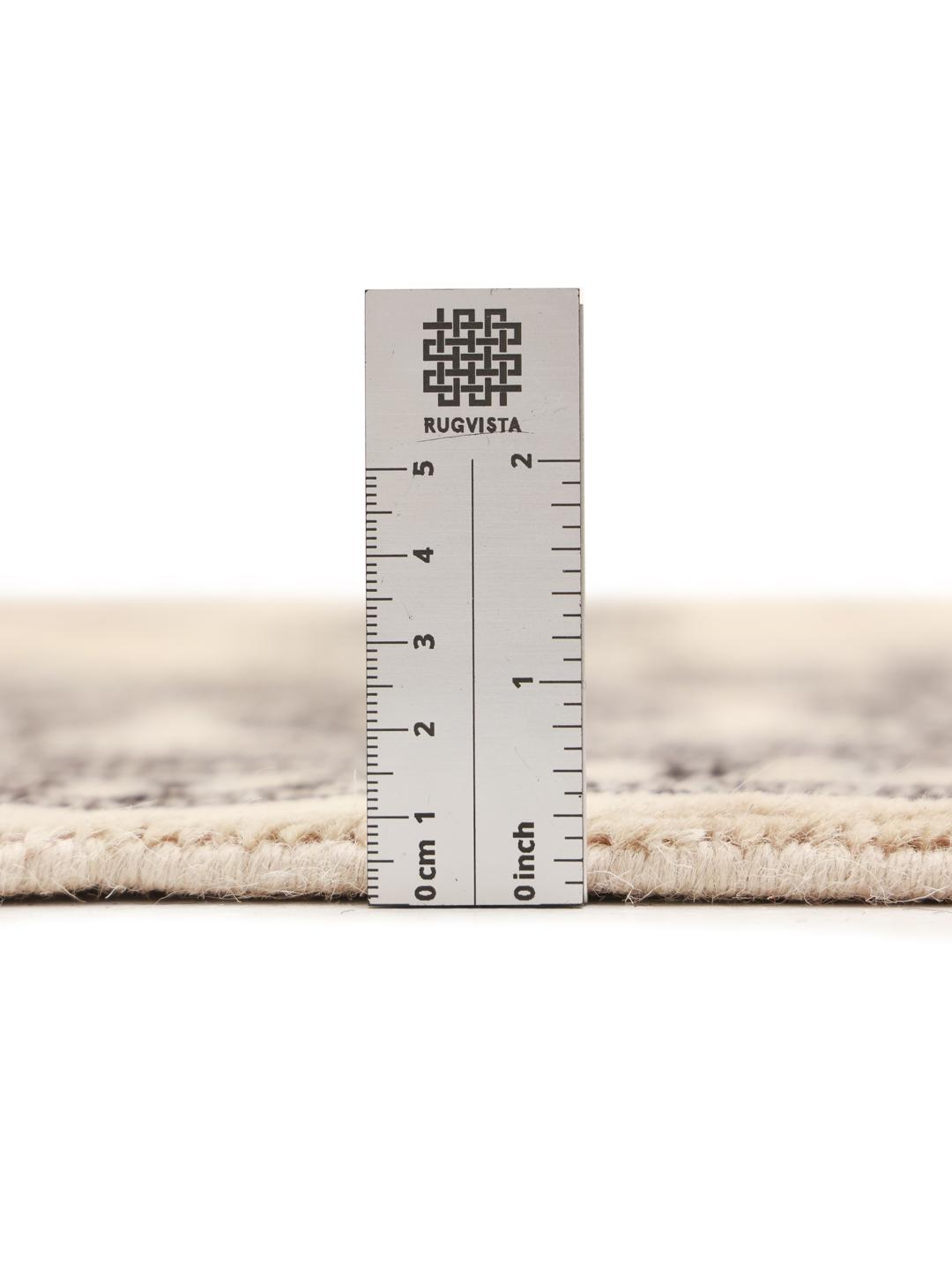
The term 2ply in this rug's construction refers to the use of two strands of wool twisted together to create the pile. This specific technique is essential for quality, as it results in a thicker, more lustrous, and significantly more durable rug compared to those made with single-strand wool. This extra step in material preparation ensures the rug maintains its structure and appearance even under regular foot traffic.
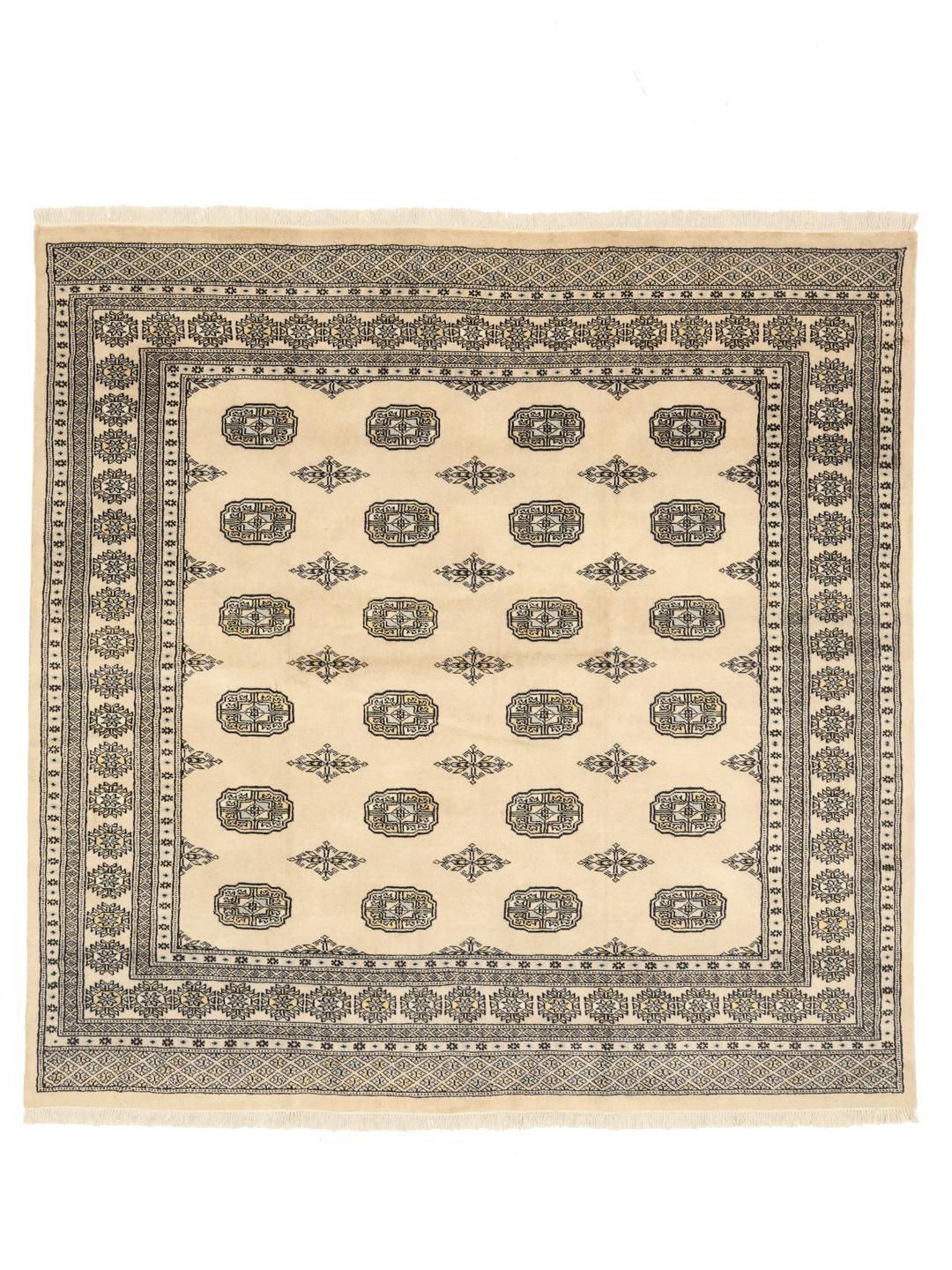
Visually, these rugs are defined by their iconic gul motifs, which are repeating, octagonal-shaped medallions that symbolise the lineage and history of the weaving communities. These medallions are typically arranged in clean, geometric rows, creating a sense of balanced harmony. The formal borders surrounding the field serve to frame these central motifs, often incorporating smaller, intricate patterns that showcase the weaver's technical skill.
Owning a hand-knotted rug from this tradition is an invitation to appreciate a legacy of patience and precision. These rugs are highly valued by collectors not just for their aesthetic beauty, but as tangible links to a long-standing cultural craft. By choosing this piece, you are preserving the heritage of skilled artistry and bringing a sense of history into your home.