The tradition of Bokhara rugs is deeply rooted in the history of the Silk Road, taking its name from the ancient, legendary city of Bukhara in Central Asia. While these designs originated among nomadic tribes who needed durable, portable textiles for their tents, the style evolved over centuries to become one of the most recognised and admired weaving traditions in the world. Today, some of the finest examples of this craft are produced in Pakistan, where artisans have refined the technique to perfection.
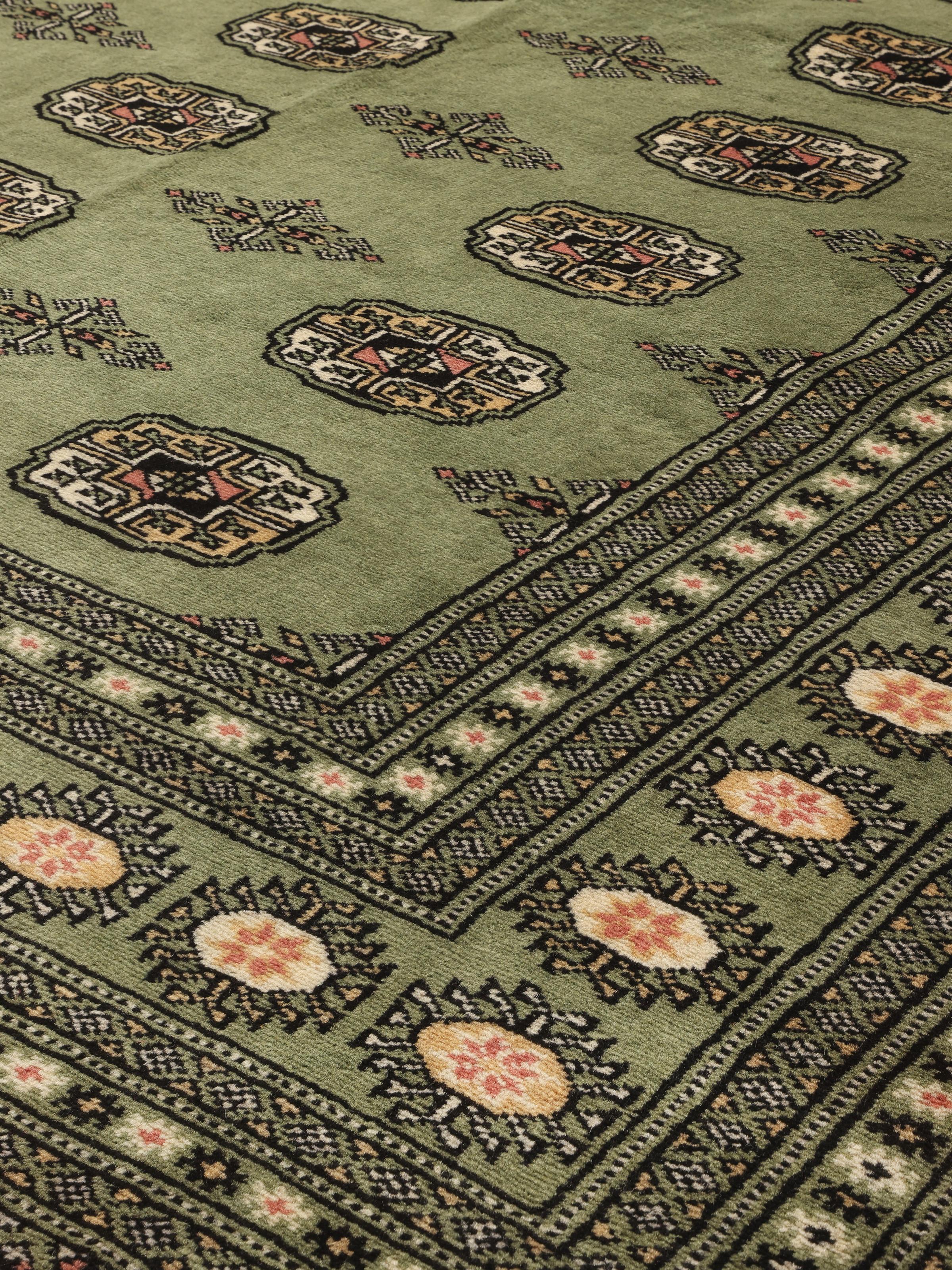
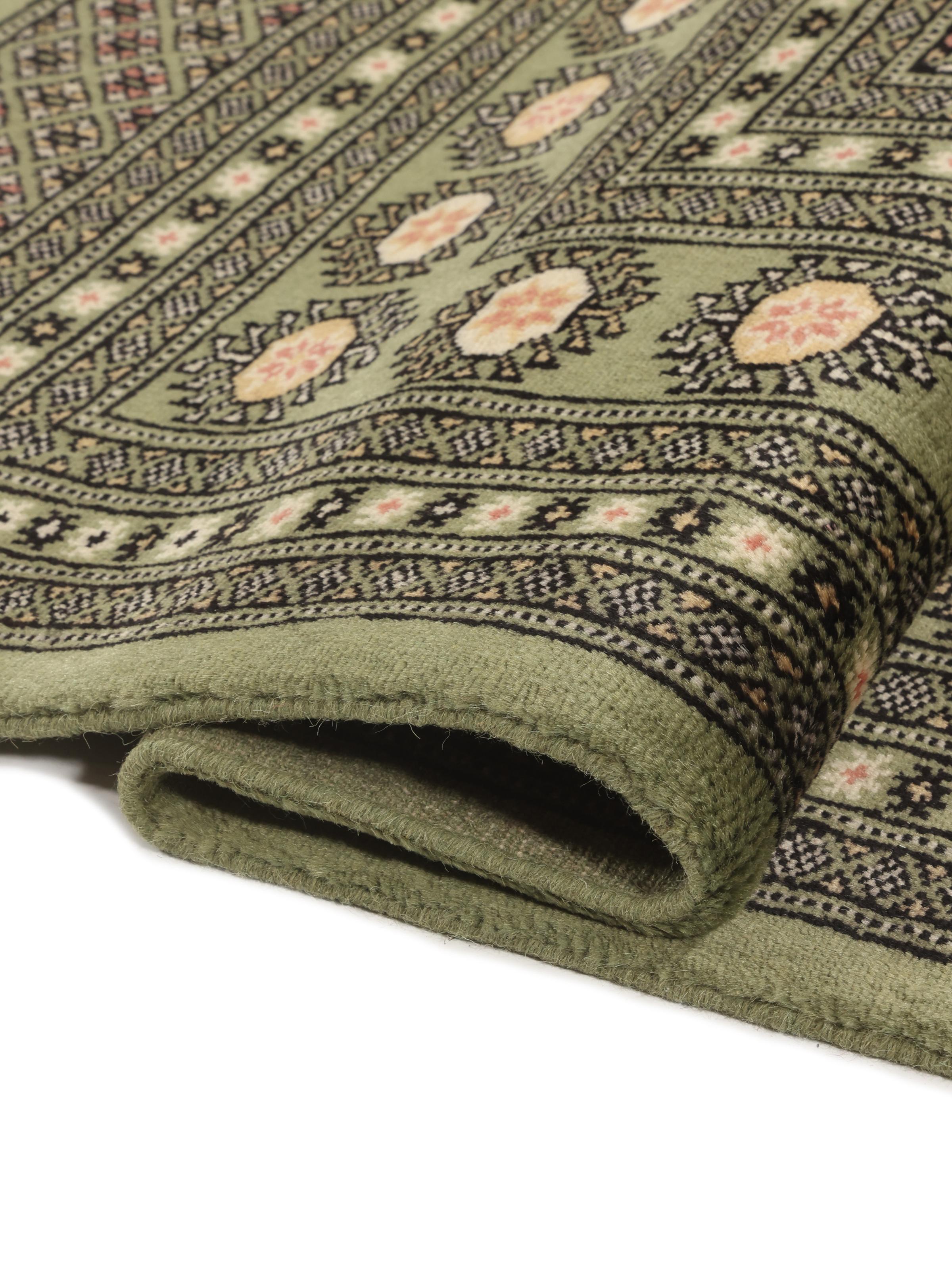
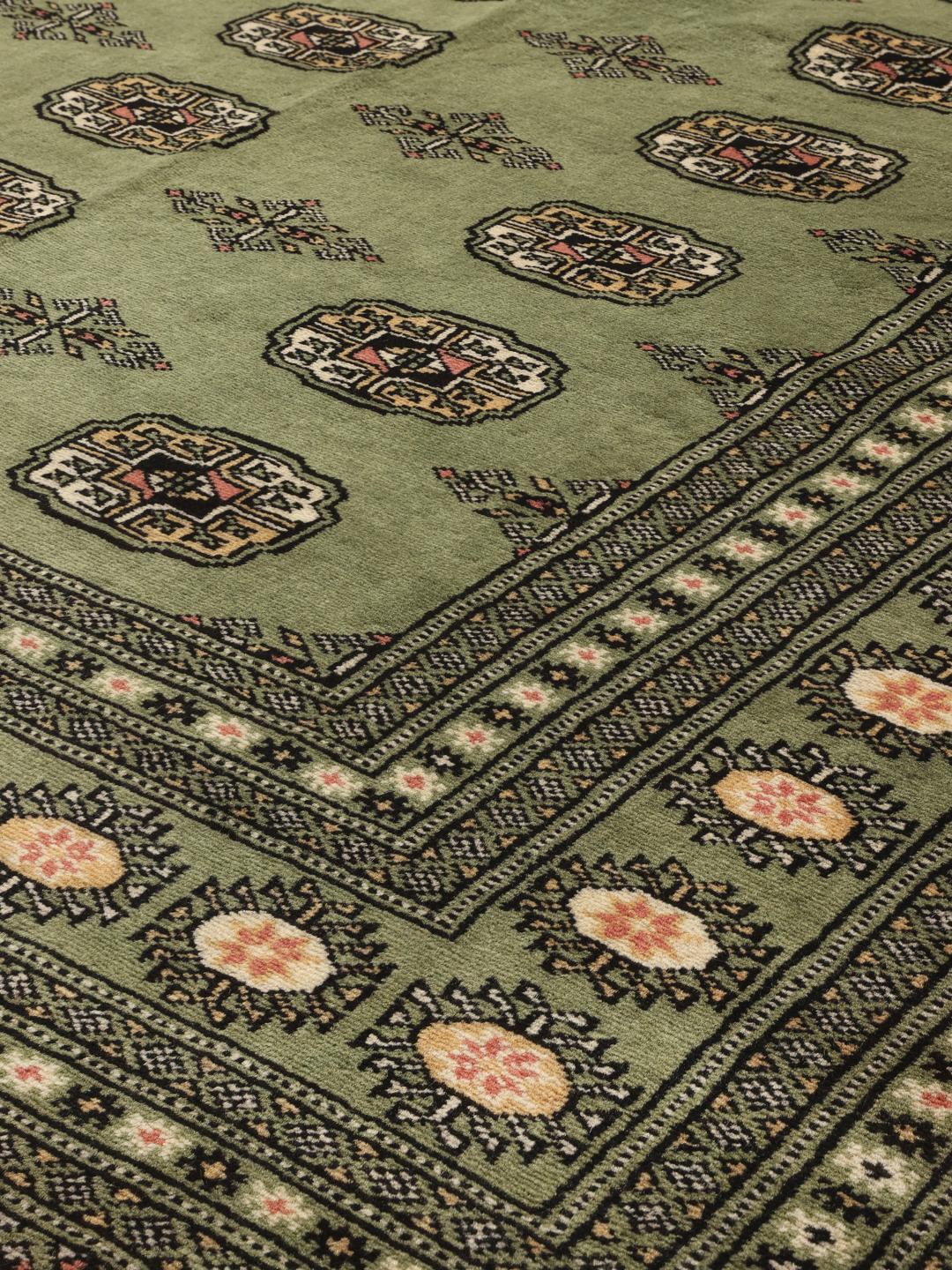
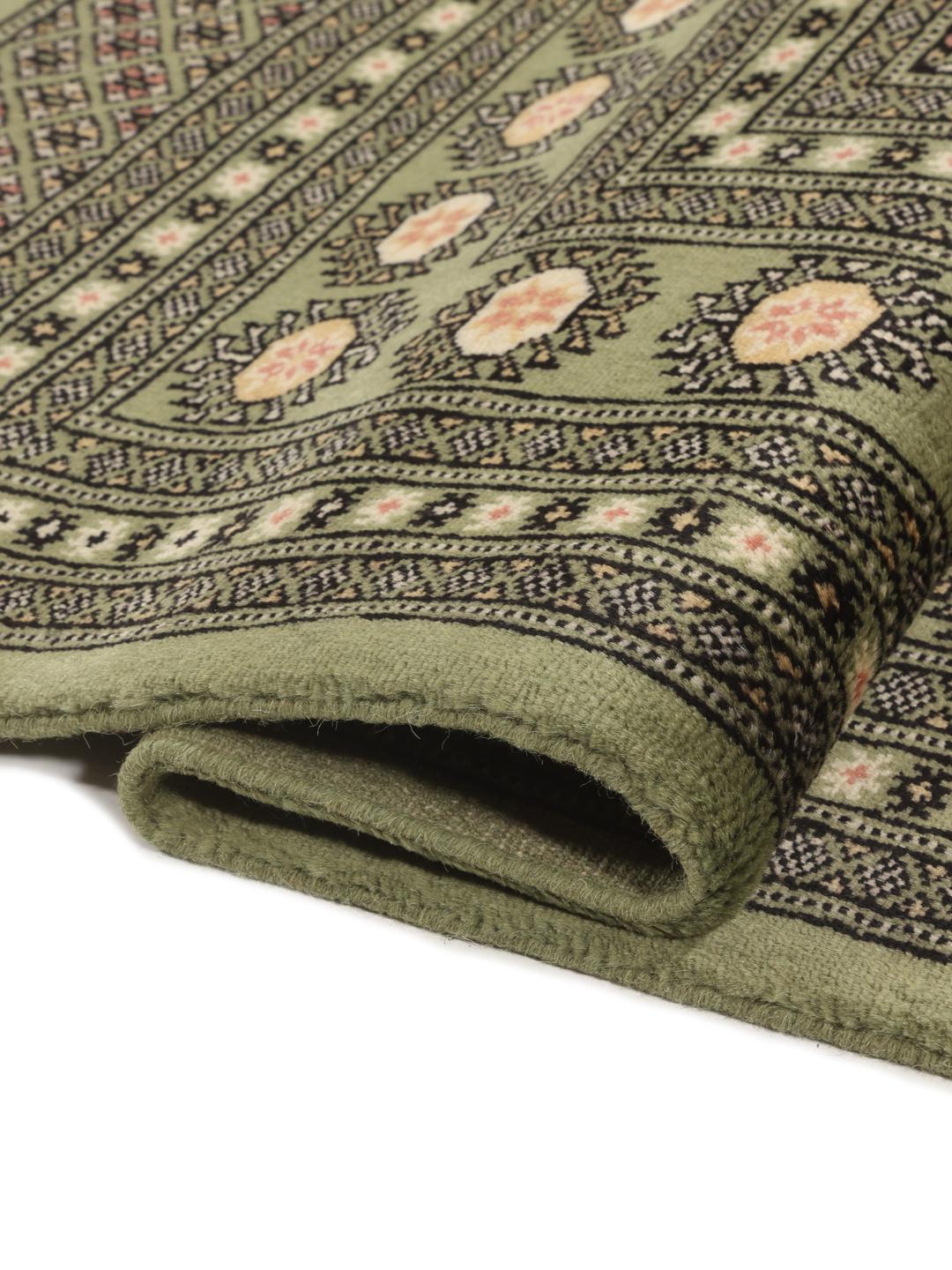
The '2ply' designation refers to a specific and sophisticated construction method where the wool yarn is spun from two individual strands twisted together before the knotting process begins. This technique is significant because it results in a pile that is significantly more lustrous, dense, and resilient than single-ply alternatives. For the owner, this means a rug that not only looks more vibrant but also feels more substantial and stands up better to the pressures of a busy home.
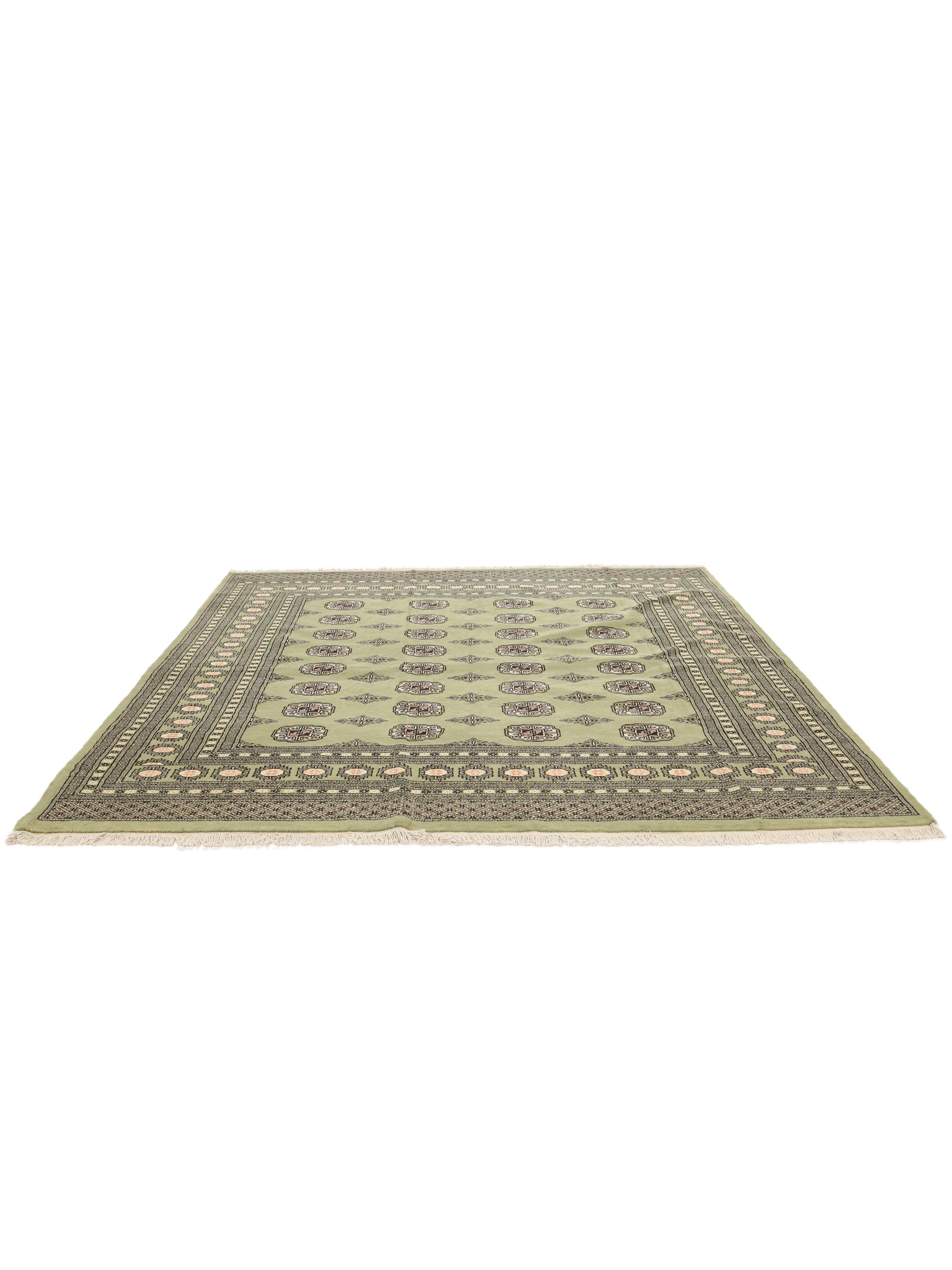
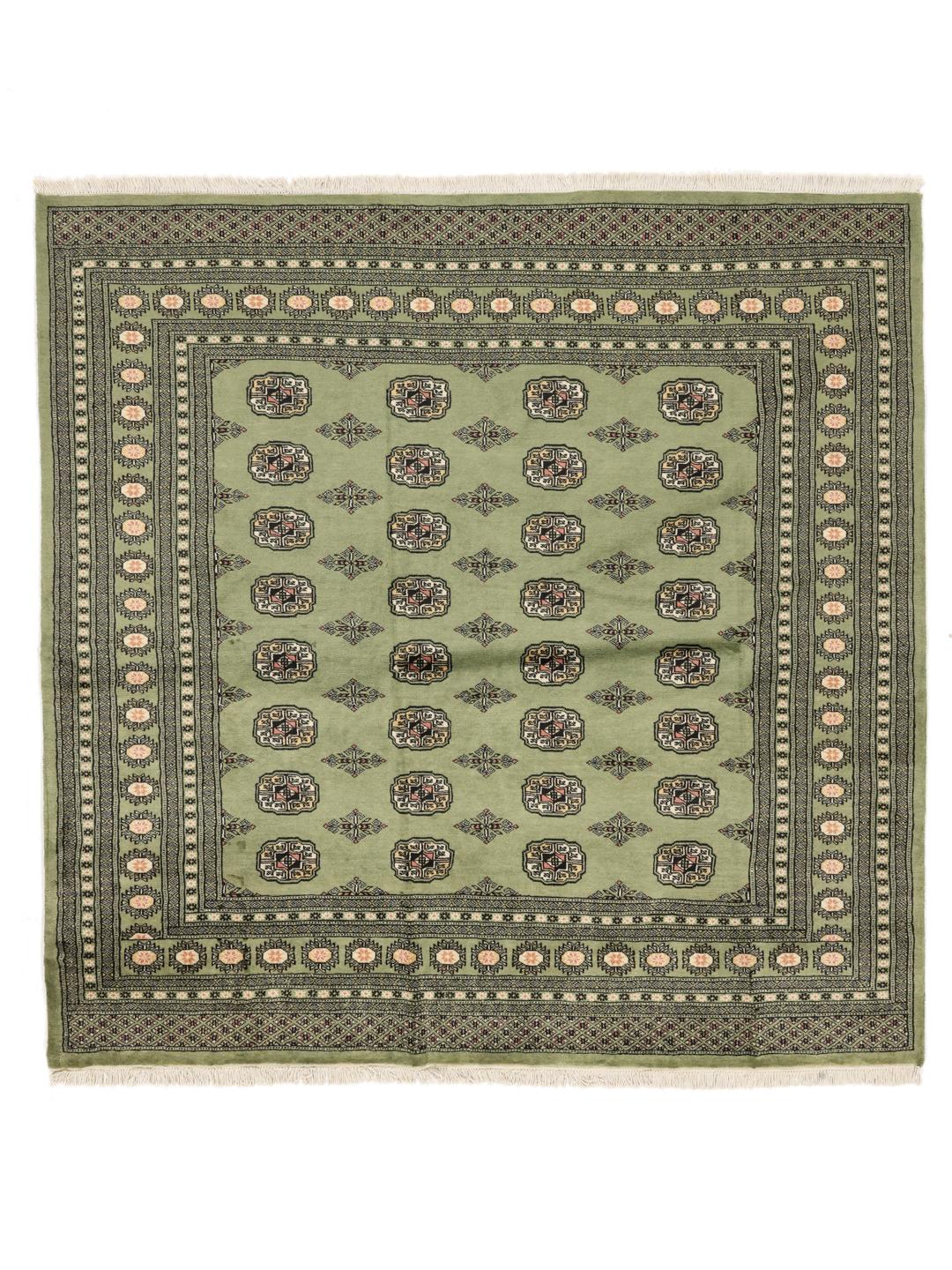
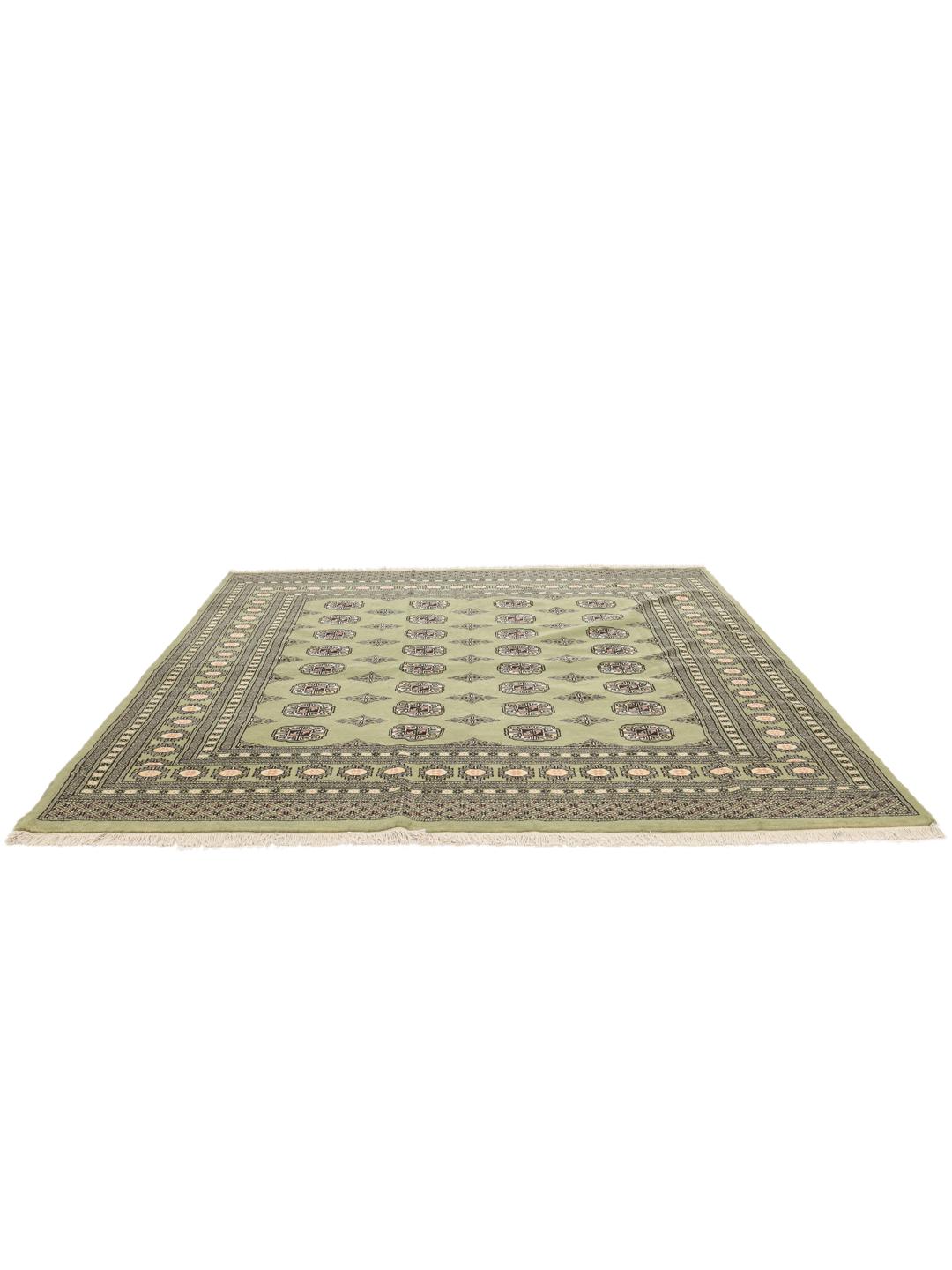
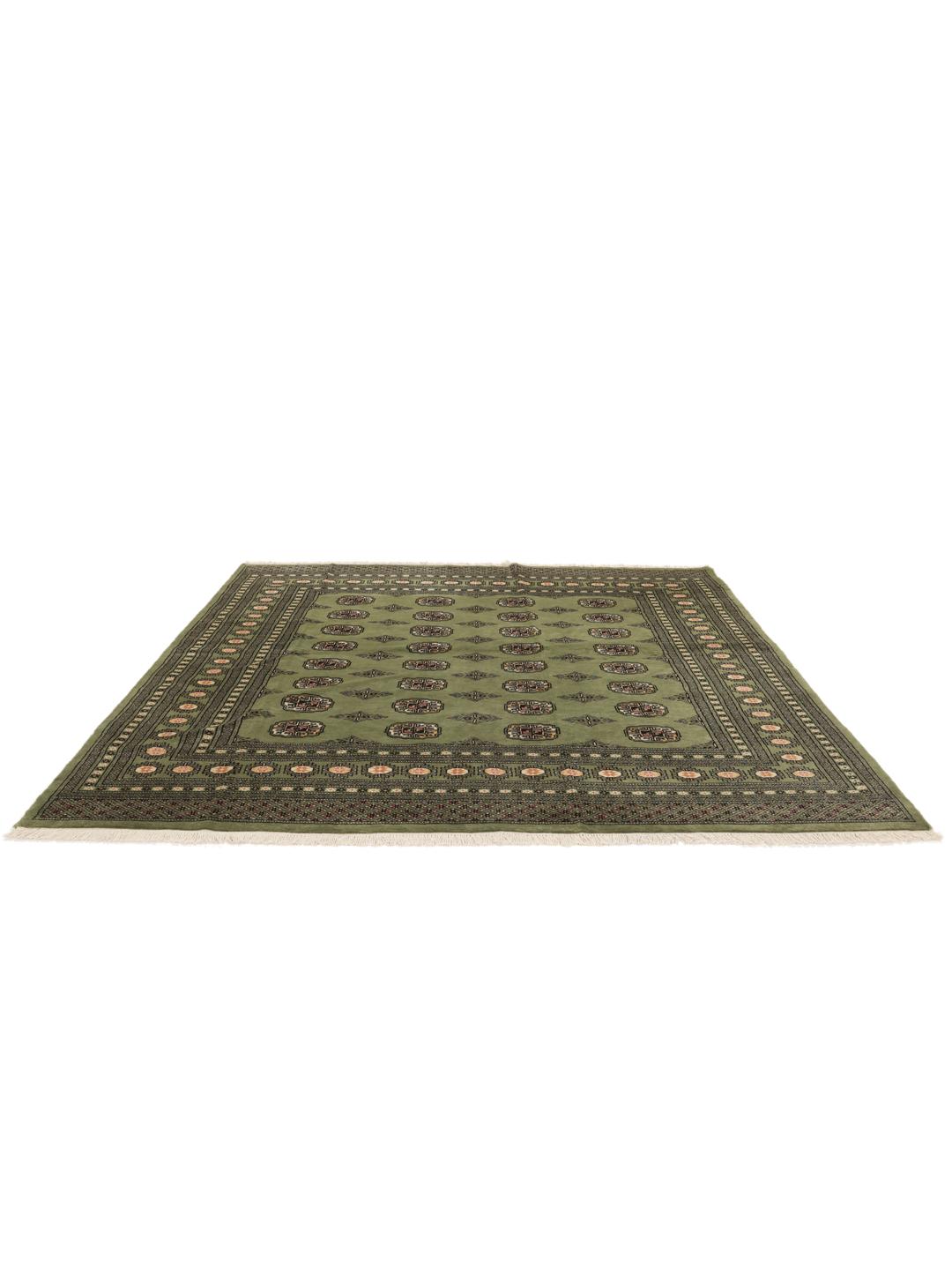
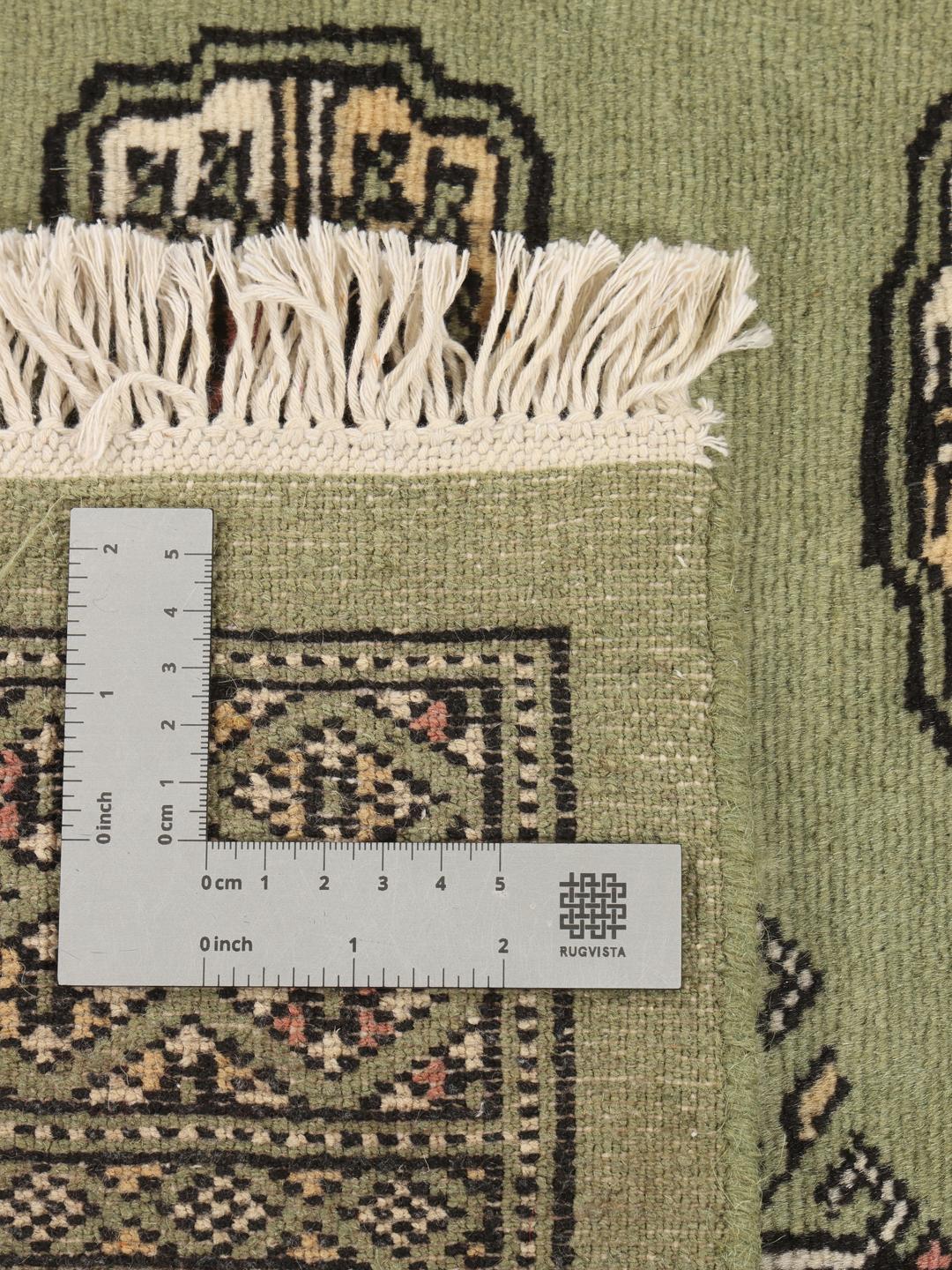
Visually, these rugs are defined by their iconic 'gul' motifs, which are repeating octagonal or elephant-foot medallions arranged in structured rows across the field. These patterns are typically enclosed by intricate, formal borders that frame the composition. The use of a green field in this particular piece is a sophisticated variation on the classic red palette, offering a fresh and calming interpretation of a timeless design language.
Collectors value these rugs for their combination of heritage, technical skill, and enduring aesthetic appeal. Owning a piece from this tradition is more than just purchasing a floor covering; it is an act of preserving a centuries-old craft. Each rug serves as a testament to the weaver's ability to translate cultural history into a functional piece of art that brings a sense of history and permanence to any contemporary home.