Usak rugs have long been celebrated for their historical significance, originating from the town of Usak in western Turkey, which was once a major hub for carpet production during the 15th and 16th centuries. These rugs were historically known for their grand scale and artistic, often floral-inspired designs that adorned palaces and mosques across the Middle East and Europe. Over time, the tradition migrated, and today, some of the most skilled artisans continuing this legacy are found in India.
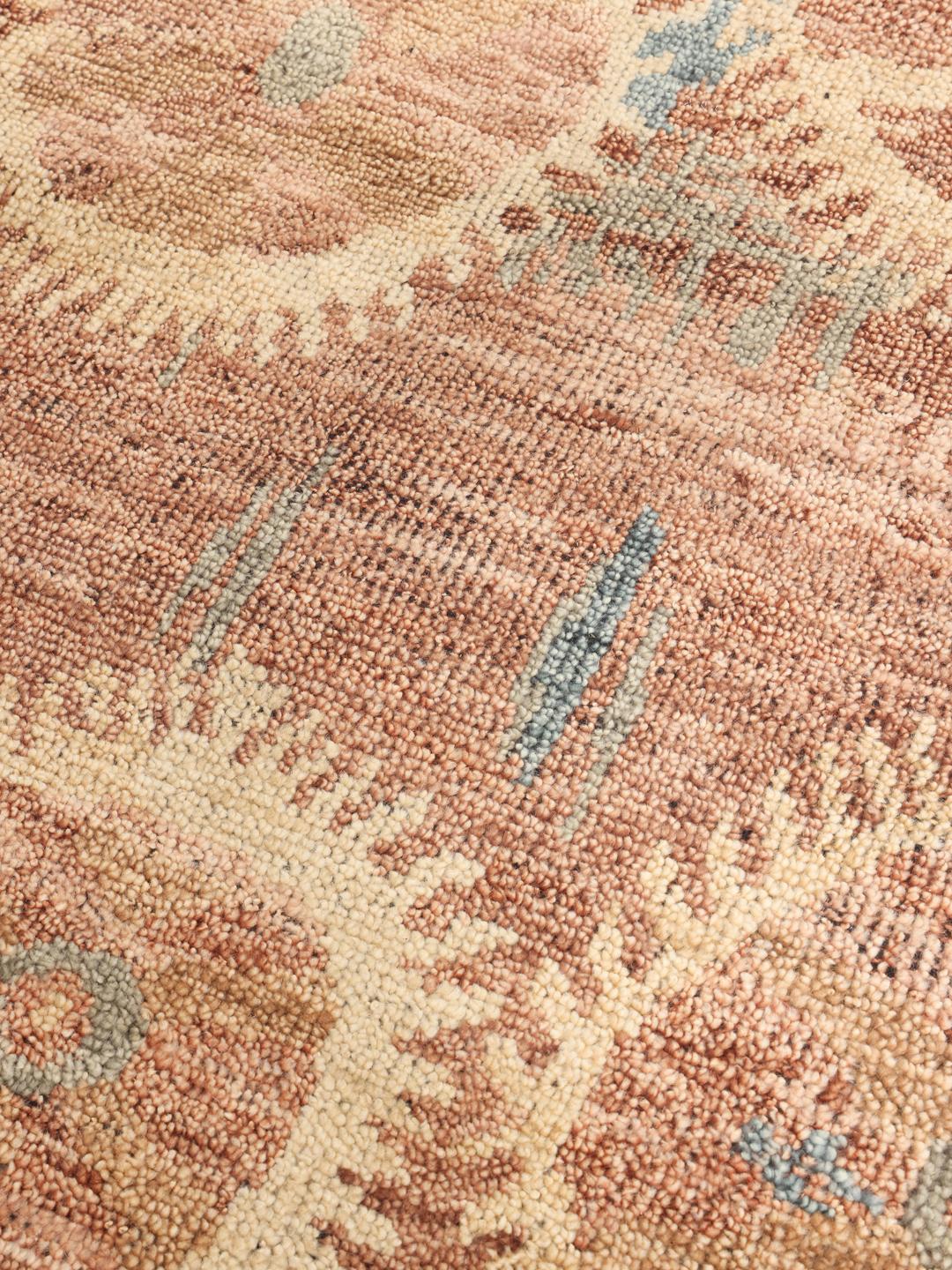
The term Usak refers to a specific design language that emphasises large-scale patterns and a balanced, harmonious composition. Unlike more tightly packed geometric styles, the Usak aesthetic is characterised by its openness and the use of soft, blended colours. This approach allows the individual motifs to breathe and stand out, creating a visual rhythm that is both sophisticated and inviting.
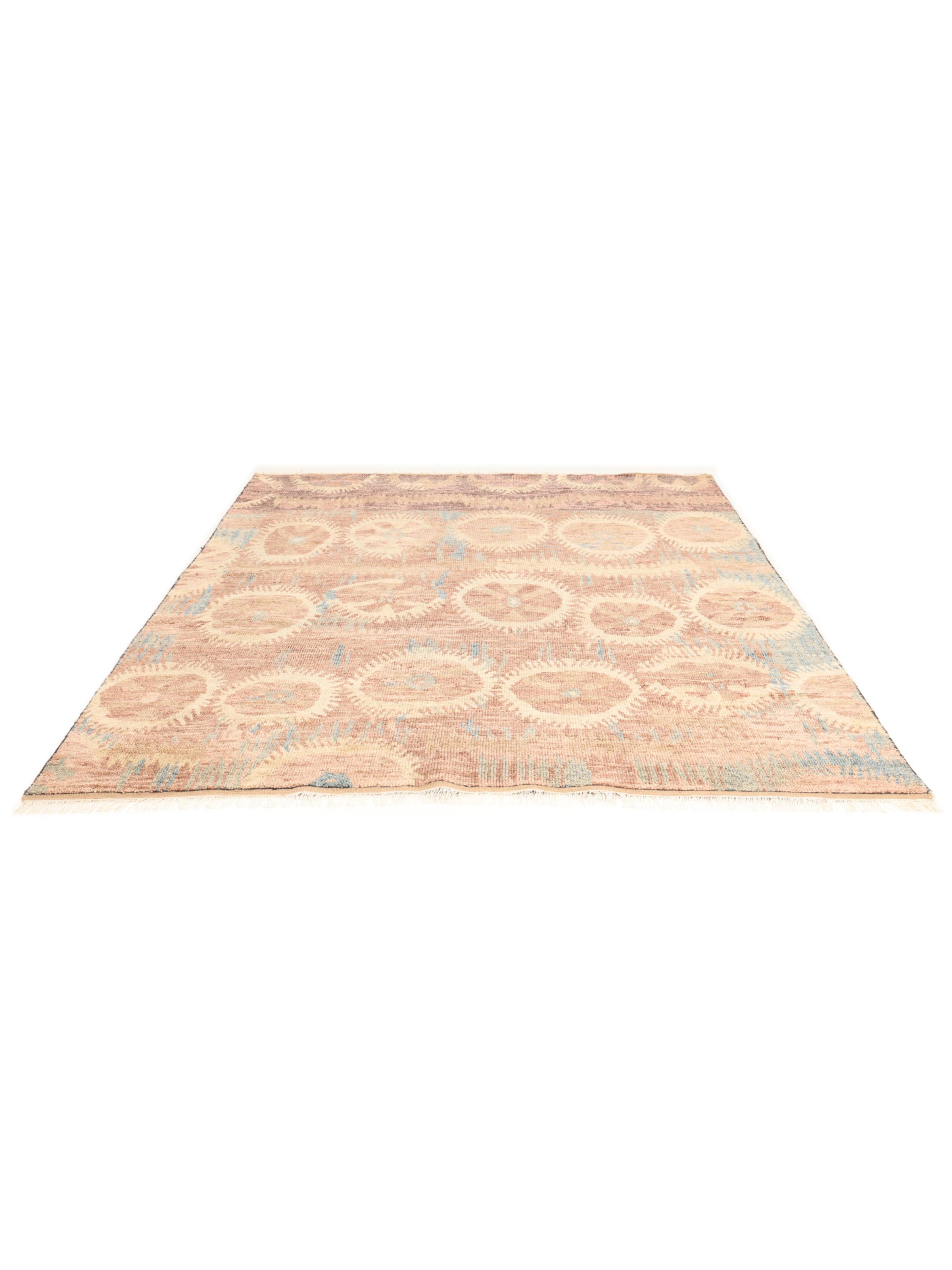
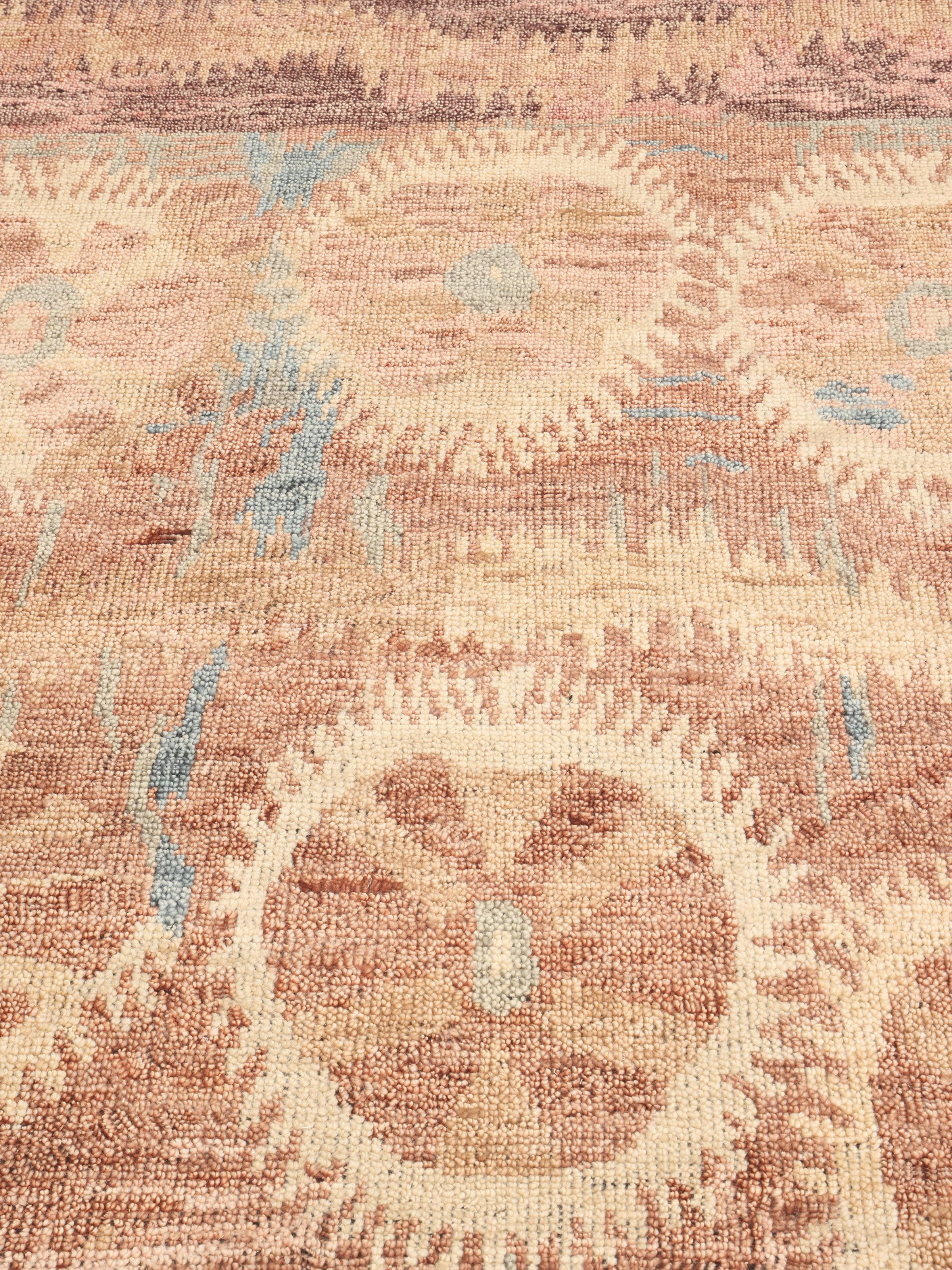
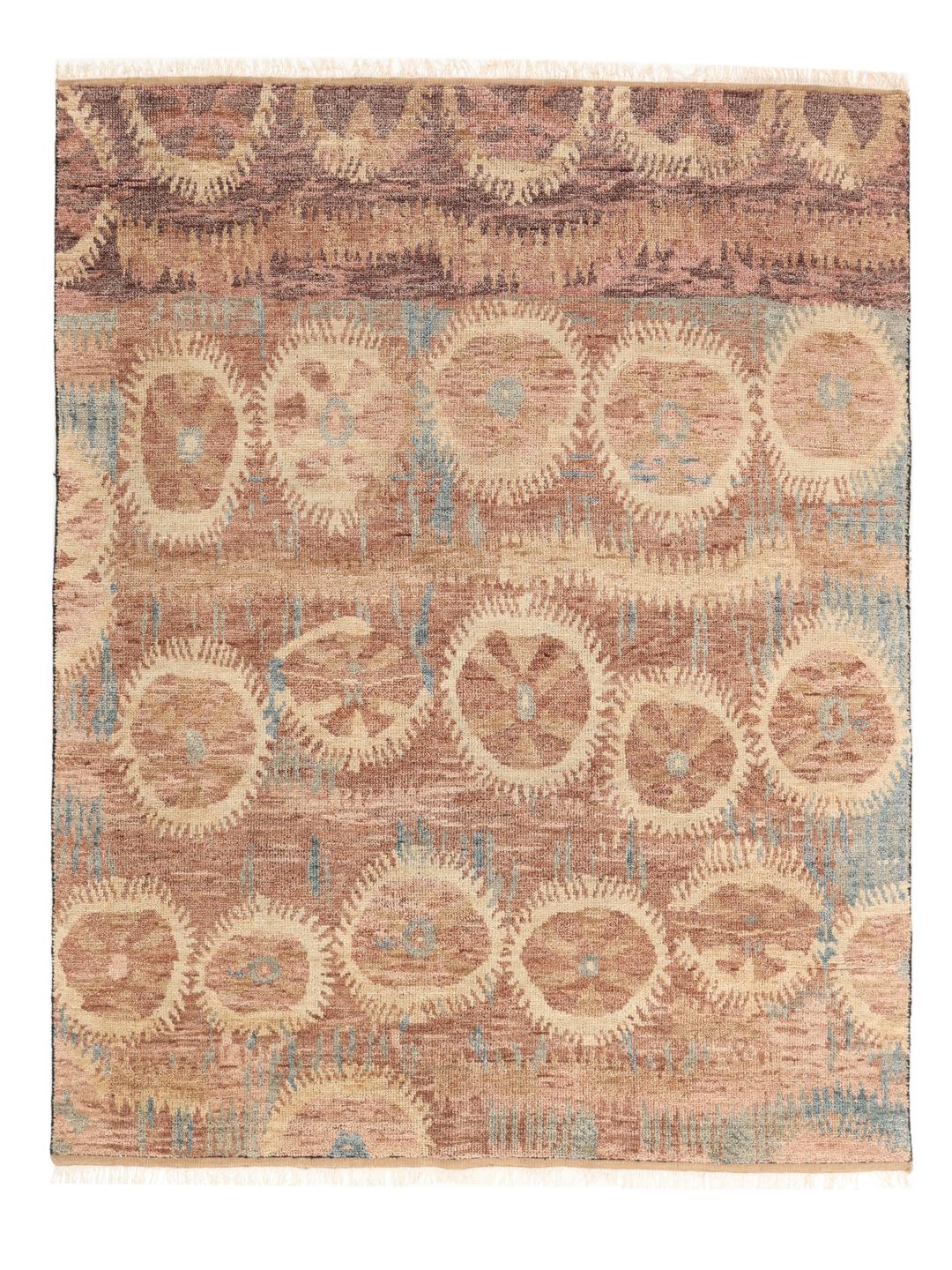
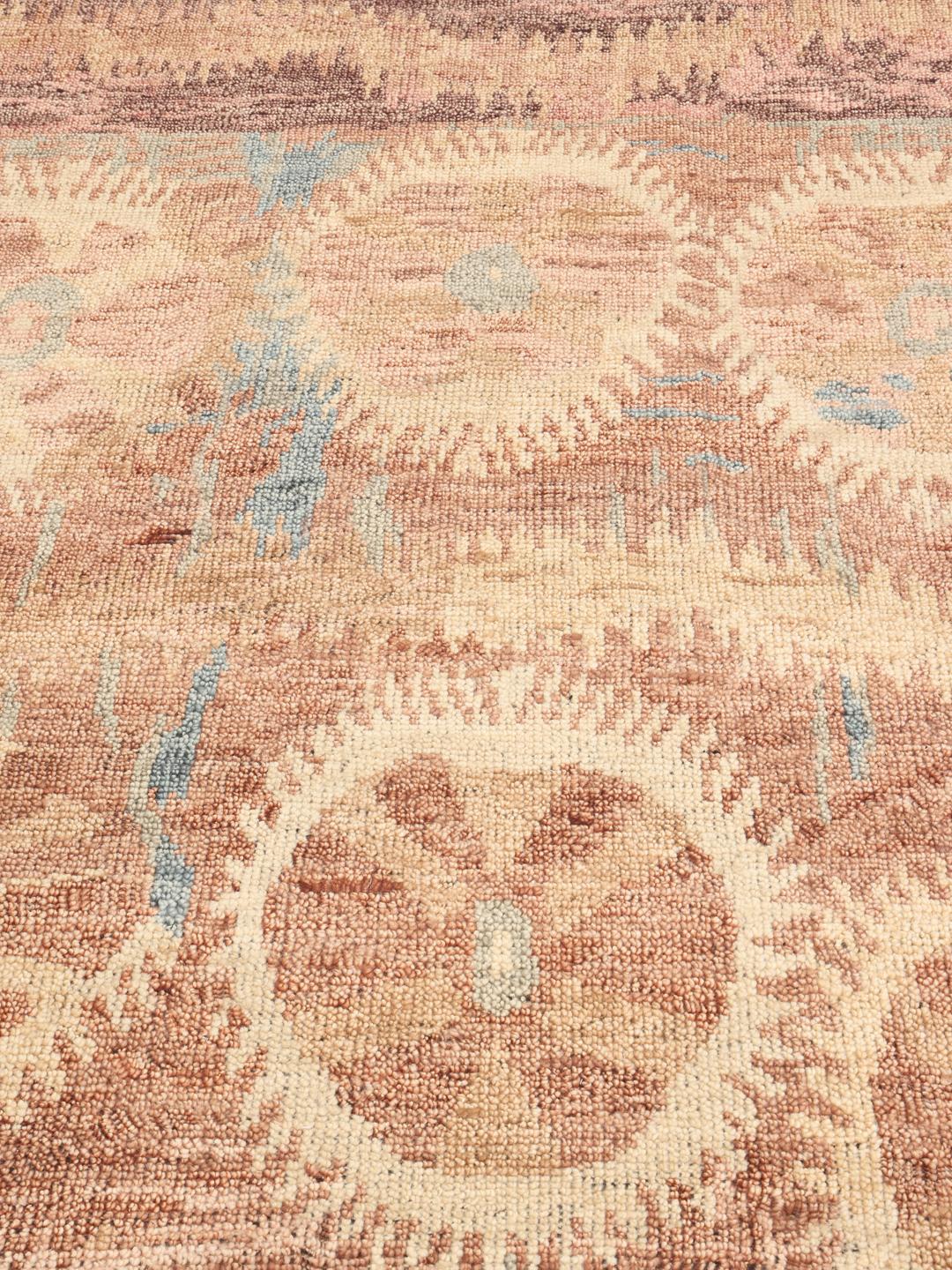
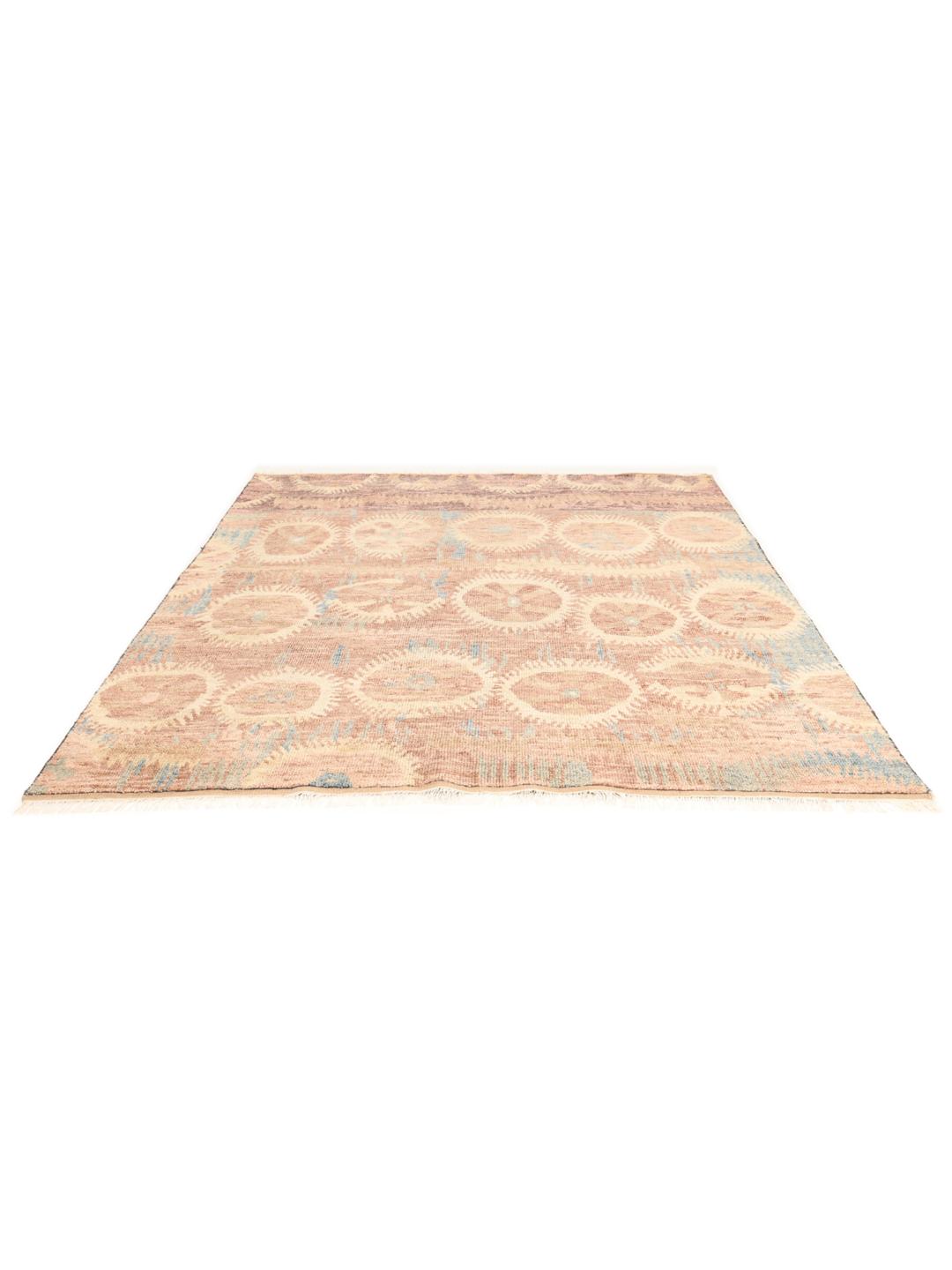
Signature design elements of the Usak tradition often include stylised medallions and organic, flowing forms that appear to float across the field. In this particular piece, the use of large, repeating circular motifs is a nod to these classic traditions while offering a slightly more contemporary, rhythmic interpretation. The interplay between the bold shapes and the softer background tones is a hallmark of the style, demonstrating a masterful use of space and colour.
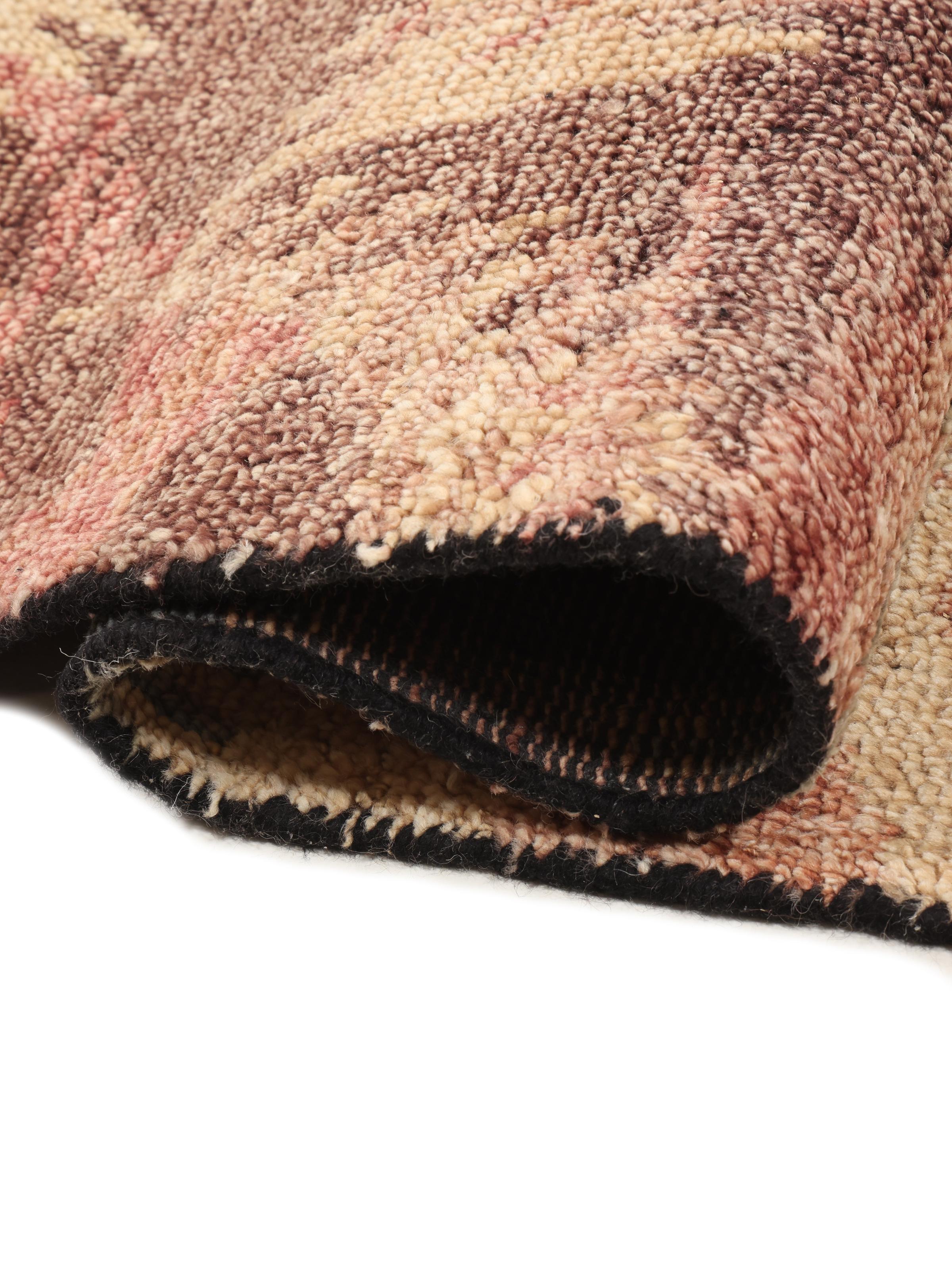
Owning an Usak rug is an invitation to engage with a rich cultural lineage of craftsmanship. These rugs are highly valued by collectors and design enthusiasts alike, not just for their beauty, but for the skill required to translate historical motifs into a durable, functional floor covering. By choosing this piece, you are participating in a long-standing tradition of excellence that values both the beauty of the design and the longevity of the materials.