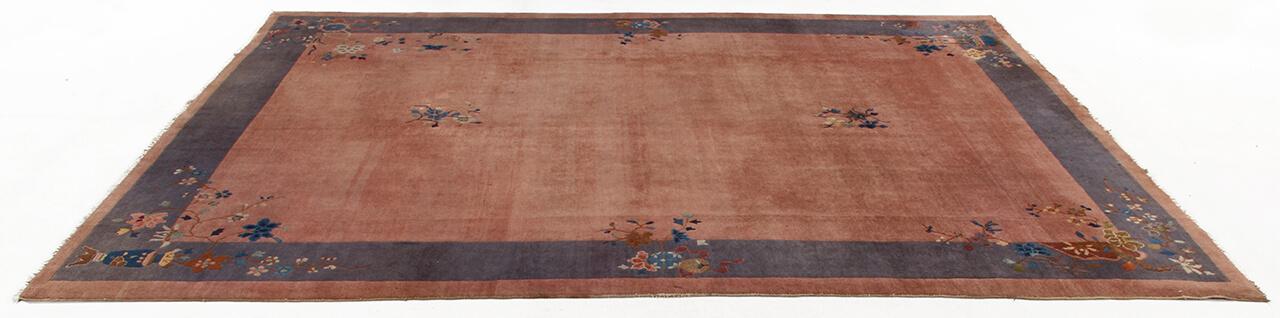
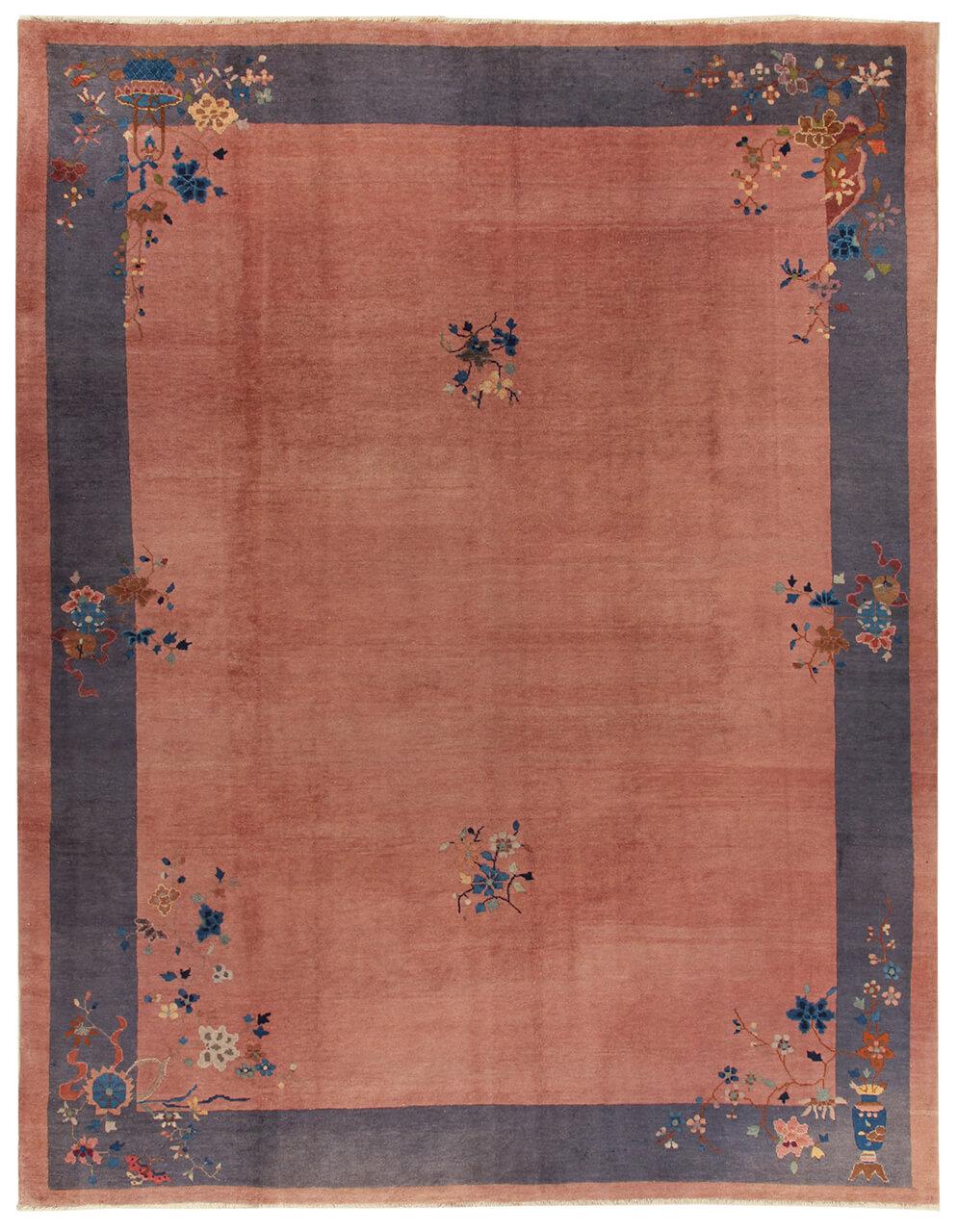
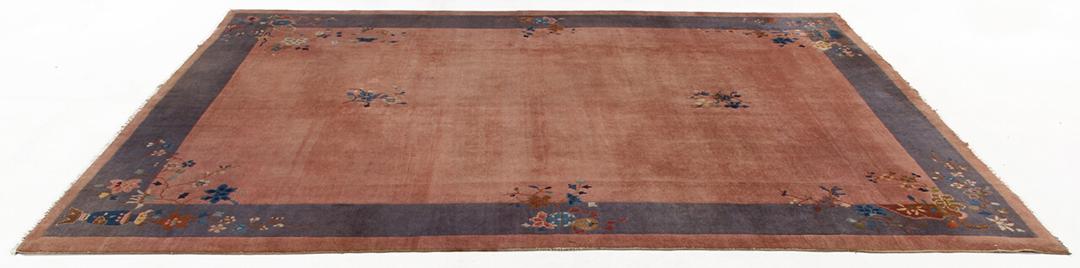
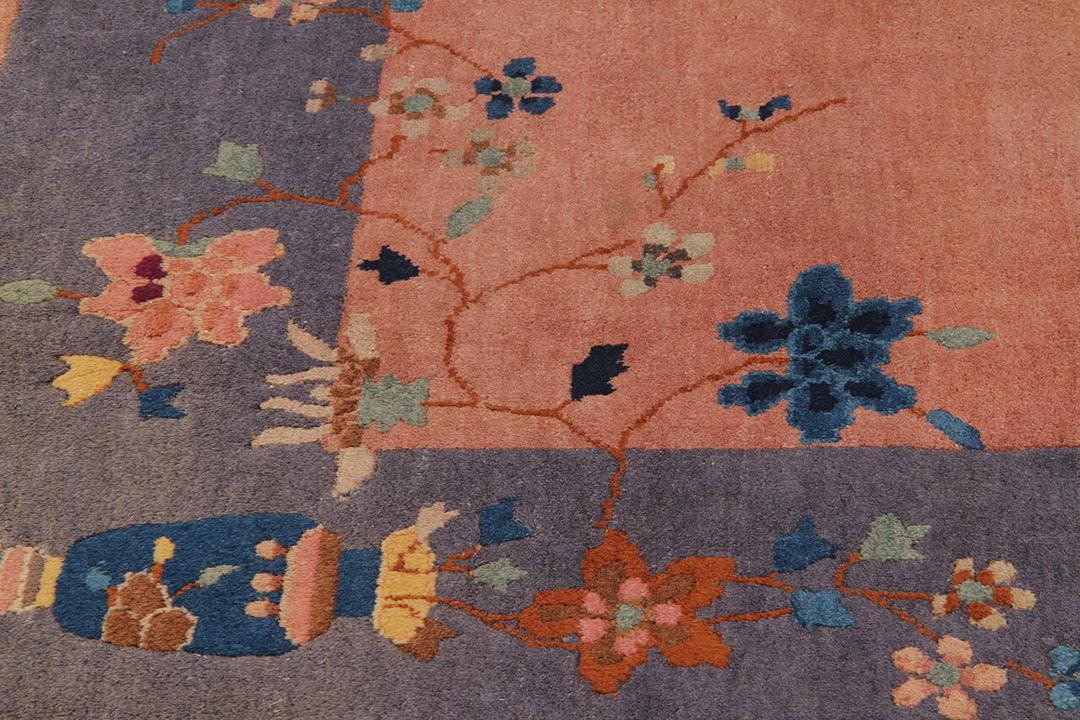
Originating from China during the early 20th century, this rug is a prime example of the influential Nichols-style production. Walter Nichols was an American who established a rug manufacturing business in Tientsin, China, during the 1920s, blending traditional Chinese motifs with the bold, modern sensibilities of the Art Deco movement.
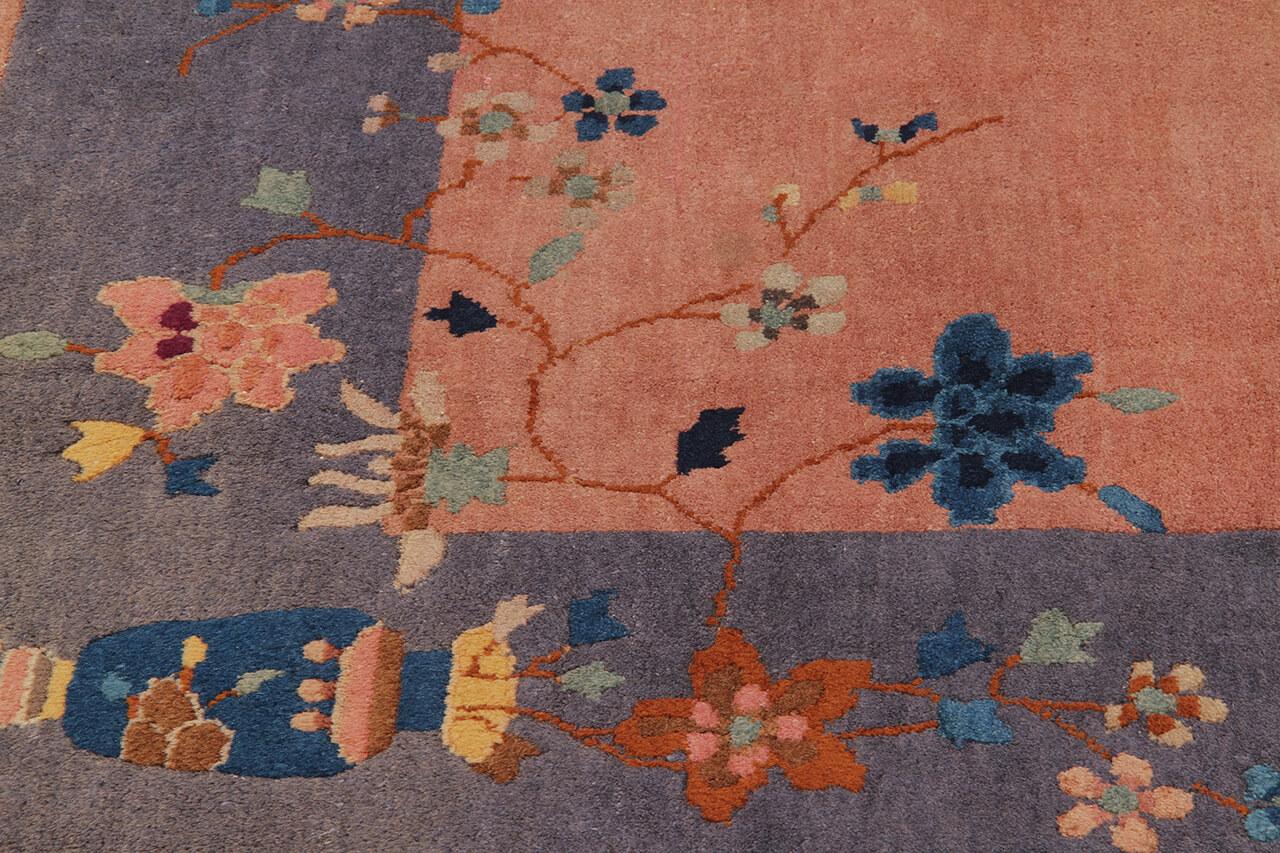
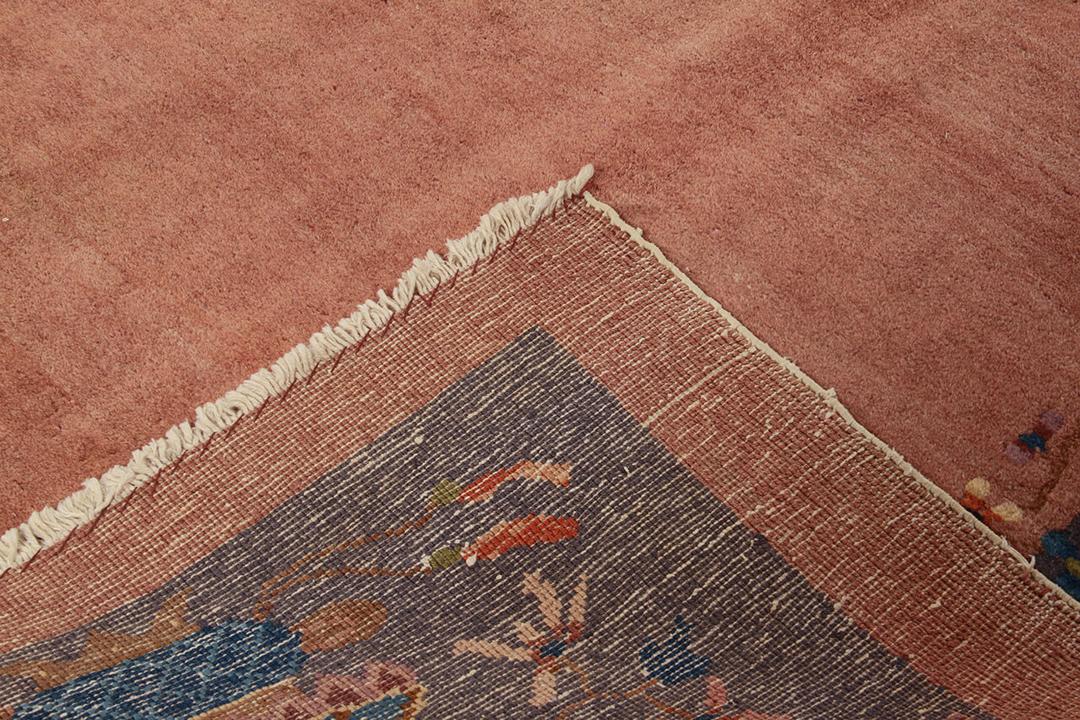
These rugs are celebrated for their sculptural, high-pile construction. The artisans employed a technique that created a distinct, three-dimensional effect, where the motifs appear slightly raised from the background. This layering adds a remarkable level of depth and texture that has become a hallmark of high-quality early Chinese export rugs.
The visual language of this piece reflects the transition from classical Chinese symbolism to the streamlined elegance of the Jazz Age. While traditional rugs might be crowded with complex patterns, this Art Deco approach favours open space and strategically placed, elegant floral sprigs, often utilising a sophisticated palette that moves away from the primary reds and blues of earlier eras.
Collectors value these rugs for their historical significance as a bridge between two cultures. Owning a Nichols-style piece is not just about the floor covering itself, but about preserving a moment in trade history where Eastern weaving traditions met Western design trends. It remains a sought-after piece for those who appreciate the intersection of global history and refined interior design.