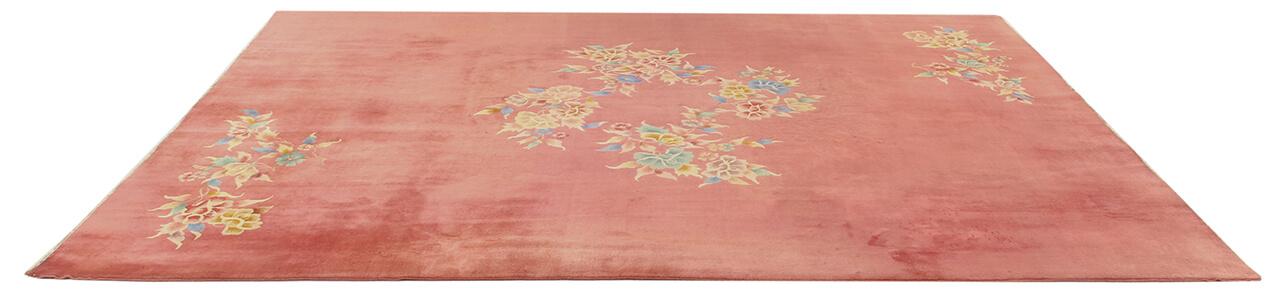
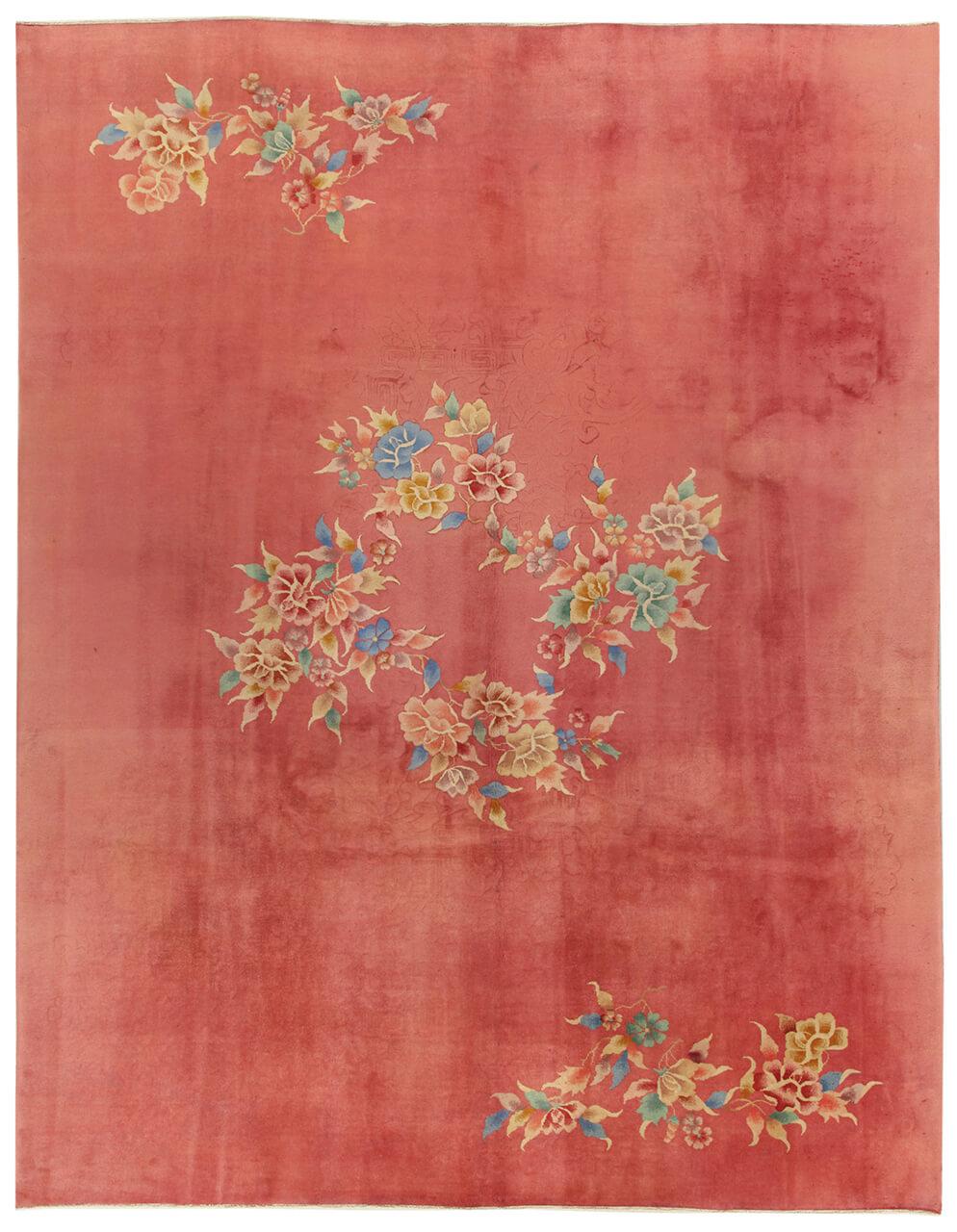
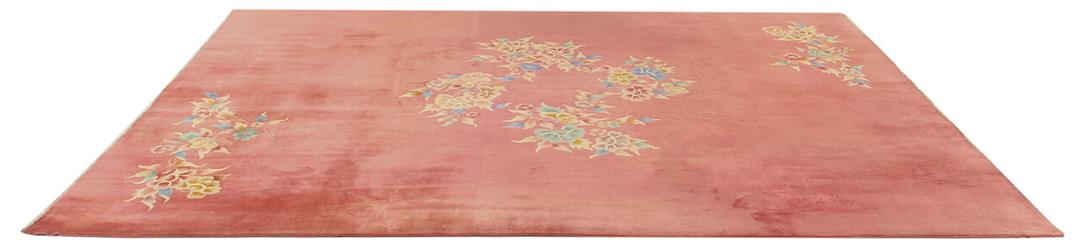
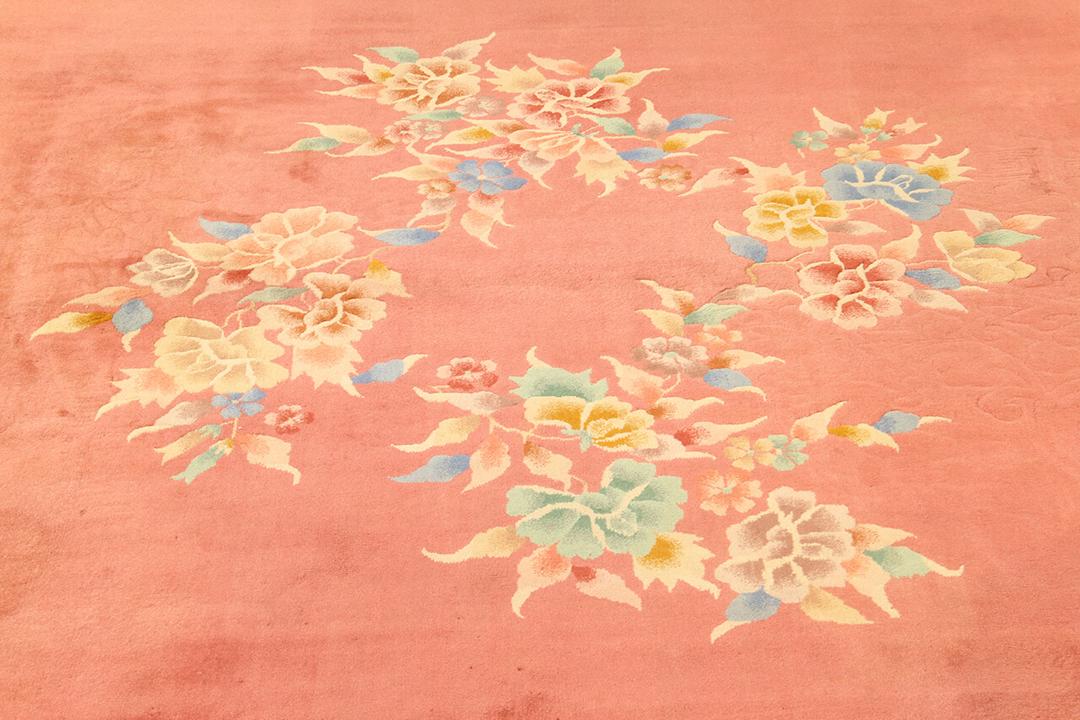
The story of Chinese Art Deco rugs, often associated with the Nichols brand, begins in the early 20th century. During this era, traditional Chinese weaving techniques were adapted to meet the aesthetic demands of the Western market, leading to the creation of rugs that combined classic Chinese motifs with the bold, geometric, and stylised floral sensibilities of the Art Deco movement. These rugs were primarily produced in China and became highly coveted for their unique synthesis of Eastern and Western design philosophies.
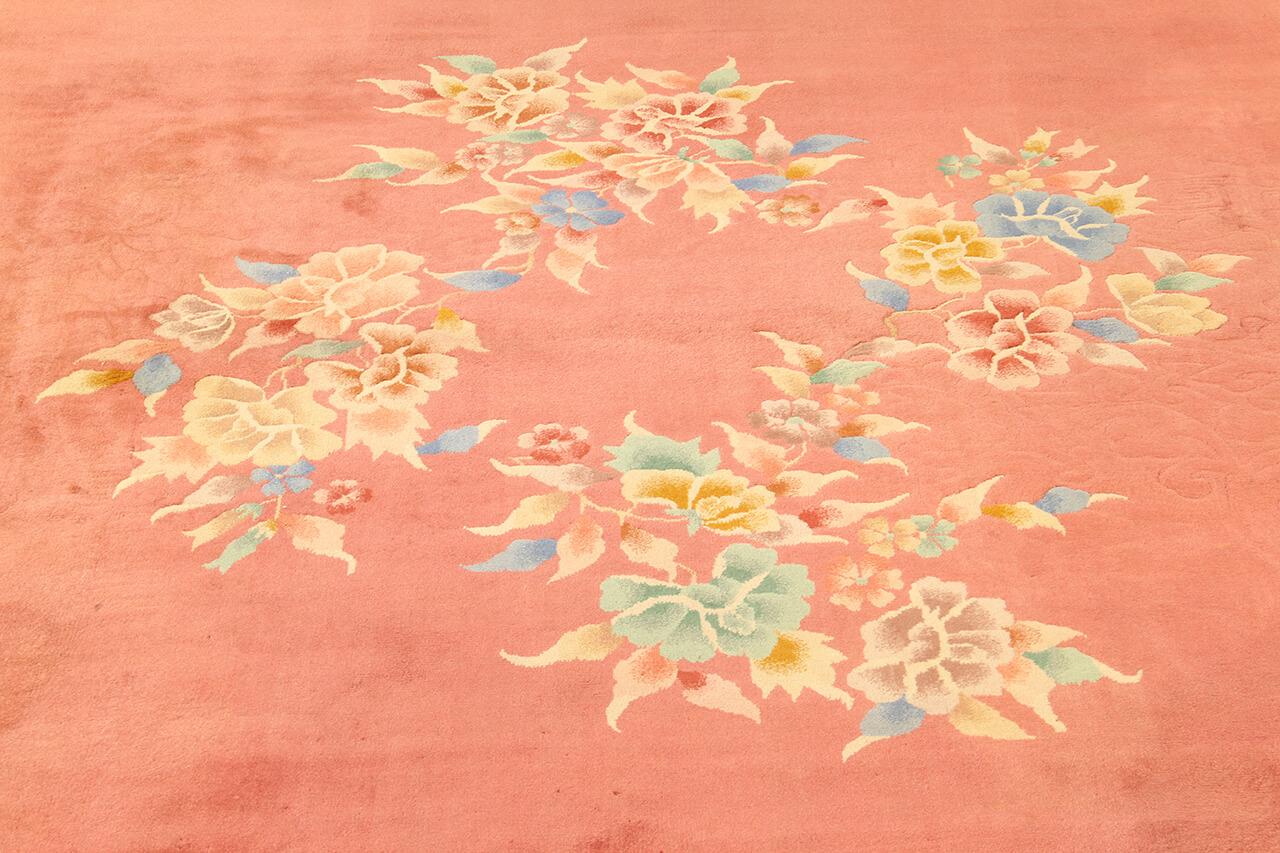
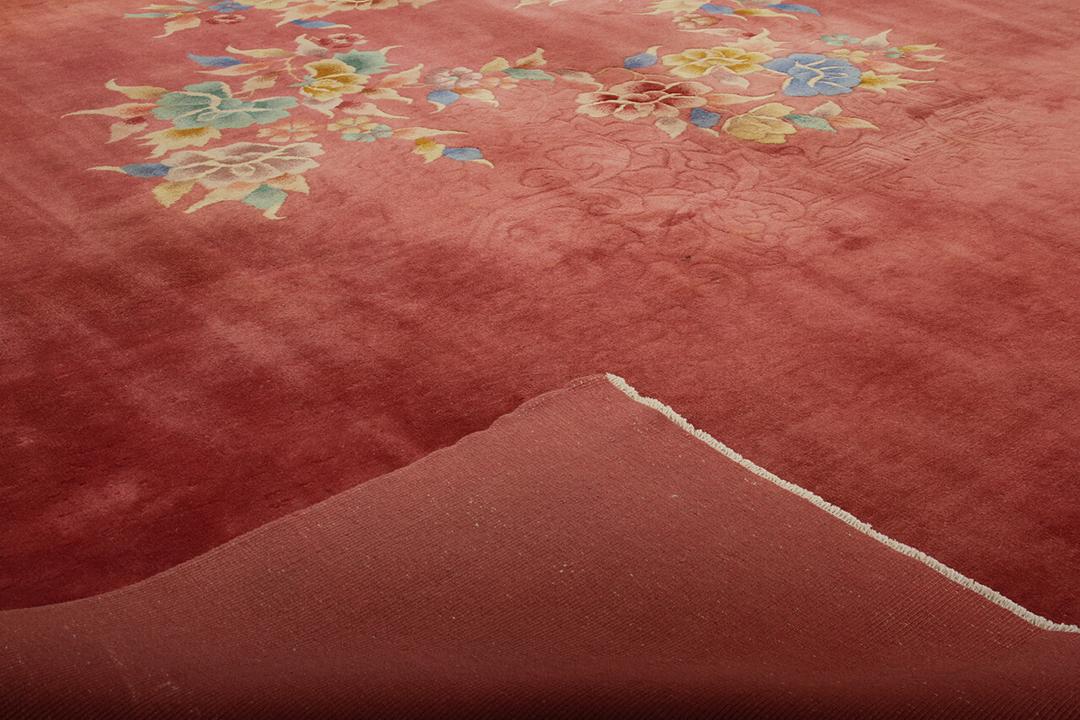
The technical quality of these pieces is rooted in the use of high-quality wool and a specific approach to pile construction. The artisans employed specialised hand-knotting methods that allowed for the creation of intricate, embossed-like designs, where the floral motifs were often carved or sculpted into the pile to create depth and texture. This technique is a hallmark of the era and requires immense skill, as the weaver must maintain perfect tension to ensure the pattern remains crisp and clear across the entire surface.
Signature design elements of these antique rugs include a departure from the crowded, medallion-heavy compositions of earlier periods. Instead, they often feature open, spacious fields with spare, elegant floral arrangements or stylised natural motifs. The borders are typically understated, allowing the central floral elements to take centre stage. The use of colour is equally distinct, often utilising sophisticated, saturated tones that create a vibrant yet harmonious visual language.
Owning an antique rug from this tradition is a privilege for any collector. It represents a brief, golden moment in textile history where traditional craft met modern design innovation. These rugs are valued not only for their beauty but for their status as cultural artefacts that reflect a time of global exchange and artistic experimentation. By preserving such a piece, you are maintaining a connection to the heritage of Chinese textile arts and the skilled hands that crafted it.