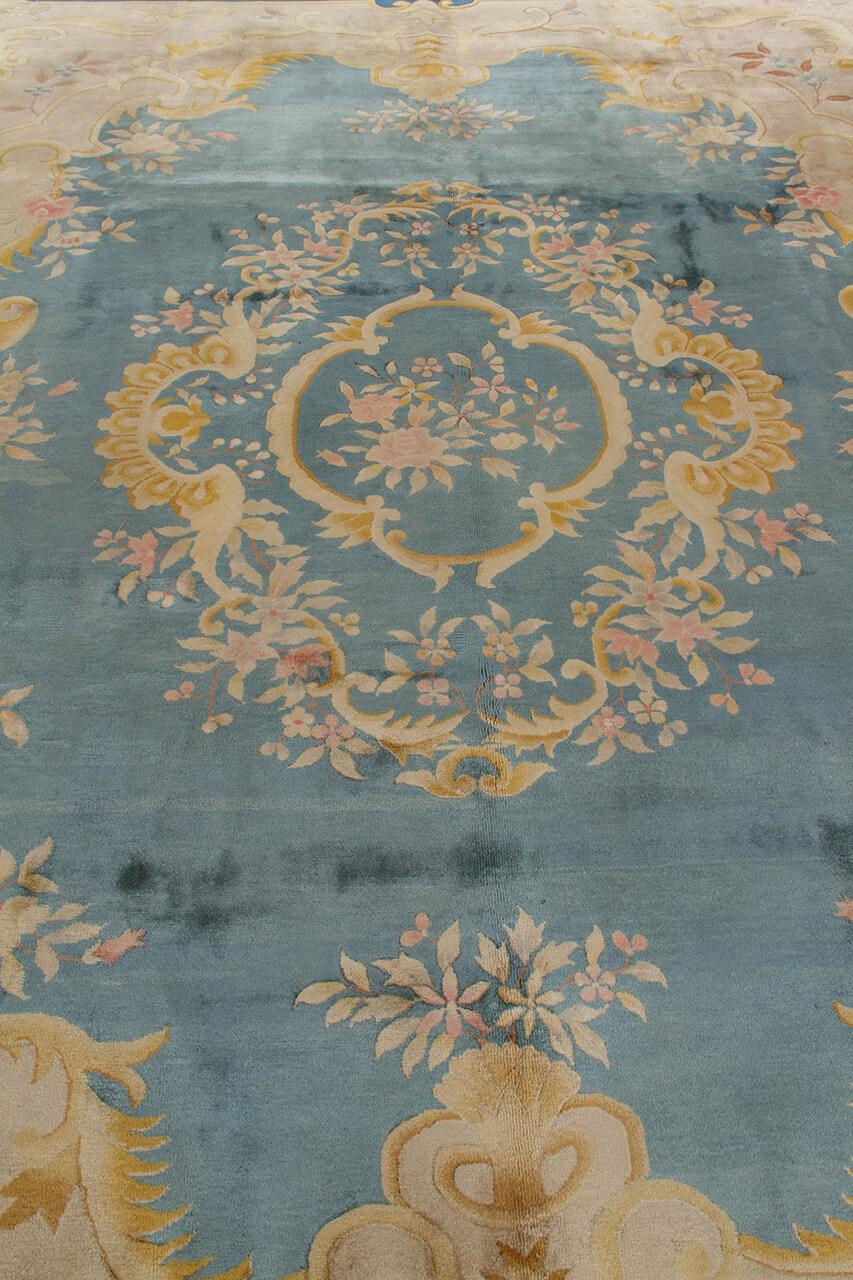
The tradition of Chinese rug making is deeply rooted in centuries of artistic development, often reflecting the aesthetic sensibilities of the imperial courts and the scholarly elite. Nichols rugs, in particular, occupy a special place in the history of 20th-century carpets. Produced in the early decades of the 1900s, these rugs were specifically designed to appeal to Western tastes by blending traditional Chinese motifs with the bold, clean lines of the Art Deco movement.
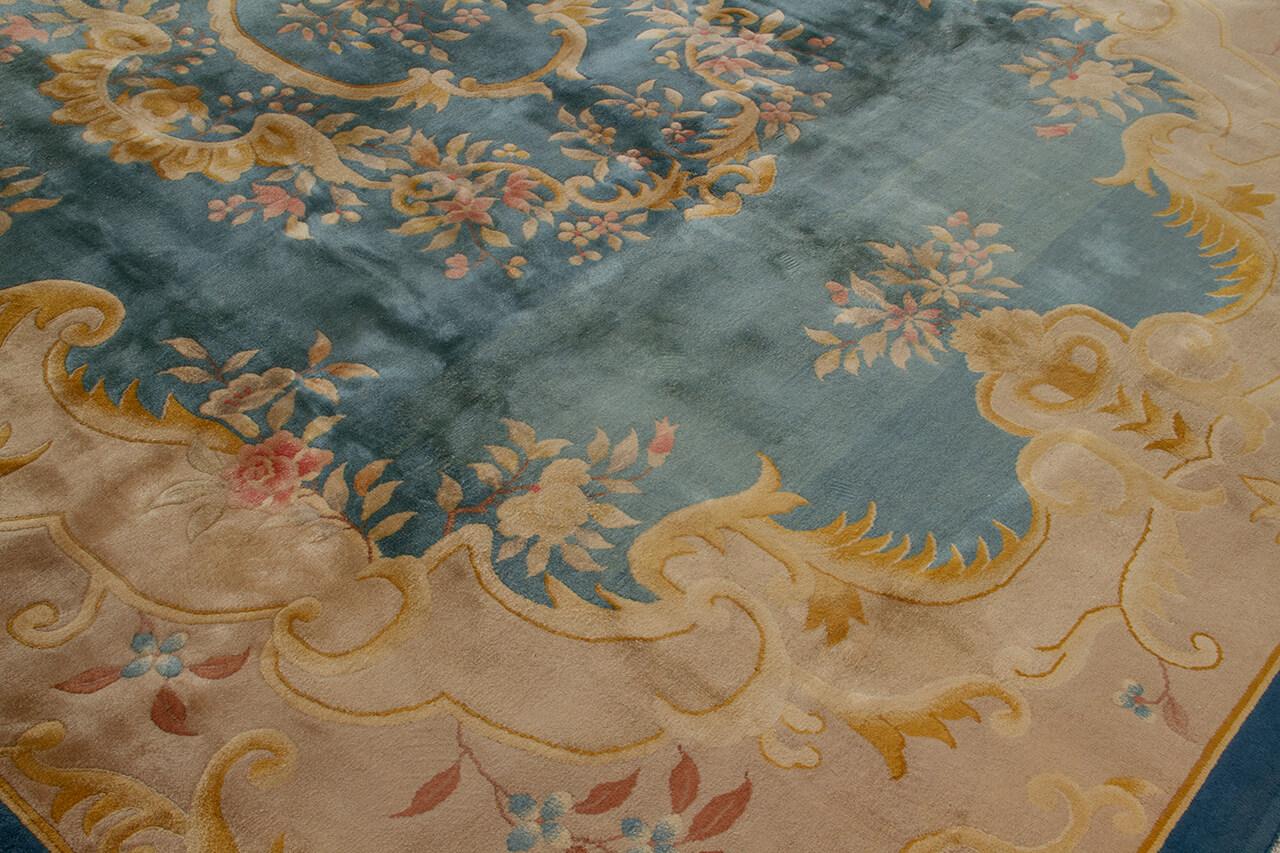
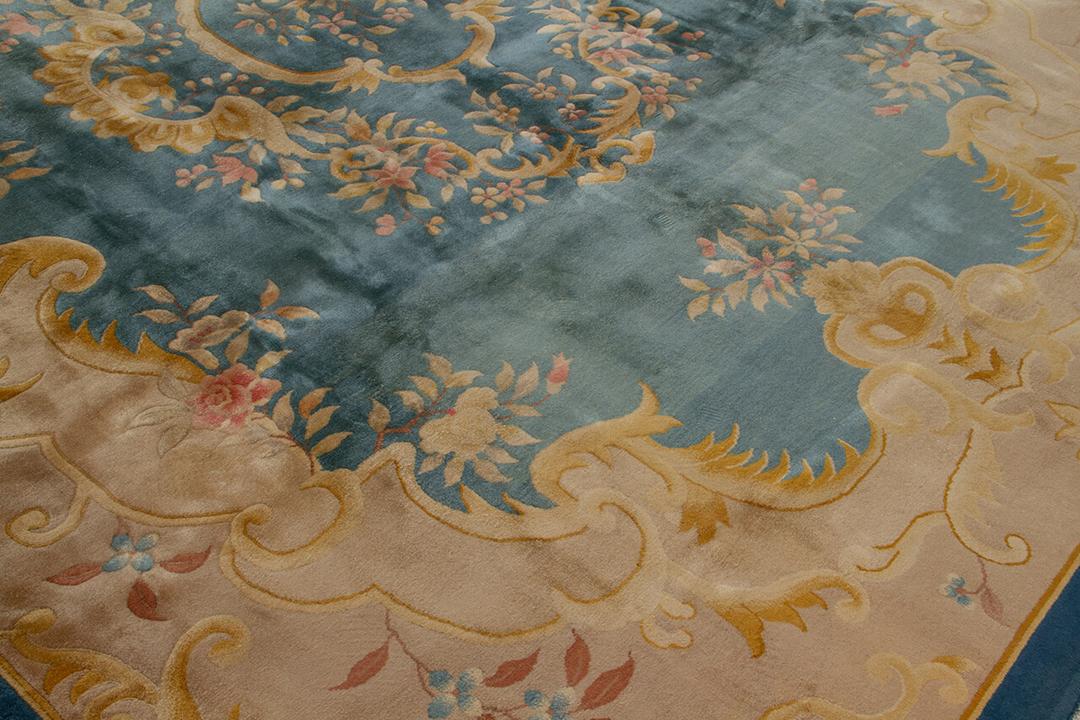
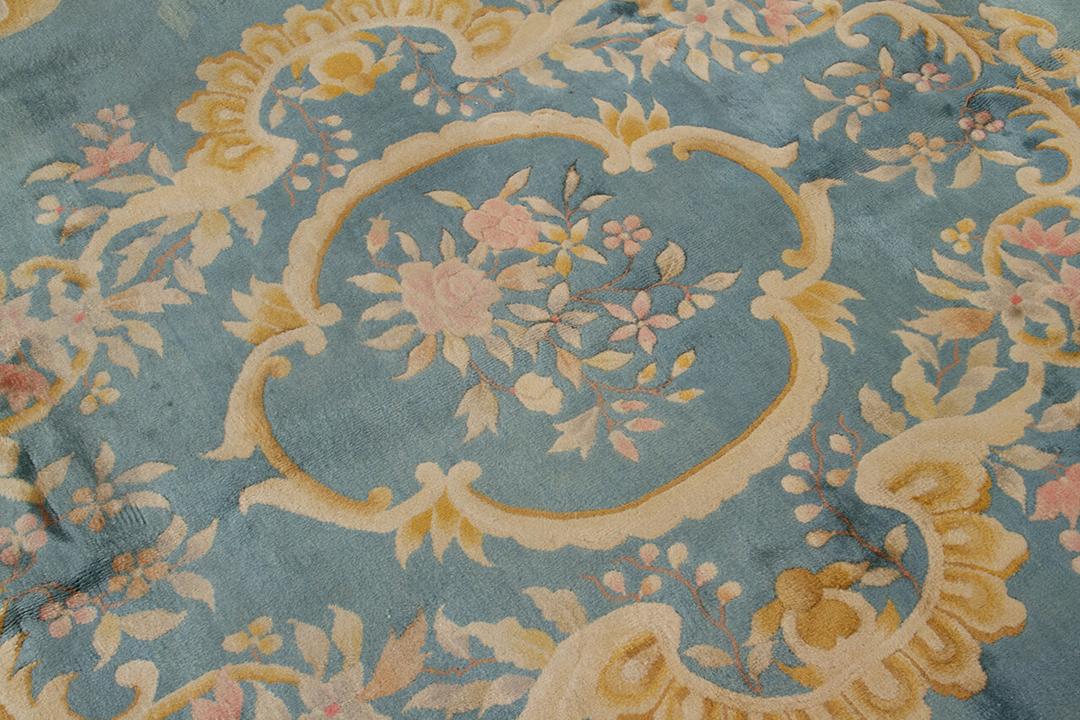
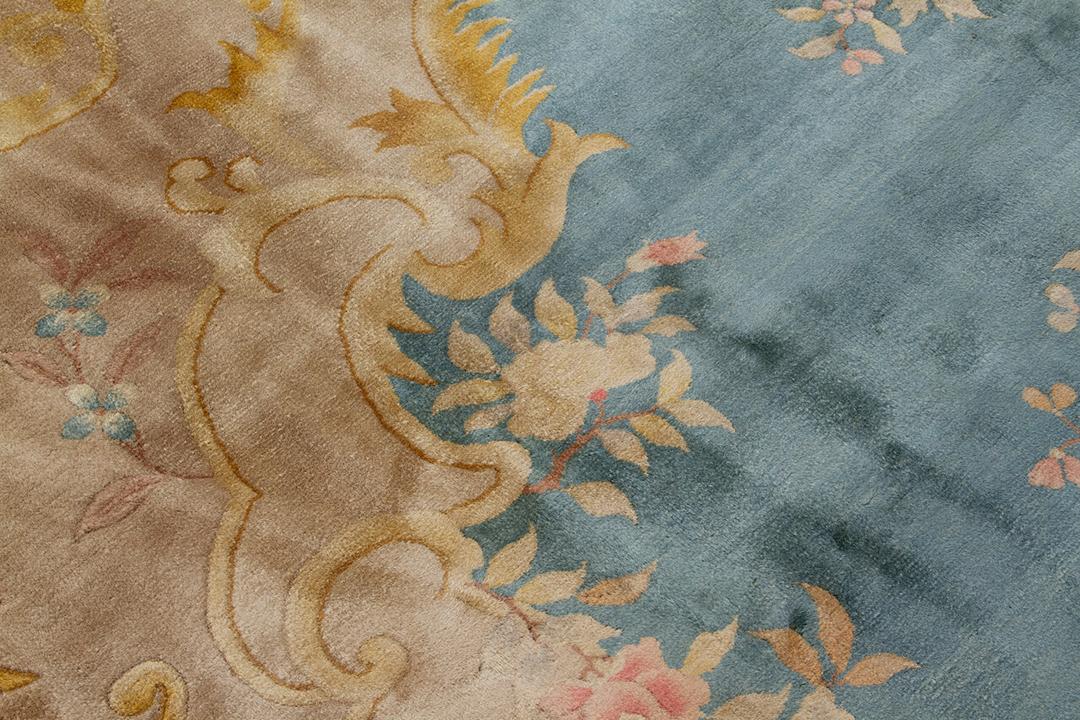
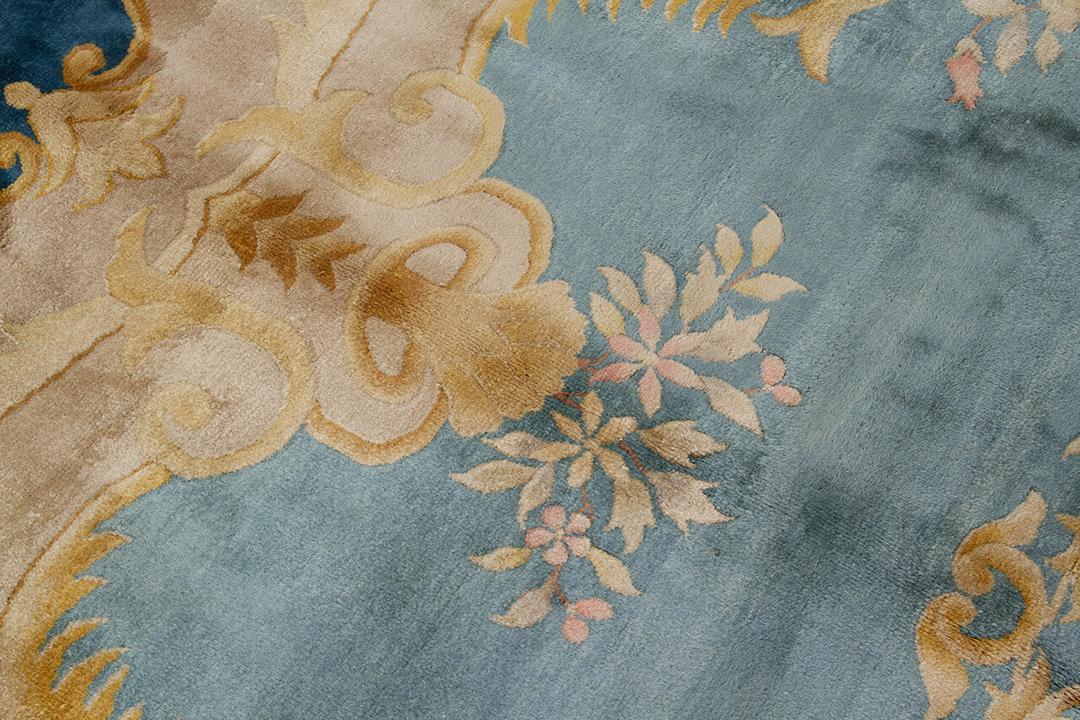
The craftsmanship behind these pieces is characterised by a high level of technical mastery. The pile is typically woven with a focus on creating a soft, sculptured effect, often referred to as embossed or carved pile. This technique creates a subtle relief, adding a tactile dimension to the floral designs that makes them stand out from the field. This level of detail is a hallmark of the premium quality associated with this specific era of Chinese production.
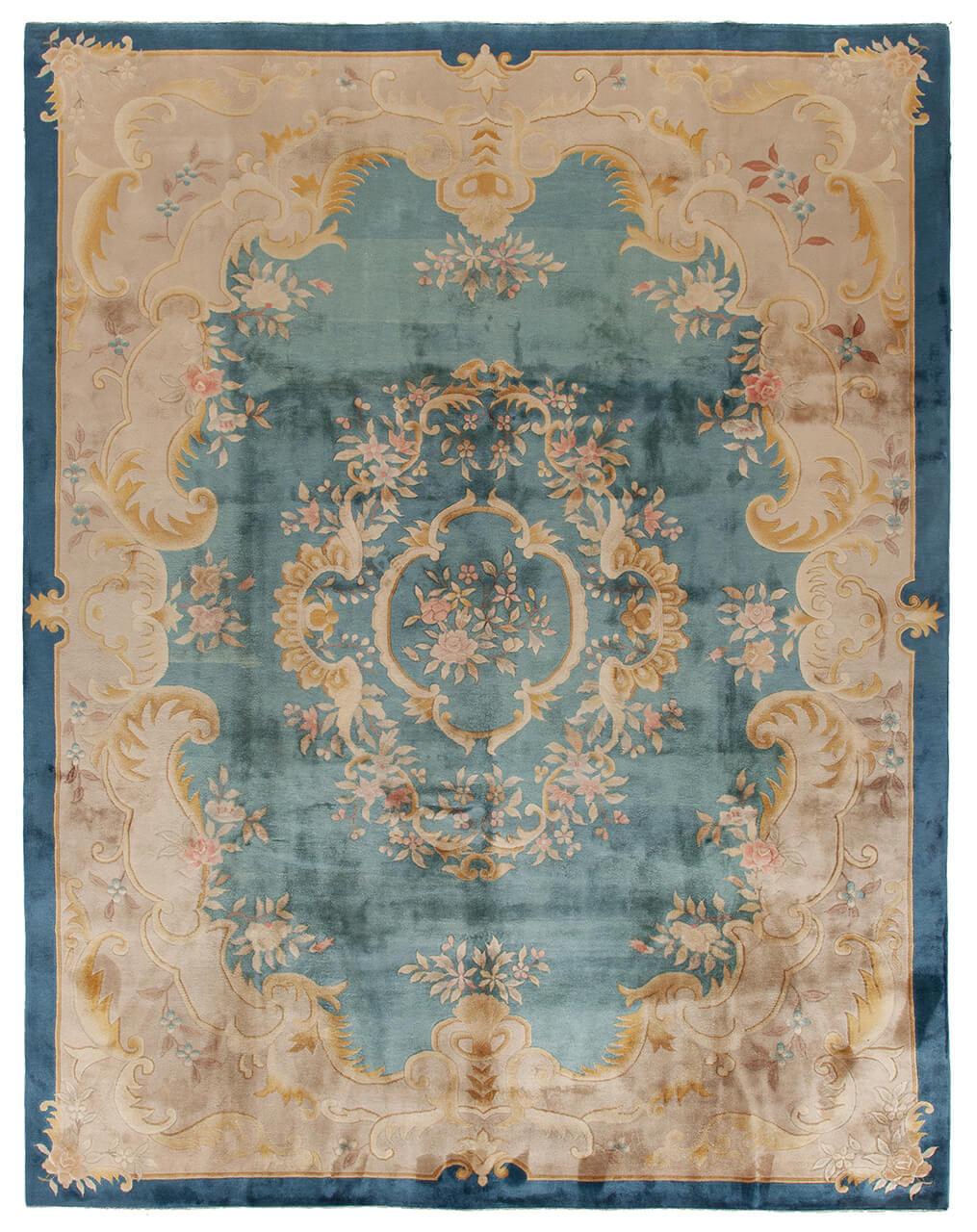
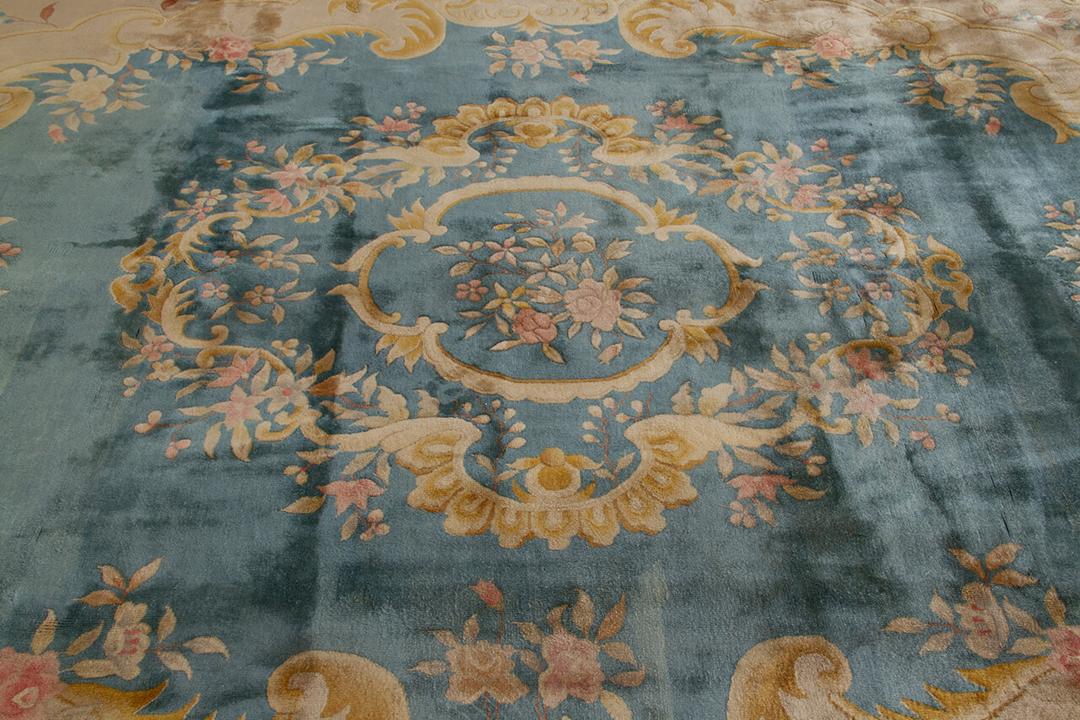
Signature design elements of the Nichols tradition include large, open fields featuring asymmetrical floral arrangements, such as peonies, lotus blossoms, or chrysanthemums. These are frequently accompanied by traditional Chinese symbols of good fortune and longevity. The colour palette often relies on harmonious, muted tones or dramatic contrasts, with this particular piece showcasing a beautiful, serene blue that highlights the artistic sophistication of the era.
Collecting antique rugs from this tradition is highly valued because they represent a unique bridge between Eastern craftsmanship and Western modernism. Owning such a rug is an act of preservation, as it keeps the skill and vision of mid-century artisans alive. These pieces are not just floor coverings but significant cultural artifacts that bring history, elegance, and a sense of permanence to a modern home.