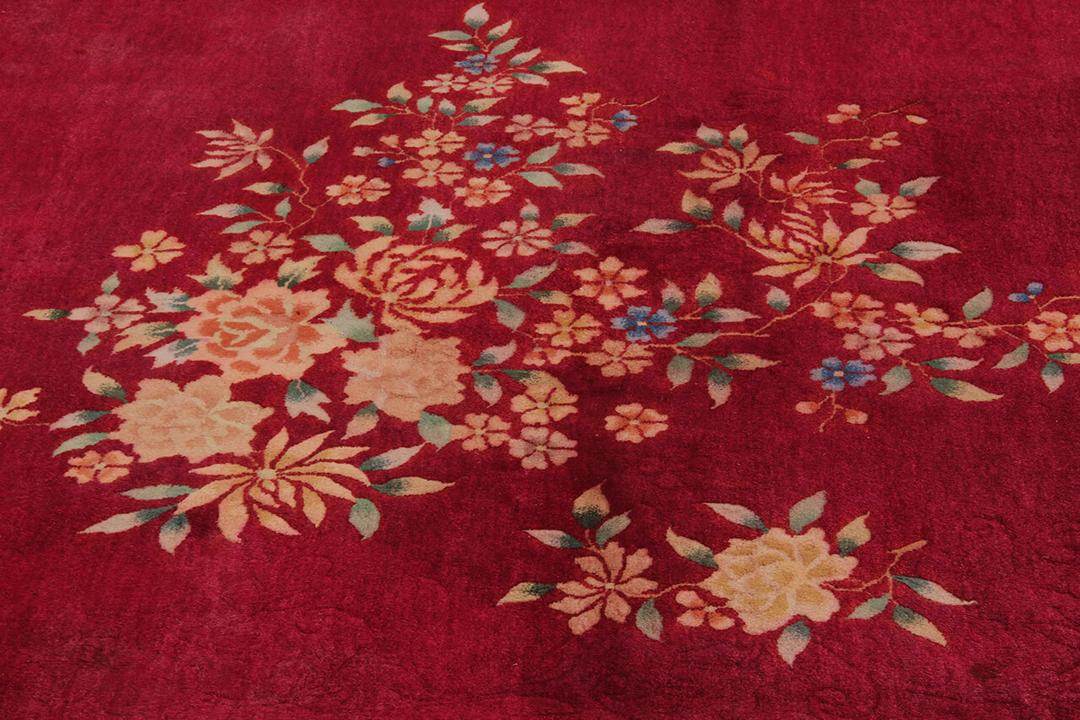
The Nichols Chinese rug tradition emerged during the 1920s and 1930s, a period when the Art Deco movement was reshaping global design. Walter Nichols, an American entrepreneur based in Tientsin, China, played a pivotal role in this evolution. He commissioned rugs that merged traditional Chinese imagery, such as floral sprays and Buddhist symbols, with the clean lines and bold colour palettes favoured by the burgeoning Art Deco movement in the West.
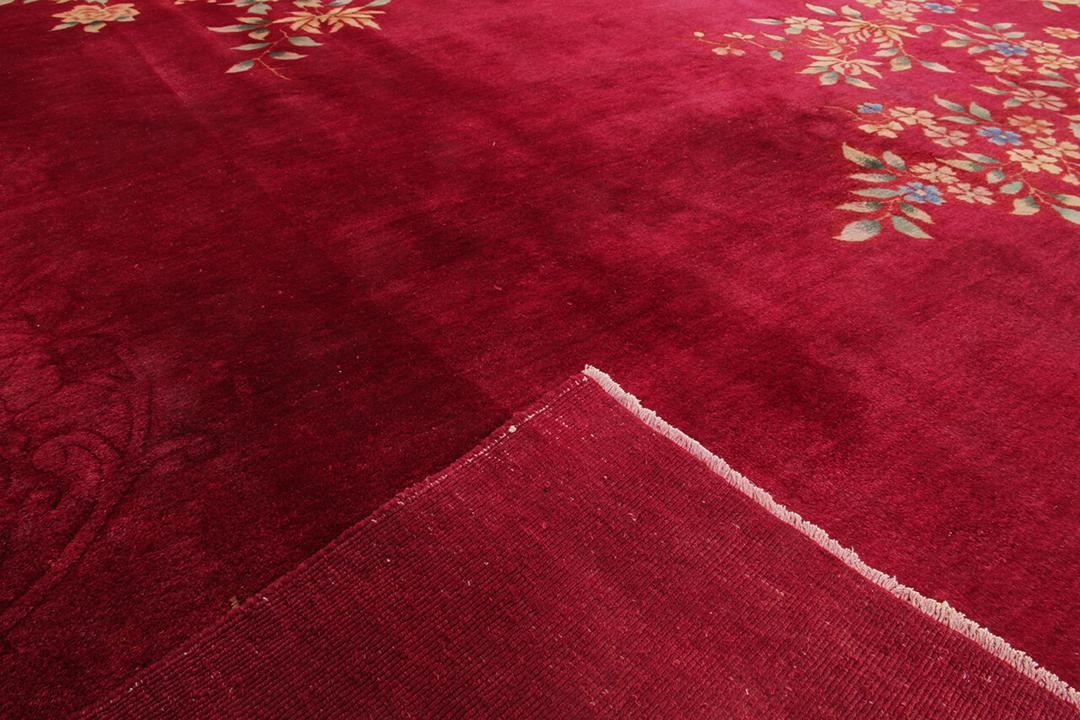
These rugs are celebrated for their distinctive use of thick, lustrous wool and a sculptural pile that creates a sense of depth. The weaving technique employed for these pieces results in a heavy, durable construction that was designed to withstand the wear of busy homes while maintaining a soft, luxurious touch. This technical approach is a hallmark of the Nichols style, setting these rugs apart from other regional traditions of the time.
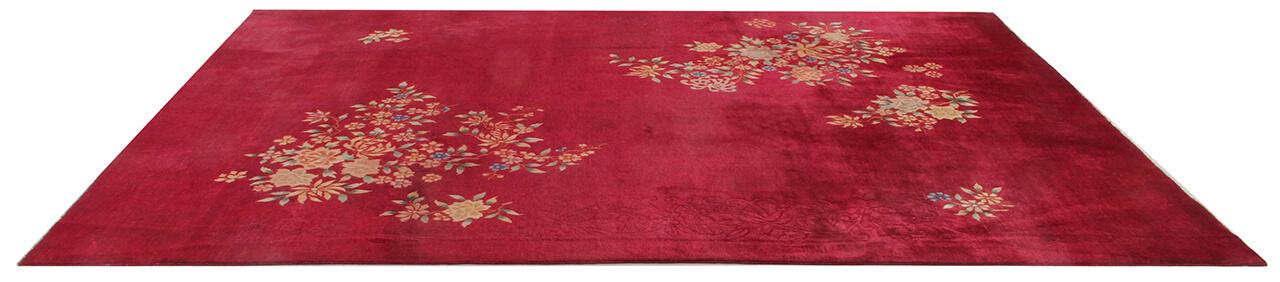
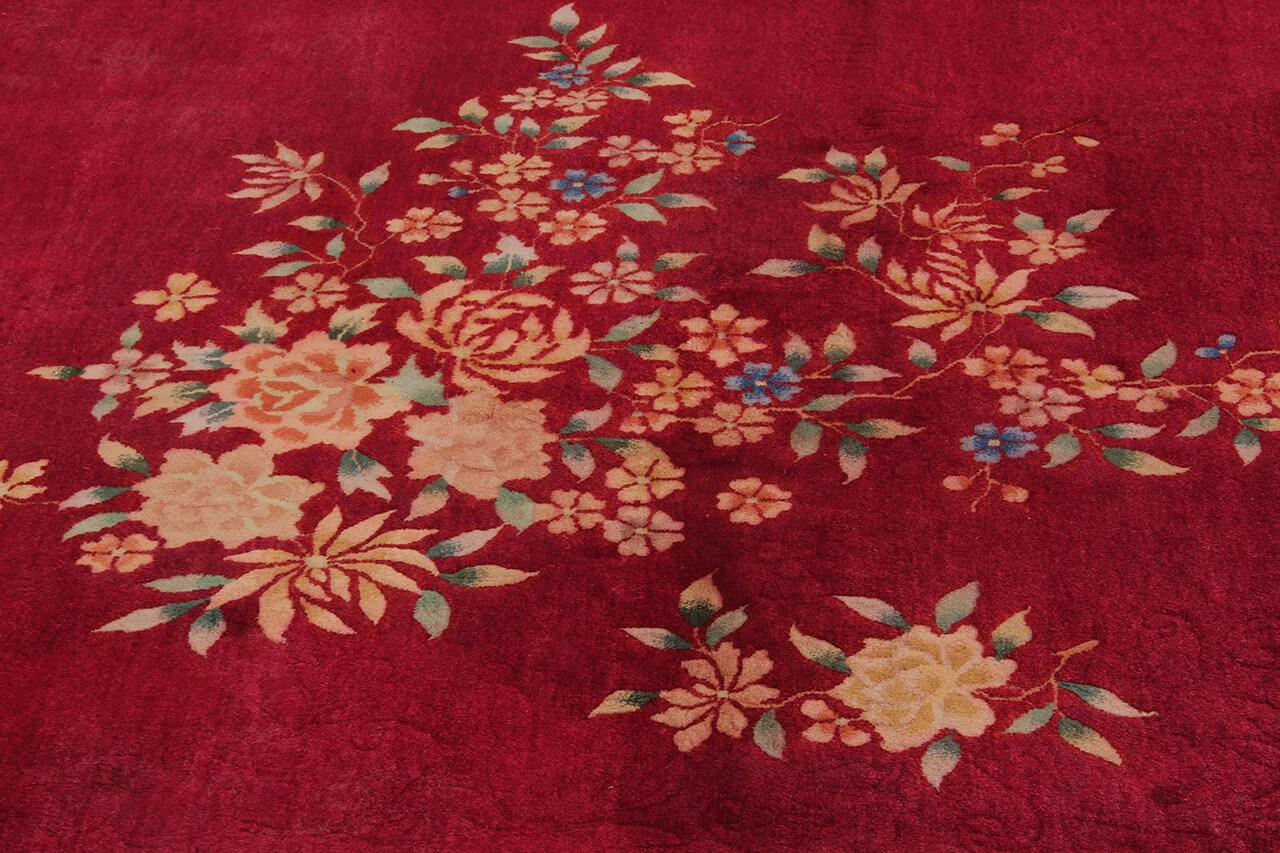
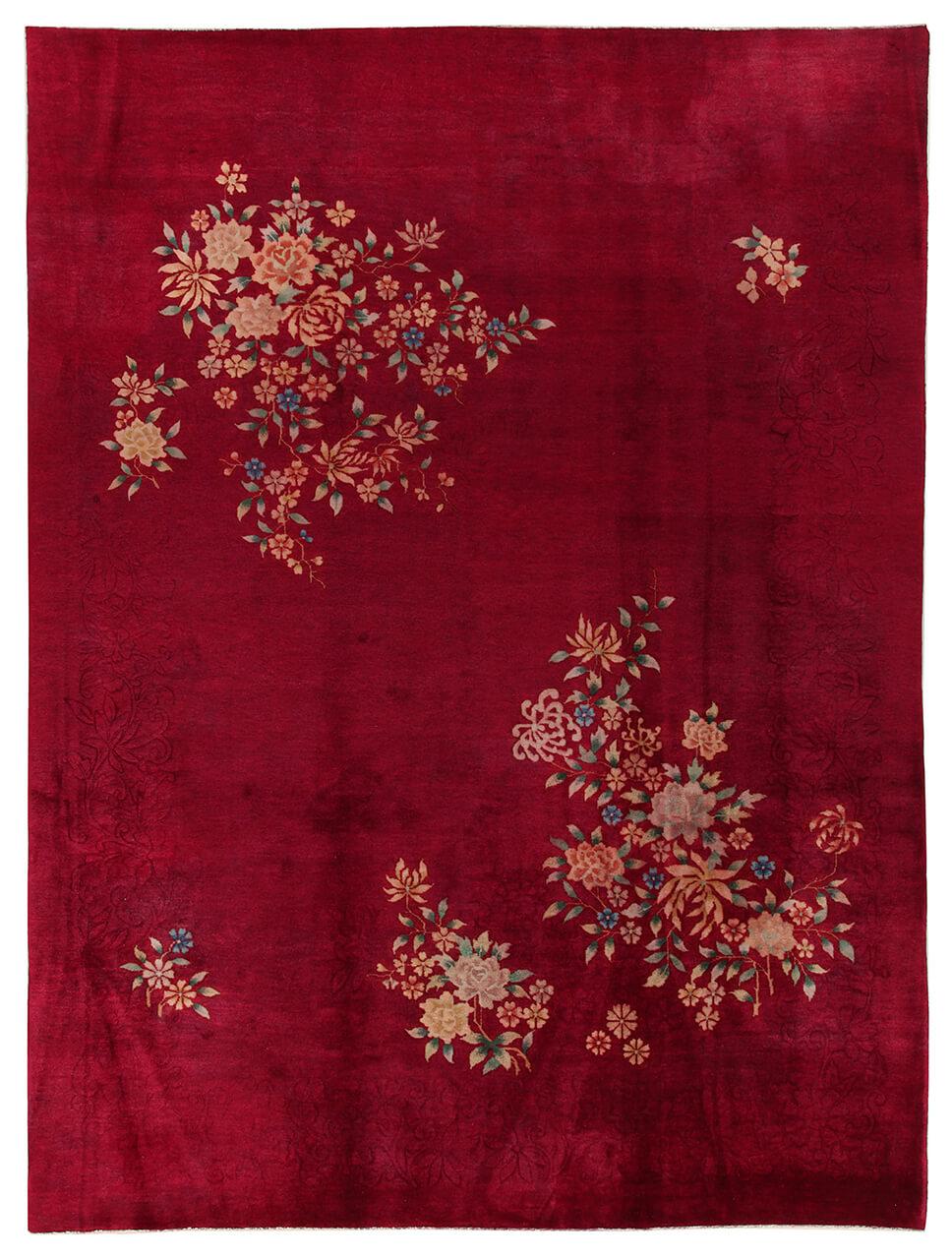
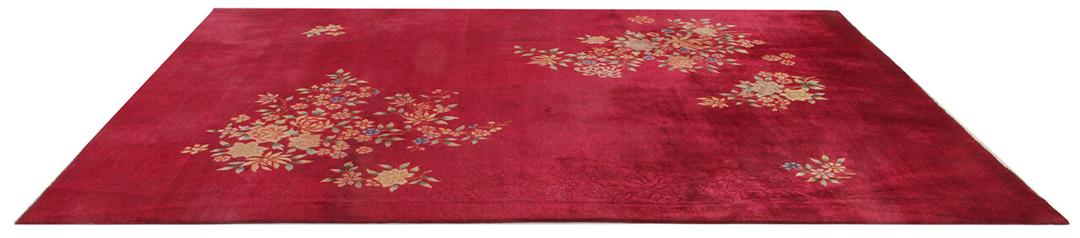
Visually, these rugs are characterised by their expansive, often monochromatic fields featuring asymmetrical floral arrangements. Unlike the dense, all-over patterns found in many other rug traditions, the Nichols aesthetic relies on negative space to let the motifs breathe. The vibrant reds, blues, and golds used in these designs were achieved through high-quality dyeing techniques that have allowed the rugs to retain their intensity and character over many decades.
Today, these antique pieces are highly sought after by collectors who value the intersection of Eastern artistry and Western design innovation. Owning a Nichols rug is a testament to an appreciation for design history and the enduring quality of hand-crafted objects. These rugs represent a specific moment in time where cultural exchange flourished, resulting in a legacy of beauty that remains highly relevant and desirable for modern homes.