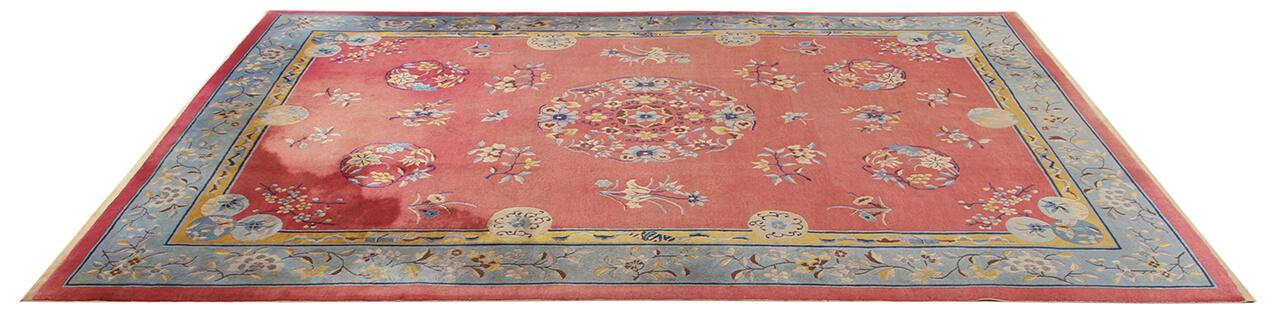
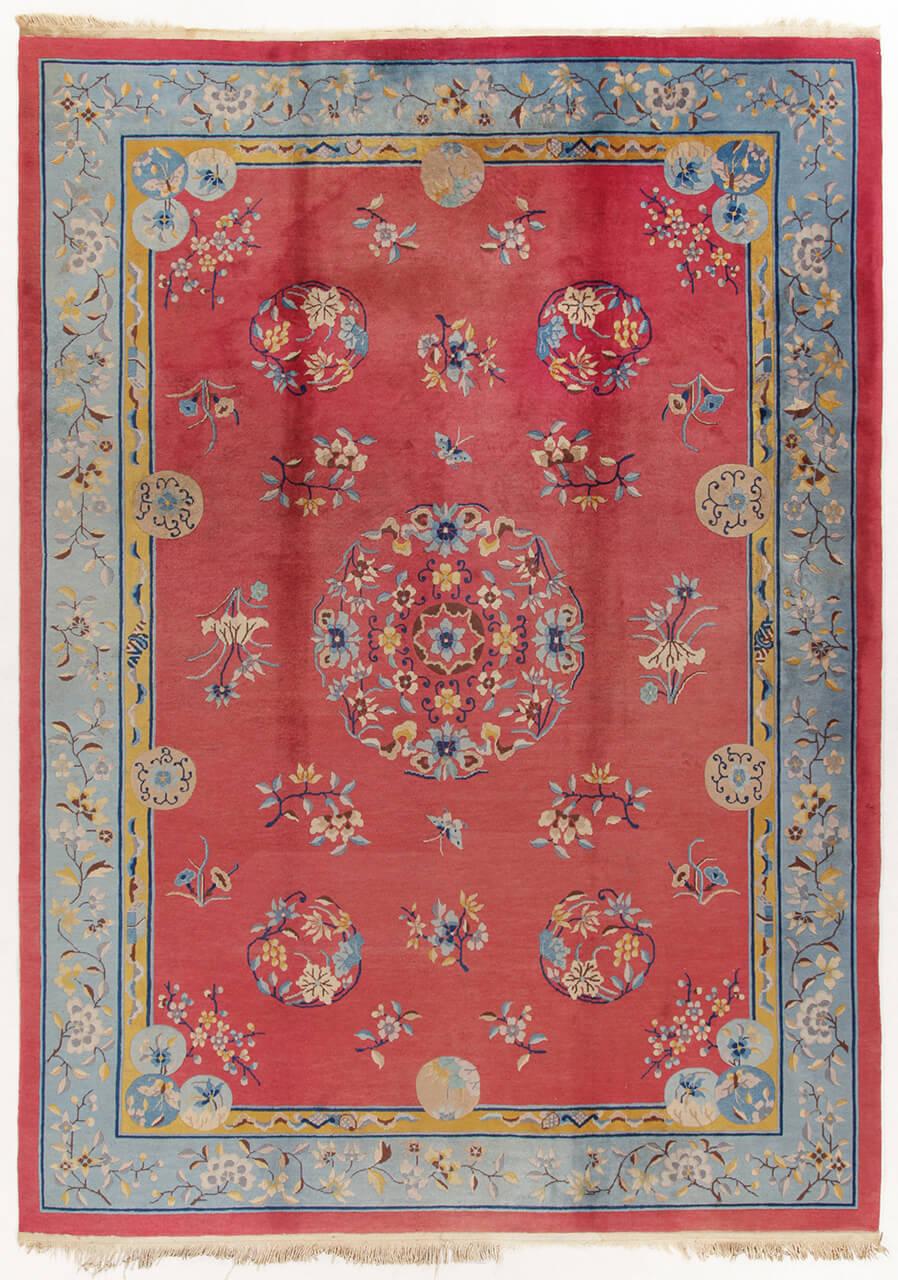
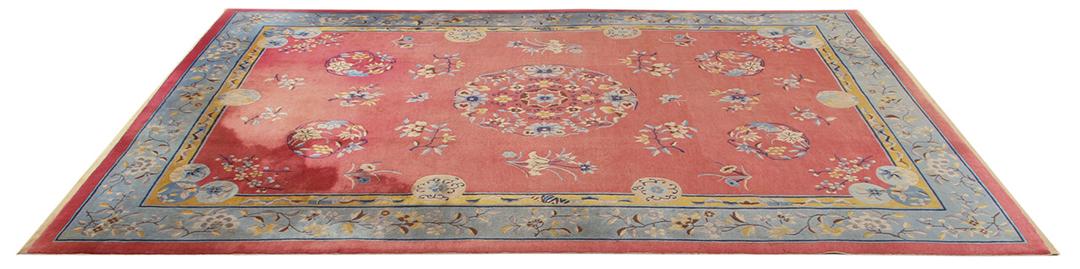
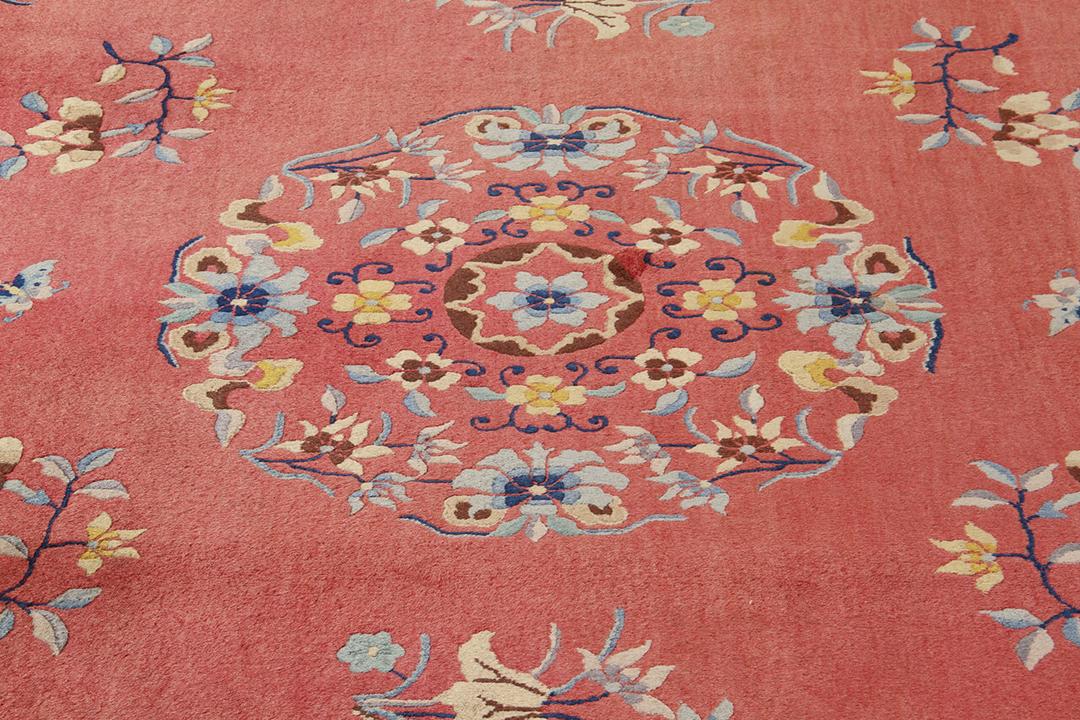
The history of Chinese rug weaving is deeply rooted in ancient traditions, yet it underwent a dramatic evolution during the early 20th century. The Nichols rugs are particularly famous for their role in the Art Deco movement, where traditional Chinese motifs such as peonies, butterflies, and central medallions were reimagined through a more modern, decorative lens. These pieces were highly sought after by Western collectors and designers who appreciated the fusion of Eastern craftsmanship with global aesthetic trends.
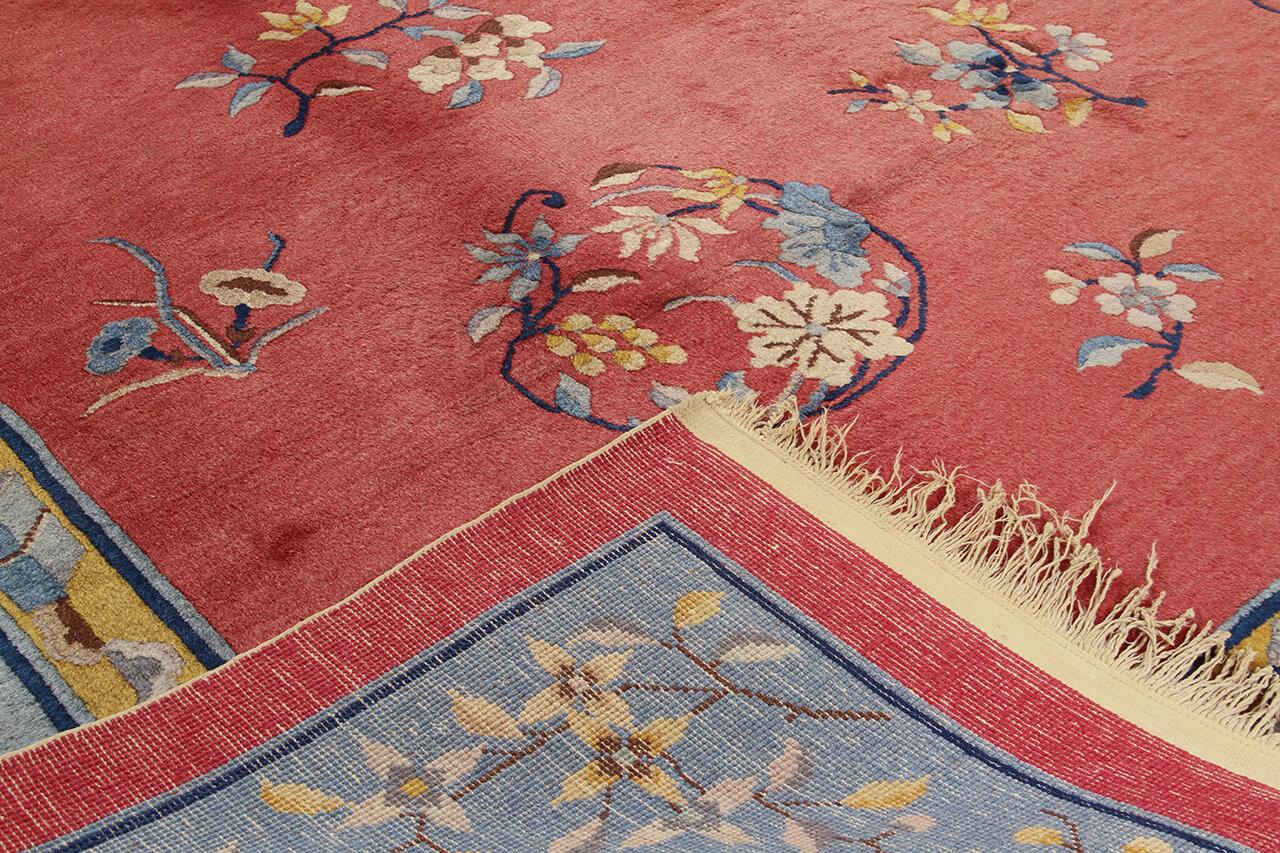
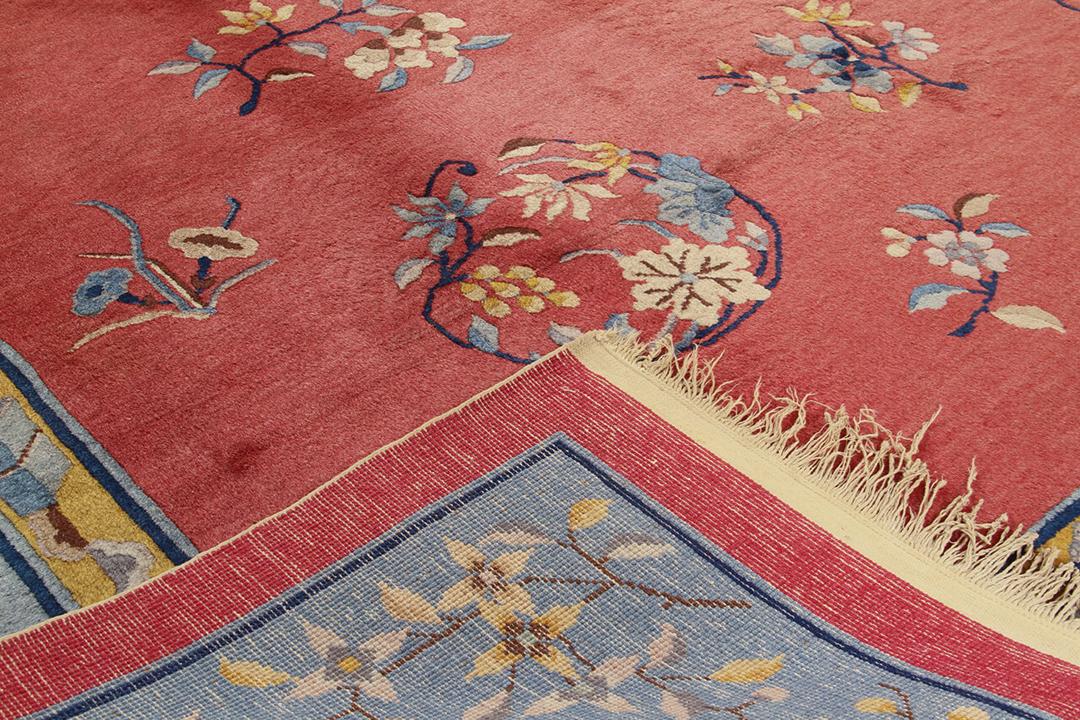
The technical quality of these rugs is defined by the use of high-grade wool and a sturdy cotton foundation. The hand-knotting process used in these antique pieces allowed for a sculptural quality in the pile, often featuring carved or embossed designs that give the motifs a three-dimensional appearance. This technique, while demanding for the weaver, results in a luxurious, plush surface that remains a hallmark of the finest Chinese antique rugs.
Visually, this piece showcases the iconic design elements of the era, where the traditional medallion is balanced by a spacious, open field. The border patterns are typically ornate, featuring scrolling vines and floral sprays that frame the central design with grace. The use of vibrant, expressive colours like the deep red seen here was a signature choice for these rugs, intended to bring warmth and vitality into sophisticated interiors.
Collecting these antique rugs is more than just an interior design choice, as it represents the preservation of a specific cultural moment in time. They are valued for their rarity, their bold artistic vision, and the human expertise required to produce them. By adding this piece to your home, you are participating in a long legacy of appreciation for the skill and creative spirit of the artisans who shaped the history of decorative textiles.