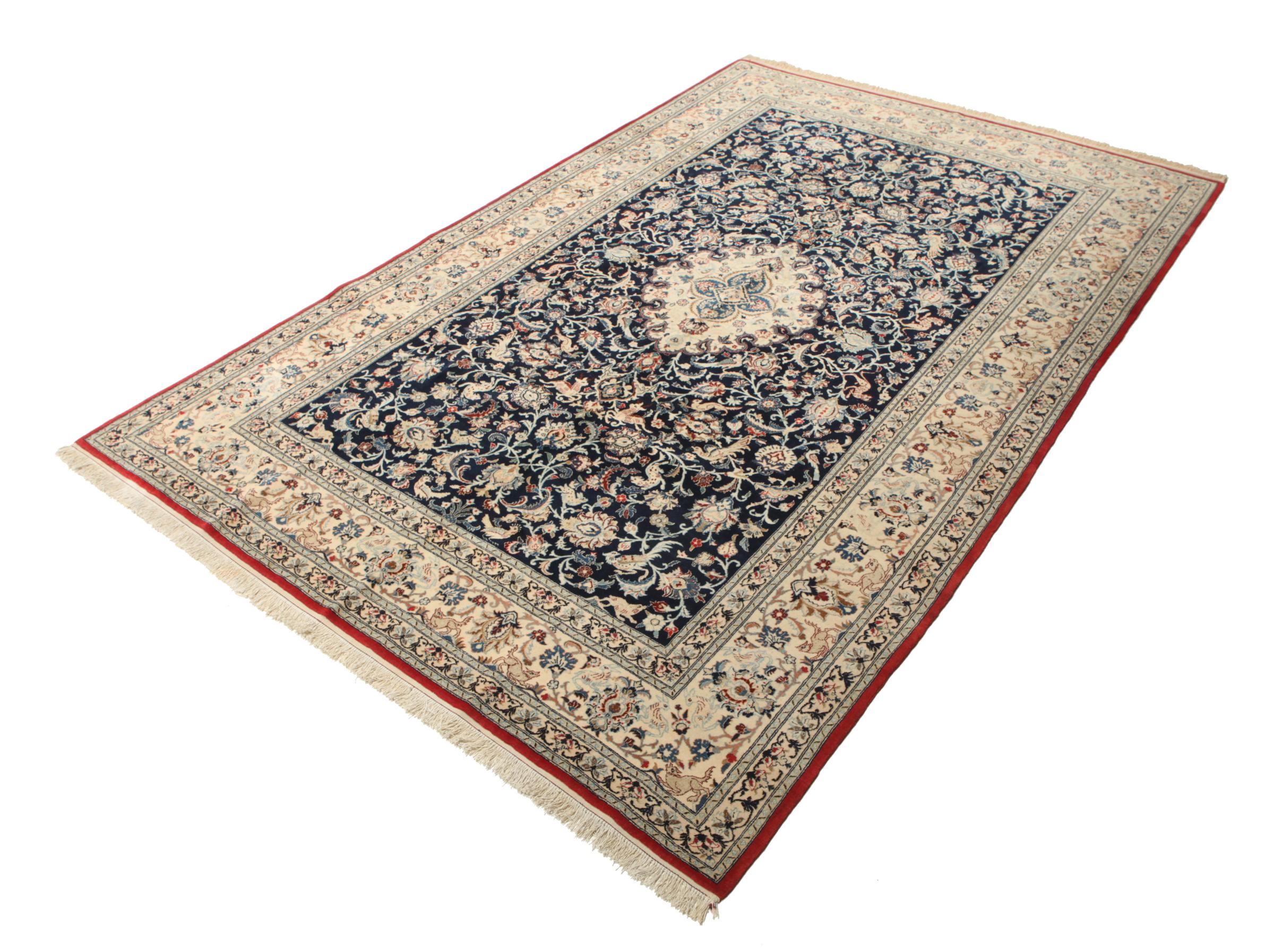
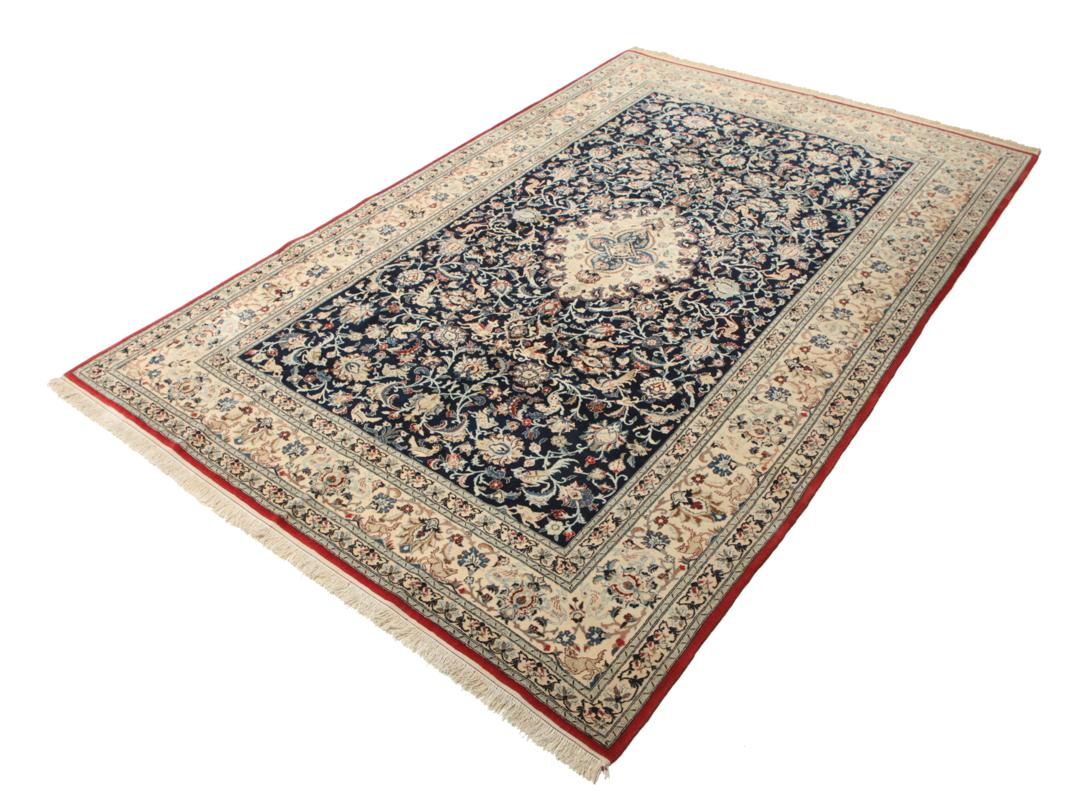
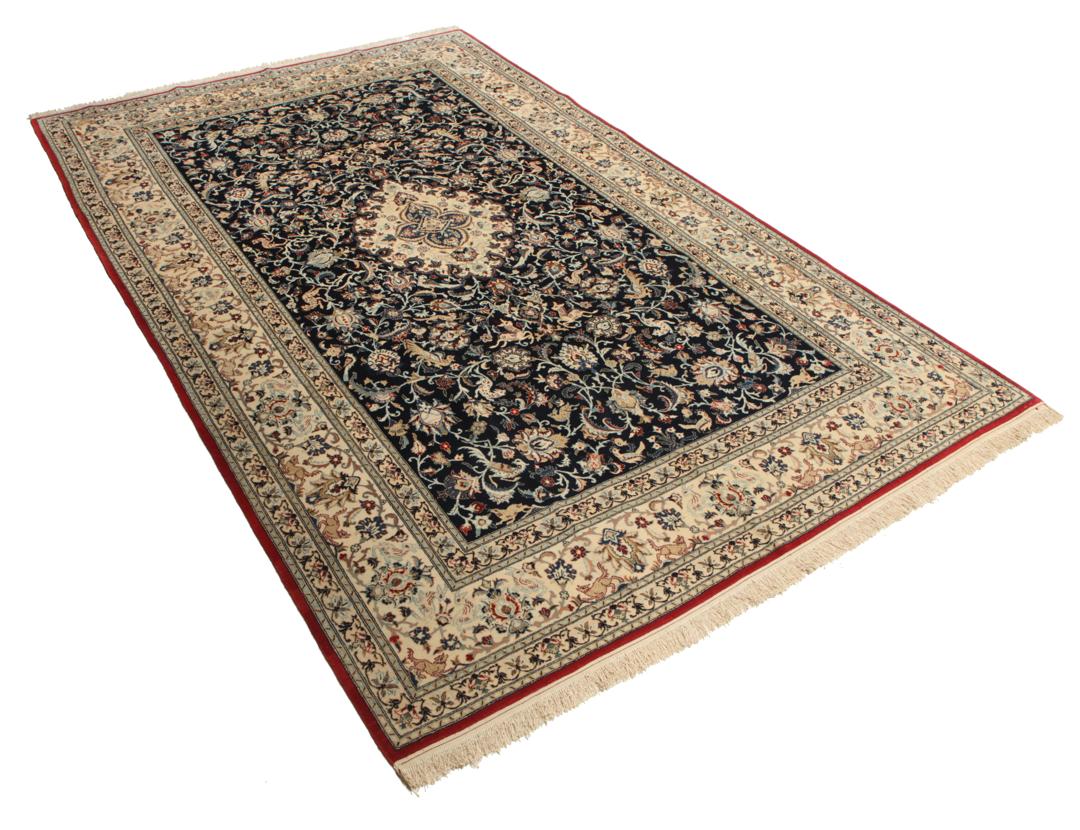
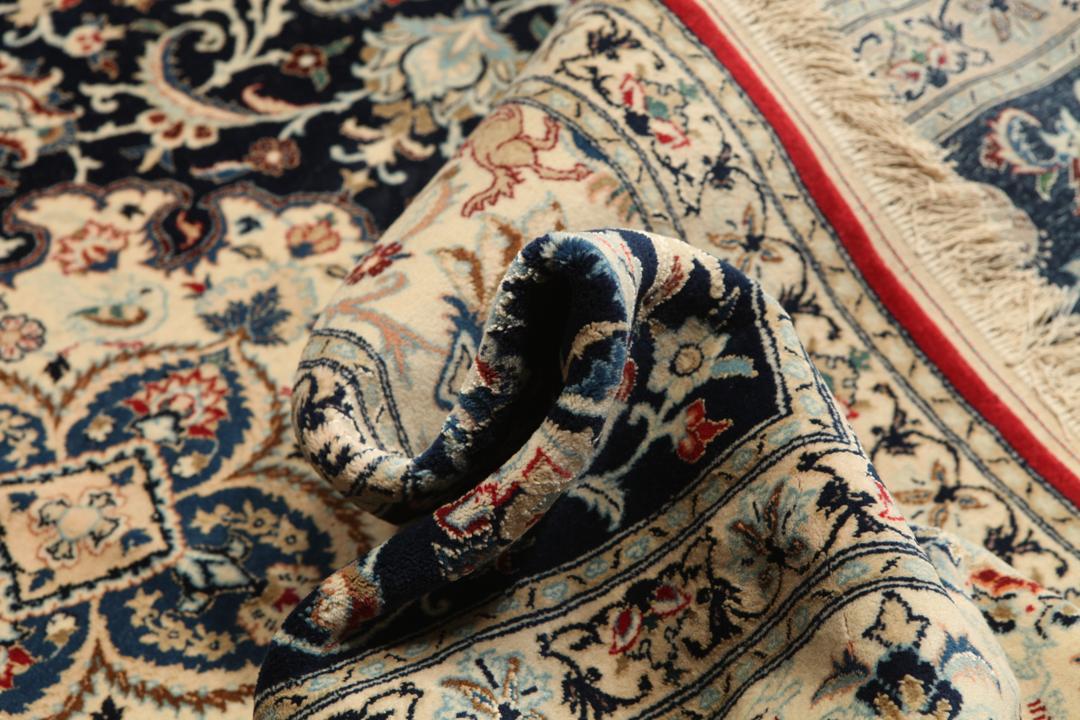
The Nain rug tradition hails from the historic city of Nain in the Middle East, a town that transitioned from a centre of high-quality wool weaving to a world-renowned hub for luxurious, fine-knotted rugs in the early 20th century. While originally known for producing high-quality heavy textiles, the regional artisans adapted their skills to create intricate, court-style carpets that quickly became synonymous with elegance and prestige.
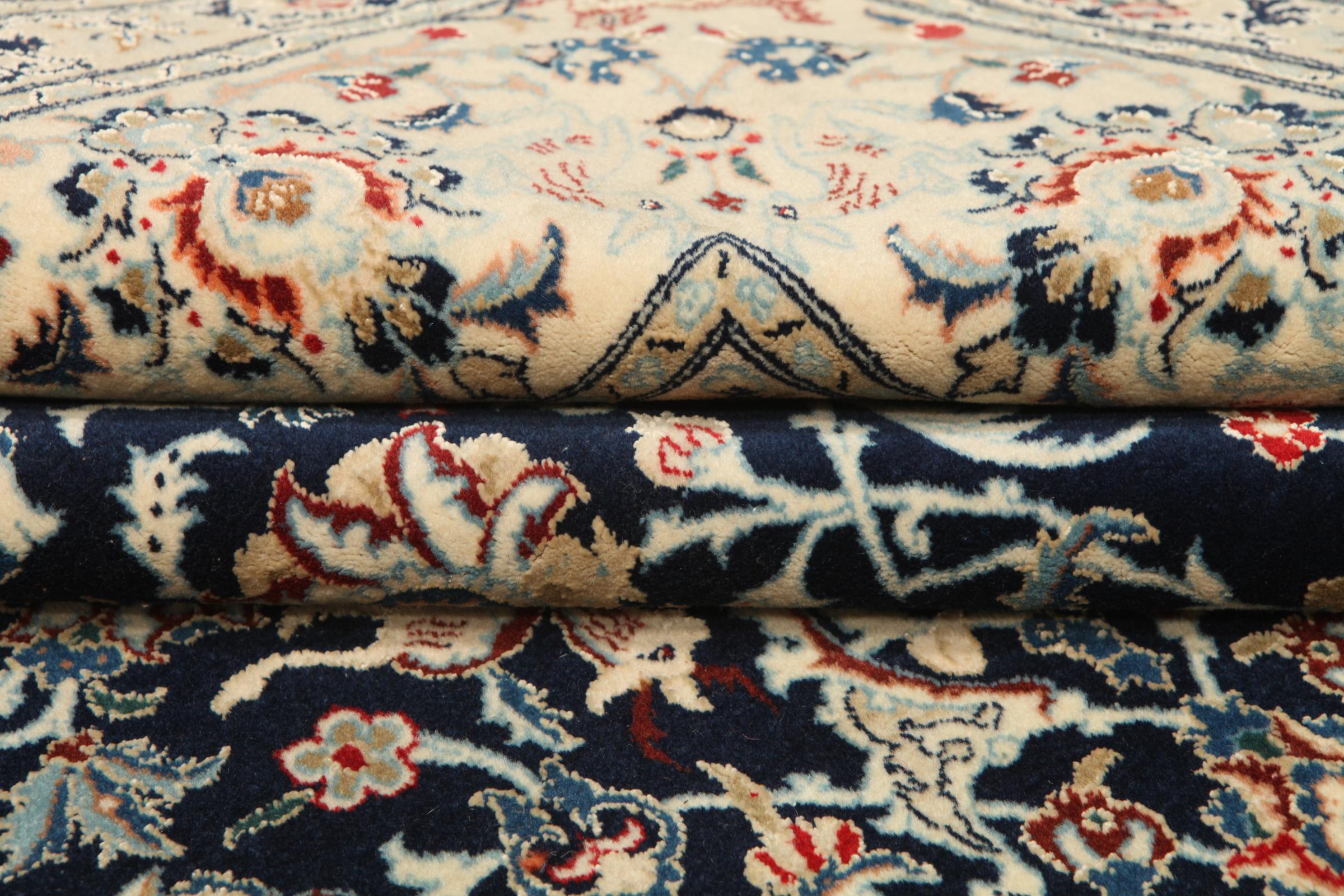
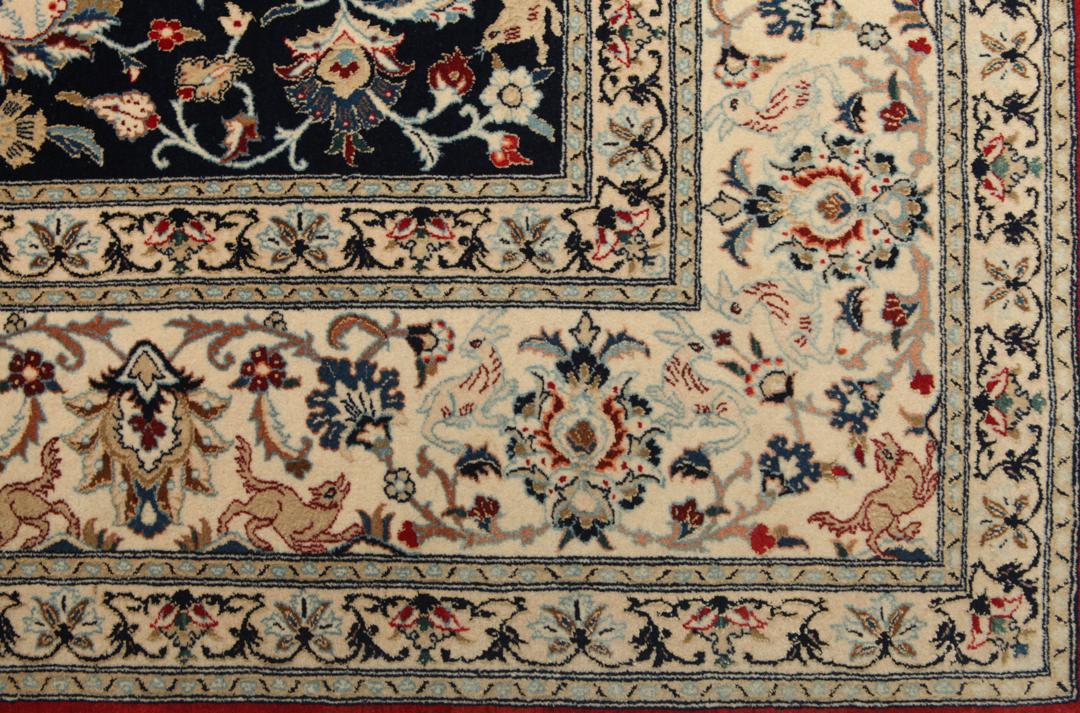
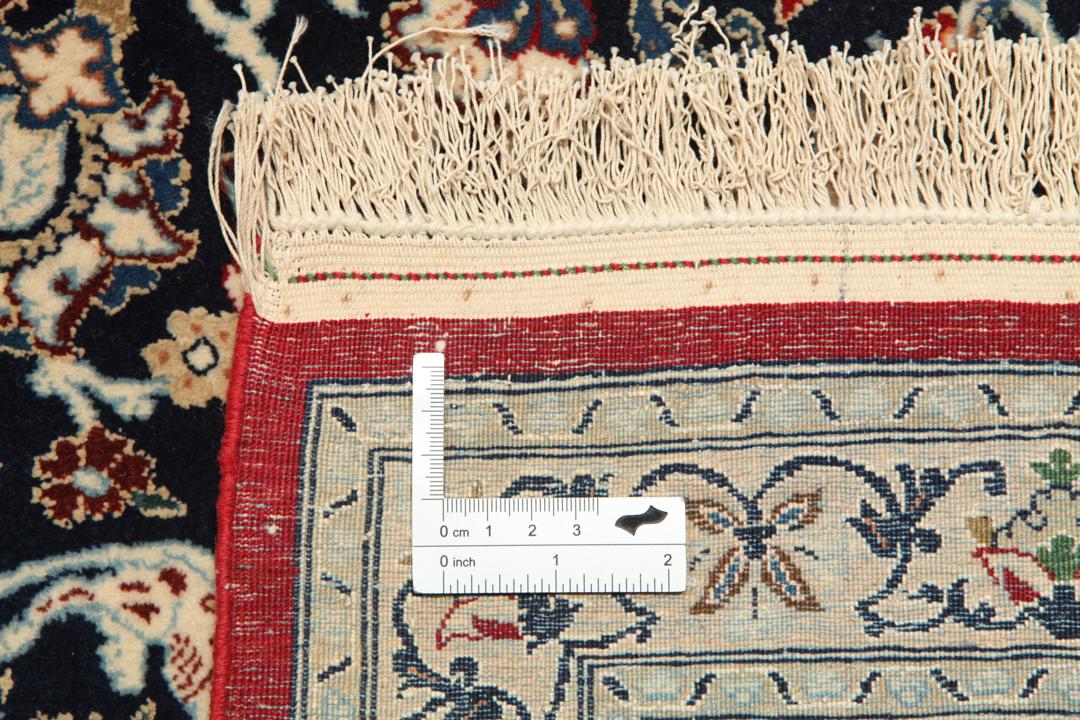
The term 'Tuteshk' refers to a specific, highly coveted grade of Nain rug, representing the pinnacle of the regional craft. These rugs are categorised by the number of 'la' or threads used in the fringe, with lower numbers indicating a higher density of knots and thinner, more refined threads. A Tuteshk, often considered one of the finest grades, requires a level of patience and technique that elevates it far beyond standard weaving, resulting in a silk-like appearance and unparalleled clarity of design.
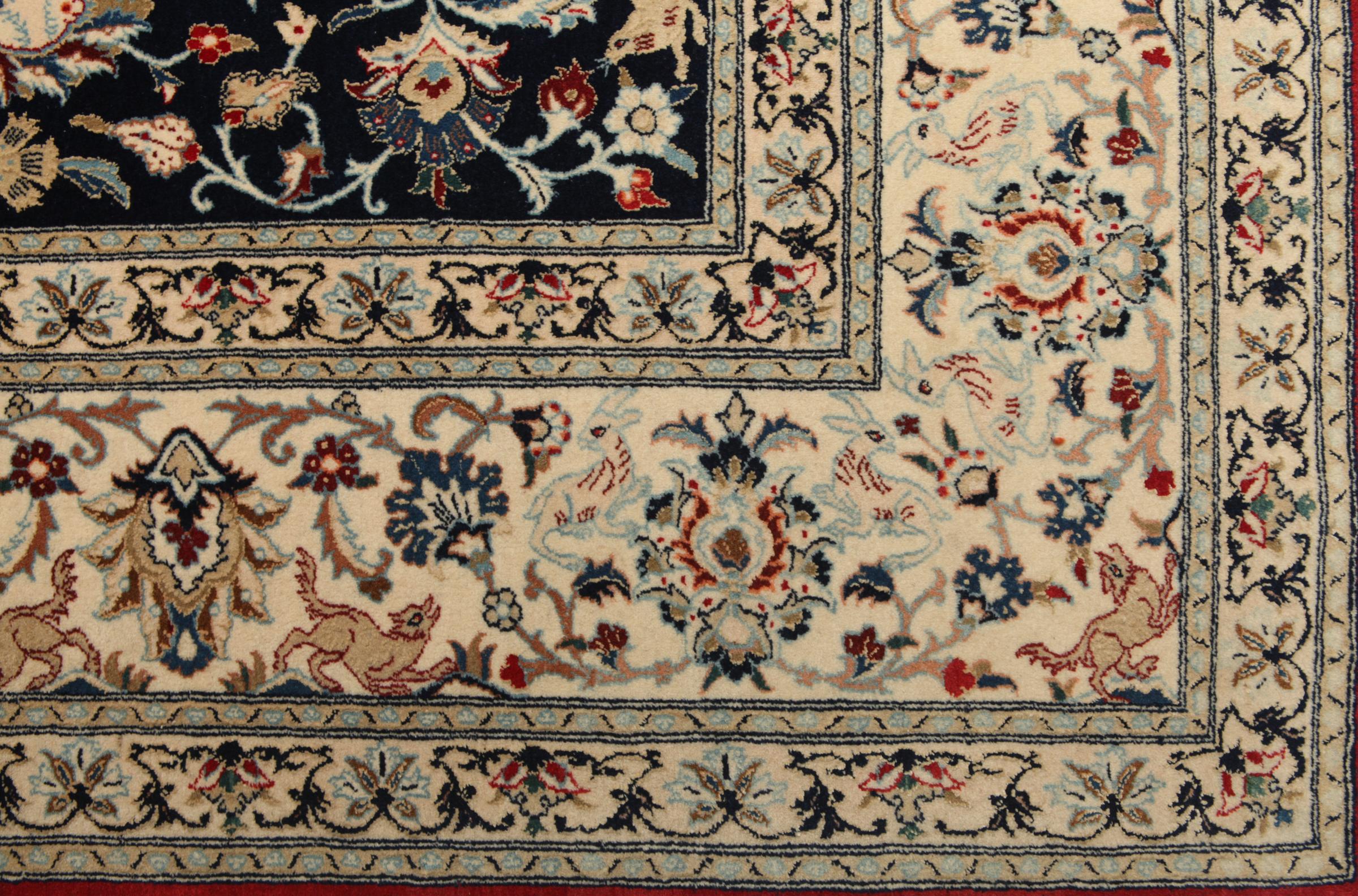
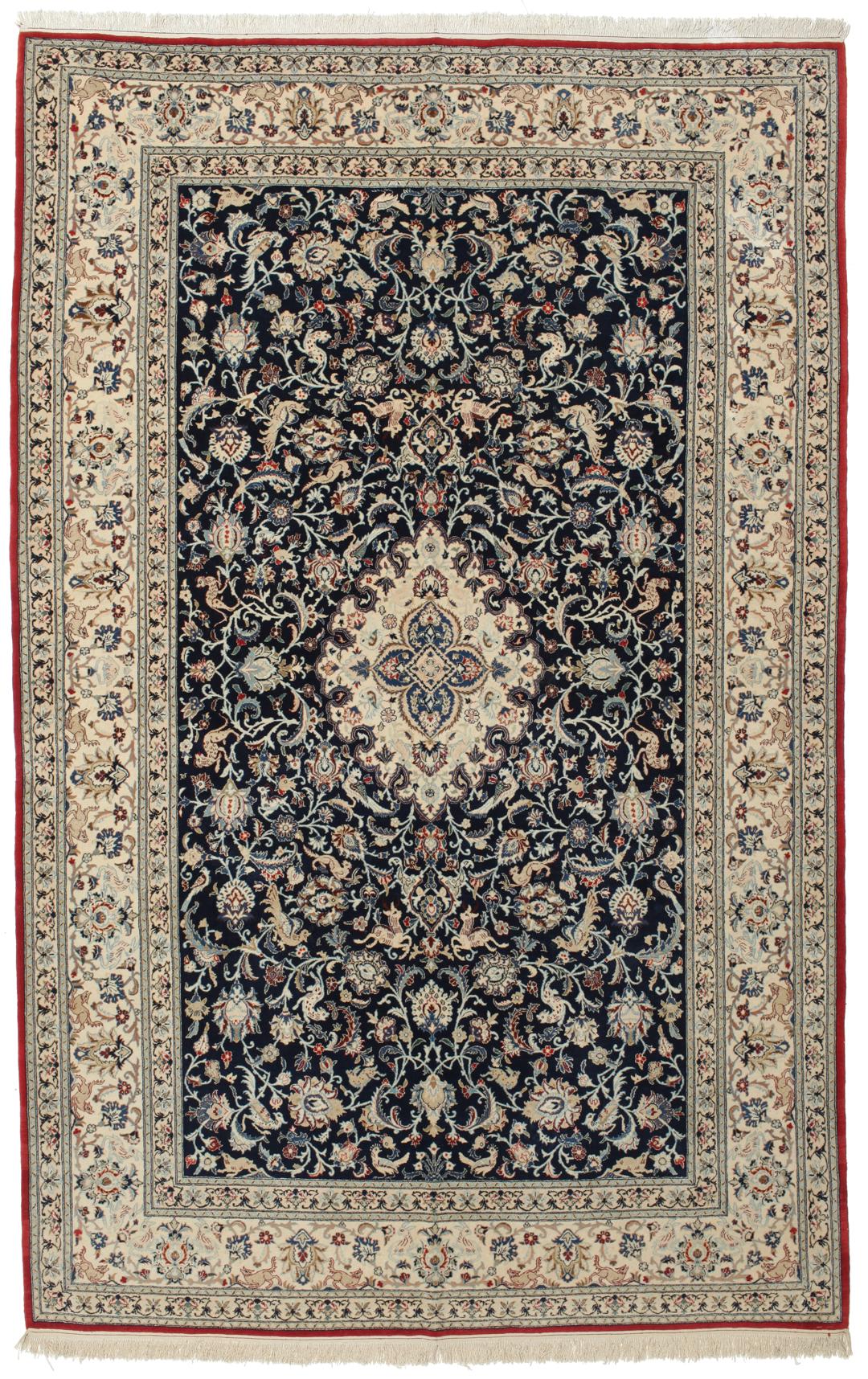
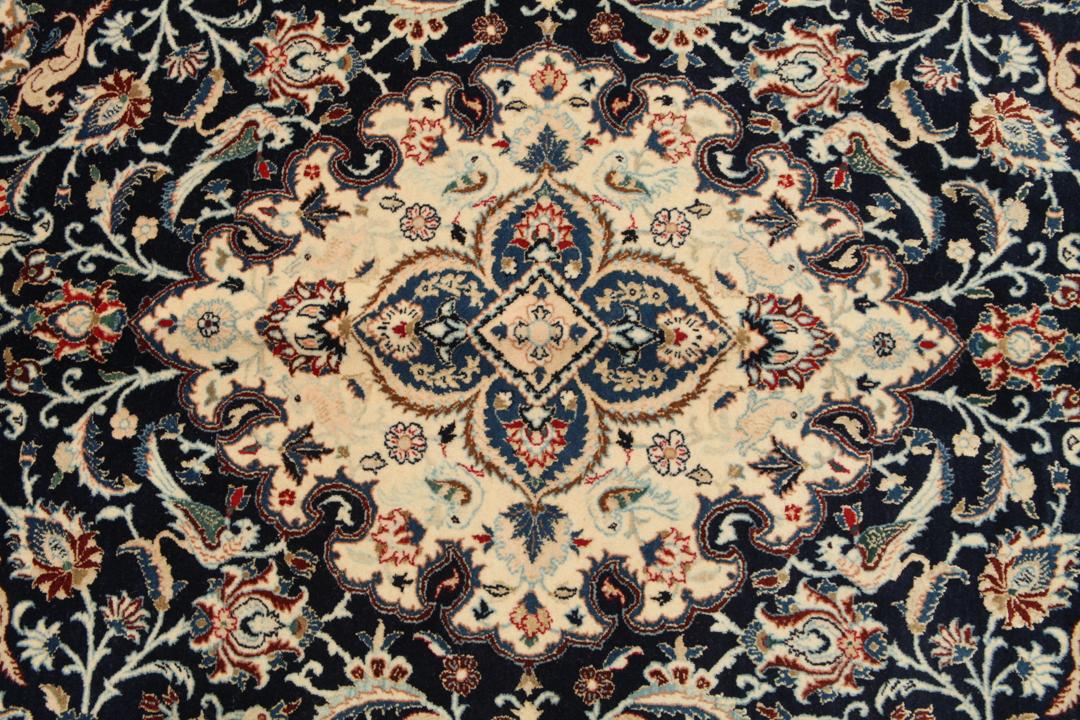
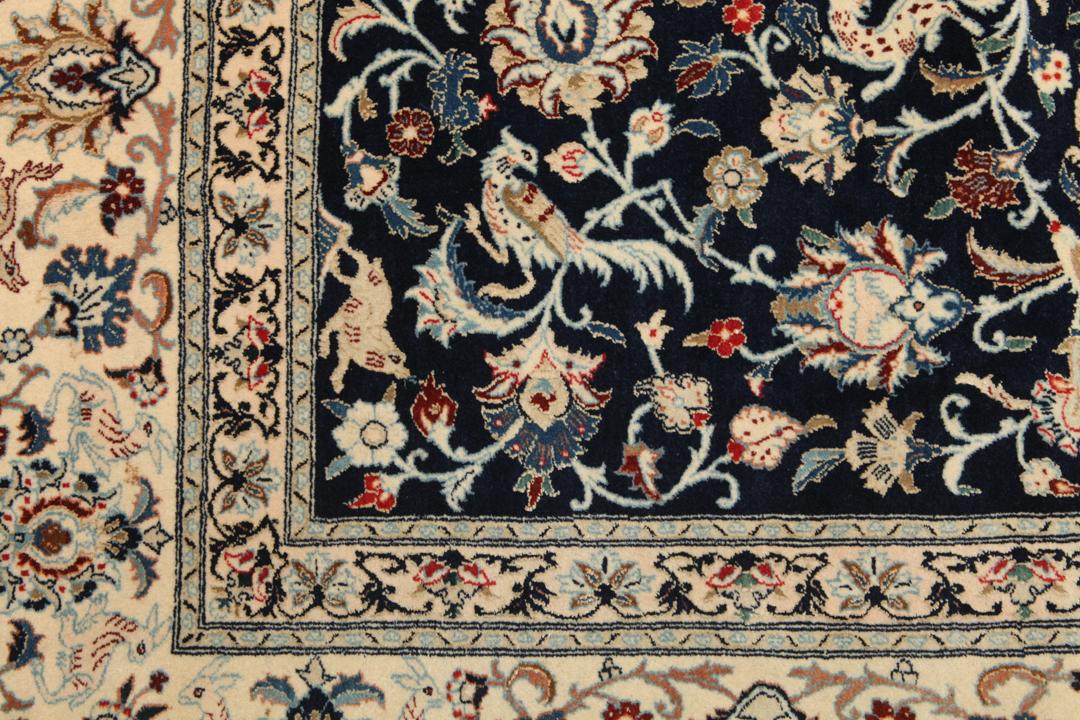
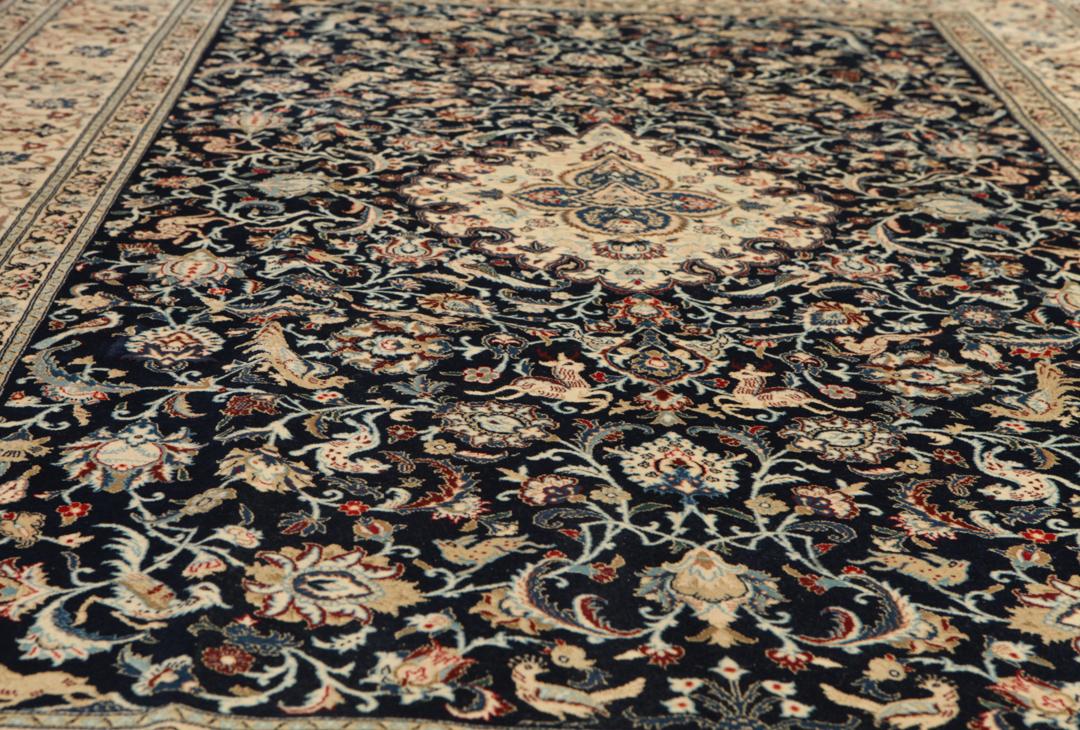
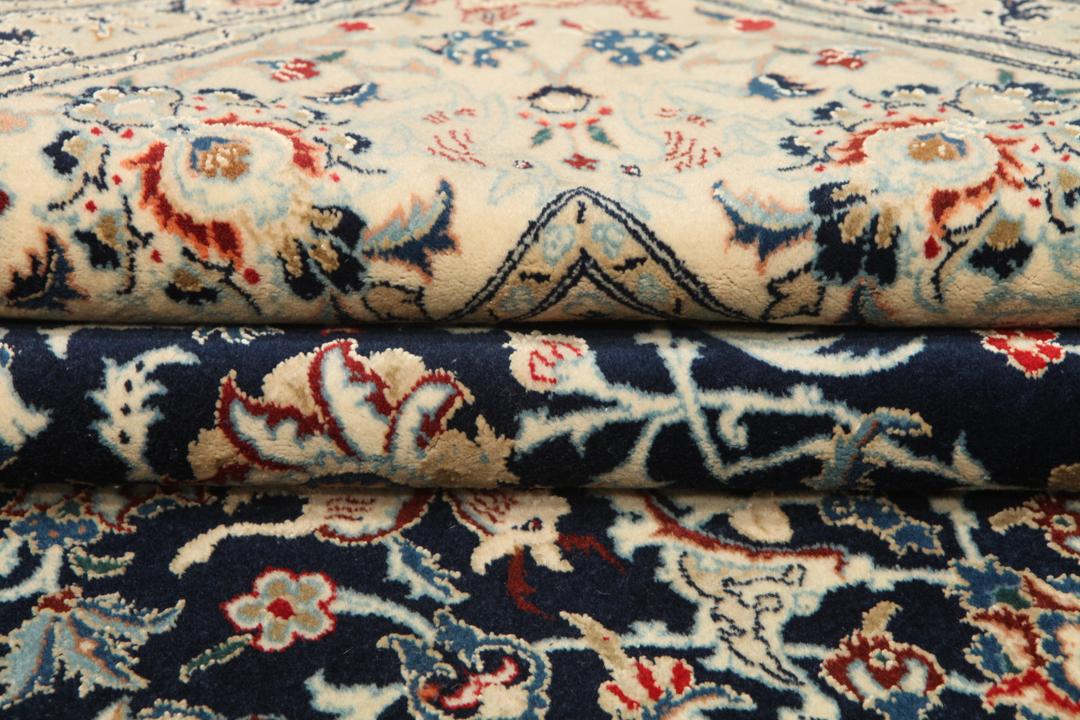
The design vocabulary of a Nain is rooted in a balance between the field and the border, often featuring a central medallion inspired by classic Middle Eastern floral arrangements. These rugs are known for their use of elegant, curvilinear motifs, including scrolling vines, delicate blossoms, and intricate arabesques. The colour palette is traditionally restrained, often favouring ivory, cream, and deep navy tones, which allows the complexity of the pattern to take centre stage.
Collecting a Nain Tuteshk is more than just a decor choice; it is an acquisition of cultural heritage and refined skill. These rugs are highly valued by collectors for their consistency, their sophisticated colour schemes, and the immense labour required to create them. Owning such a piece connects your home to a long-standing tradition of excellence, ensuring that the history and artistry of the region continue to be appreciated through the generations.