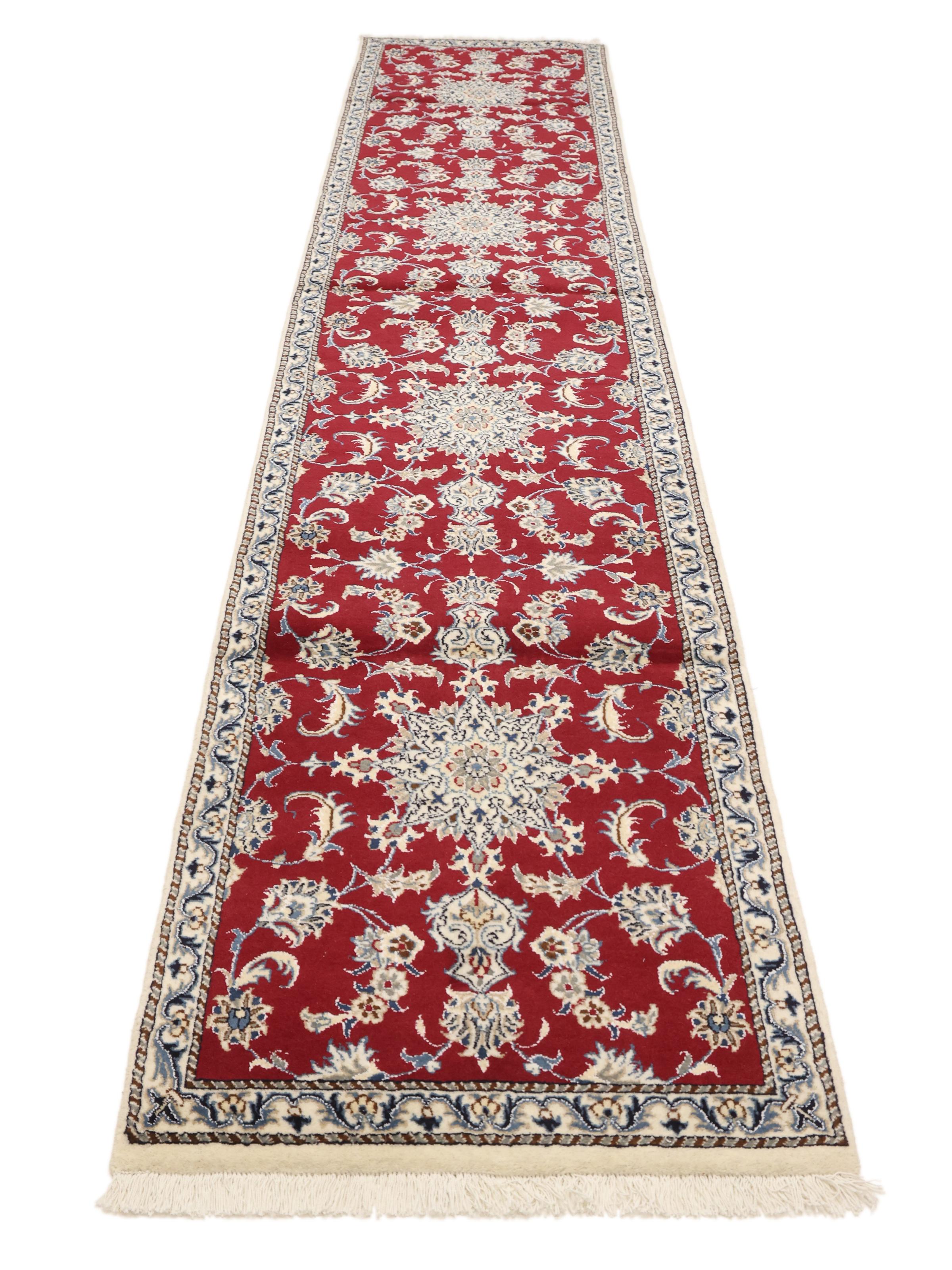
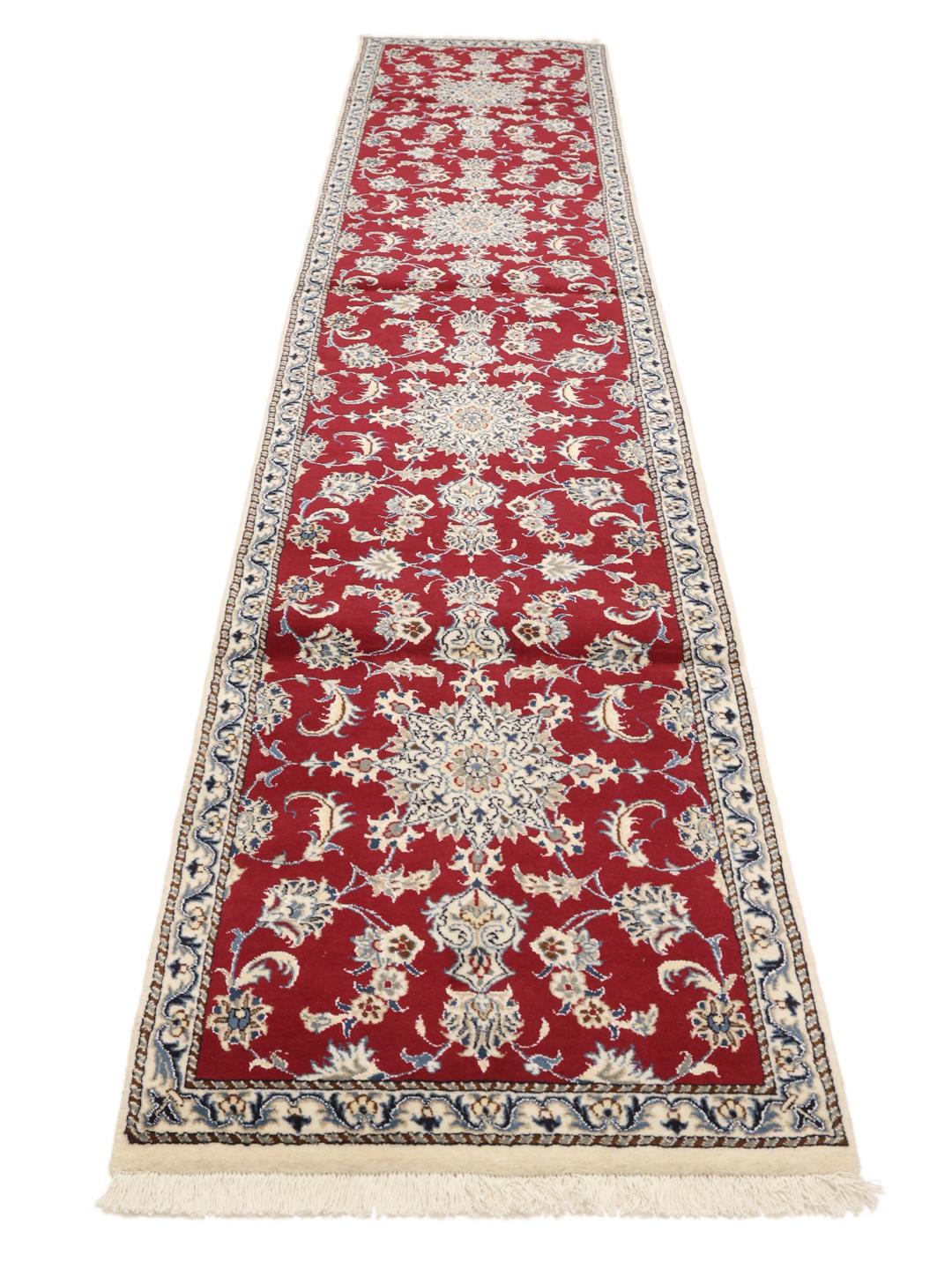
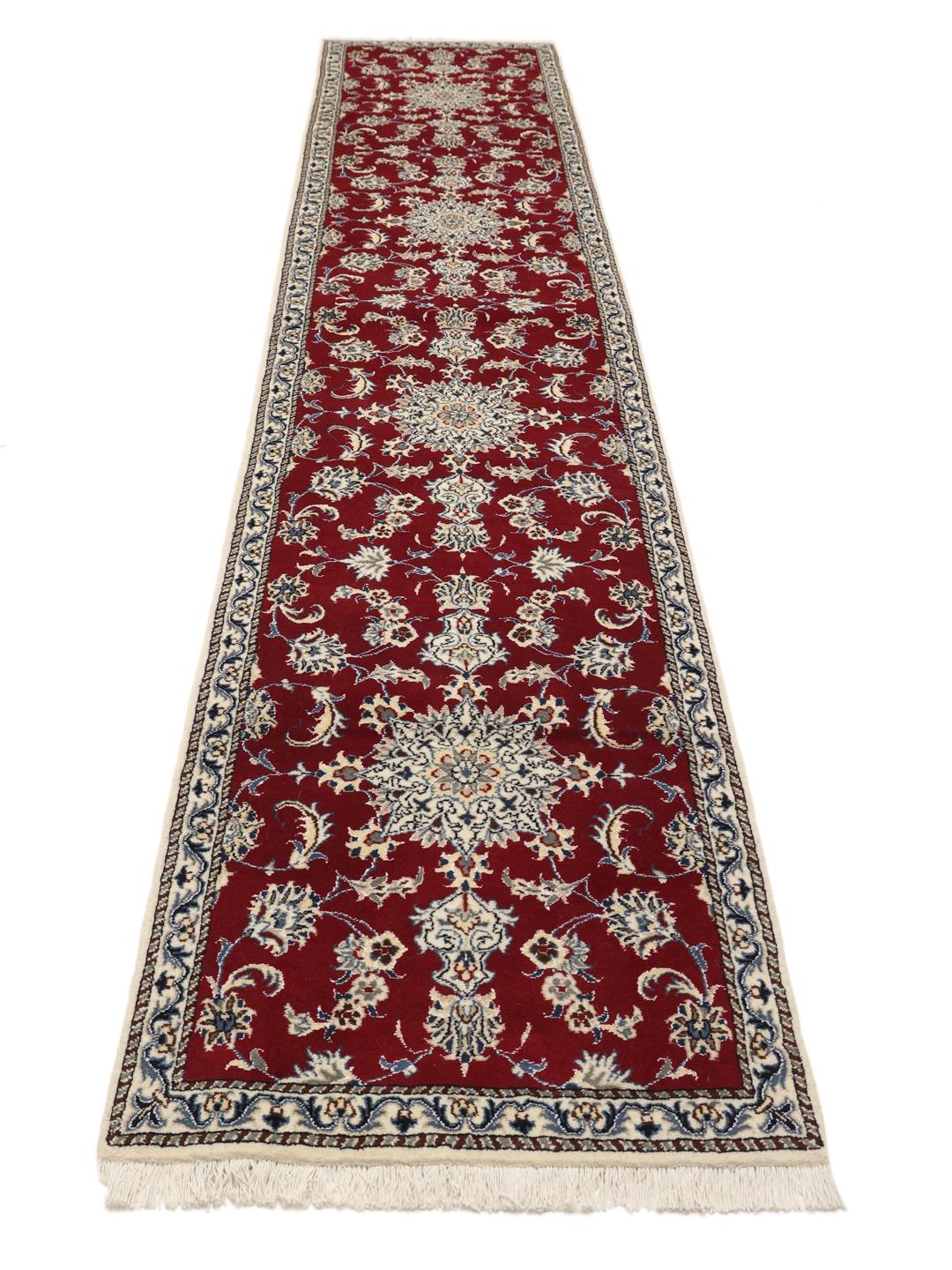
Nain rugs trace their origins to the town of Nain, located in the central part of the Middle East. Historically a centre for fine textile production, the town evolved from creating high-quality wool garments to producing some of the most sought-after rugs in the world during the early 20th century, often utilising natural dyes and sophisticated designs.
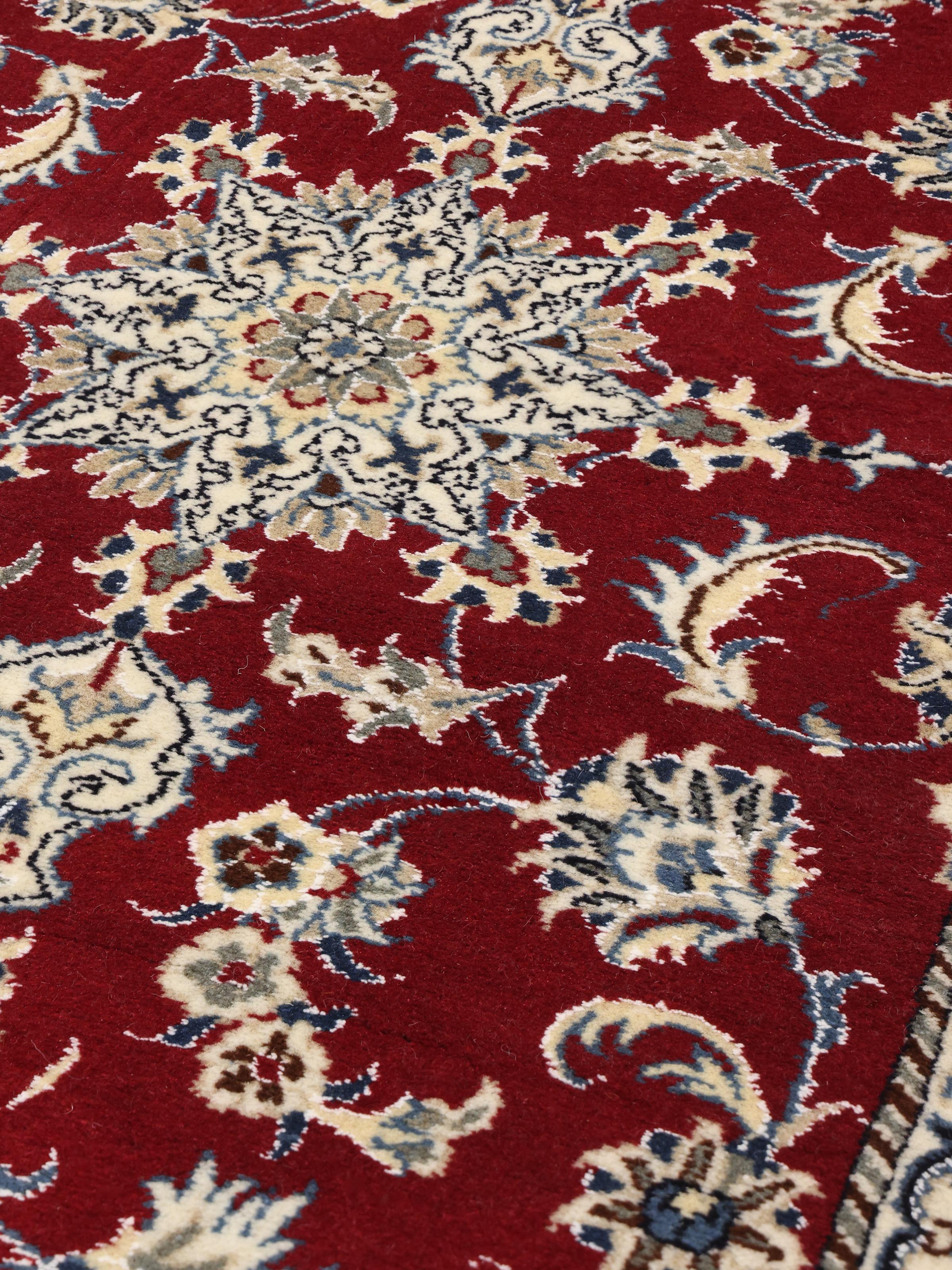
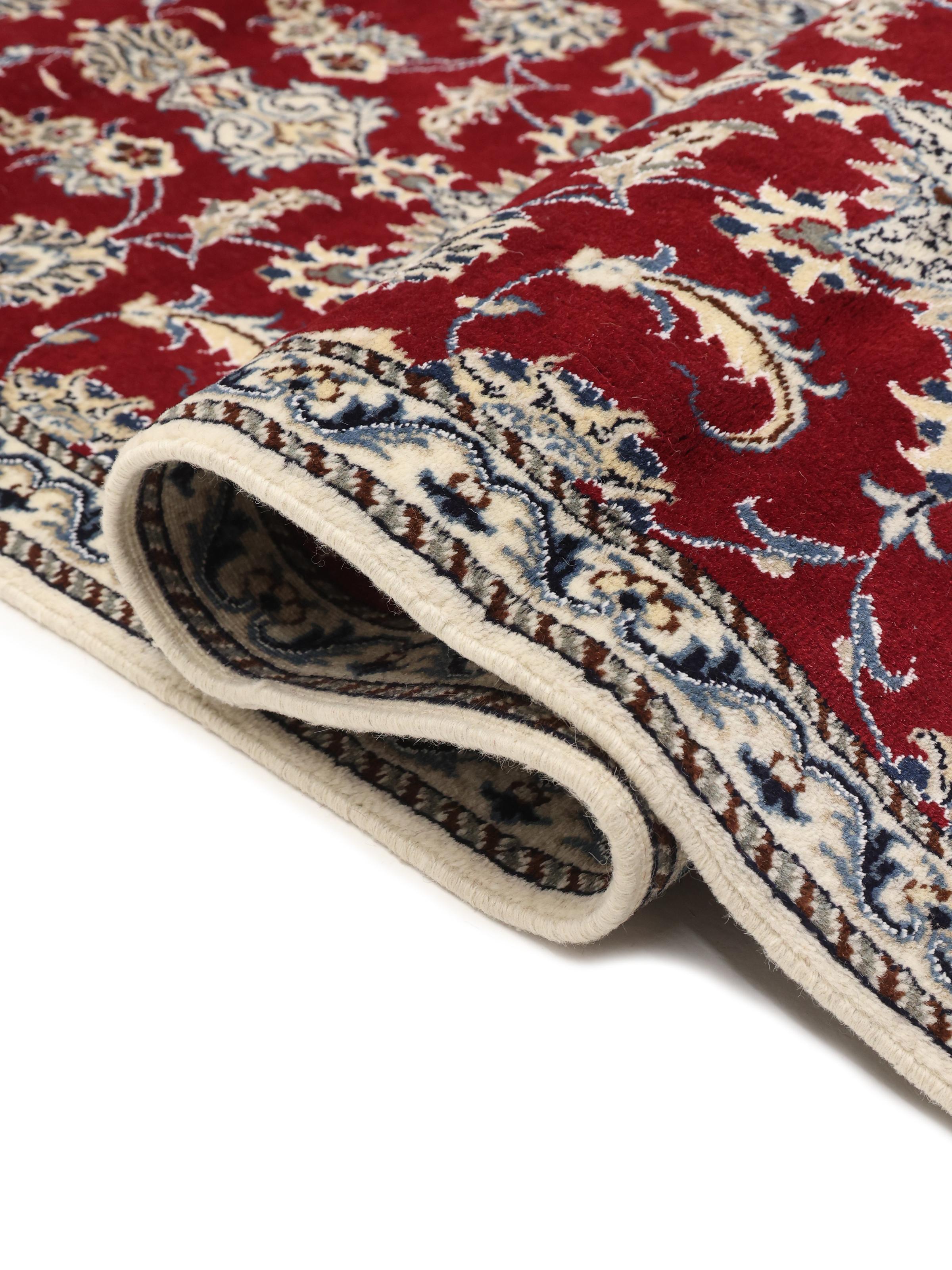
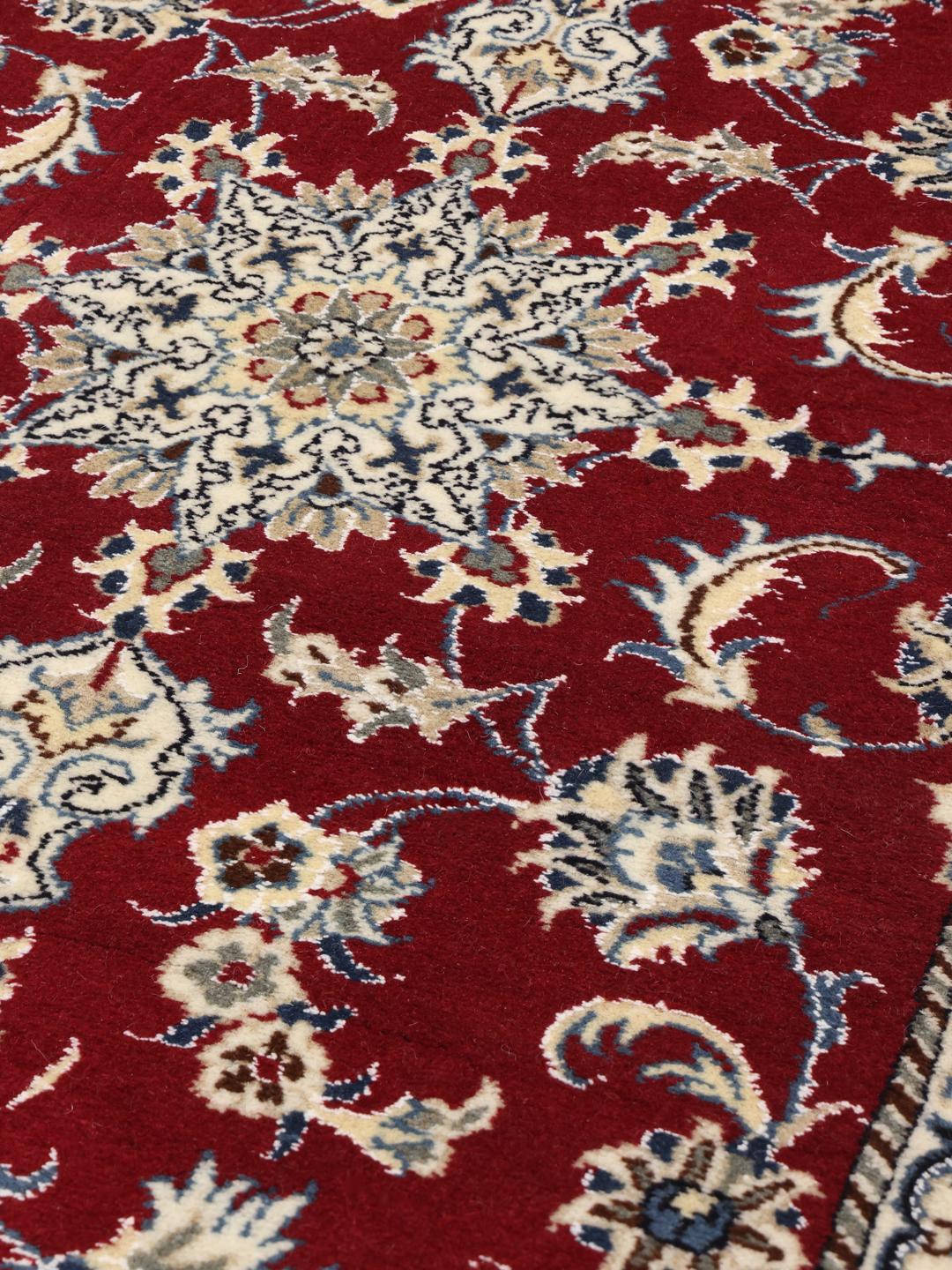
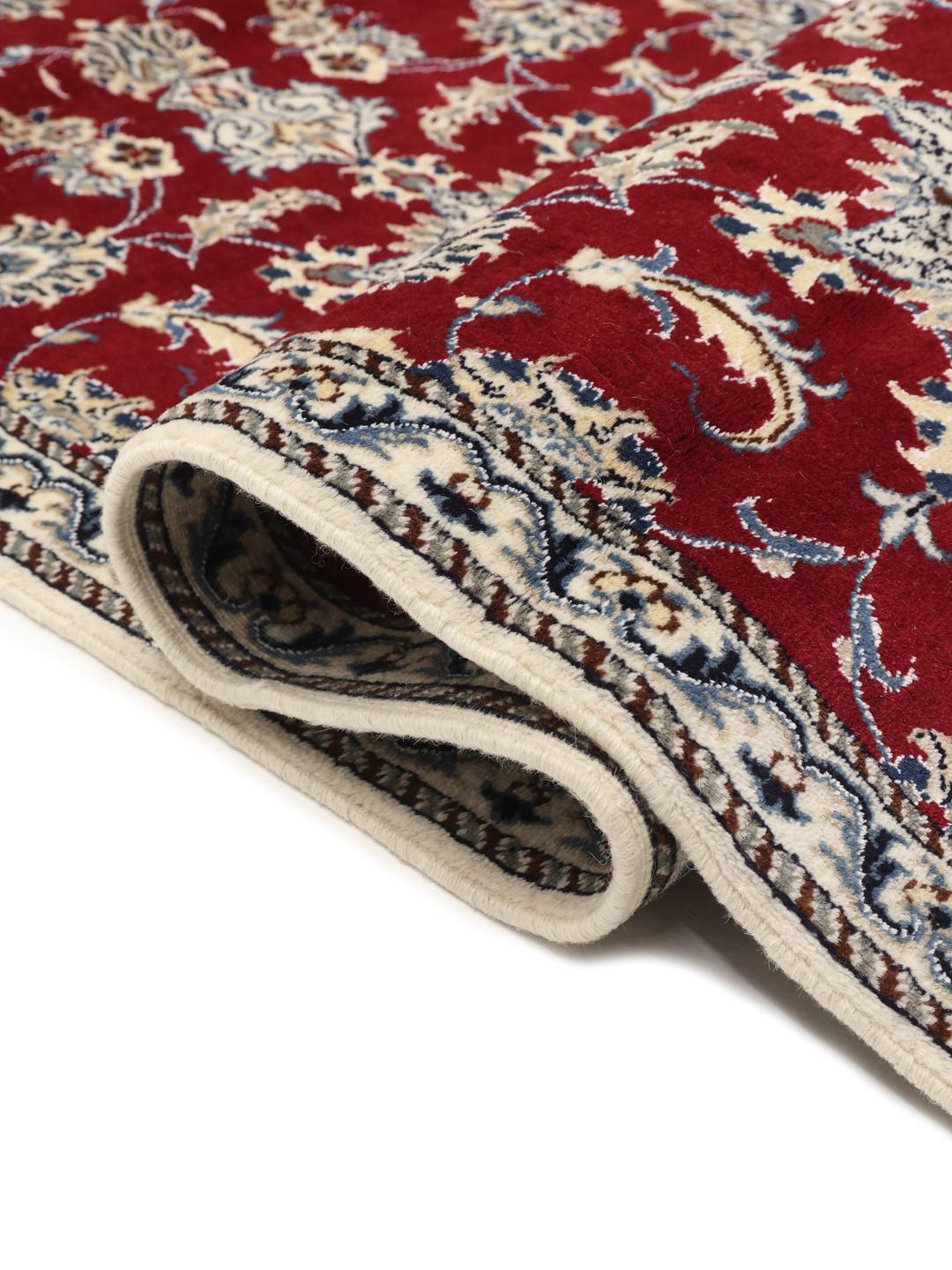
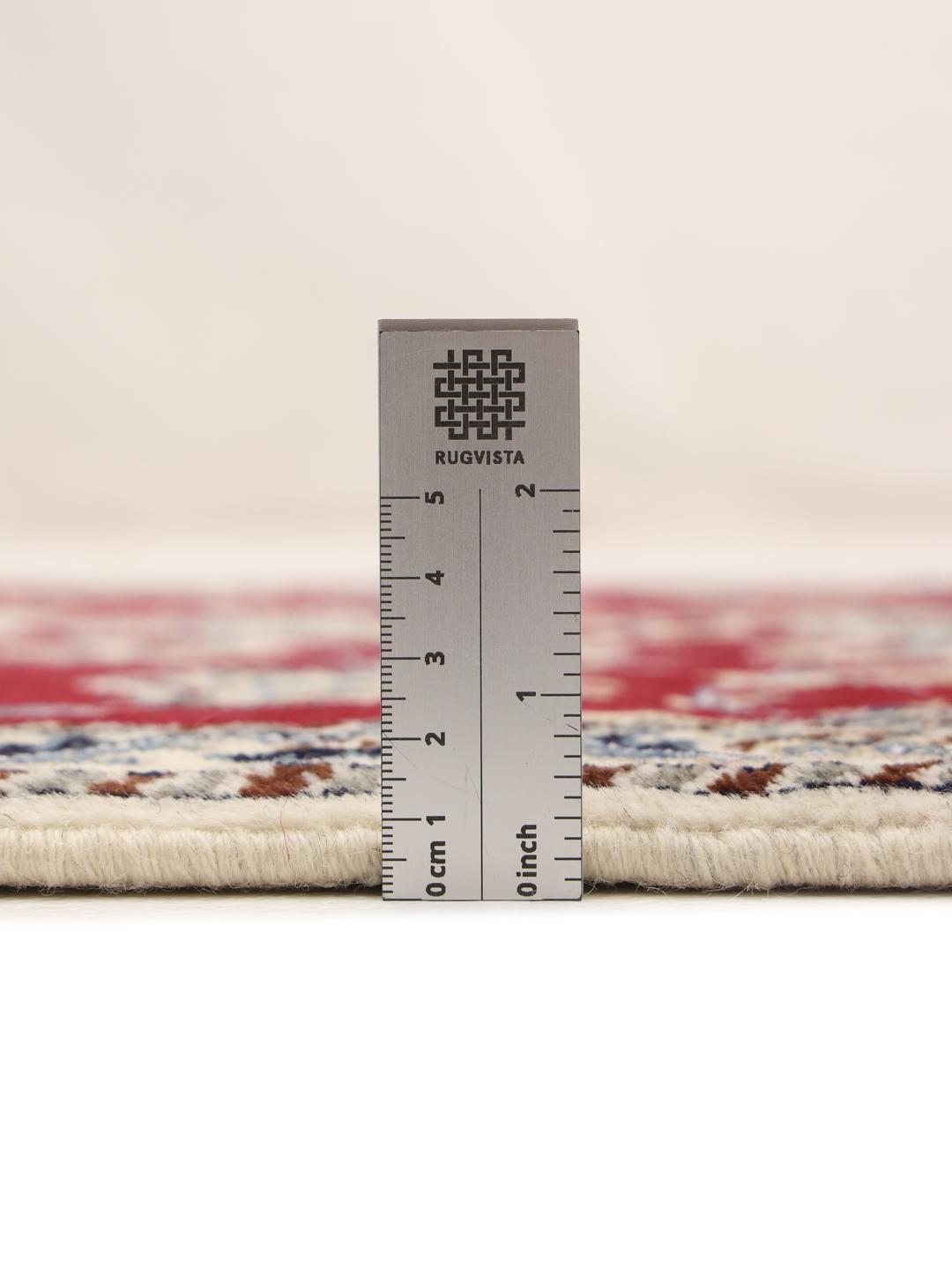
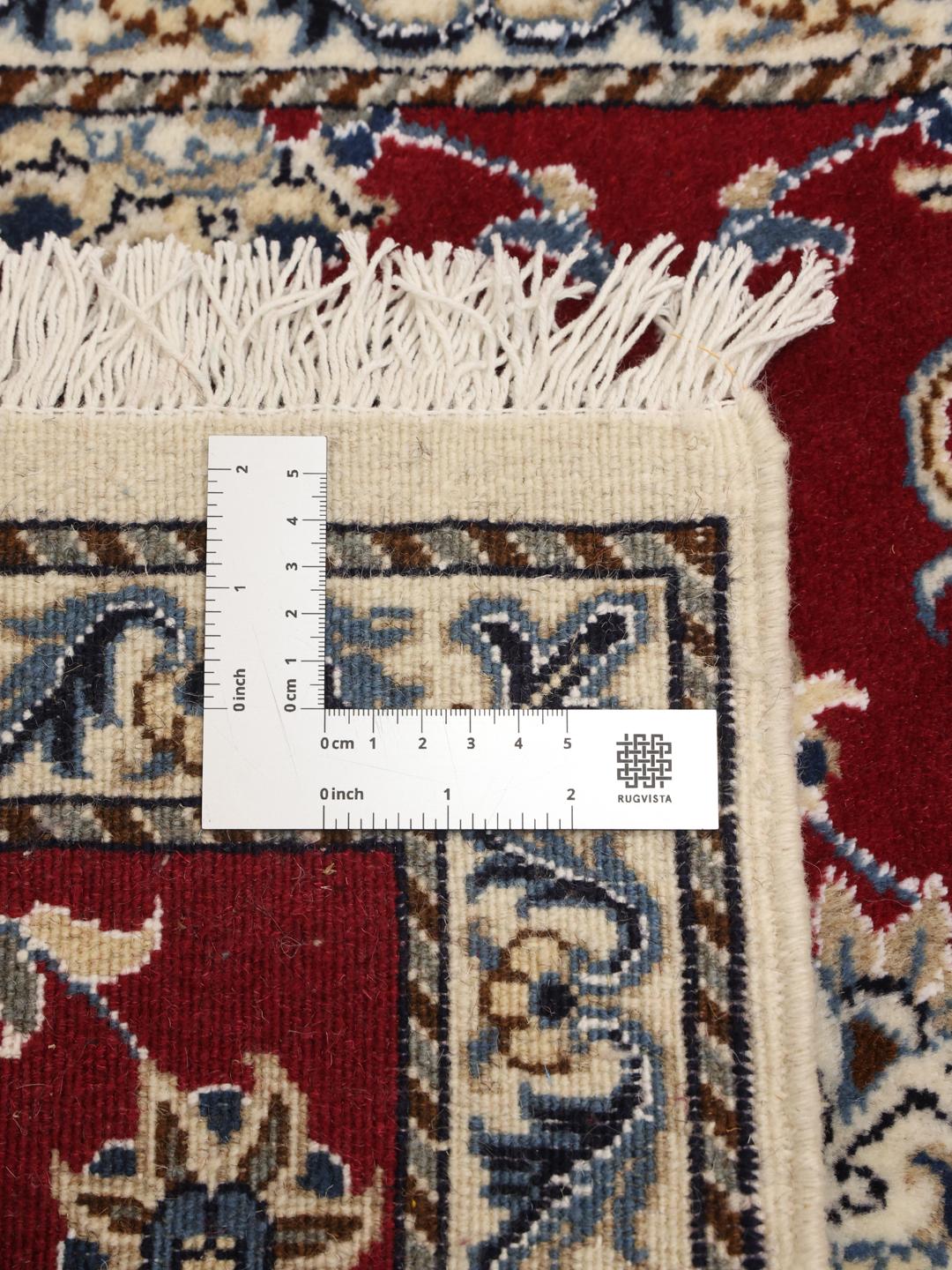
The technical quality of these rugs is often measured by their knot density, which directly impacts the clarity of the design and the durability of the pile. A higher density allows for the intricate, curvilinear floral patterns—often featuring central medallions and sweeping vine work—that are the hallmark of this tradition, ensuring the motifs remain sharp and clear.
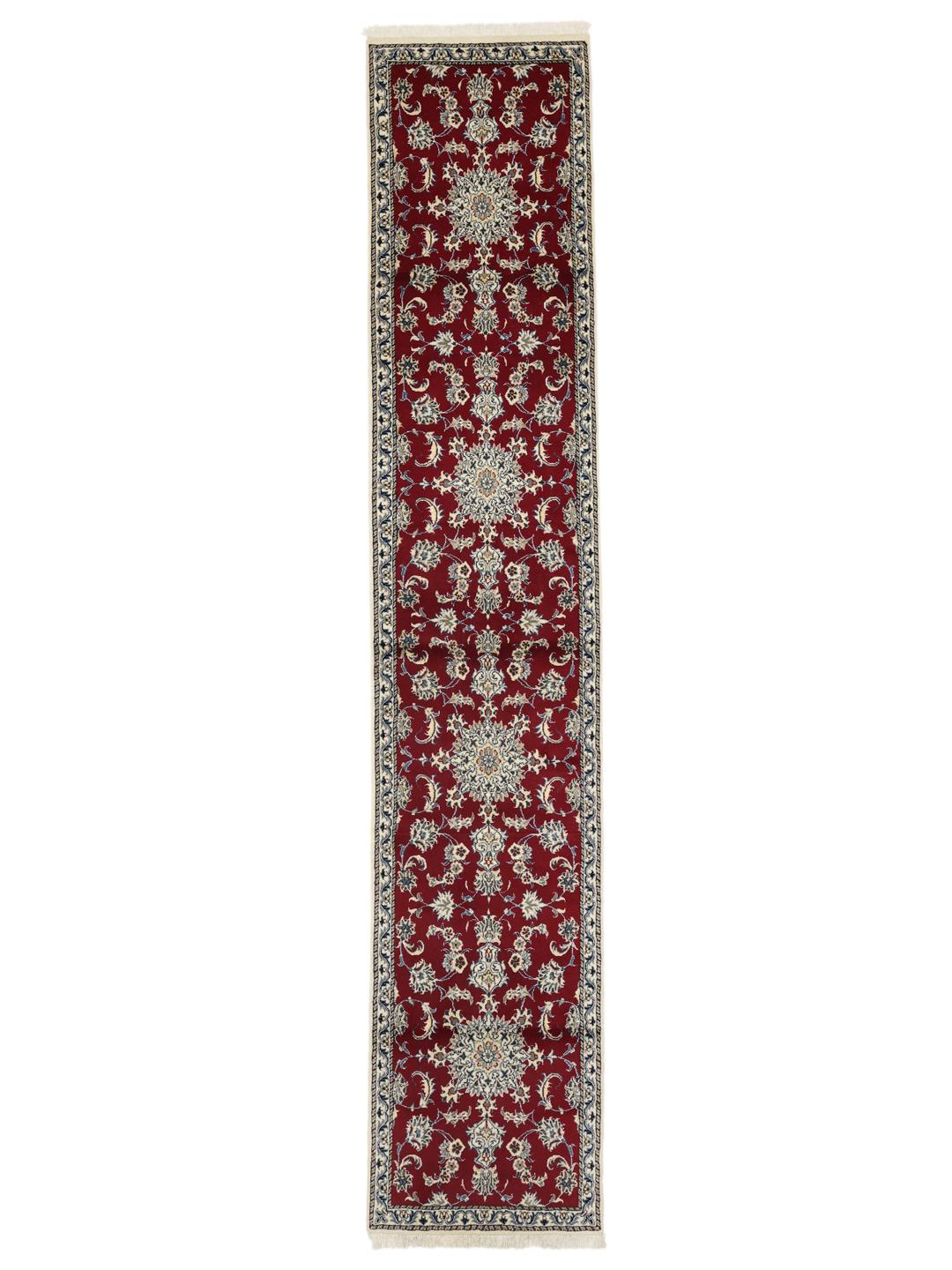
Visually, these rugs are defined by a refined colour palette, often favouring shades of ivory, blue, and deep red. The design typically centres around a medallion, surrounded by a complex field of scrolling vines, leaves, and smaller floral elements, all framed by a formal, multi-layered border that balances the overall composition.
Owning a piece from this tradition is considered a mark of appreciation for historical craftsmanship and cultural heritage. These rugs are highly valued by collectors for their consistency in quality and their ability to bring a sense of formal elegance to a room, serving as a testament to the skill of the artisans who preserve these traditional techniques.