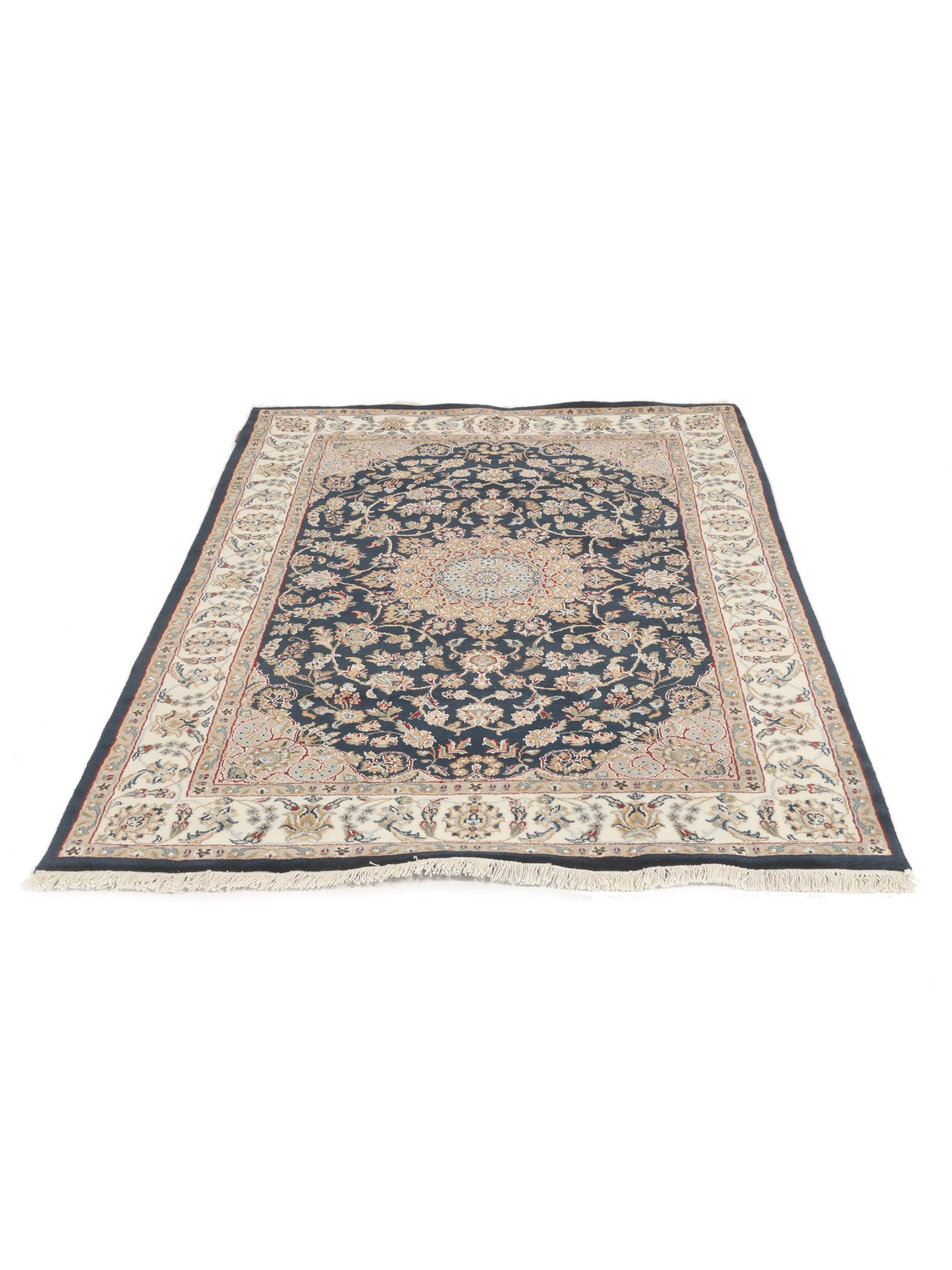
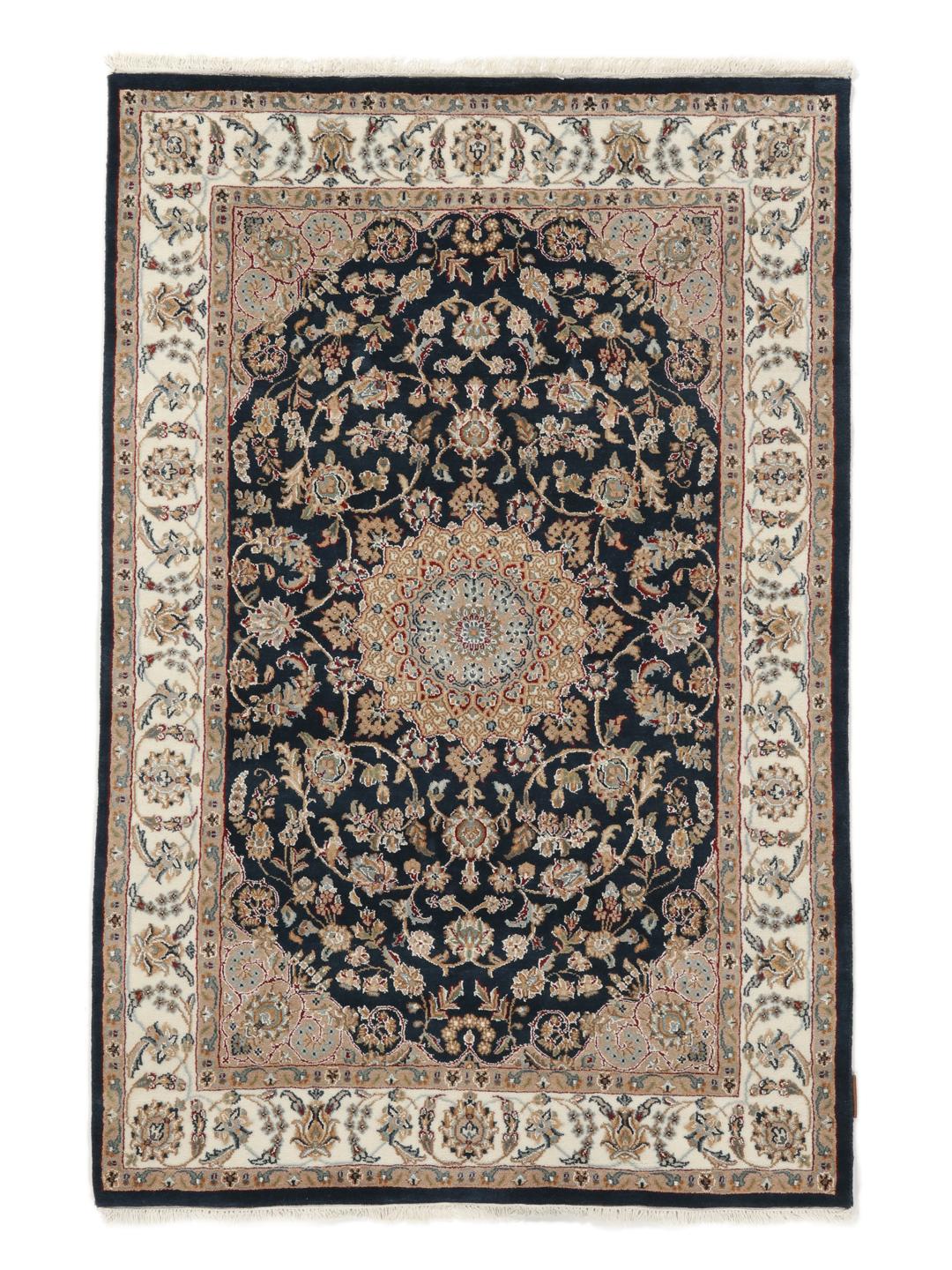
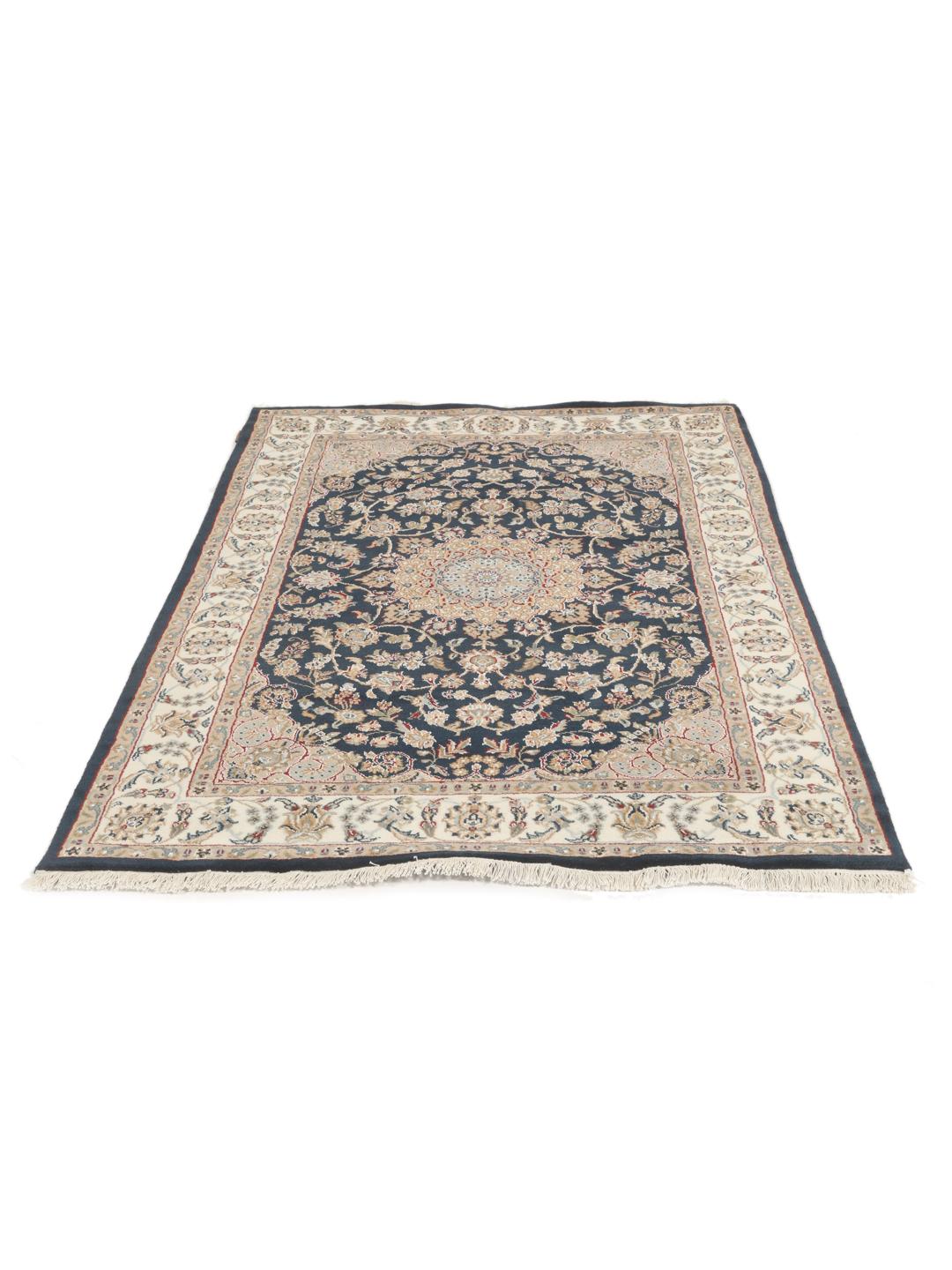
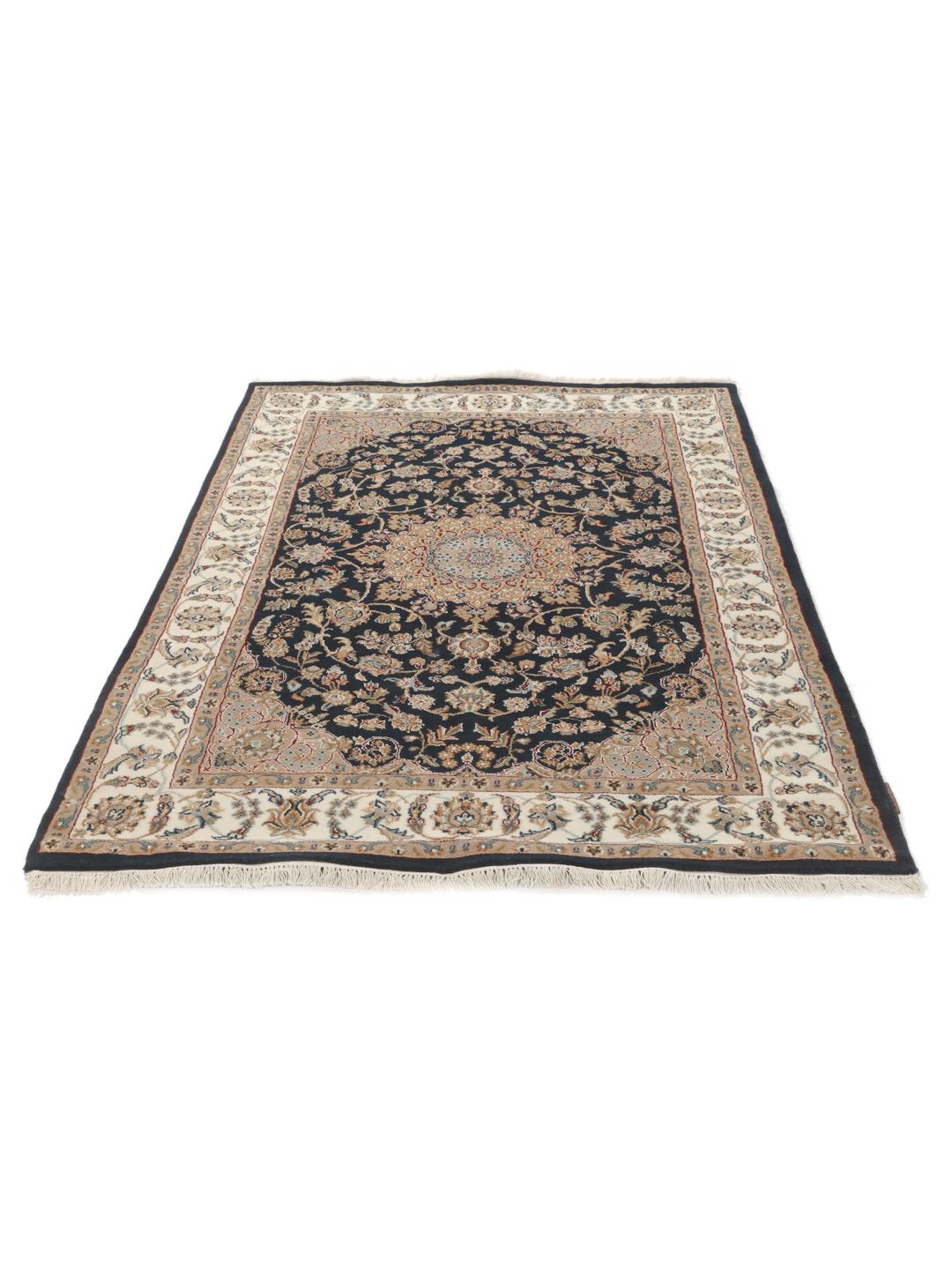
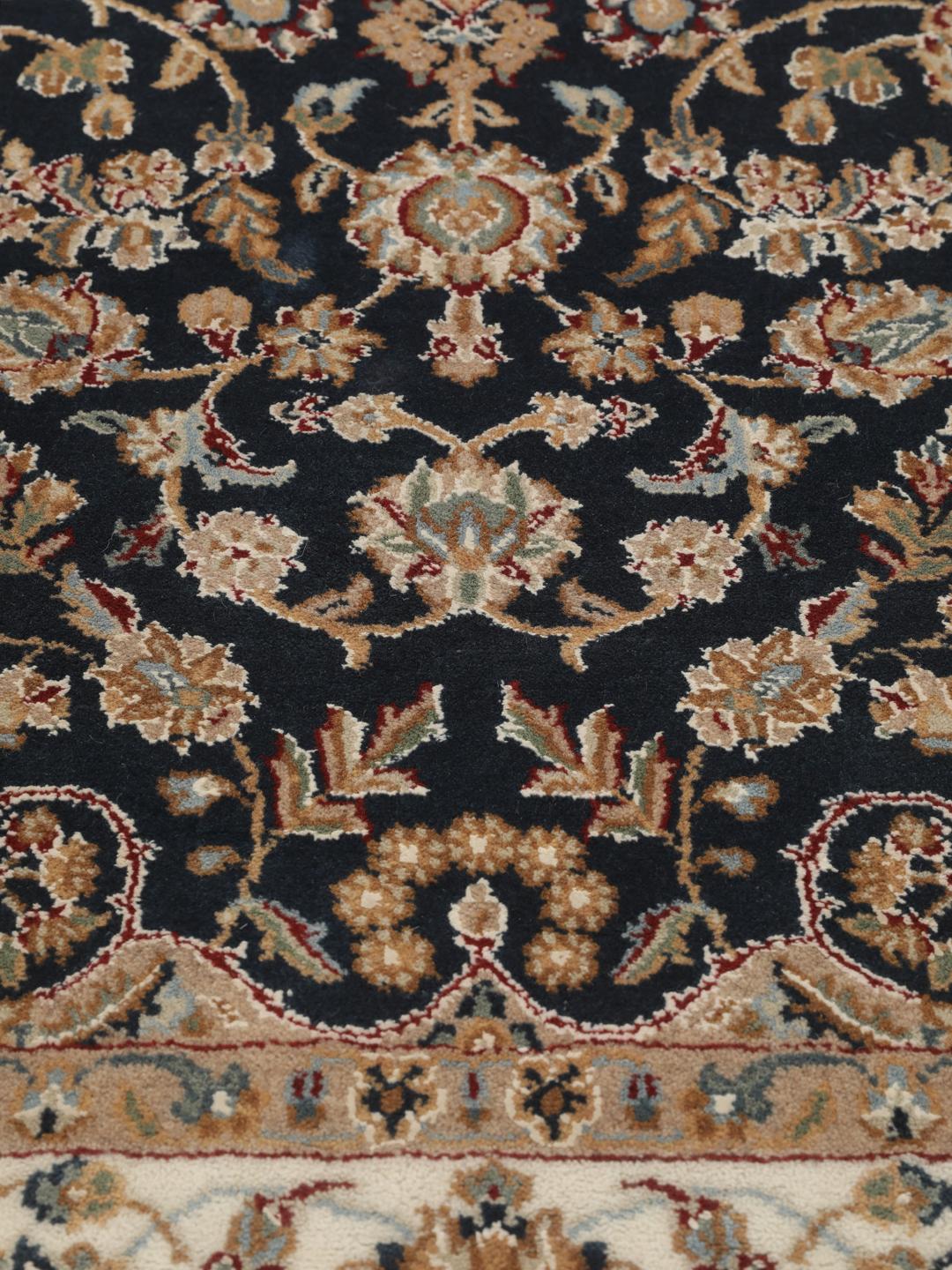
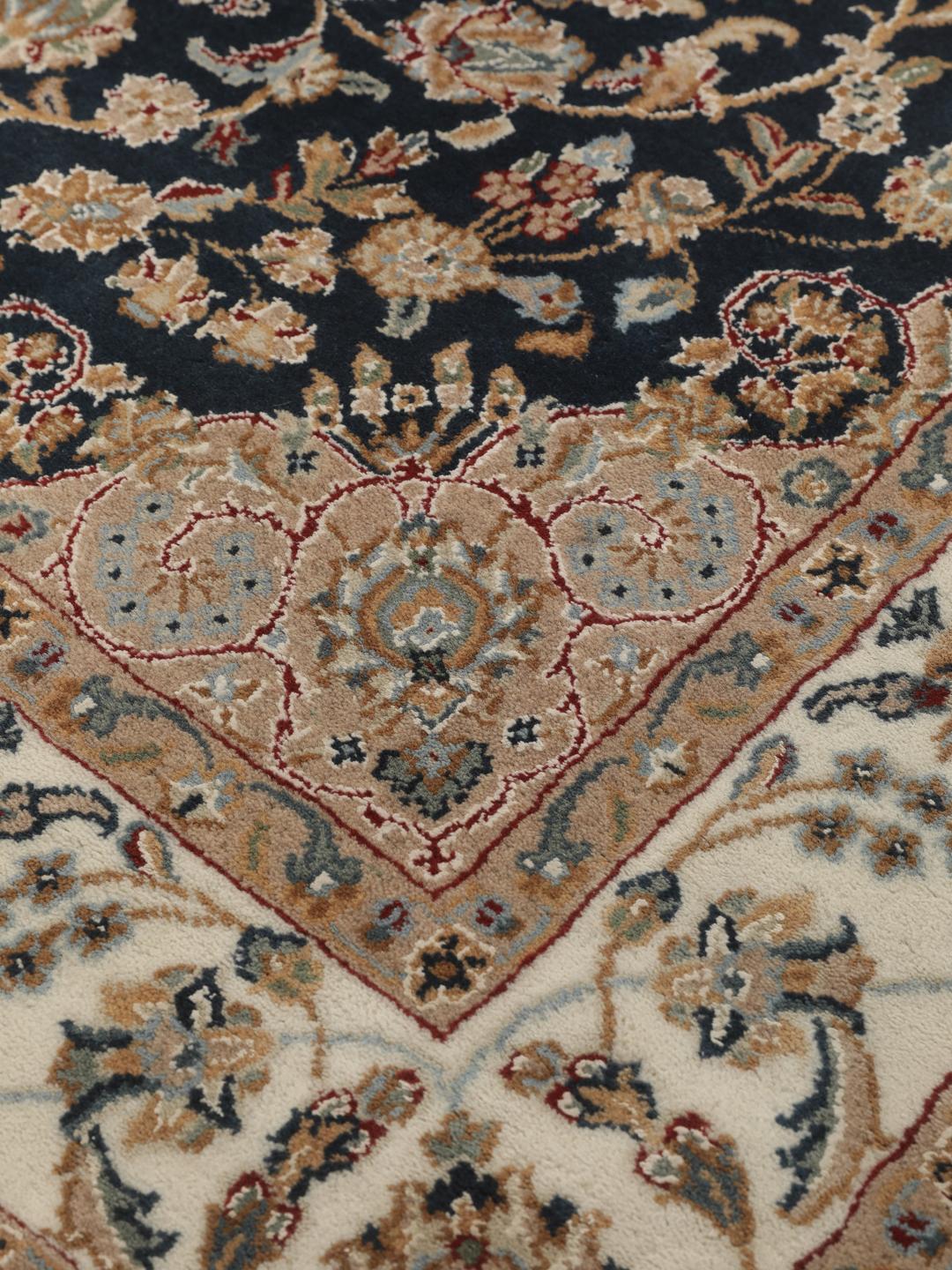
The Nain rug tradition traces its roots to the town of Nain in the Middle East, a region historically celebrated for its fine textiles and religious architecture. Over time, the refined aesthetic of these rugs—characterised by a balanced, formal composition—inspired weavers across the globe, leading to the development of the Nain Indo style. These pieces maintain the classic spirit of their origins while being crafted by talented artisans in India.
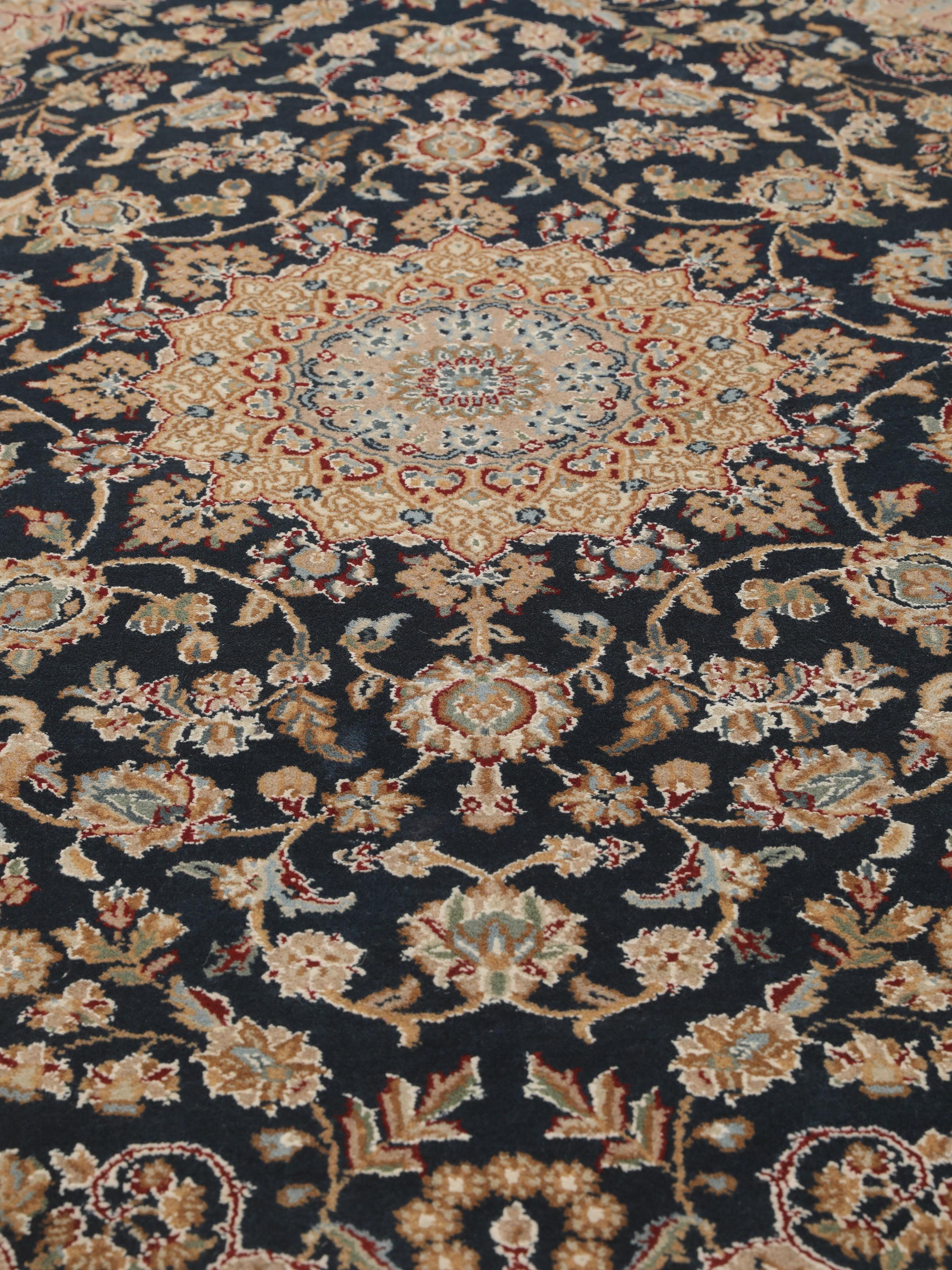
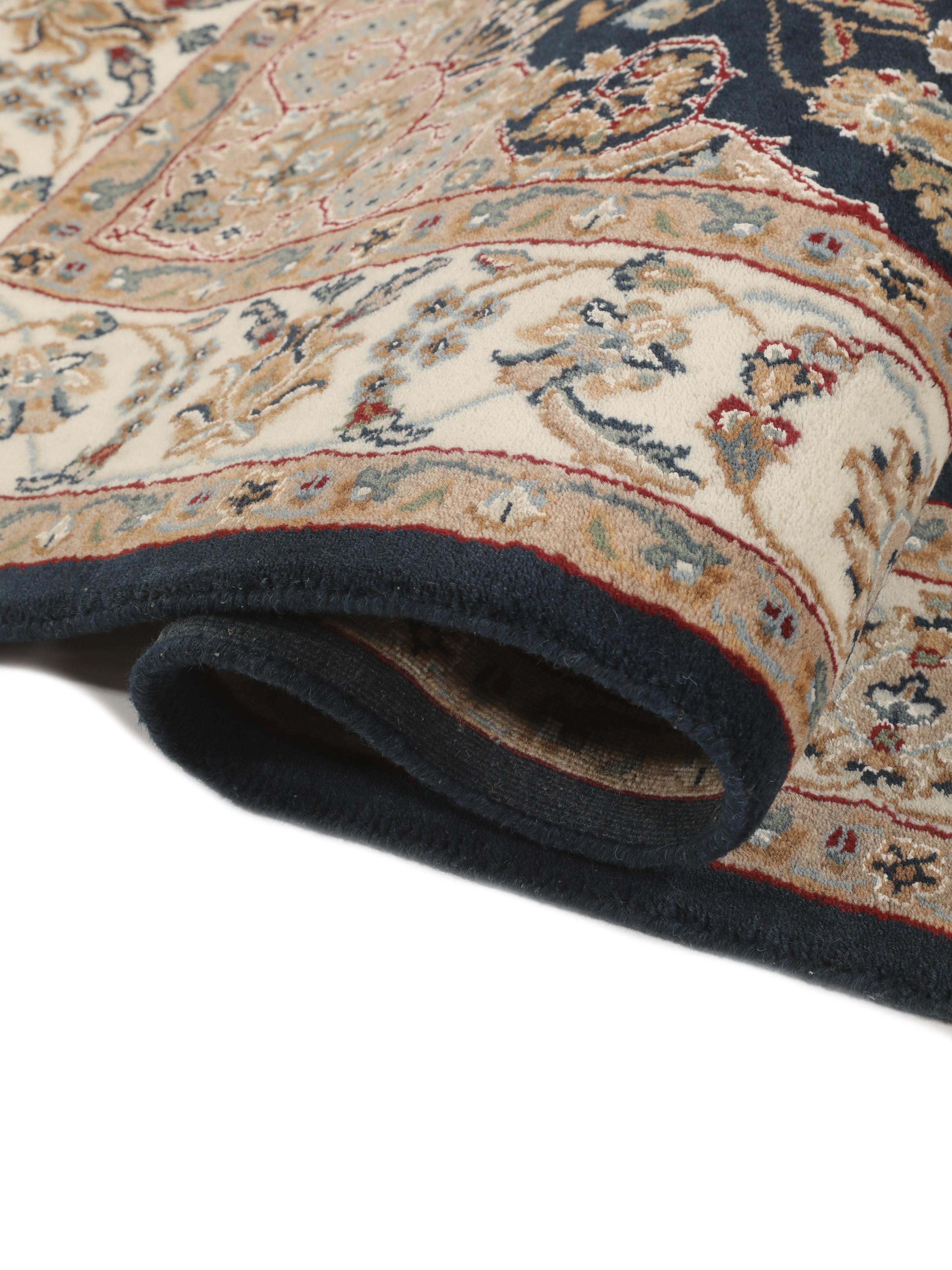
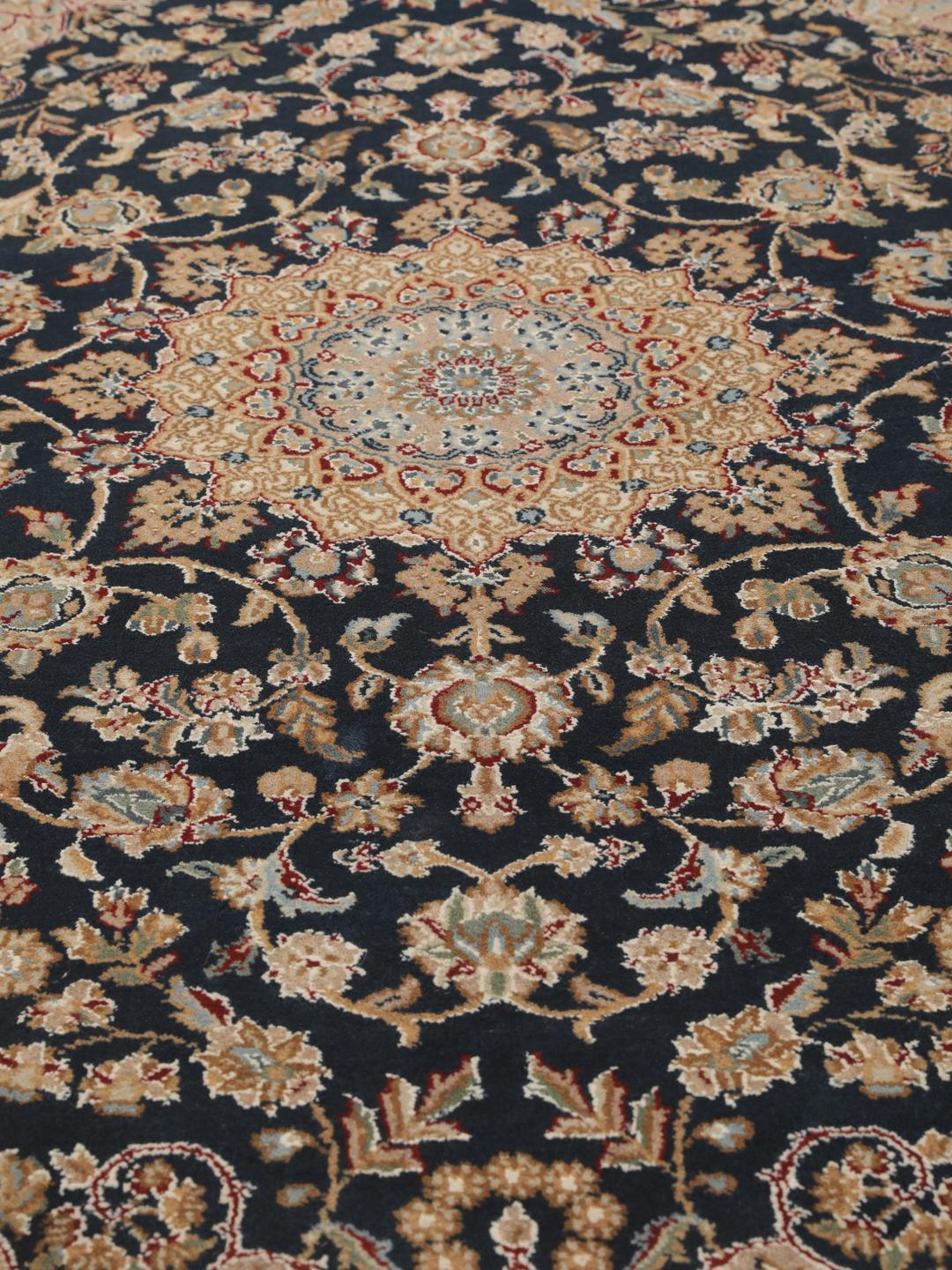
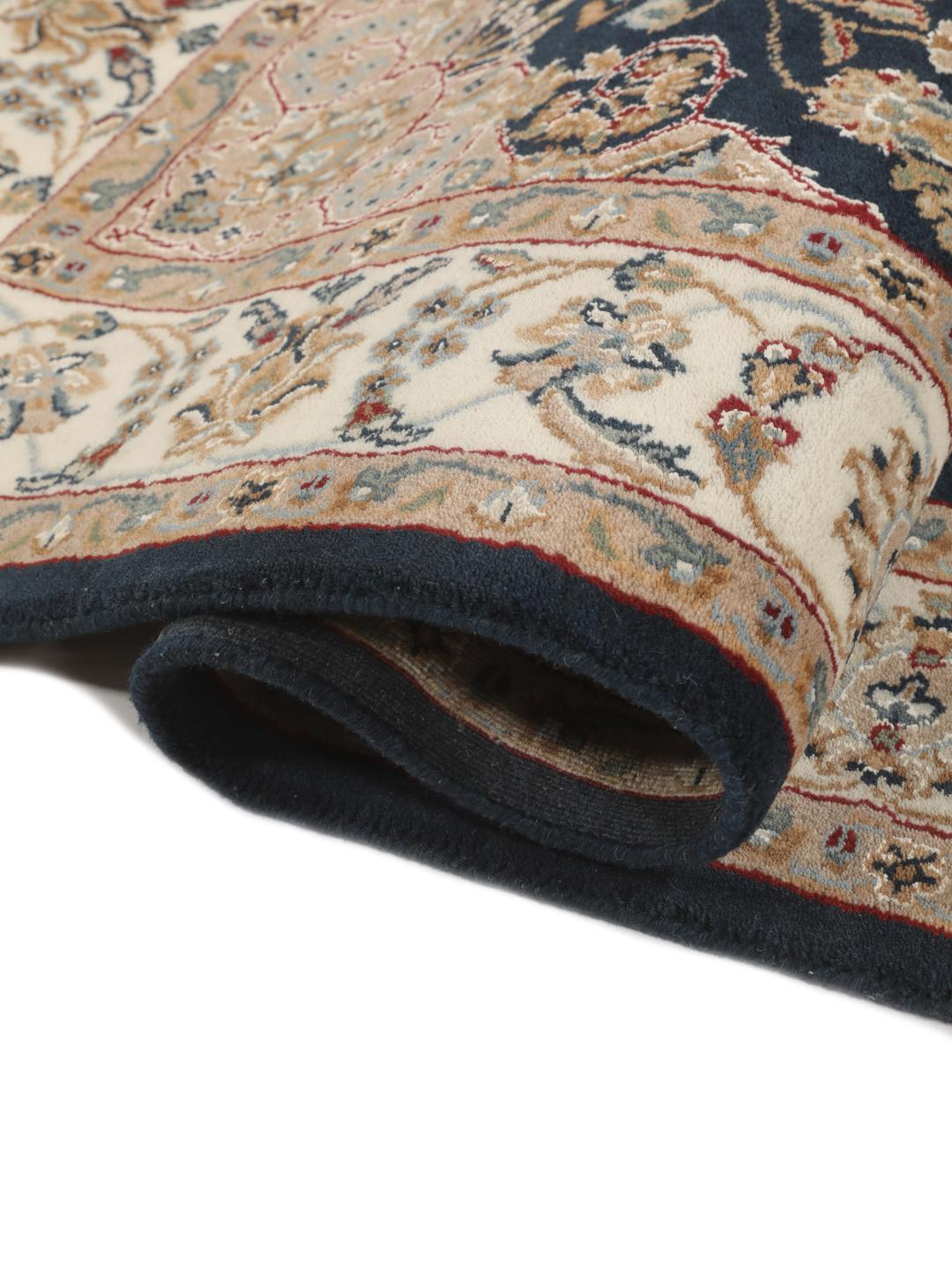
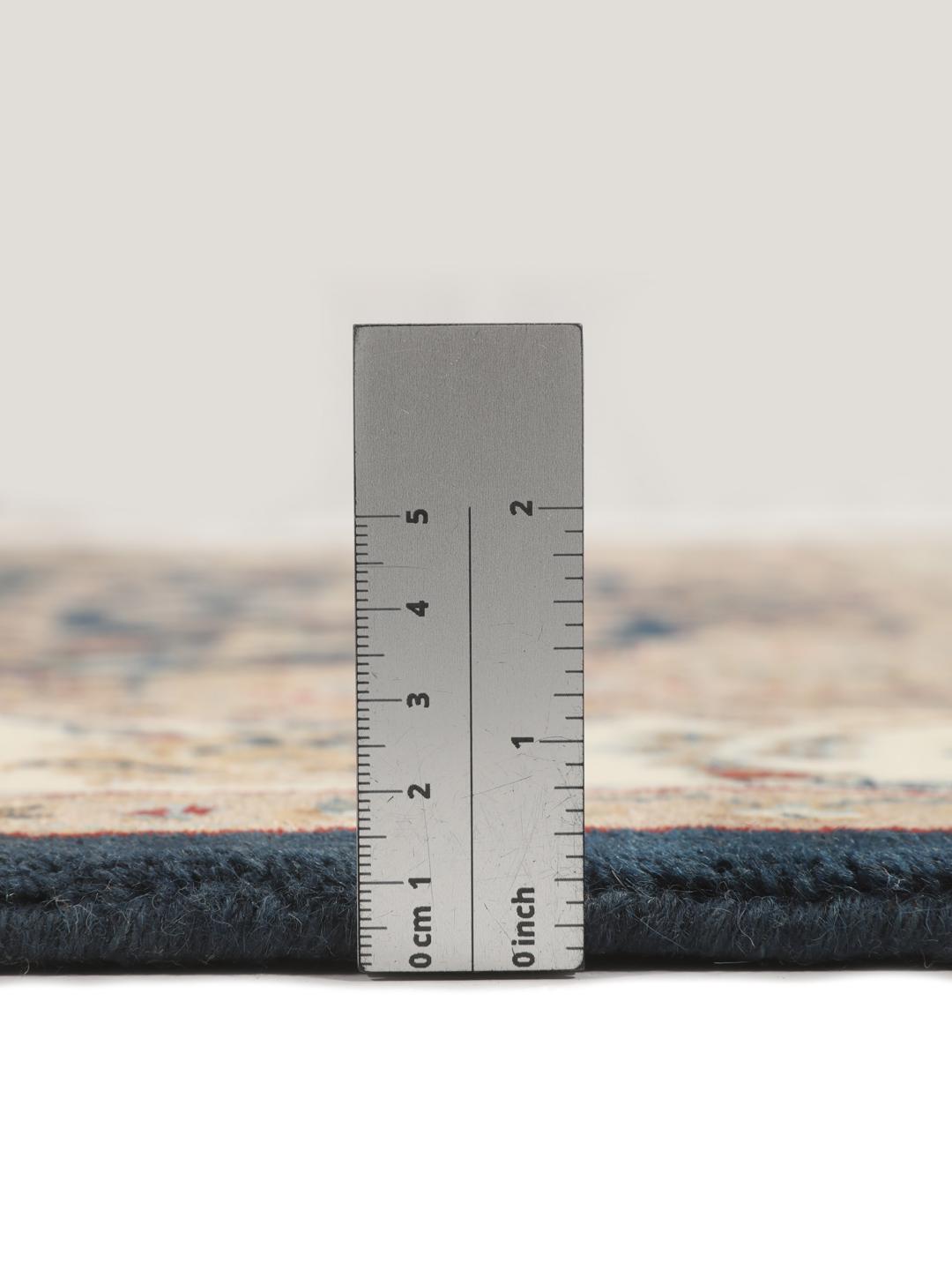
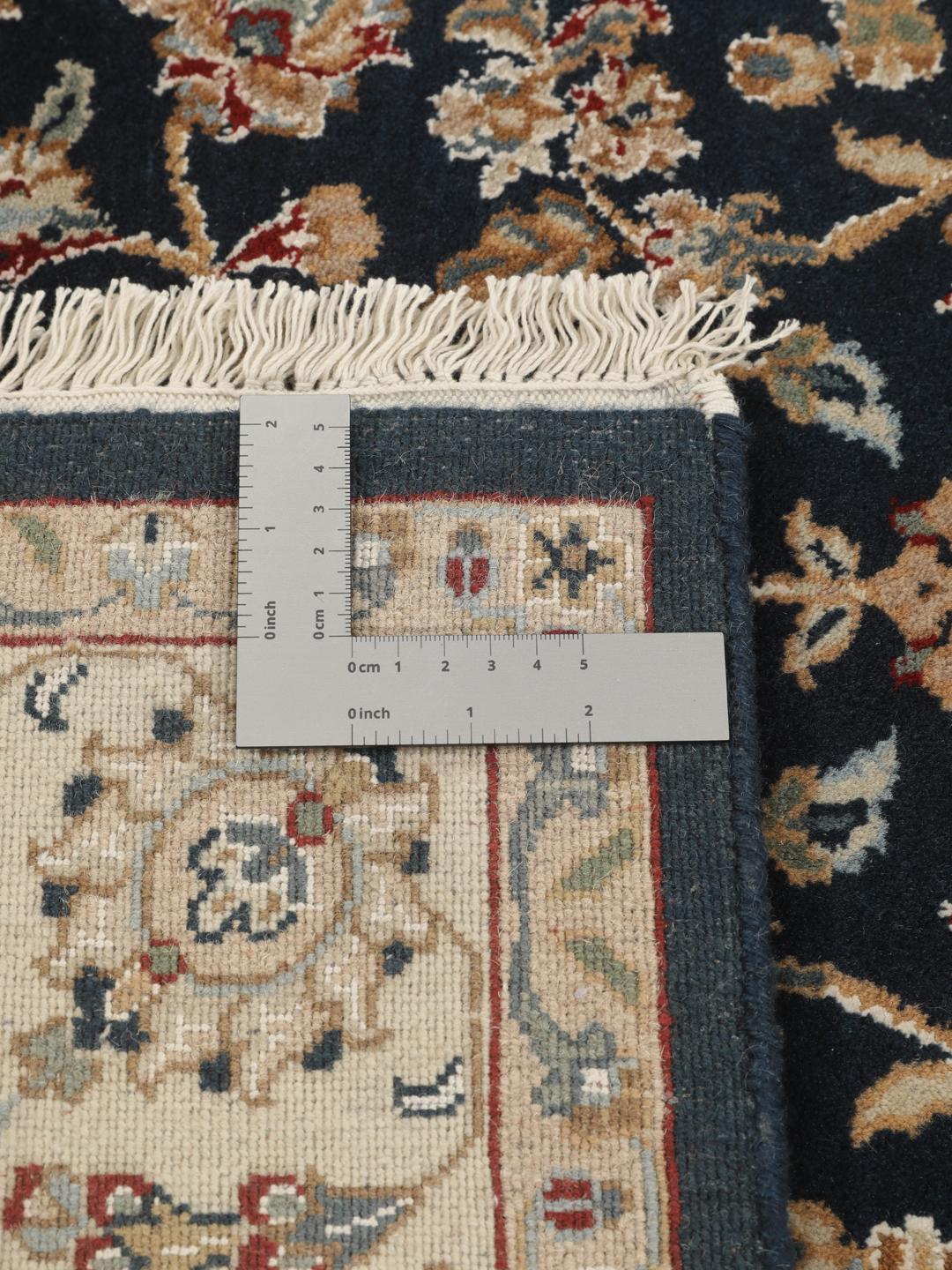
Central to the quality of these rugs is the hand-knotted technique, which allows for the high degree of detail seen in the fine floral motifs. This method is highly regarded for its ability to produce a dense, resilient pile that stands up to daily use while retaining its intricate patterns. The term 'Nain' often signifies a focus on elegance and precision, with designs that are meant to harmonise with sophisticated interiors.
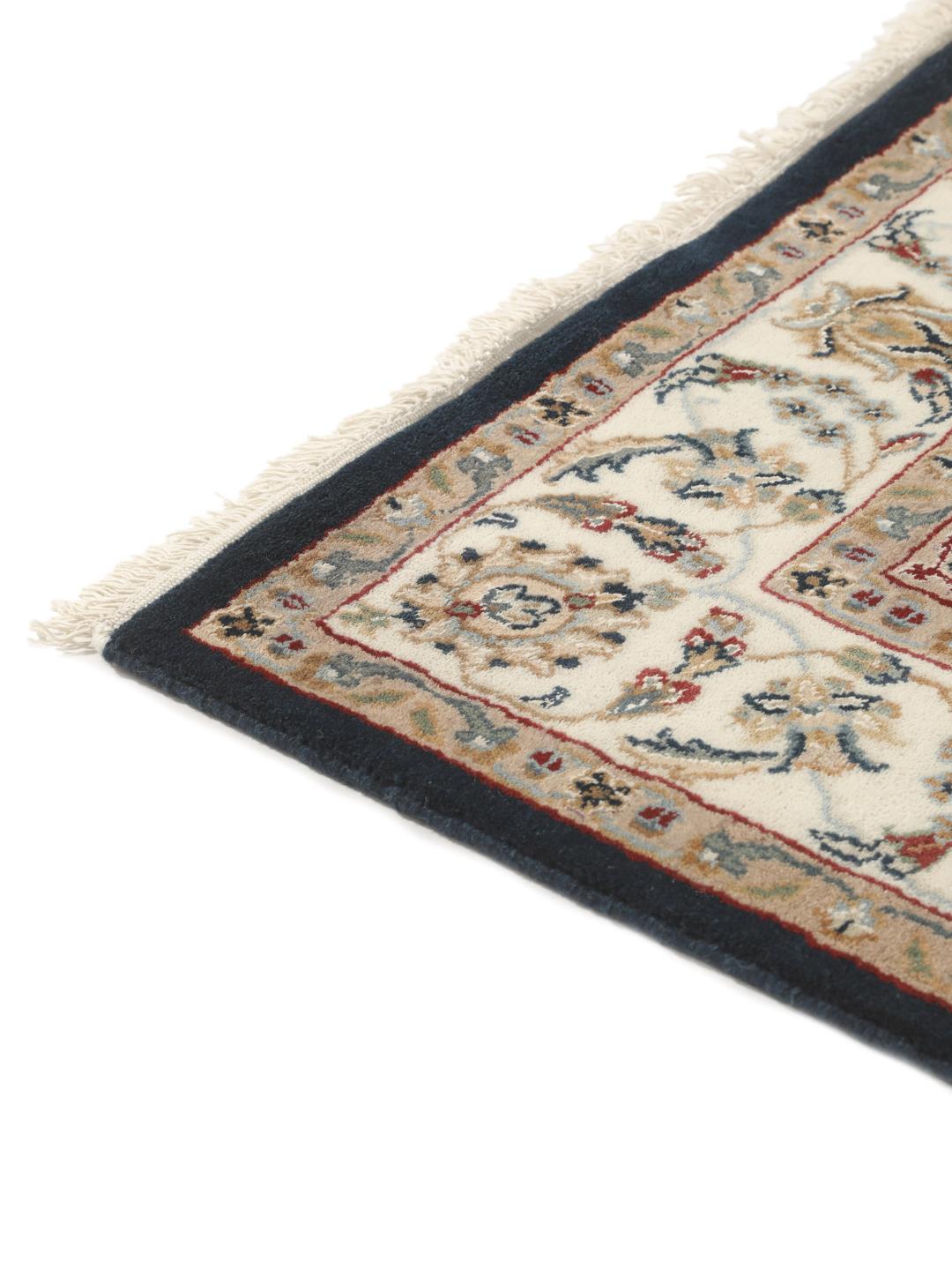
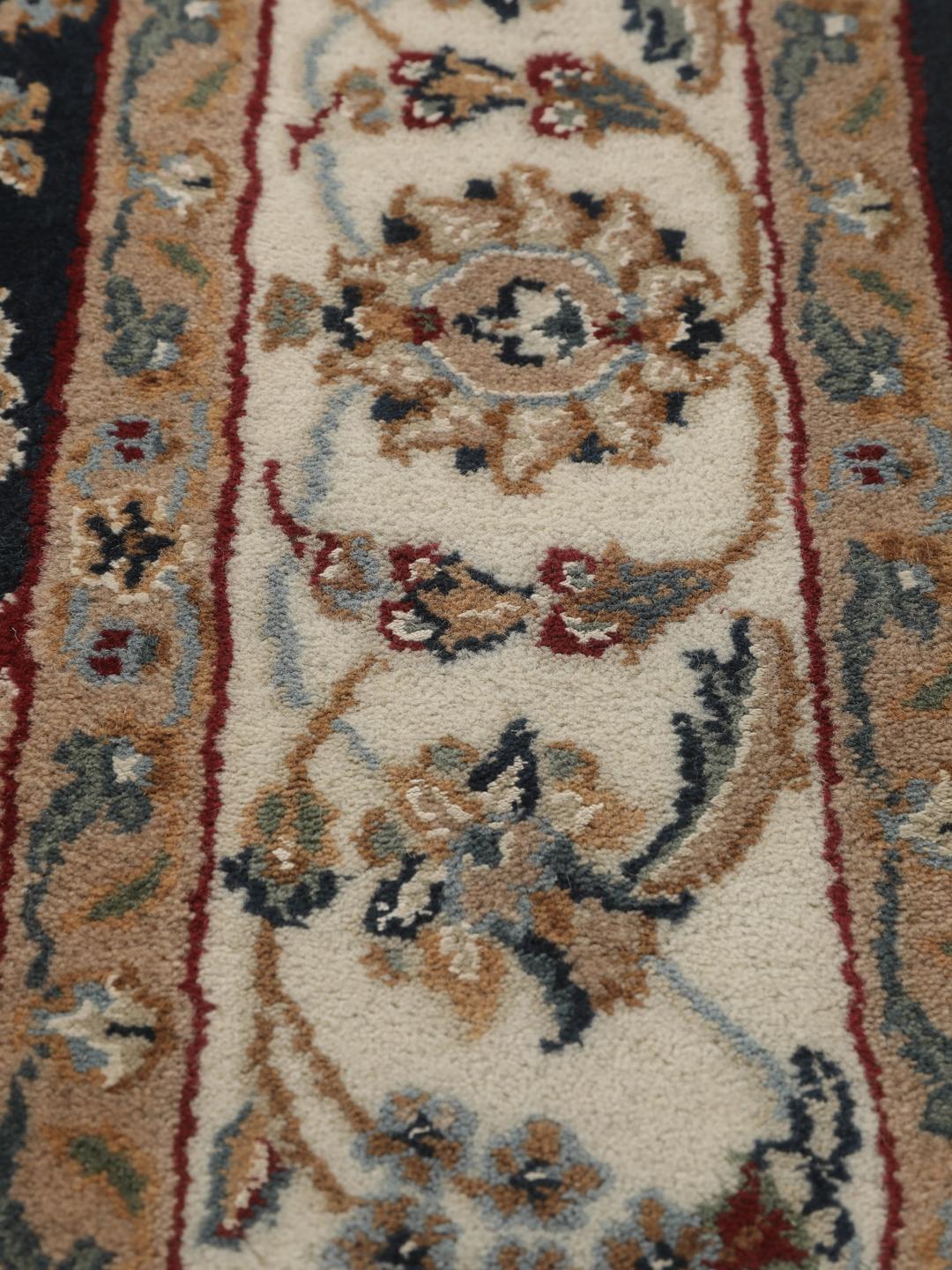
Signature elements of this tradition include a prominent central medallion, often filled with complex palmettes and arabesques, set against a field of scrolling stems. The borders are typically multi-layered, framing the central field and drawing the eye toward the centre. While traditional colour palettes often rely on cool, calming tones, the addition of beige and other neutral highlights provides a versatile depth that makes these rugs highly sought after.
Collecting a rug from this tradition is an investment in cultural heritage and human skill. Each piece serves as a link to a storied past, where weaving was a respected craft passed down through generations. By bringing such a rug into your home, you are not just decorating a floor; you are preserving a tradition of excellence and enjoying a piece of functional art that adds enduring value to your living environment.