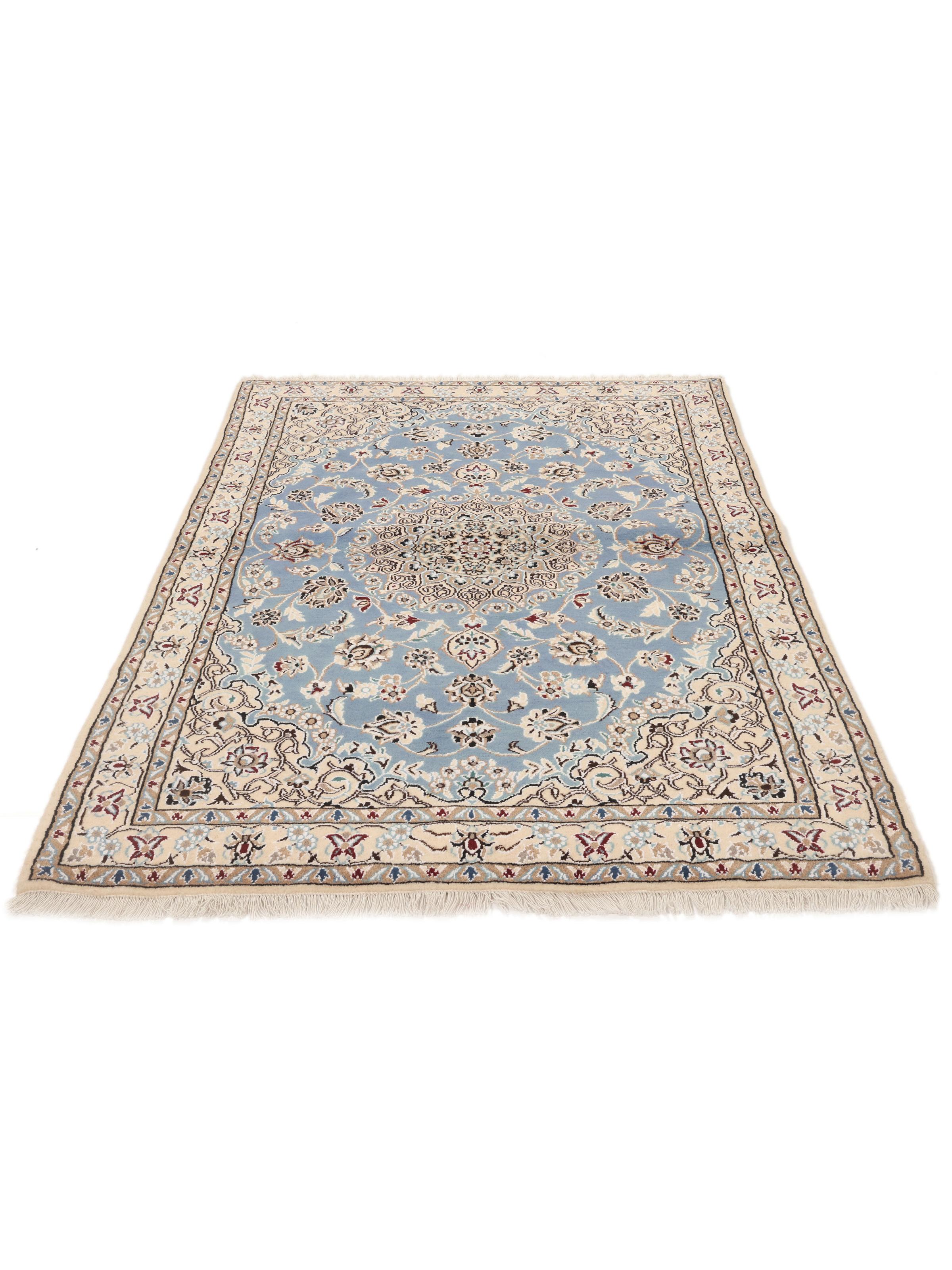
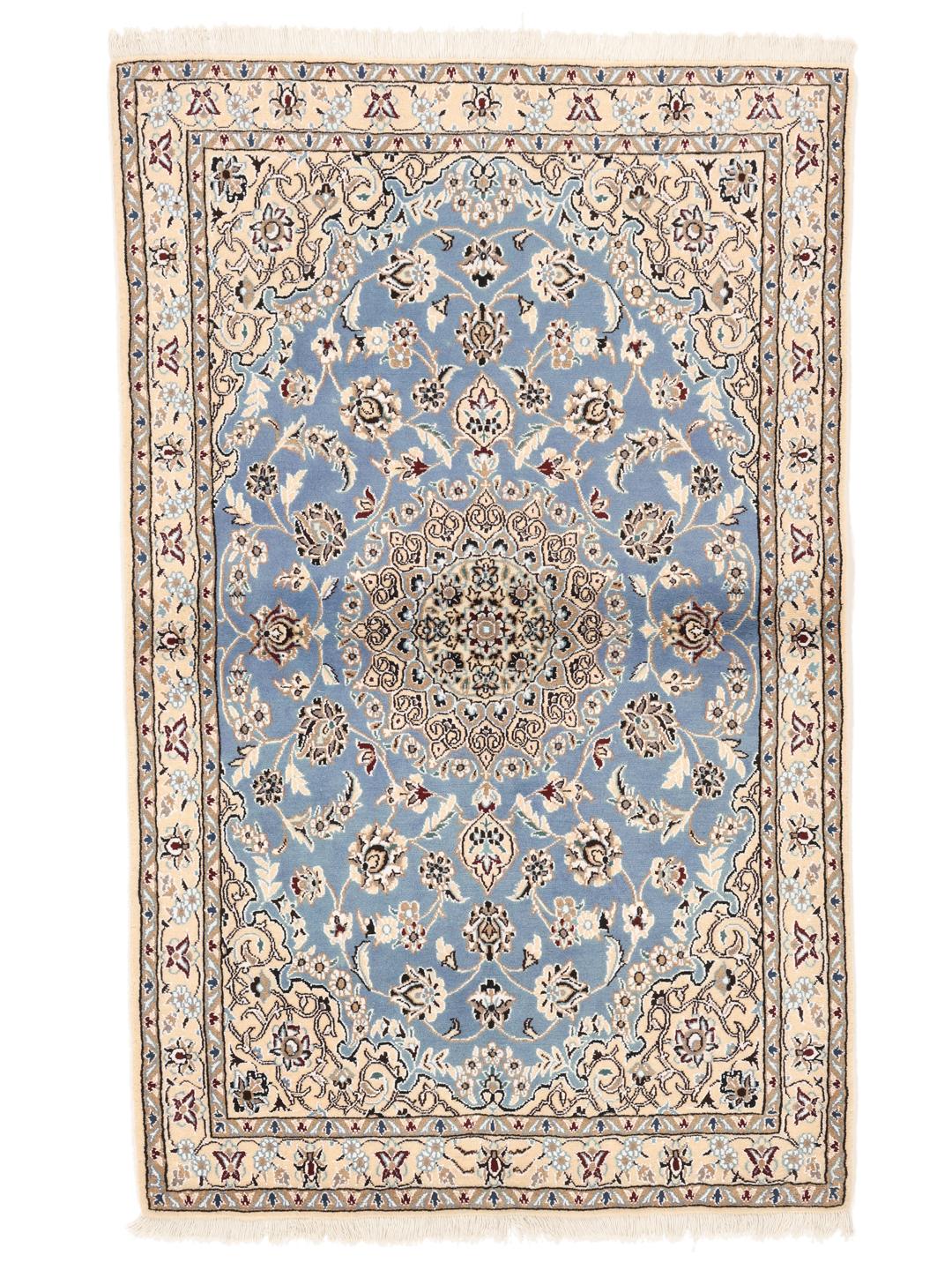
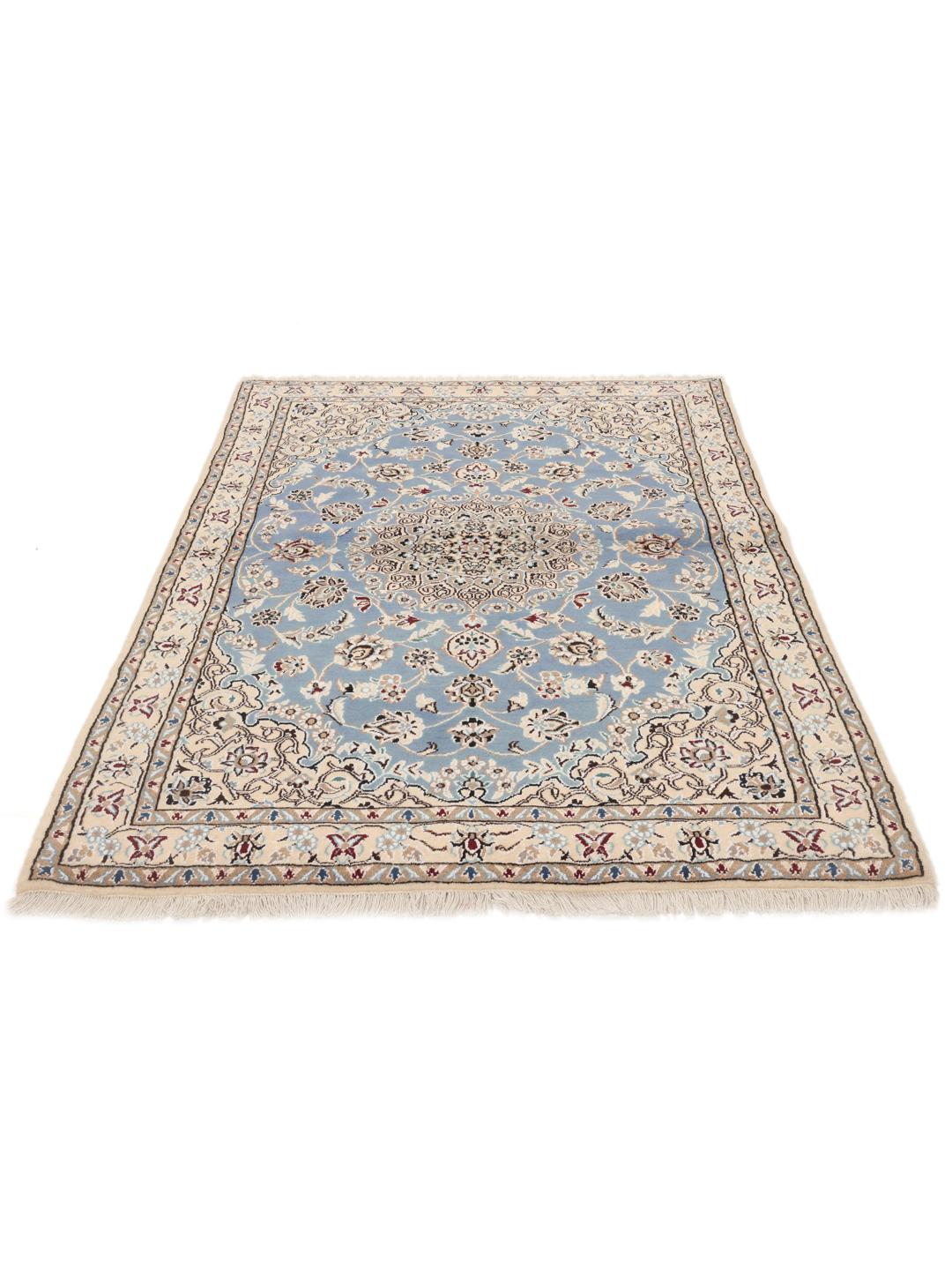
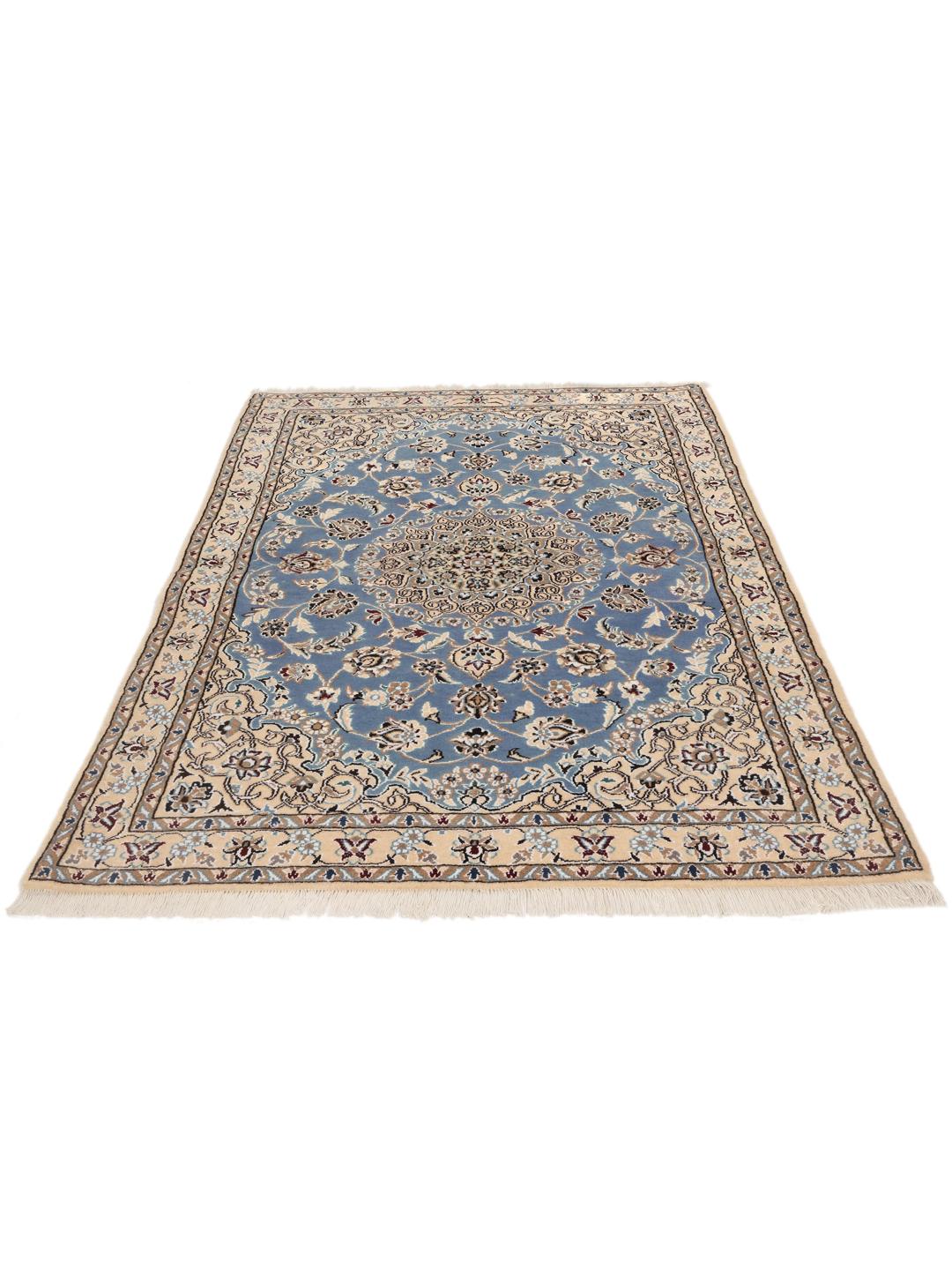
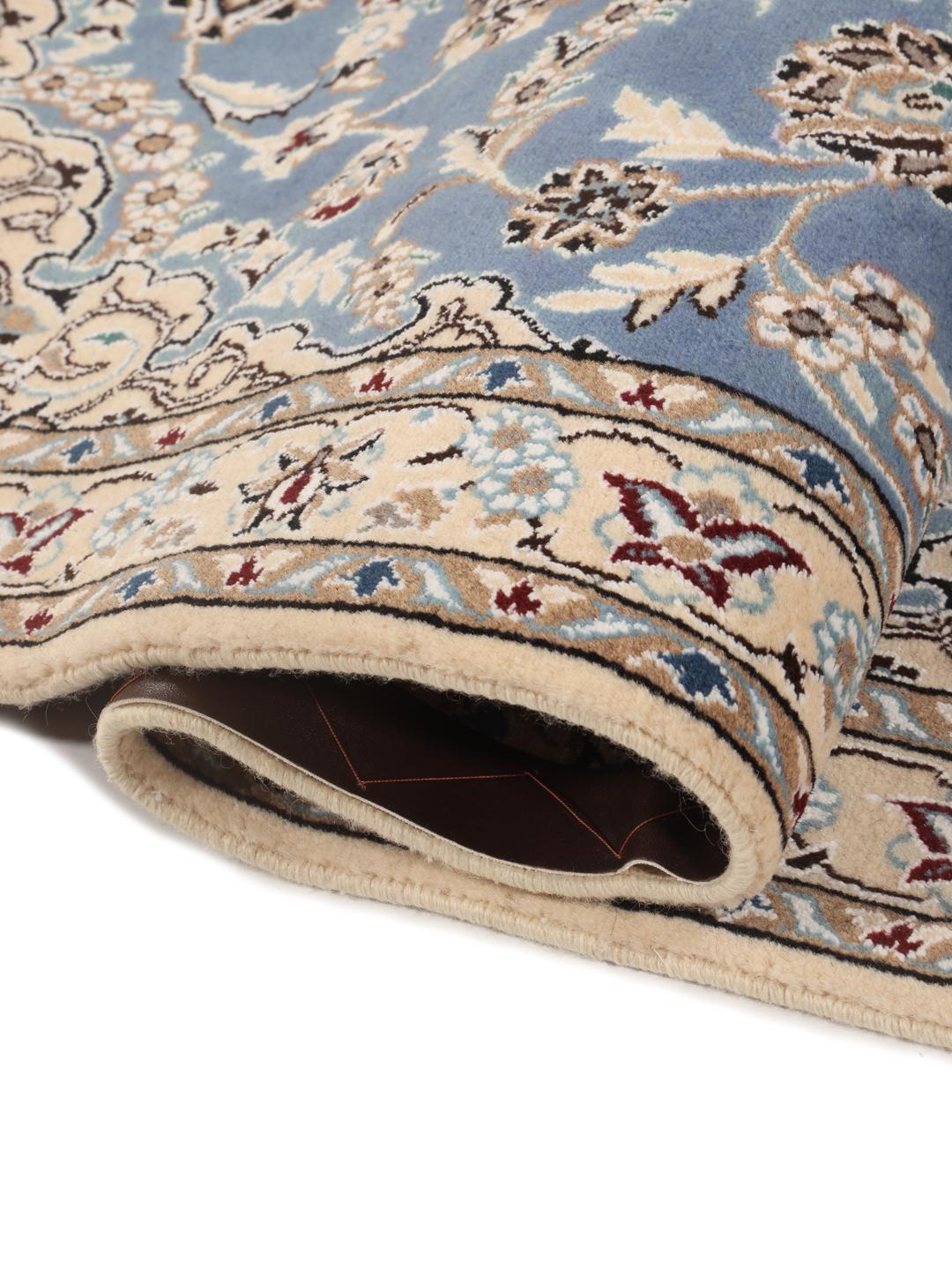
Nain rugs originate from the city of Nain in the Middle East, a town that transitioned from a tradition of fine garment weaving to becoming world-renowned for its high-quality floor coverings. Historically, the area was known for its excellence in textile production, and this heritage of precision was naturally applied to rug making, resulting in some of the most sought-after pieces in the world.
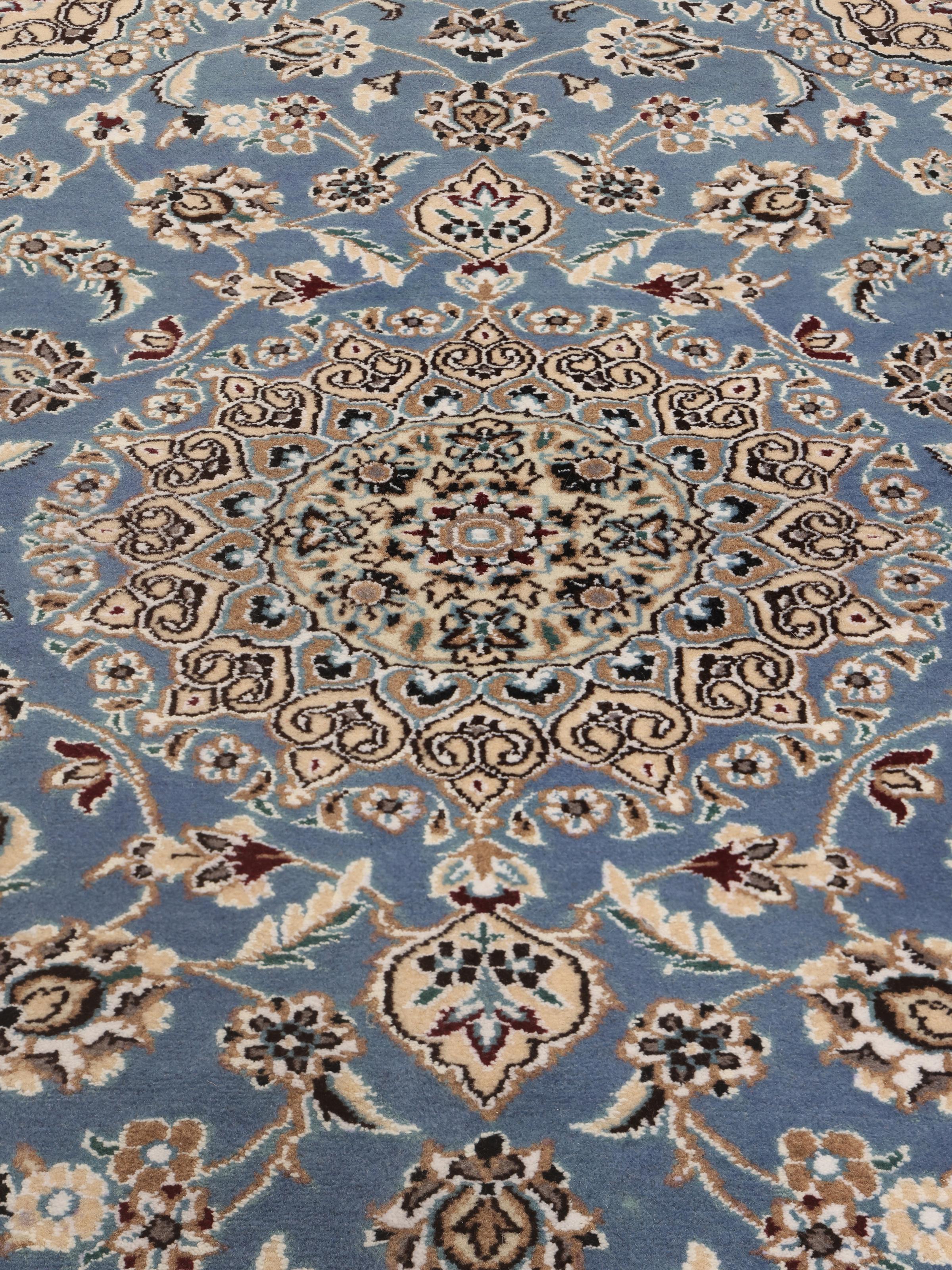
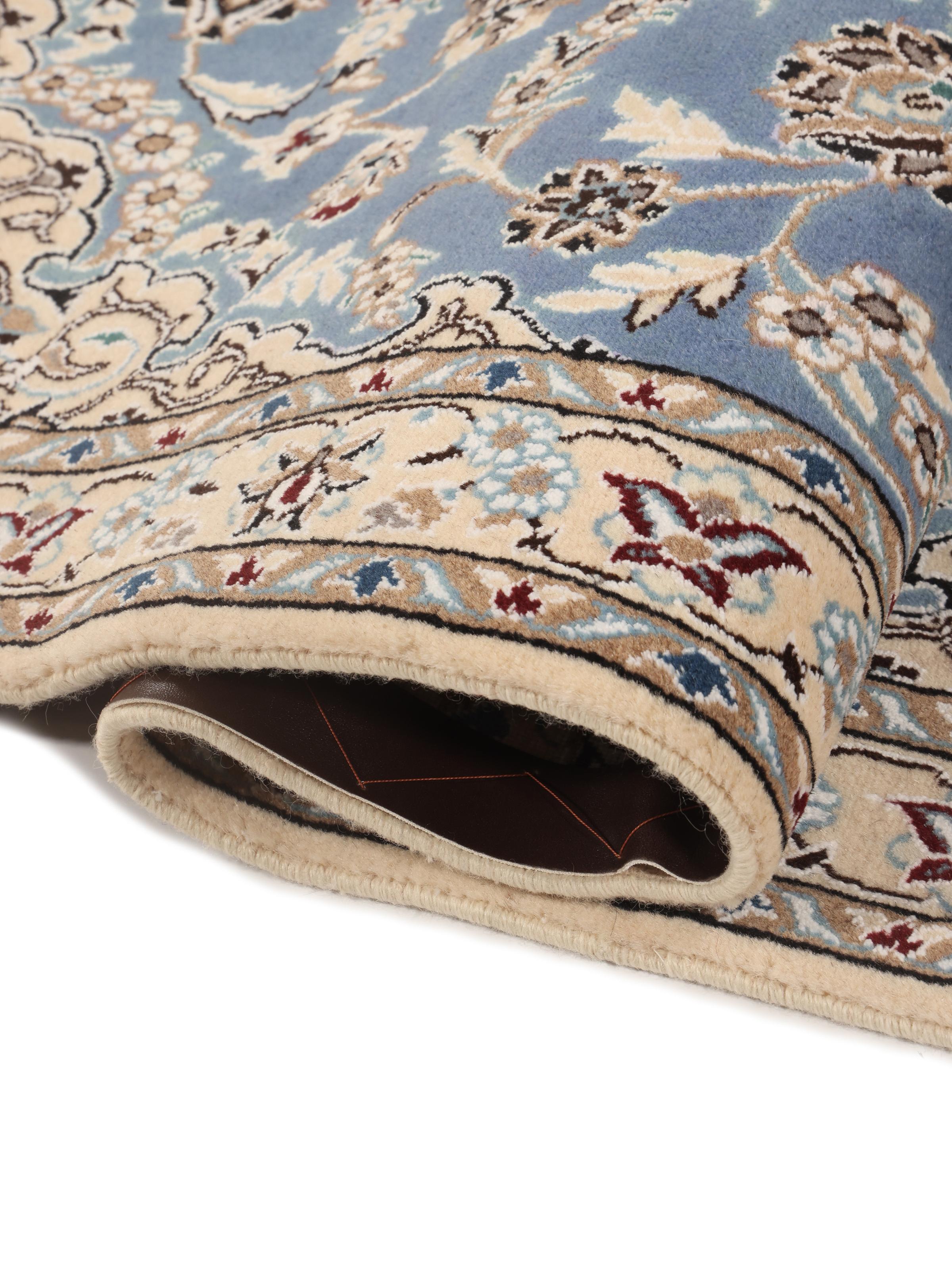
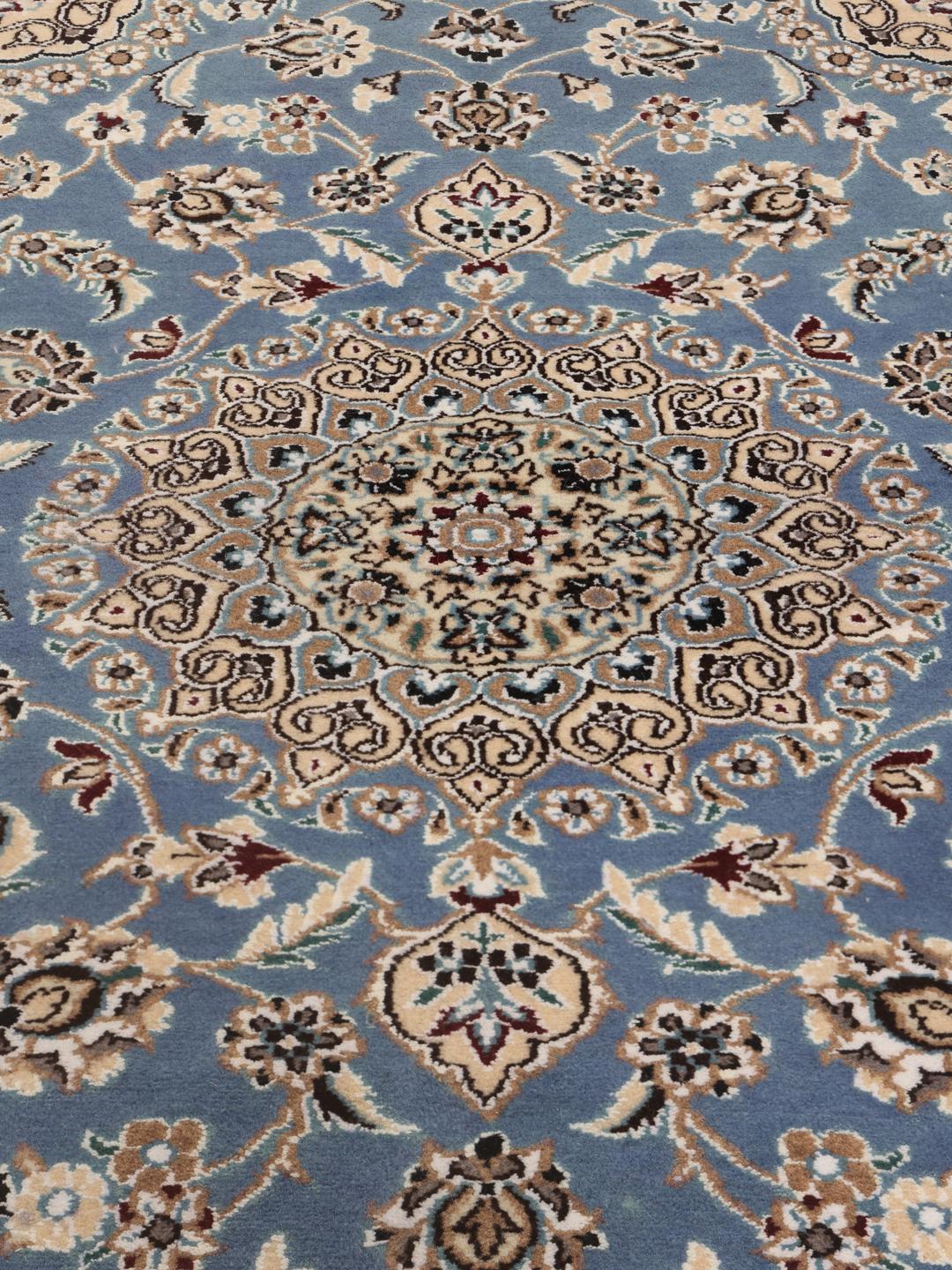
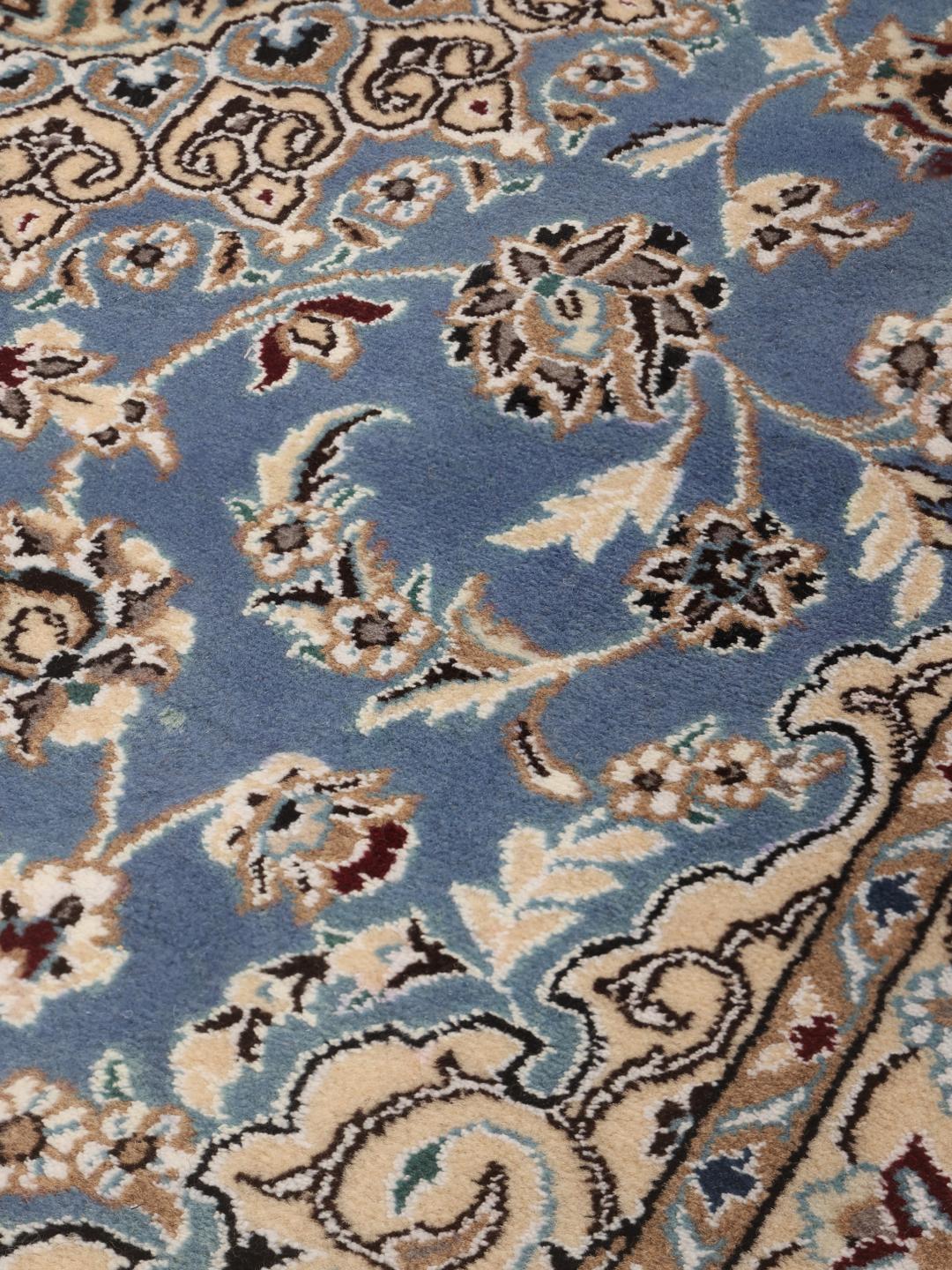
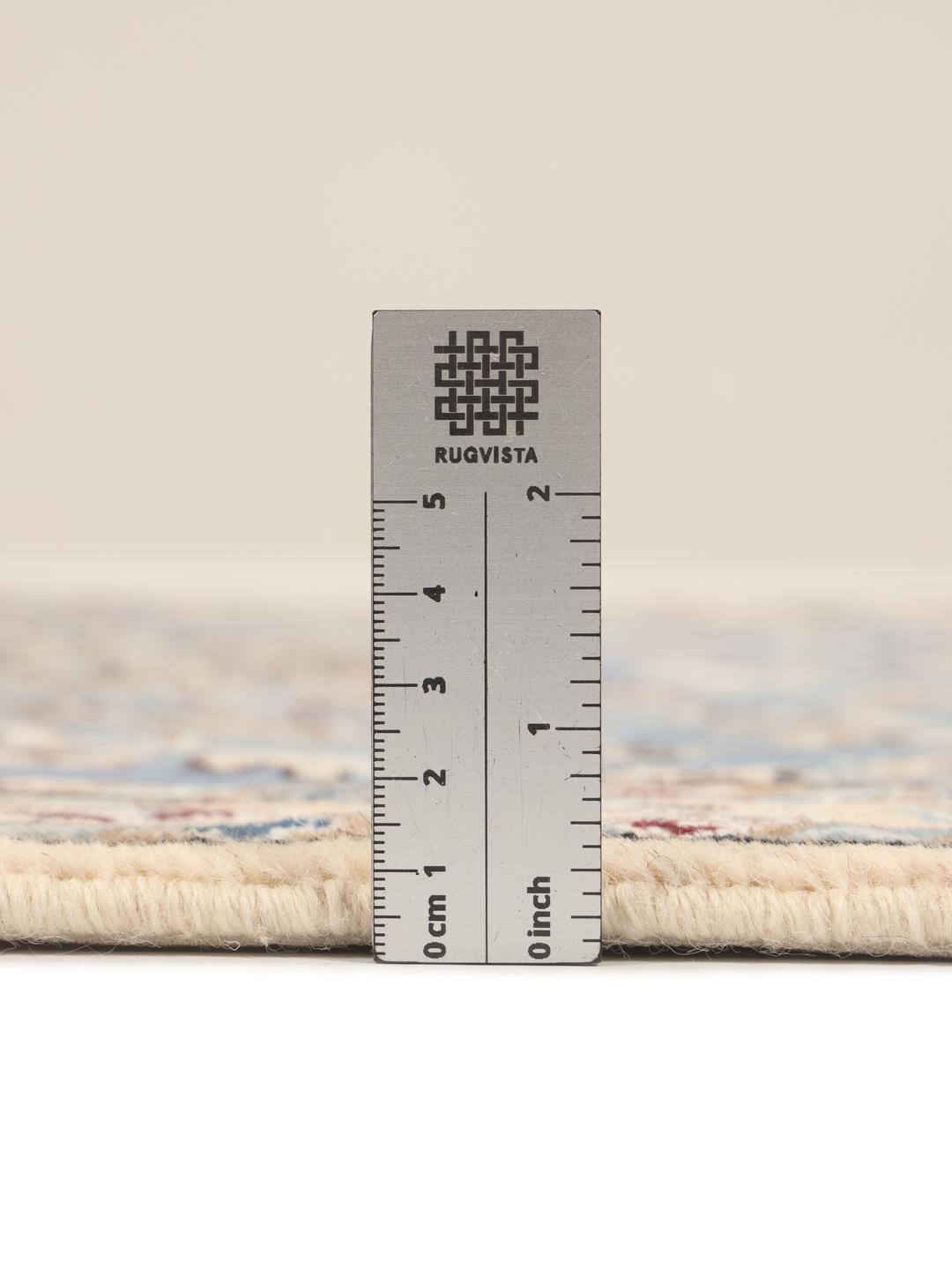
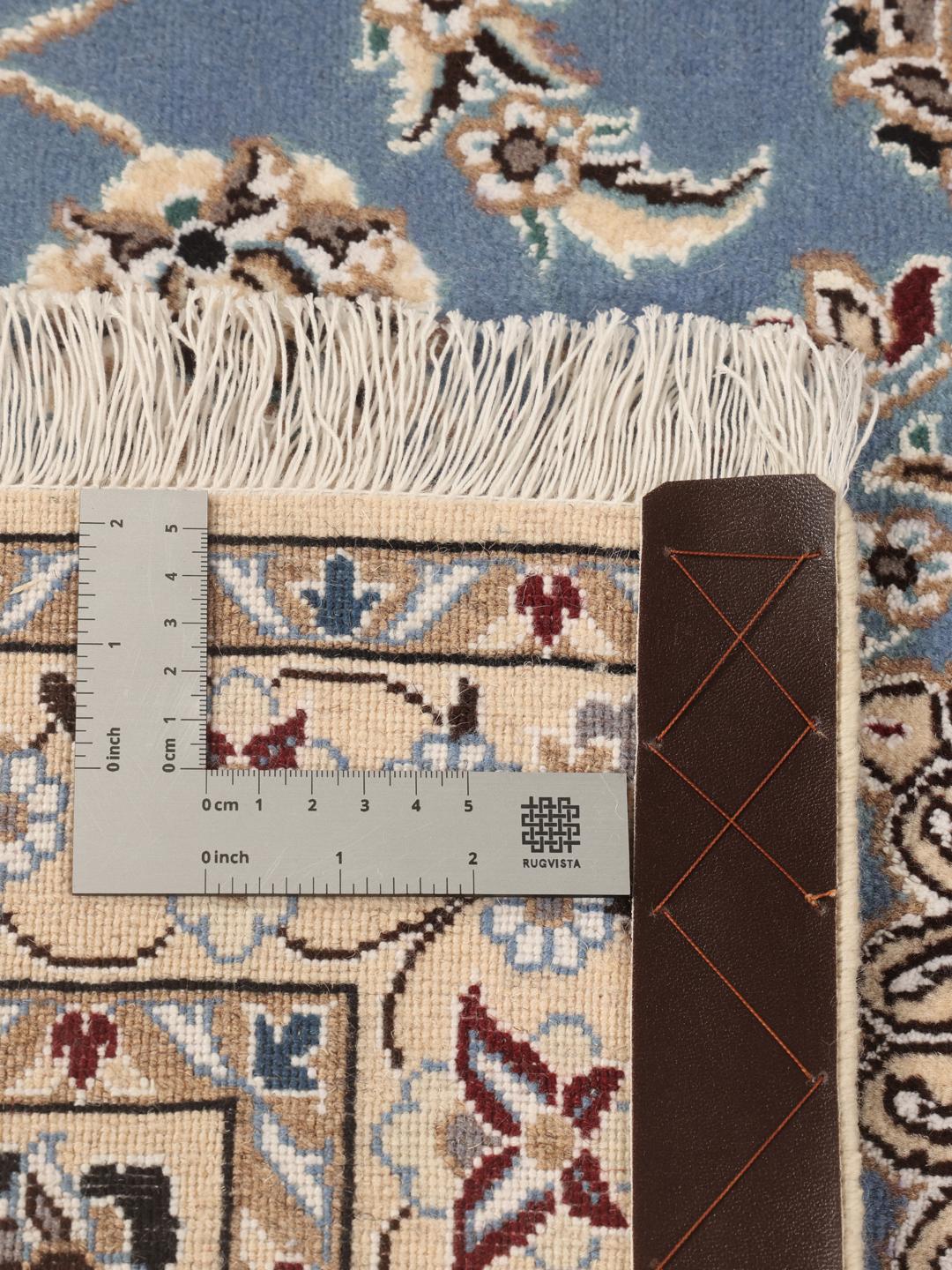
The term 9La is a technical classification that refers to the number of threads used in the fringe, or the 'La' count. A lower number, such as 9, indicates a finer construction with more threads twisted together, which allows for a much higher knot density. This technical specification is the reason why these rugs are celebrated for their incredible detail and smooth, almost silk-like texture.
Visually, these rugs are defined by their sophisticated colour palettes, often featuring soft blues, beiges, and creams. The designs typically centre around a delicate medallion surrounded by intricate floral scrolls, vines, and palmettes. The harmony between the field and the border is carefully managed, creating a sense of balance and elegance that is instantly recognisable to those familiar with this regional craft.
Collecting a Nain rug is an investment in cultural tradition and human skill. Because of the extreme precision required to create them, they are highly valued by collectors who appreciate the dedication to detail. Owning one is a way to celebrate a craft that has been passed down through generations, ensuring that this beautiful, enduring art form continues to be appreciated in modern homes.