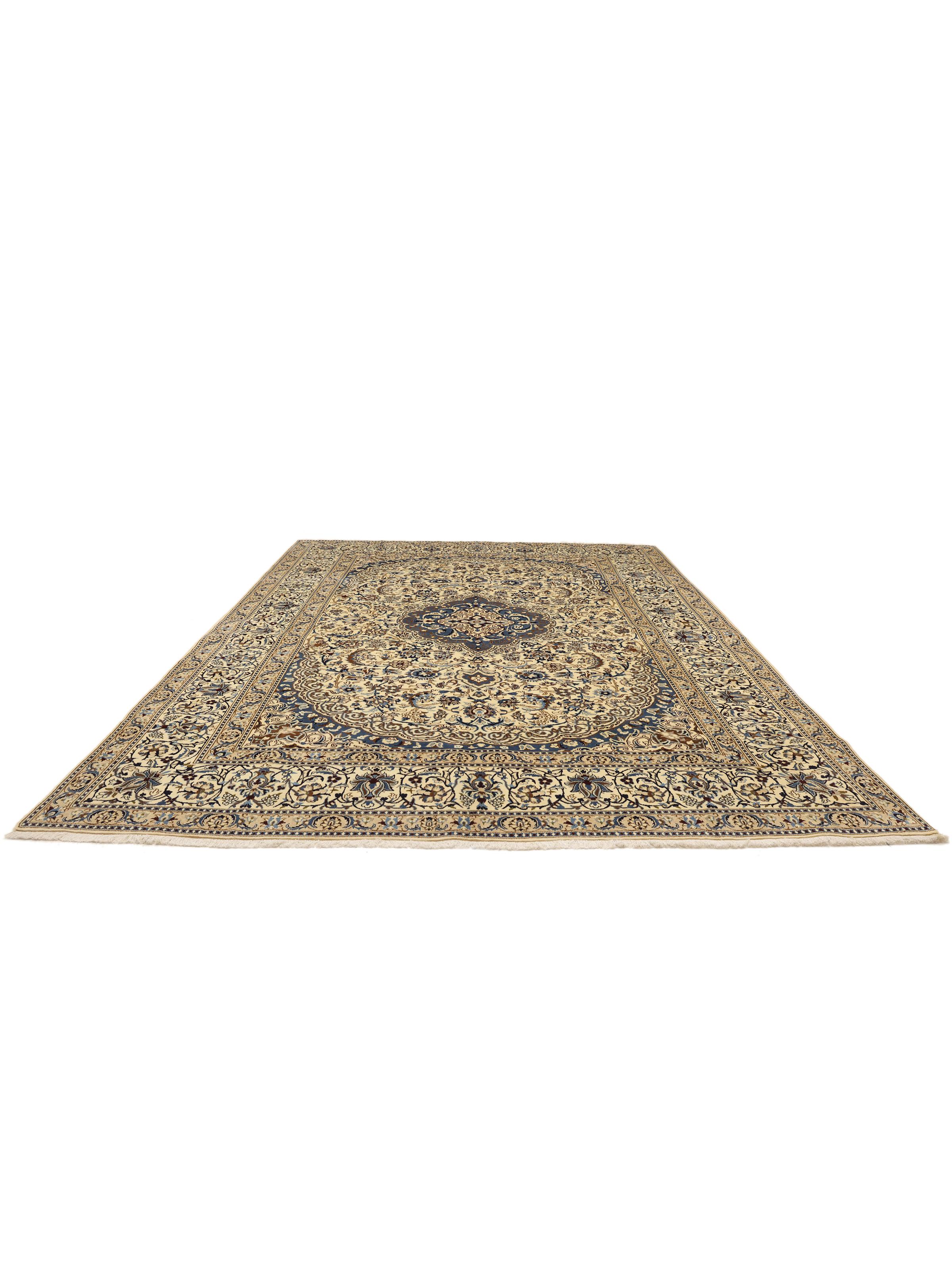
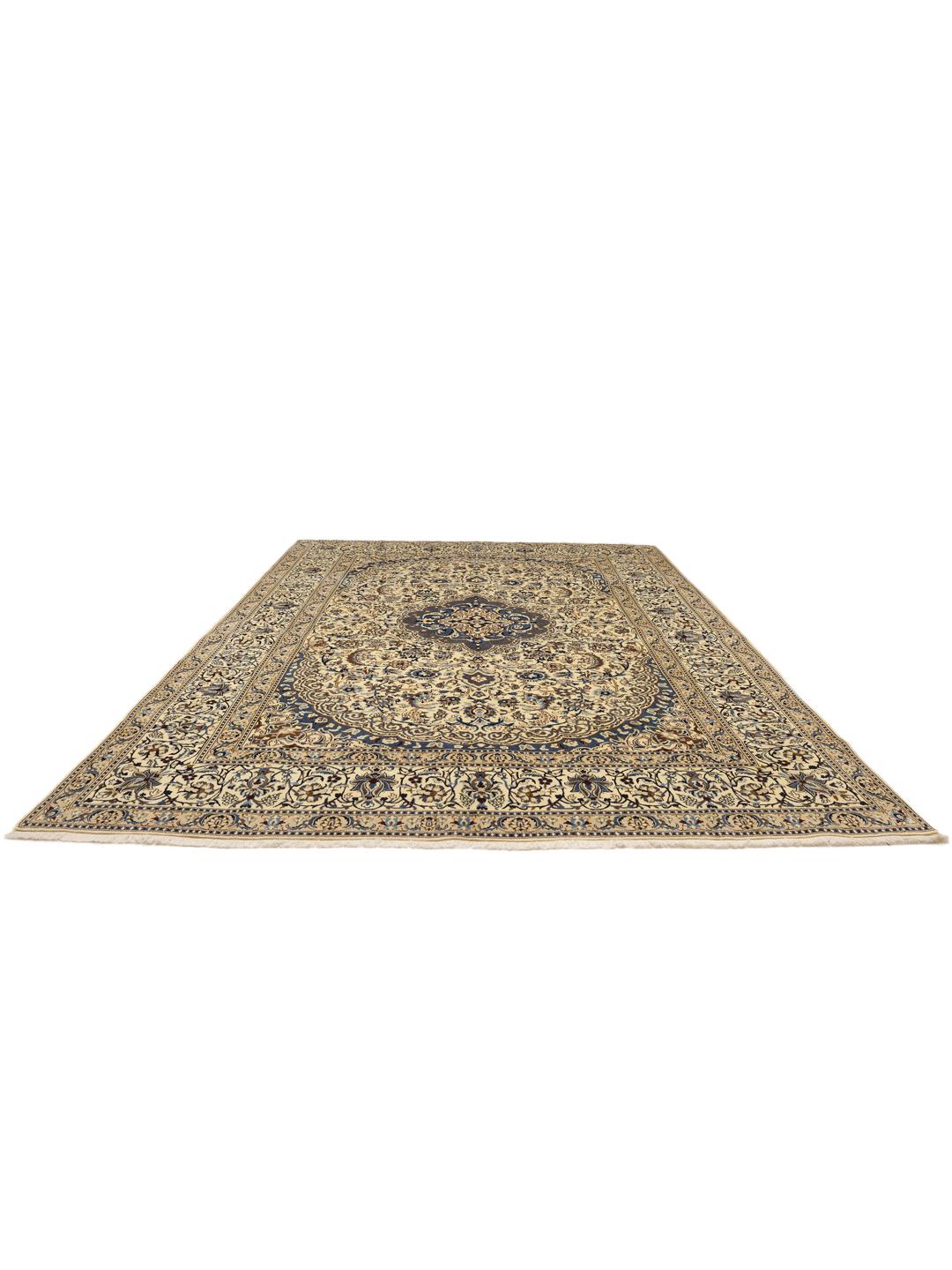
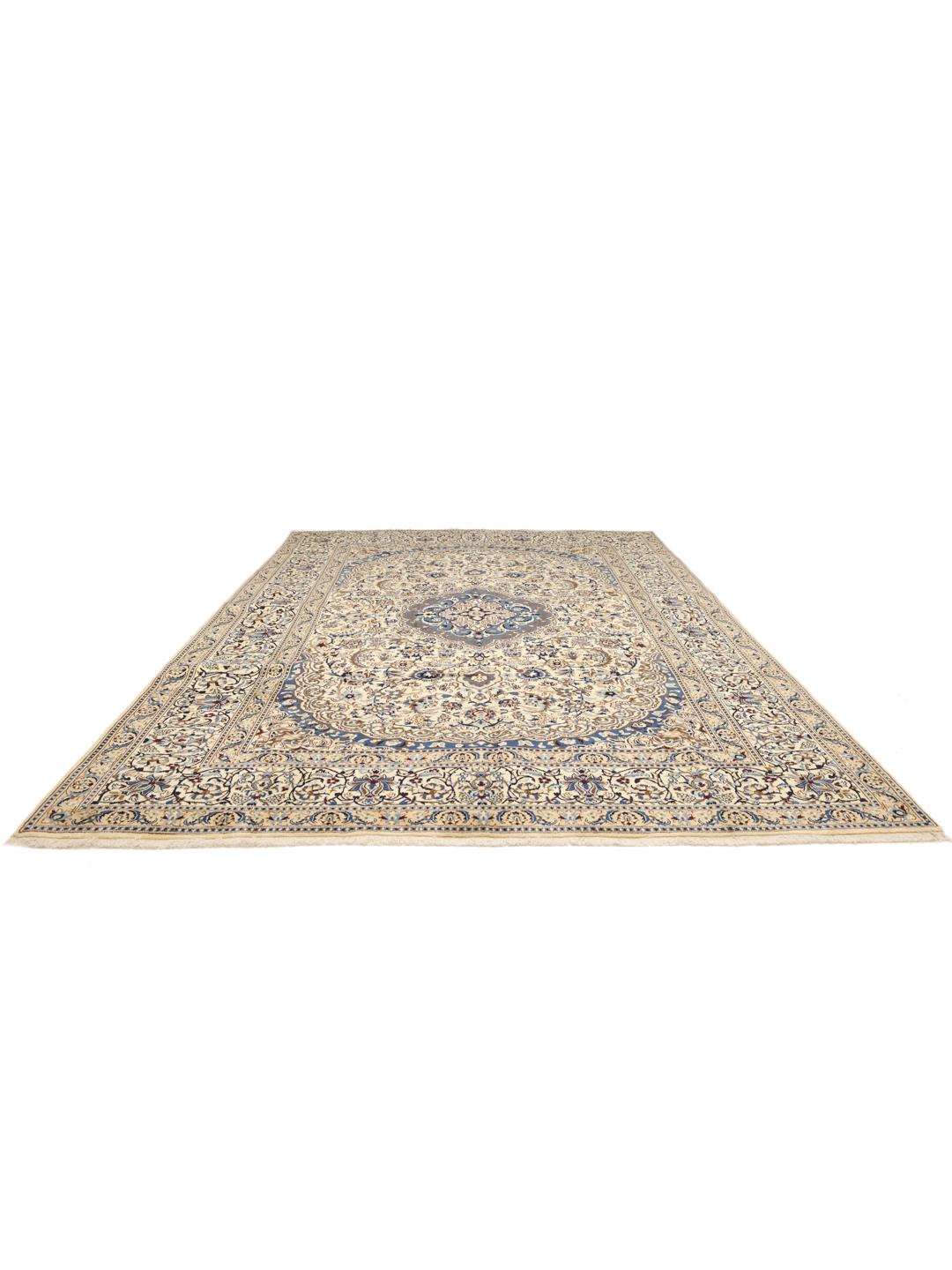
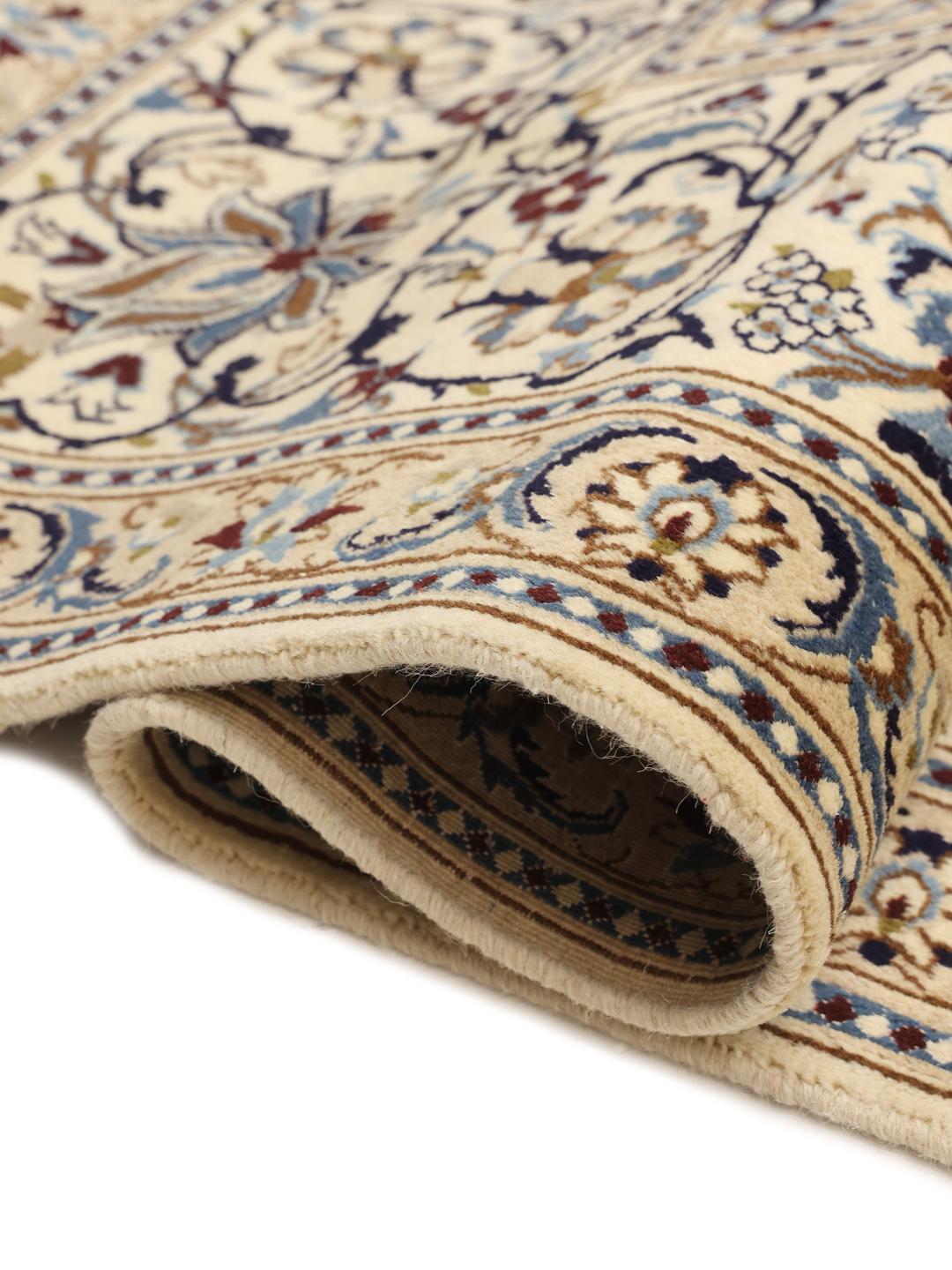
Nain rugs originate from the historic city of Nain, located in the central part of the Middle East. Originally famous for producing high-quality hand-woven garments and cloaks, the region transitioned into rug making in the early 20th century. By shifting their expertise from textiles to the intricate world of floor coverings, the weavers of Nain quickly earned a reputation for producing some of the most sophisticated and refined rugs in the world.
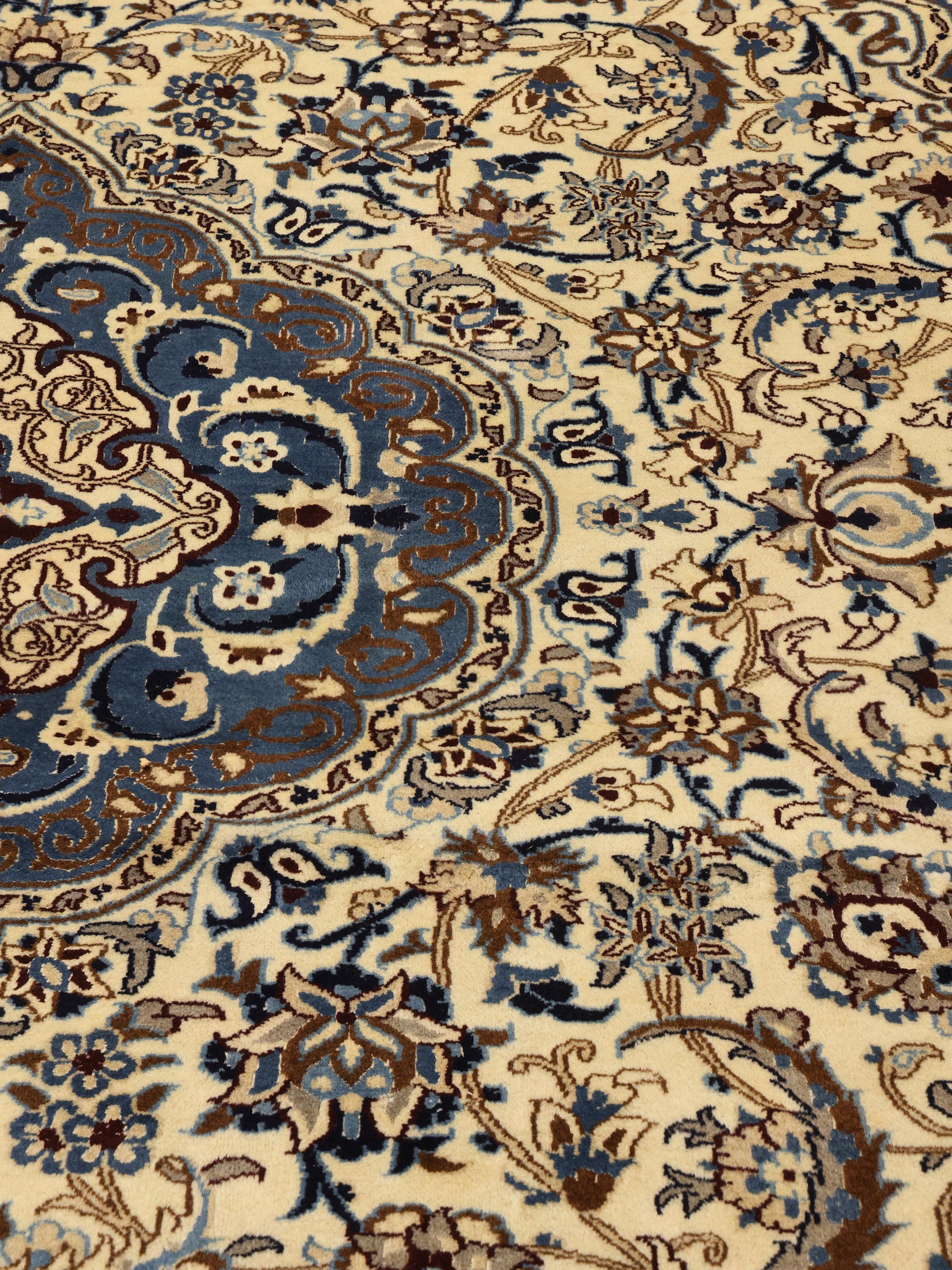
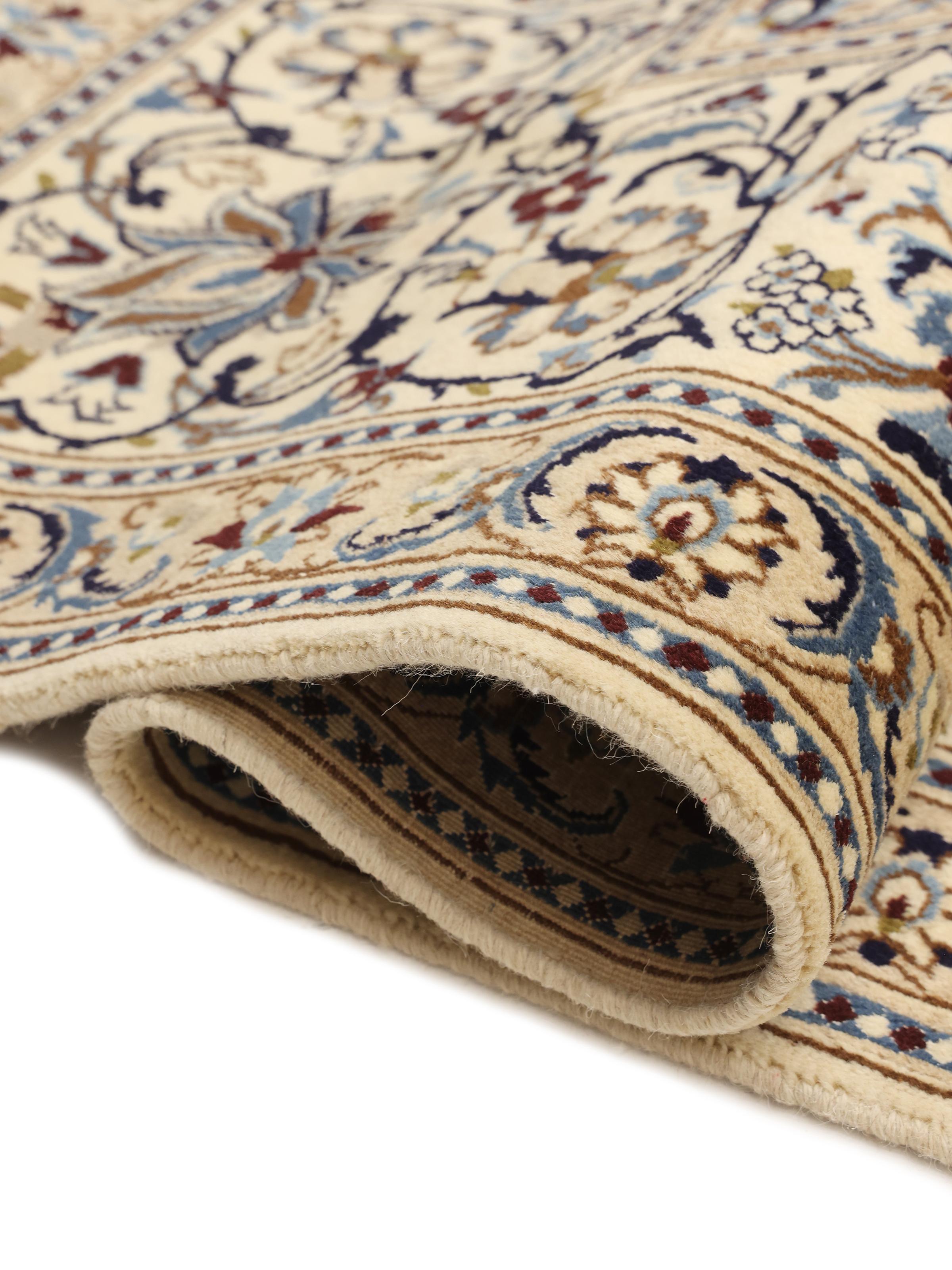
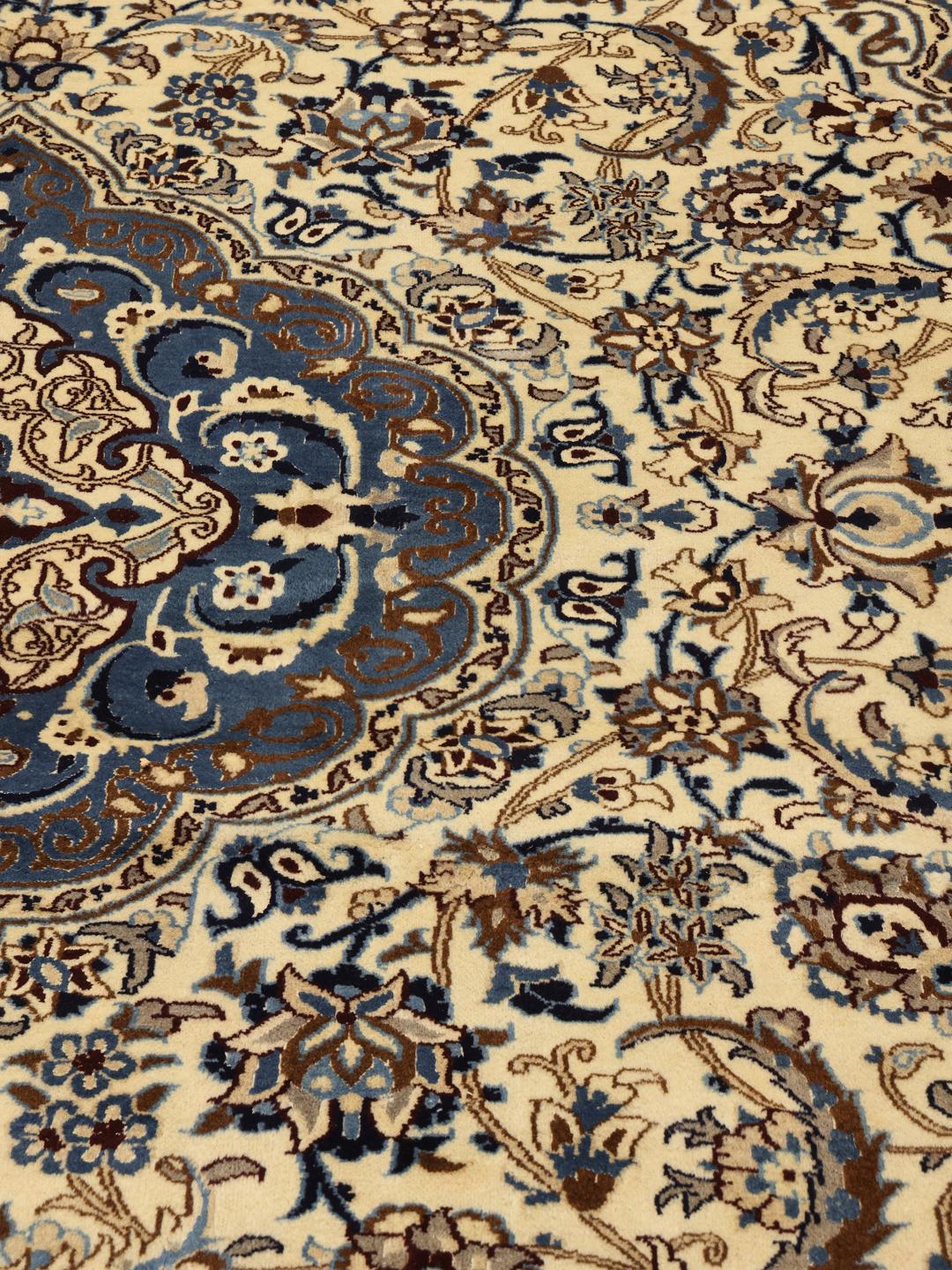
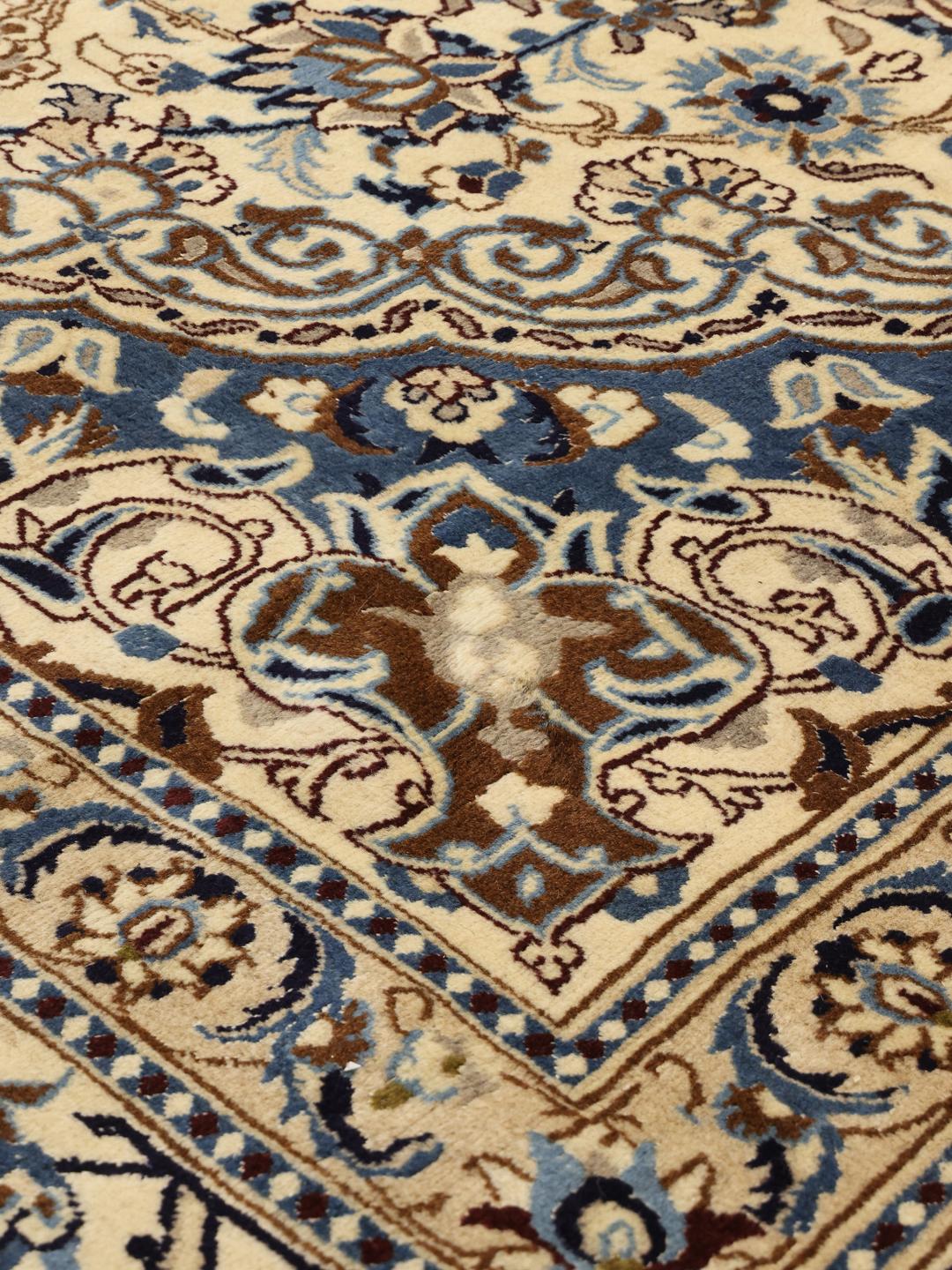
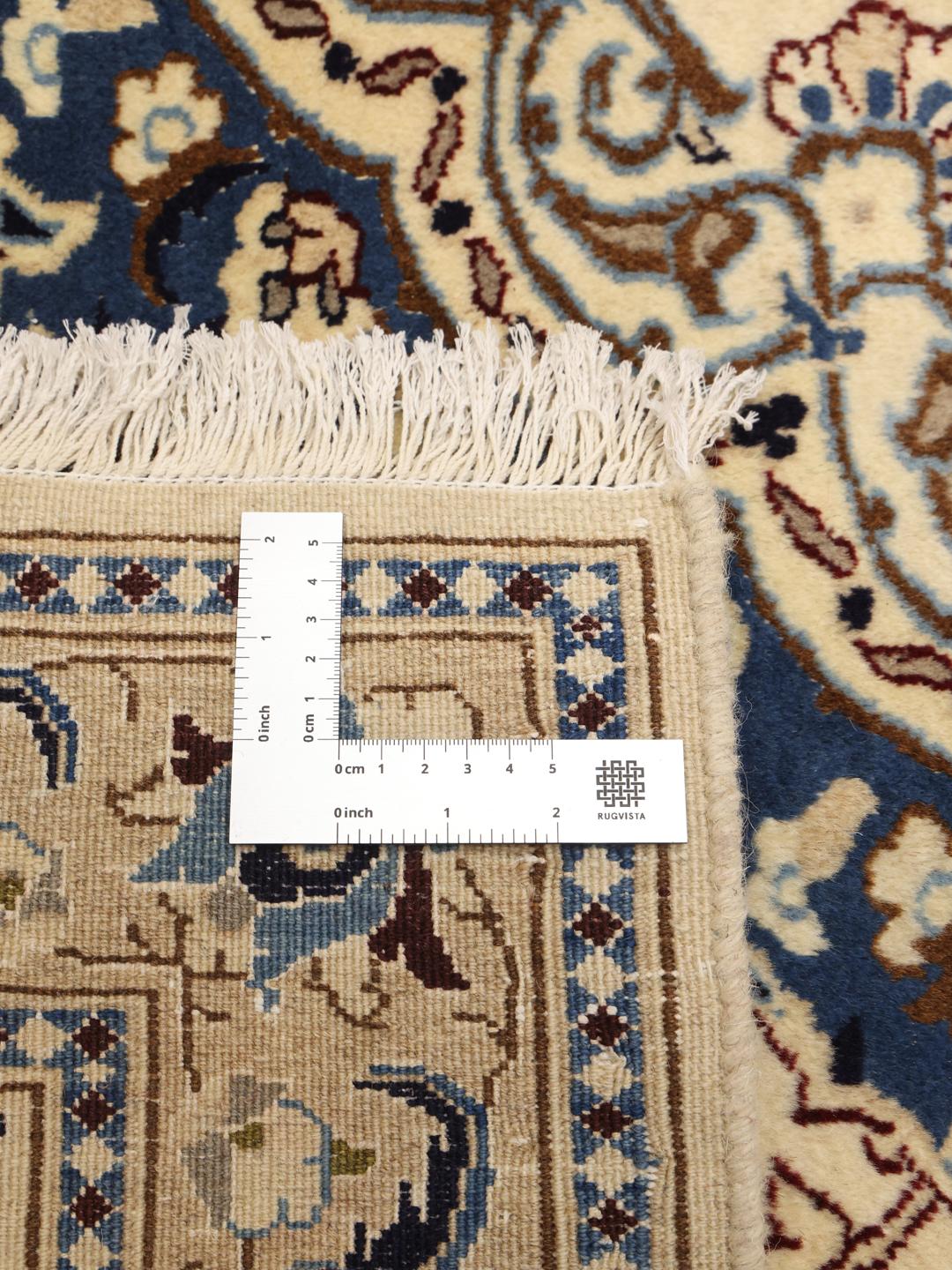
The term '9La' refers to the thickness of the thread used in the knotting process. In the Nain tradition, the number of 'la' indicates the number of strands of yarn twisted together to form the pile. A 9La rug is celebrated for its balance between durability and fineness, providing a dense, soft pile that is highly sought after by collectors. This technical precision is what allows for the detailed, almost painterly quality of the patterns.
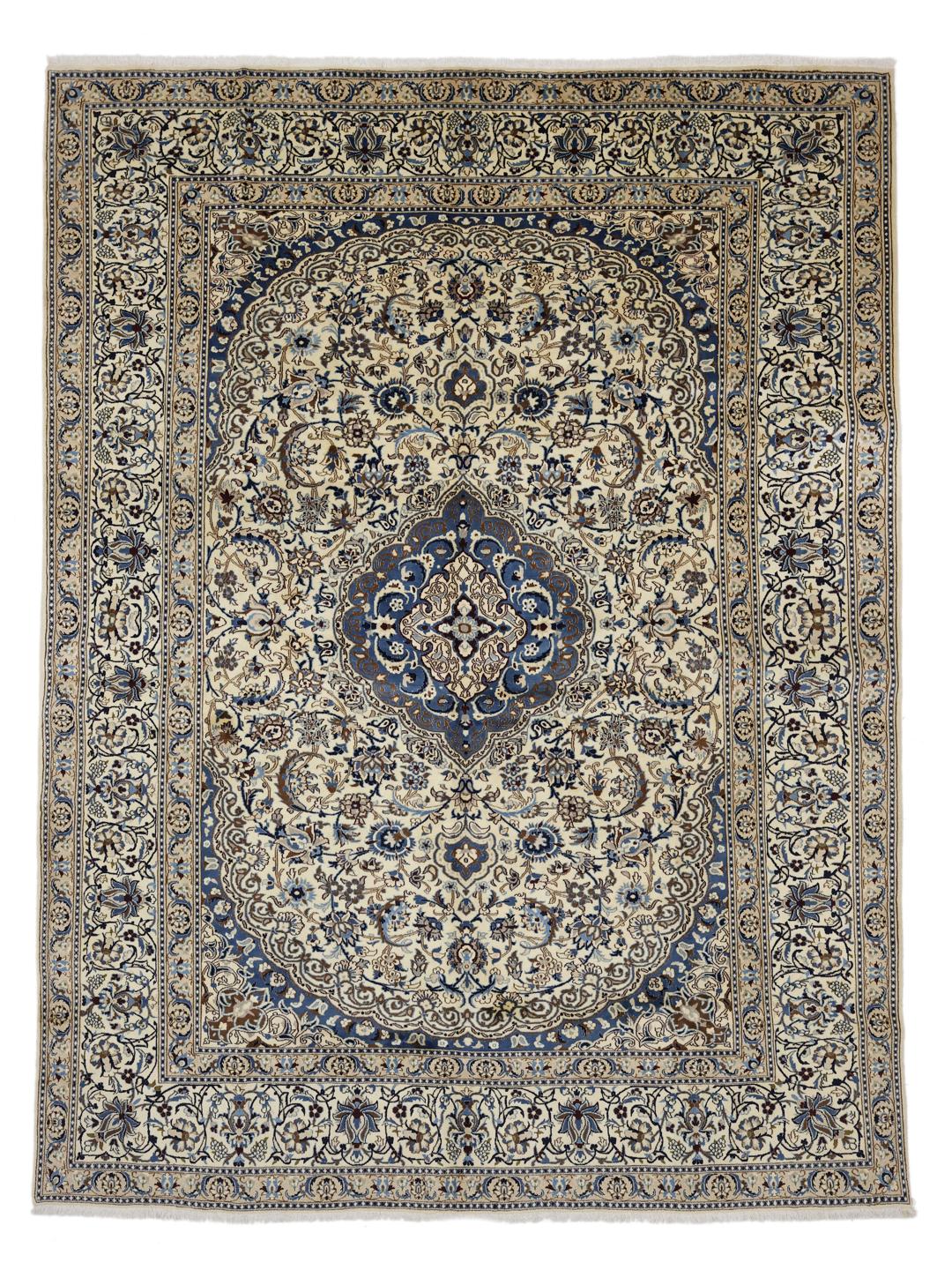
Signature design elements of these rugs often include a central medallion surrounded by dense floral and vine motifs, typically arranged in a balanced, symmetrical layout. The colour palette is famously restrained, often featuring shades of cream, white, and various tones of blue, which gives these rugs a calm and airy appearance. This traditional aesthetic is designed to complement rather than overwhelm an interior, making it a staple of elegant home decor.
Owning a Nain rug is considered a mark of appreciation for the high level of skill involved in Middle Eastern craft traditions. These pieces are highly valued not only for their beauty but for the cultural heritage they represent. Because they are crafted with such high standards, they are often passed down through generations, retaining their value and aesthetic appeal as they become a cherished part of a family's history.