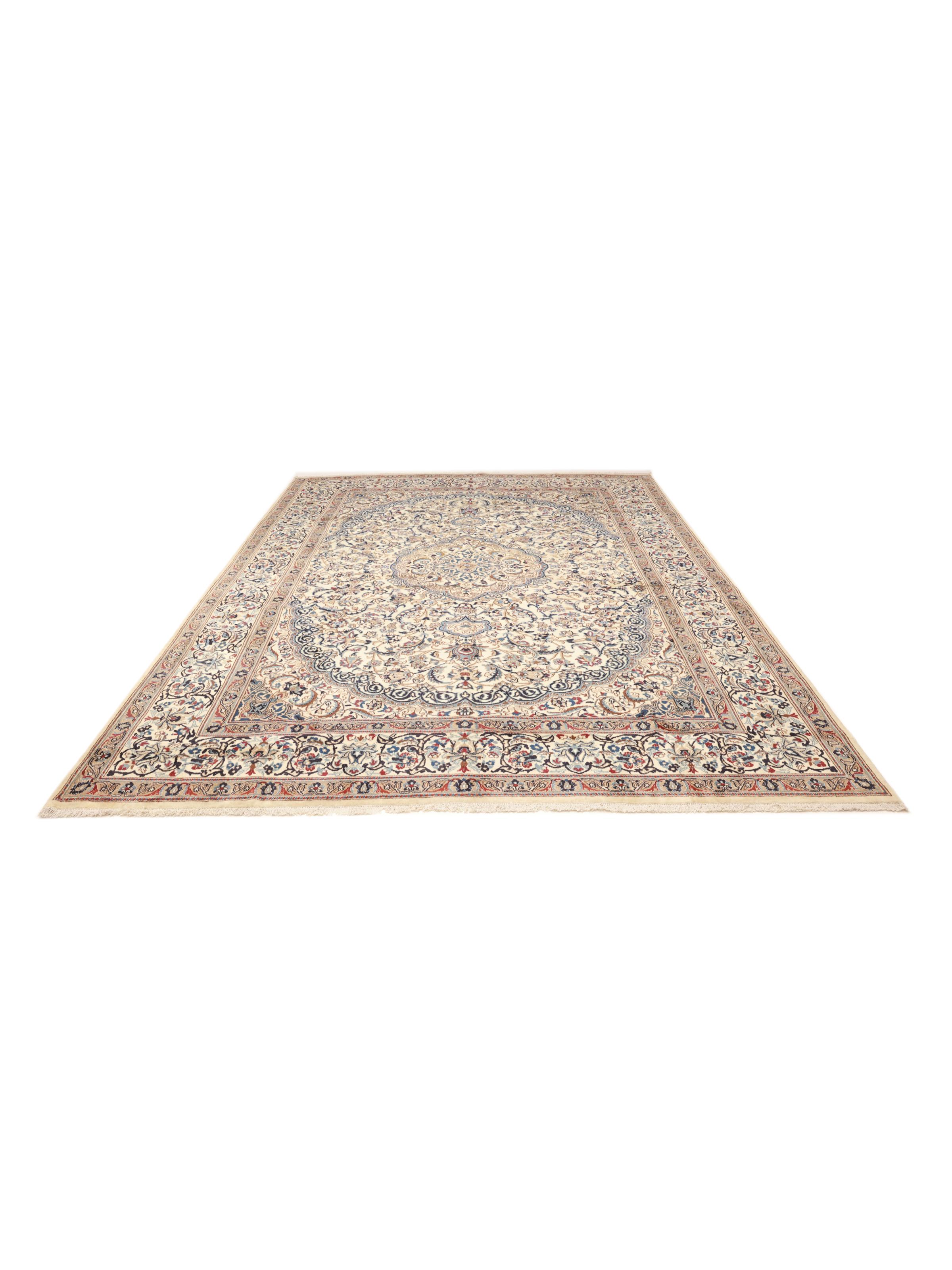
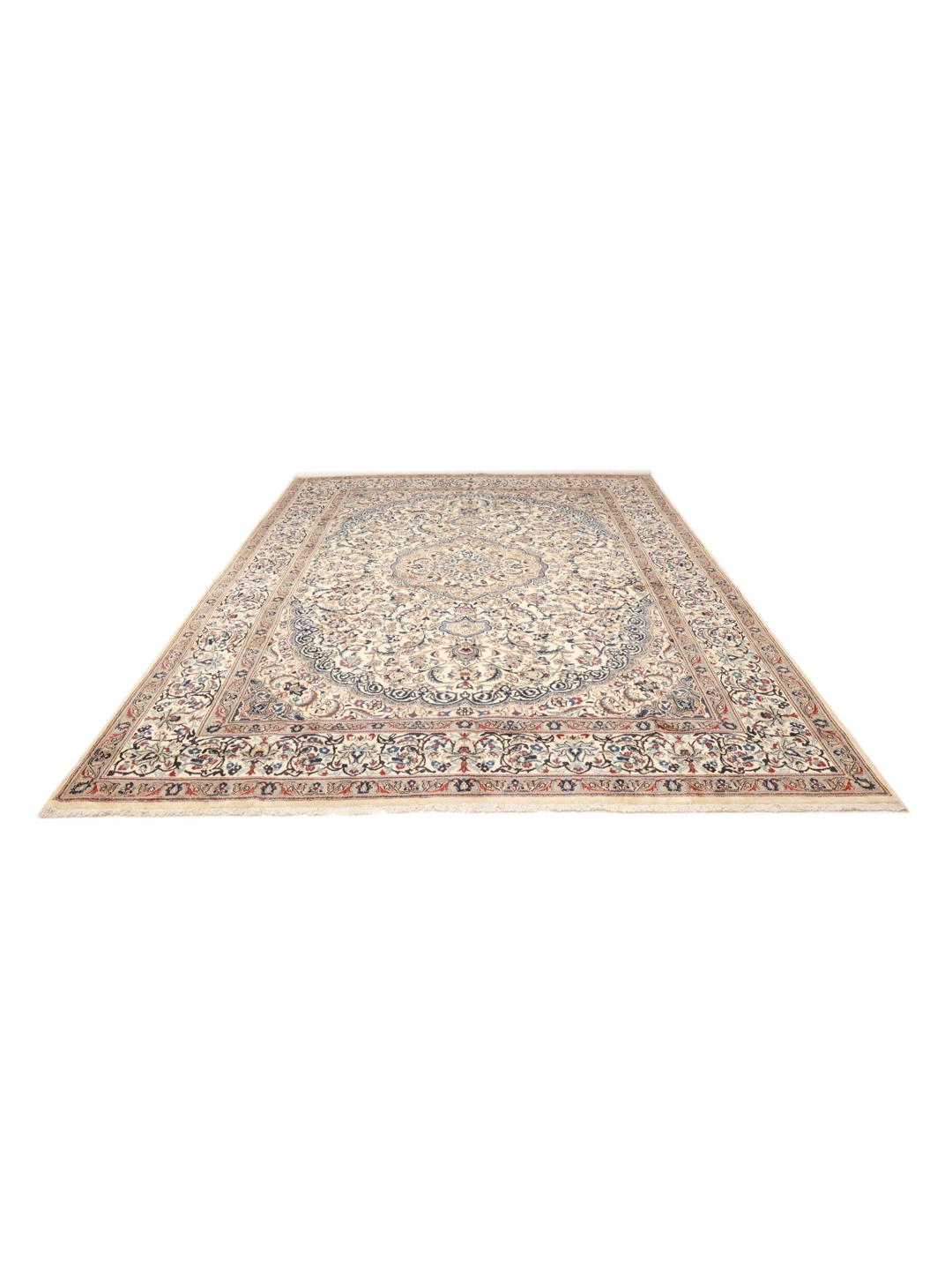
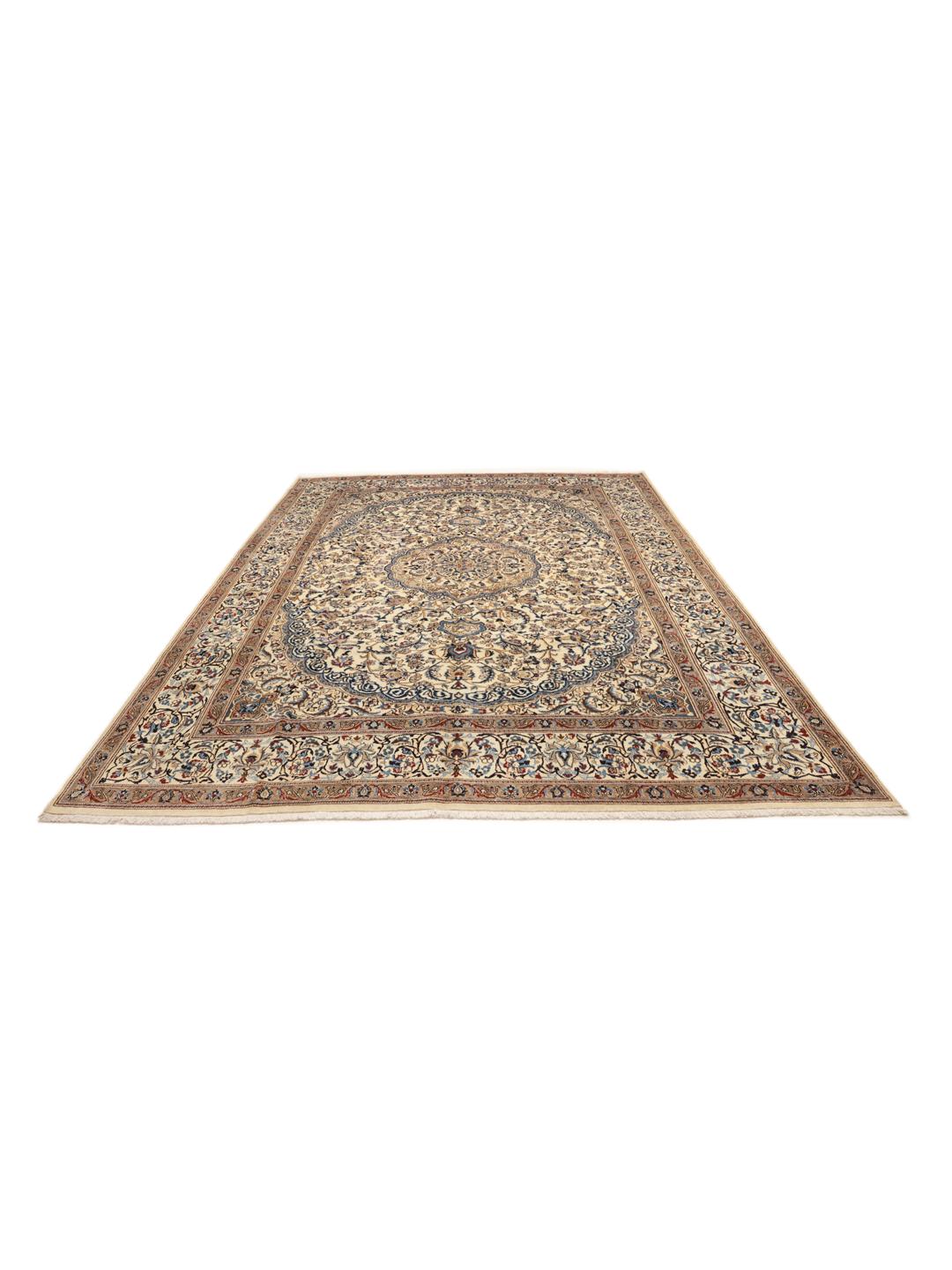
The Nain rug tradition originates from the town of Nain, located in the heart of the Middle East. Historically known for producing high-quality wool textiles and robes, the town shifted its focus to rug weaving in the early 20th century. This transition allowed local artisans to apply their existing expertise in fine detailing and colour coordination to the creation of what would become some of the most sought-after rugs in the world.
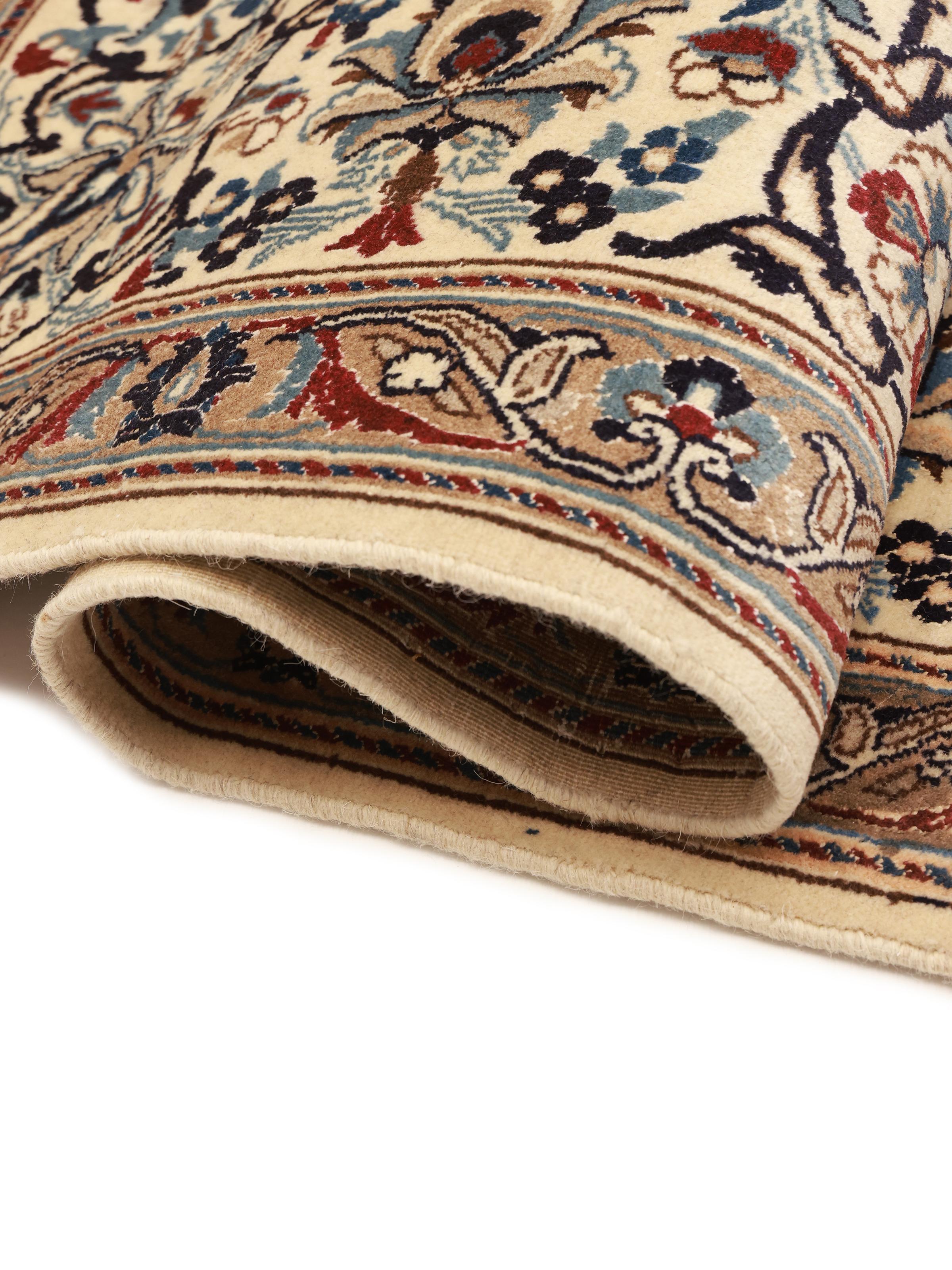
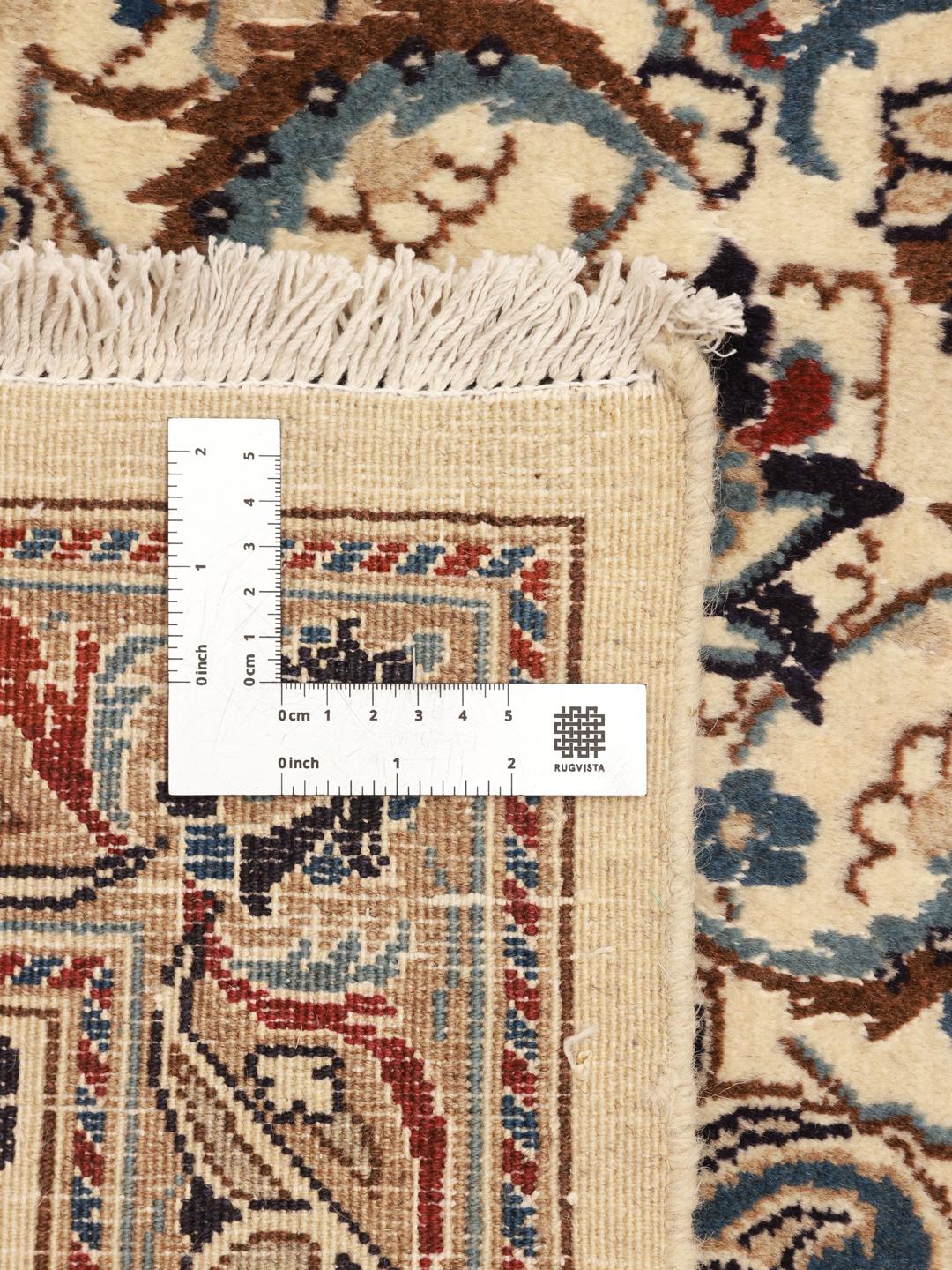
The term 9La is a specific technical designation within the Nain tradition, referring to the number of strands of yarn used in the warp. In the local dialect, 'La' means 'layer'. A 9La rug is crafted using nine-ply yarn in the foundation, which directly influences the rug's texture and pile height. This specific construction is prized for achieving a perfect balance between a fine, elegant appearance and the necessary durability for a home environment.
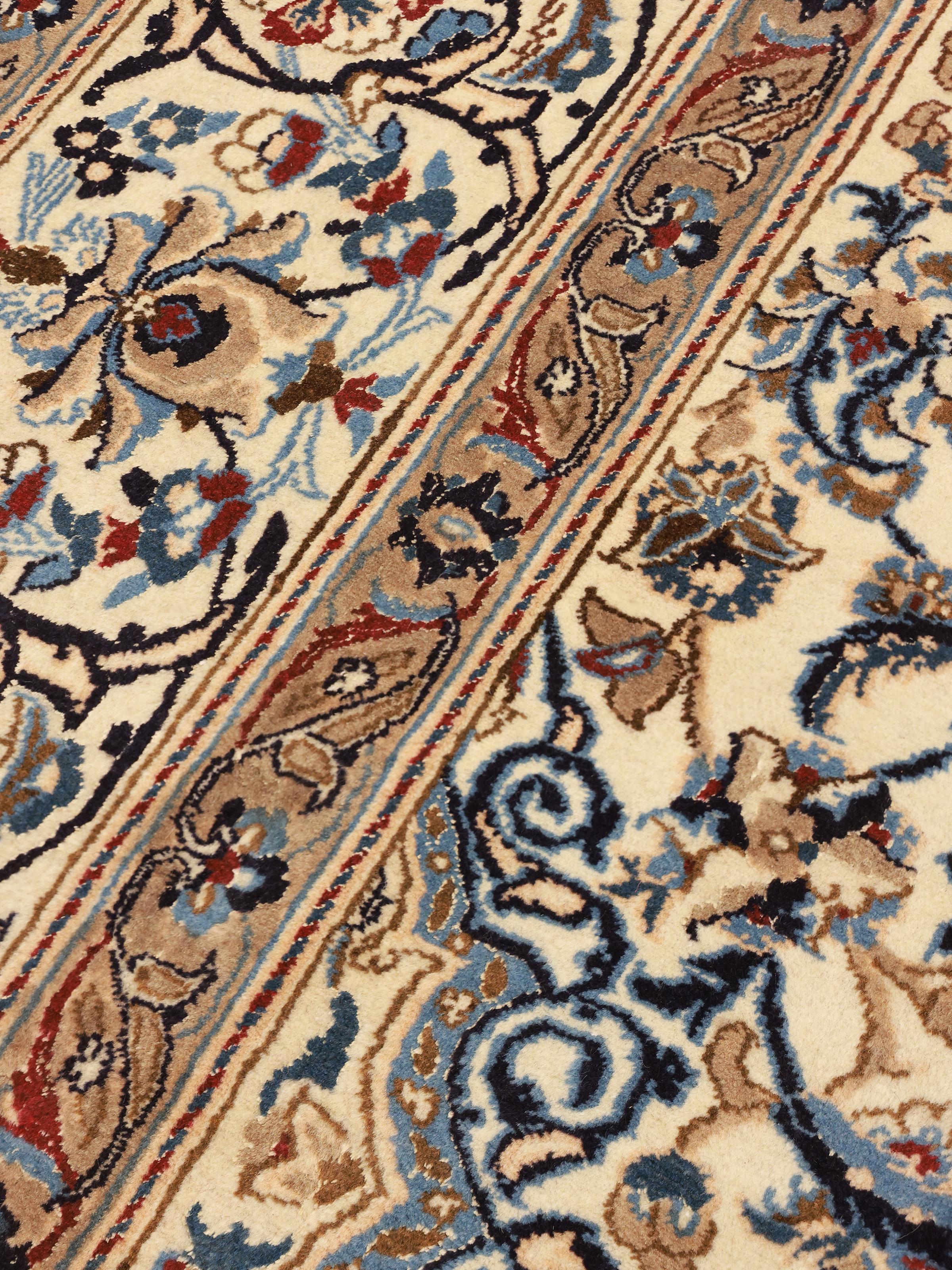
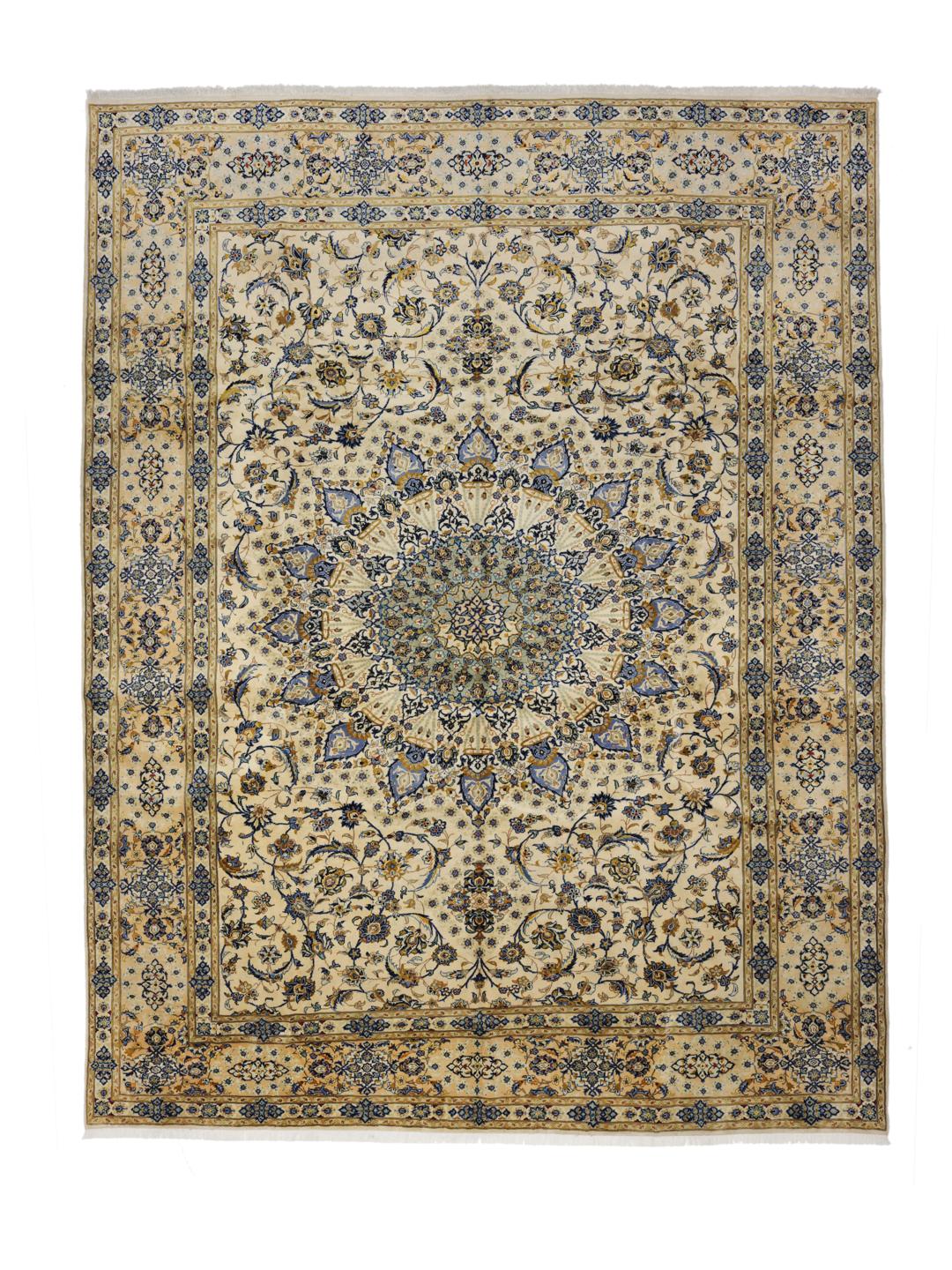
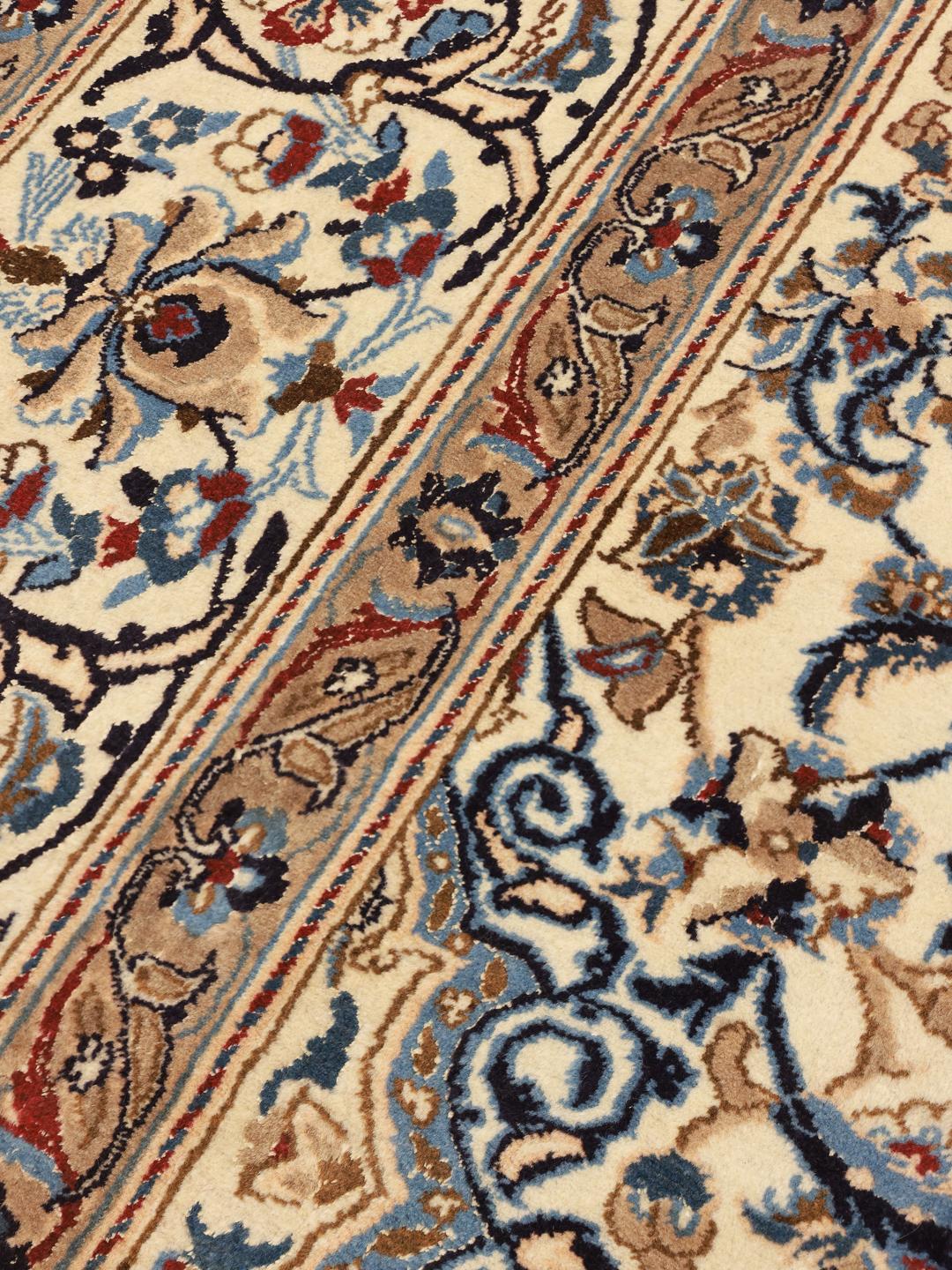
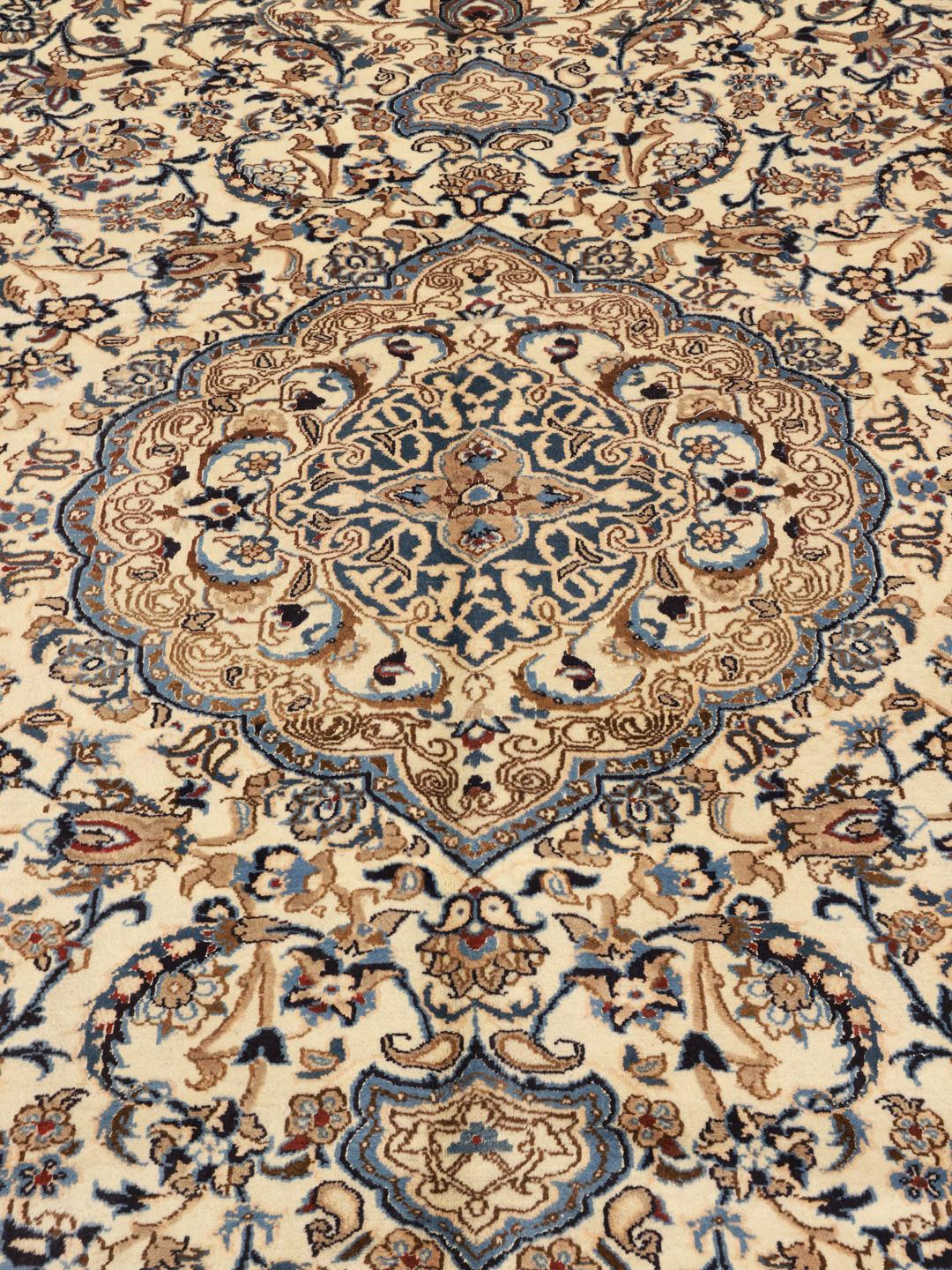
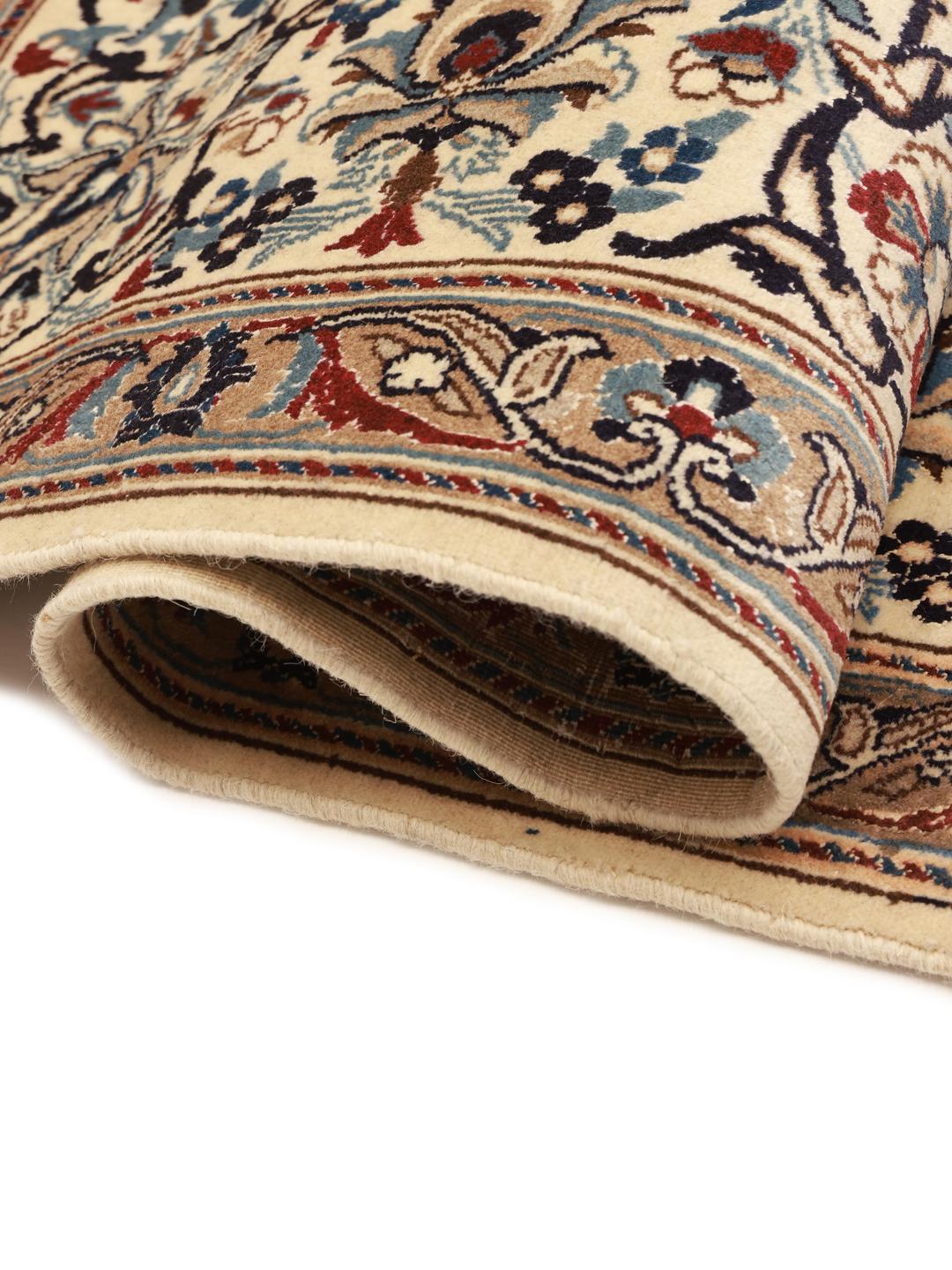
Visually, these rugs are defined by their sophisticated colour palettes, often utilising soft creams, beiges, and various shades of blue. The designs typically feature a central medallion surrounded by elaborate floral patterns, vines, and arabesques, showing a clear evolution from earlier, more geometric tribal styles toward a more refined, courtly aesthetic. The borders are usually as meticulously detailed as the central field, creating a cohesive and harmonious visual experience.
Collecting a Nain rug is an exercise in appreciating heritage and technical mastery. Because these rugs represent a pinnacle of regional weaving skill, they are highly valued for their longevity and their ability to anchor a space with a sense of history. Owning one is a commitment to preserving a craft tradition that has been refined over generations, ensuring that the skill and dedication of the weavers continue to be celebrated in modern homes.