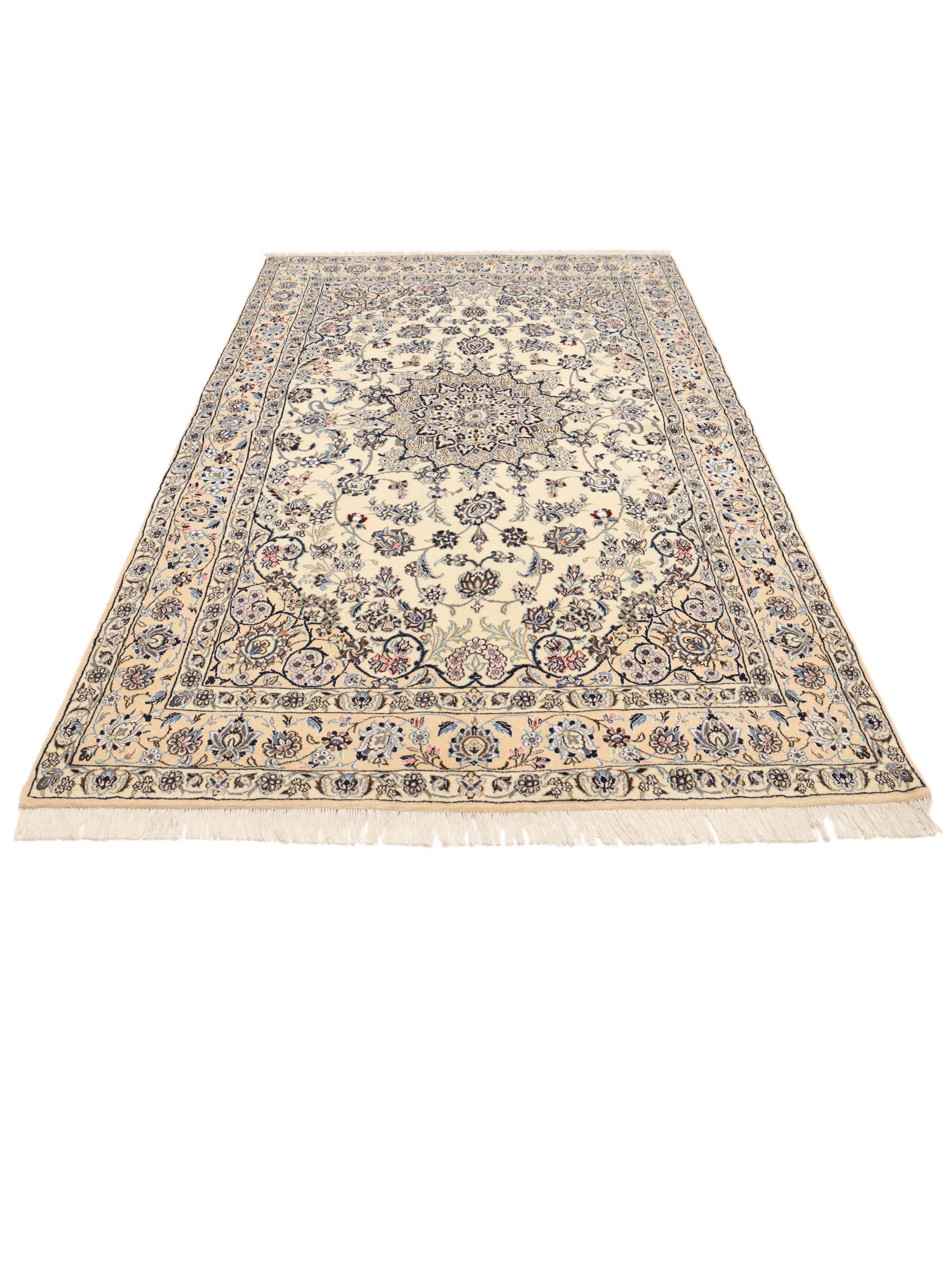
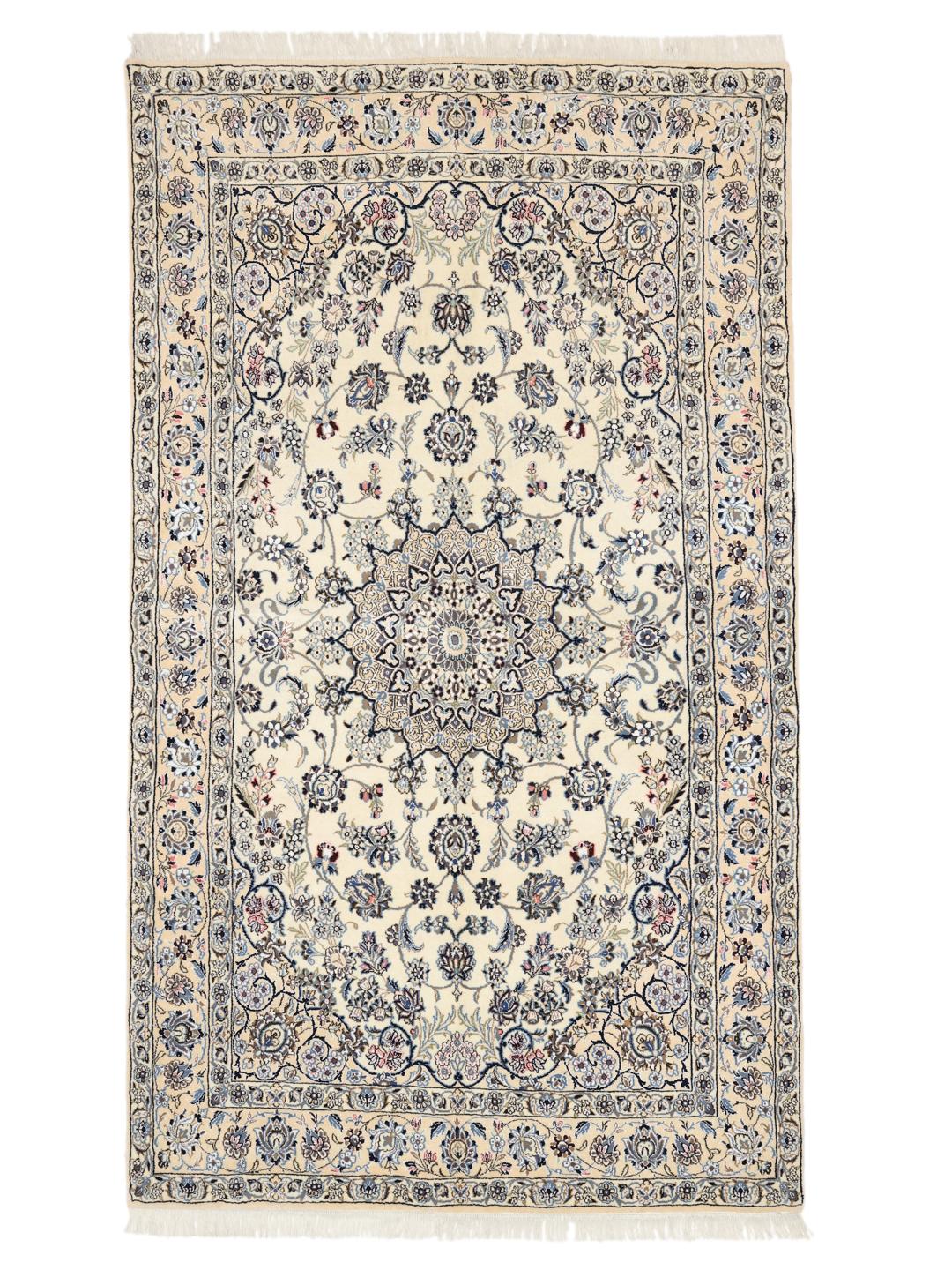
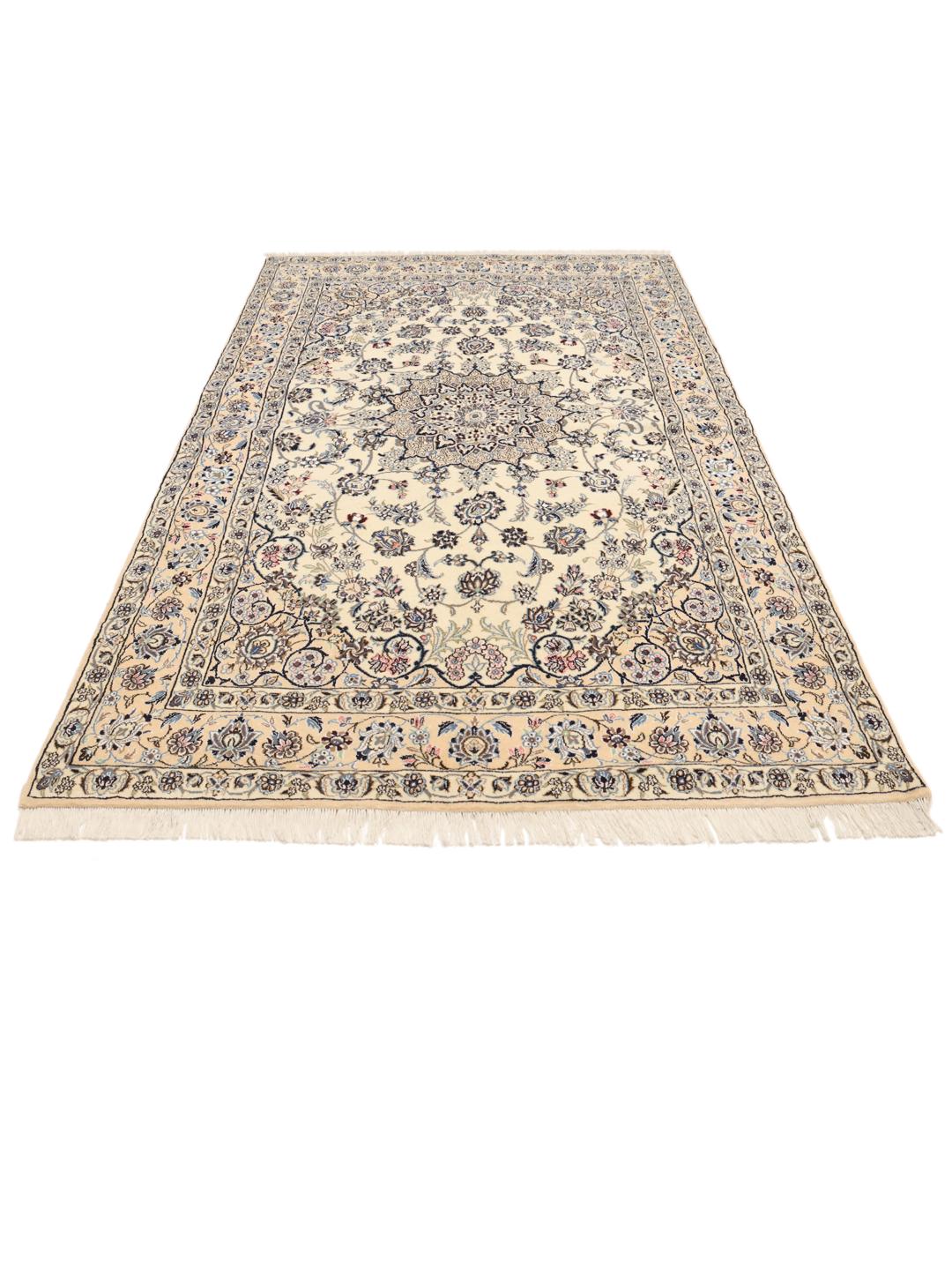
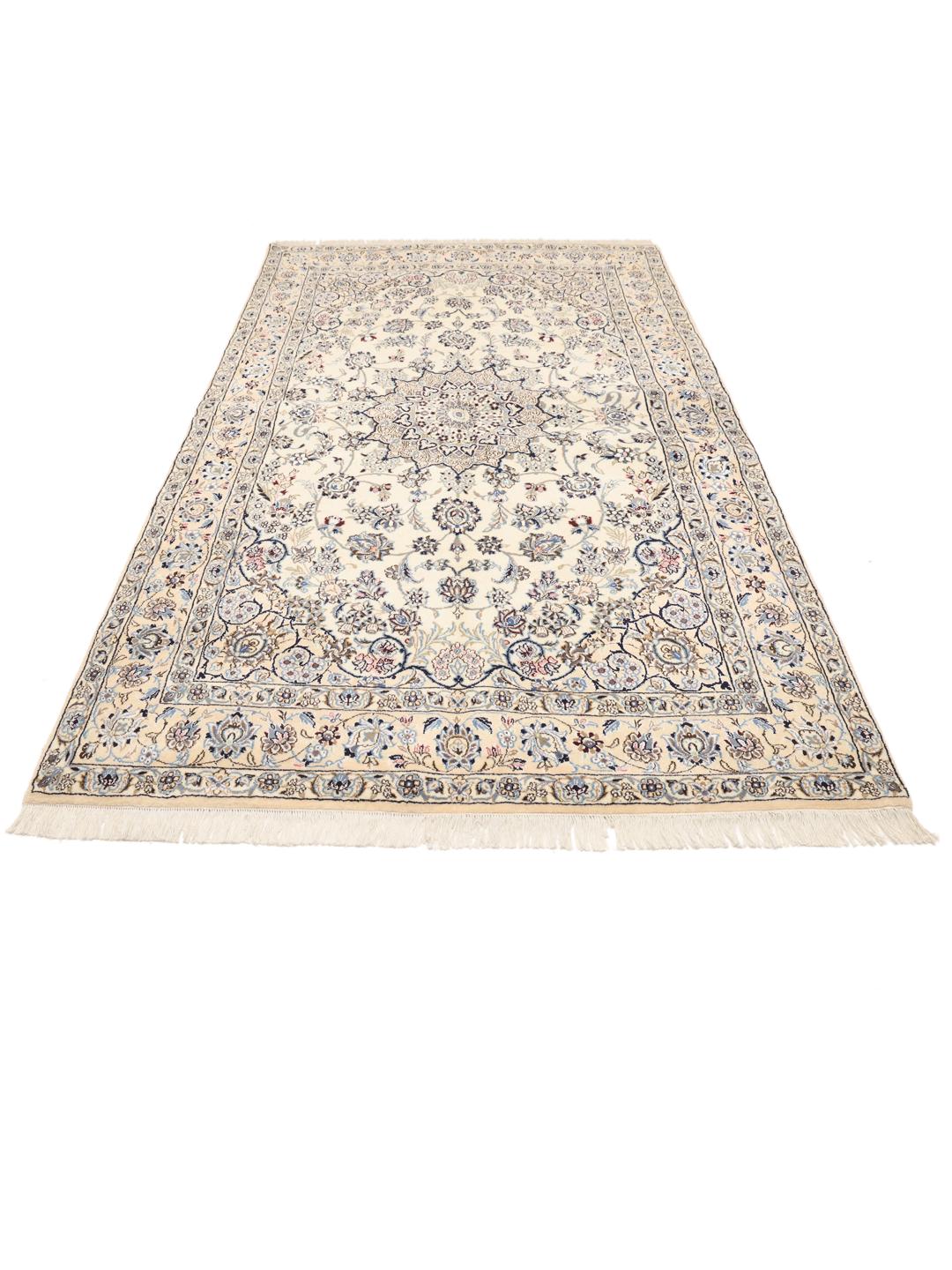
The Nain rug tradition hails from the town of Nain in the Middle East, a region that evolved from a centre for high-quality clothing textiles into one of the most prestigious hubs for rug weaving in the early 20th century. While historically known for its fine woollen goods, the region adapted its expertise to create rugs of unparalleled precision, often utilising soft, light-toned palettes that distinguish them from the more vibrant traditions of neighbouring areas.
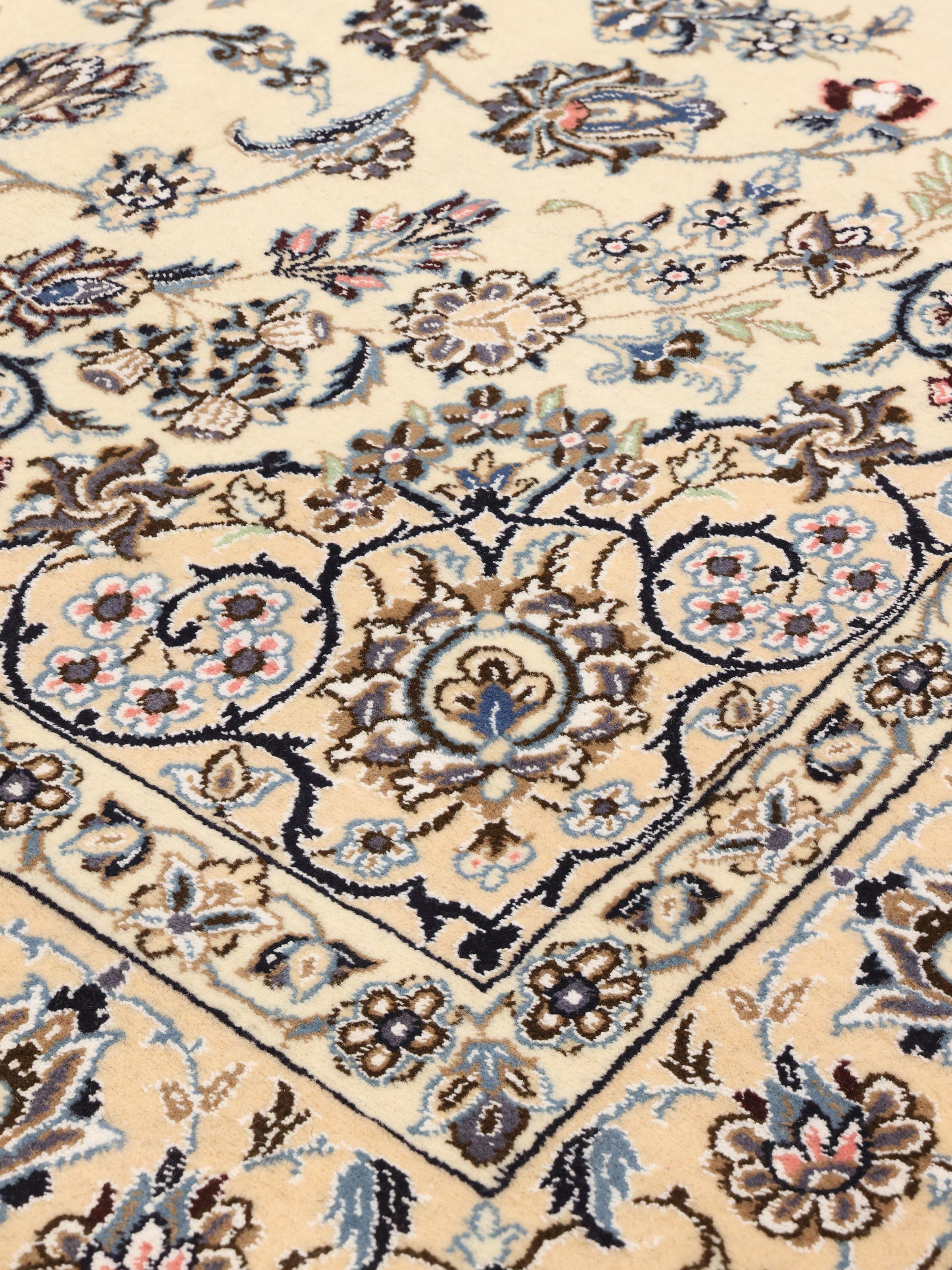
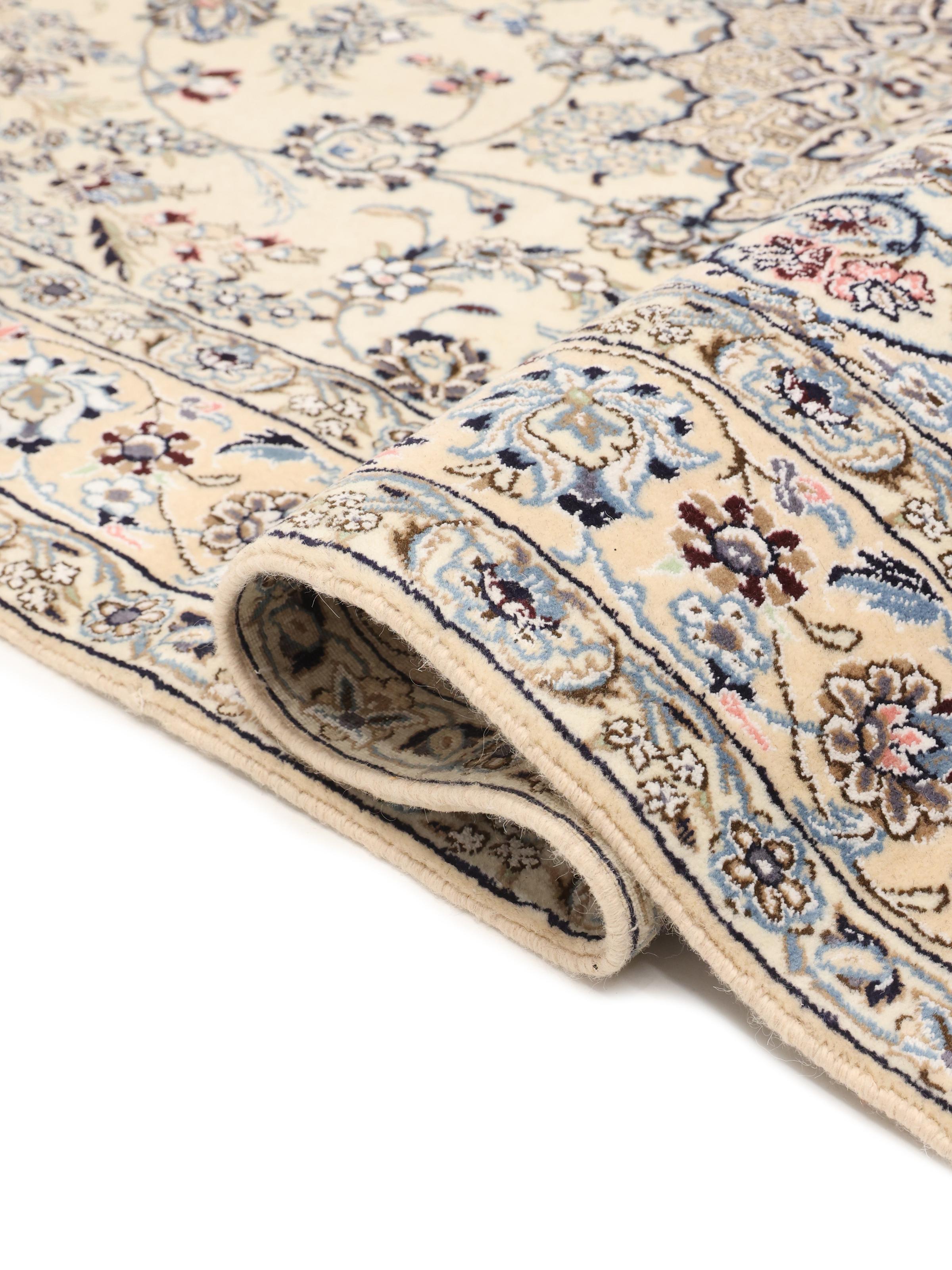
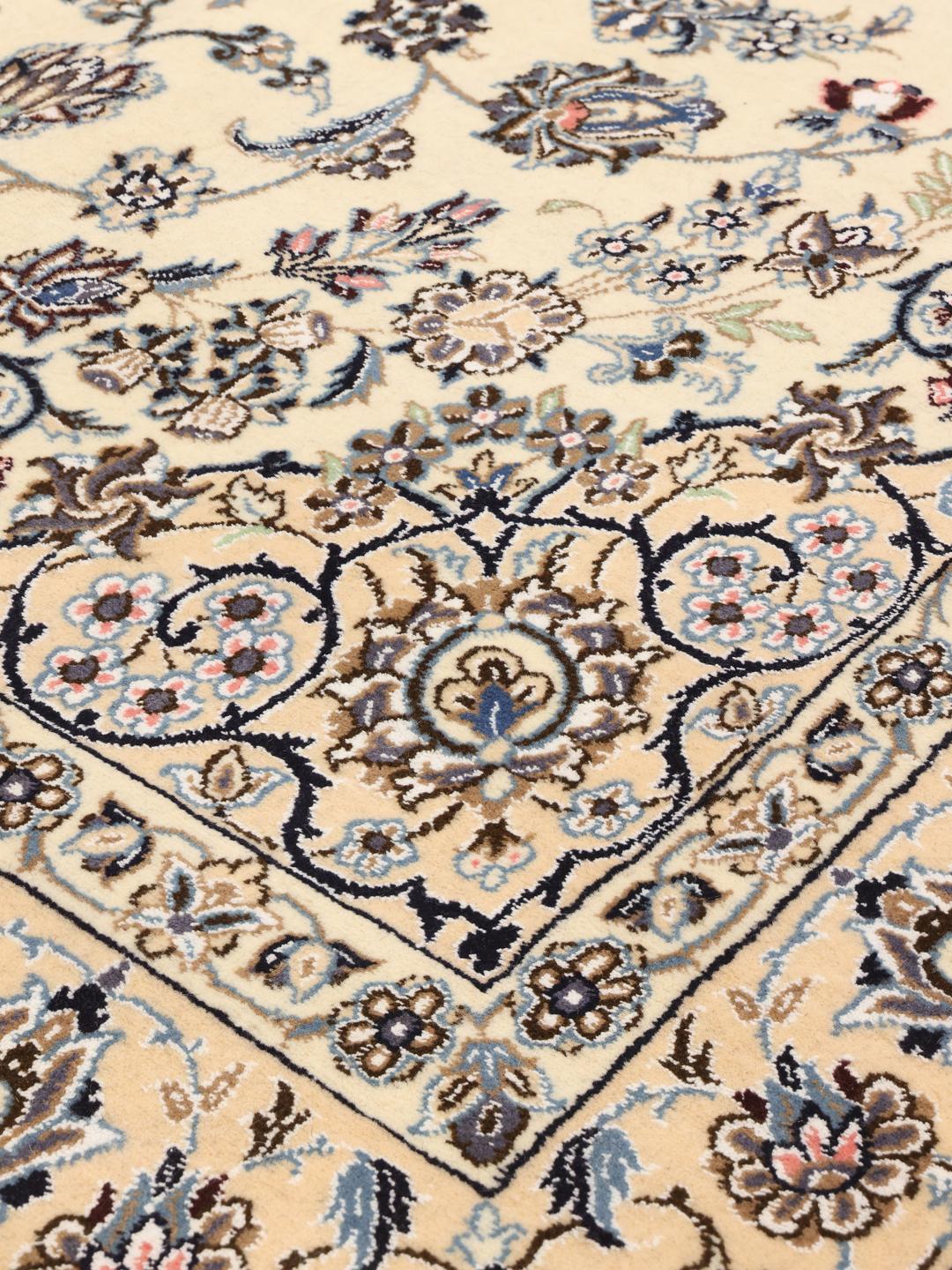
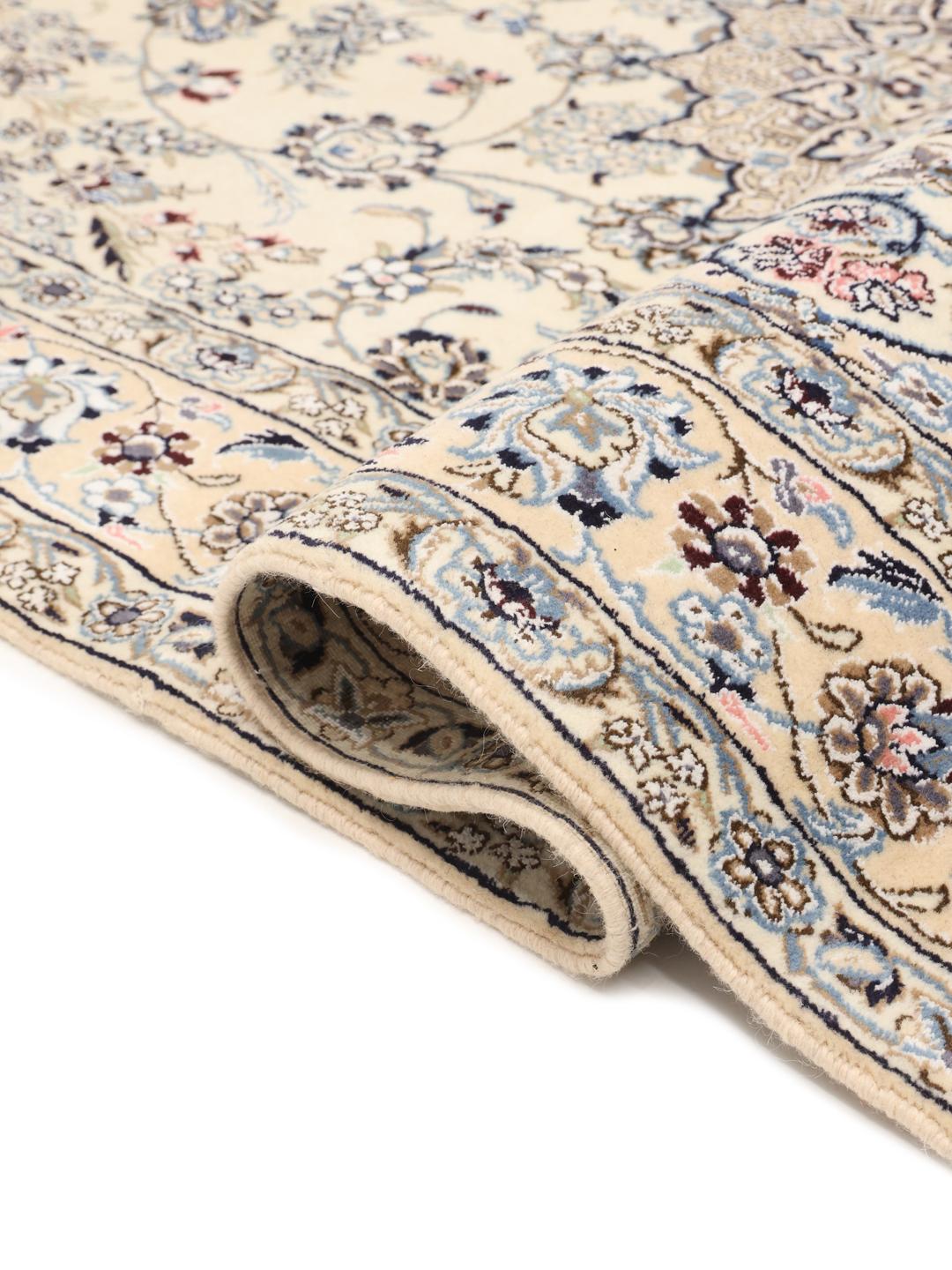
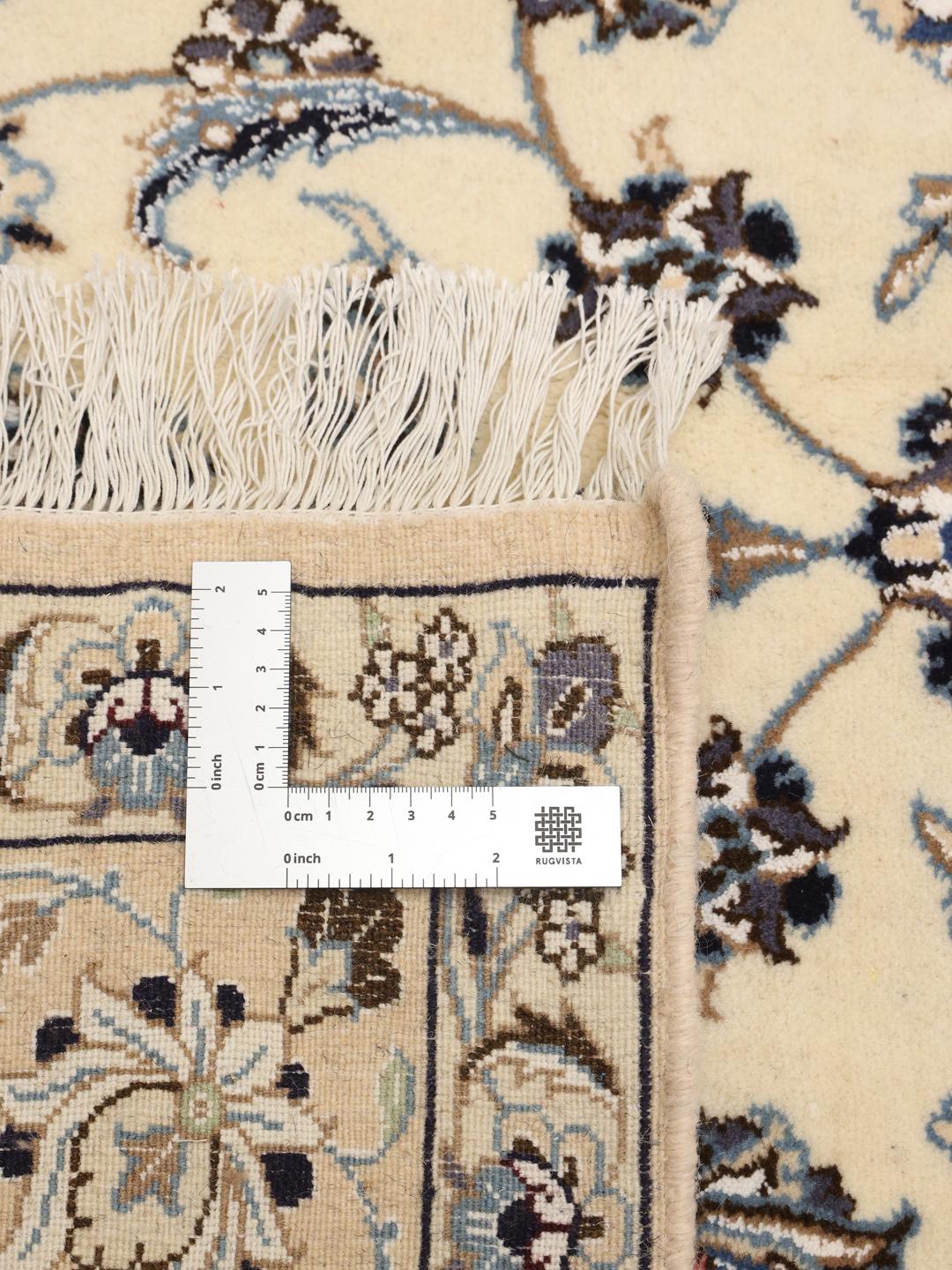
The term 9La is a technical designation that refers to the number of threads used in the fringe, or the foundation of the rug. A 9La classification indicates a specific level of fineness and density, which directly impacts the clarity of the design. This technical precision allows for the intricate, curvilinear floral patterns that are the hallmark of the Nain style, providing a level of detail that is both visually captivating and technically demanding to produce.
Visually, these rugs are defined by their elegant central medallions and elaborate scrolling vines, often rendered in shades of blue, cream, and beige. The design language is rooted in a formal, balanced aesthetic that emphasises symmetry and grace. Unlike more tribal traditions, the Nain style leans towards a sophisticated, courtly look that has become synonymous with refined living and high-status interior design.
Owning a Nain Fine 9La rug is an investment in cultural heritage. Collectors value these pieces not only for their beauty but for the immense skill required to execute such complex designs with perfect consistency. By bringing this rug into your home, you are preserving a tradition of excellence and ensuring that a piece of Middle Eastern craft history remains vibrant and appreciated for years to come.