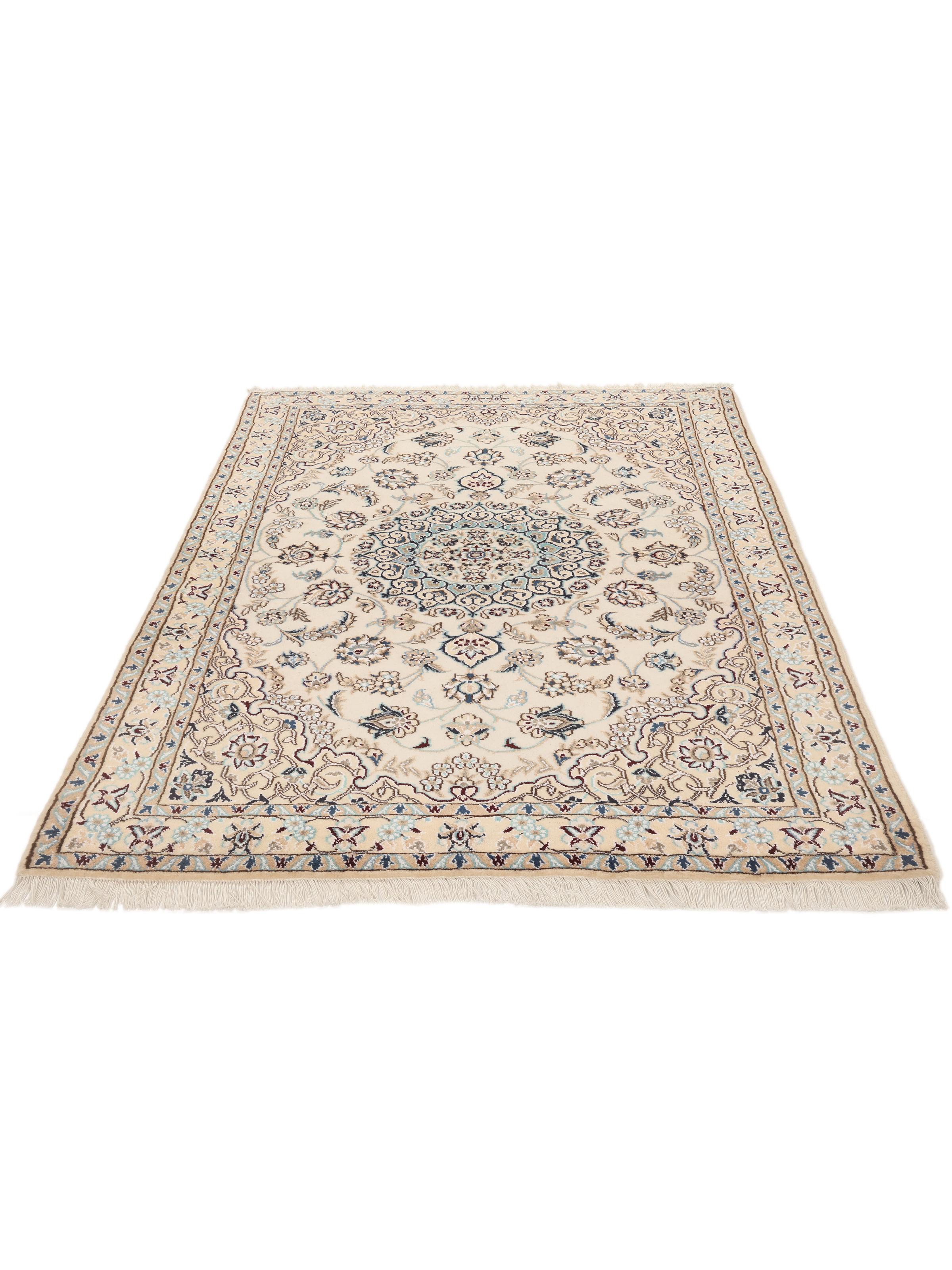
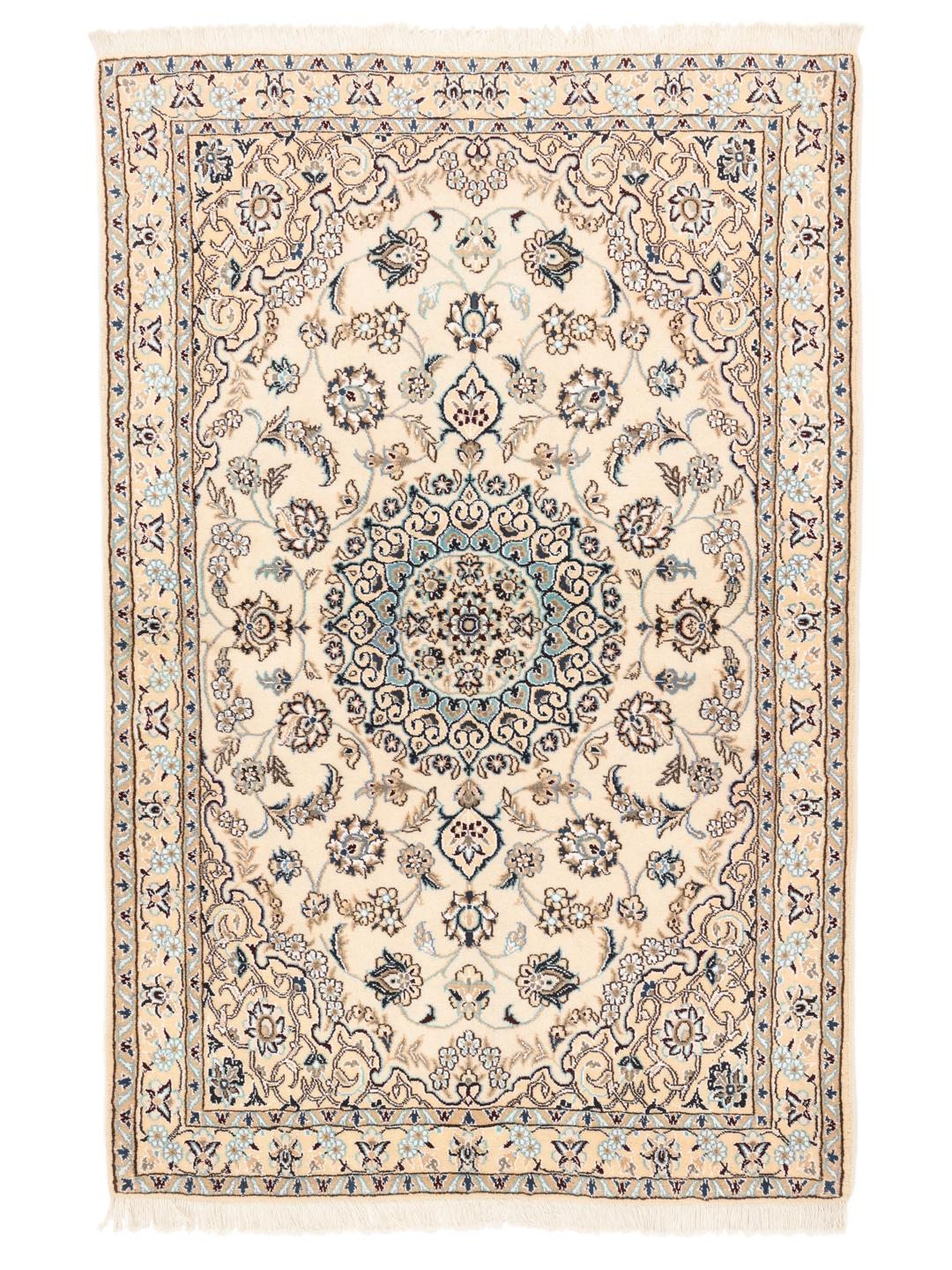
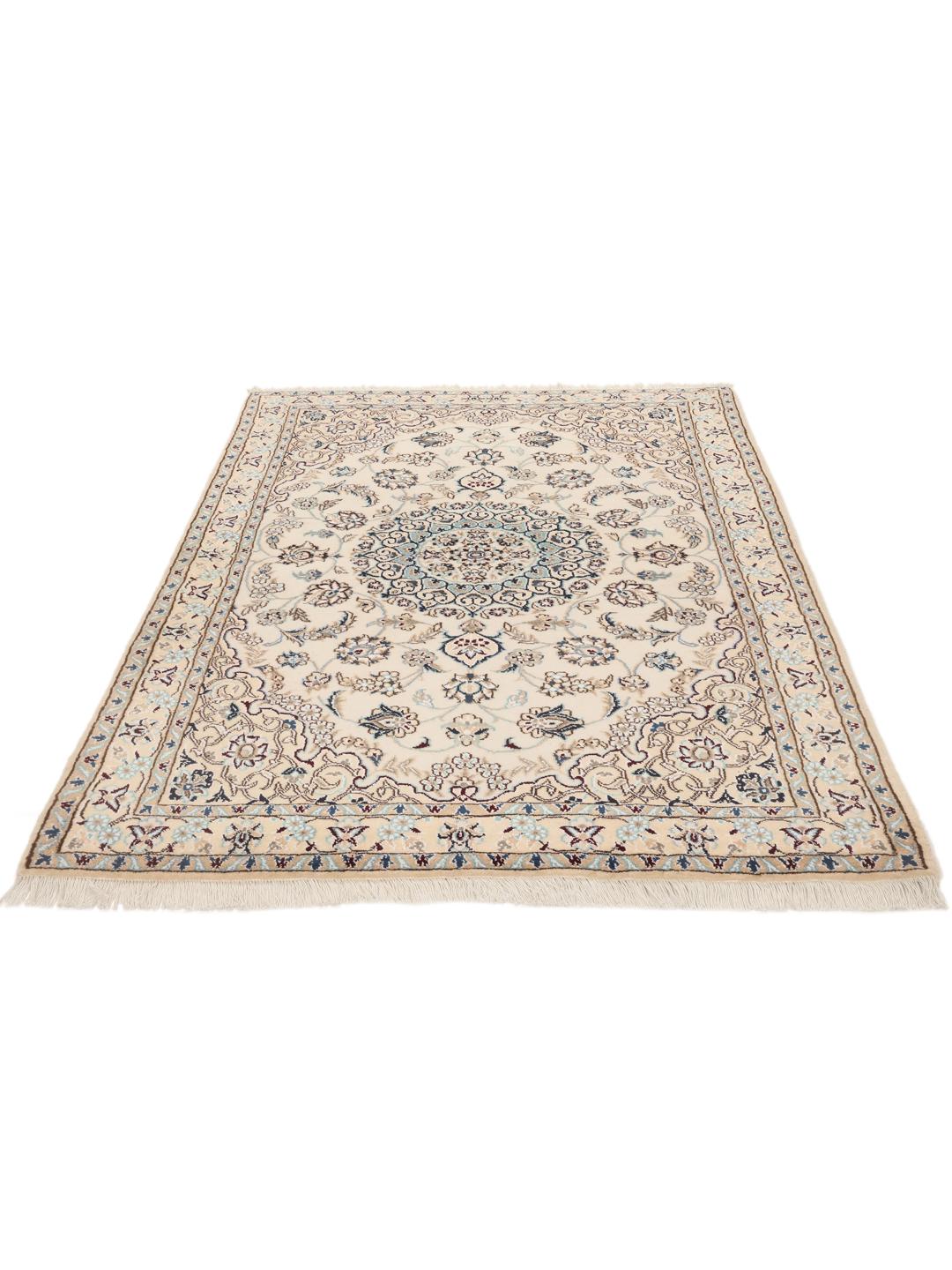
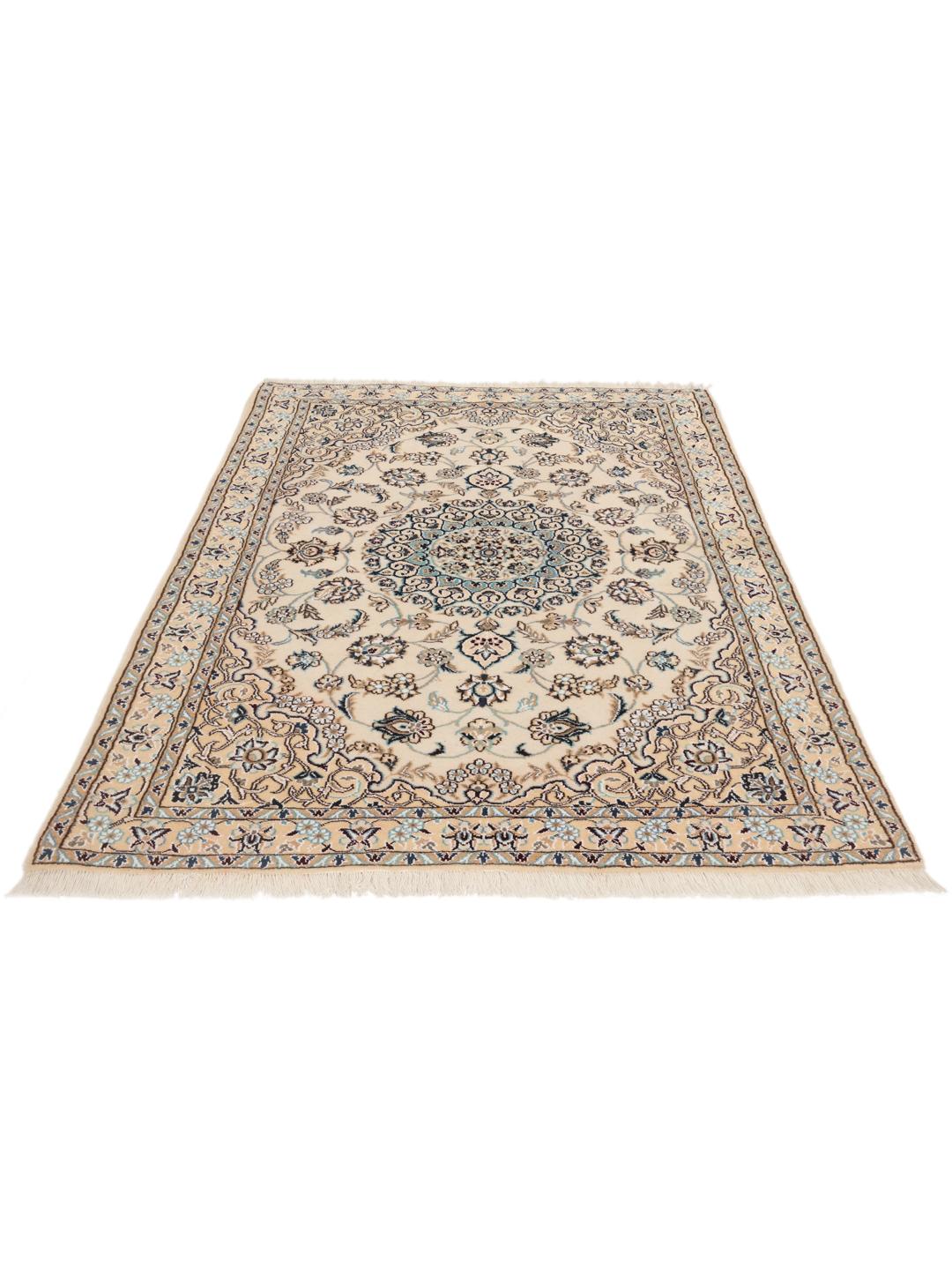
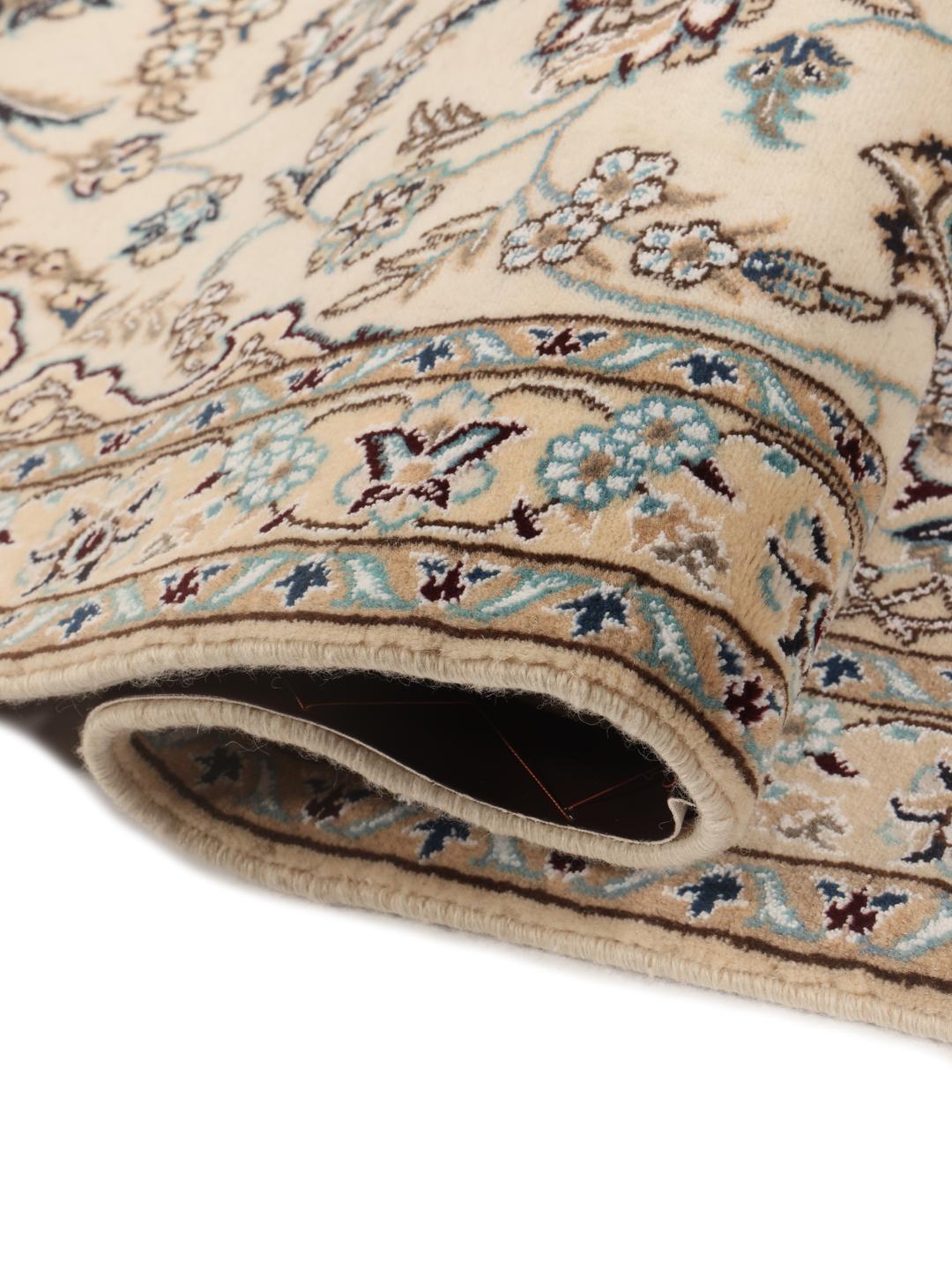
The Nain rug tradition hails from the historic town of Nain, located near the desert edge in the Middle East. Originally a centre for the production of high-quality woollen garments, the city transitioned into rug weaving in the early 20th century. Over decades, Nain rugs have gained global acclaim for their distinctively light colour palettes and exceptionally fine floral designs, often incorporating silk highlights to create a luminous, elegant finish.
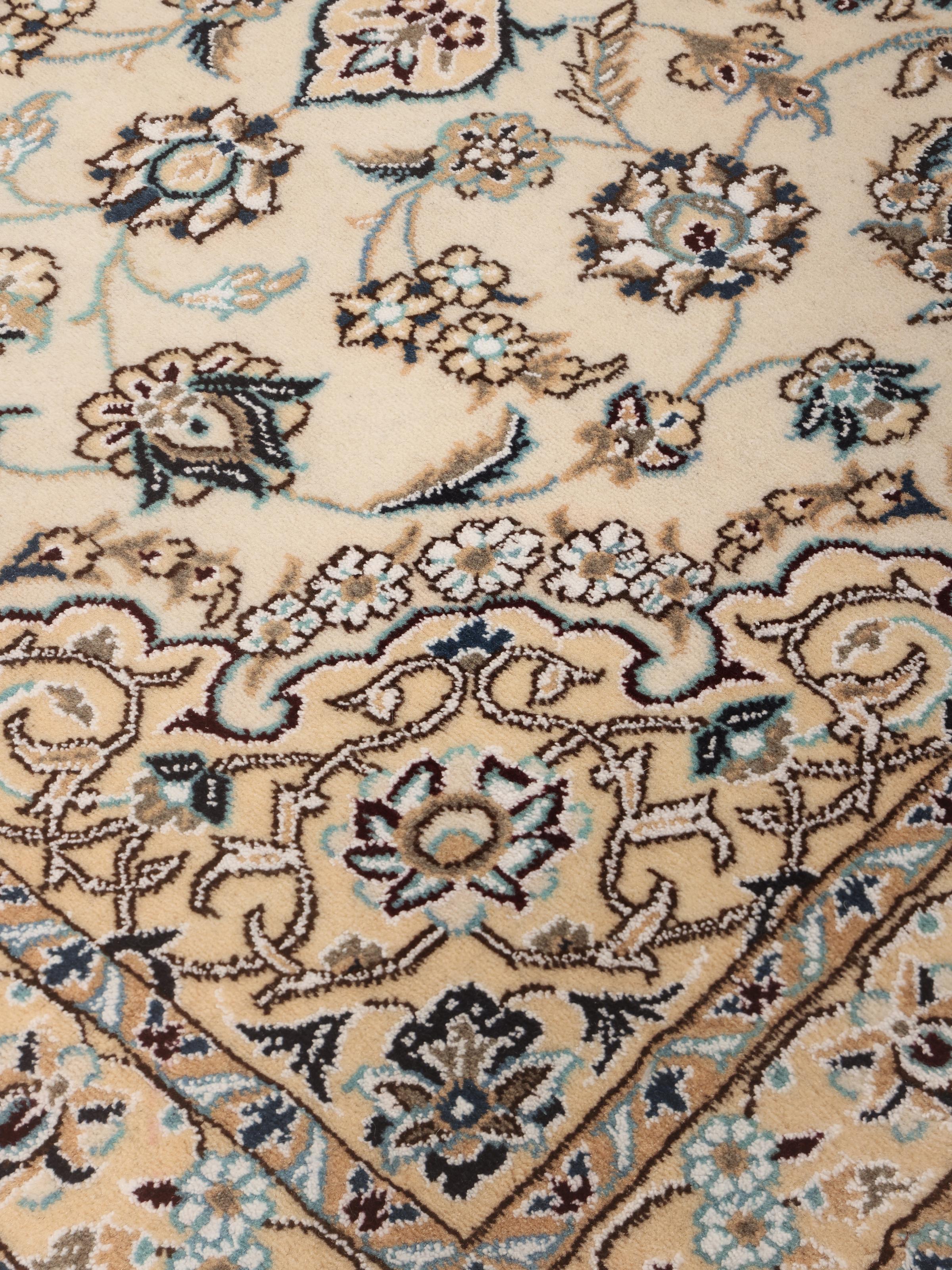
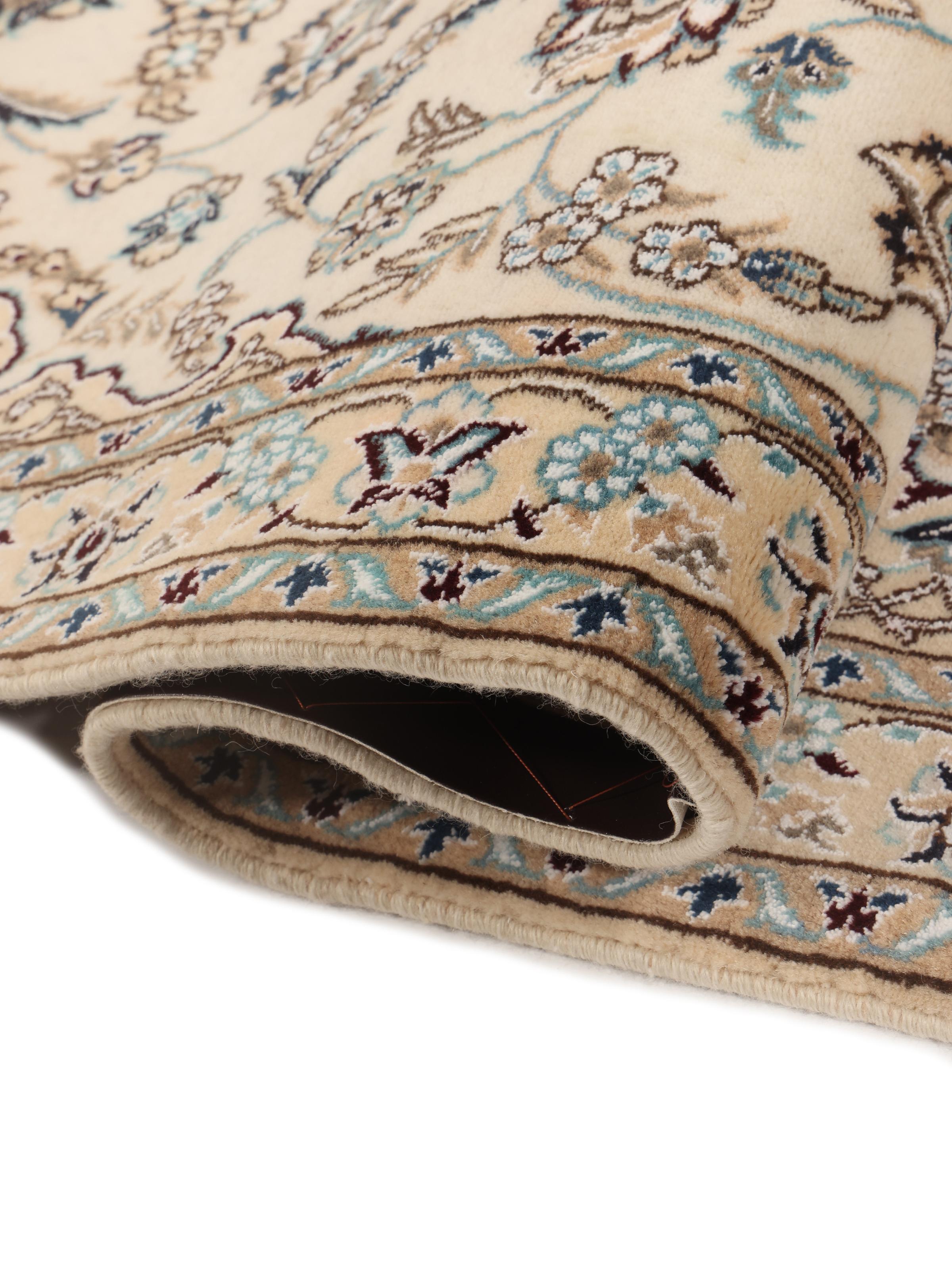
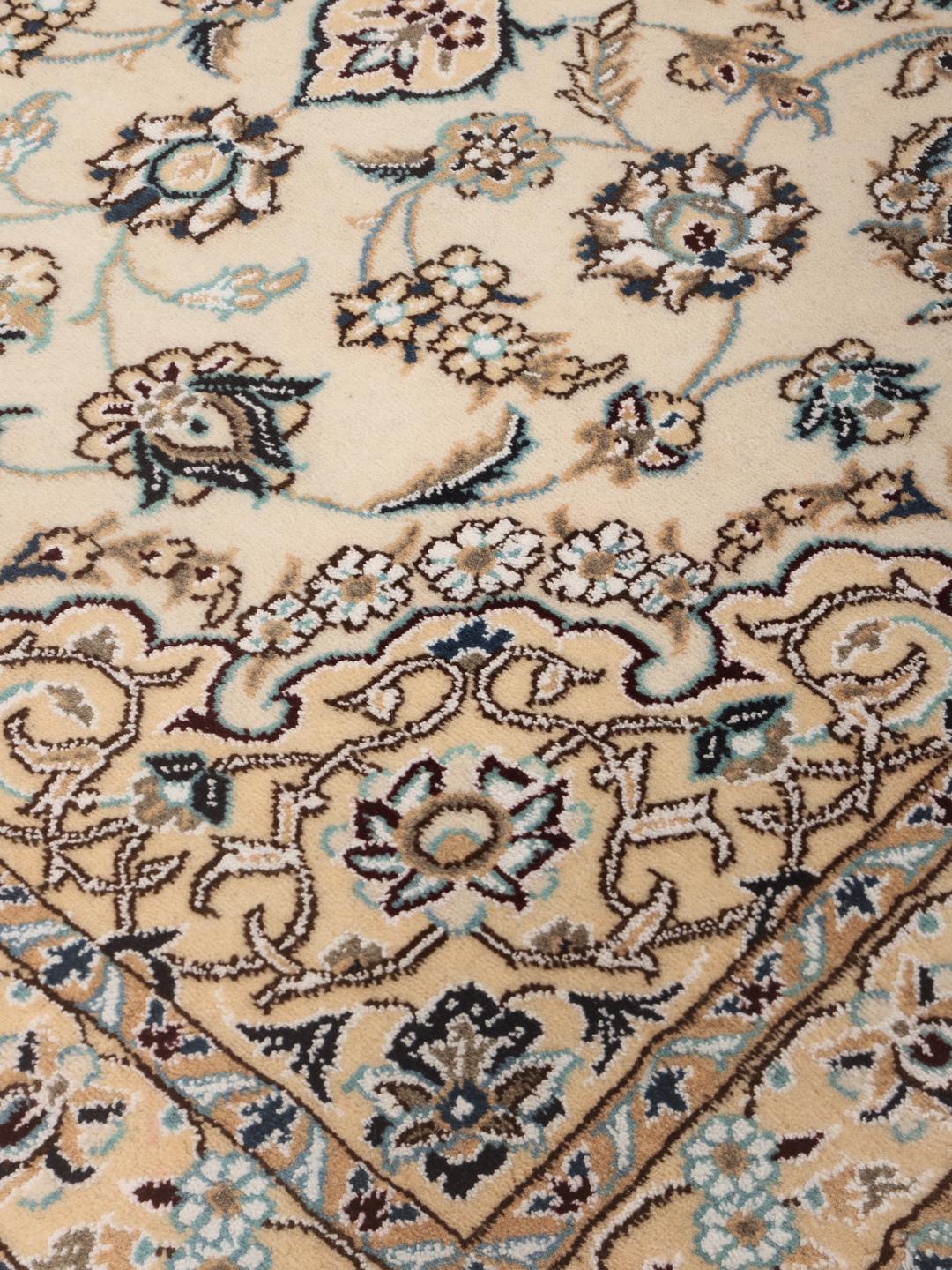
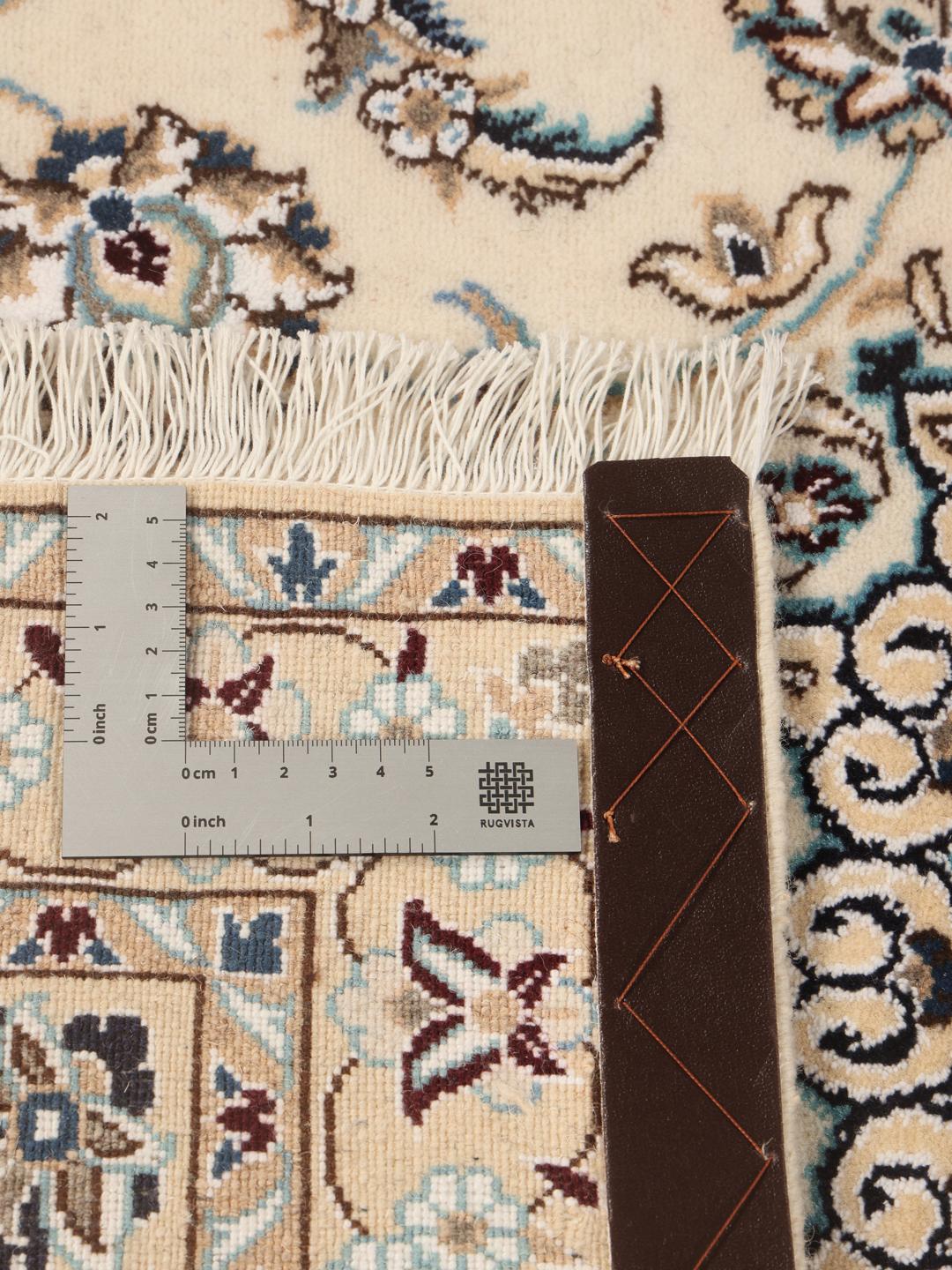
The term '9La' is a technical classification specific to the Nain weaving tradition. The 'La' refers to the number of strands of yarn used in each warp thread of the rug's foundation. A 9La rug is crafted using nine strands, which allows for a finer weave and more intricate detailing compared to higher 'La' numbers. This technical specification is crucial because it directly influences the rug's density, sharpness of design, and overall durability, making it a prized choice for collectors.
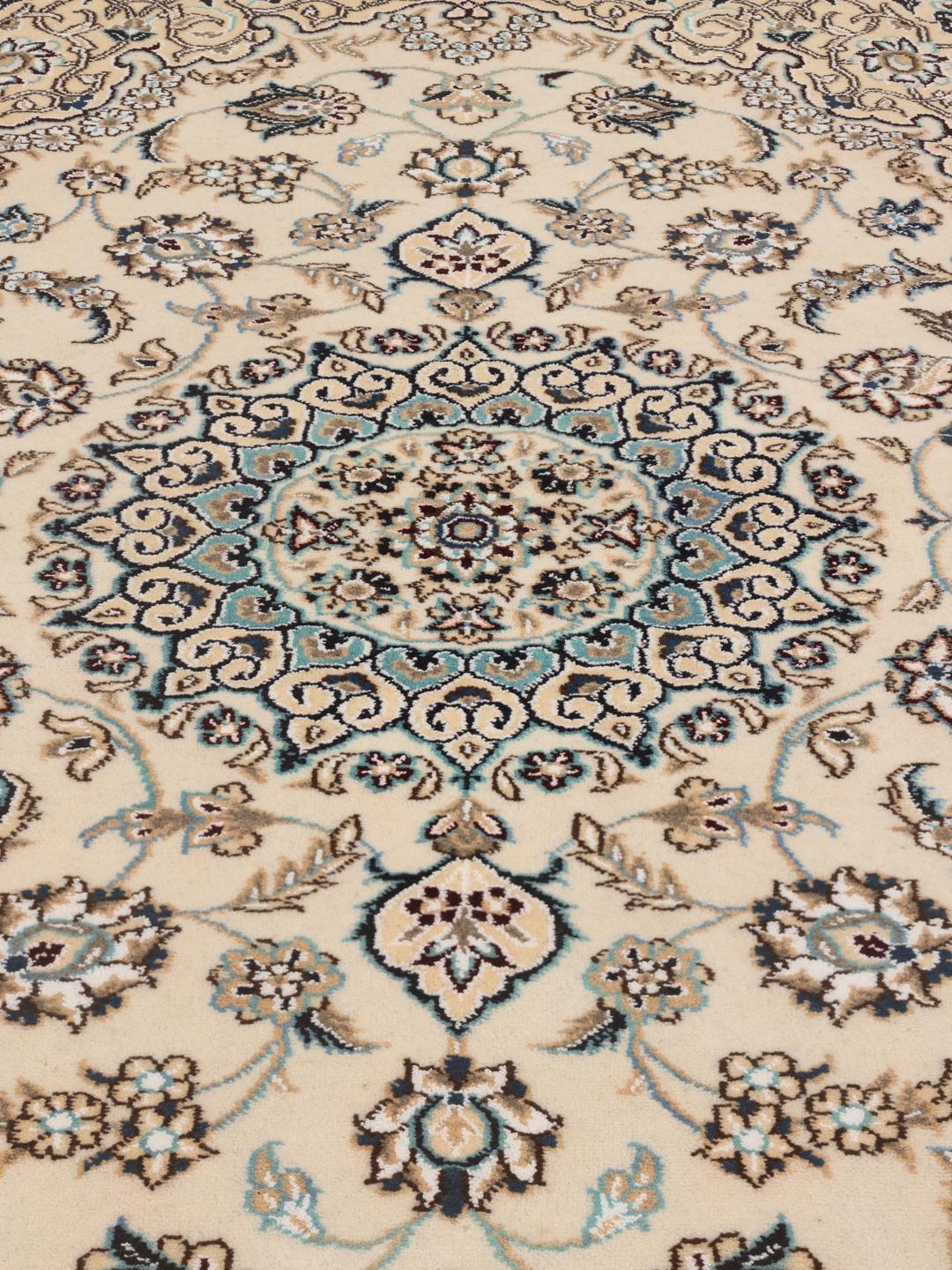
Visually, these rugs are defined by their sophisticated use of floral motifs, typically centred around a majestic medallion. The patterns often draw inspiration from classical garden themes, featuring scrolling vines, delicate blossoms, and intricate arabesques. While many traditional rugs favour deep, bold hues, the Nain style is famous for its muted, elegant tones, often relying on cream, ivory, and soft blue shades to create a feeling of openness and serenity.
Rugs from this region are highly valued for their cultural significance and the extraordinary skill required to produce them. Owning a Nain rug is considered an investment in artistic heritage, representing a bridge between ancient weaving techniques and refined modern living. Because these pieces are created entirely by hand, they carry the unique signature of the weaver, making them not just floor coverings, but legacy items that retain their beauty and value over time.