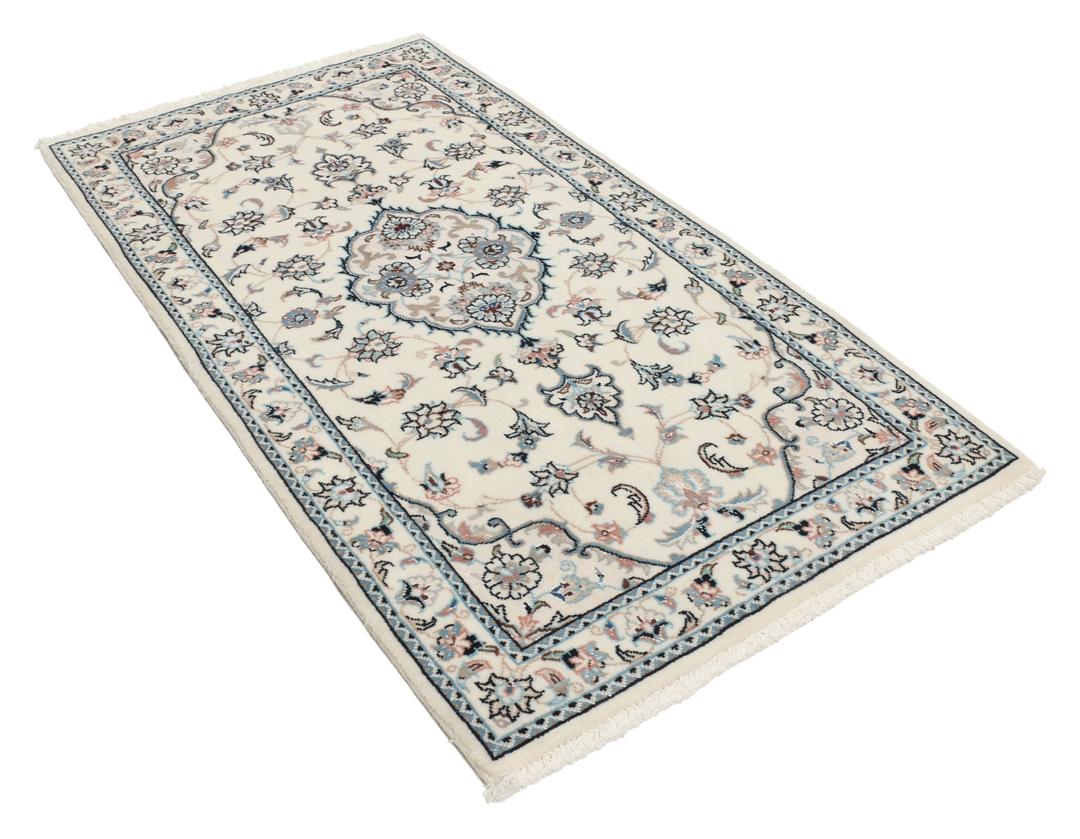
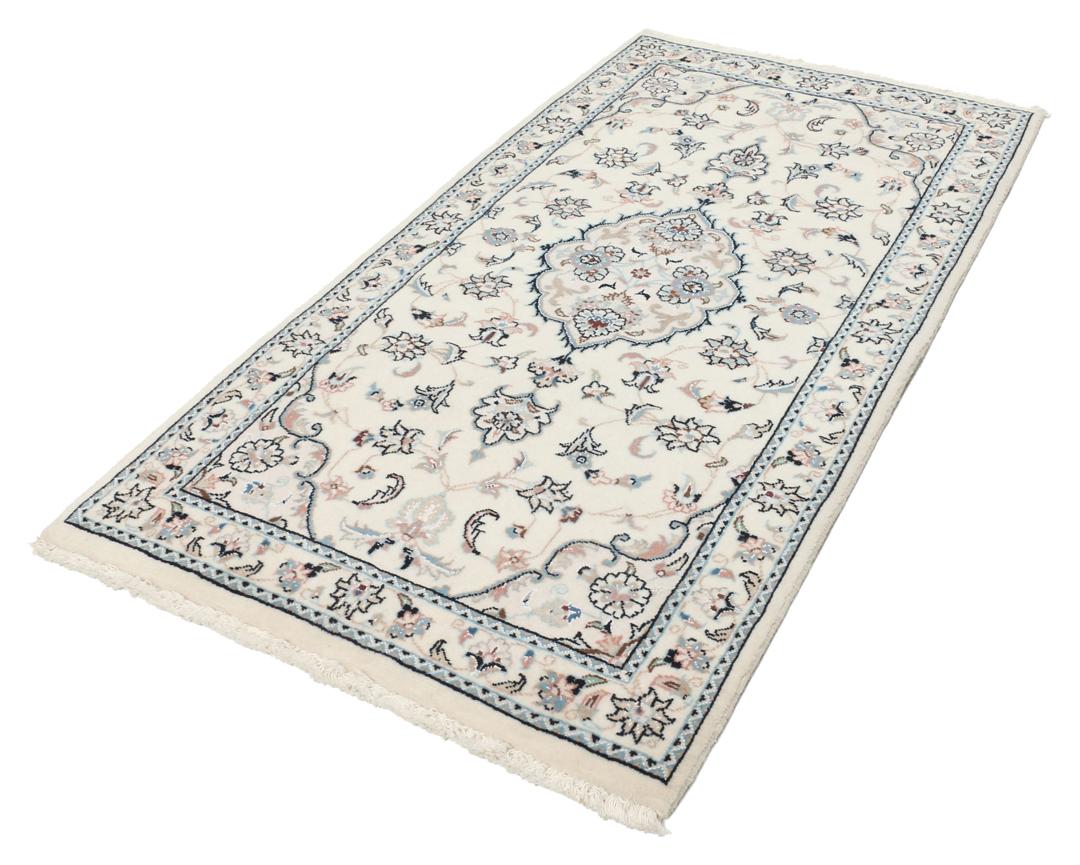
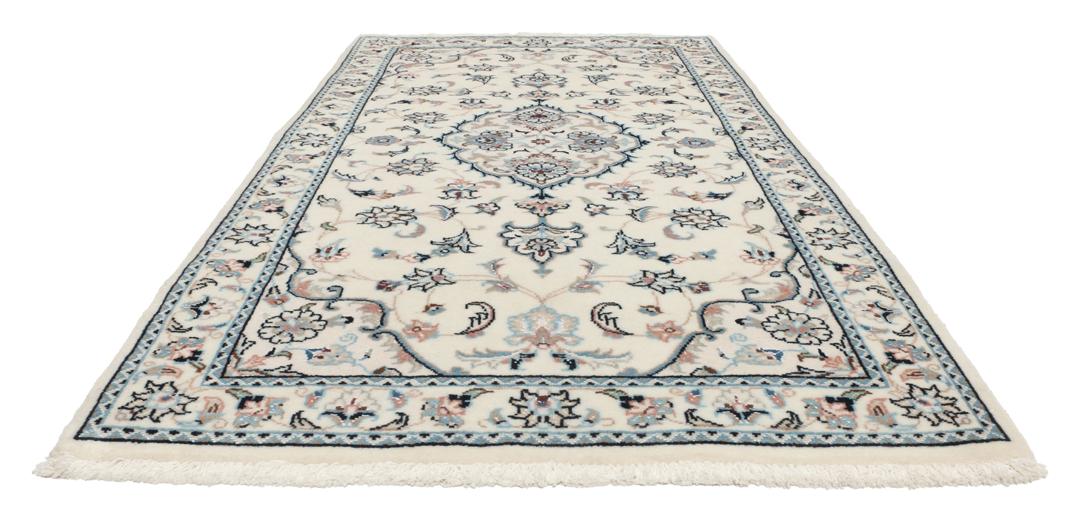
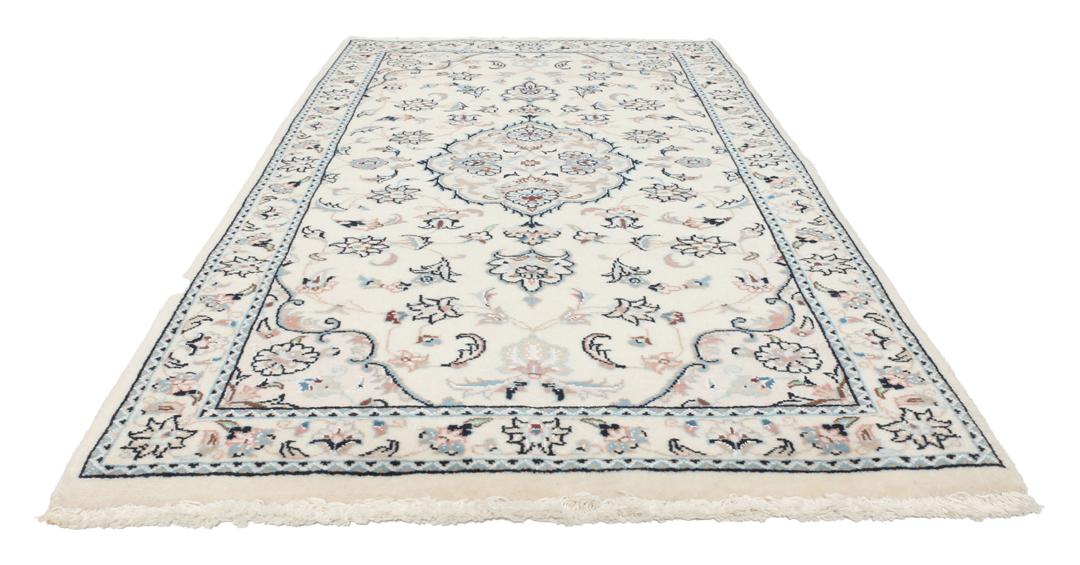
Nain rugs originate from the city of Nain, located in the heart of the Middle East. Historically a centre for fine textile production, the region transitioned from weaving high-quality garments to creating some of the world's most sought-after rugs during the early 20th century. This evolution has solidified the region's reputation as a leader in refined, artistic floor coverings.
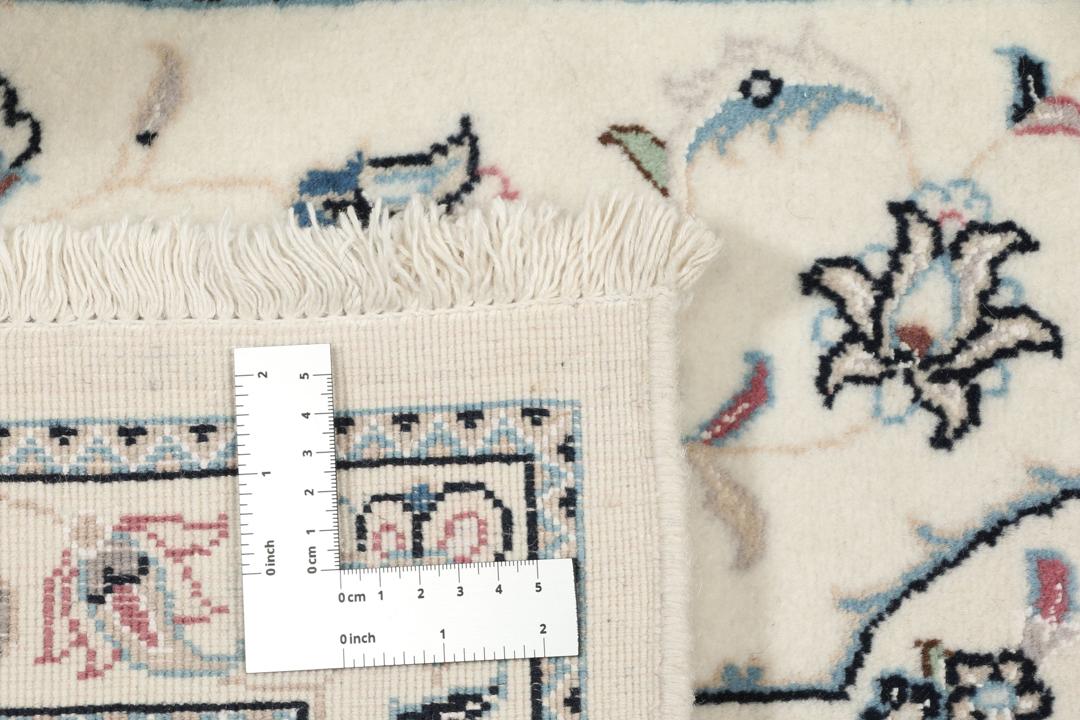
The '9La' designation is a specific technical term used in the Nain tradition to indicate the fineness of the rug. It refers to the number of strands of yarn twisted together in the warp threads of the foundation. A 9La classification represents a high level of detail and quality, requiring a delicate touch and advanced expertise to achieve the signature Nain appearance.
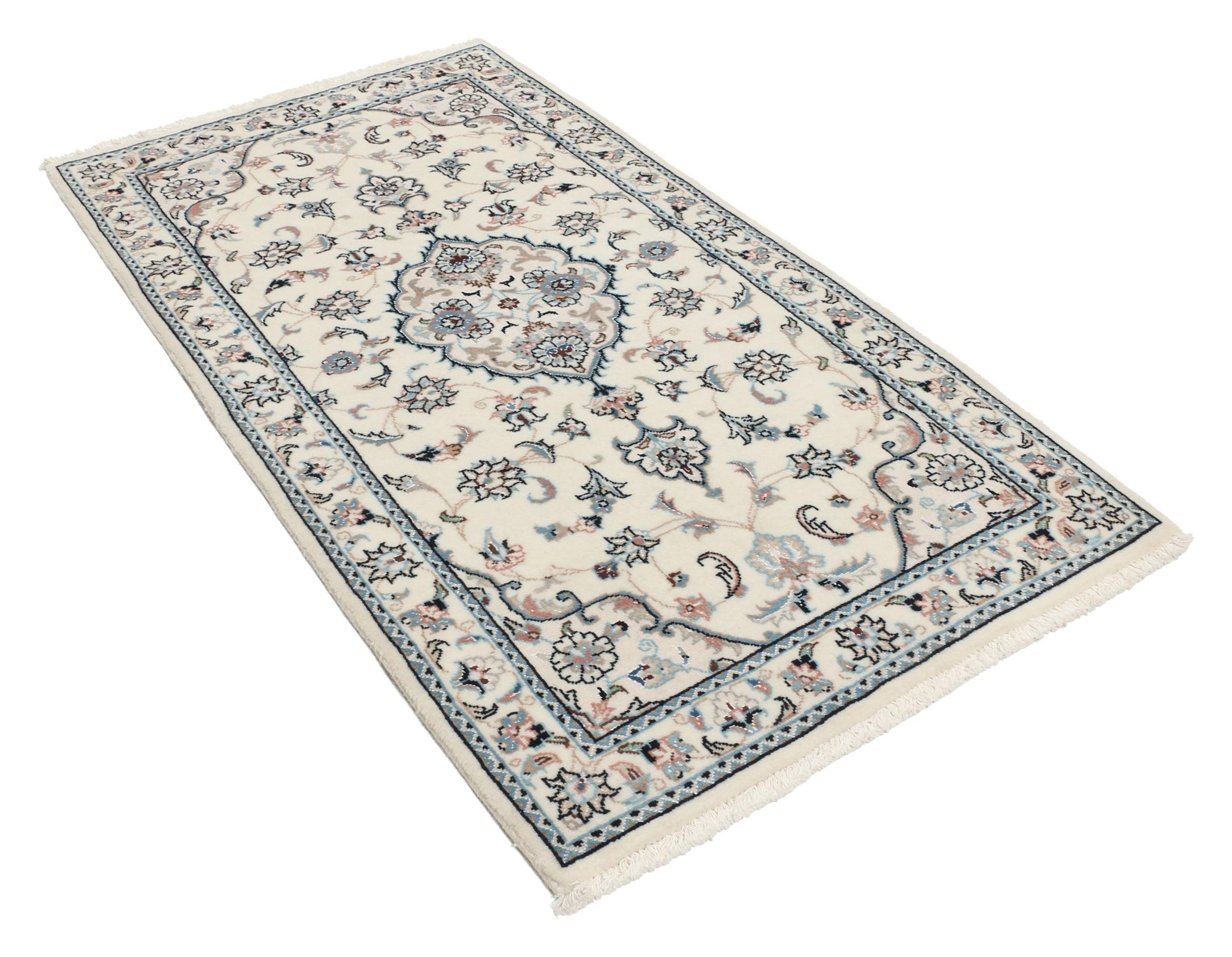
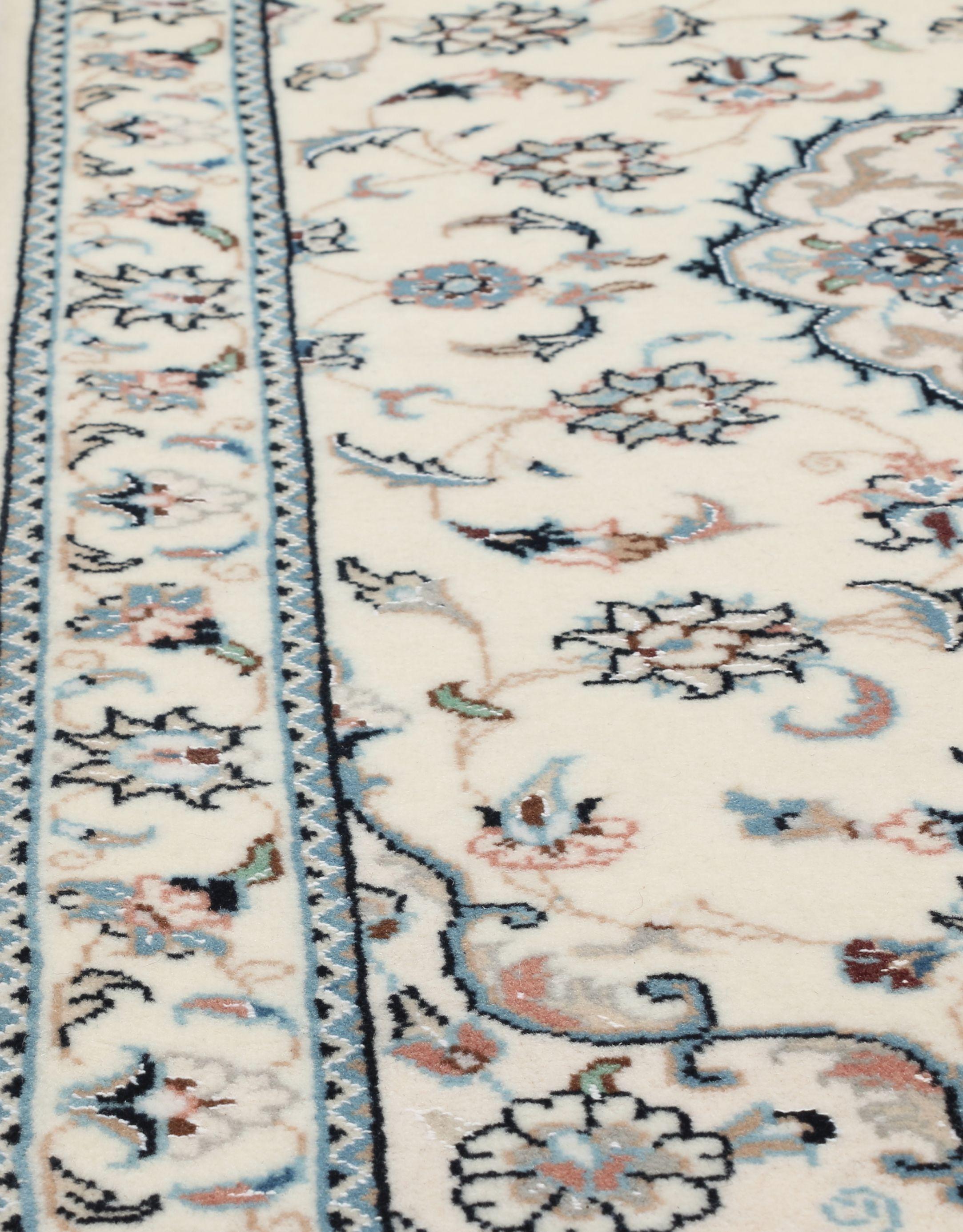
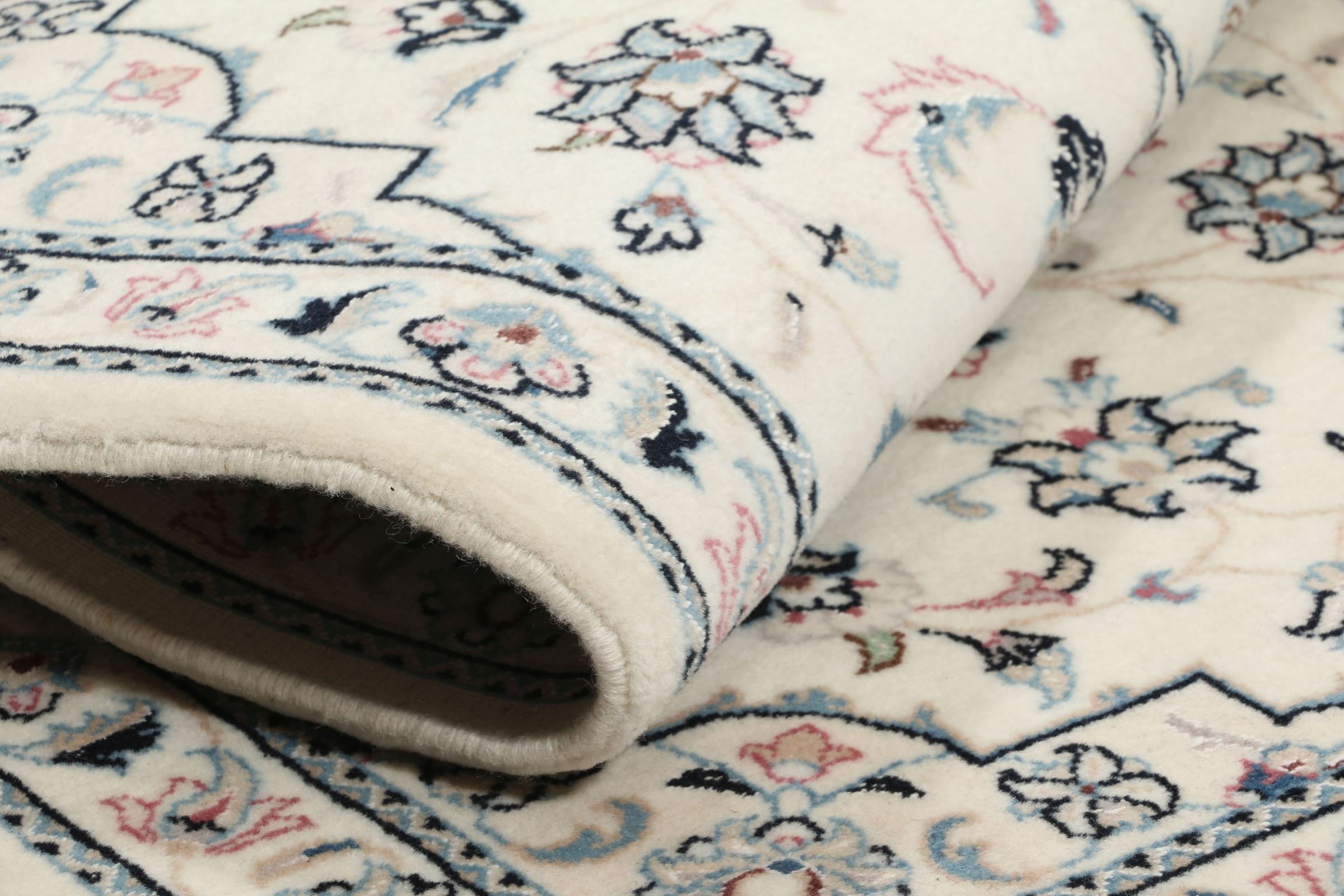
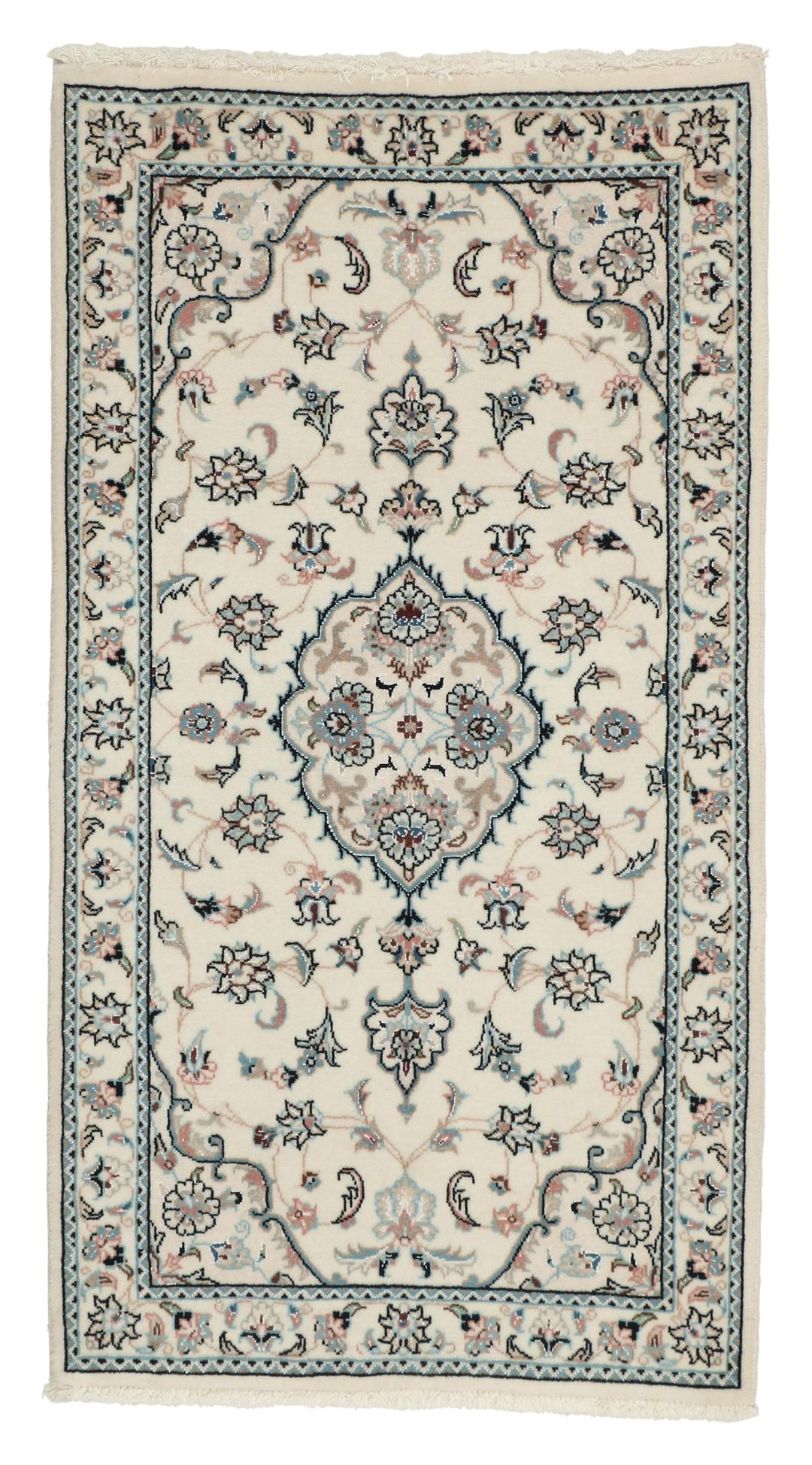
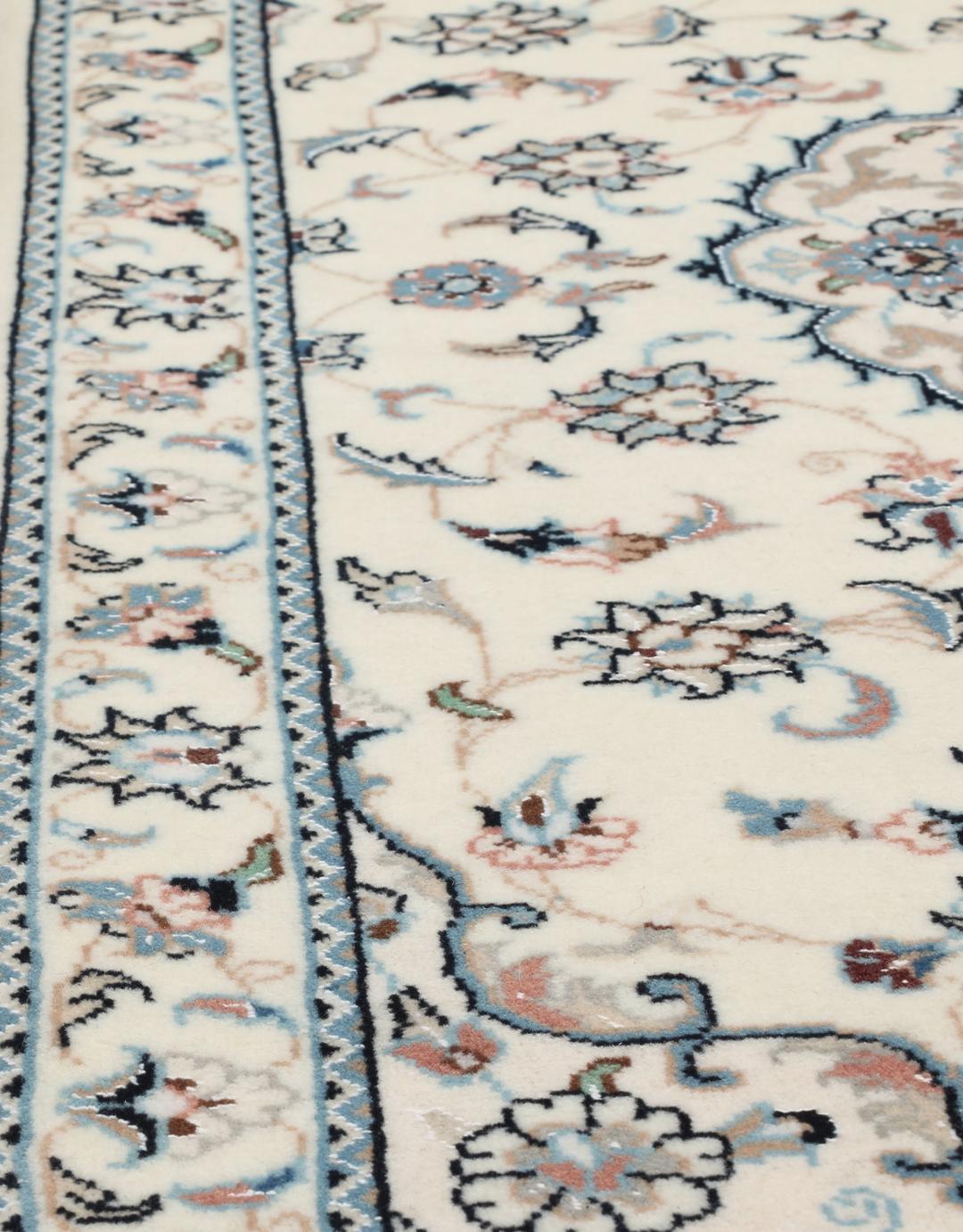
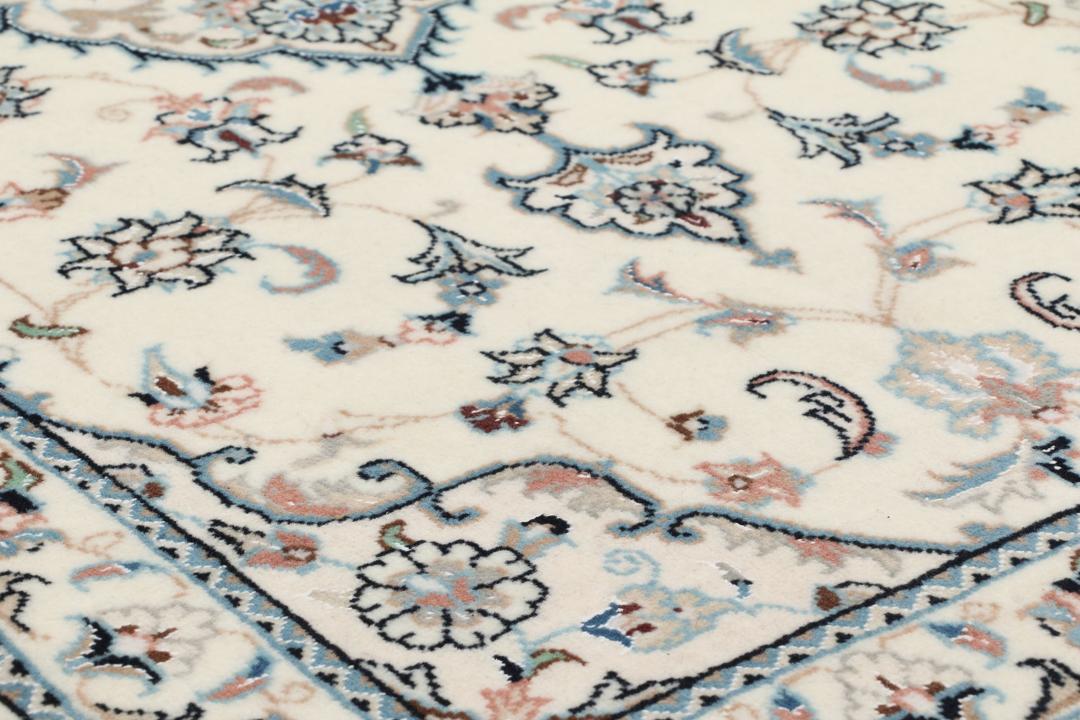
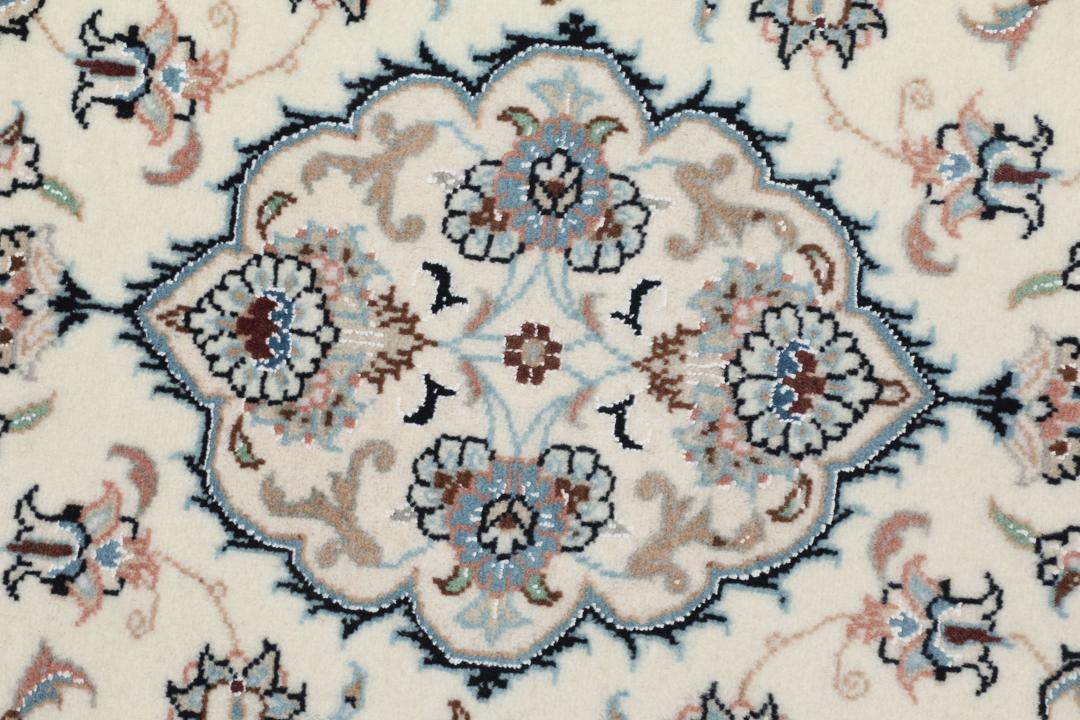
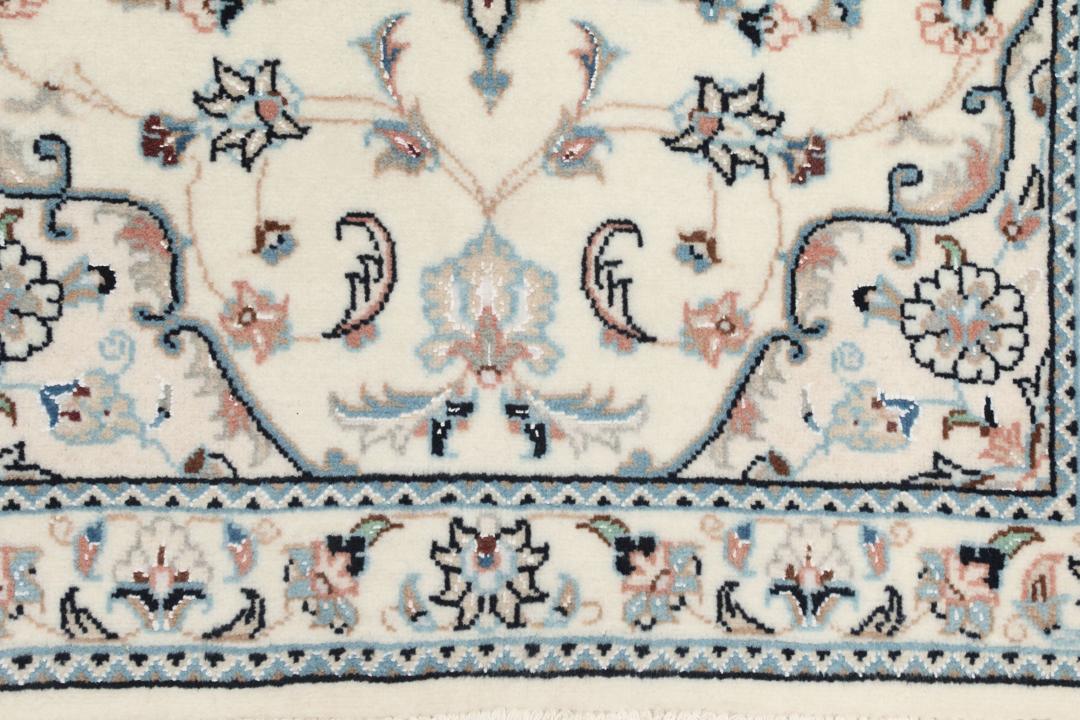
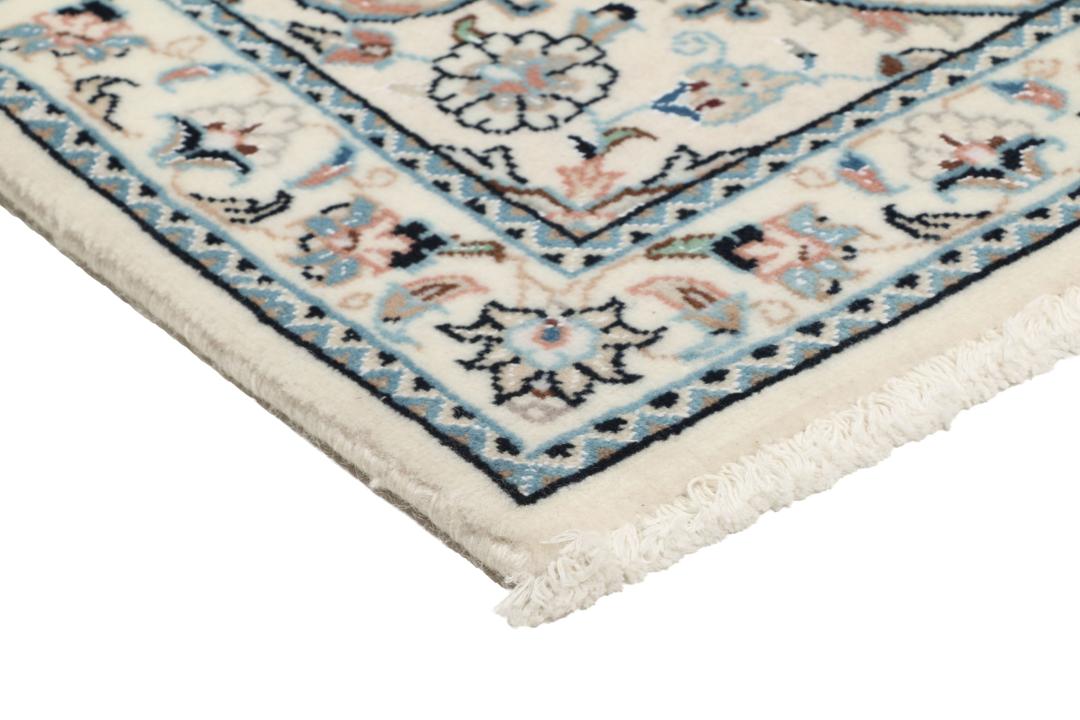
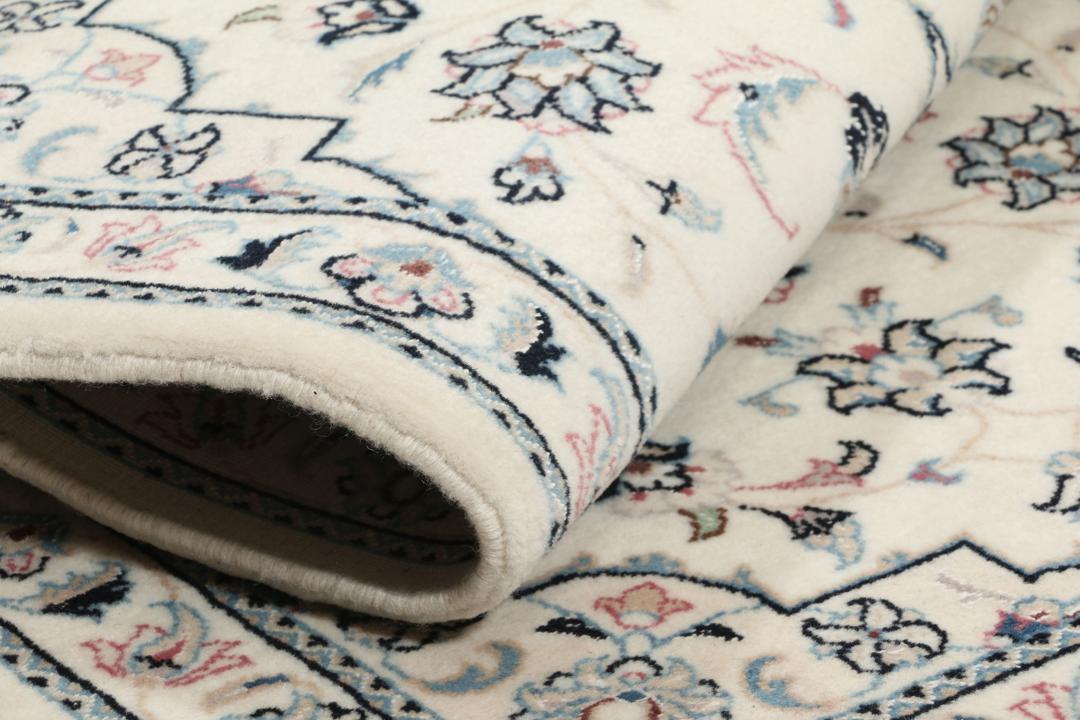
Visually, these rugs are defined by their elegant, balanced designs. They frequently feature a central medallion surrounded by dense, flowing floral sprays, intricate arabesques, and delicate scrolls. The colour palettes are typically restrained, favouring soft creams, blues, and beige tones that emphasise the clarity of the pattern rather than bold contrast.
Nain rugs are held in high esteem by collectors for their blend of technical precision and poetic design. Owning a piece from this tradition is a commitment to heritage, as each rug represents a culmination of centuries of regional artistic development. These pieces are valued as much for their enduring beauty as they are for the extraordinary level of skill required to bring them to life.