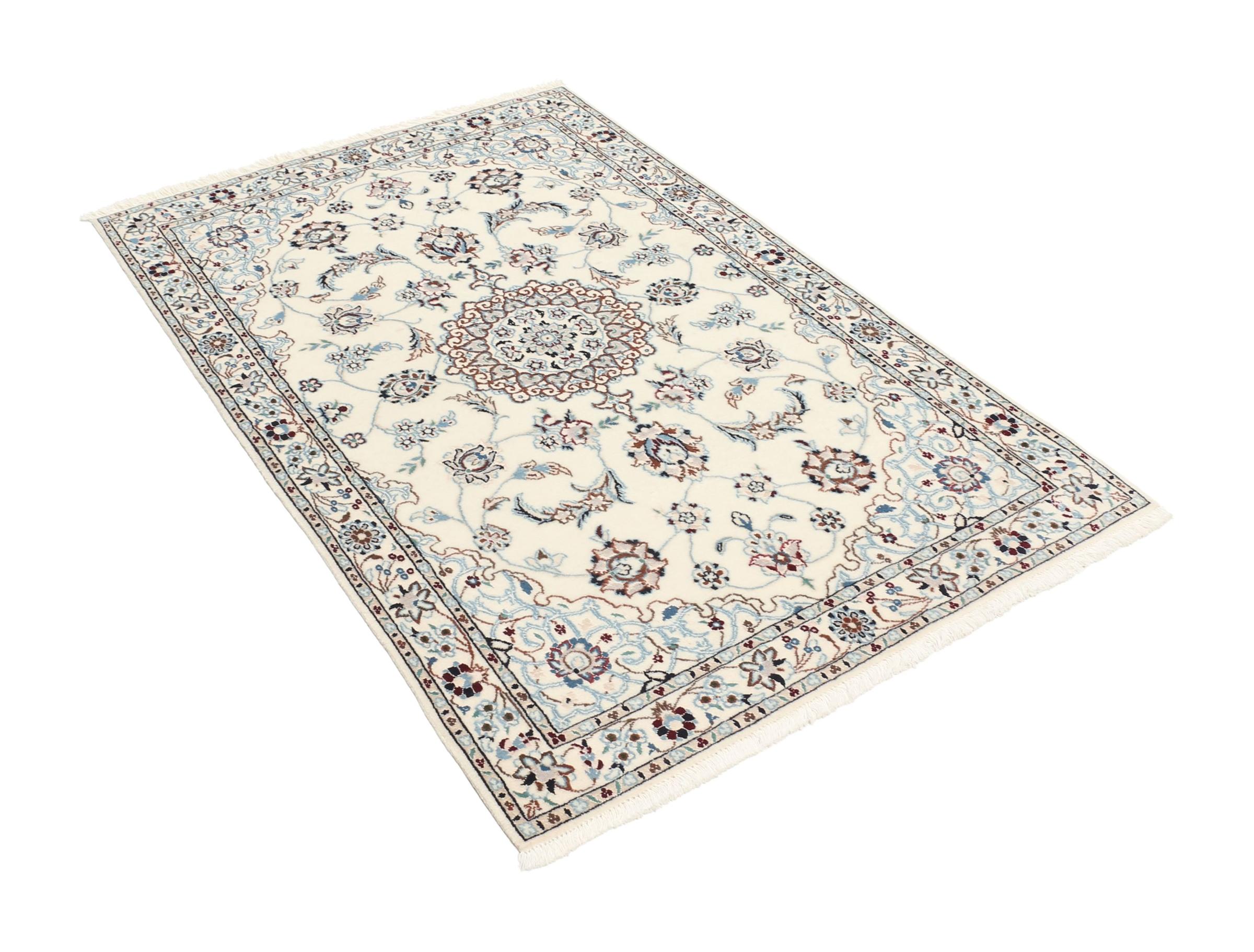
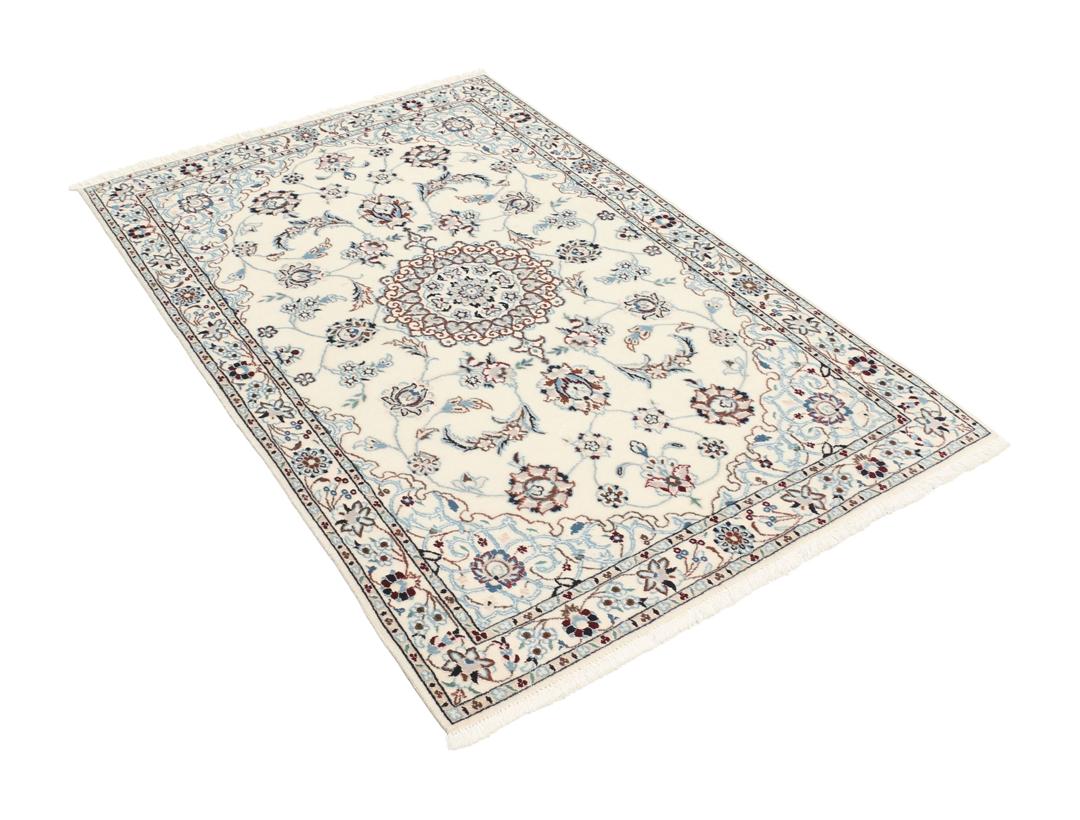
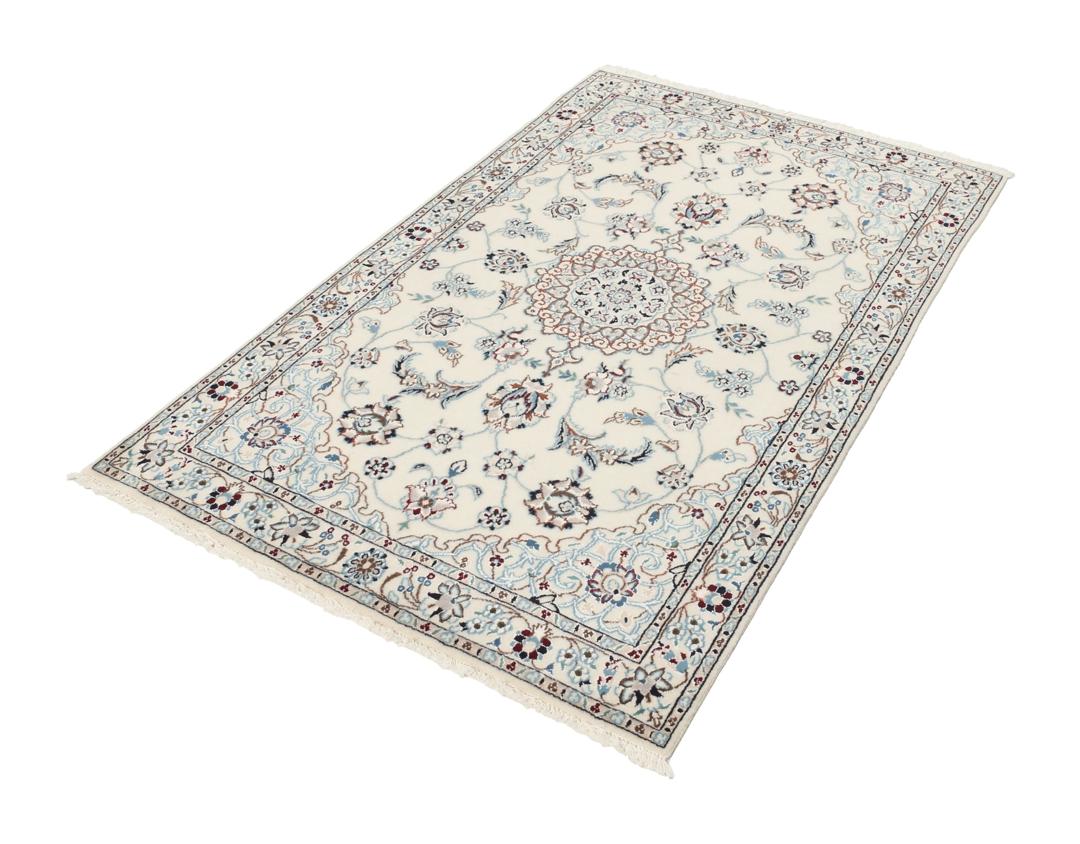
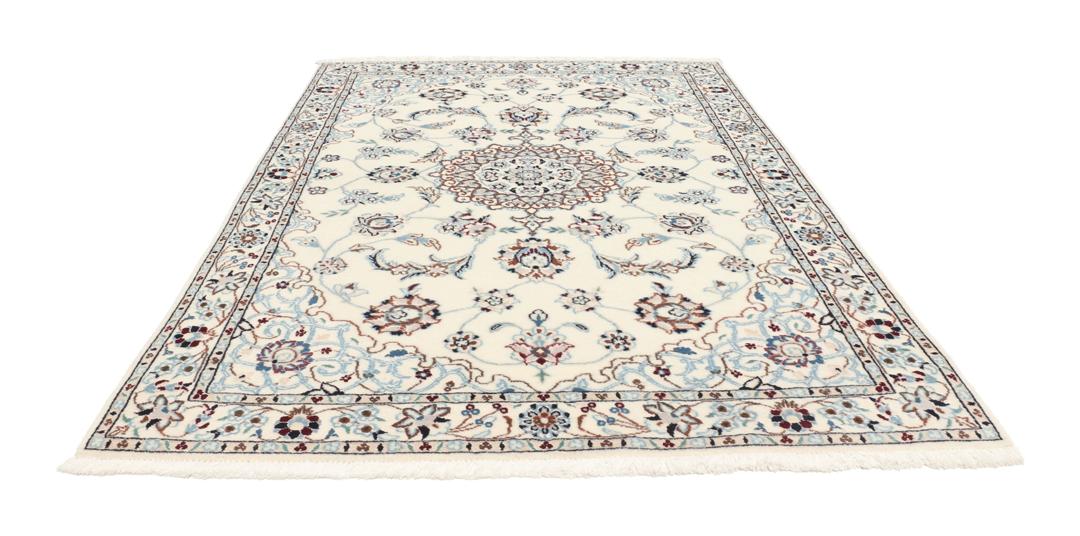
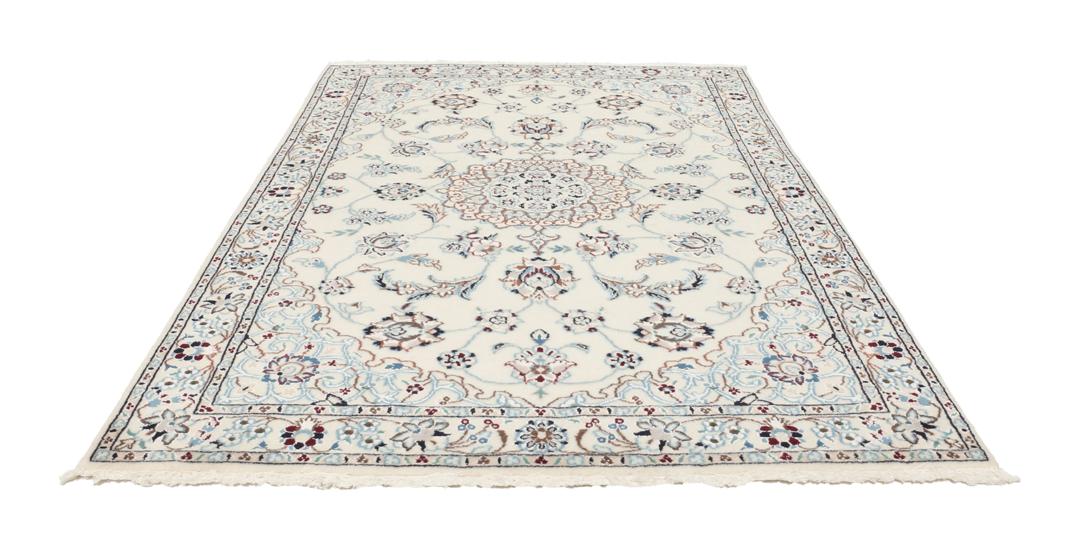
Nain rugs trace their origins to the town of Nain in the Middle East, a region that gained global recognition for its high-quality, elegant floor coverings in the early 20th century. Historically known for producing fine textiles and wools, the craft evolved to focus on these sophisticated rugs that often feature a distinct, luminous quality achieved through the careful use of materials.
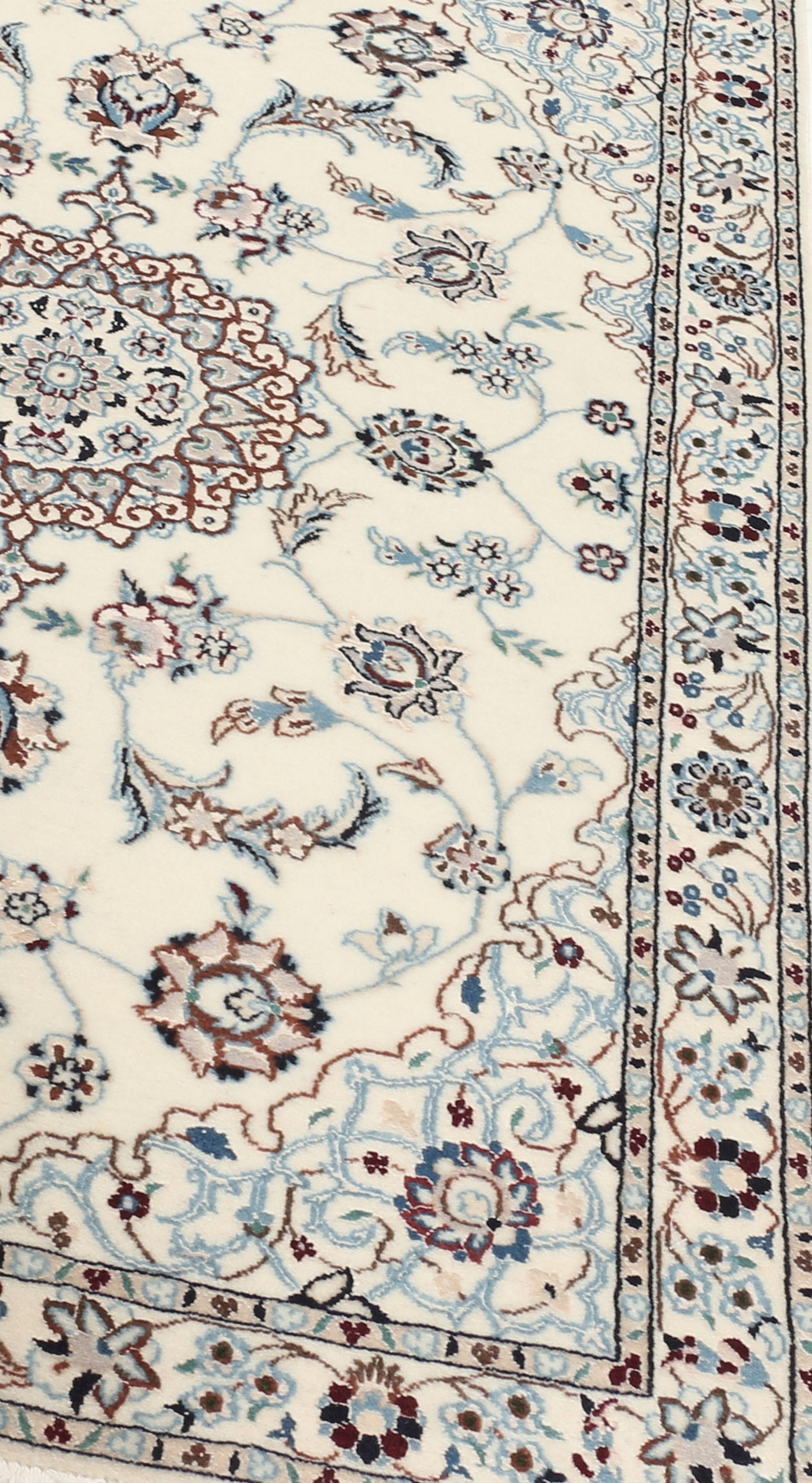
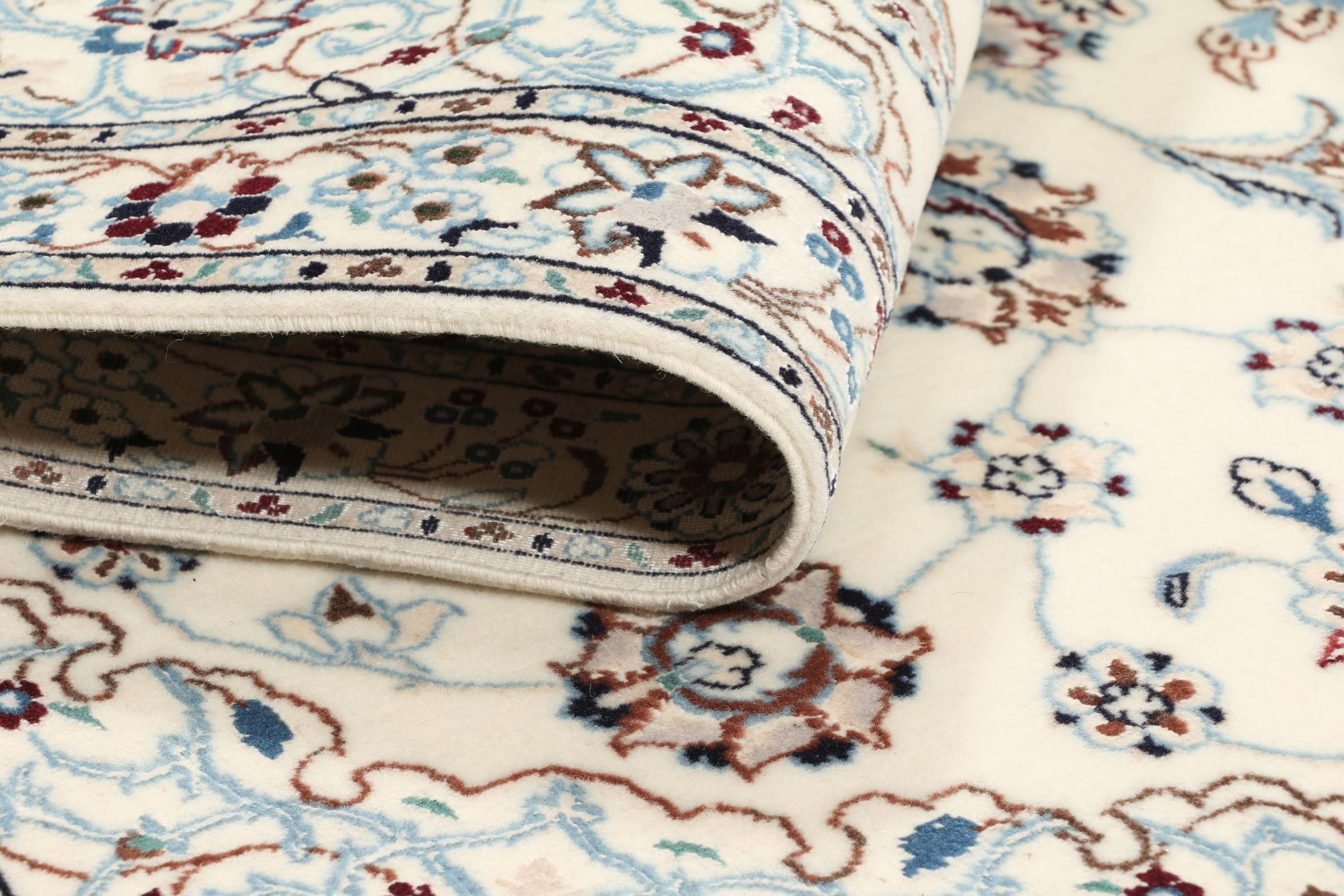
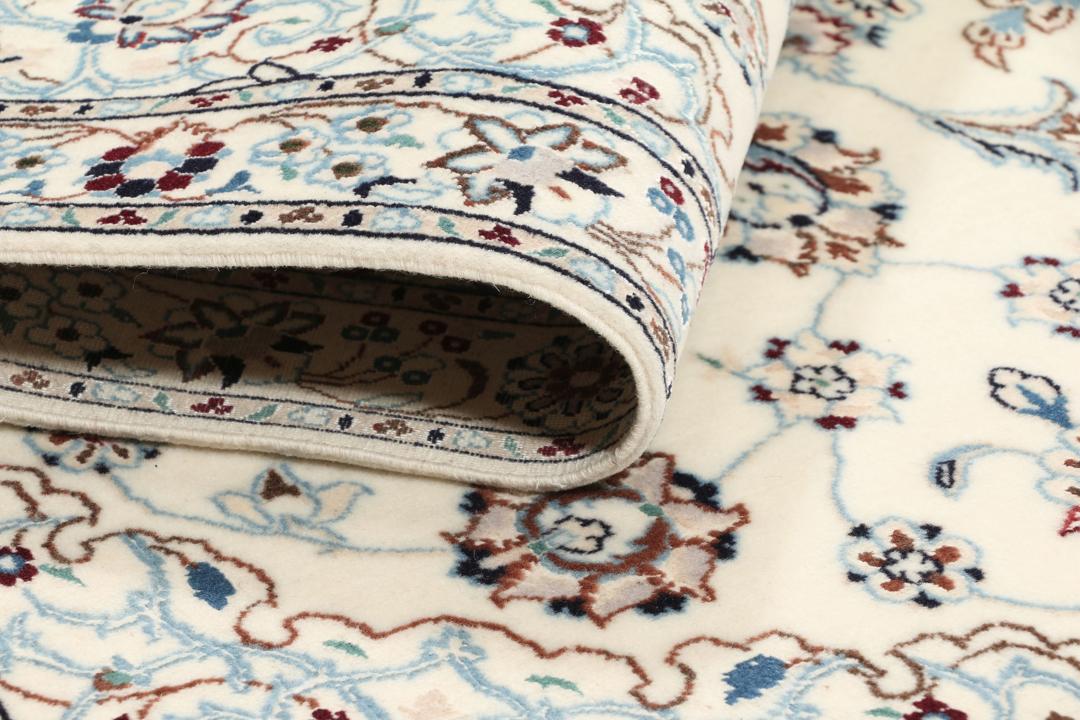
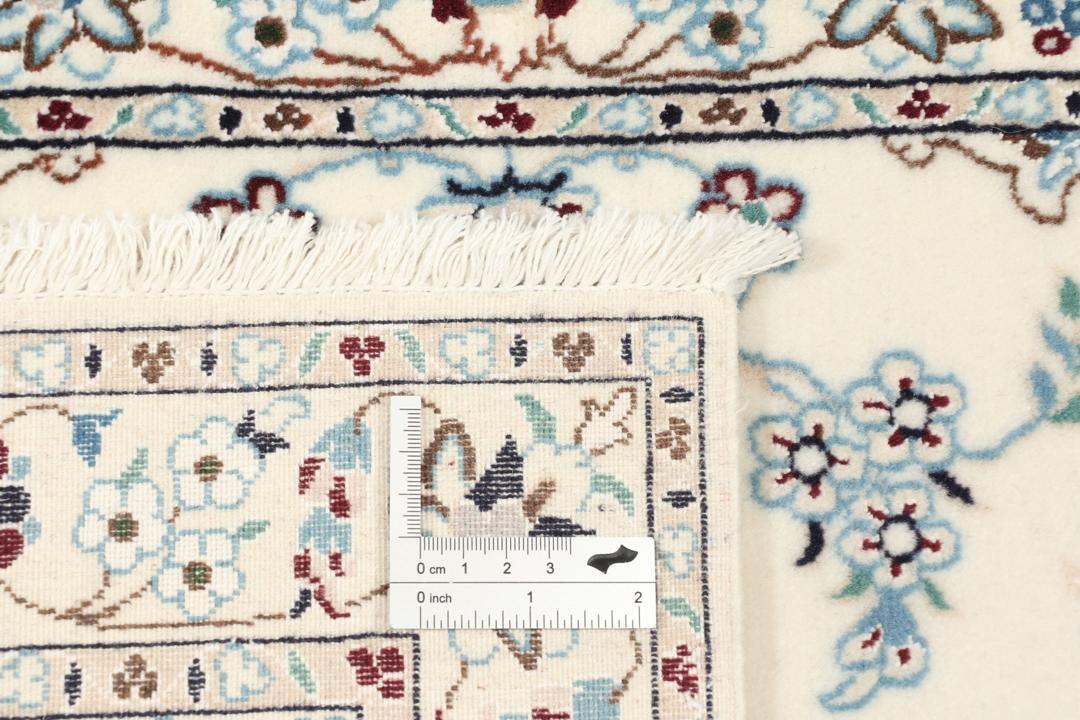
The term 'La' is central to understanding the quality of a Nain rug. It refers to the number of threads used in the warp, with a lower number indicating a finer, more complex weave. A 6La classification signifies a high-density construction that allows for incredibly detailed, sharp designs, making it a hallmark of premium craftsmanship and luxury.
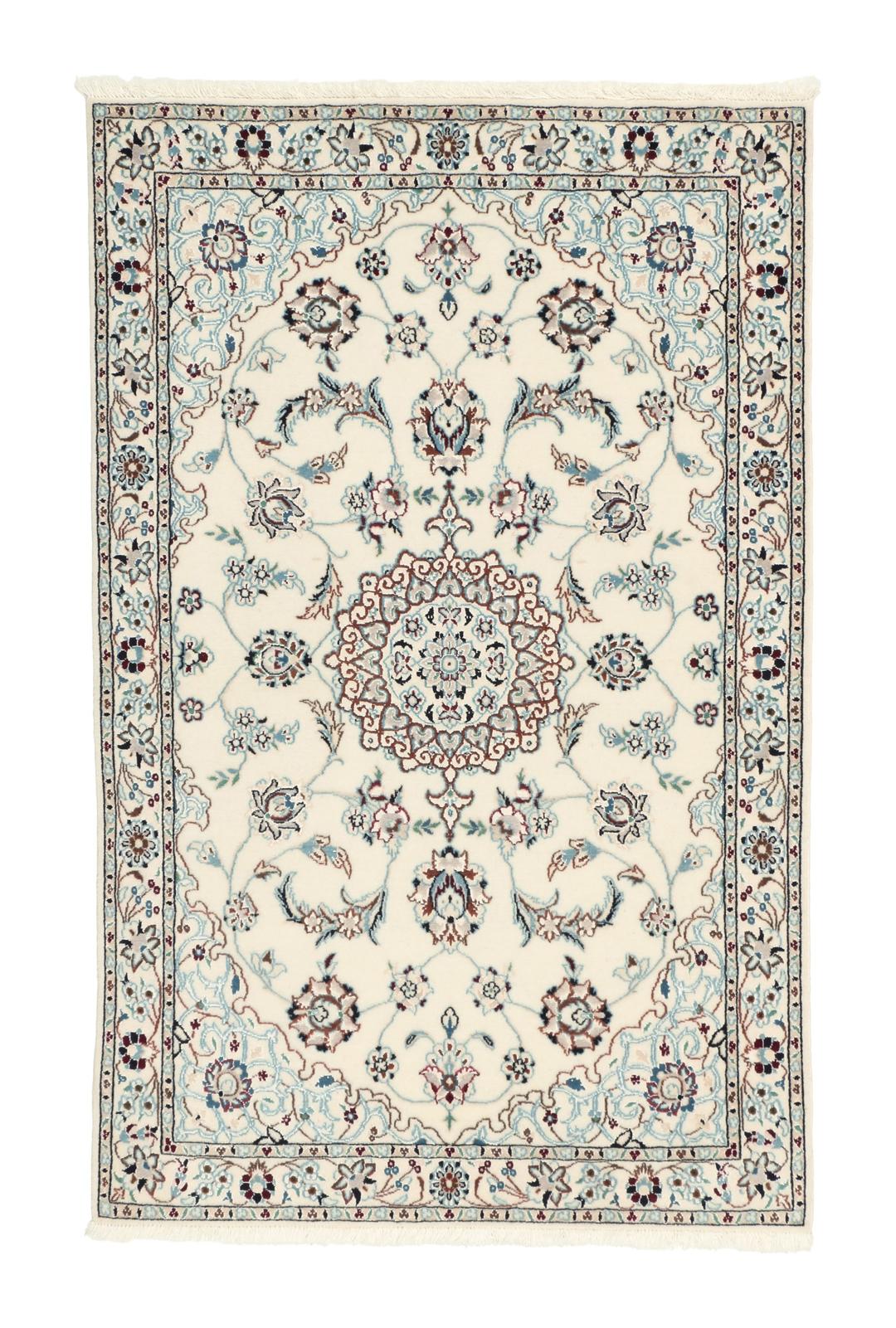
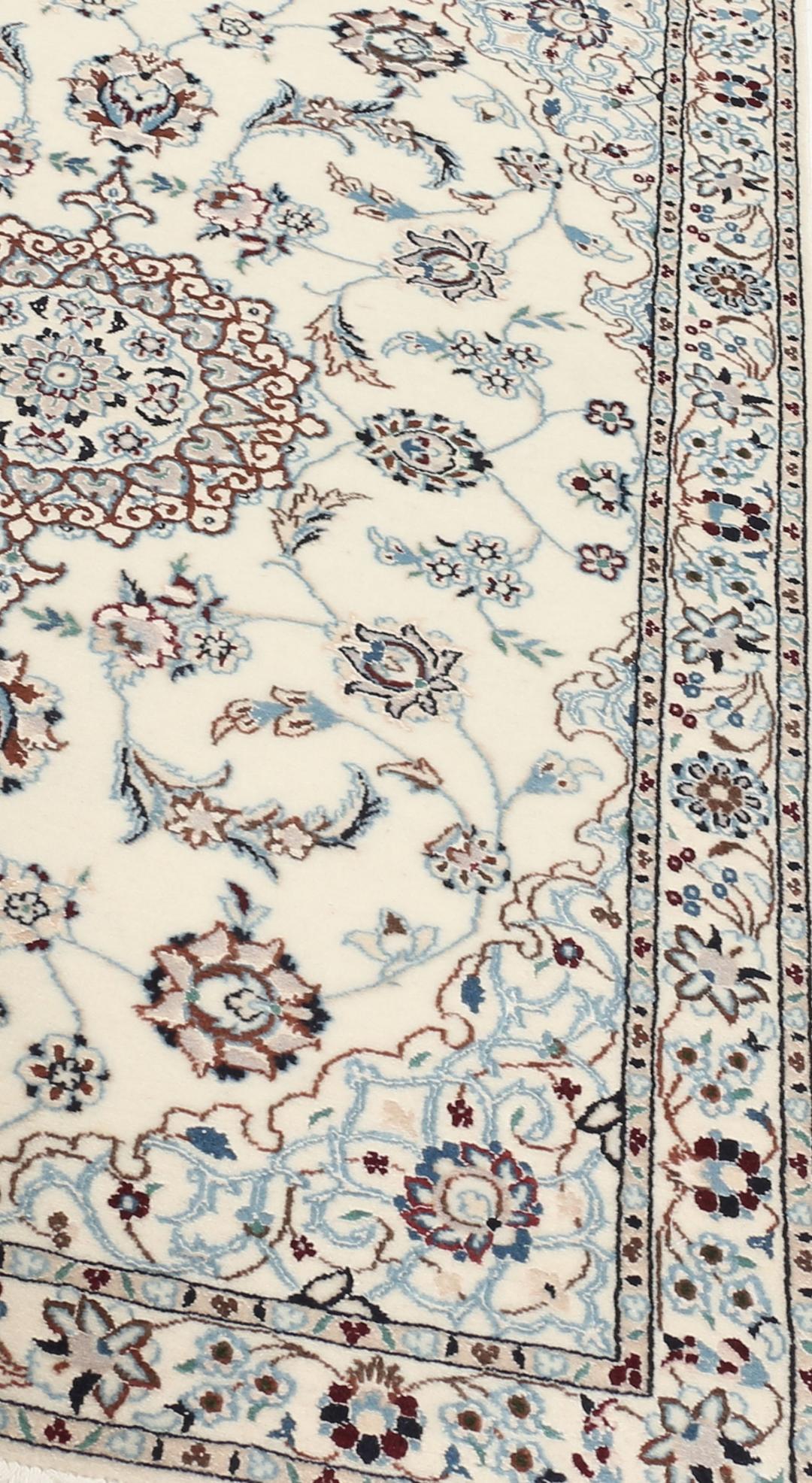
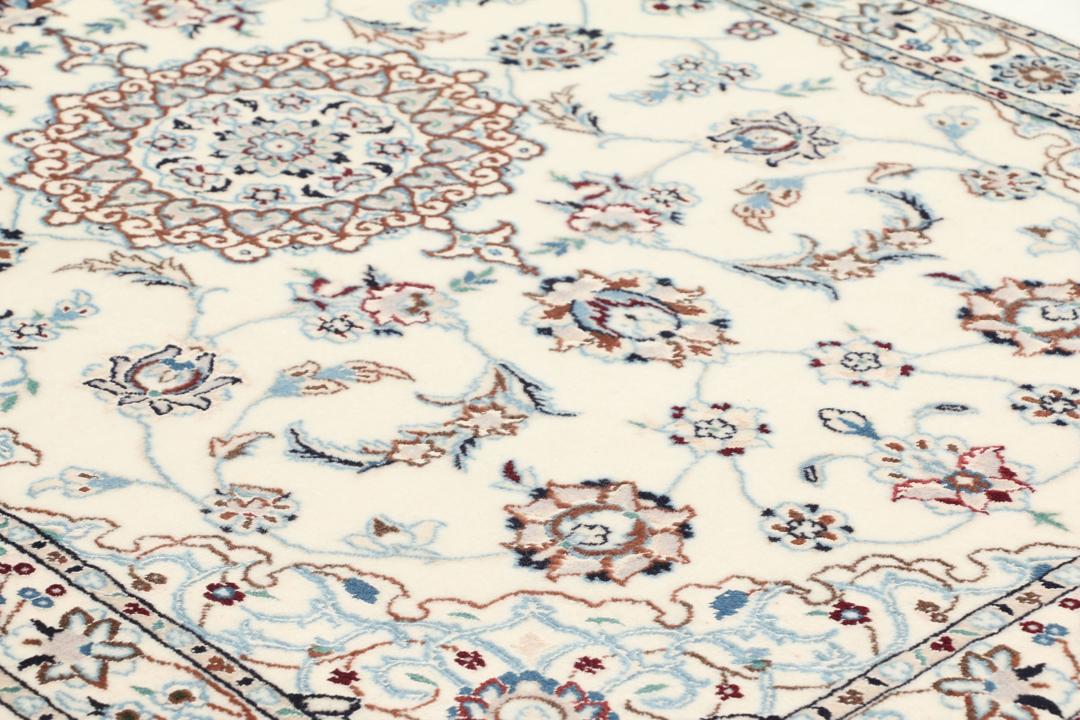
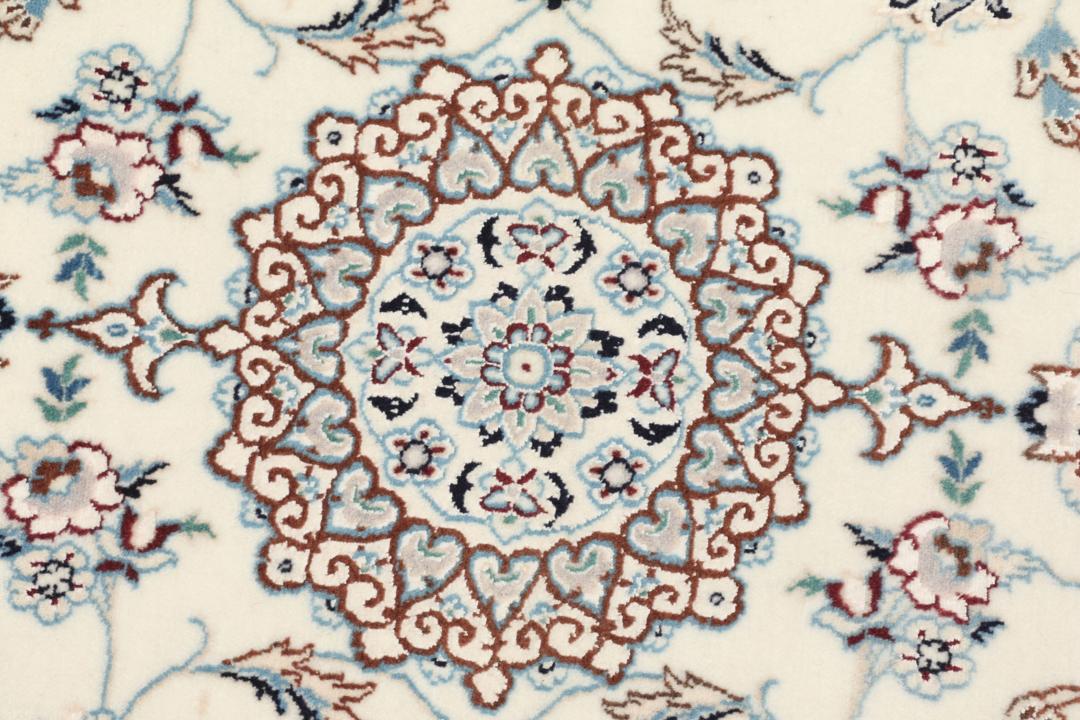
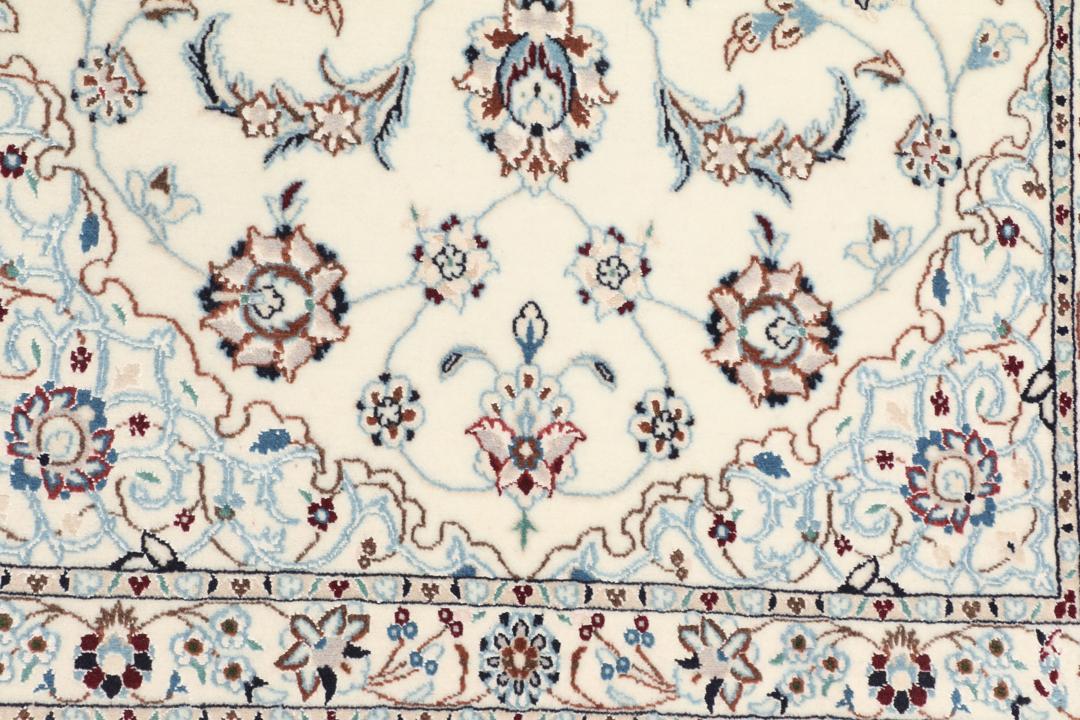
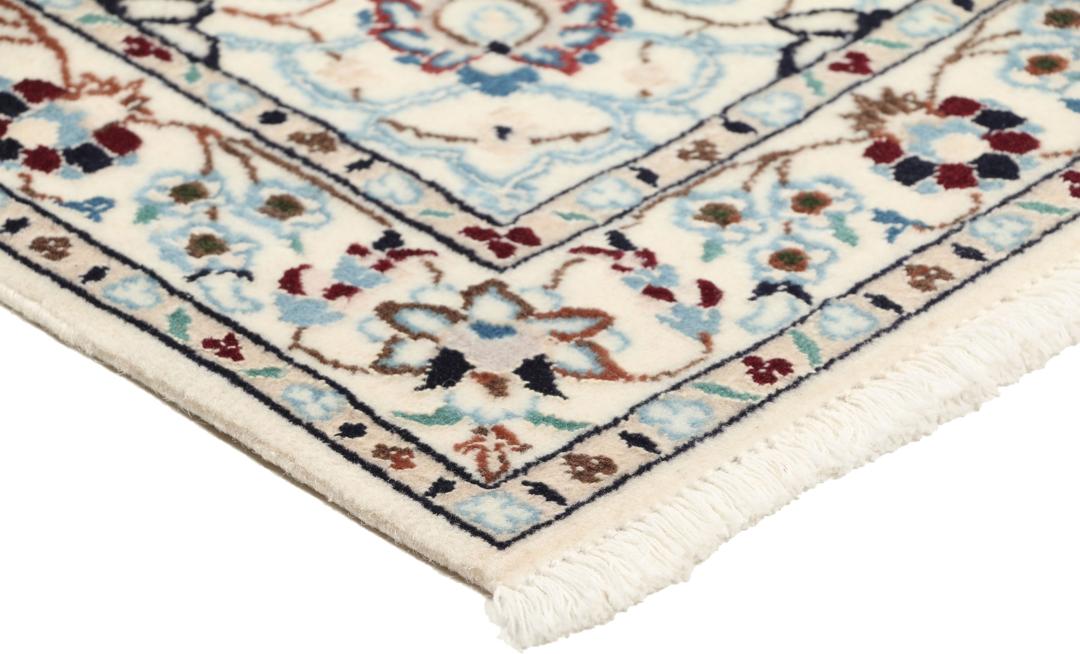
Visually, these rugs are defined by their balanced compositions, frequently centering on a central medallion surrounded by flowing arabesques, palmettos, and scrolling vines. While many traditional examples favour a palette of ivory, blue, and navy, each individual rug often introduces unique colour nuances that reflect the personal vision of the weaver.
Collectors and enthusiasts value these rugs for their combination of artistic beauty and technical precision. Owning a piece from this tradition is an investment in cultural heritage, representing a level of skill and dedication that is increasingly rare in the modern world.