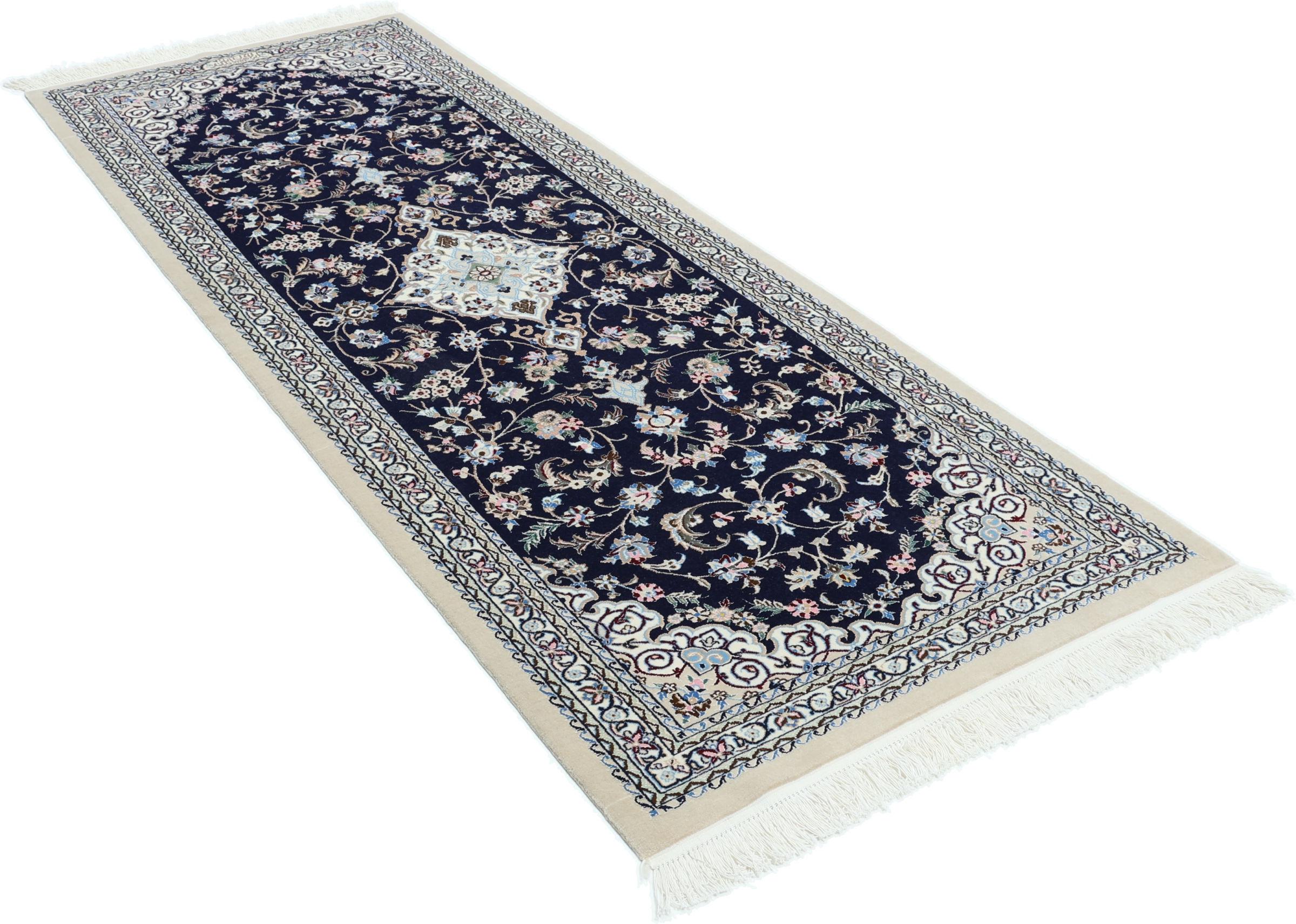
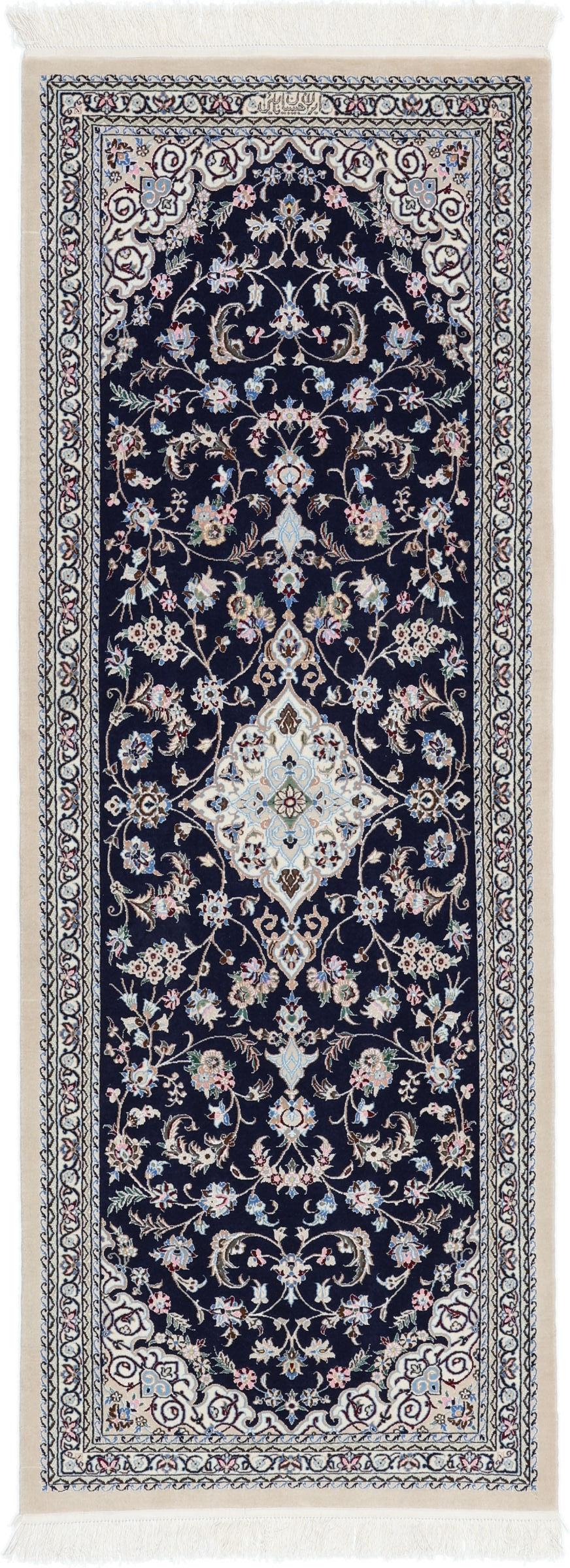
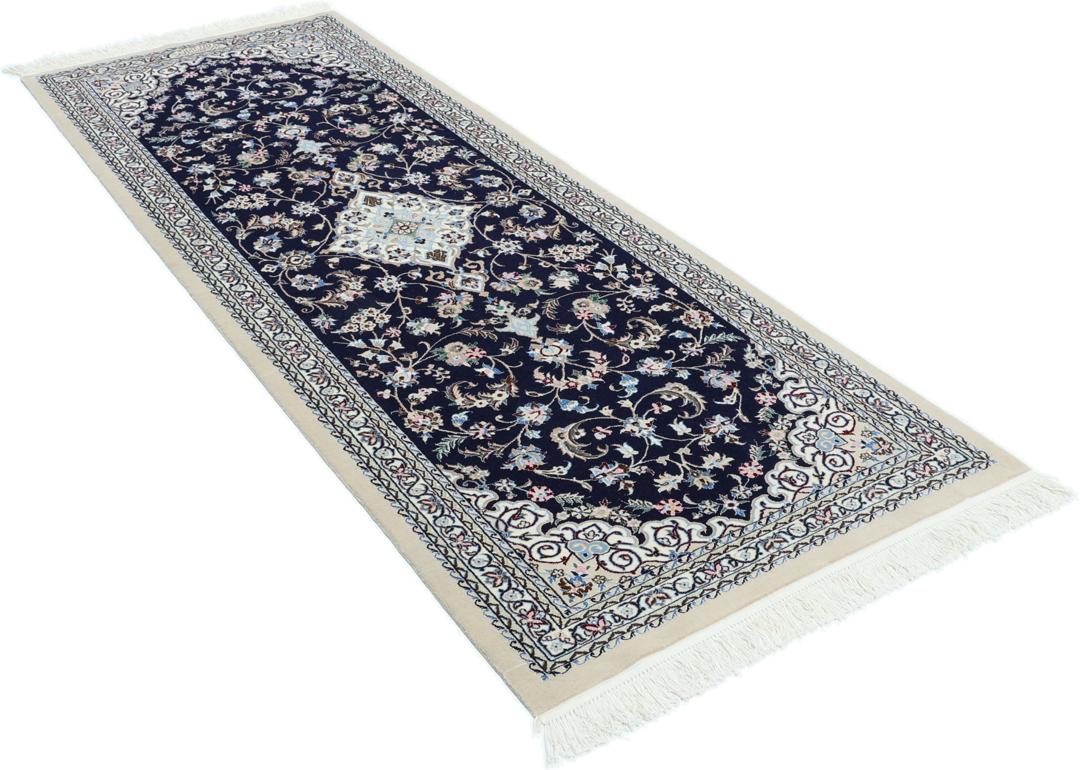
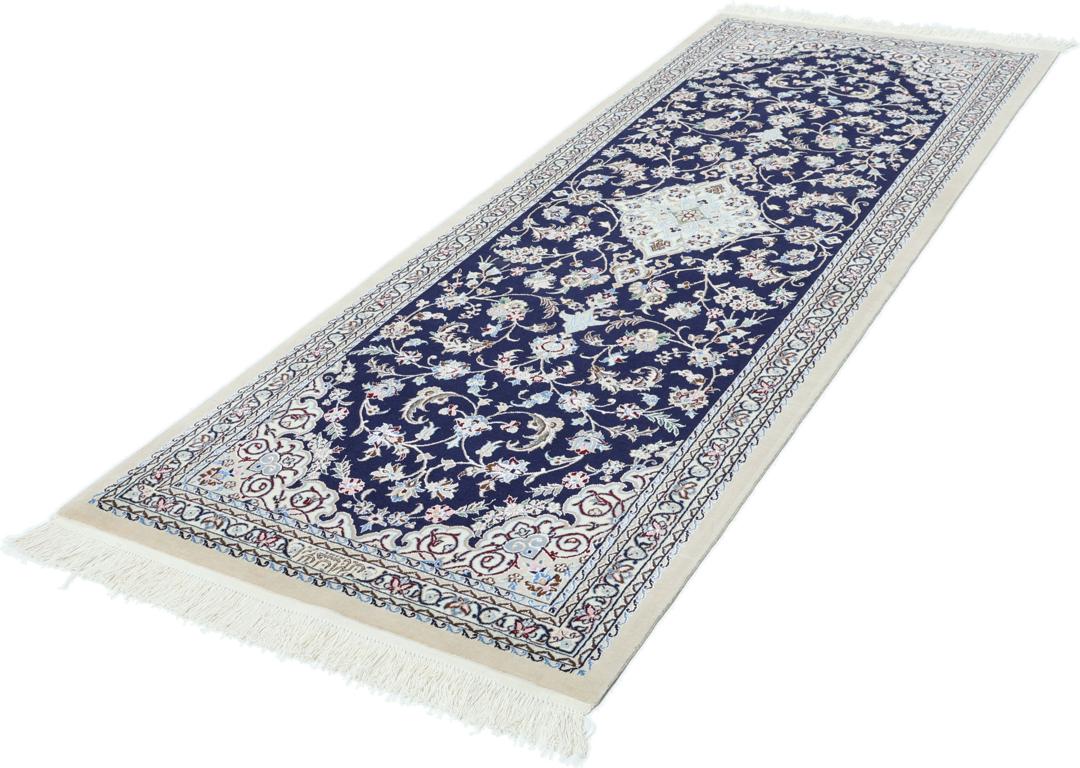
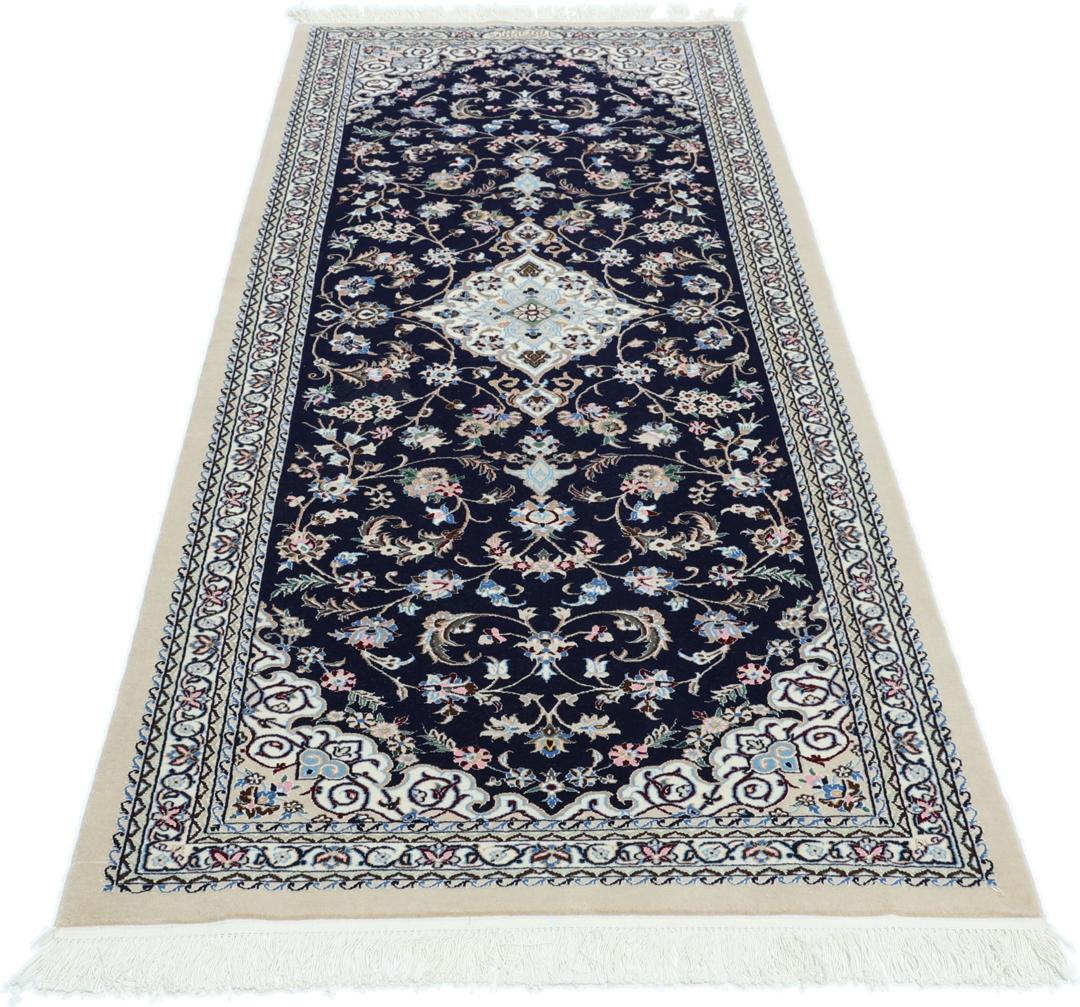
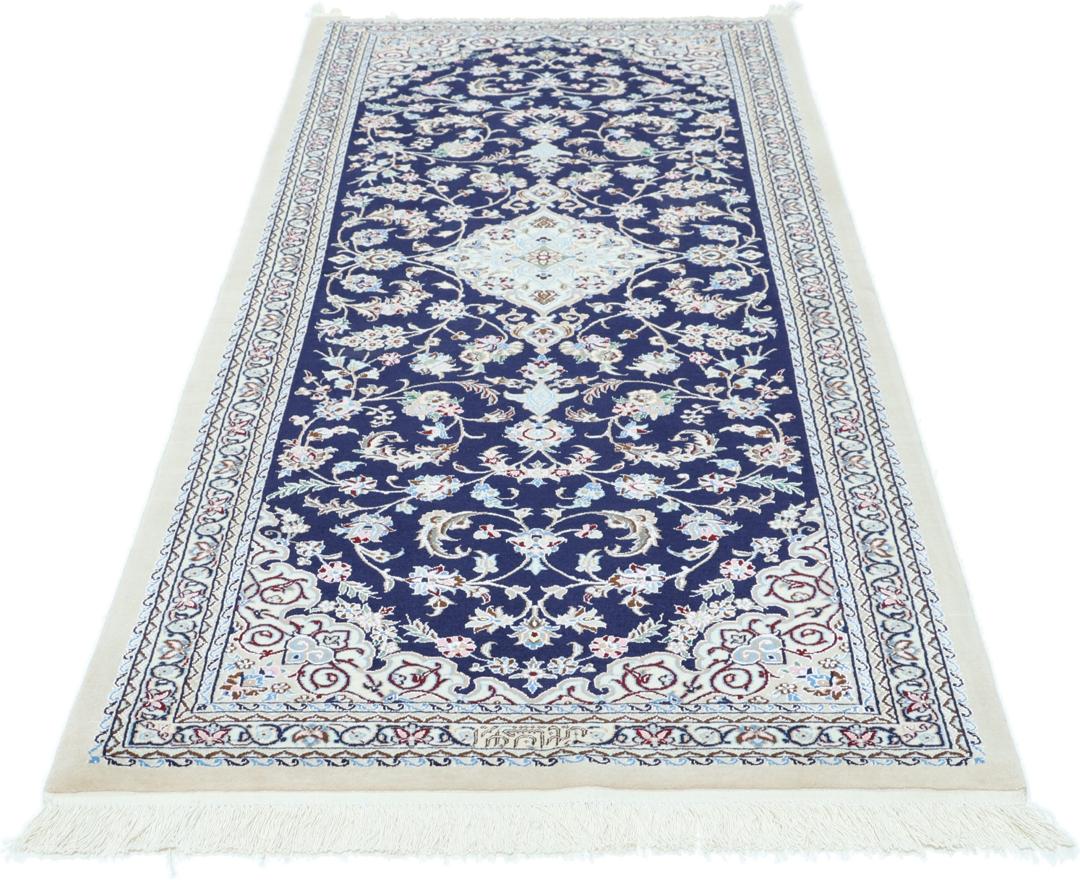
Nain rugs originate from the historic city of Nain, located in the heart of the Middle East. Originally known for producing high-quality wool textiles and cloaks, the region transitioned into rug weaving during the early 20th century. Over time, Nain developed a distinct reputation for creating some of the most refined and sought-after rugs in the world, often characterised by their light, elegant colour palettes and incredibly fine detail.
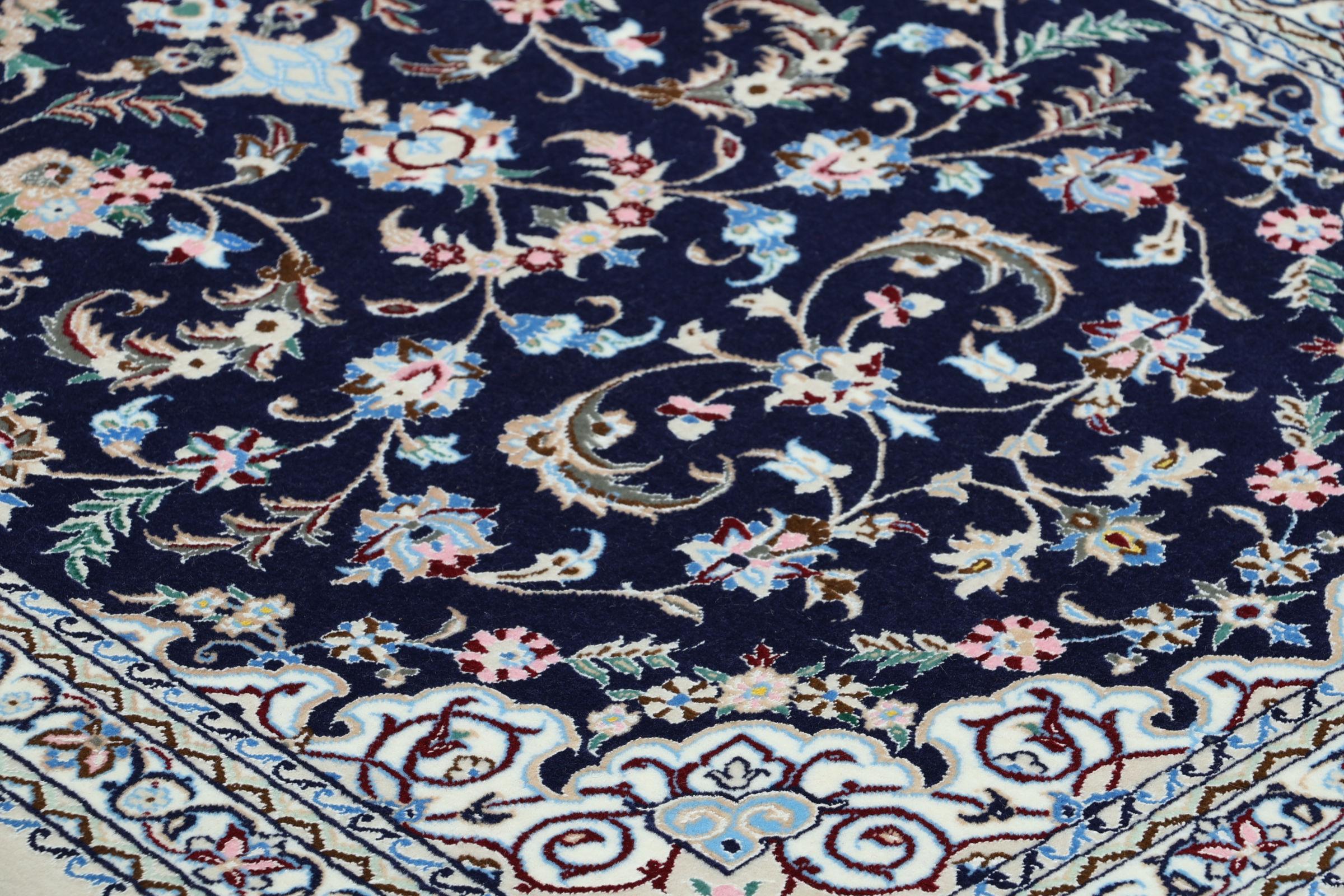
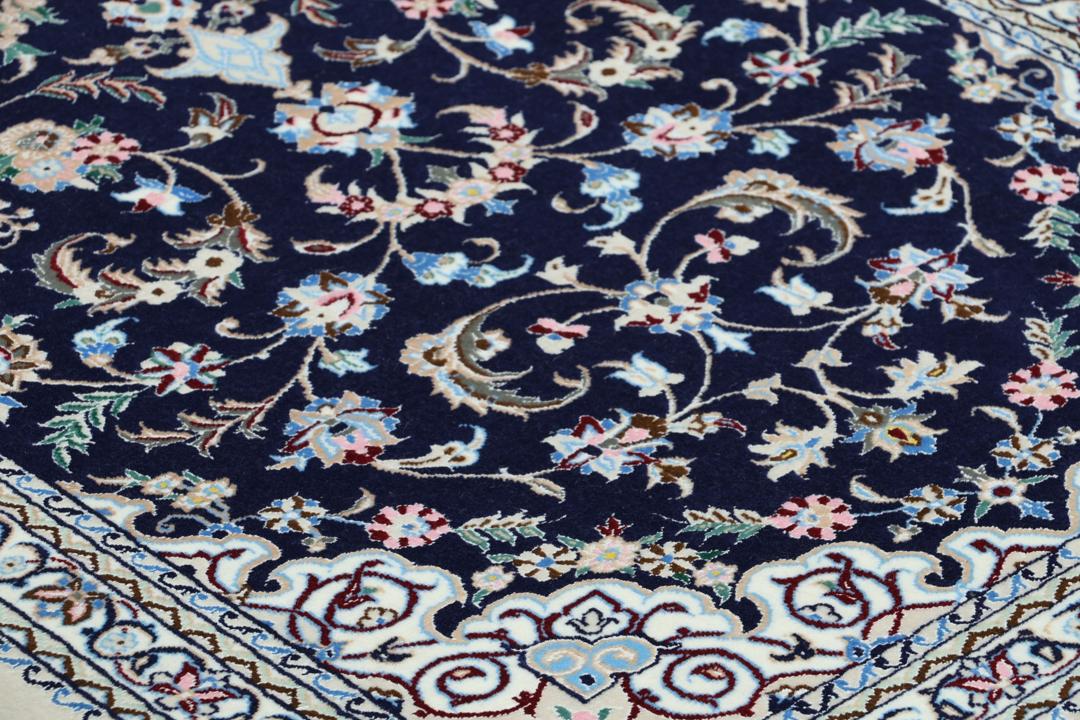
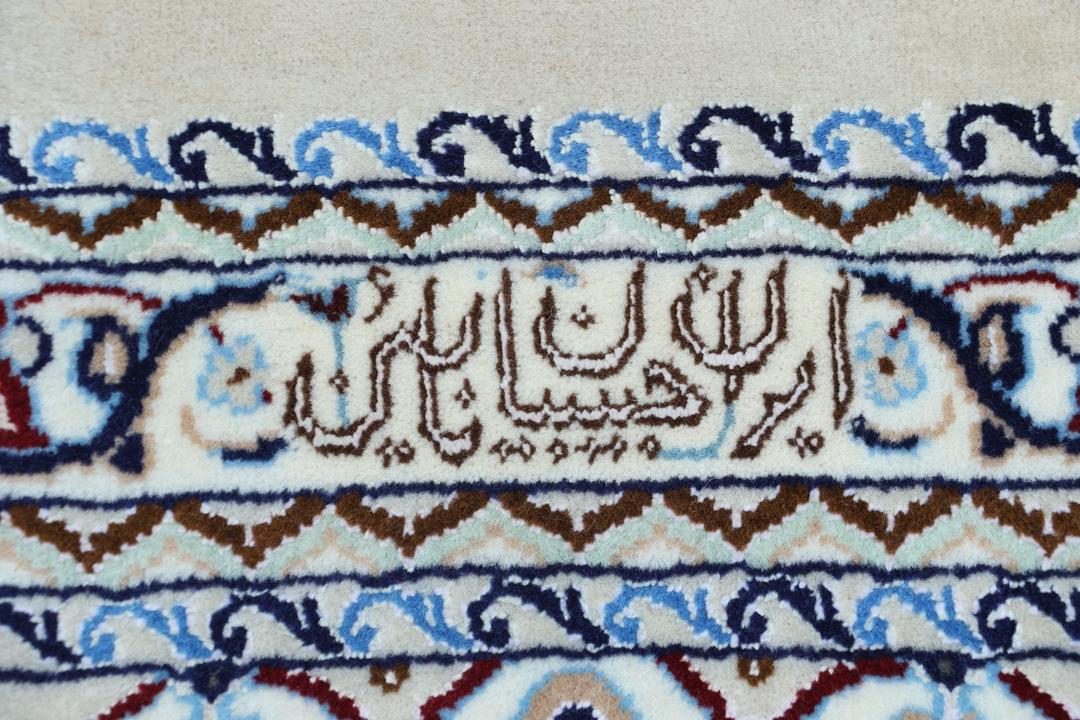
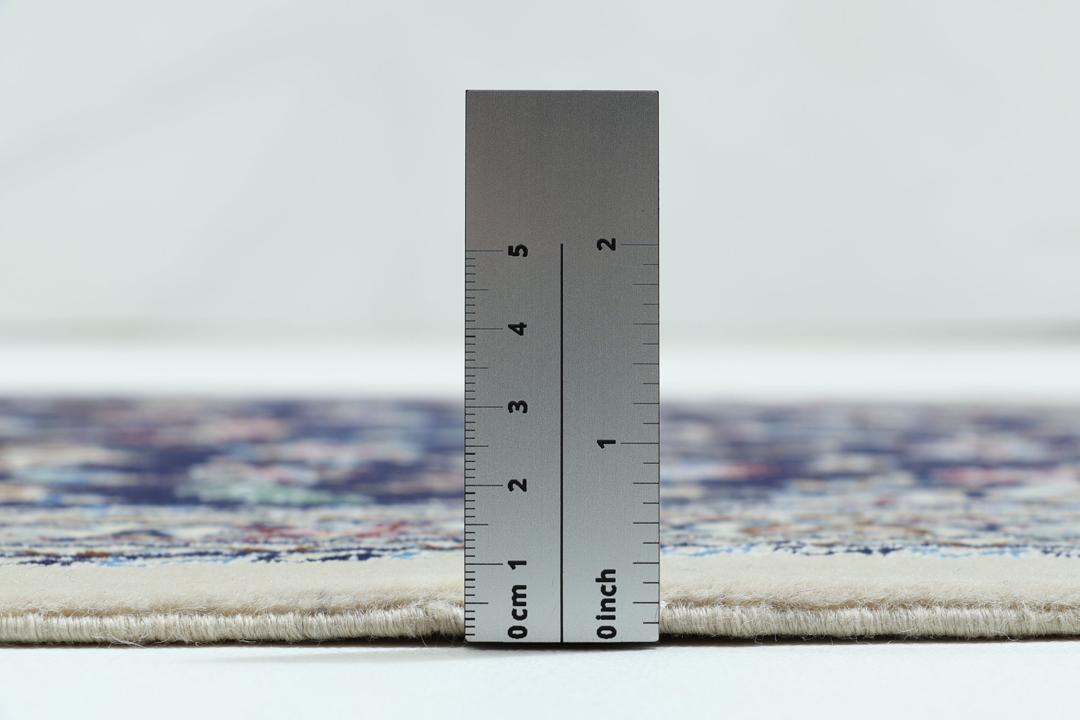
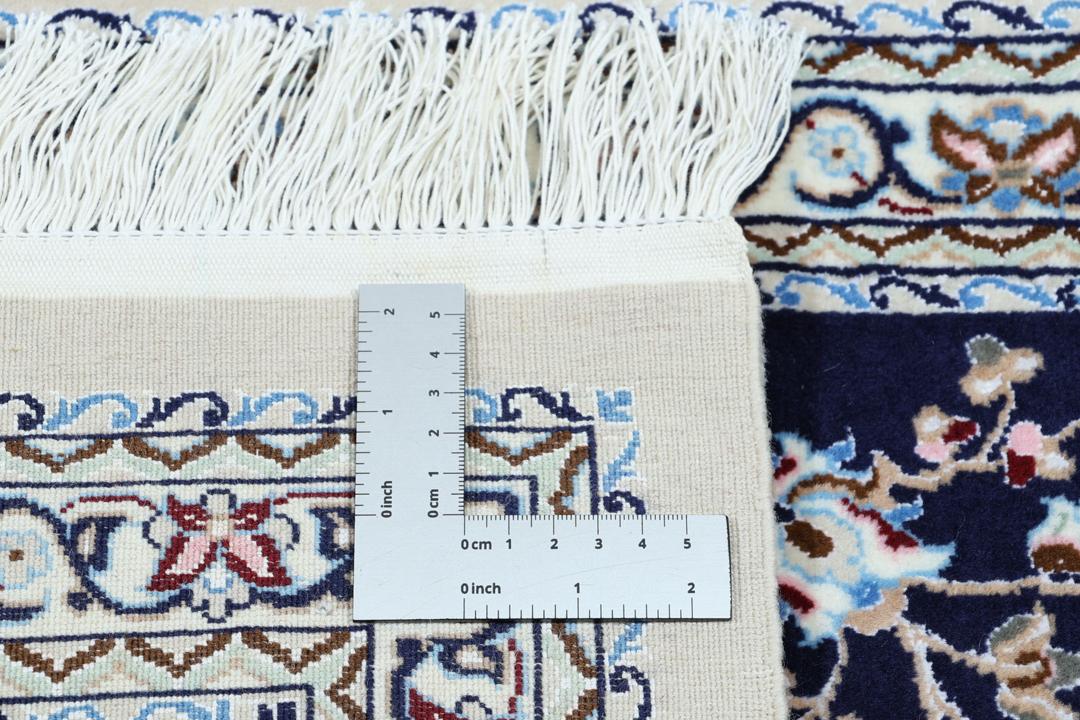
The designation 'La' is a traditional term used to describe the quality of a Nain rug, referring to the number of strands of thread used in the foundation. A 6La rug is among the finest grades, indicating a very high density of knots and an exceptionally thin, fine thread count. This technical specification is crucial, as it allows for the intricate, delicate patterns that define the Nain style, resulting in a rug that is both light in weight and dense in visual information.
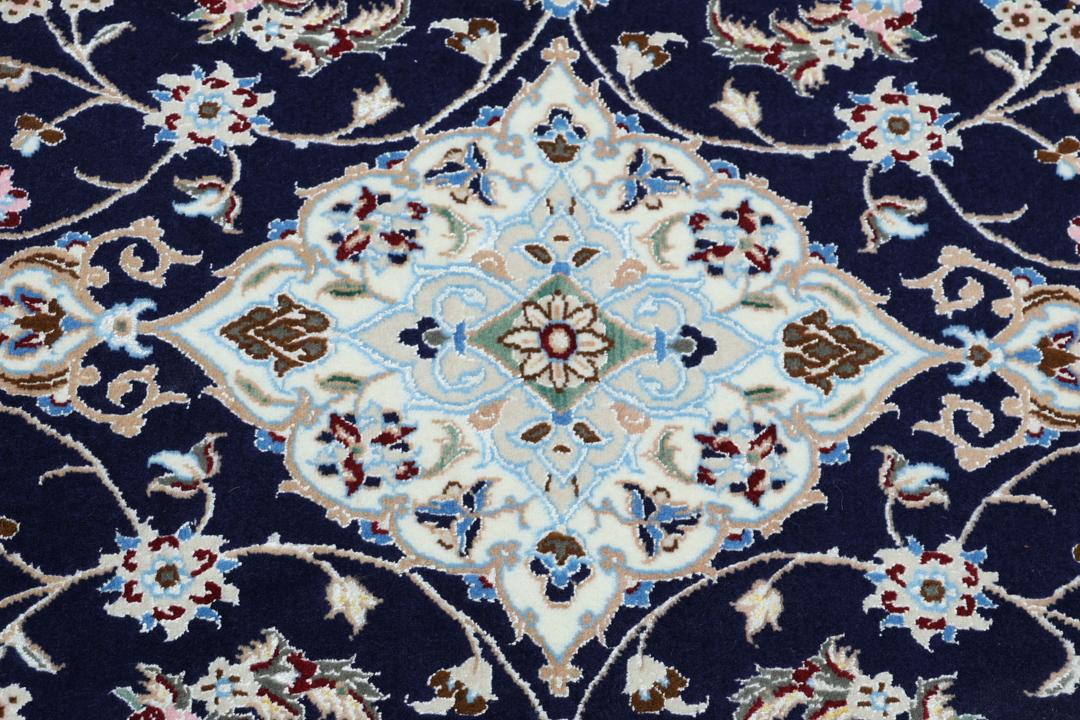
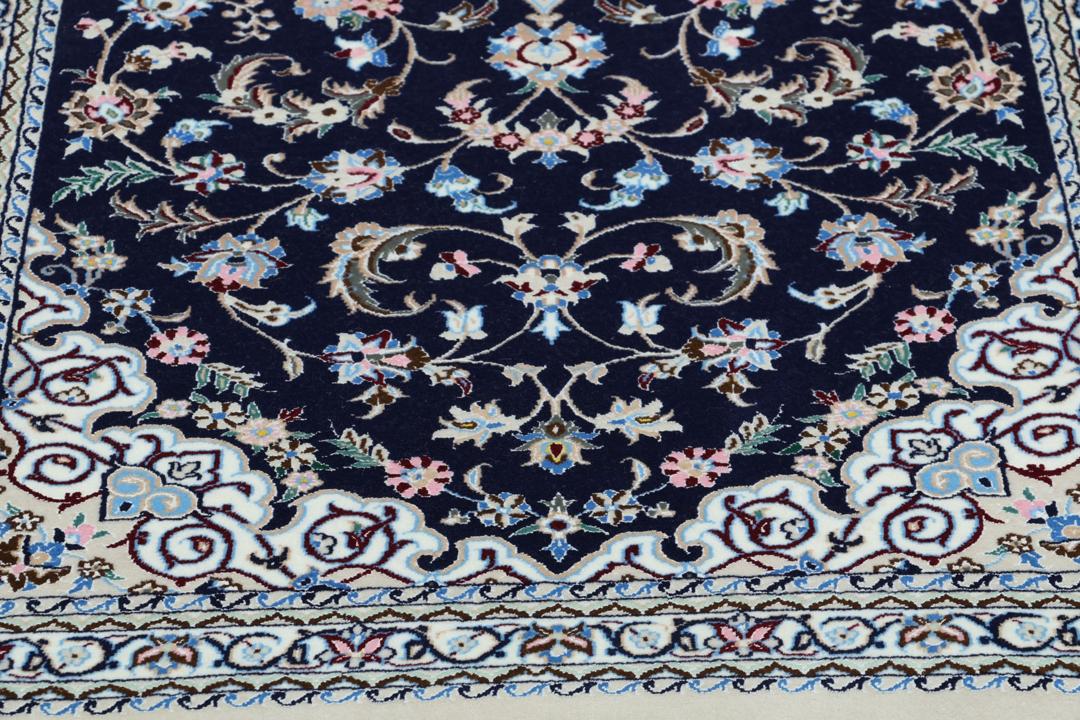
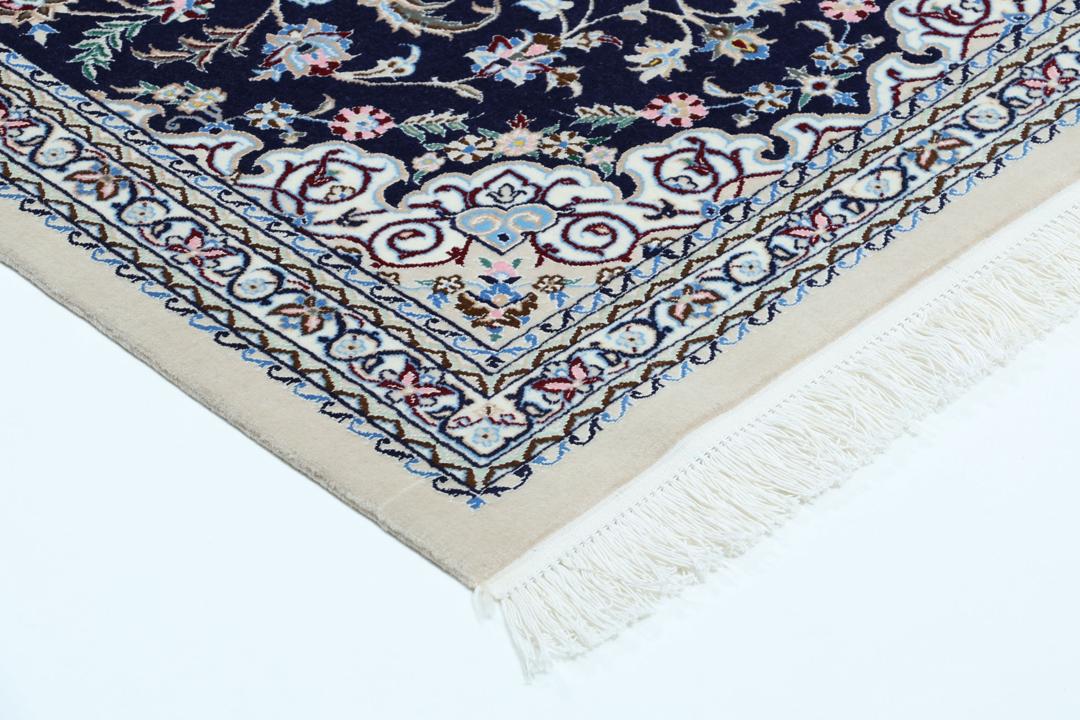
Visually, these rugs are celebrated for their sophisticated floral arrangements, often featuring a central medallion surrounded by scrolling vines, palmettes, and arabesques. The colour schemes are traditionally restrained, often utilising shades of blue, cream, and white to emphasise the clarity of the design. This specific piece maintains these hallmarks, offering a harmonious composition that is both complex and easy to integrate into a variety of home environments.
Collectors value Nain rugs for their combination of technical precision and artistic restraint. Owning a piece from this tradition signifies an appreciation for a craft that prioritises patience and detail above all else. These rugs are not merely floor coverings but are considered lasting investments in cultural heritage, representing the pinnacle of regional weaving traditions.