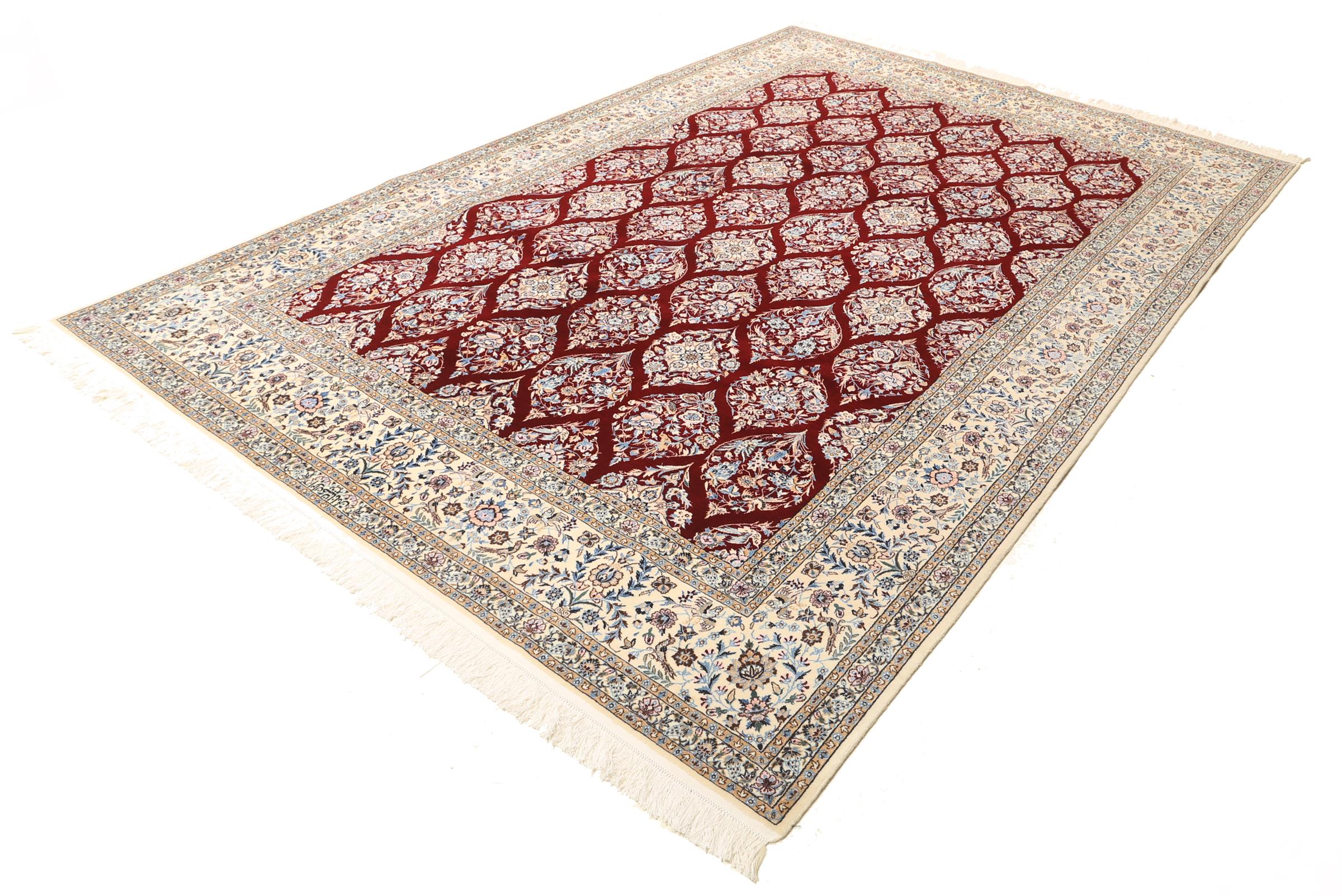
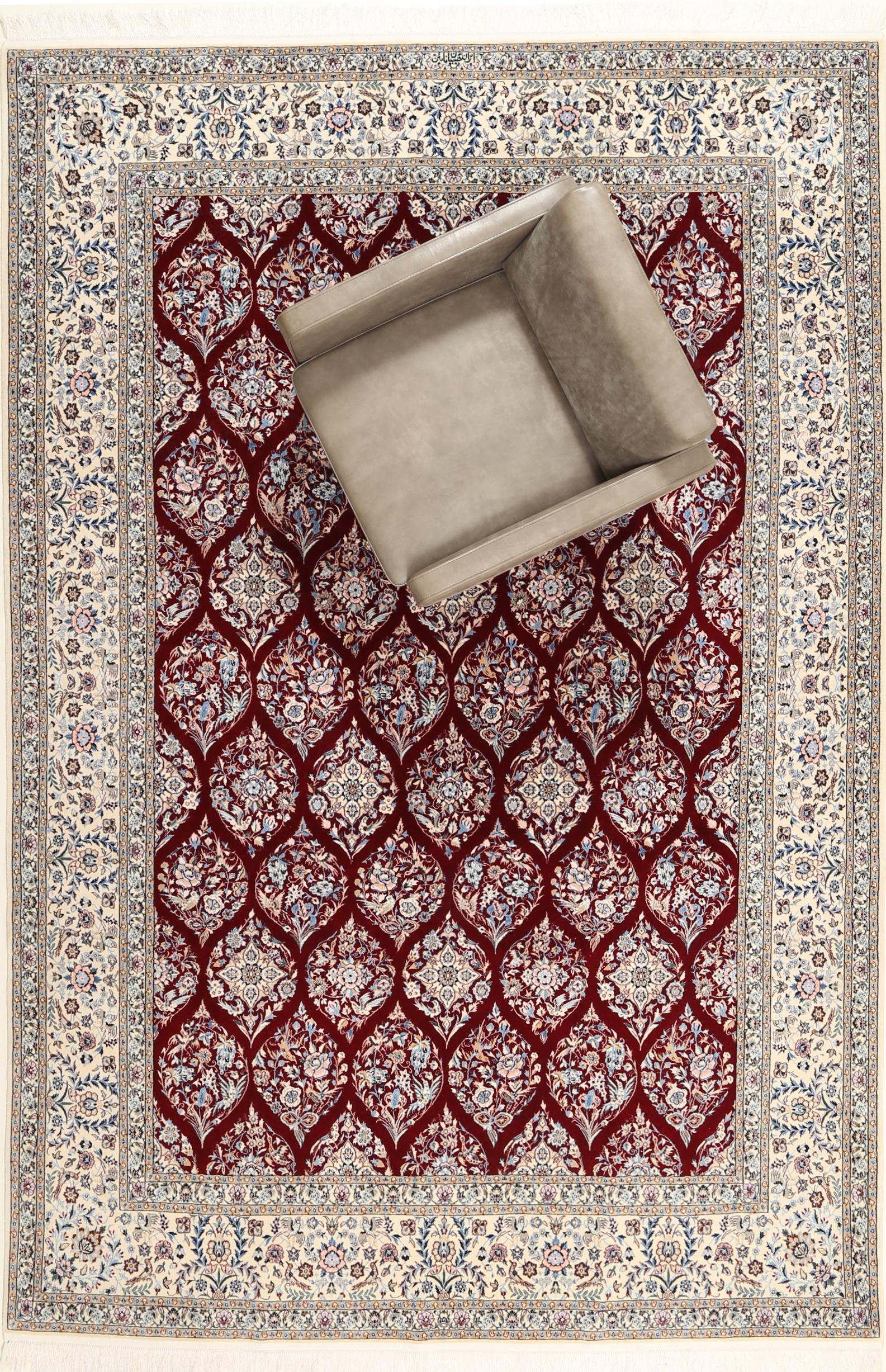
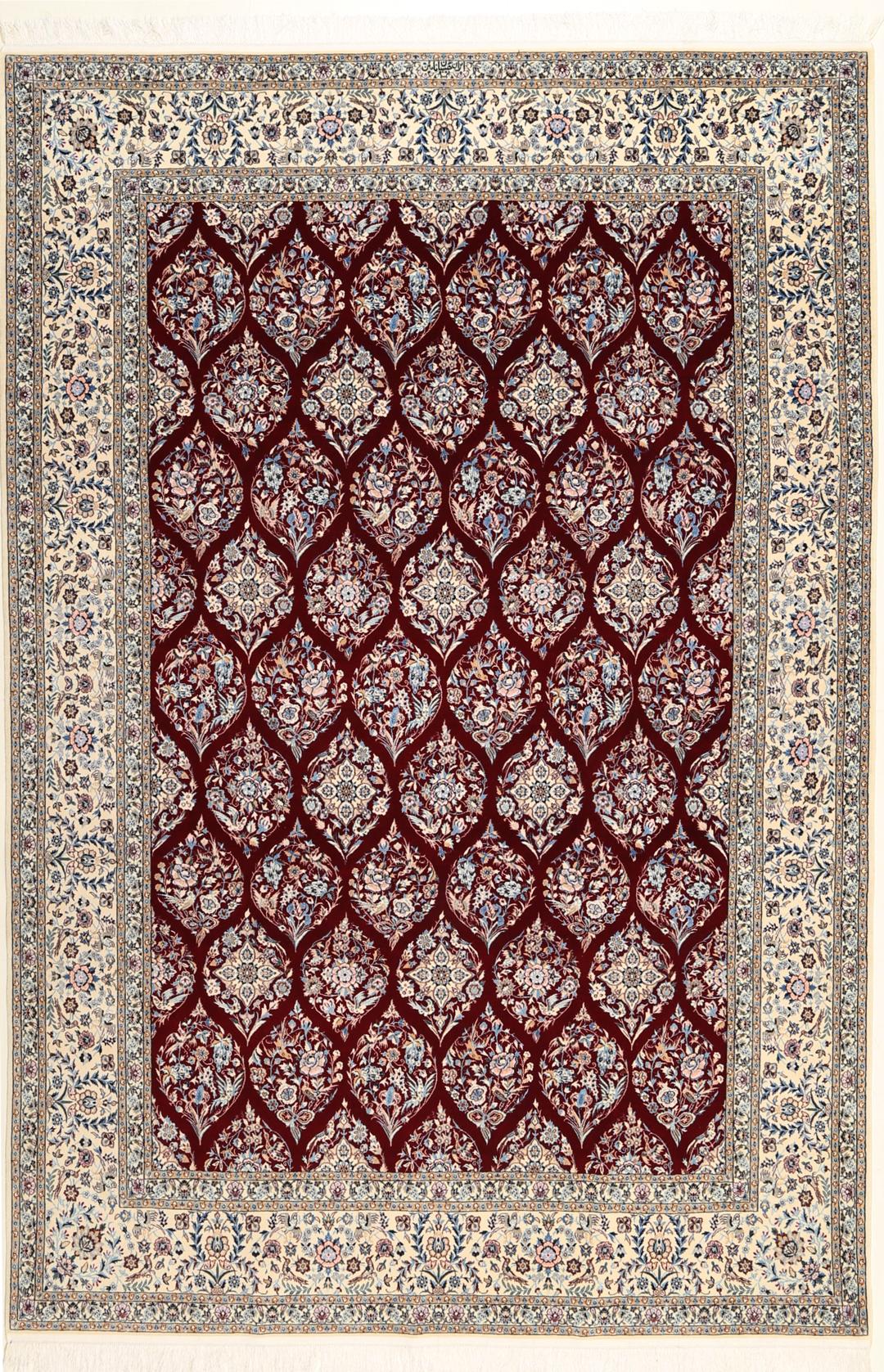
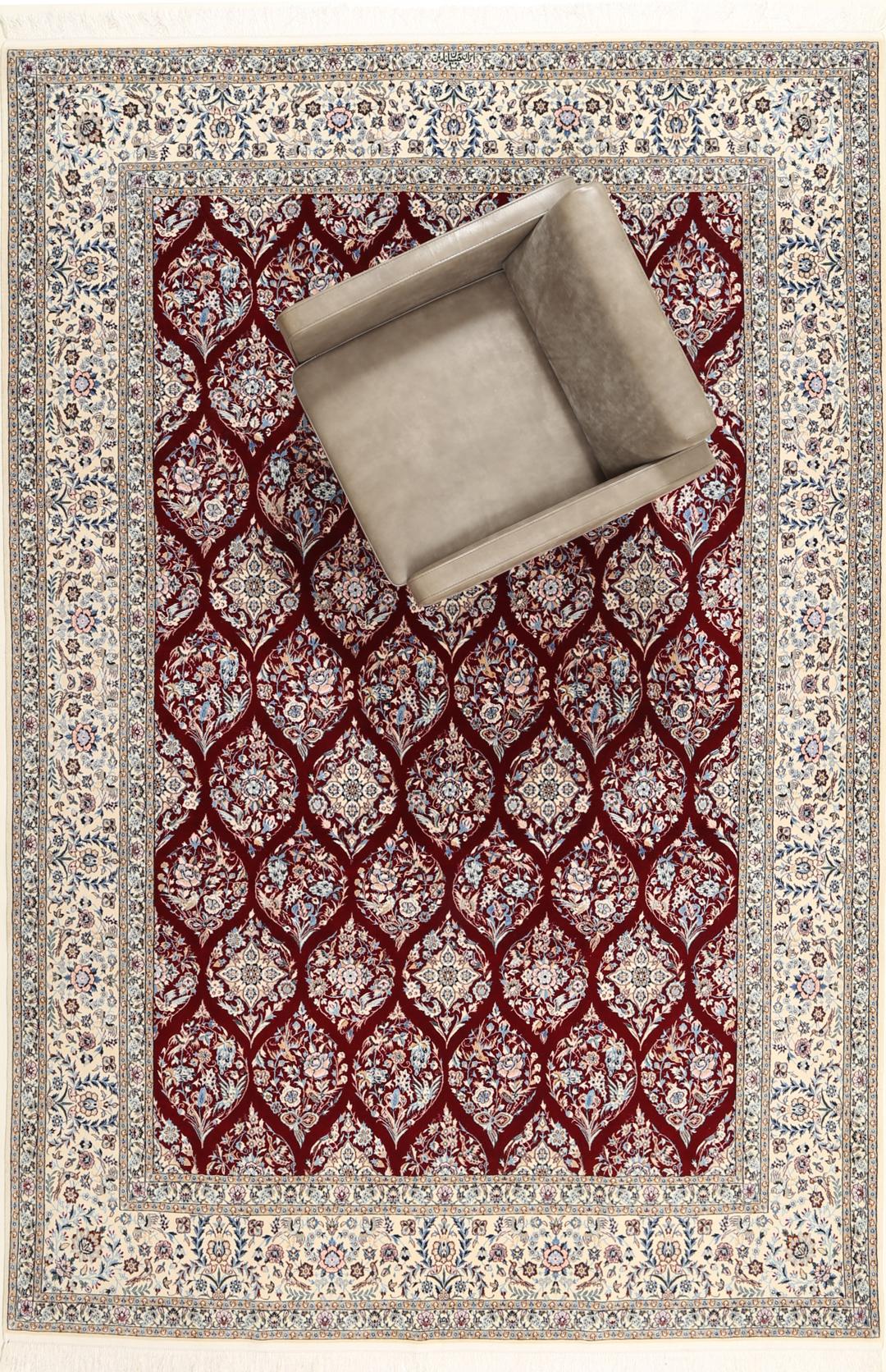
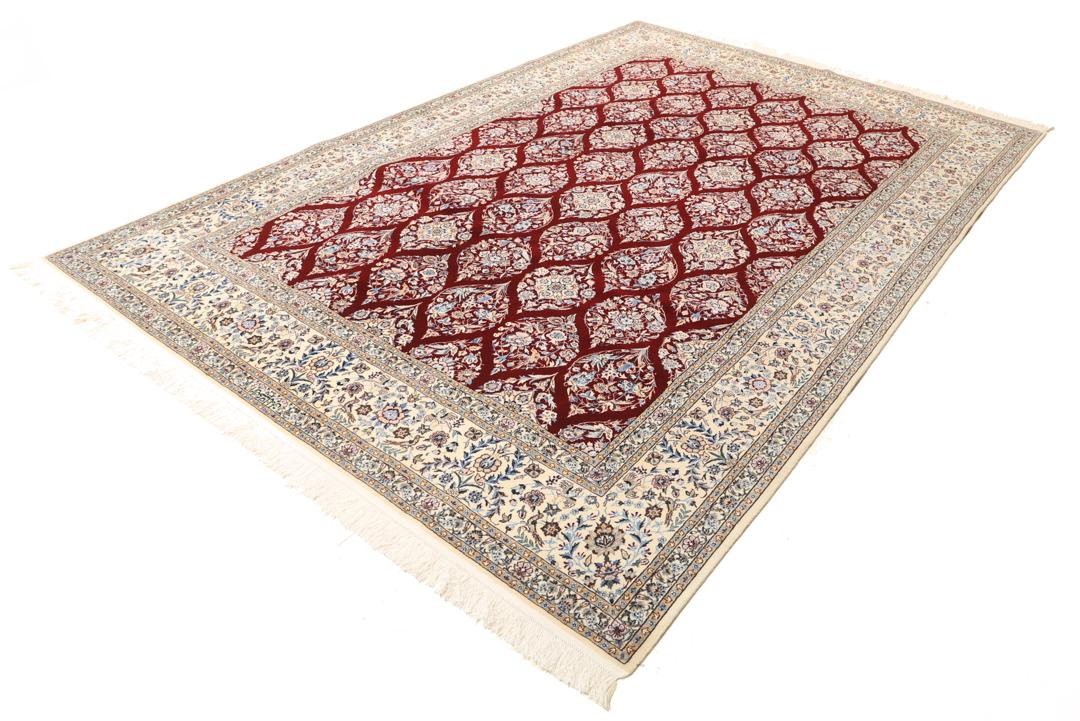
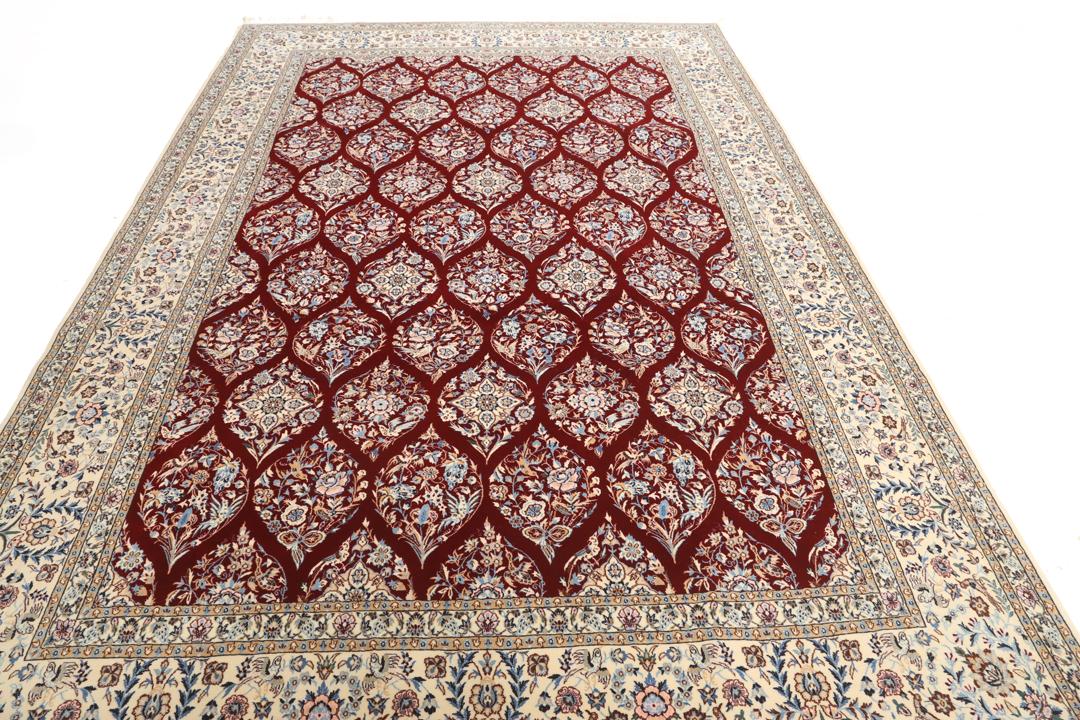
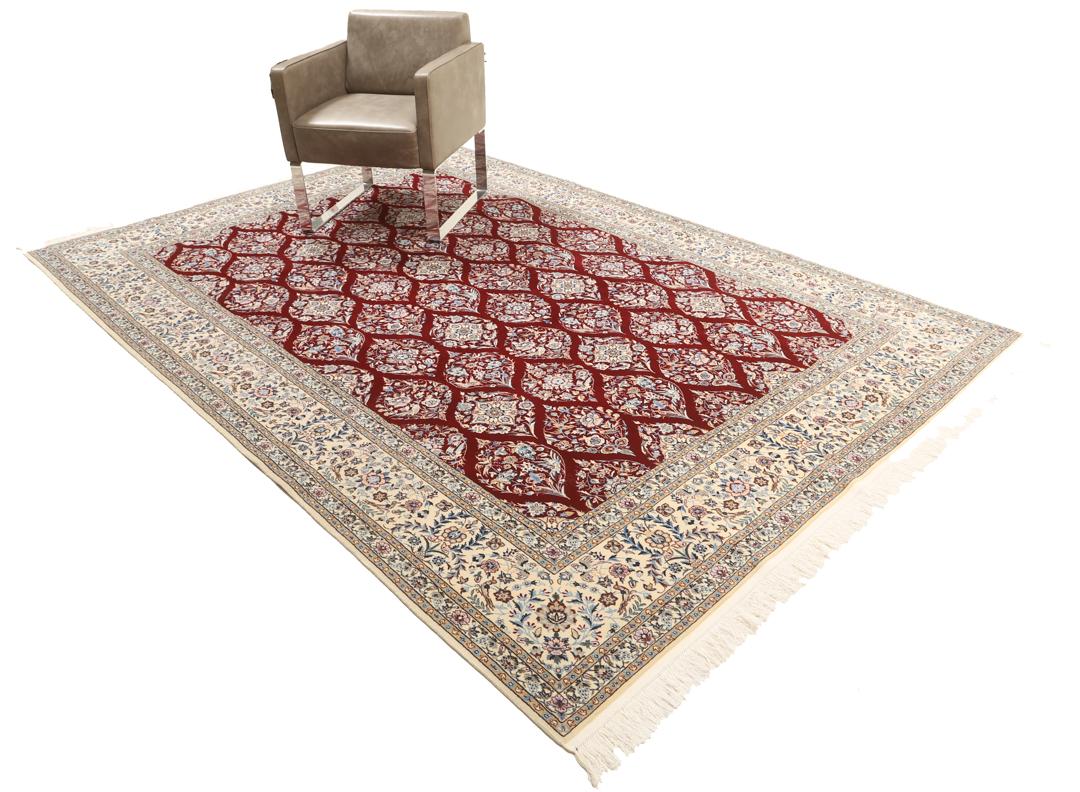
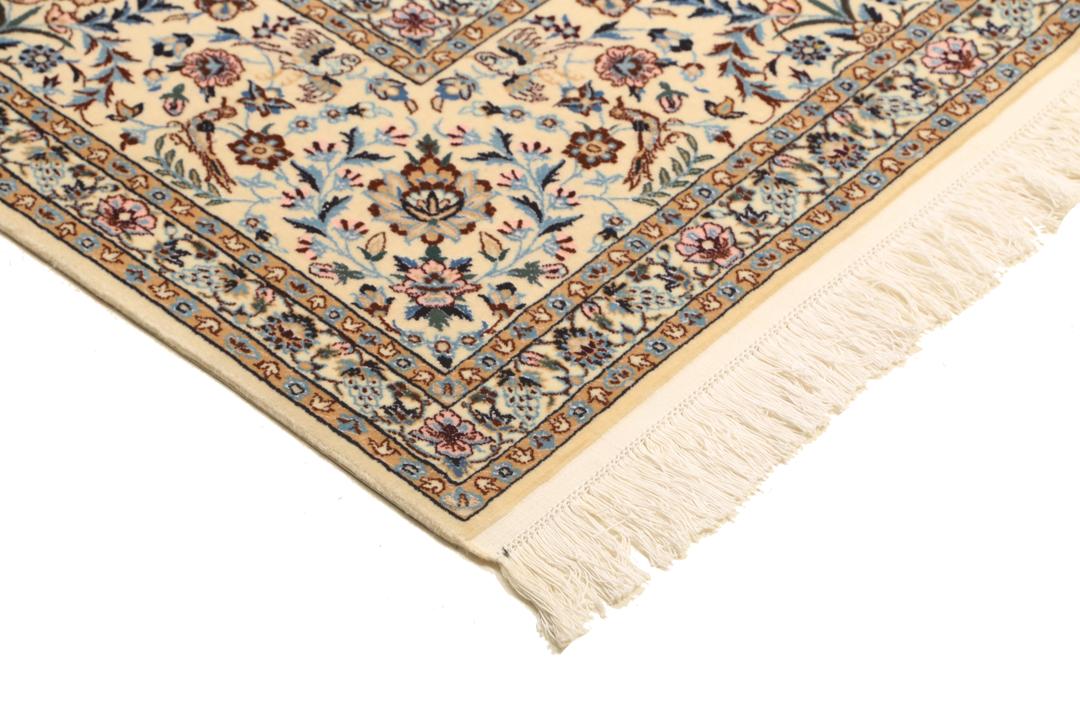
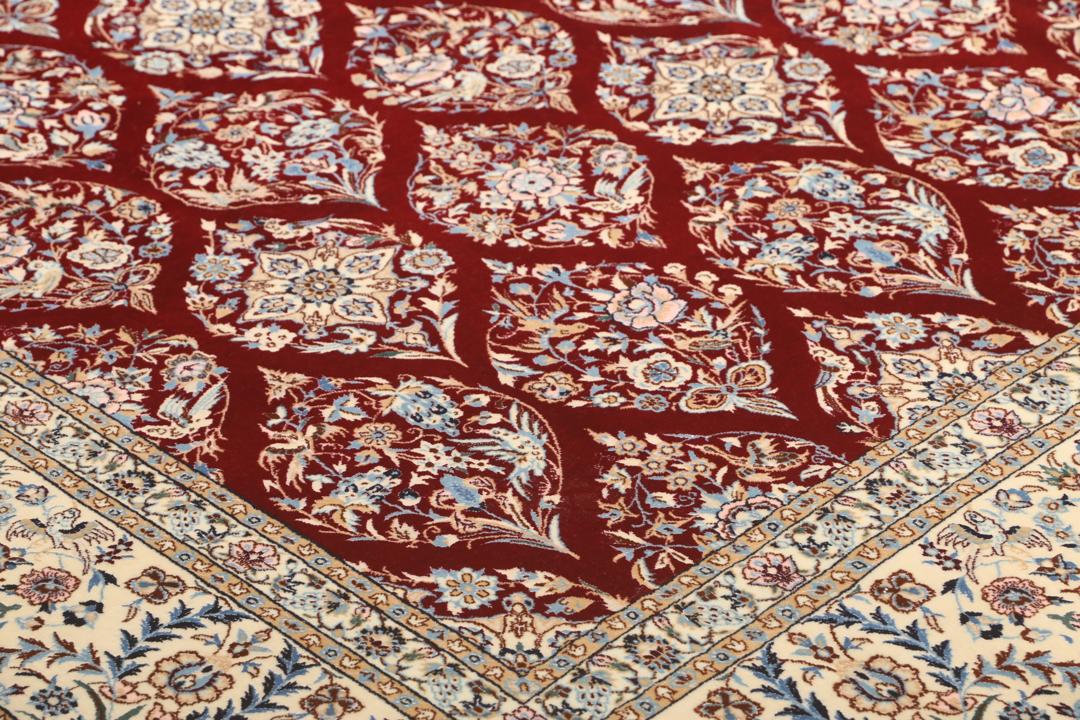
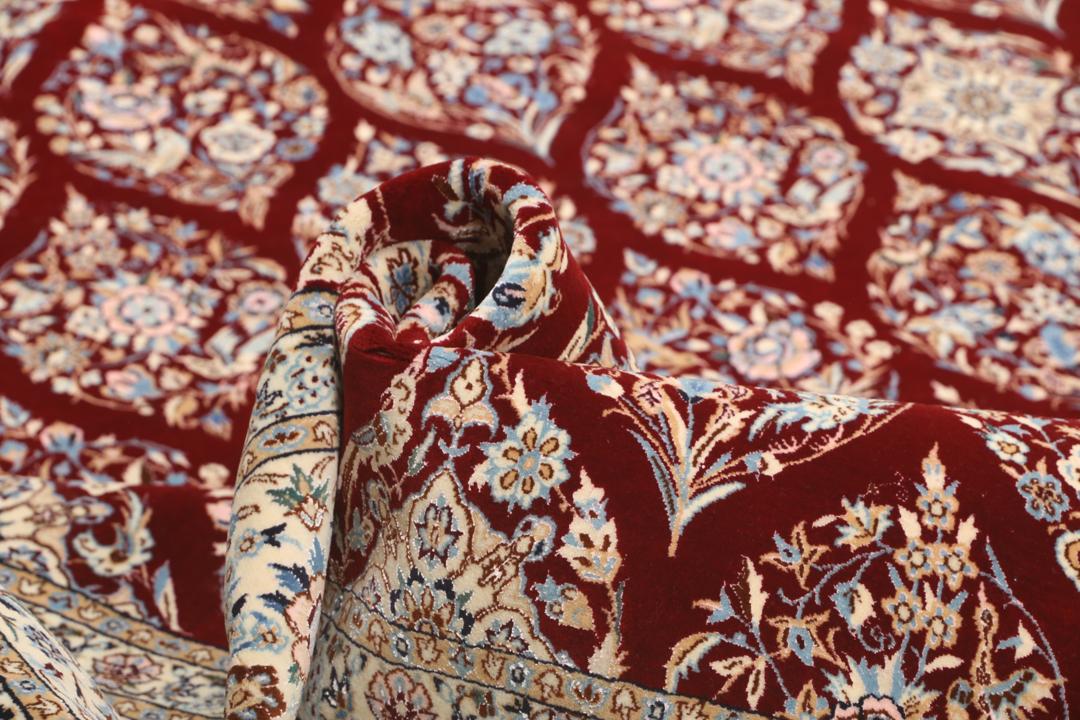
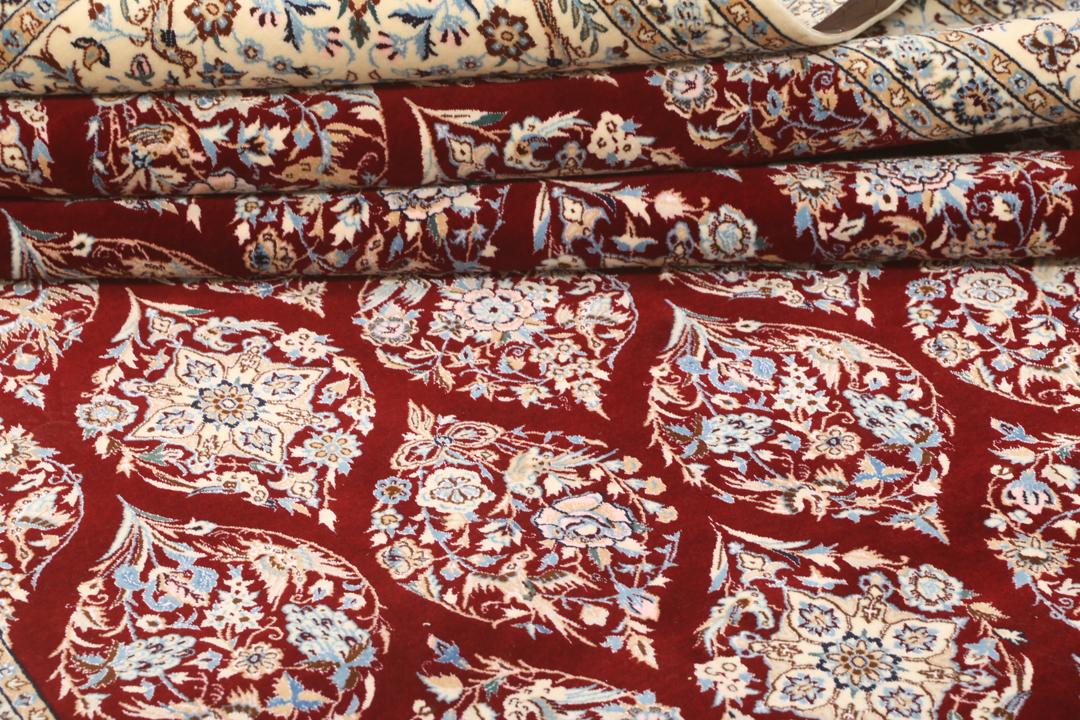
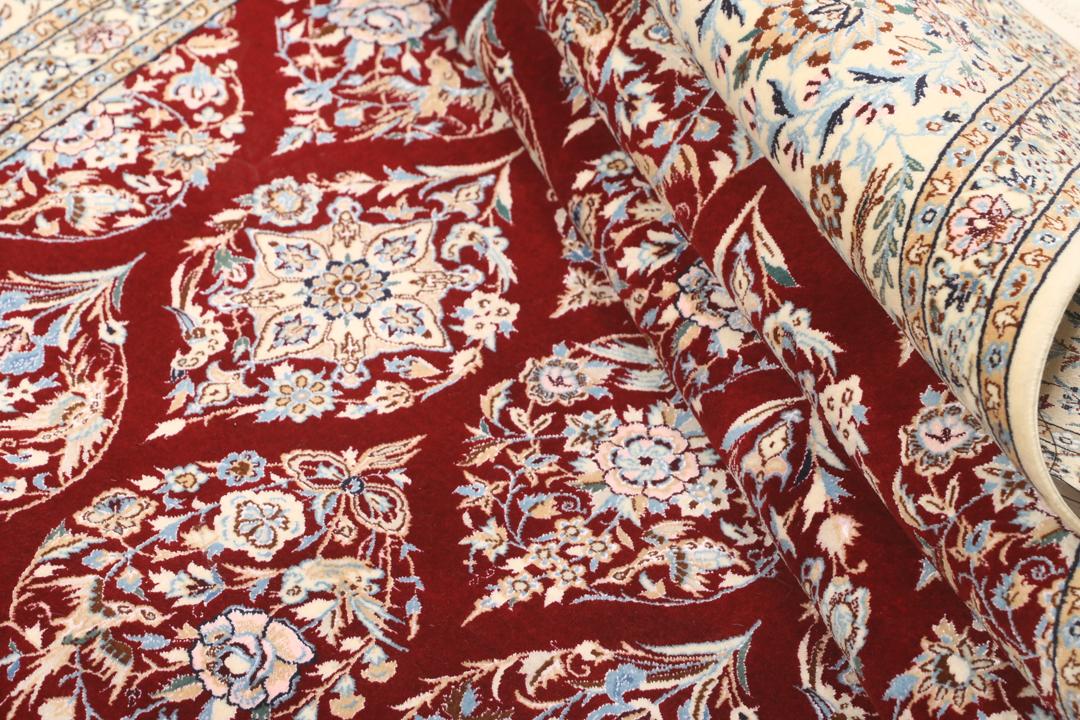
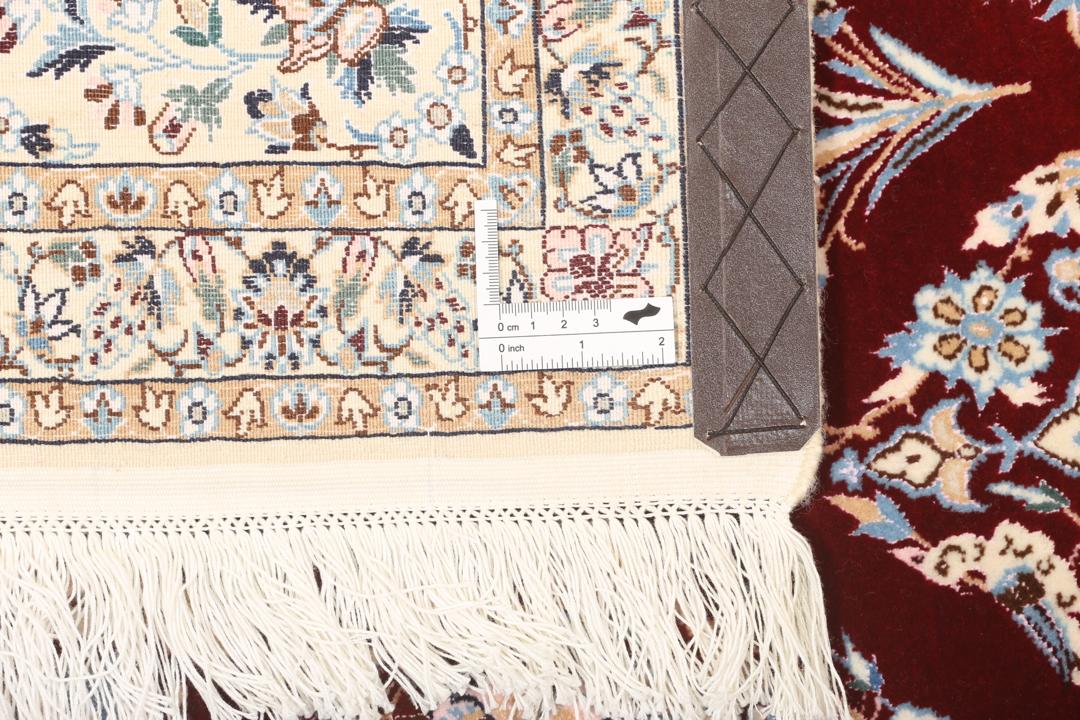
The Nain rug tradition hails from the historic city of Nain in the Middle East, a region with a long-standing reputation for producing some of the most refined and sought-after textiles in the world. Originally a centre for the production of high-quality woollen cloaks, the city pivoted to fine carpet weaving in the early 20th century. This transition allowed local artisans to apply their existing expertise in textile finesse to the creation of rugs that are now globally recognised for their elegance and precision.
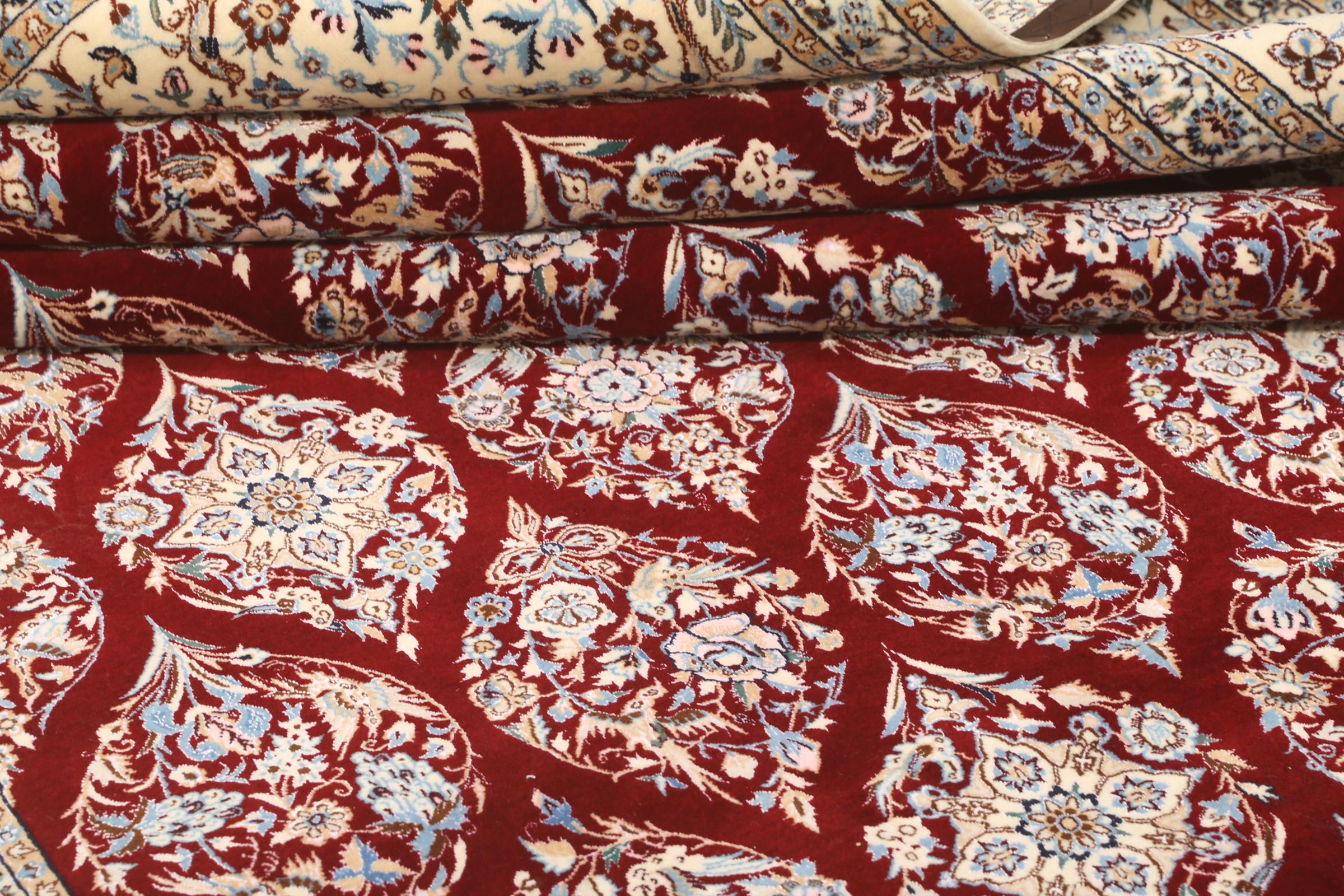
The term 'La' in the rug's classification refers to the number of strands used in the foundation, which directly dictates the fineness and quality of the finished piece. A 6La rug is considered among the most prestigious, as it implies a very high knot density and the use of the finest materials. This technical classification acts as a hallmark of quality, informing collectors that the rug has been crafted with the strictest attention to detail and a commitment to traditional standards.
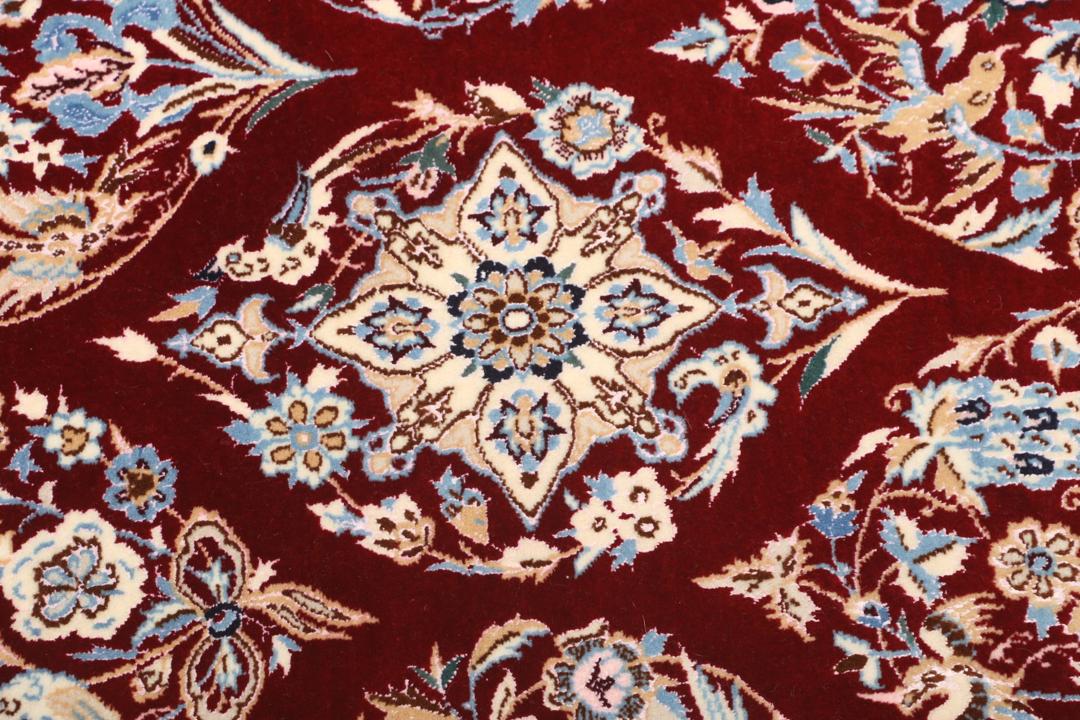
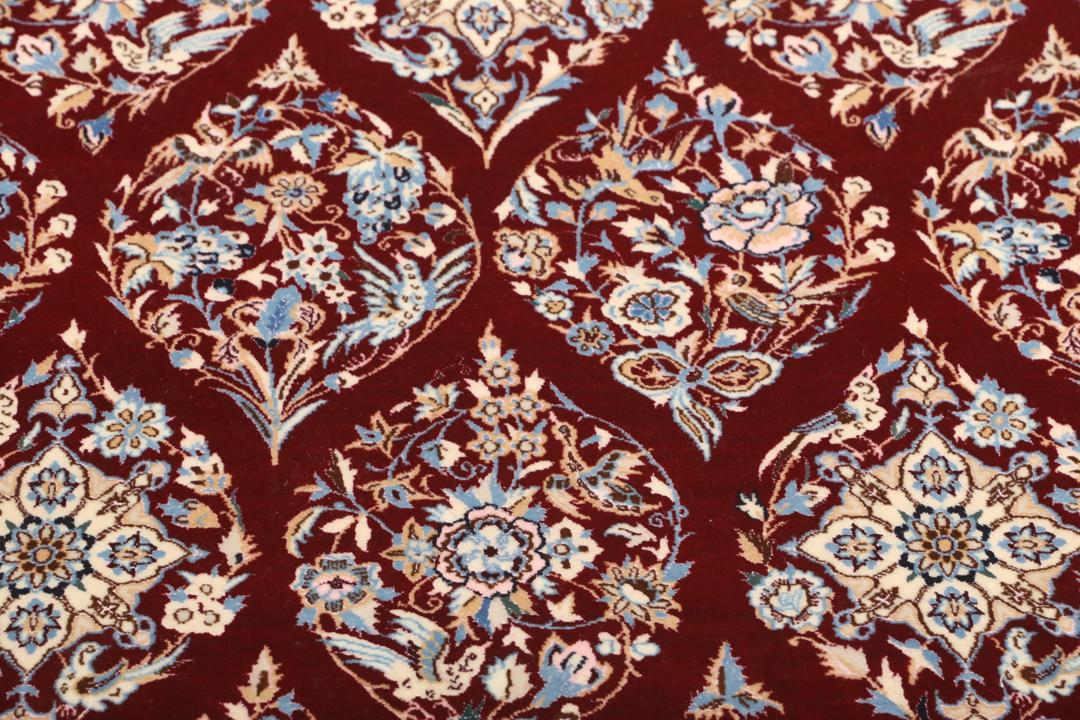
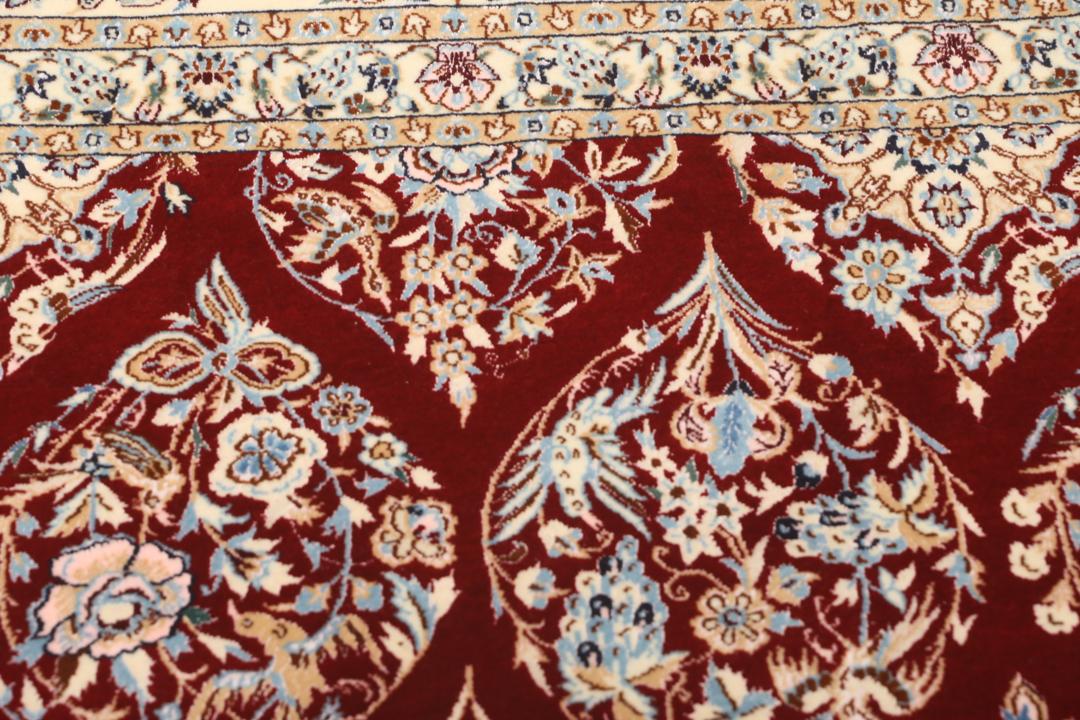
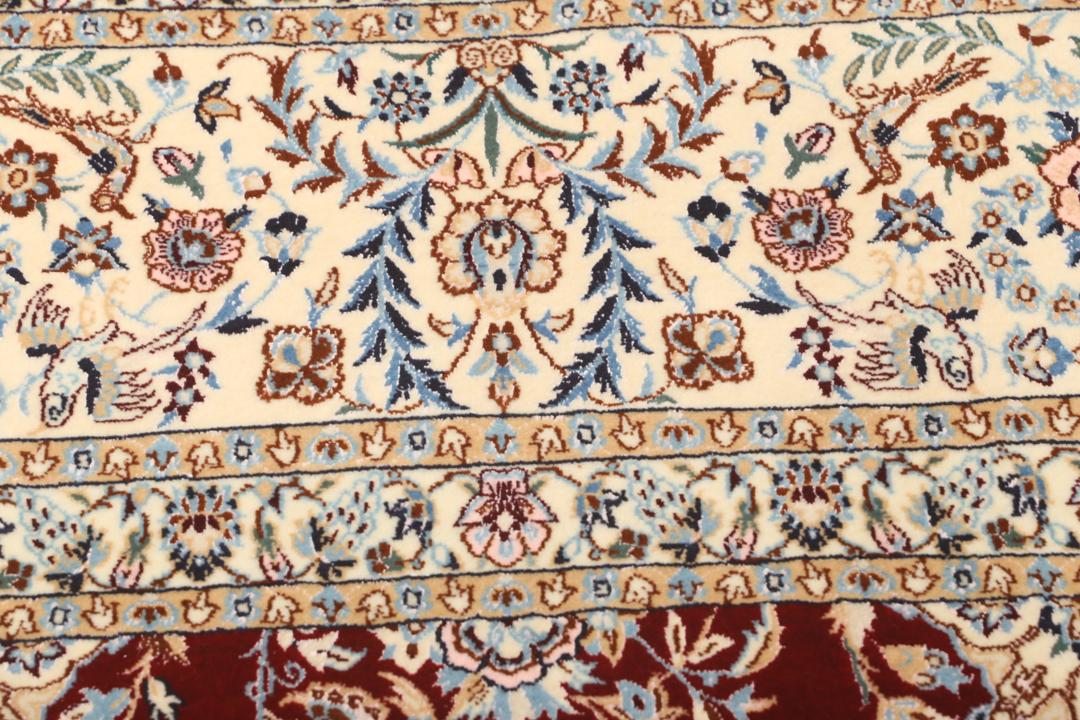
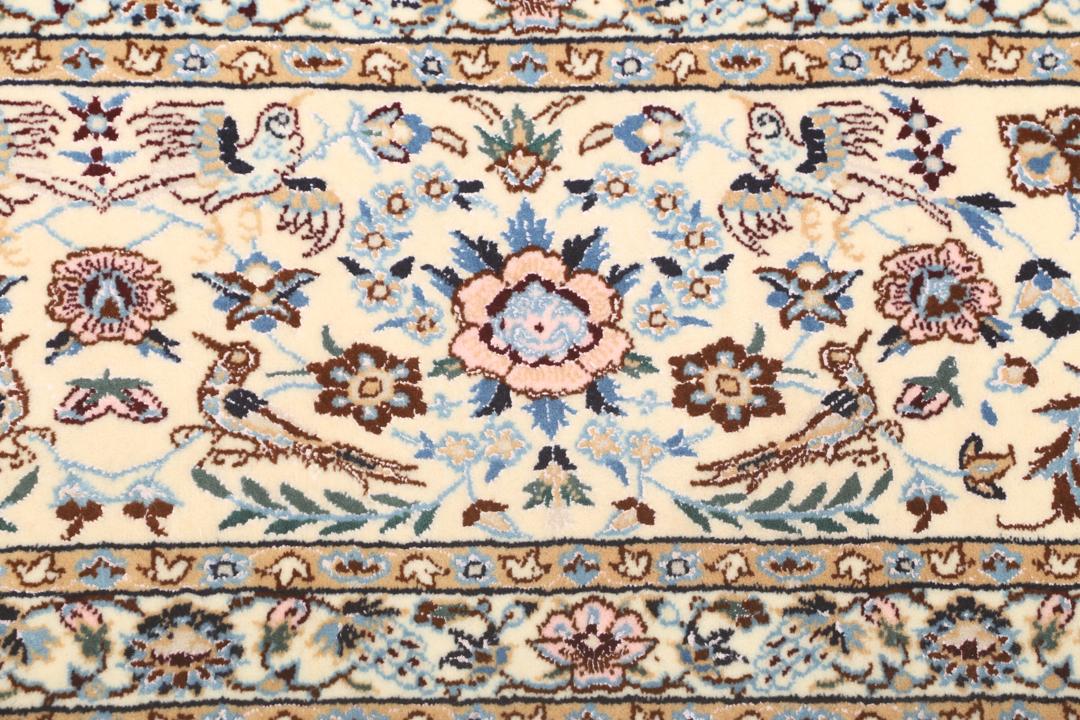
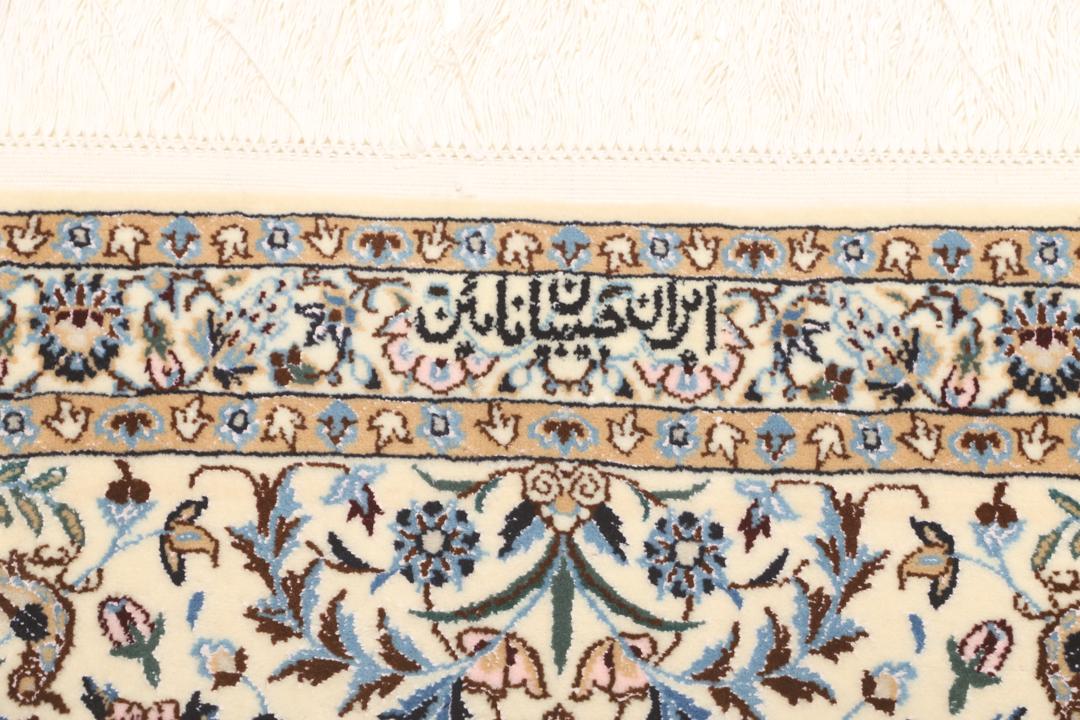
Visually, Nain rugs are defined by their sophisticated colour palettes, often favouring ivory, beige, and soft blues, though the deep, rich reds seen here provide a striking and classic variation. The design typically centres around a central medallion or an intricate floral lattice, surrounded by elaborate, scrolling borders. These motifs are inspired by the rich artistic heritage of the region, echoing the patterns found in classical architecture and illuminated manuscripts.
Owning a Nain 6La Habibian is a mark of appreciation for a craft that has been honed over generations. These rugs are highly valued by collectors not only for their beauty but for the immense skill required to produce such fine, detailed work. To possess one is to hold a connection to a living tradition, ensuring that the legacy of this masterful craft continues to be celebrated within your home for years to come.