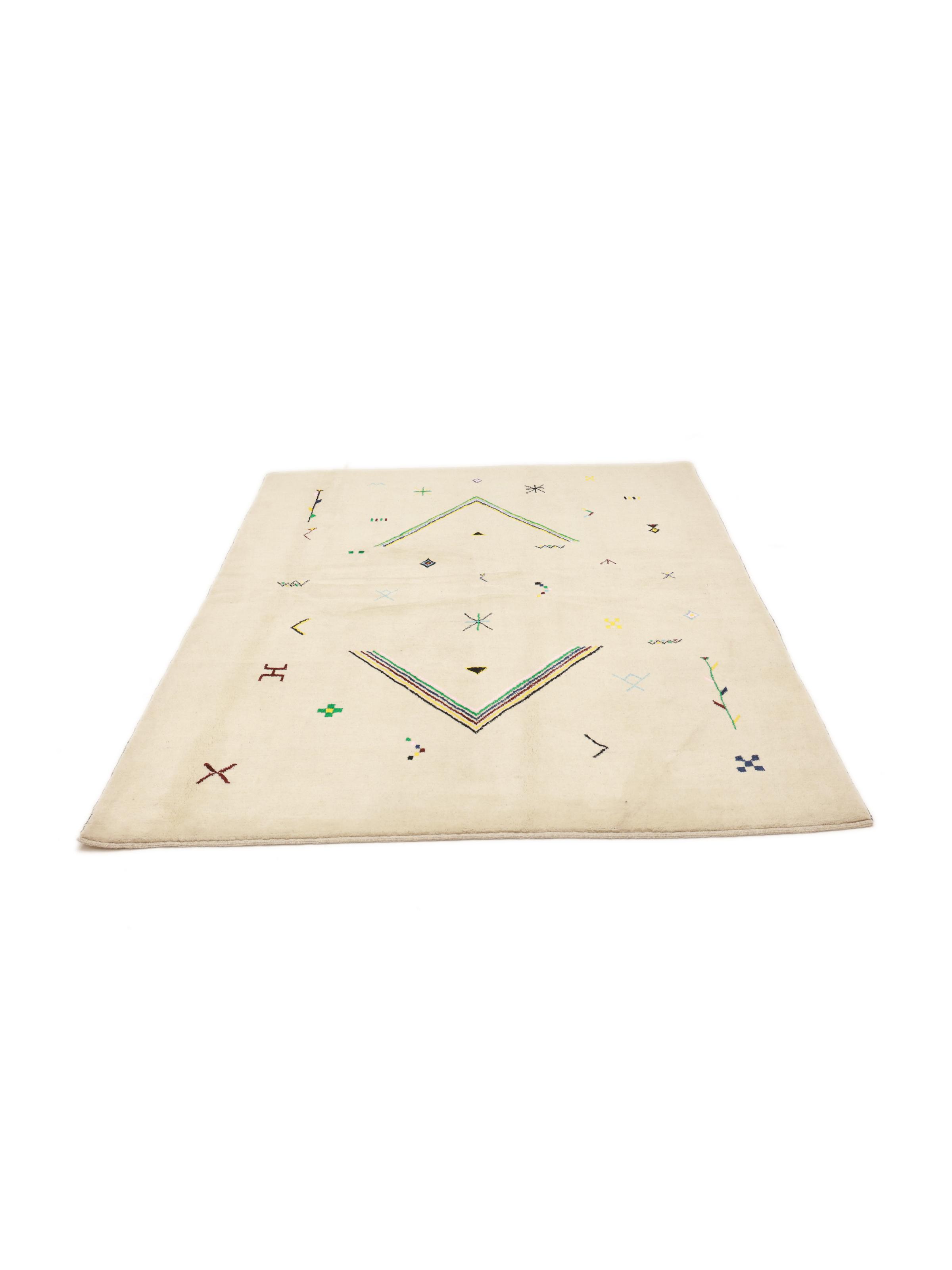
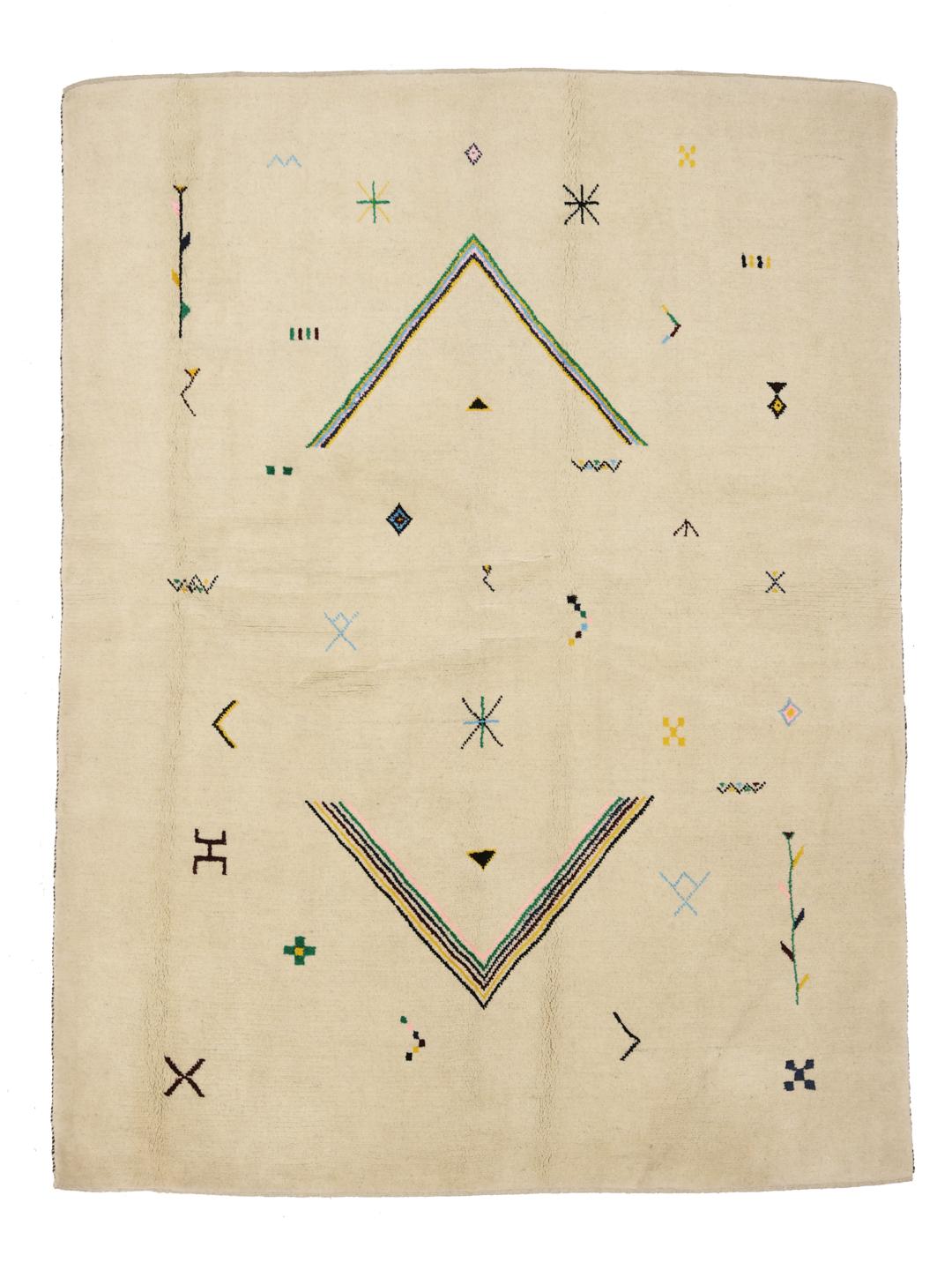
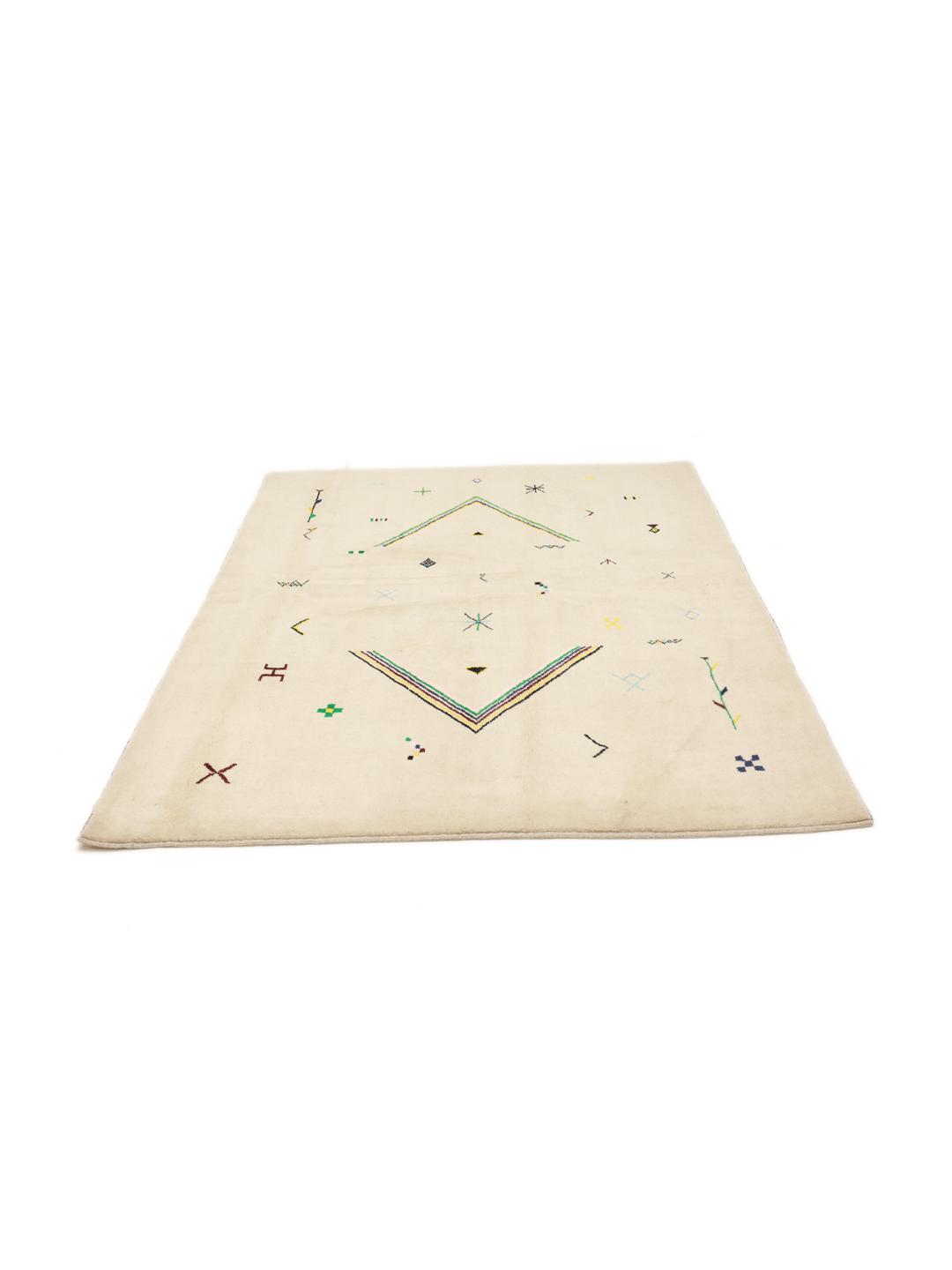
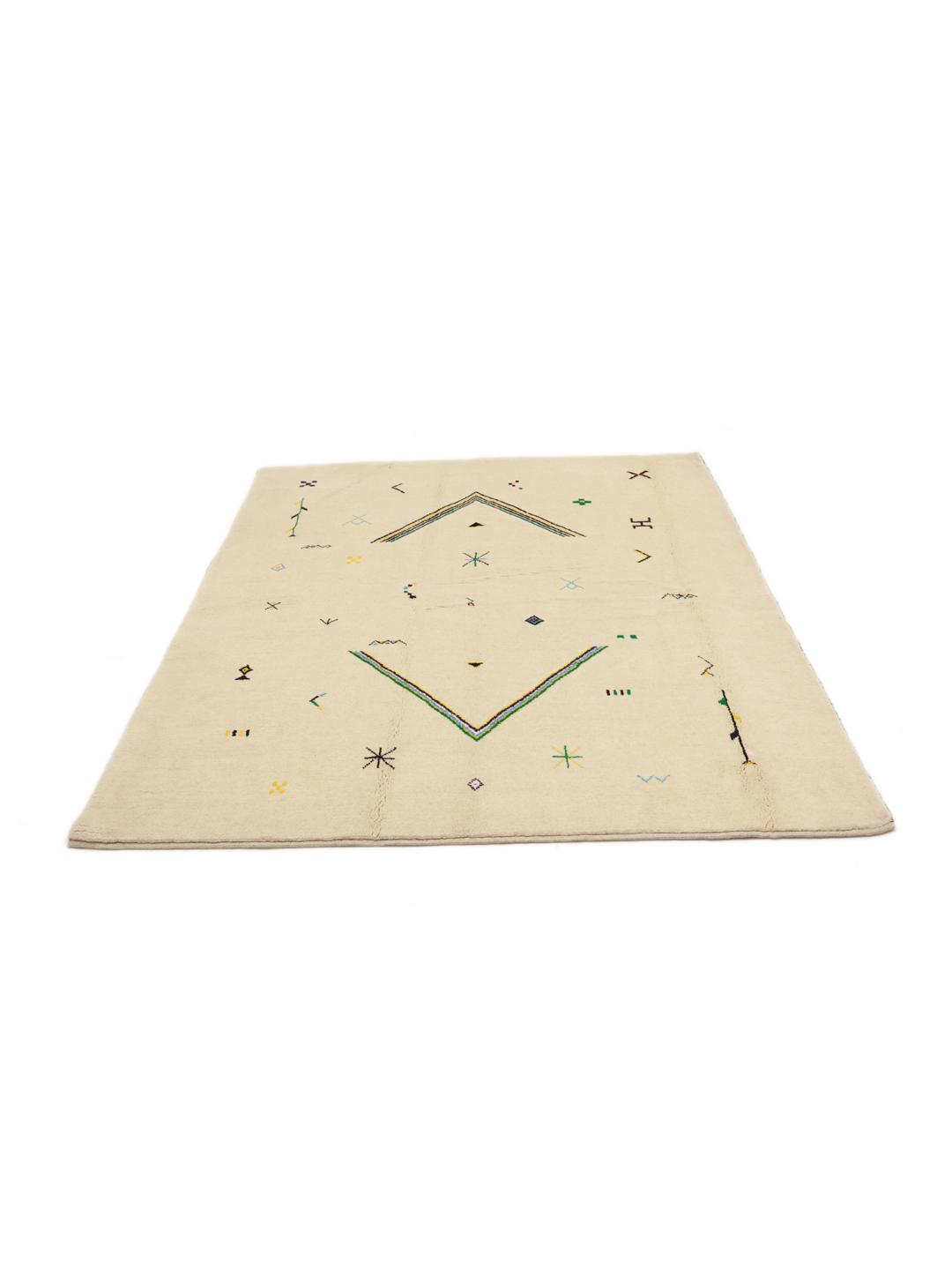
The tradition of Berber-style weaving finds its roots in the mountainous regions of North Africa, where nomadic tribes historically created textiles for survival. While this specific rug draws on that heritage, its migration and adaptation across various weaving cultures have allowed it to evolve into a globally recognised style that balances raw, natural aesthetics with refined craftsmanship.
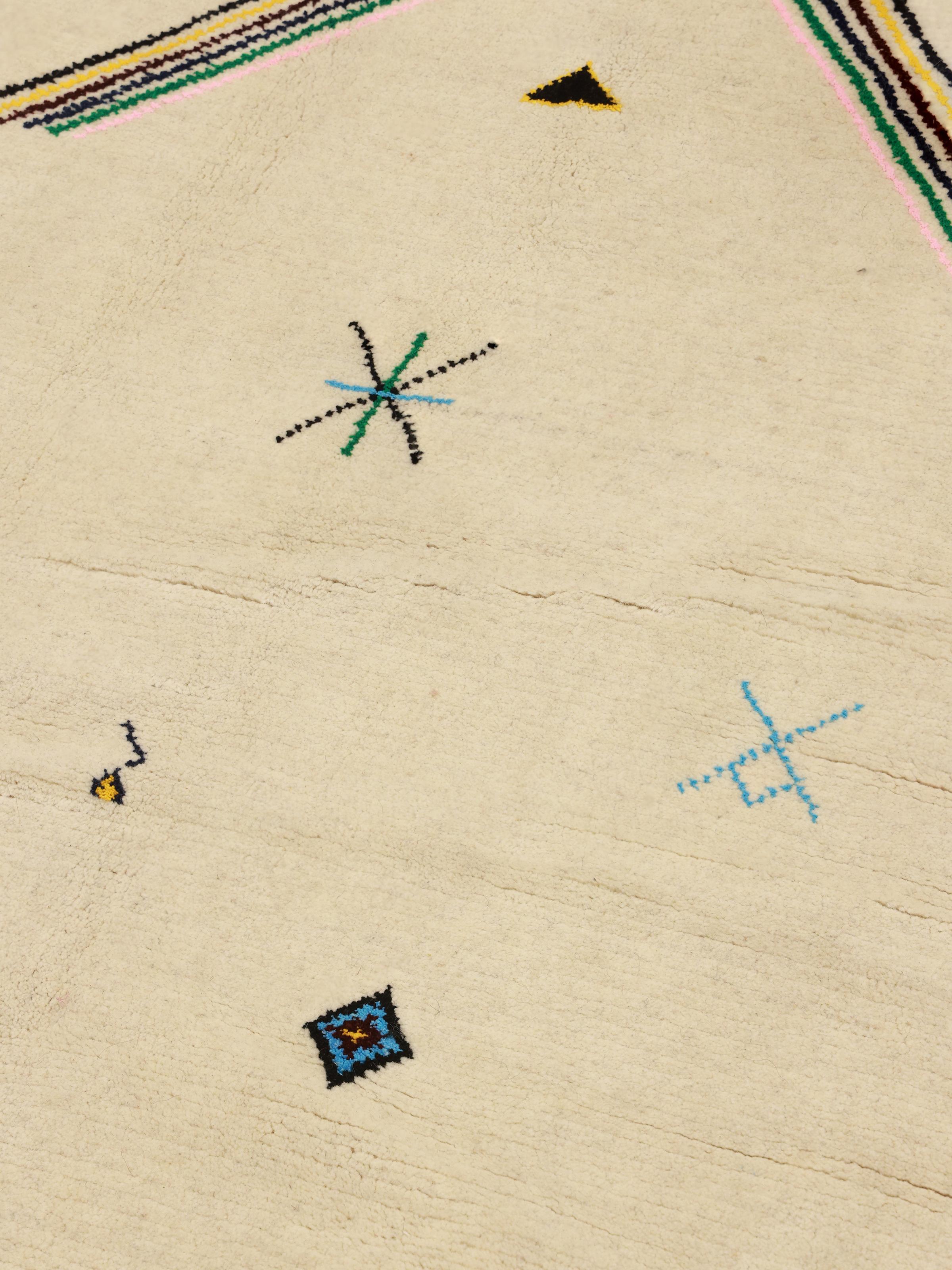
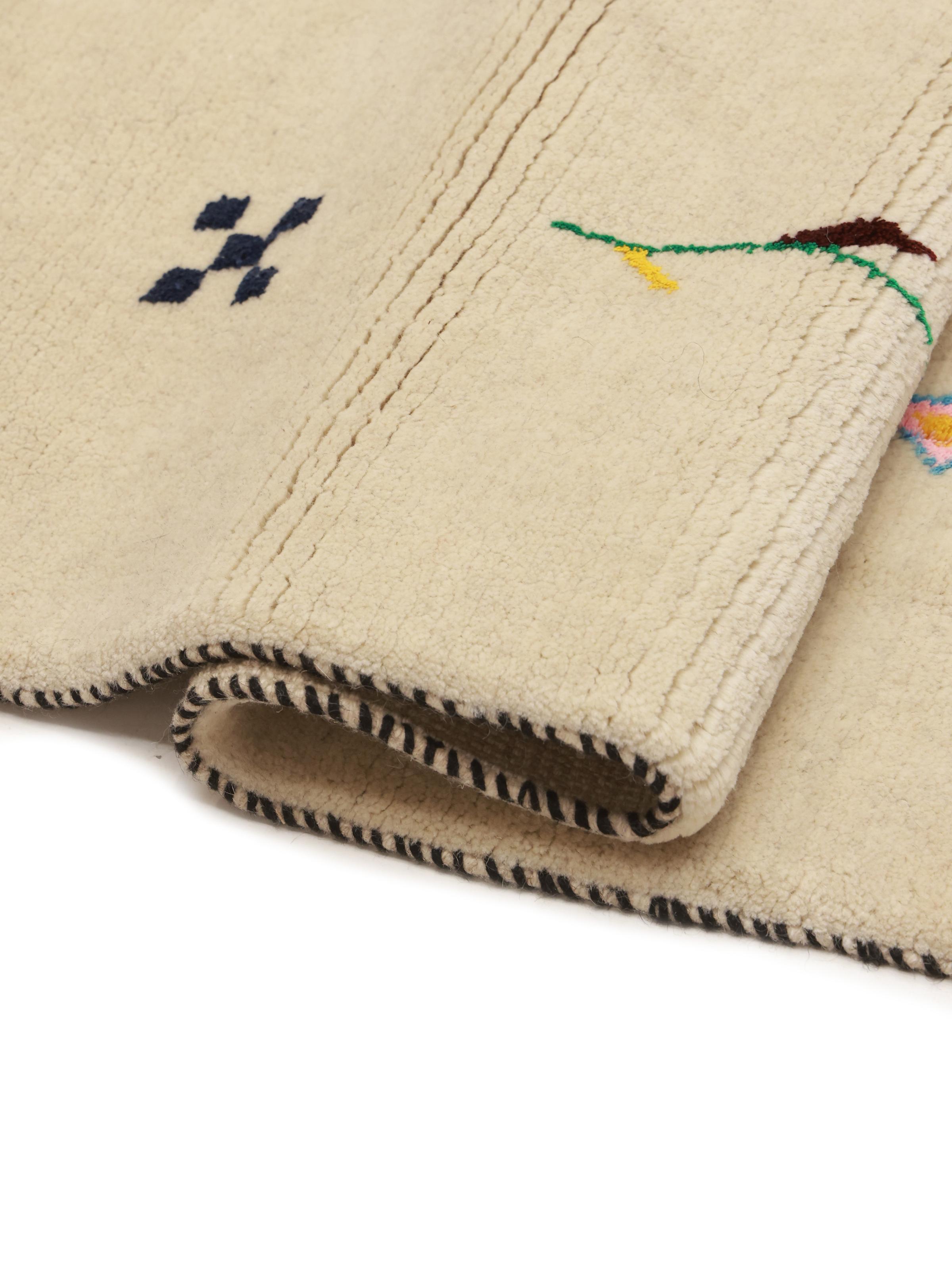
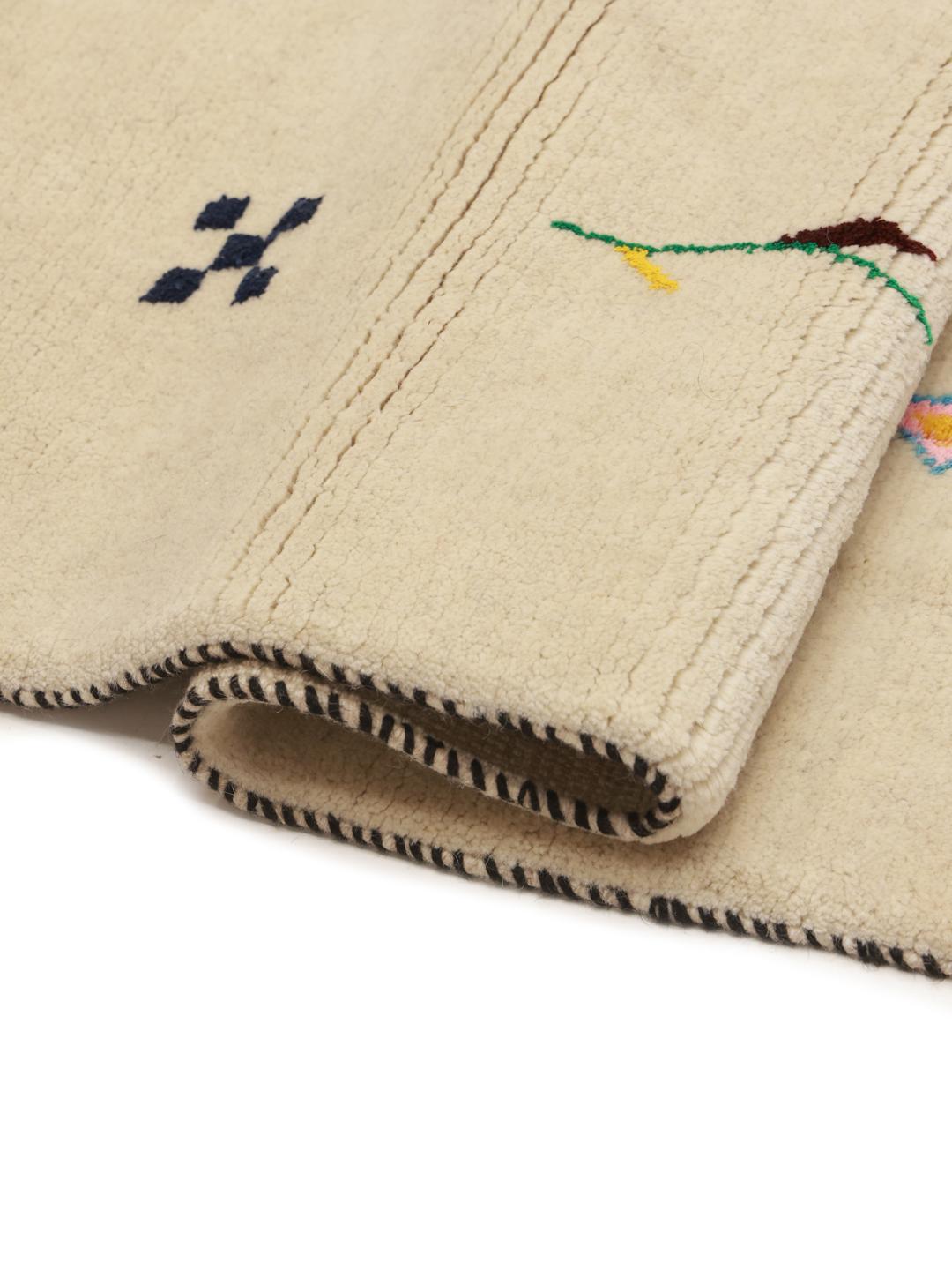
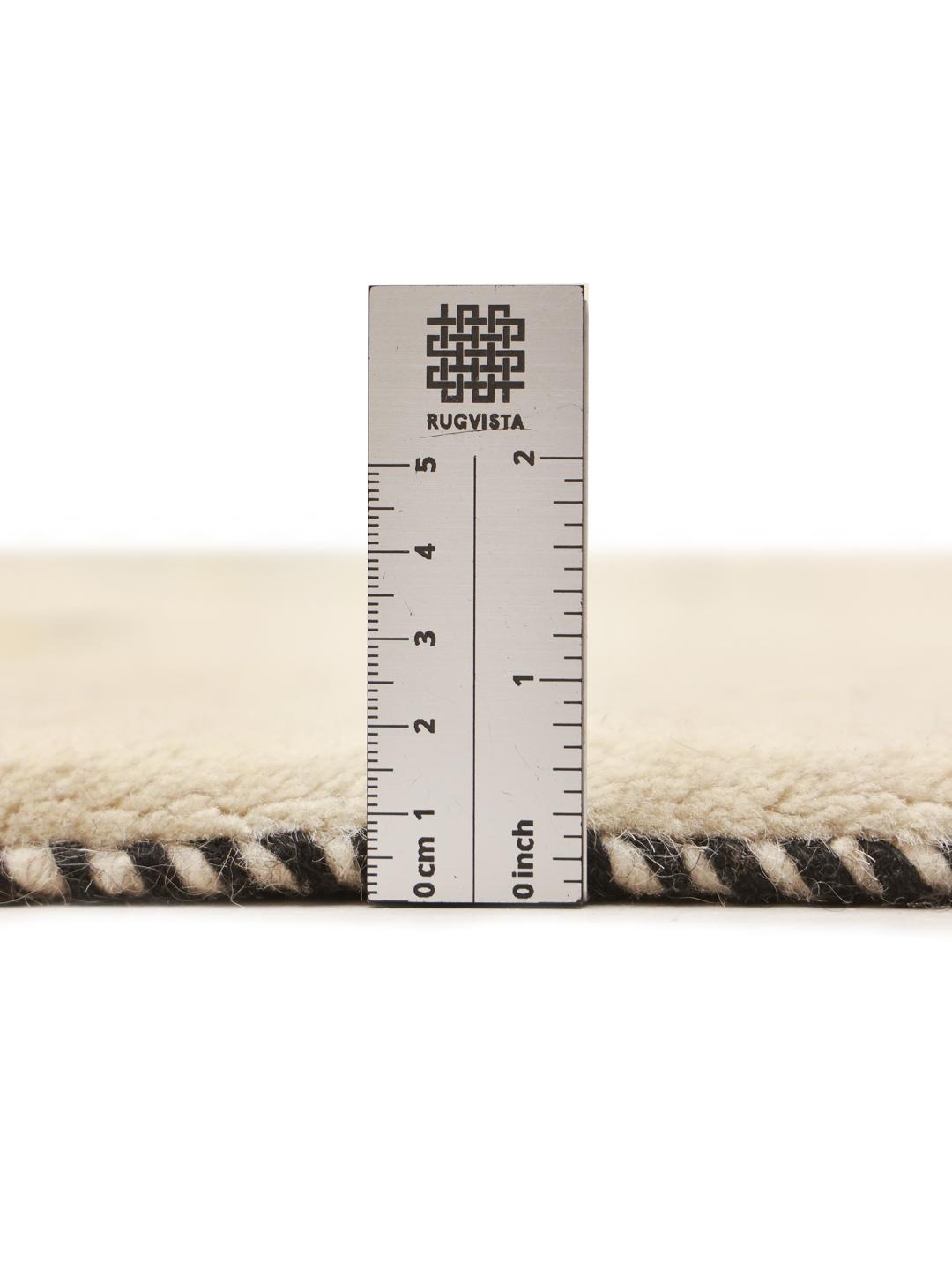
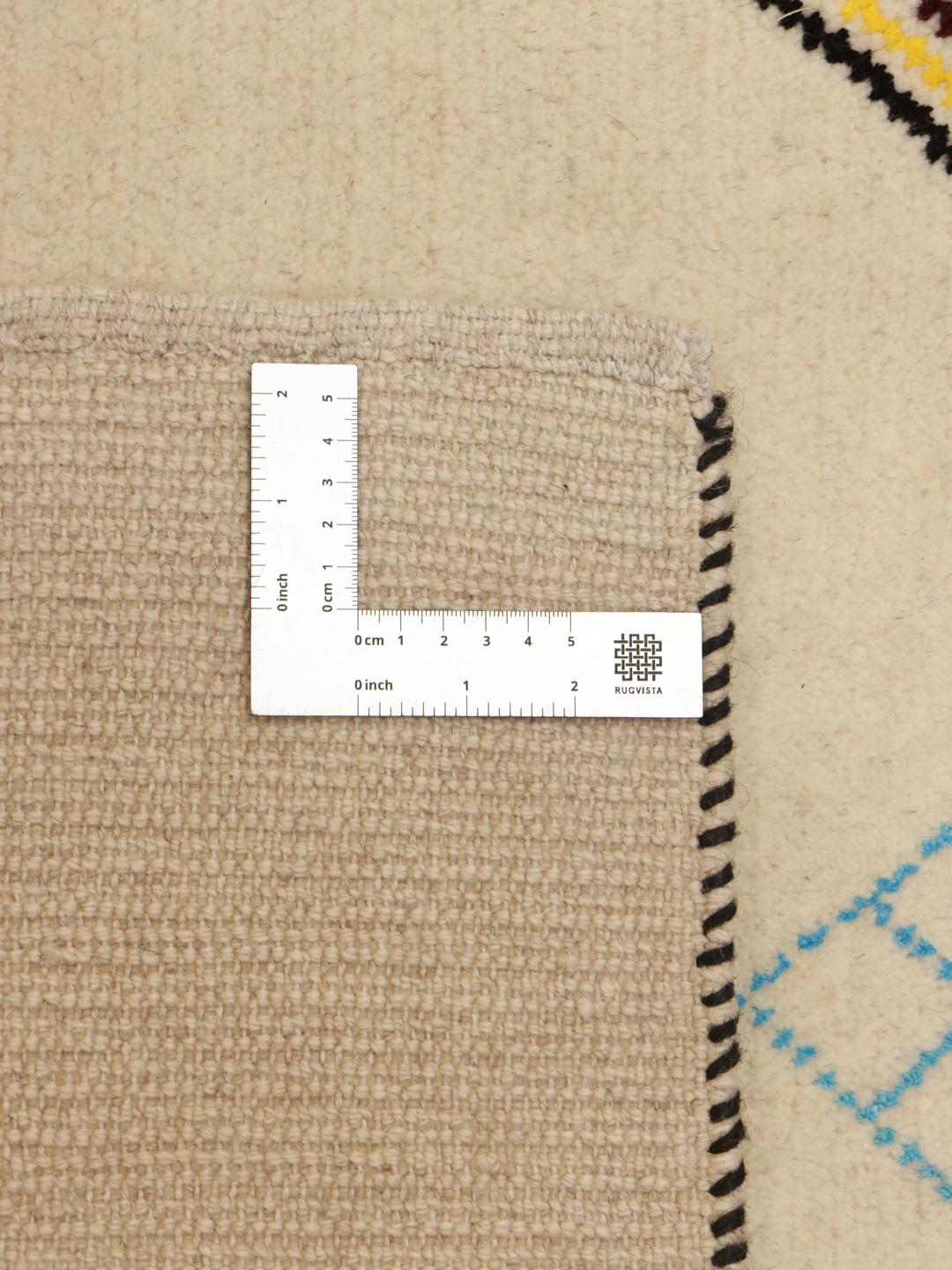
The term 'hand-knotted' refers to a technique where individual strands of wool are tied onto a warp foundation. This process is essential for creating the durable, high-quality piles that define these rugs. By using this method, the artisans can ensure the rug remains structurally sound for generations, as each knot secures the wool firmly into the base of the textile.
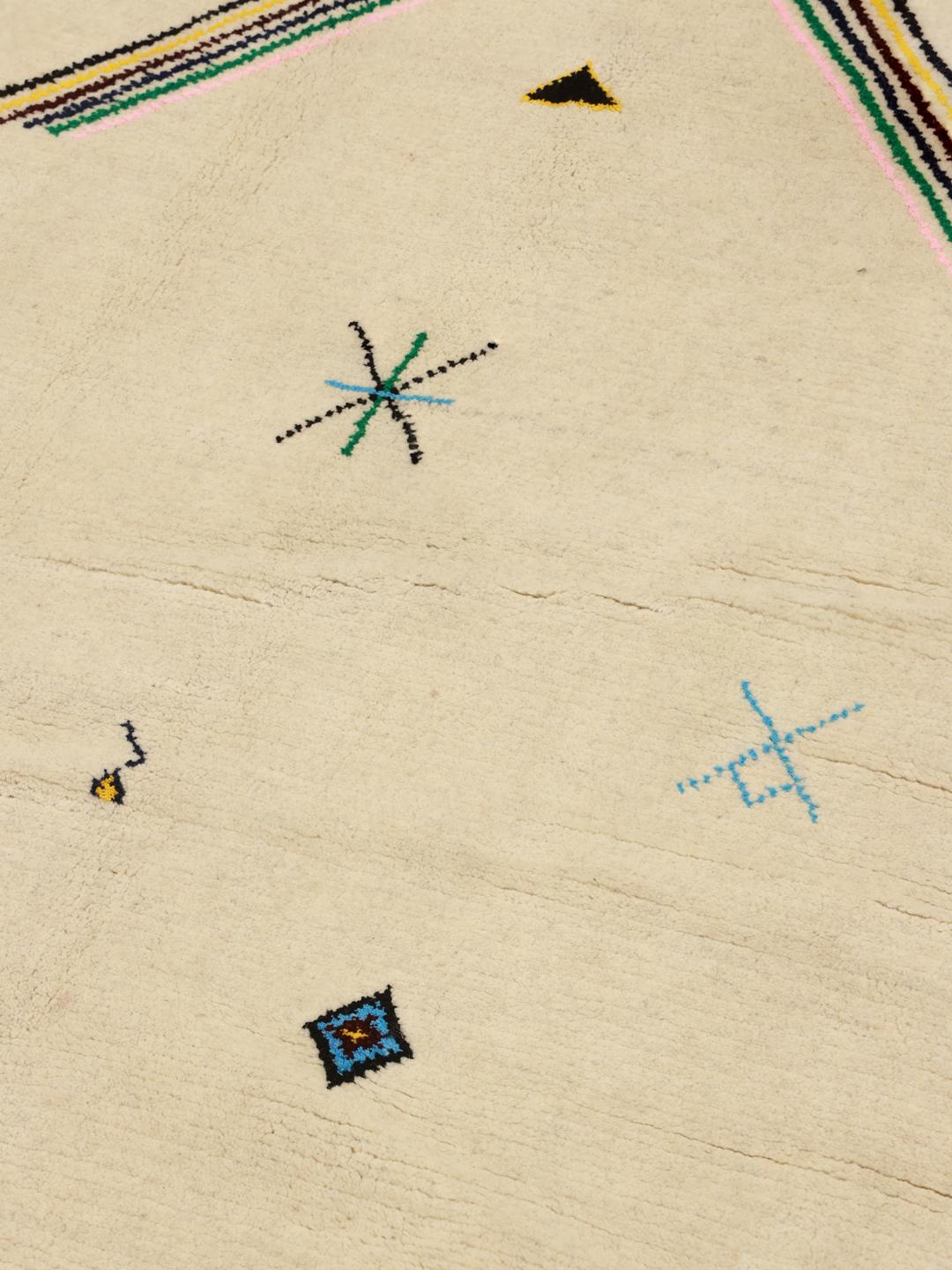
Visually, these rugs are defined by their minimalist, light-toned fields contrasted with spontaneous, often abstract motifs. These symbols are not merely decorative but are deeply rooted in the history of the weavers, often representing aspects of daily life, nature, or protection. The inclusion of such varied, colourful shapes against a neutral field is a signature of this design tradition.
Collecting a hand-knotted piece is an investment in human skill and cultural continuity. These rugs are valued not just for their utility, but for the story they tell of the artisan's hand and the legacy of the design tradition. Owning one is a way to connect your home to a long-standing history of textile artistry that transcends modern trends.