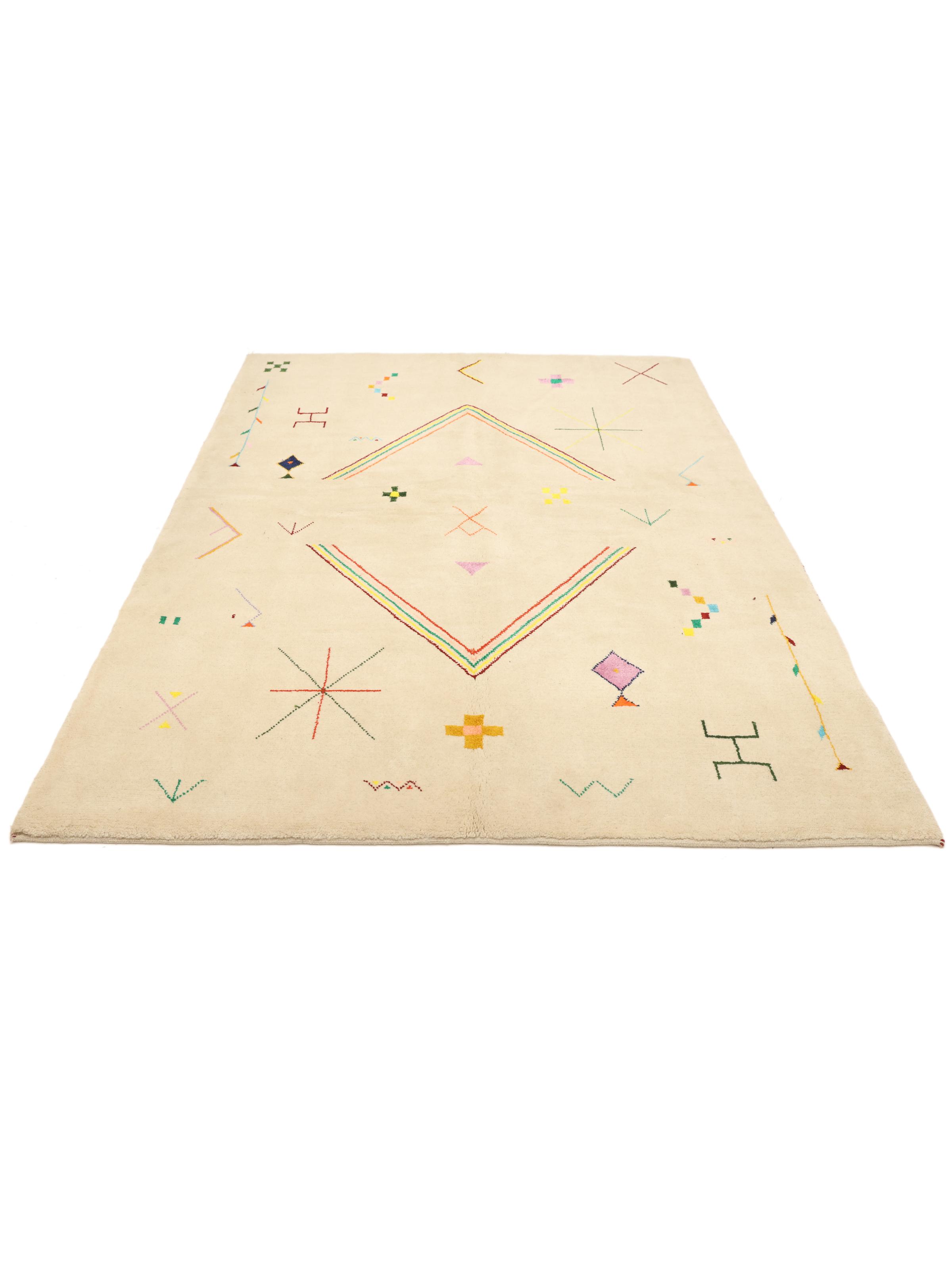
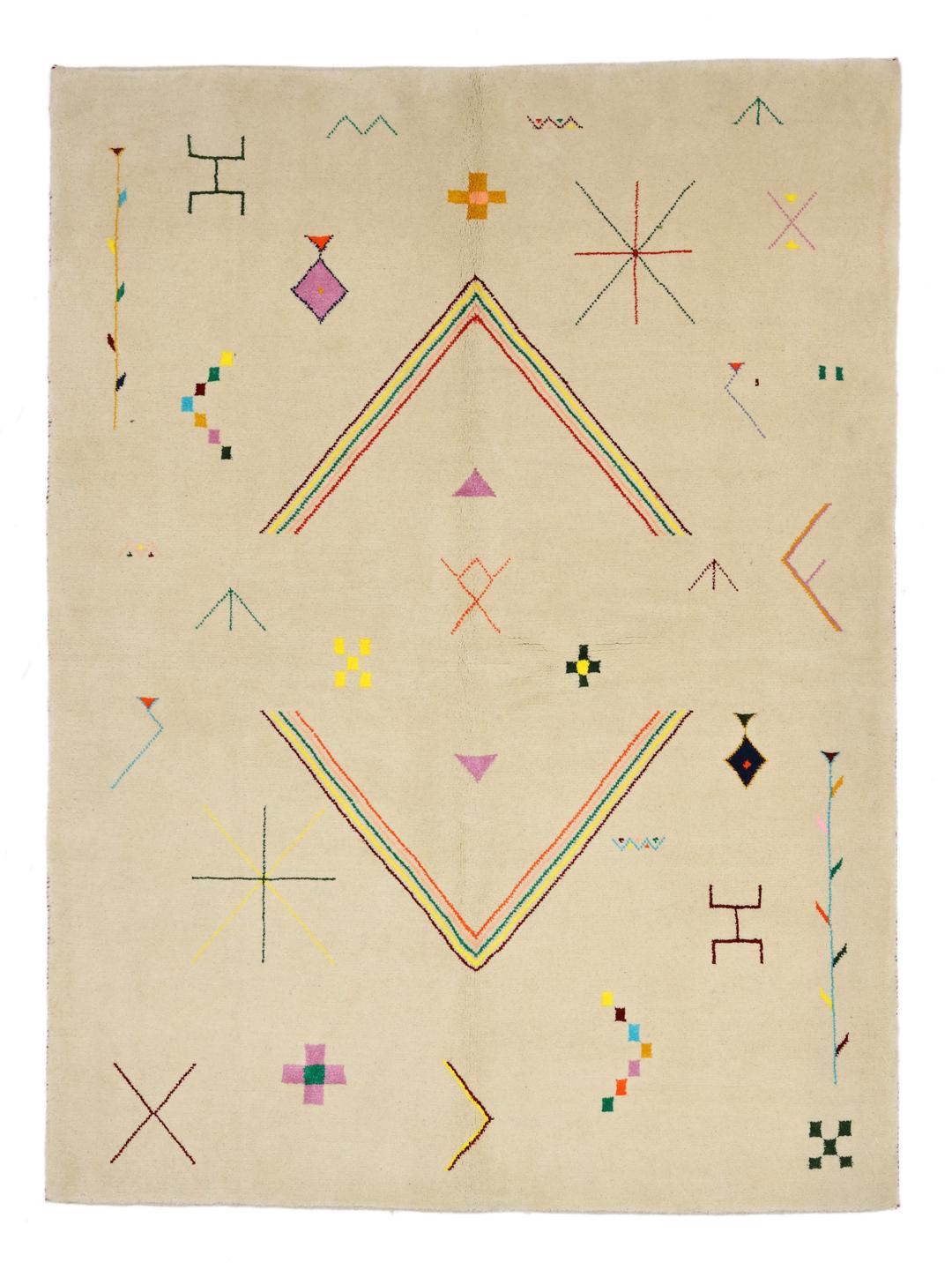
Berber-inspired rugs carry a legacy that stretches back through generations of nomadic craft in the Middle East. While historically rooted in the traditions of indigenous mountain populations, the style has evolved into a global design language, celebrated for its ability to balance minimalist, neutral fields with expressive, symbolic storytelling.
The term Berber refers to a rich heritage of weaving where the rug served as both a functional necessity and a canvas for personal expression. Historically, the weavers would incorporate symbols representing their surroundings, beliefs, and life experiences, turning each rug into a visual diary that connected the domestic space to the wider world.
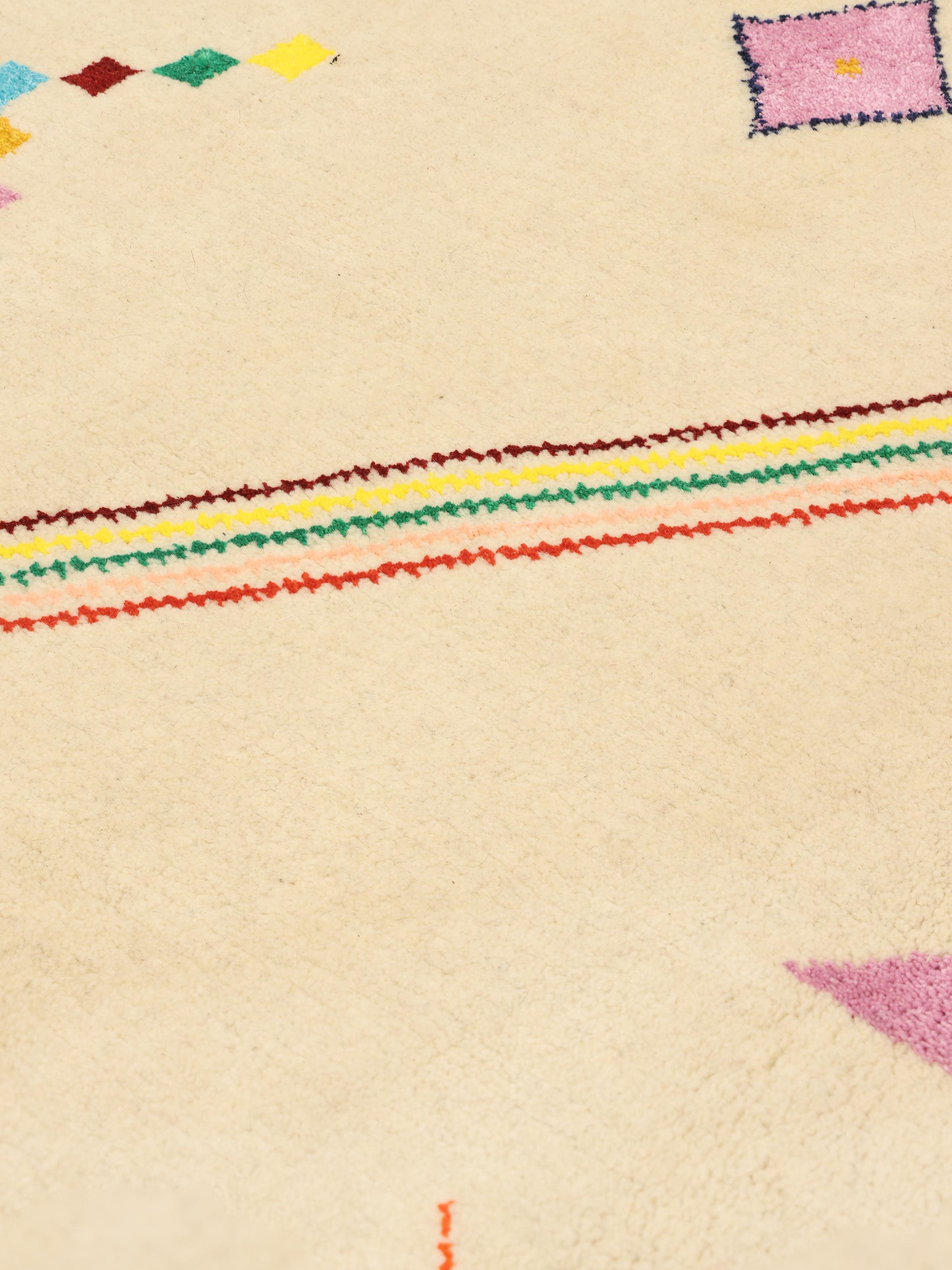
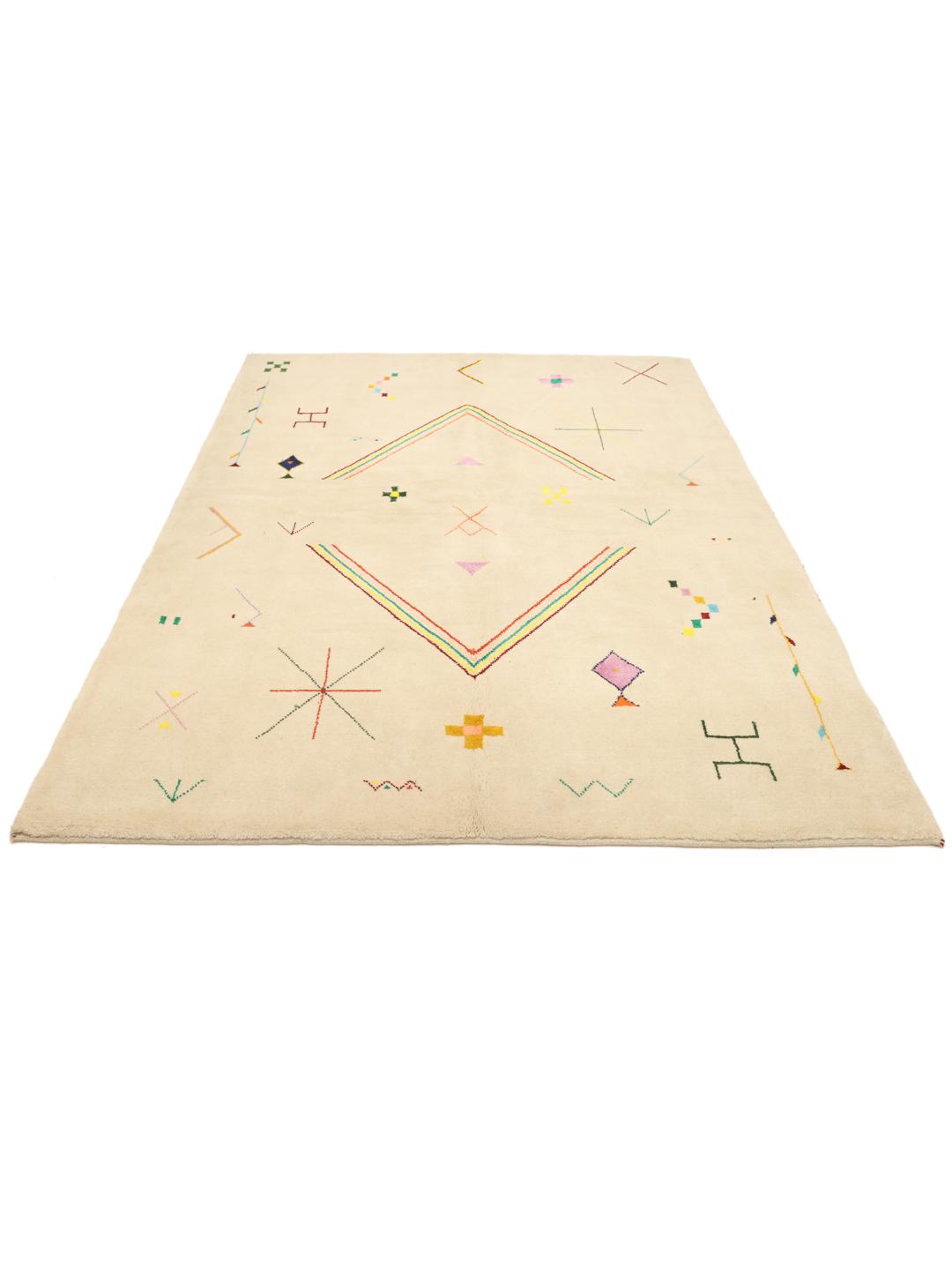
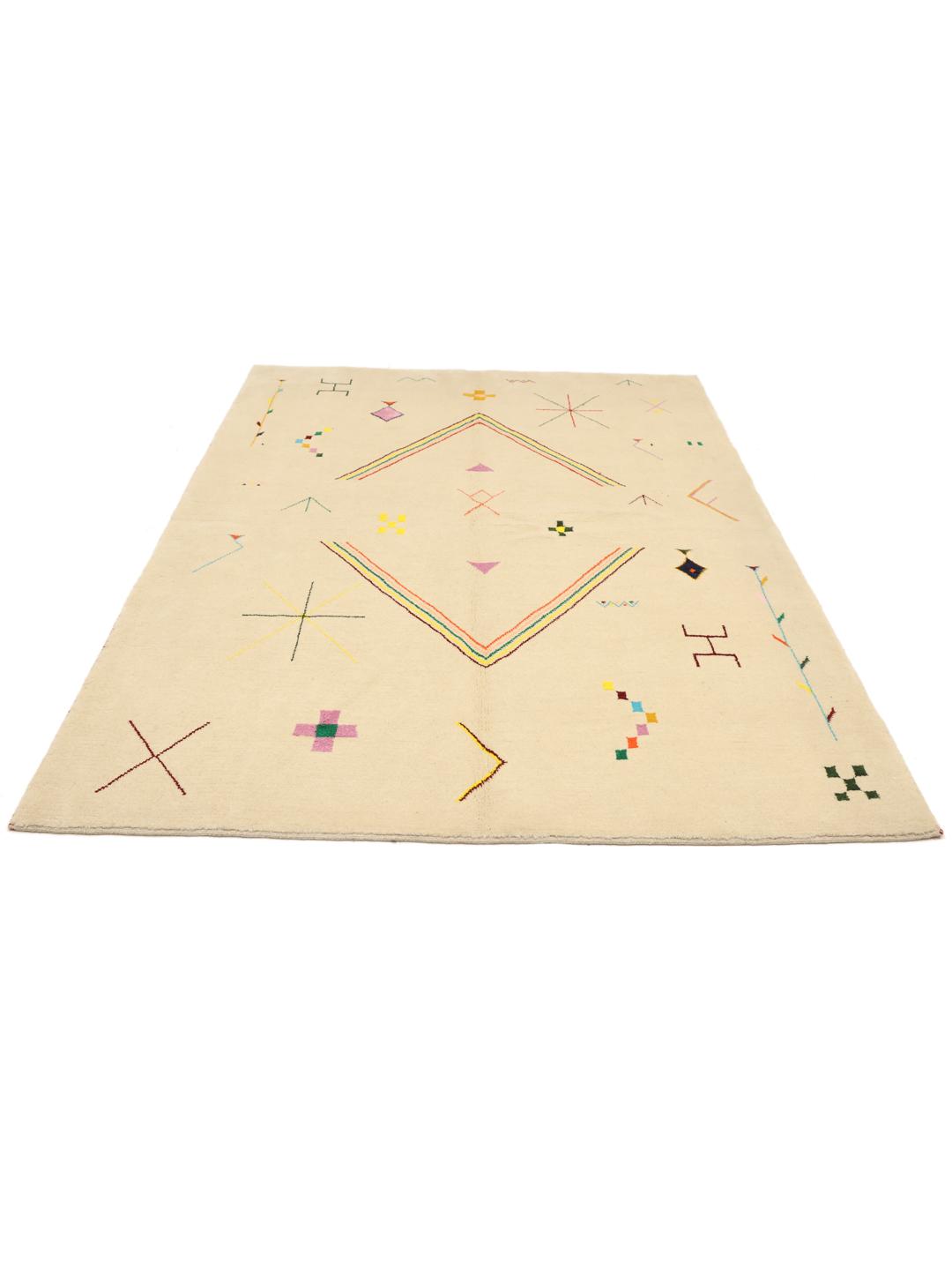
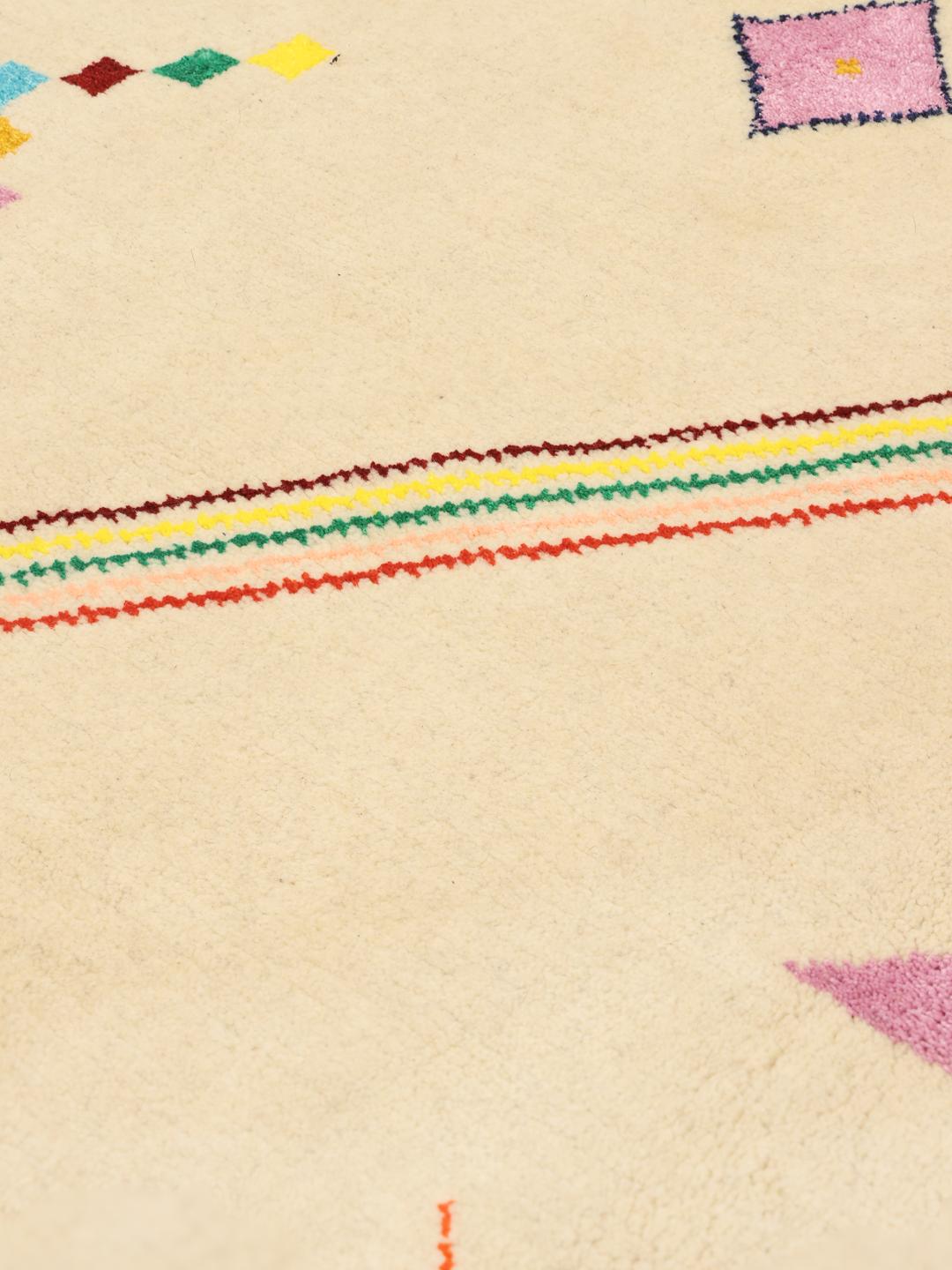
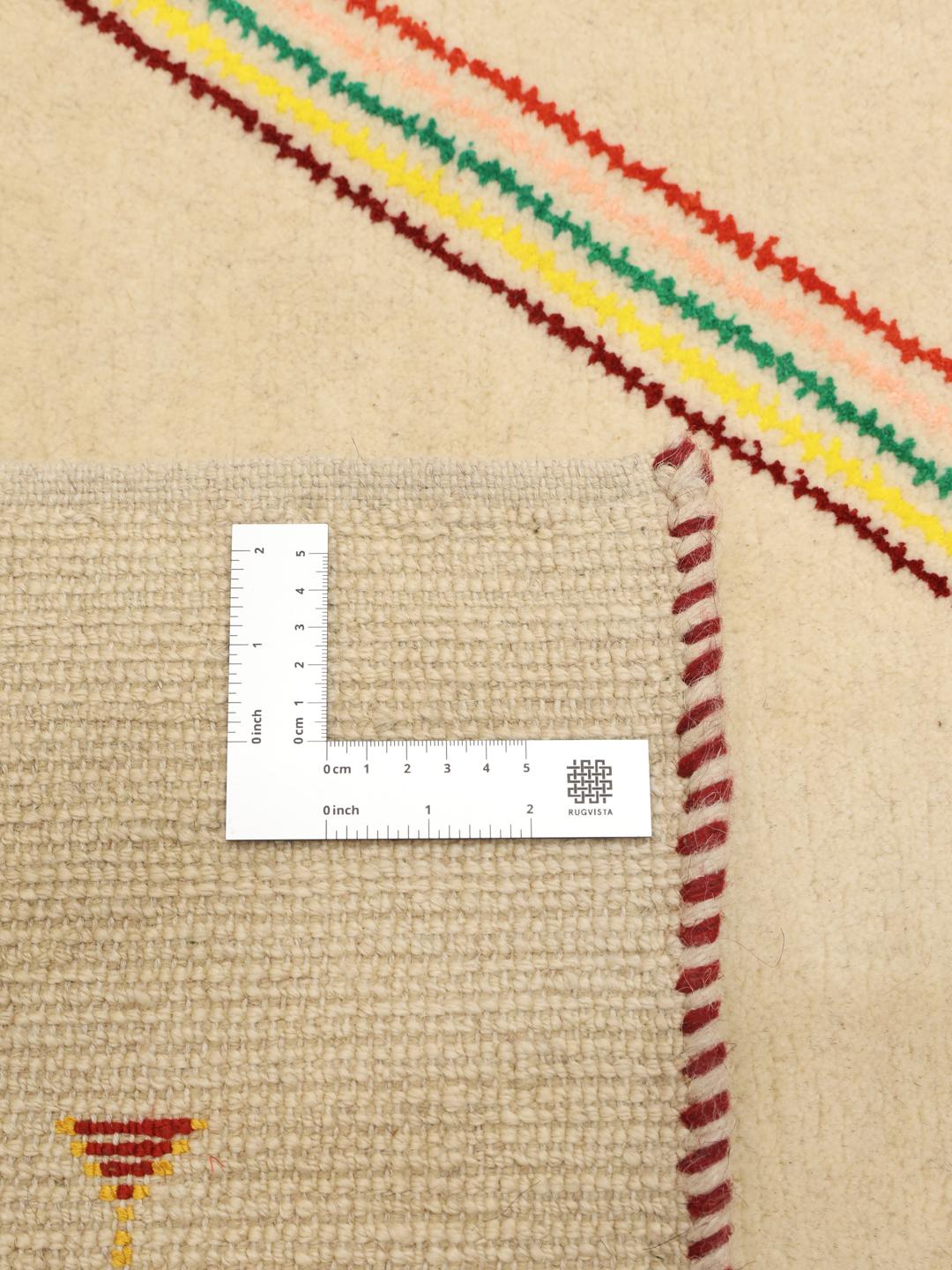
Signature design elements often include these free-form, geometric motifs that break the monotony of a solid-coloured field. In this particular piece, the use of scattered, vibrant shapes against a soft, neutral ground is a modern nod to these ancient tribal aesthetics, creating a dialogue between the traditional and the contemporary.
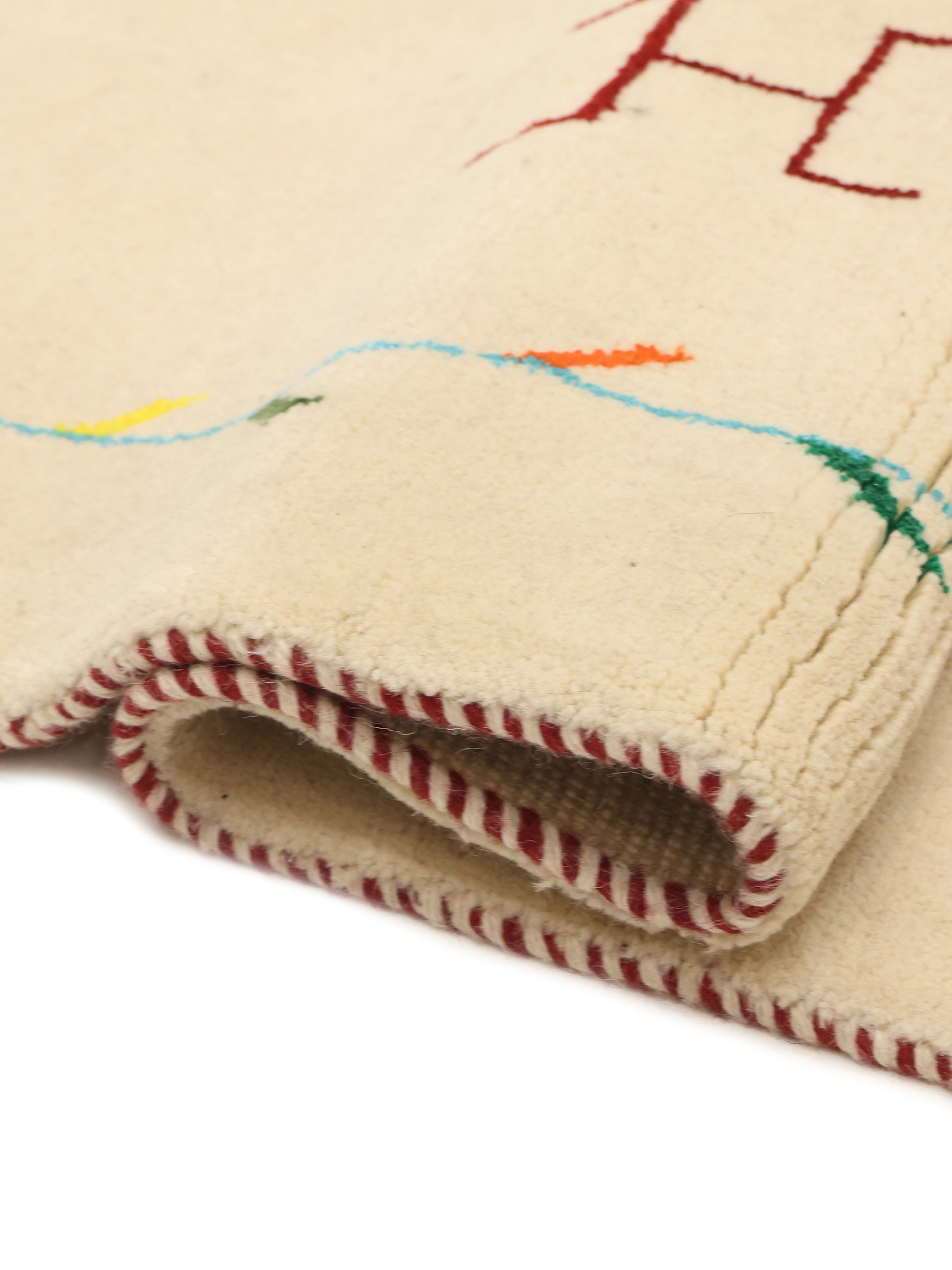
Owning a piece from this tradition is an act of preserving a specialised craft. These rugs are highly valued by collectors not just for their aesthetic versatility, but for the human effort and cultural history woven into their very structure, offering a sense of heritage that mass-produced items simply cannot replicate.