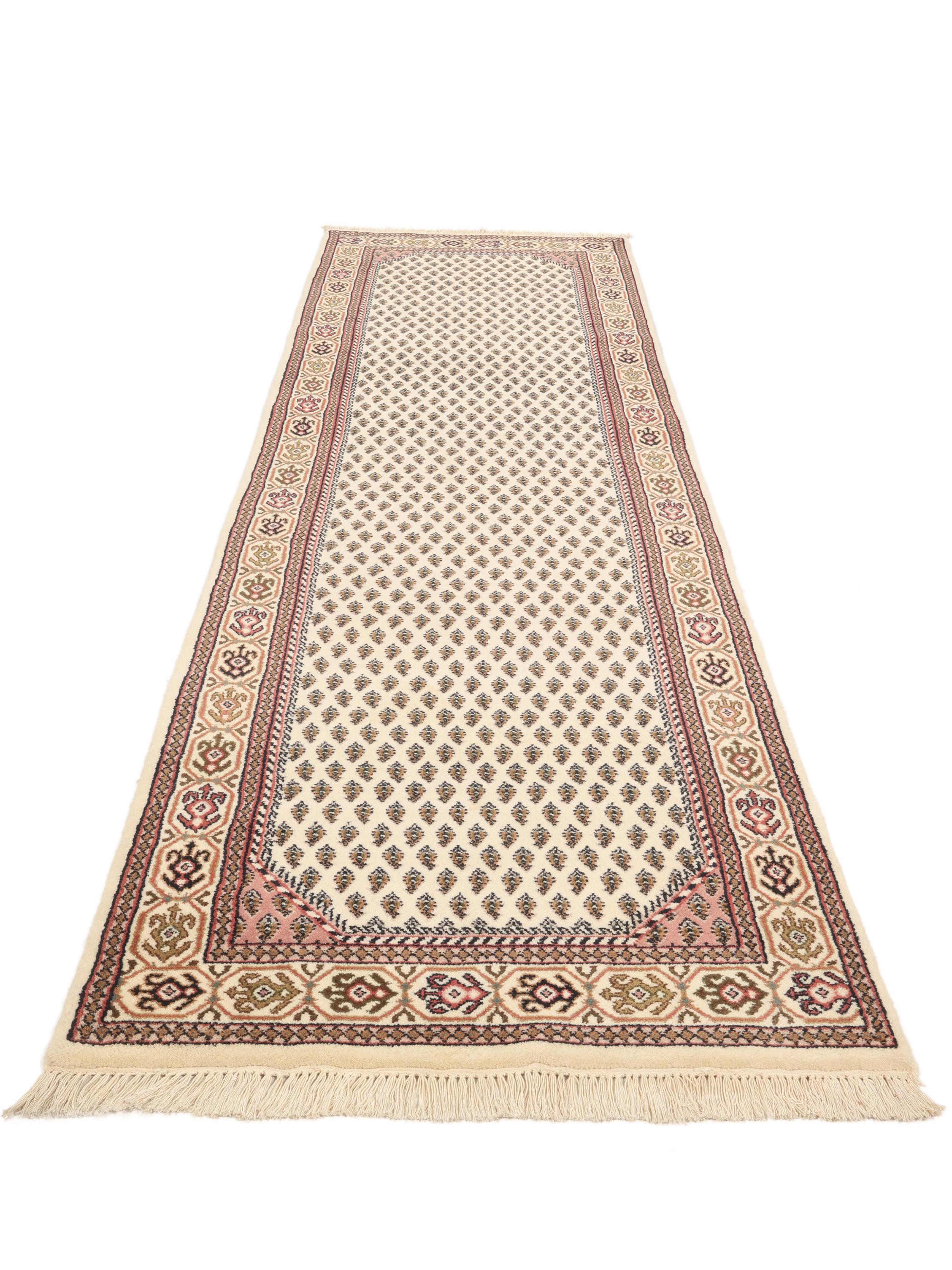
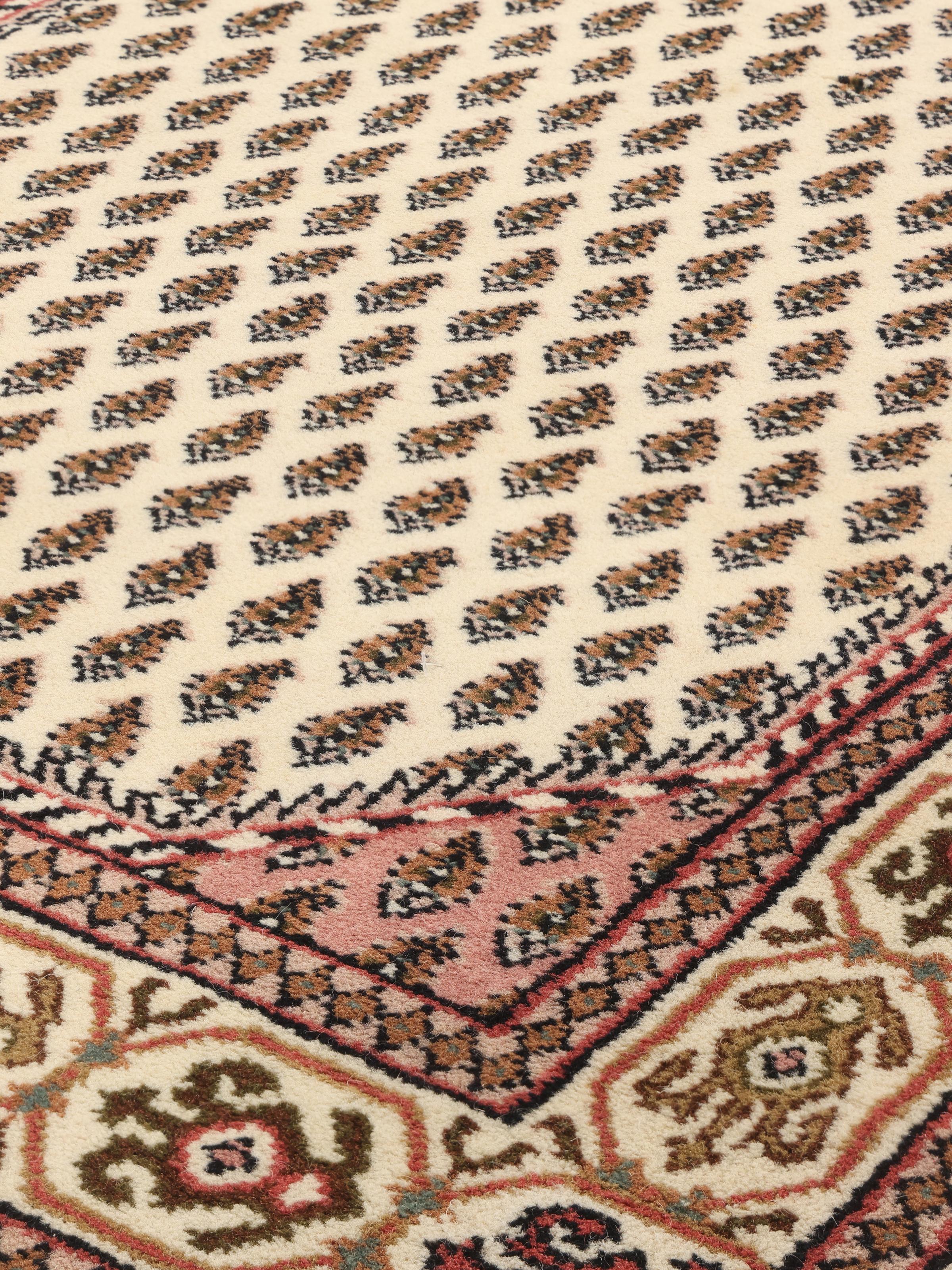
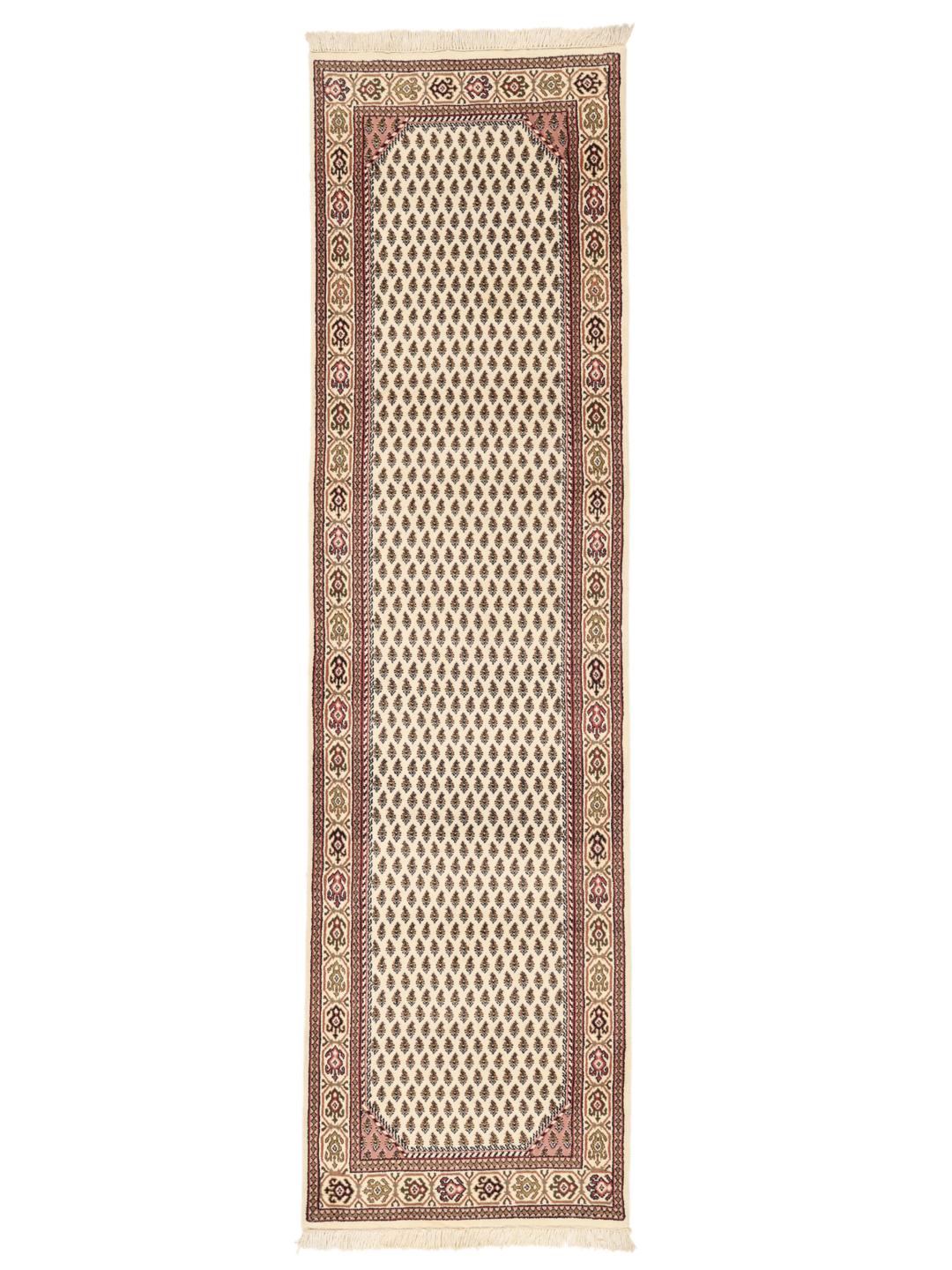
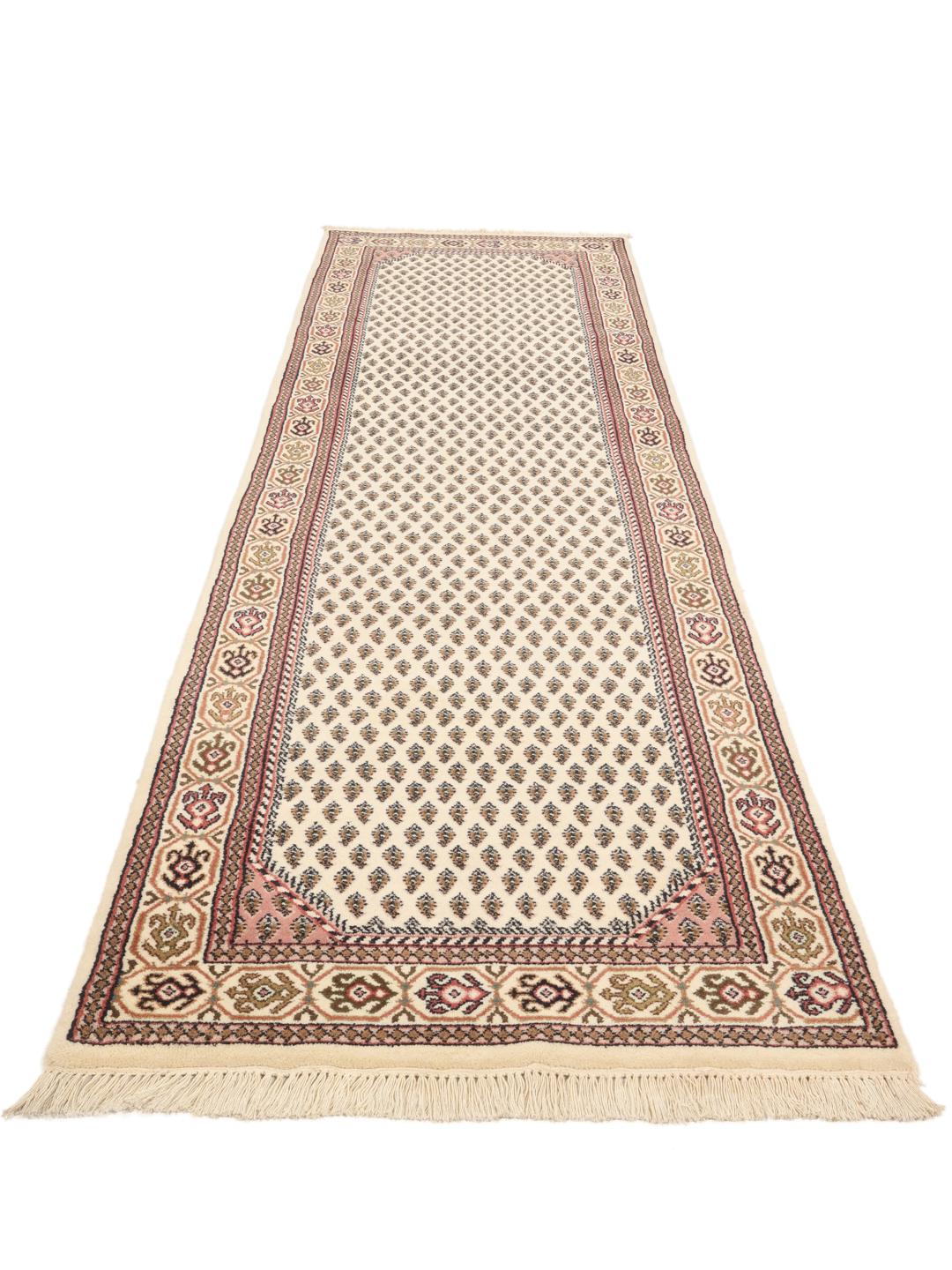
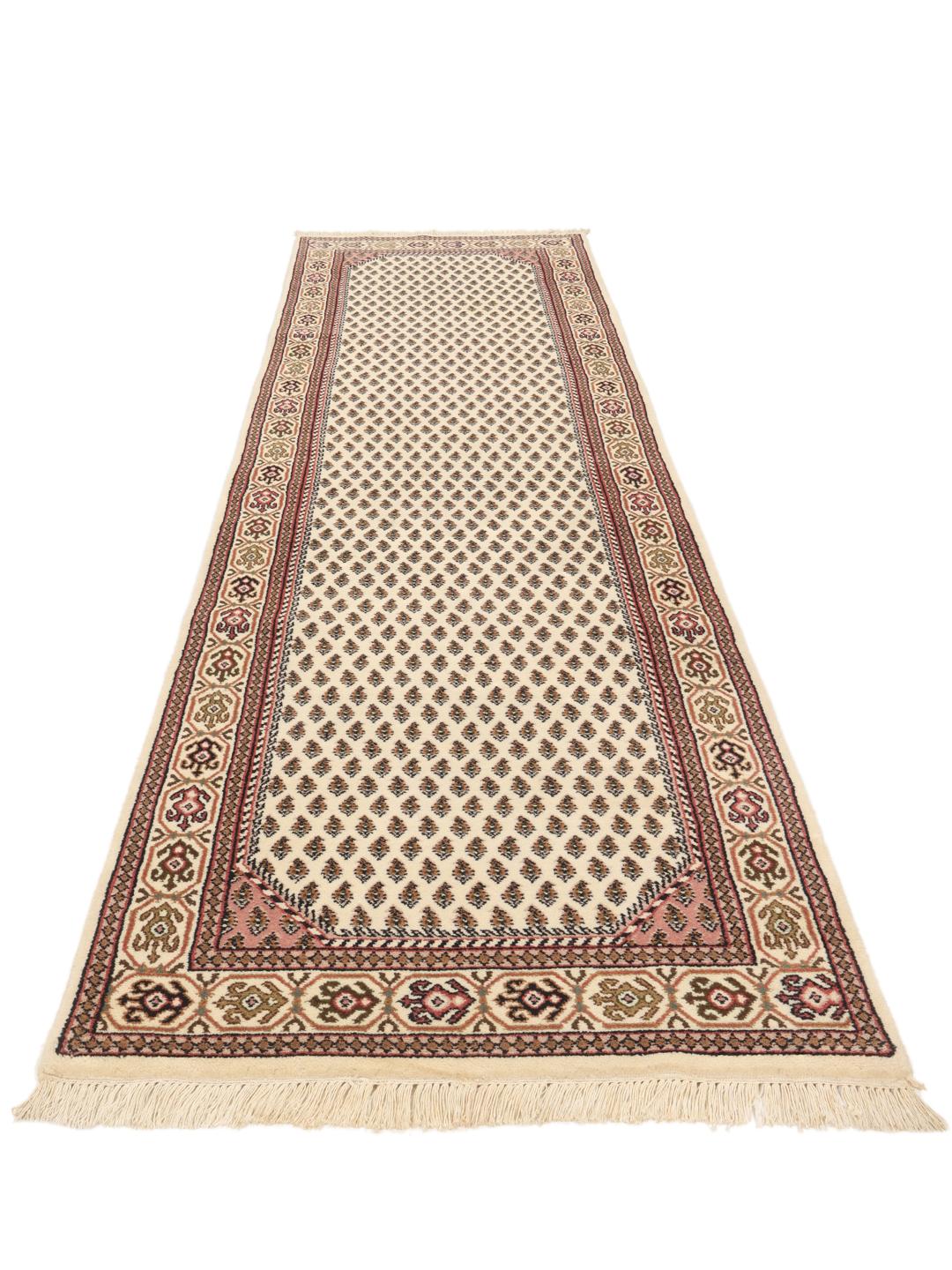
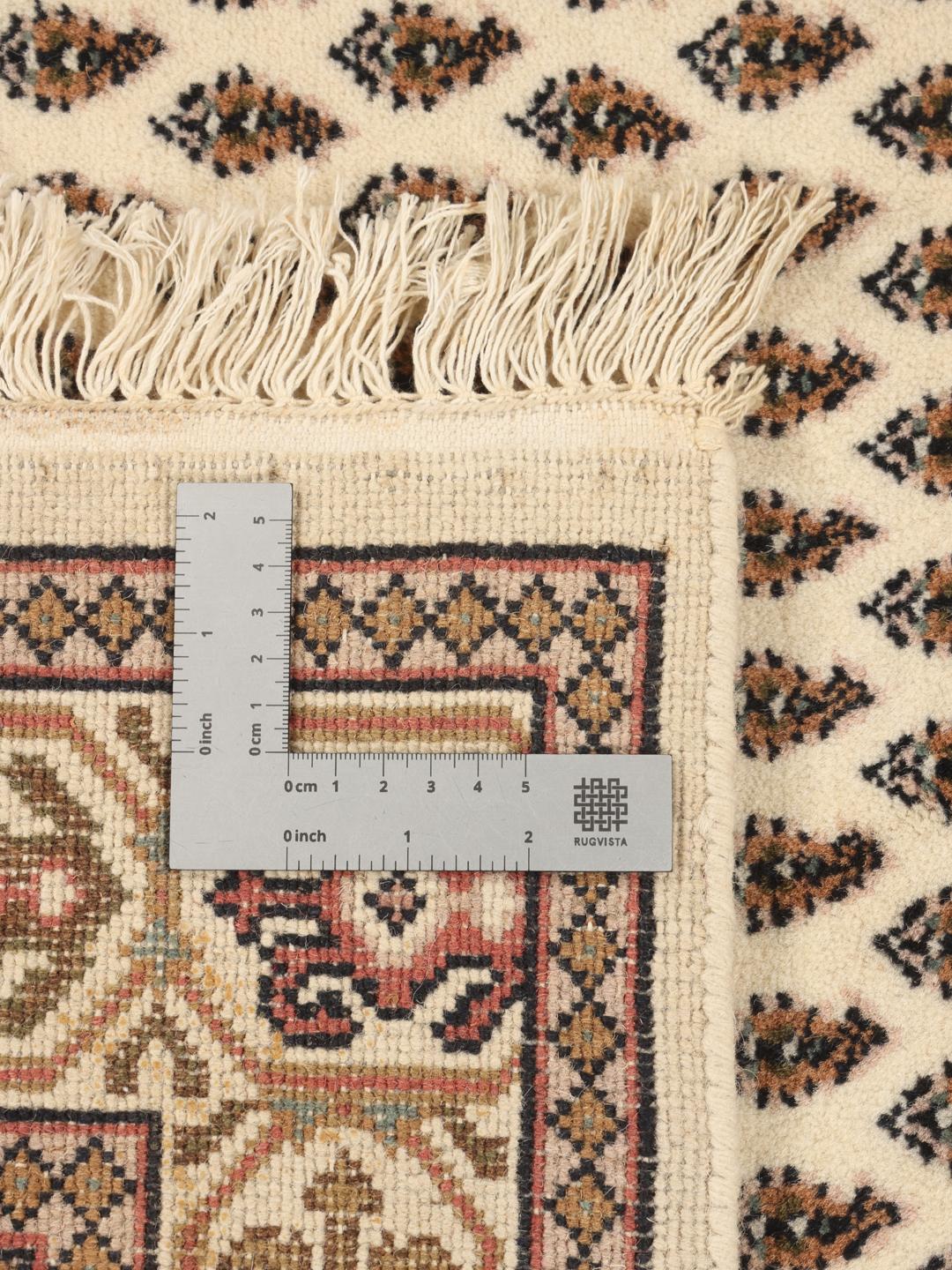
The Mir design tradition is deeply rooted in the textile history of the Middle East, though it has found a vibrant second home in the weaving centres of India. The name refers to the 'Mir-i-buta' or 'boteh' pattern, a teardrop-shaped floral motif that has been a hallmark of sophisticated weaving for centuries. This pattern represents a legacy of refined taste, often associated with the gardens and decorative arts that have long influenced the region's rug-making traditions.
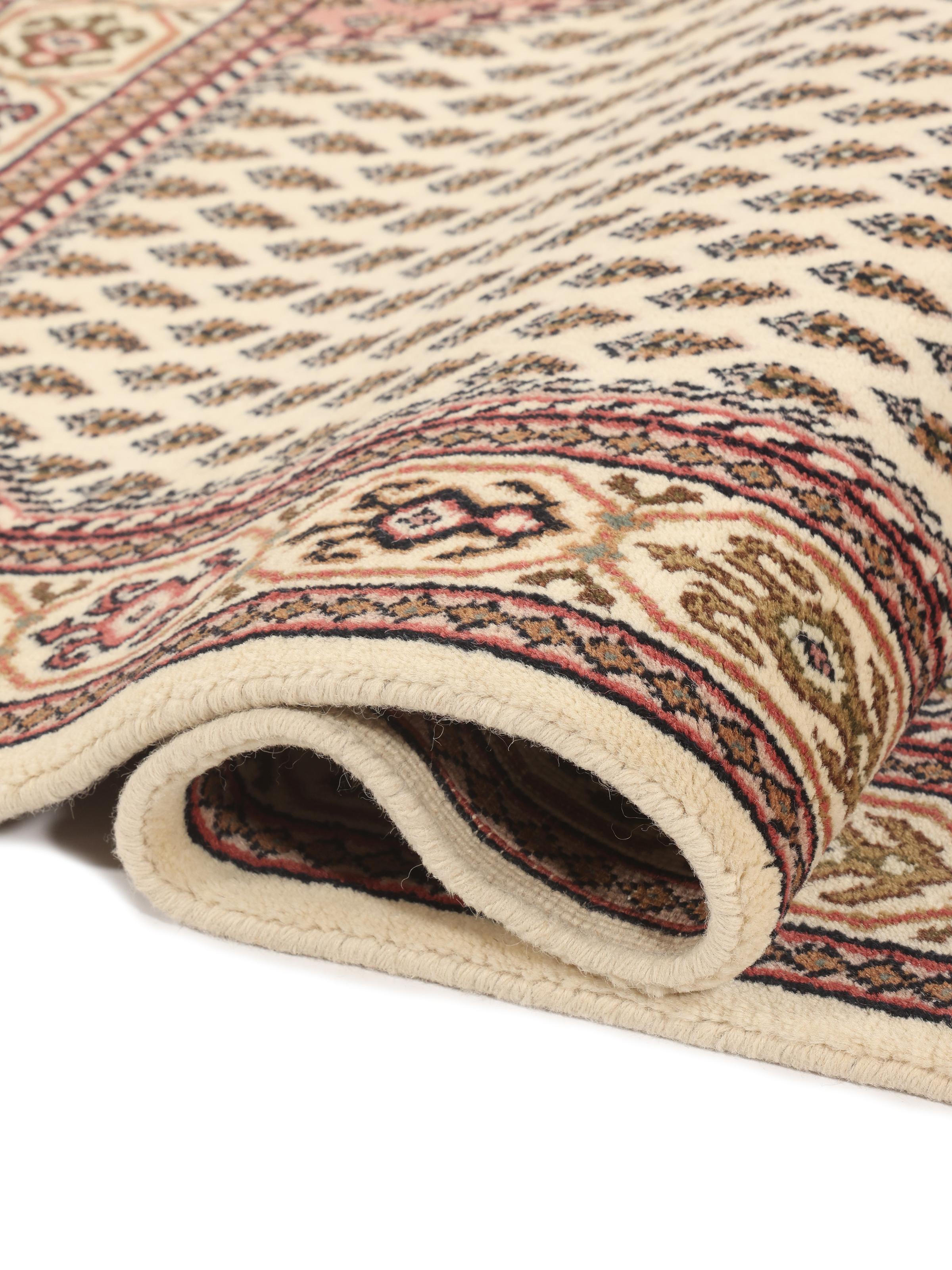
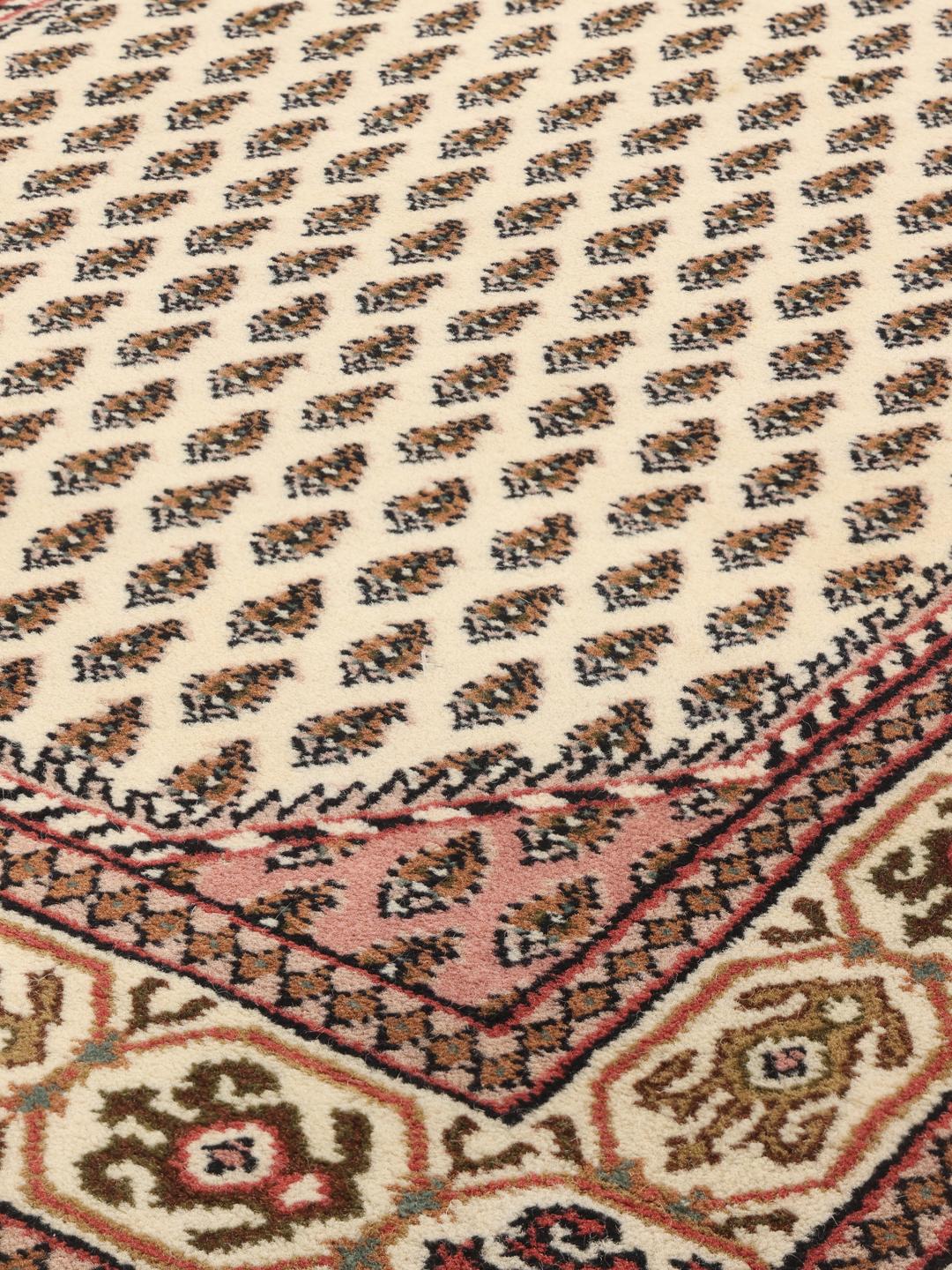
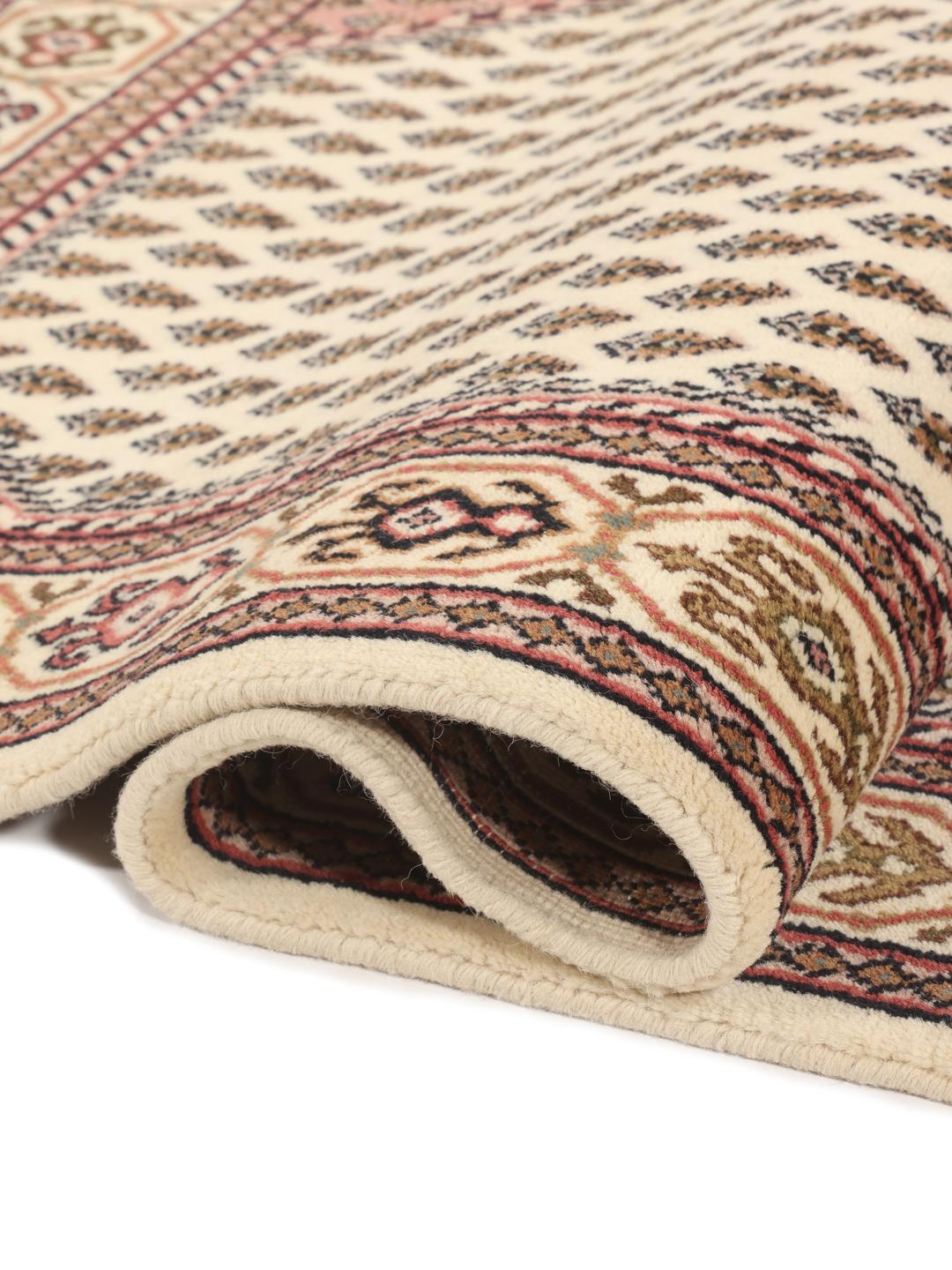
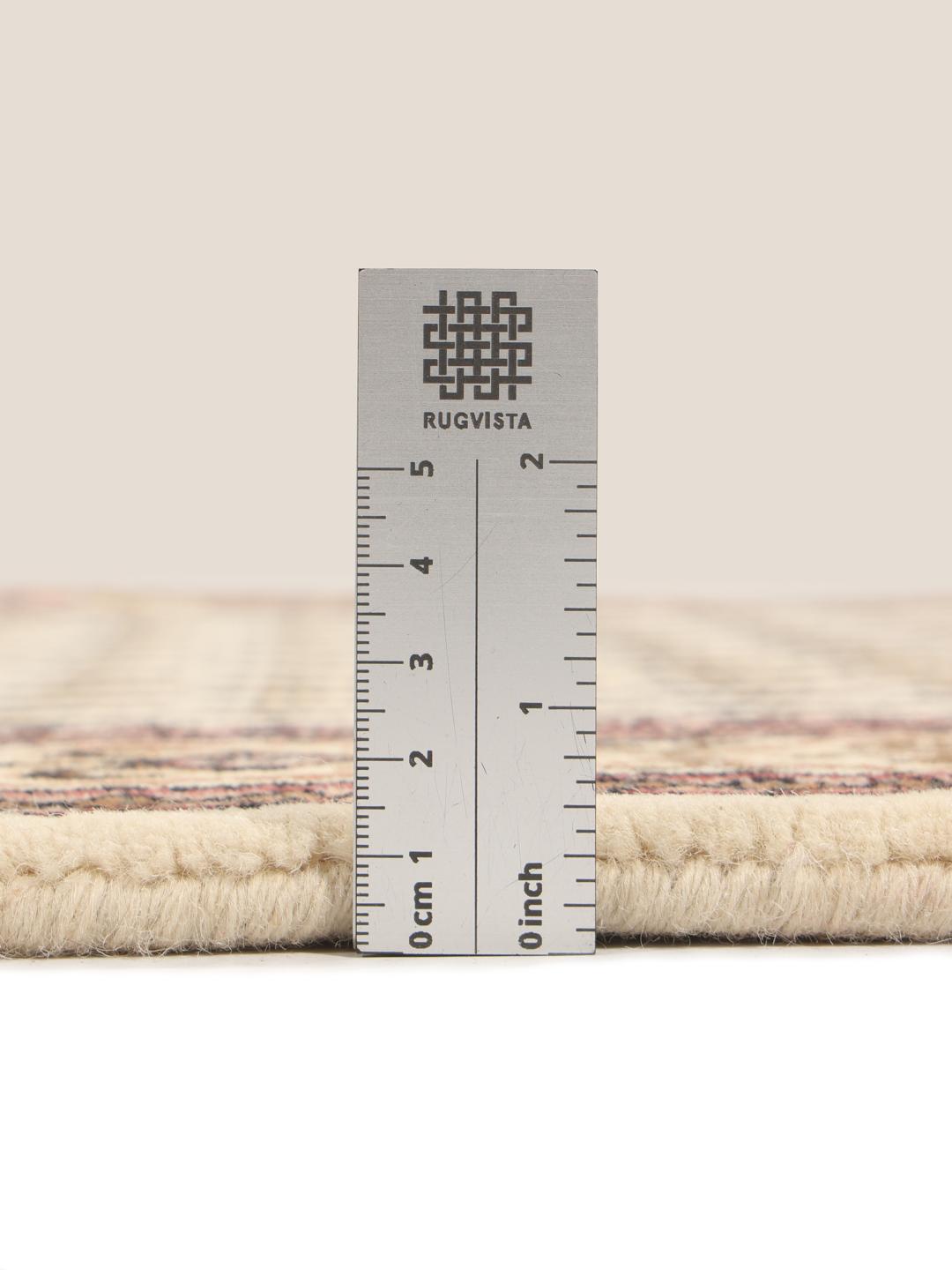
Technical quality in these rugs is defined by their construction, which focuses on achieving a balance between a fine, intricate surface and a robust, lasting foundation. The skill required to maintain uniform knotting across a runner of this size is significant, as it requires the weaver to keep consistent tension throughout the process. This consistency is what gives the rug its smooth, even texture and ensures that the pattern remains sharp and clear.
Signature elements of this style include the dense, all-over field of small boteh motifs, which creates a sense of continuous, rhythmic motion. This field is typically framed by a contrasting, ornate border that grounds the design. While the pattern is historical, it remains highly adaptable to modern interiors, providing a classic anchor point that does not overwhelm a space but rather provides a layer of sophisticated visual interest.
These rugs are highly valued by collectors and homeowners alike for their blend of heritage and practicality. Owning a piece from this tradition is a way to connect with a long-standing craft culture that values patience, precision, and the artistic expression of the natural world. It serves as a reminder that the items we choose for our homes can carry stories of distant regions and generations of refined craftsmanship.