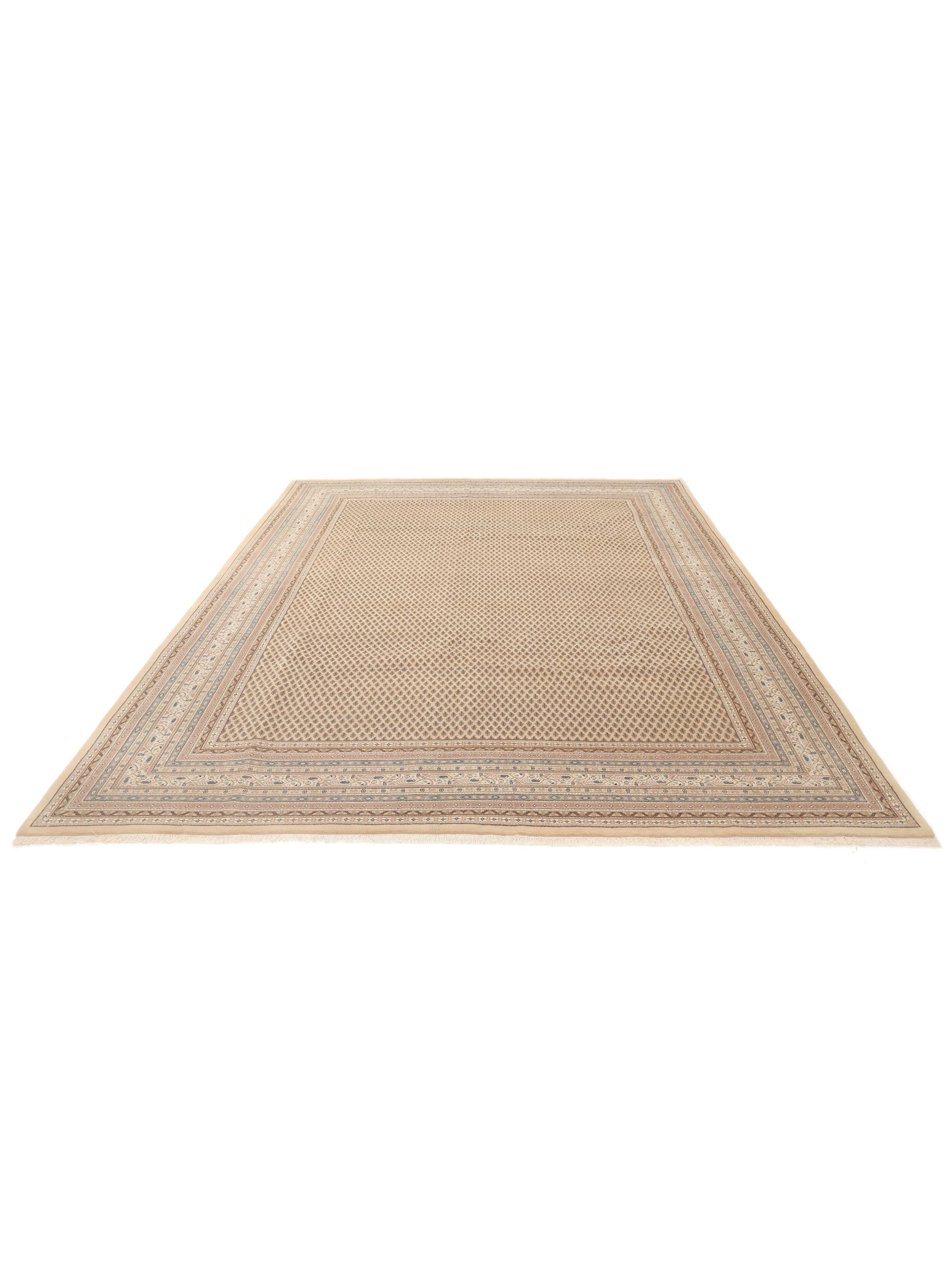
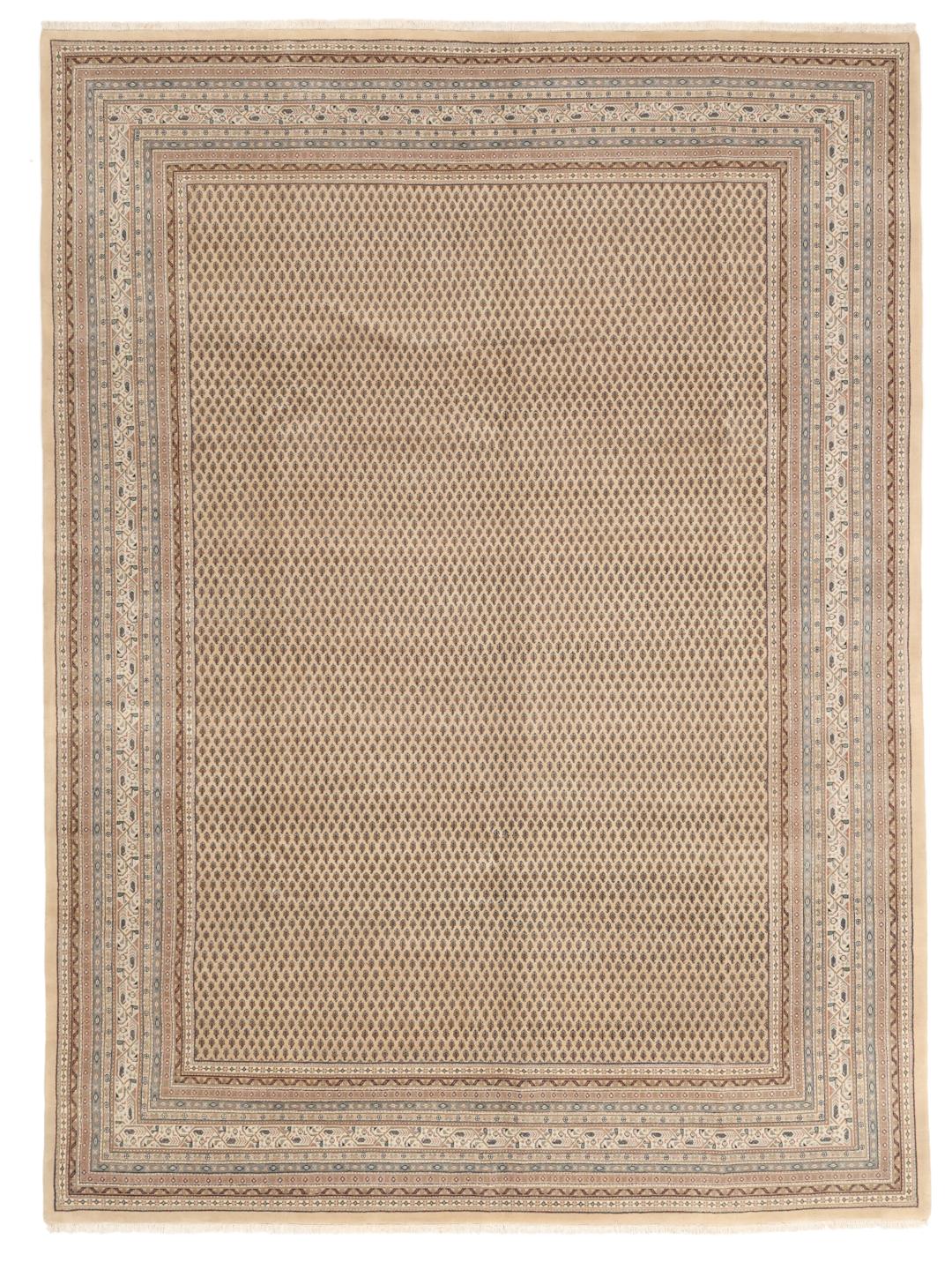
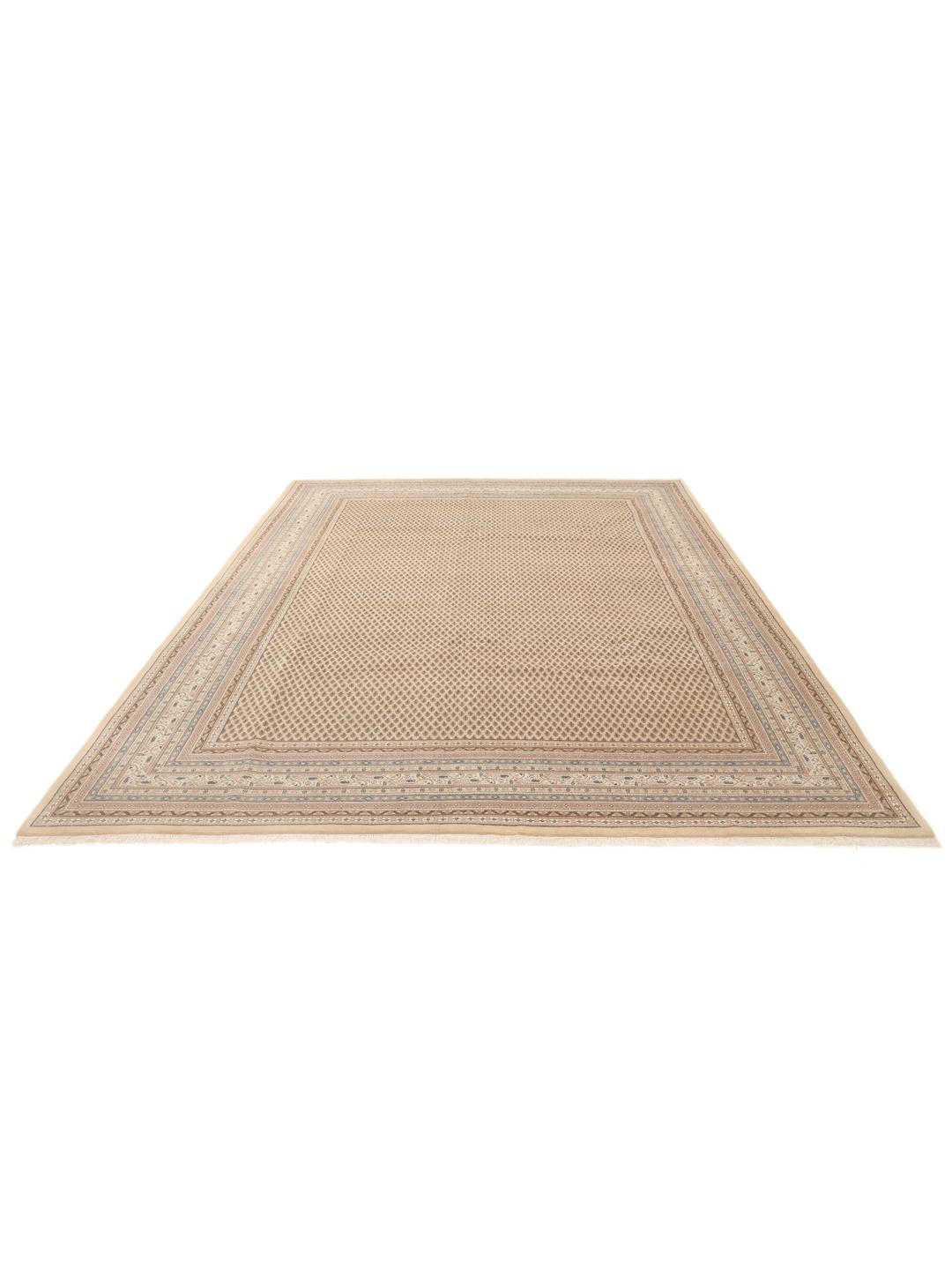
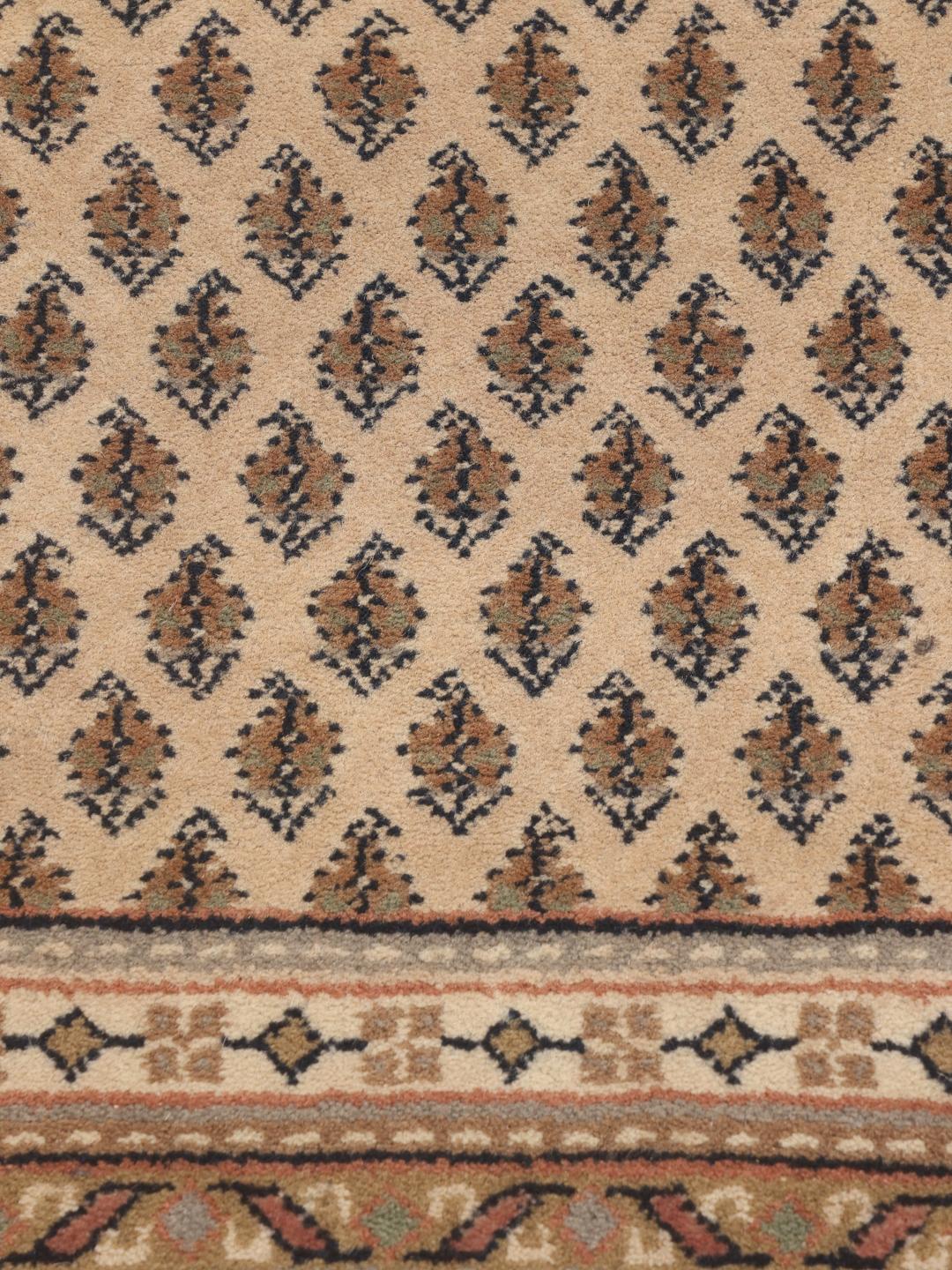
The Mir Indo tradition is deeply rooted in the history of Middle Eastern rug weaving, having evolved as artisans in India adapted classic designs to suit local materials and techniques. The 'Mir' style is famously associated with the boteh motif, a teardrop-shaped emblem that has been used for centuries to represent life and eternity. Over time, these designs travelled across borders, finding a new and vibrant home in the weaving centres of India.
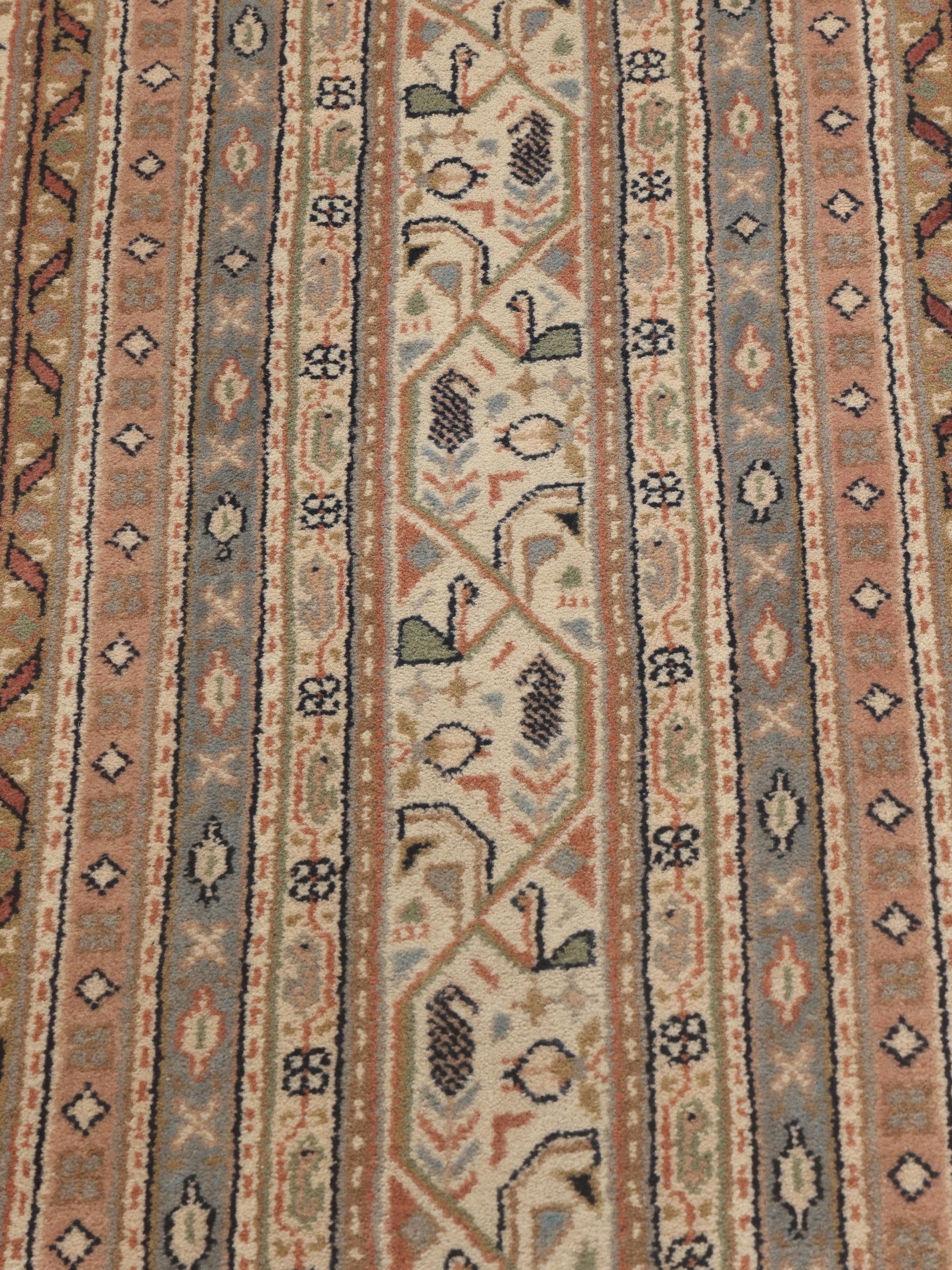
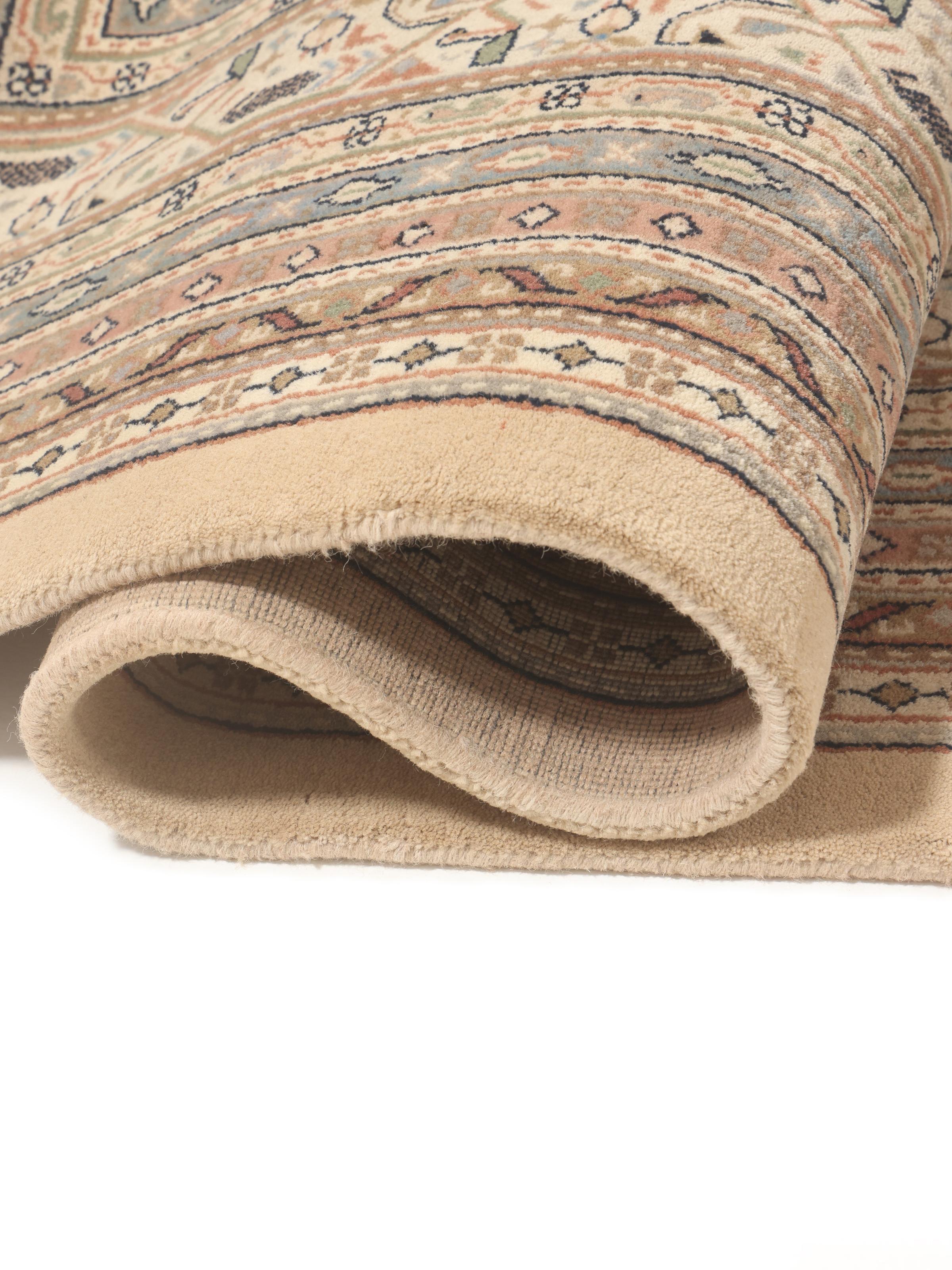
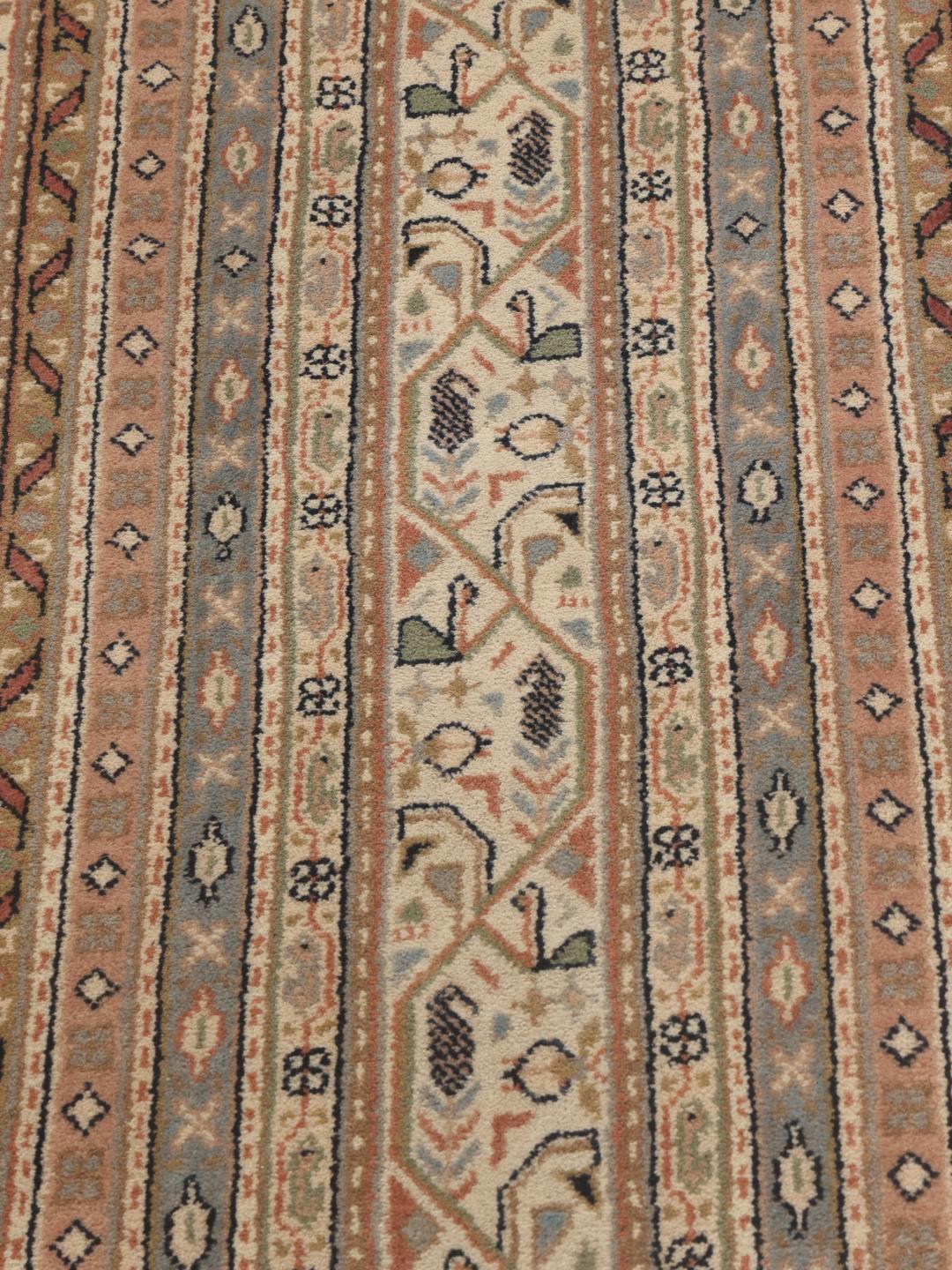
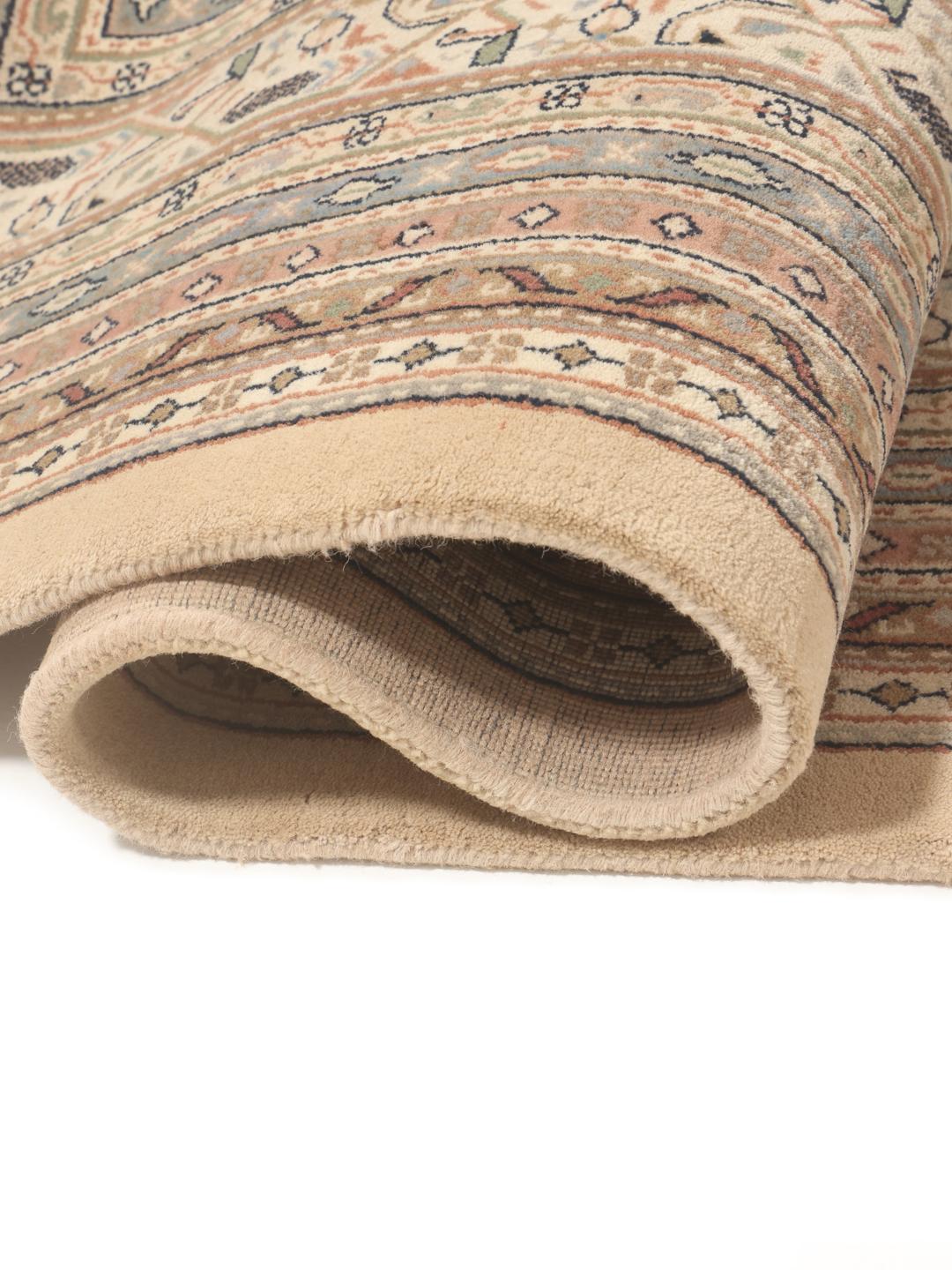
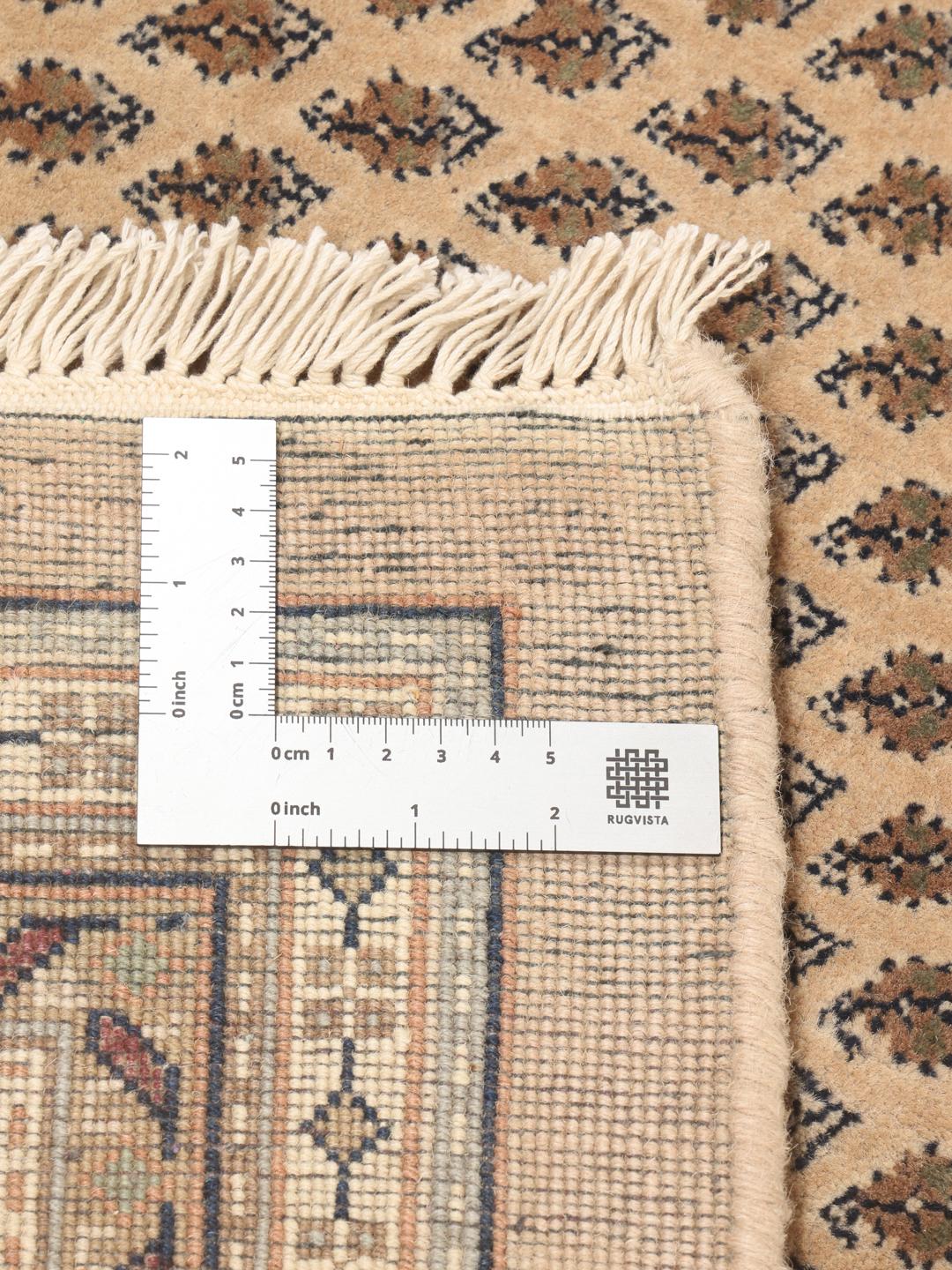
The technical quality of these rugs is defined by their dense knotting, which allows for intricate and highly detailed patterns. The term 'Mir Indo' refers specifically to these rugs that utilise high-quality wool, which is valued for its natural lustre and ability to hold deep, rich dyes. This specific construction ensures that the fine details of the motif remain clear and vibrant throughout the life of the rug.
Visually, the Mir Indo is characterised by its field, which is often filled with a repeating boteh motif, creating a harmonious and balanced aesthetic. The borders are typically formal and ornate, providing a structured frame that highlights the complexity of the central design. While many versions exist, the most prized examples are those that maintain a delicate balance between the intricacy of the pattern and the subtlety of the colour palette.
Collecting a Mir Indo rug is an investment in a long-standing cultural tradition that celebrates both skill and design. These rugs are highly regarded for their ability to bring a sense of history and warmth into a modern home. Owning one means participating in a legacy of craft, where every detail tells a story of artistic evolution and dedication to beauty.