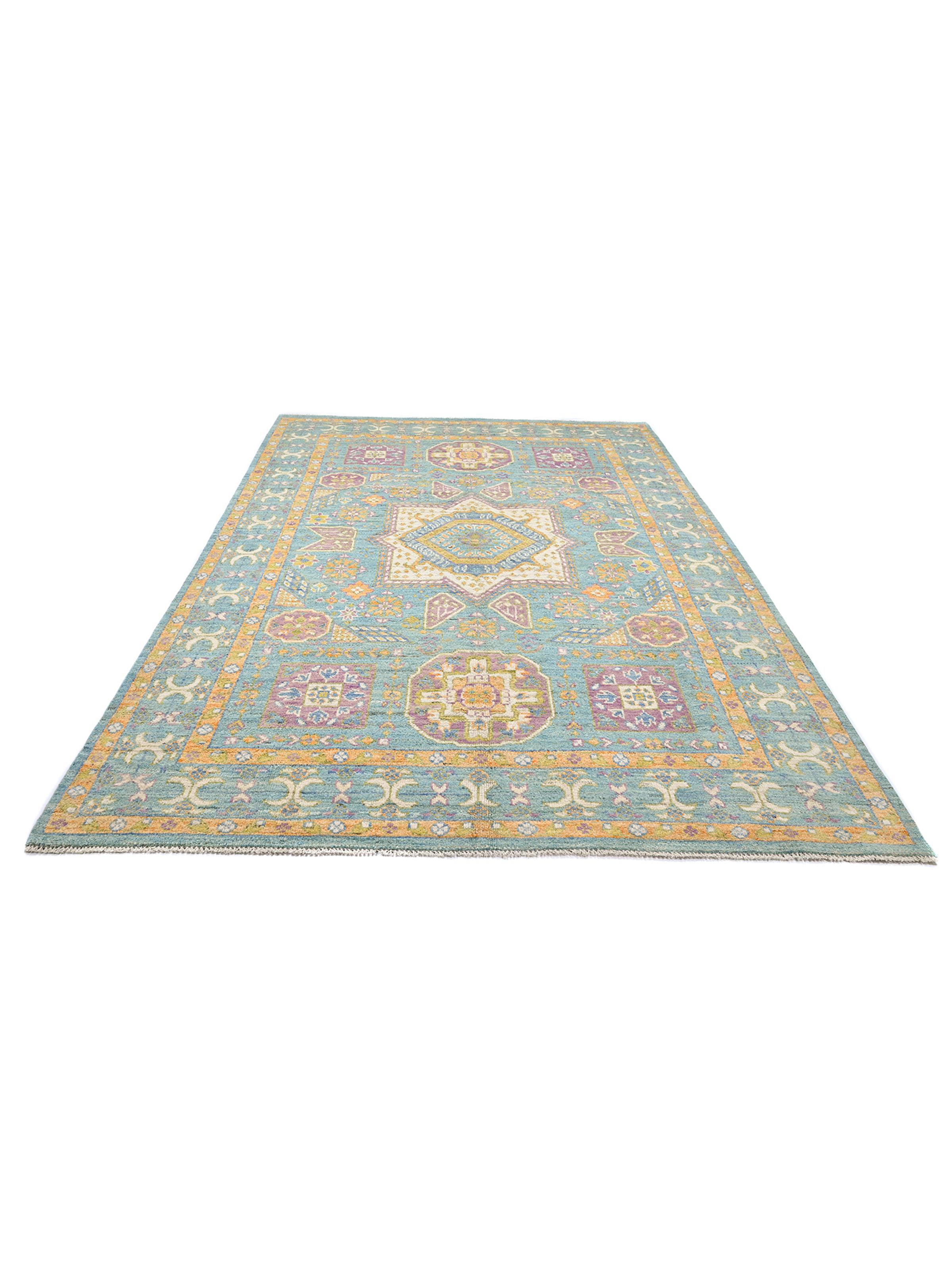
Mamluk rugs trace their design roots back to the historic Mamluk Sultanate of Cairo in the fifteenth century. While the original designs were woven in Egypt, the tradition has been kept alive and reinterpreted by skilled weavers in Afghanistan, blending historical patterns with modern craftsmanship.
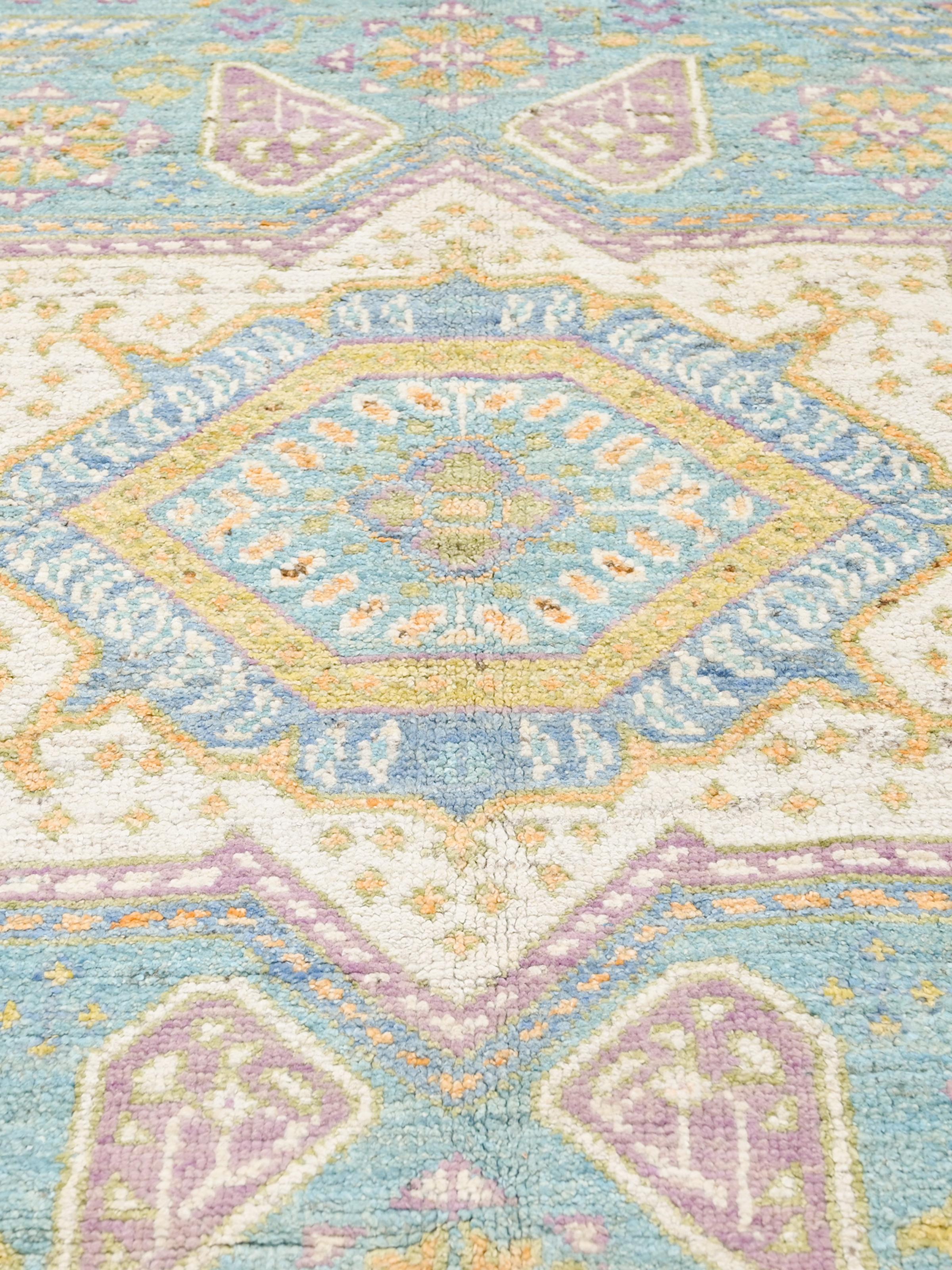
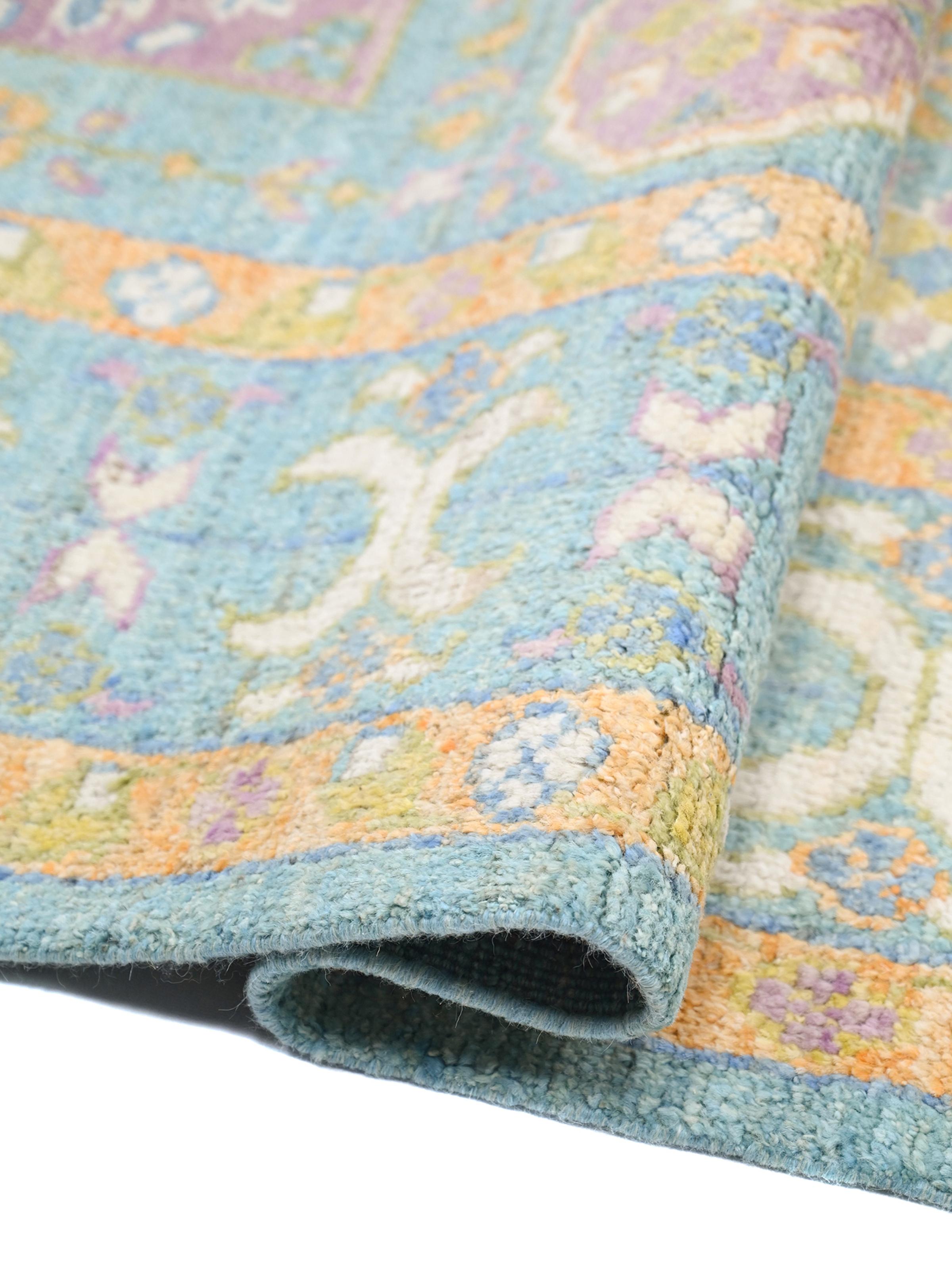
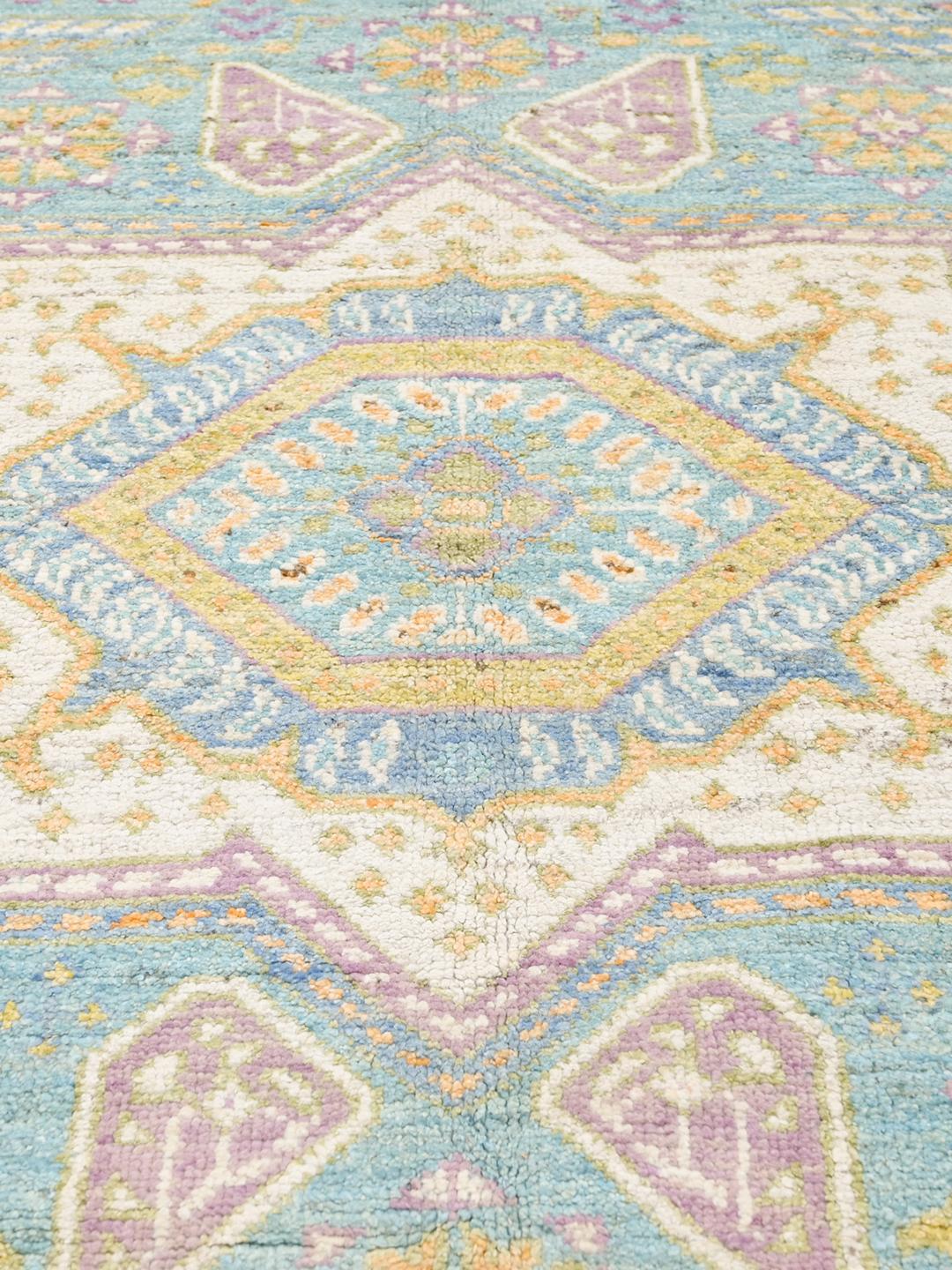
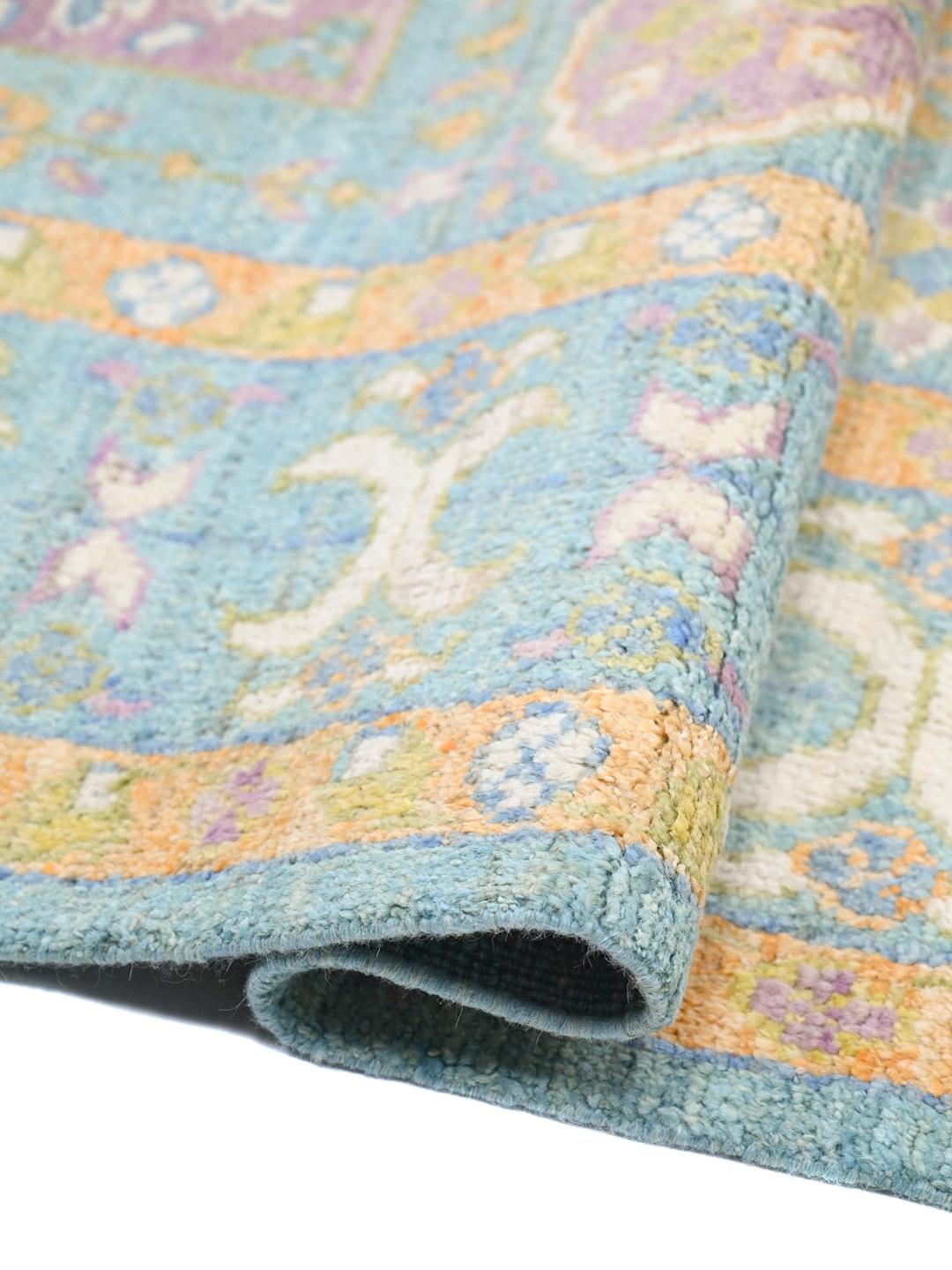
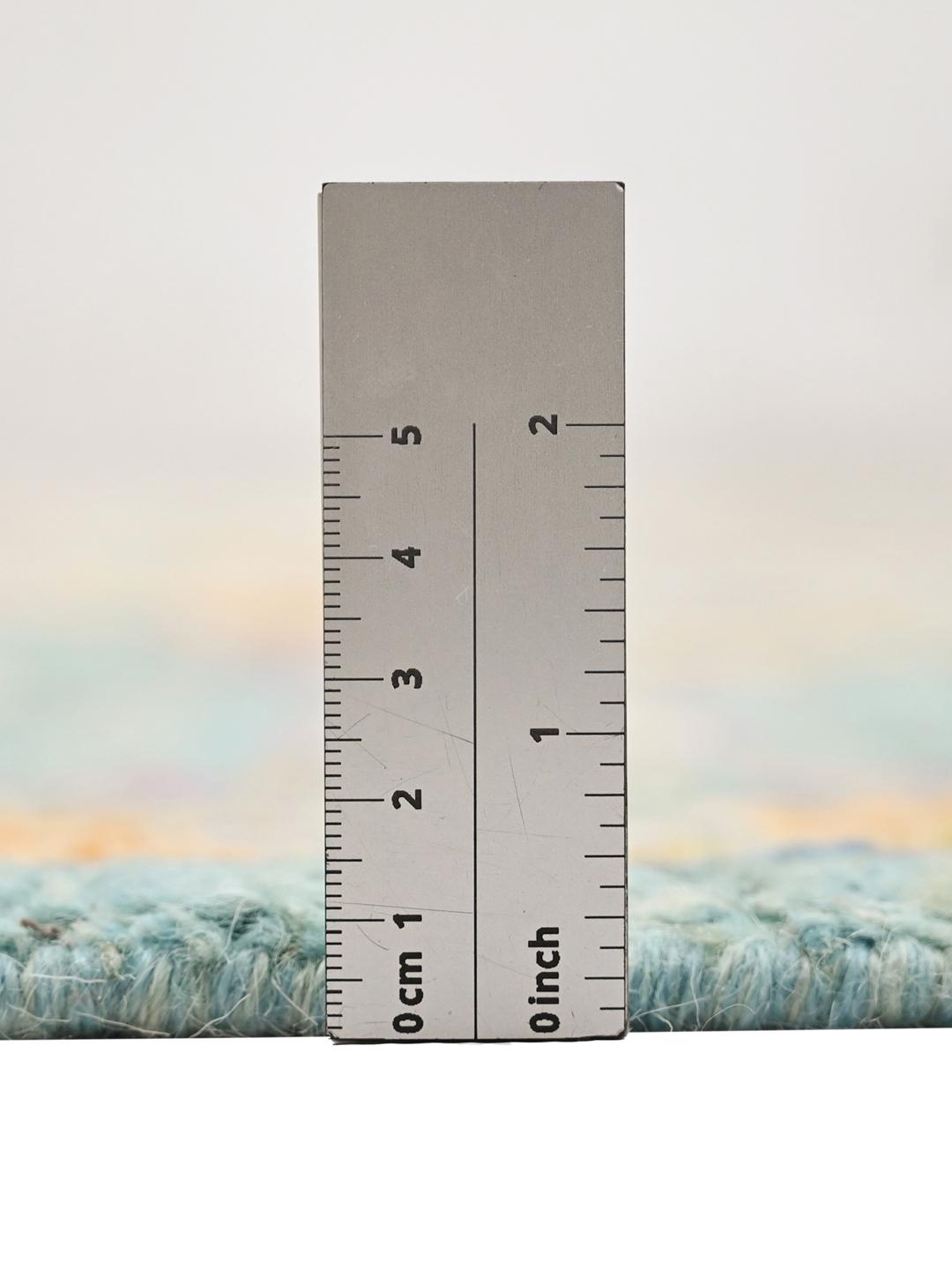
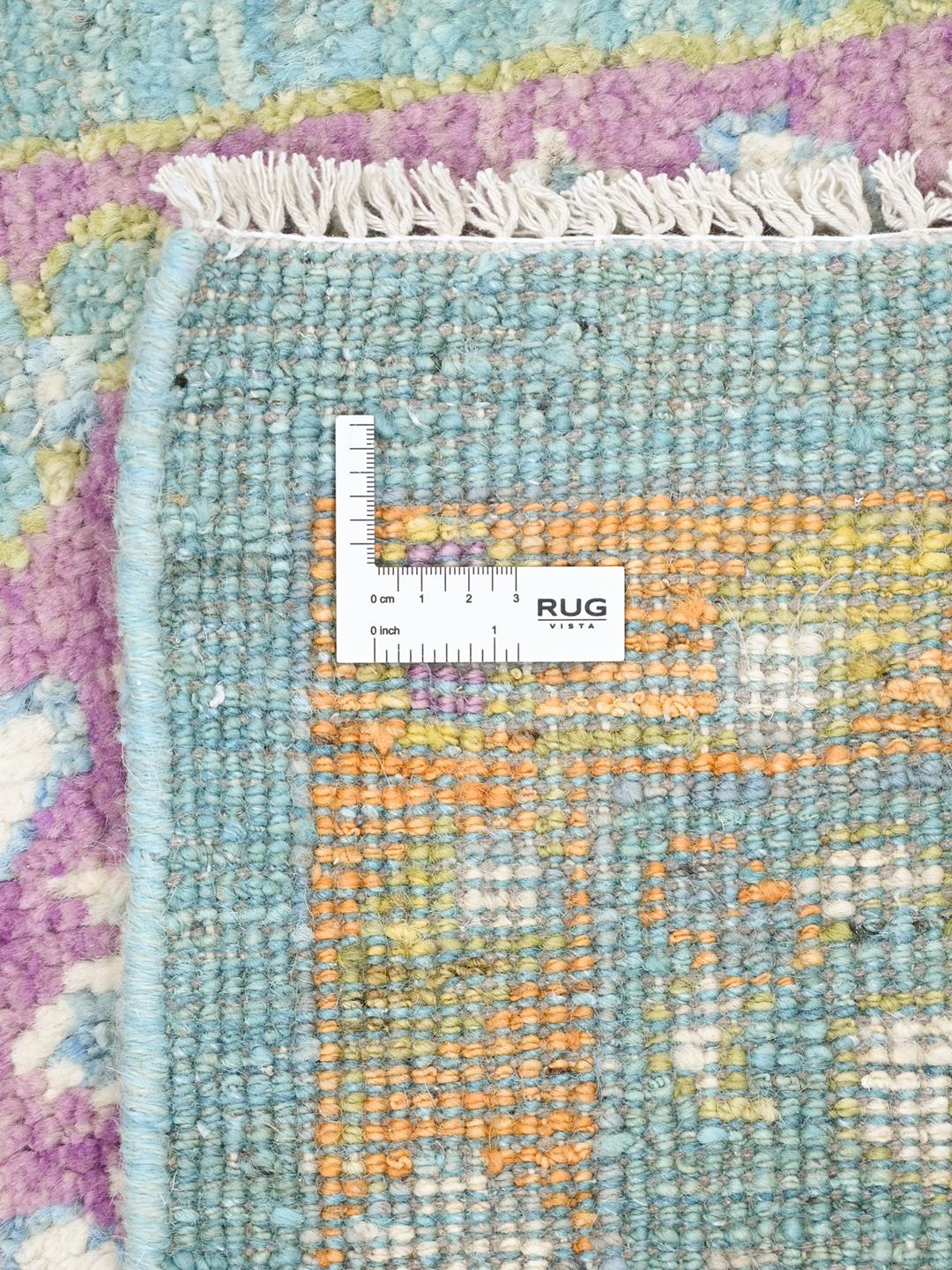
The name Mamluk represents a highly complex design style characterised by central medallions and intricate geometric compartments. The structure relies on a strong cotton warp to support the thick, hand-knotted wool pile, ensuring the rug lies flat and maintains its shape over decades of use.
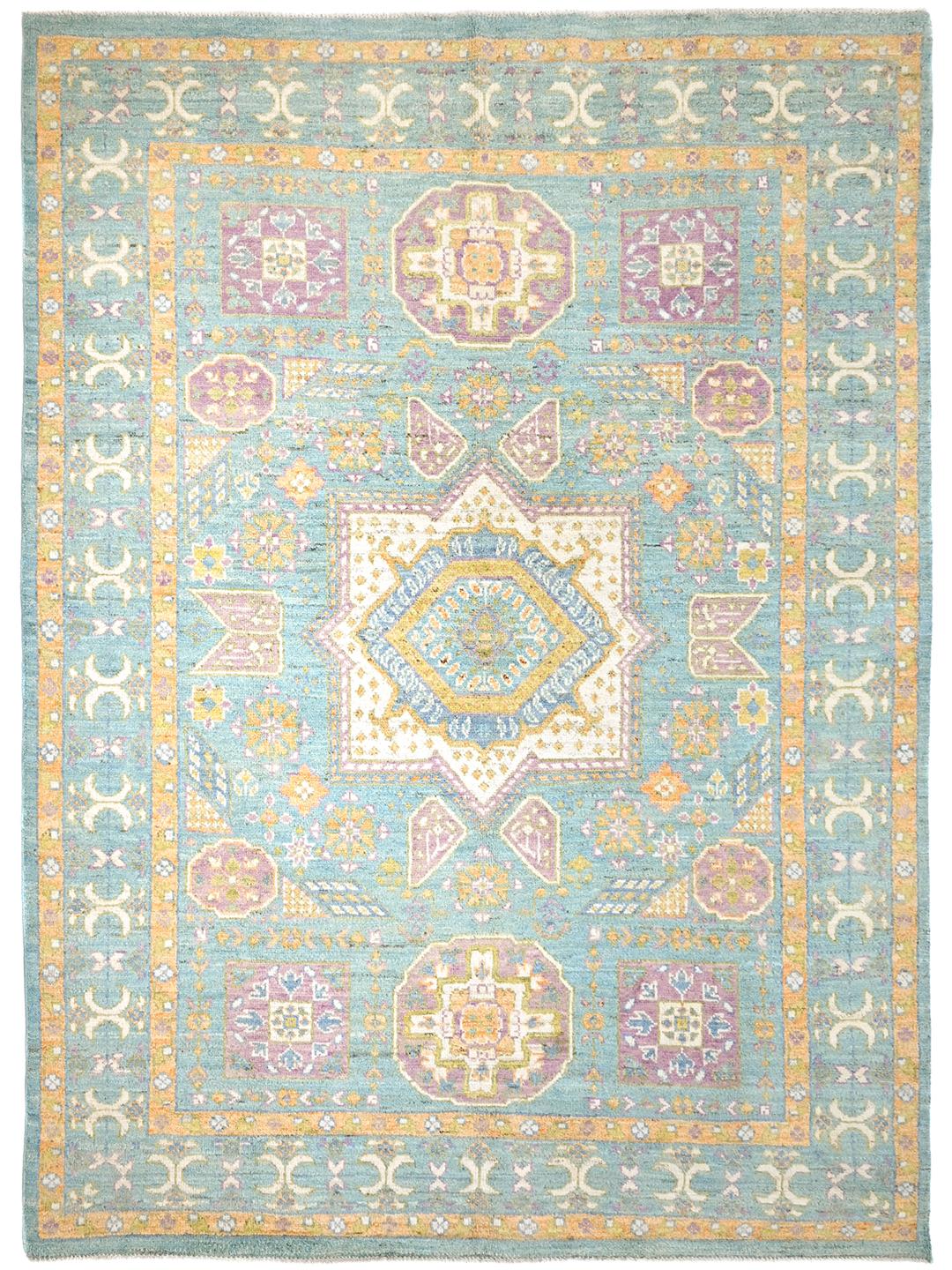
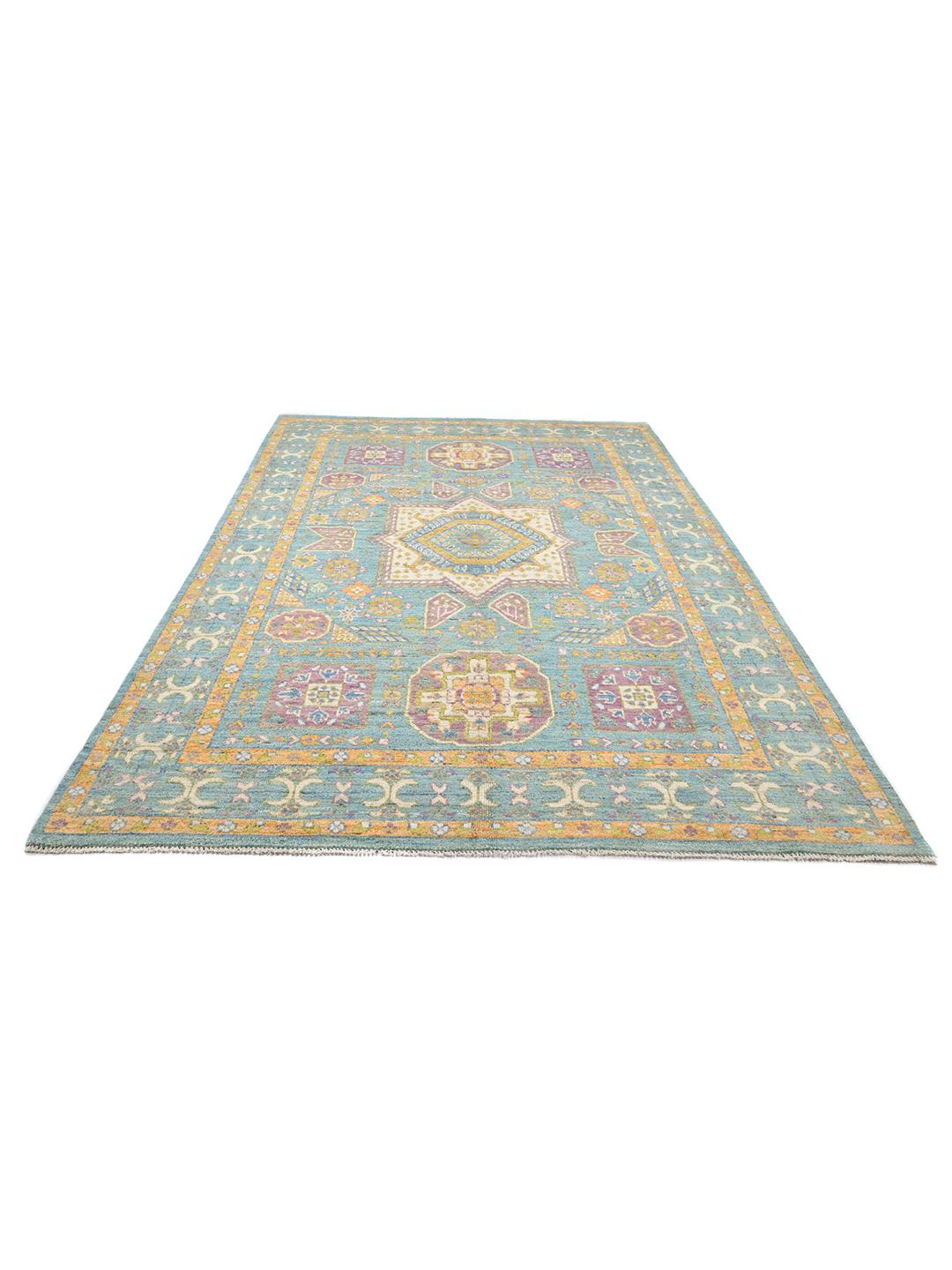
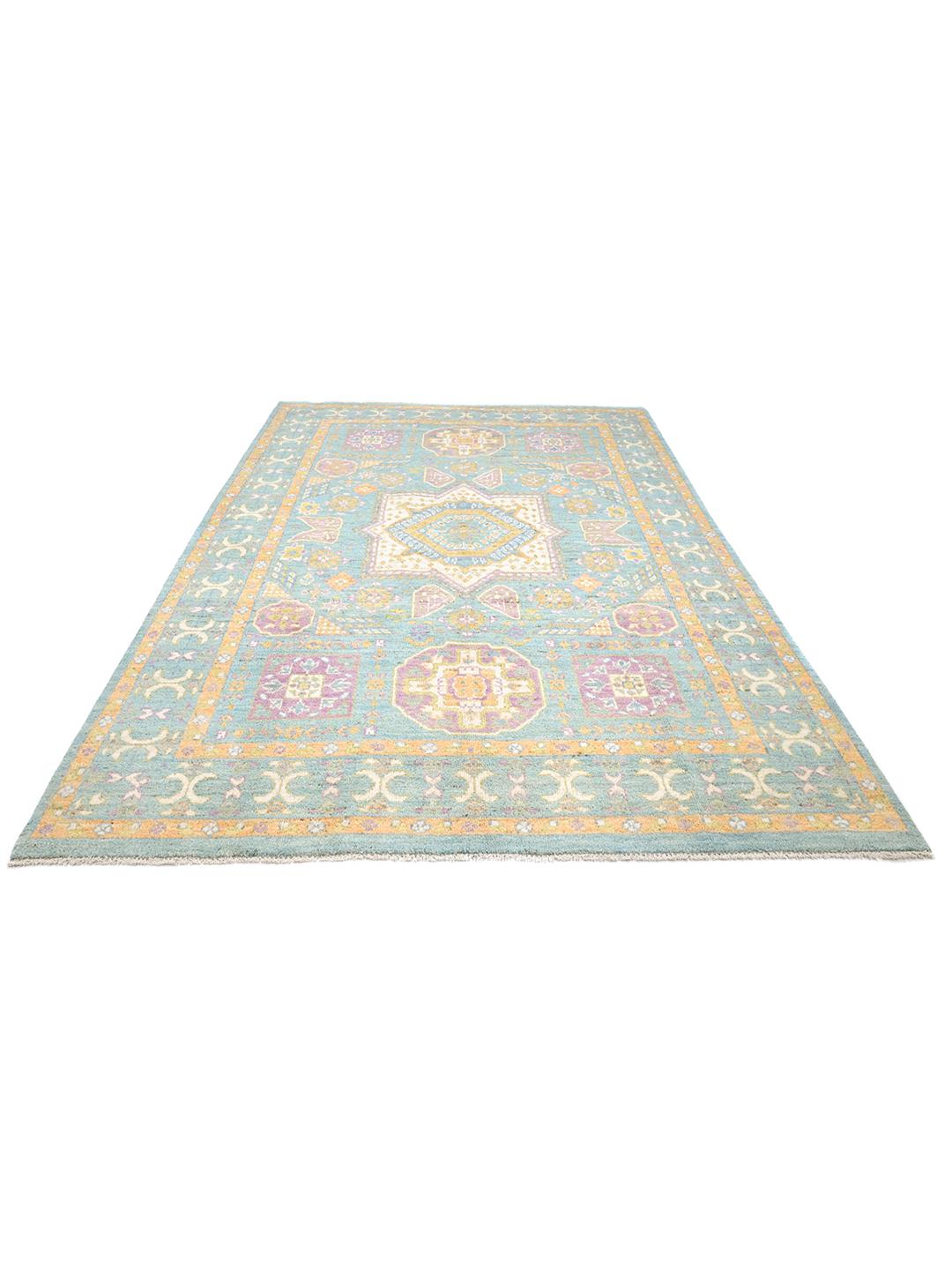
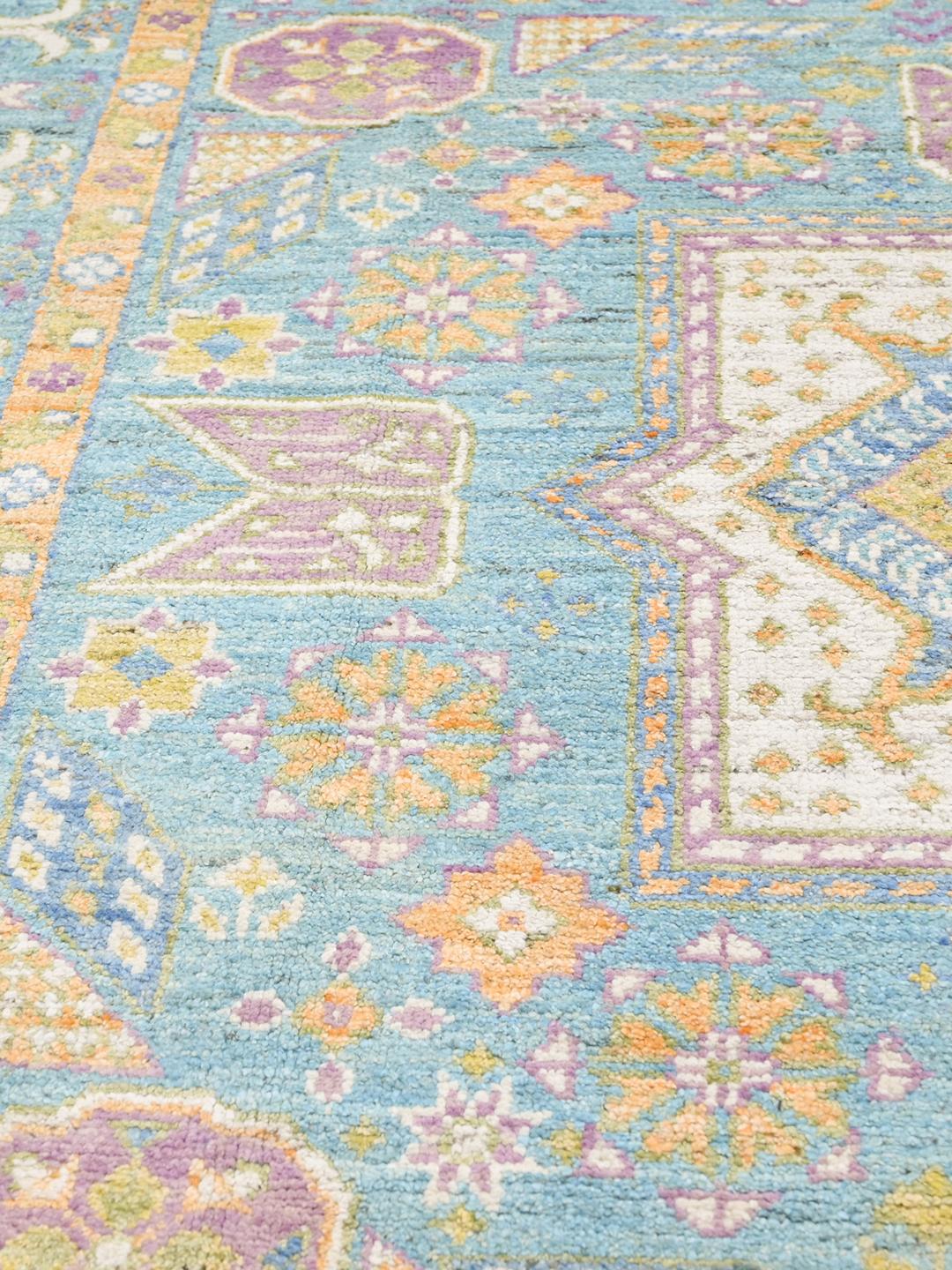
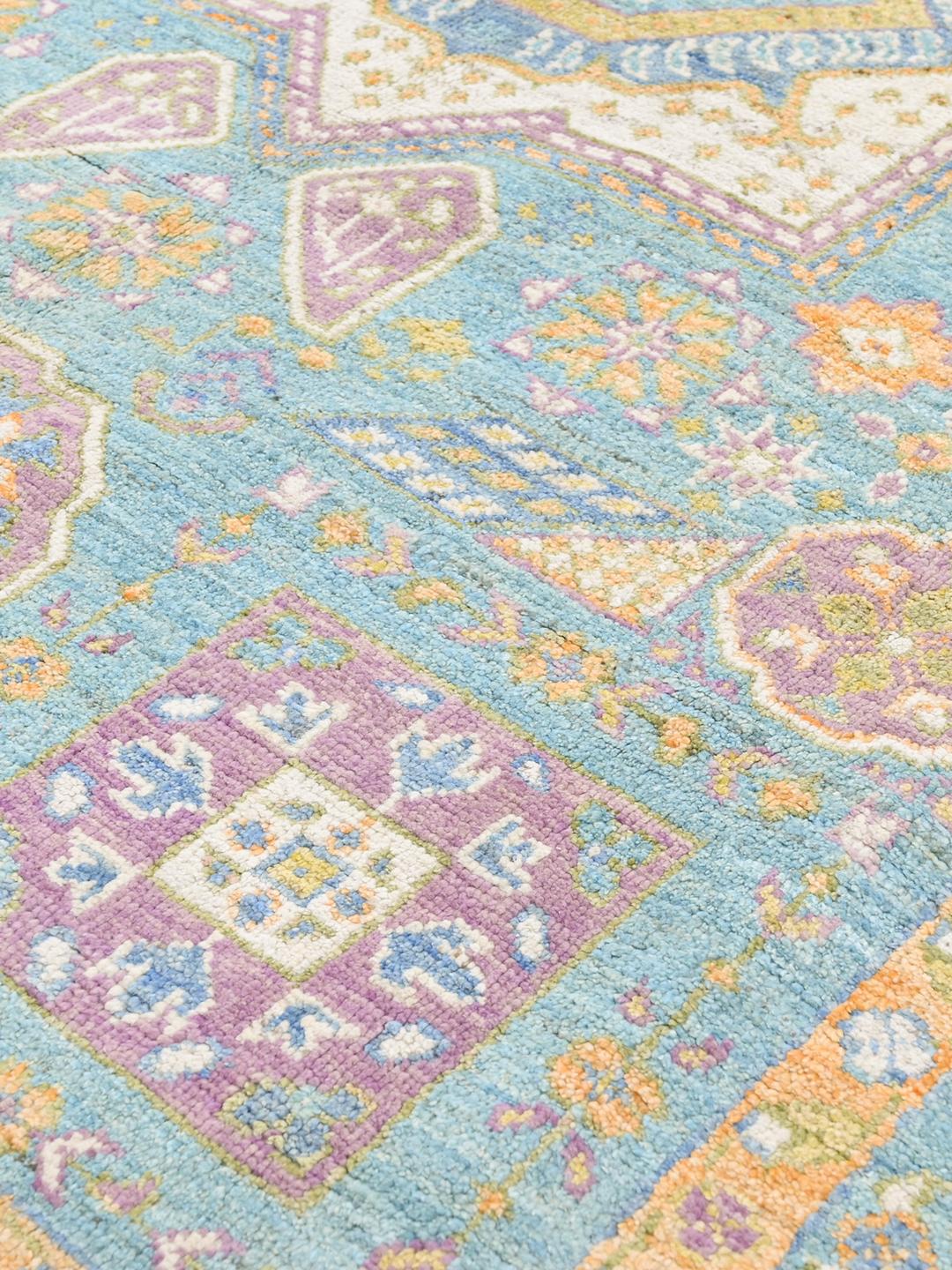
The visual language of a Mamluk rug is dominated by a large central medallion, often octagonal, surrounded by smaller geometric shapes like stars, rosettes, and squares. This specific contemporary piece updates the traditional rich red palette with a fresh light blue field, accented by vibrant orange, yellow, and purple tones.
Owning a Mamluk rug is like owning a piece of living history. These rugs are highly valued by collectors and design enthusiasts for their complex symmetry and the remarkable skill required to balance such intricate, interlocking geometric forms.