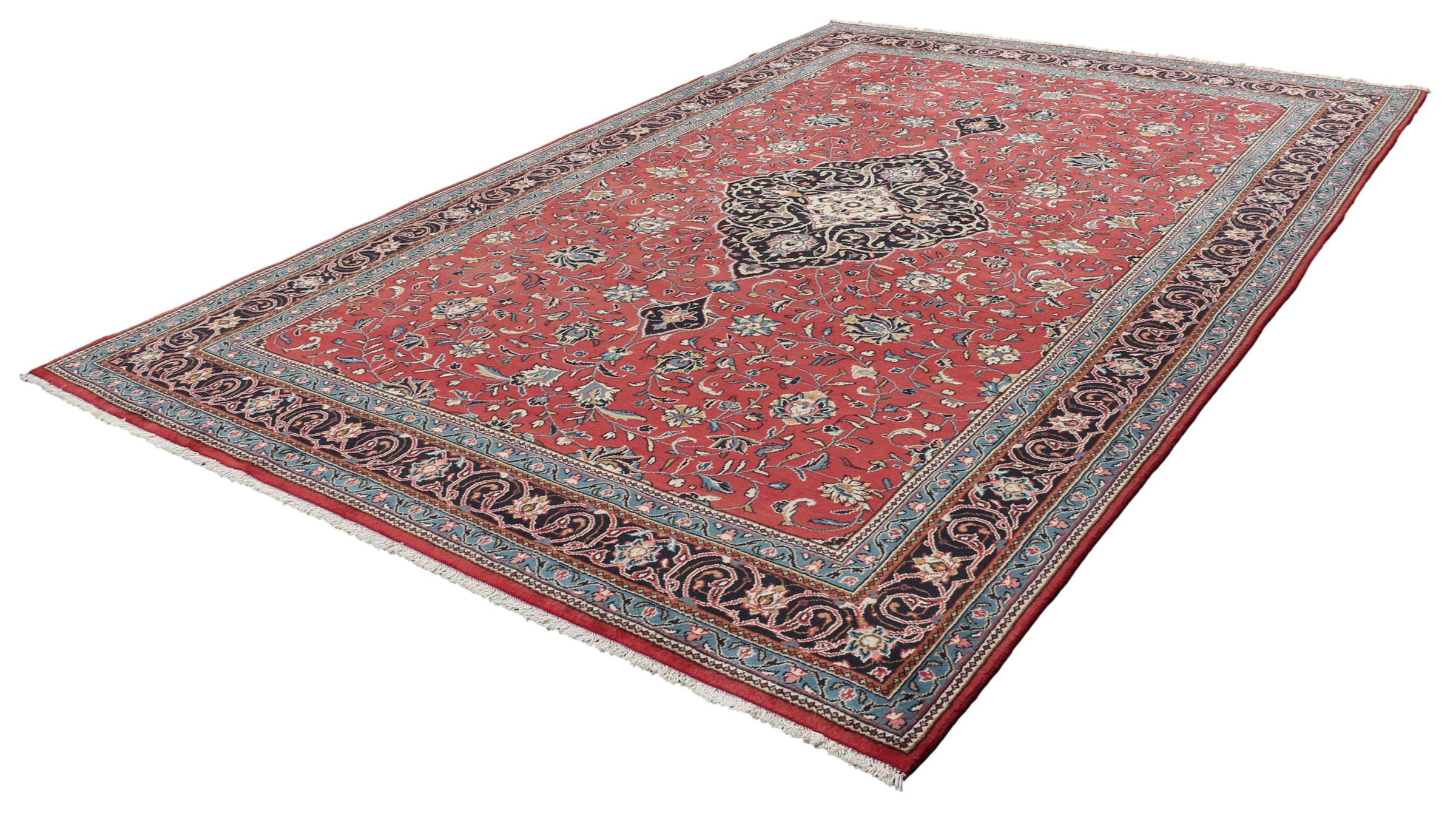
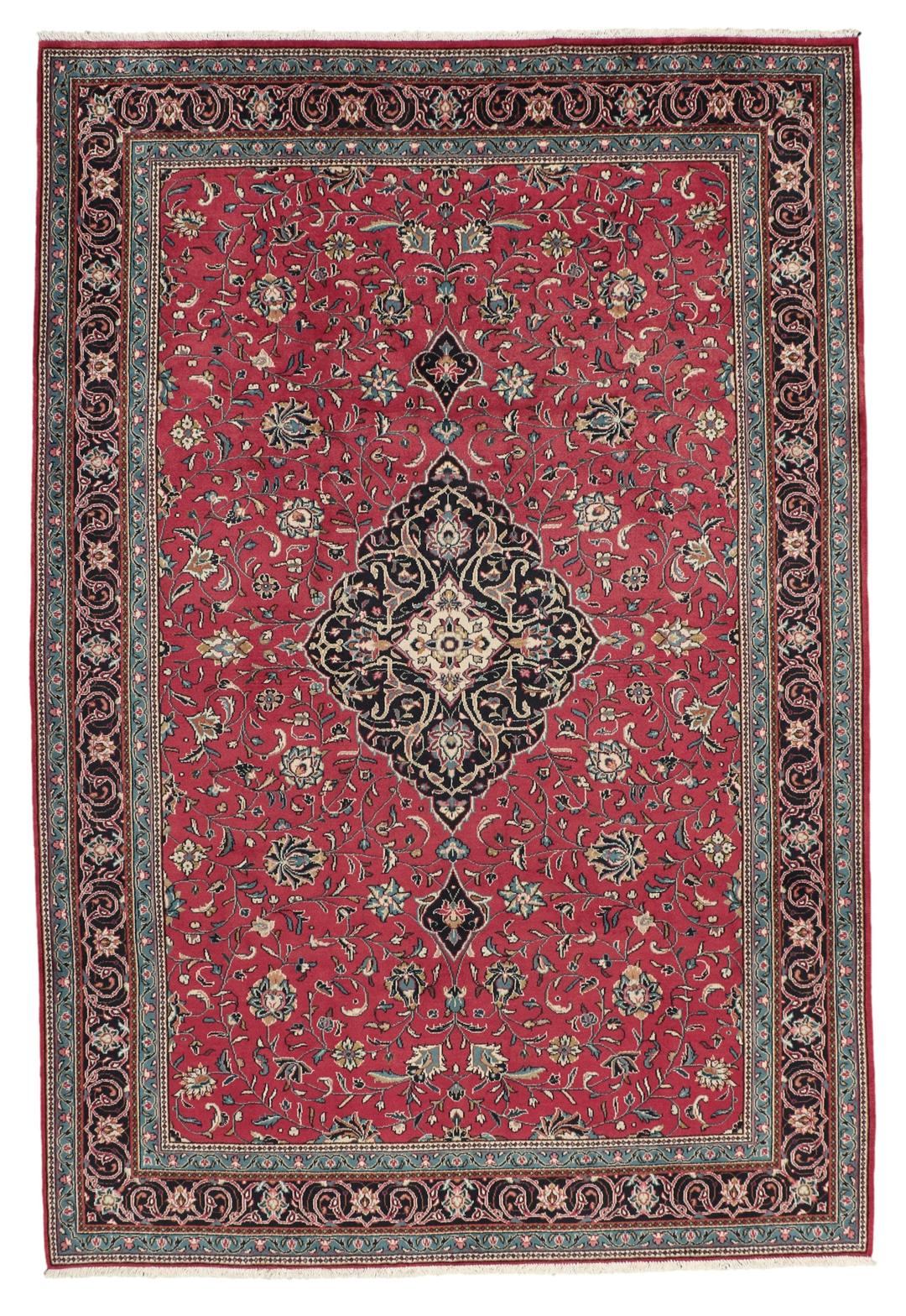
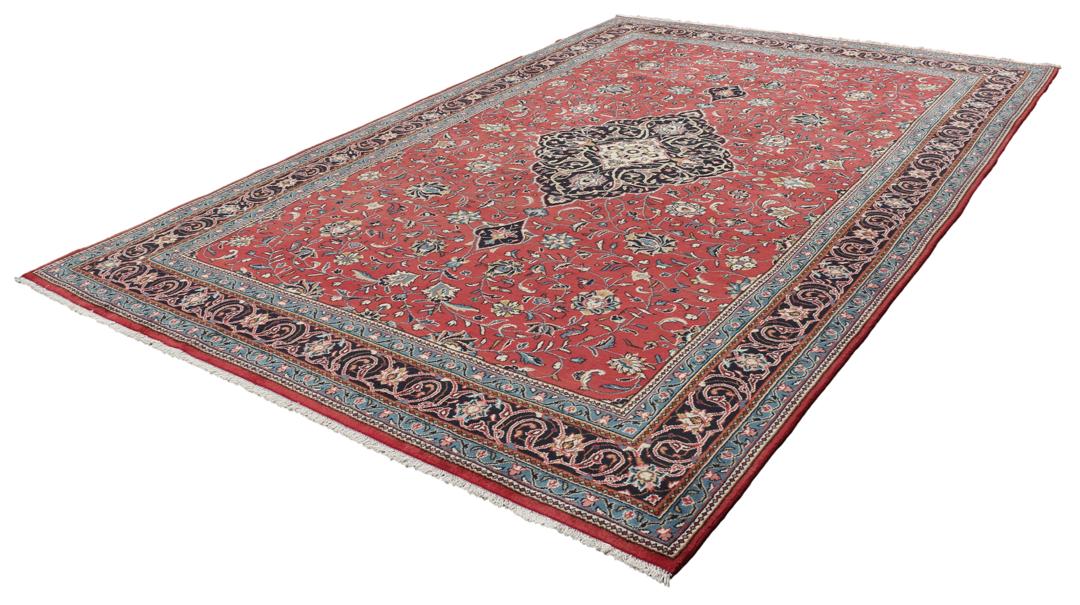
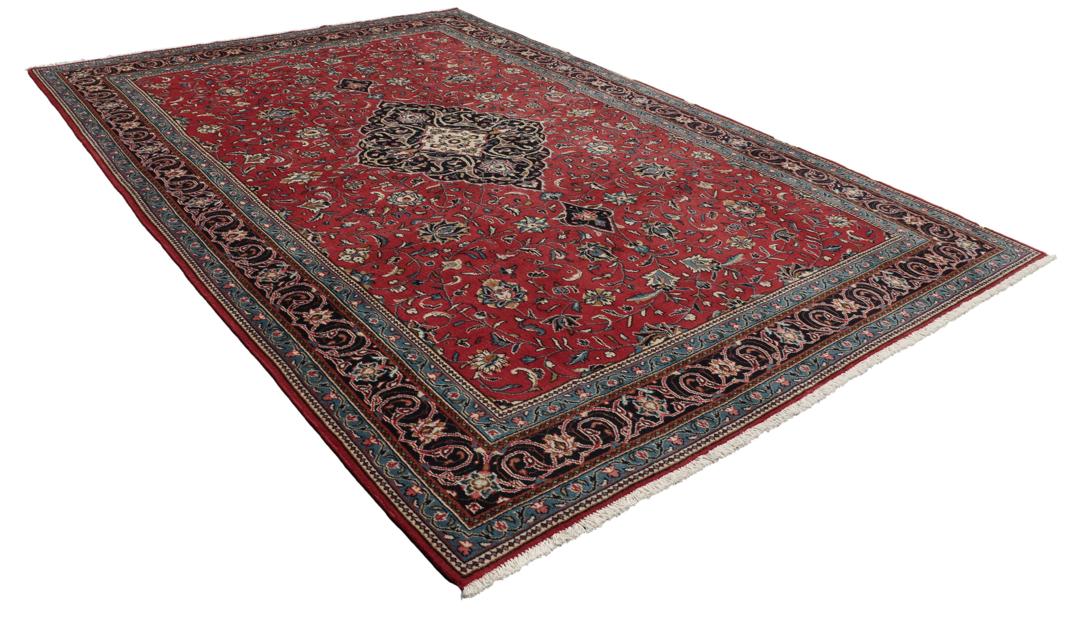
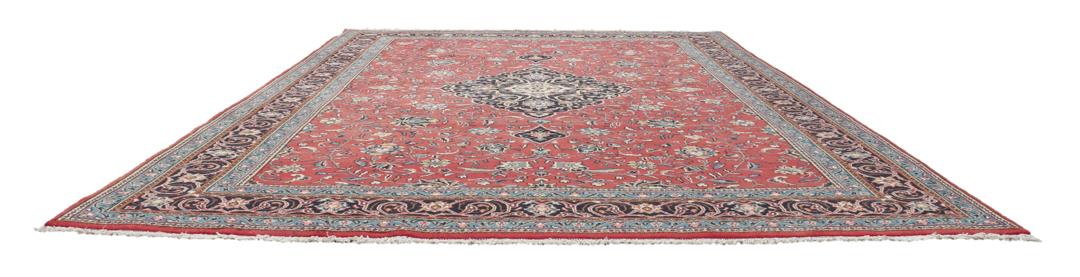
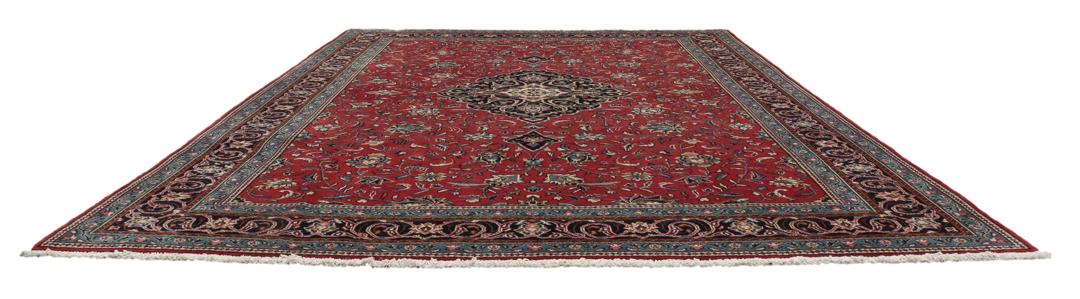
Mahal rugs originate from the historic weaving areas of the Middle East, particularly around the Arak region. Historically, these rugs were crafted to meet the growing global demand in the late nineteenth and early twentieth centuries, developing a reputation for their robust construction and elegant, spacious designs.
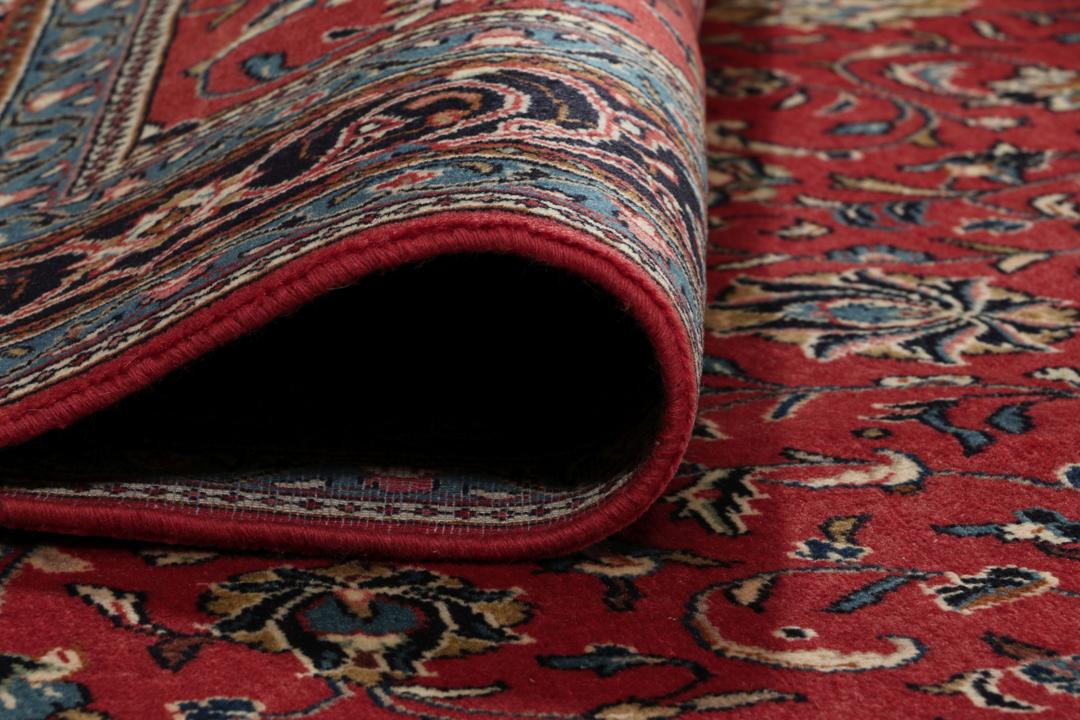
The name Mahal represents a specific style of weaving known for its supple handle and slightly coarser, more relaxed knotting compared to some of its urban neighbors. This characteristic gives the rugs a soft, blanket-like quality underfoot, making them highly desirable for creating a cosy, inviting atmosphere in domestic spaces.
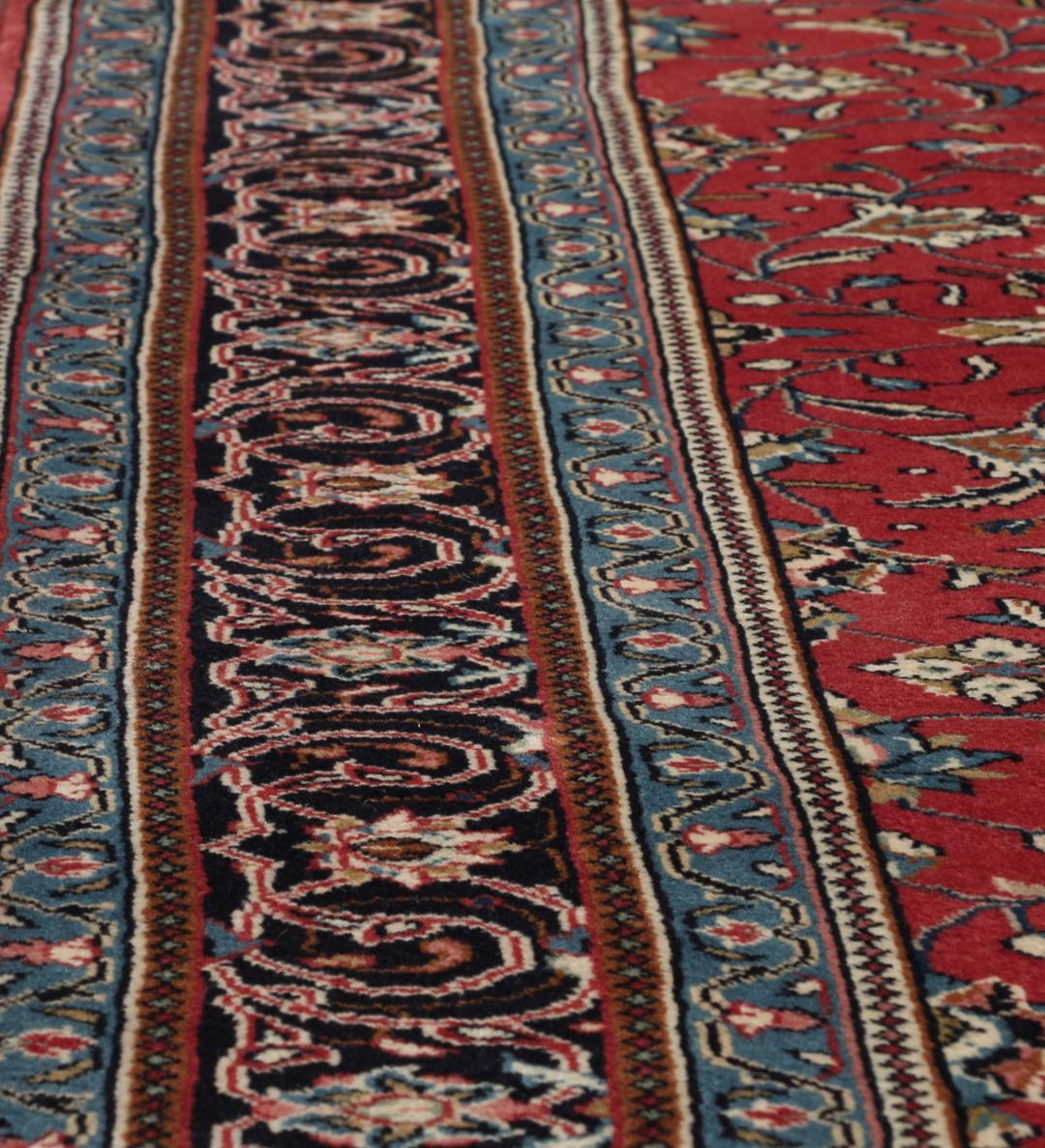
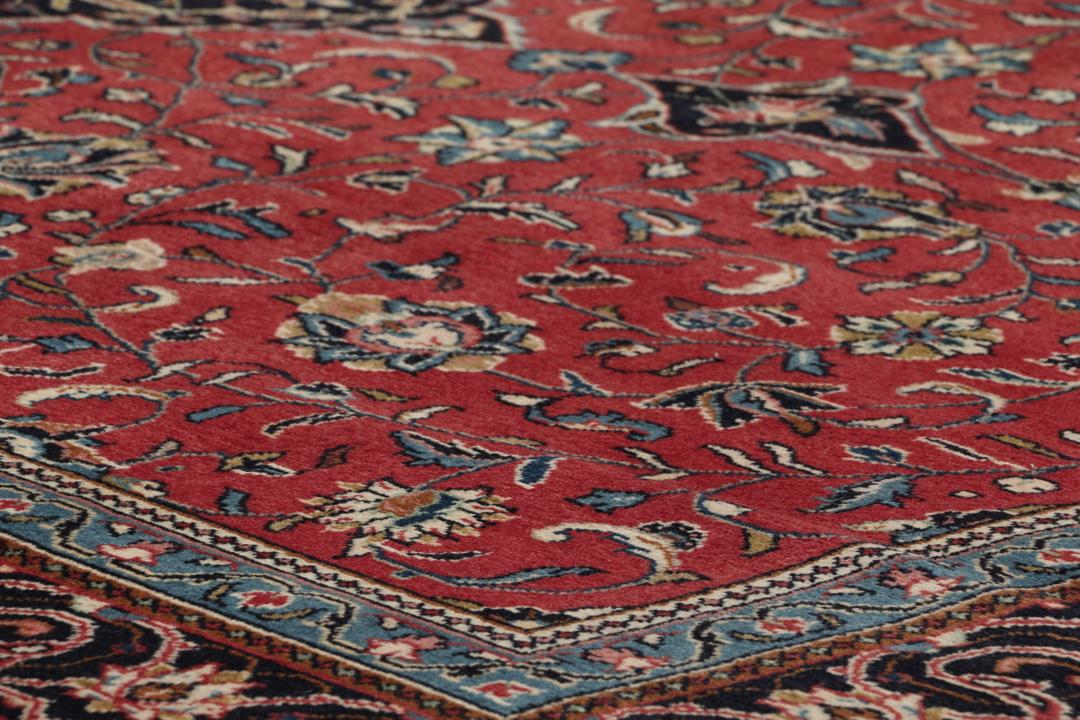
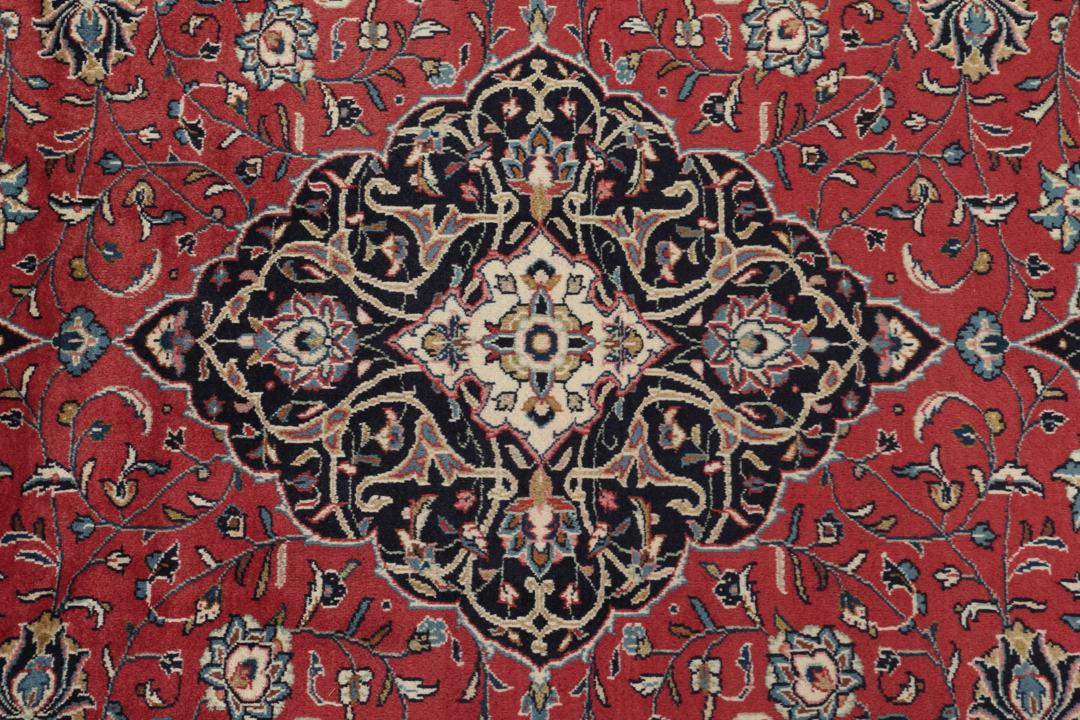
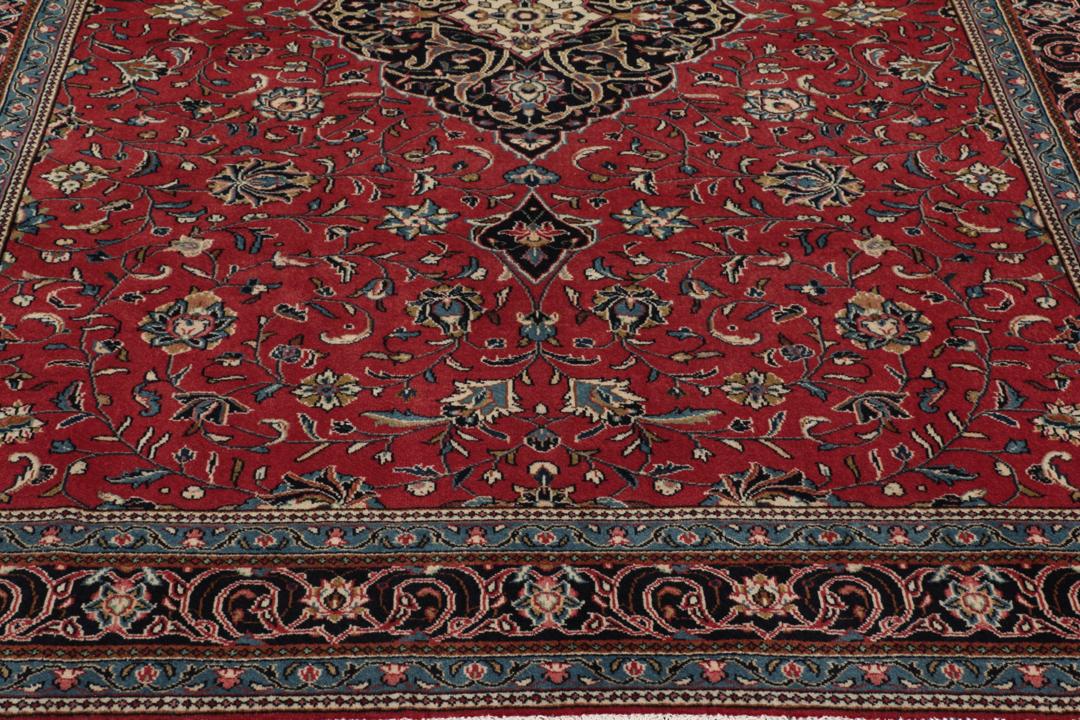
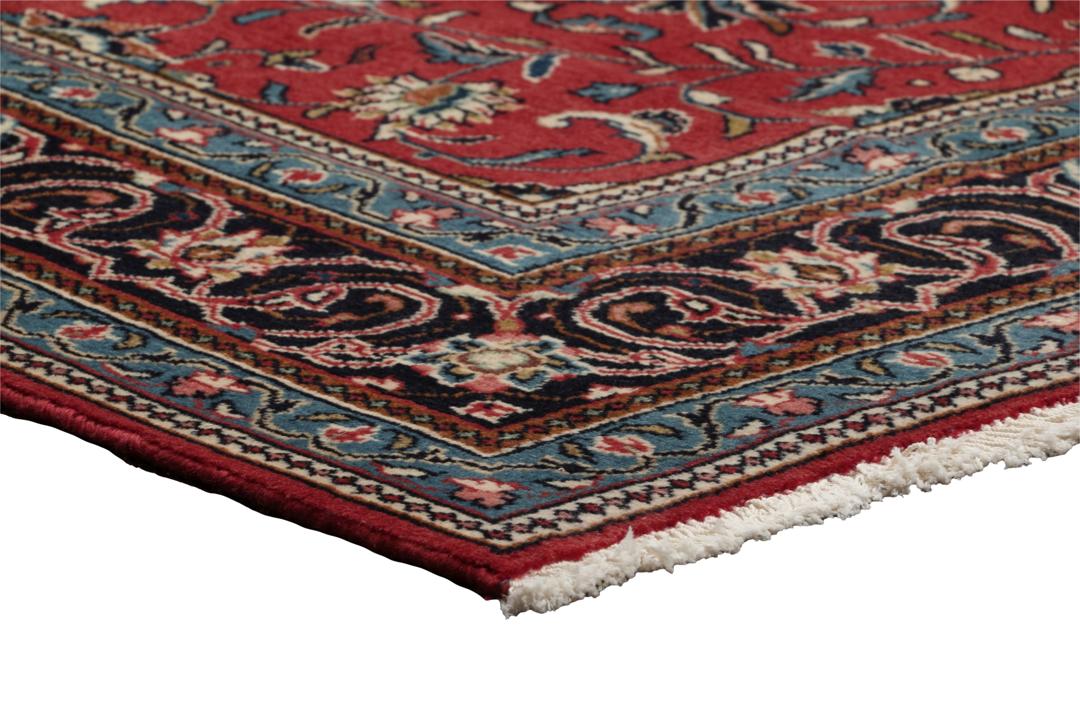
Traditional Mahal designs are celebrated for their large-scale floral patterns, scrolling vines, and prominent central medallions. While many historic examples favor softer, muted tones, this contemporary piece utilizes a bold red field contrasted with deep blue accents, offering a vibrant interpretation of classic Middle Eastern motifs.
Today, Mahal rugs are highly valued by collectors and design enthusiasts for their versatile aesthetic. They combine formal elegance with a relaxed charm, ensuring that each hand-knotted piece remains a coveted item that brings cultural depth and character to contemporary homes.