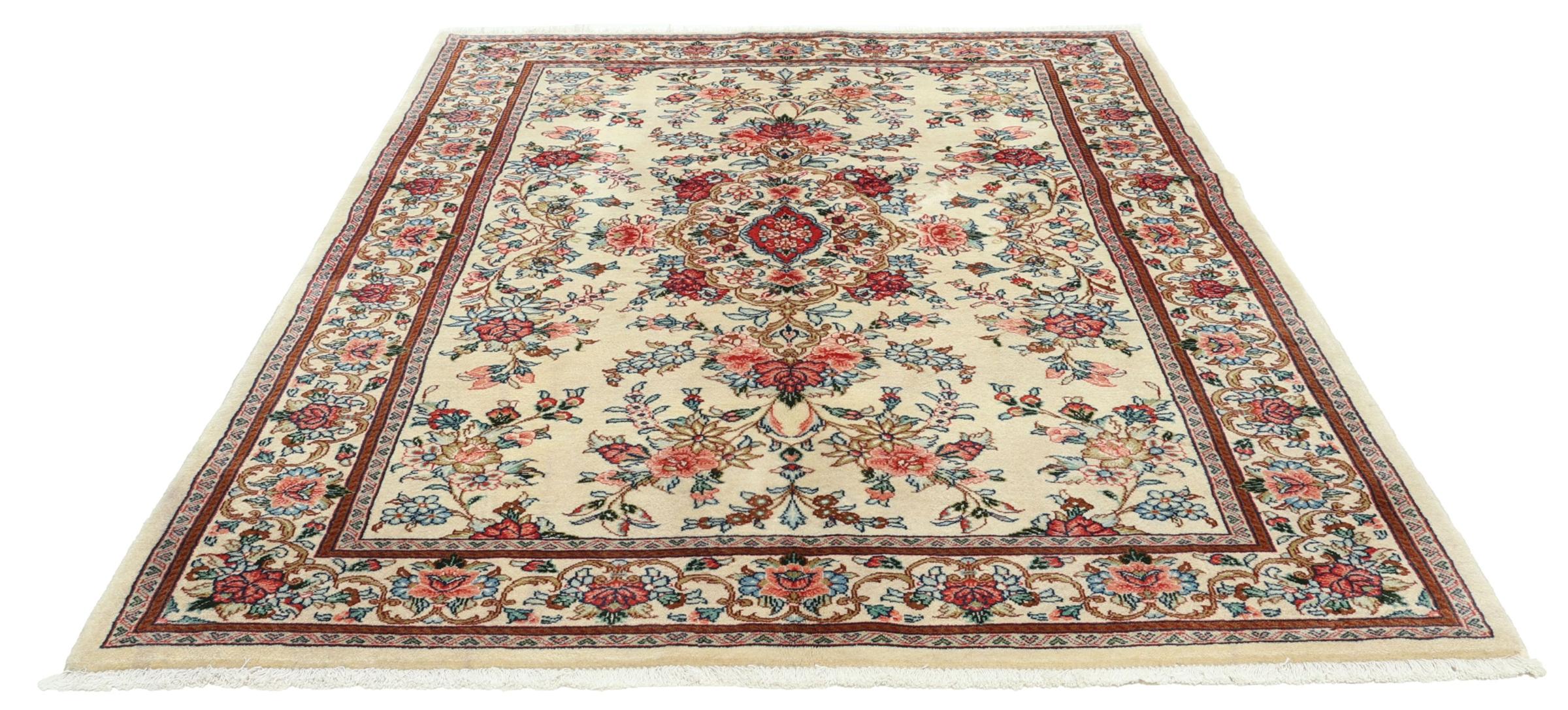
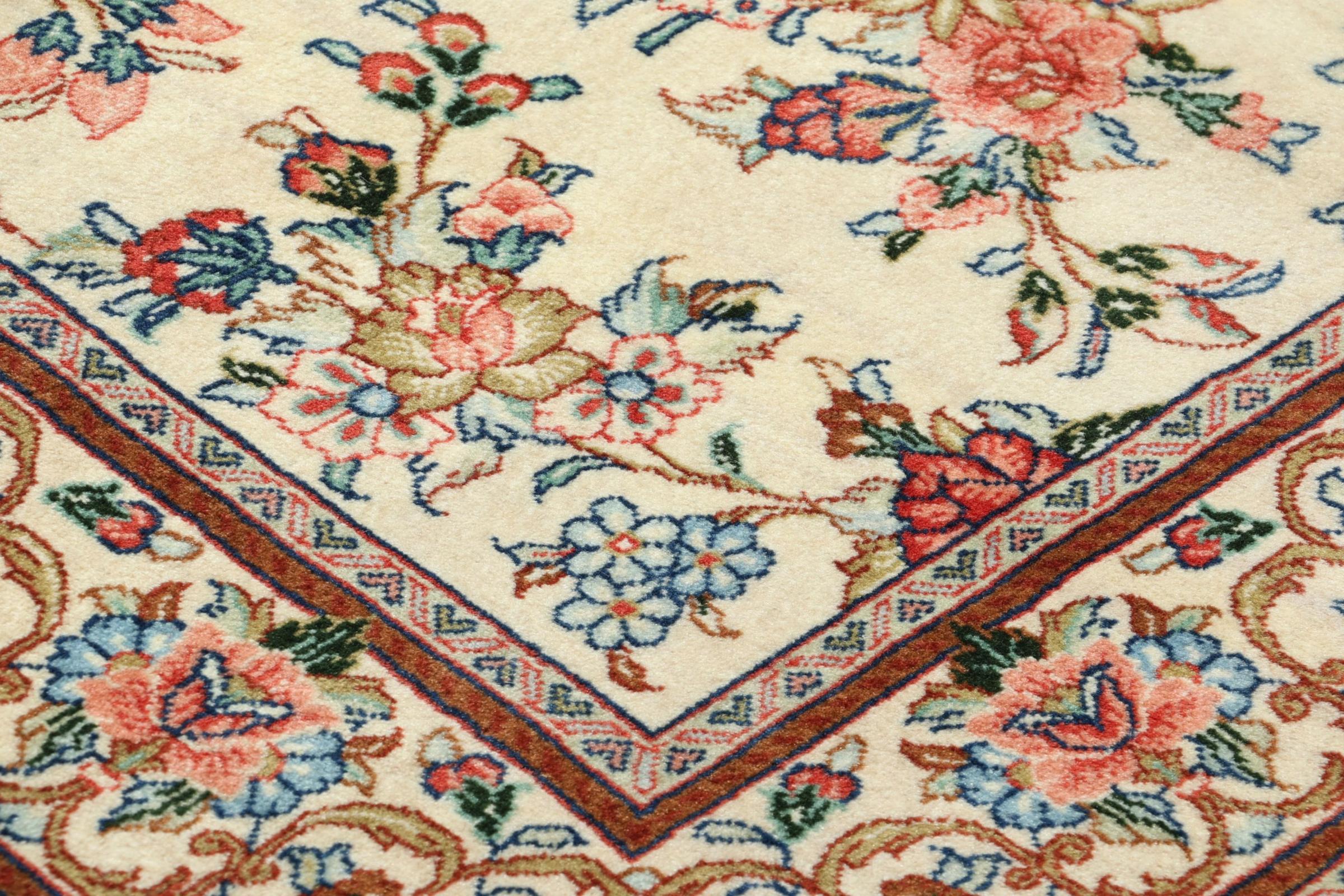
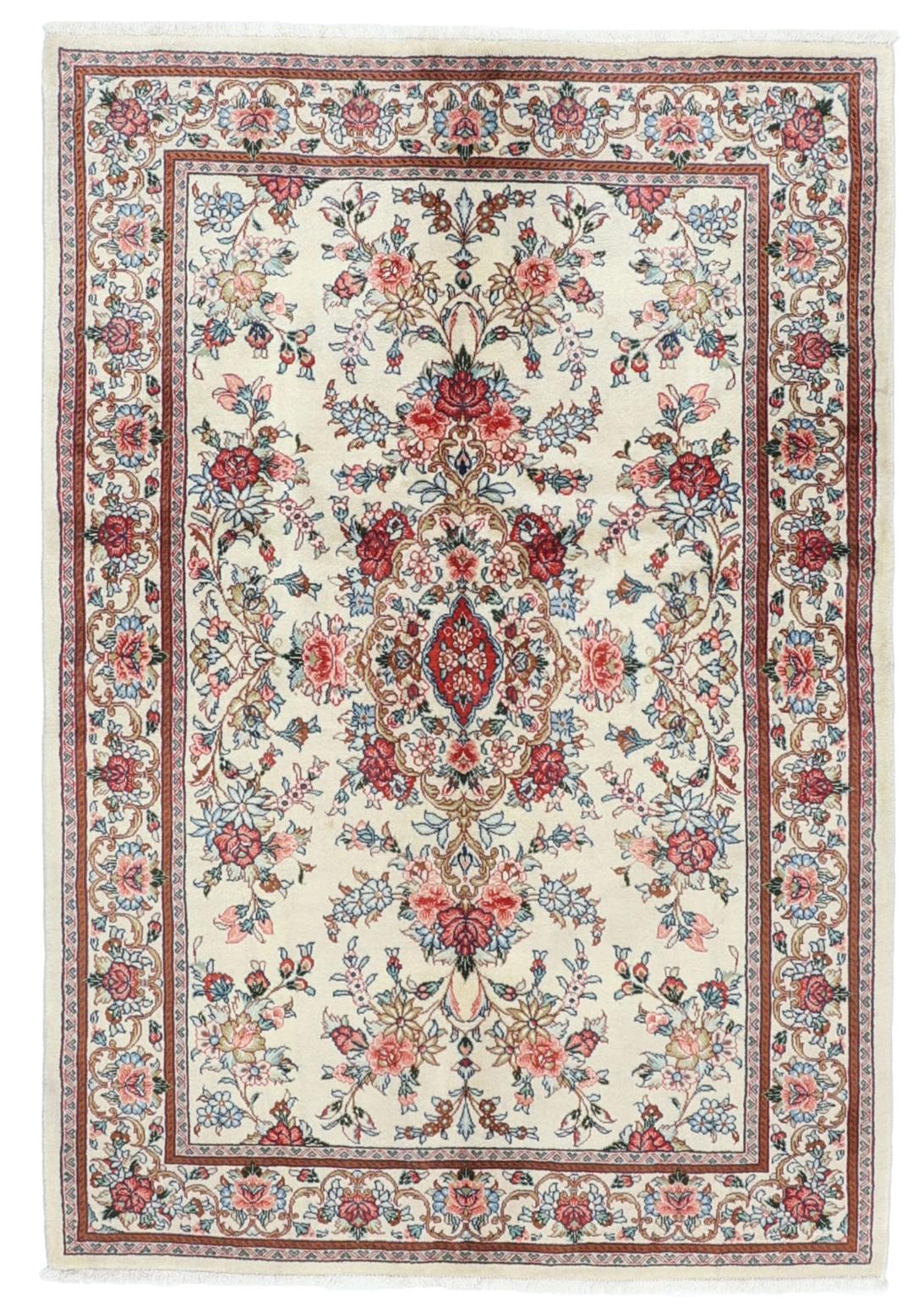
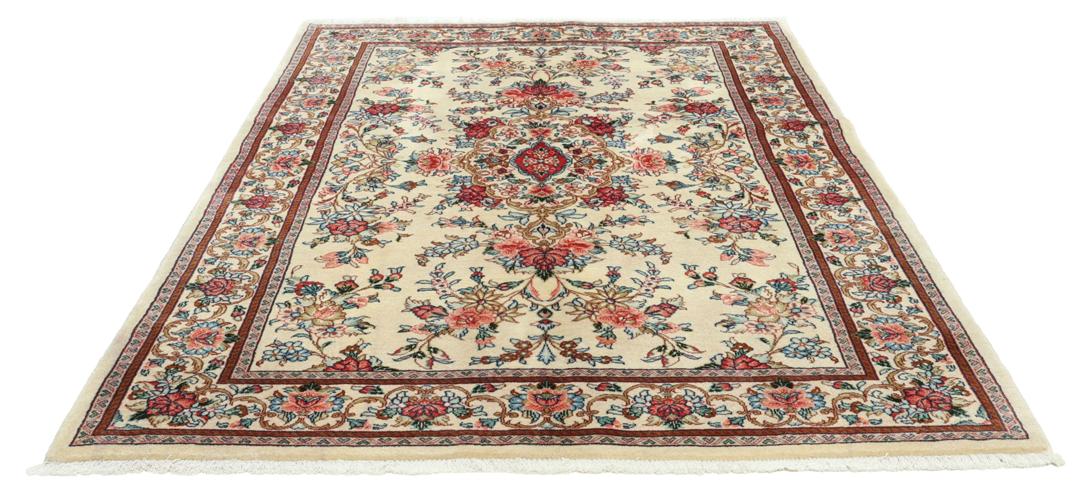
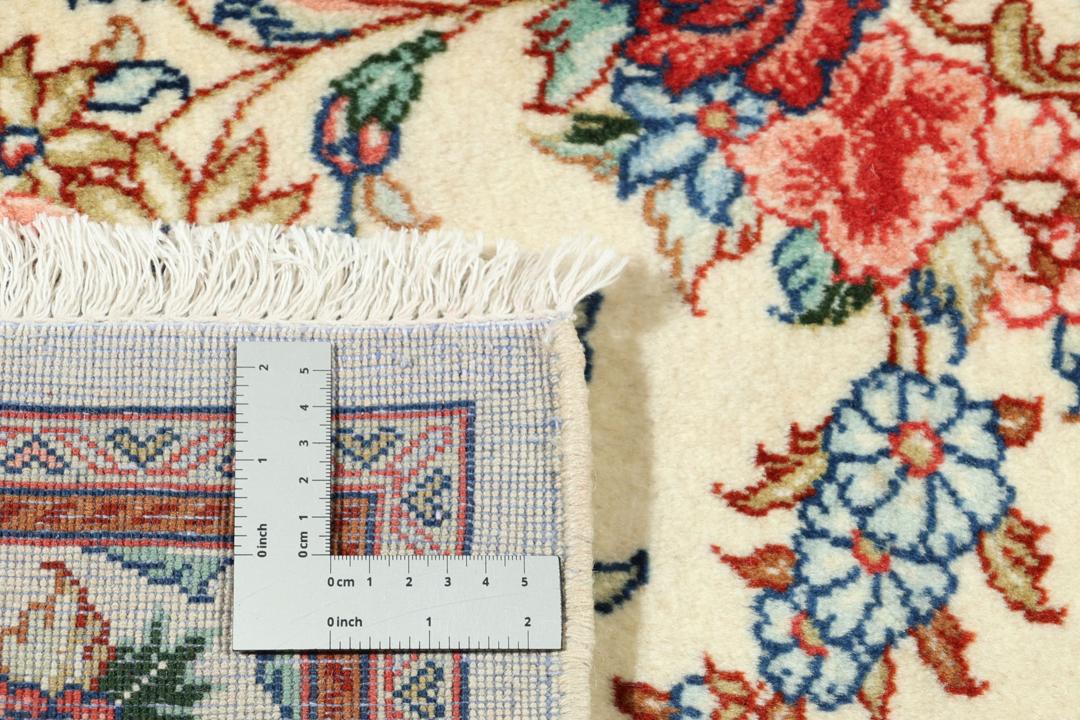
Mahal rugs originate from the Markazi province in the Middle East, a region with a deep-rooted history of weaving that dates back centuries. These rugs are celebrated for their bold, artistic interpretations of classic floral motifs, often featuring large-scale designs that deviate from the more rigid, symmetrical patterns found in other regional styles.
The term 'Mahal' refers to the specific region of production, where weavers have historically prioritised a slightly looser, more supple construction compared to other nearby weaving centres. This approach results in a rug that feels softer and more flexible, which is highly valued by collectors for its comfort and organic drape.
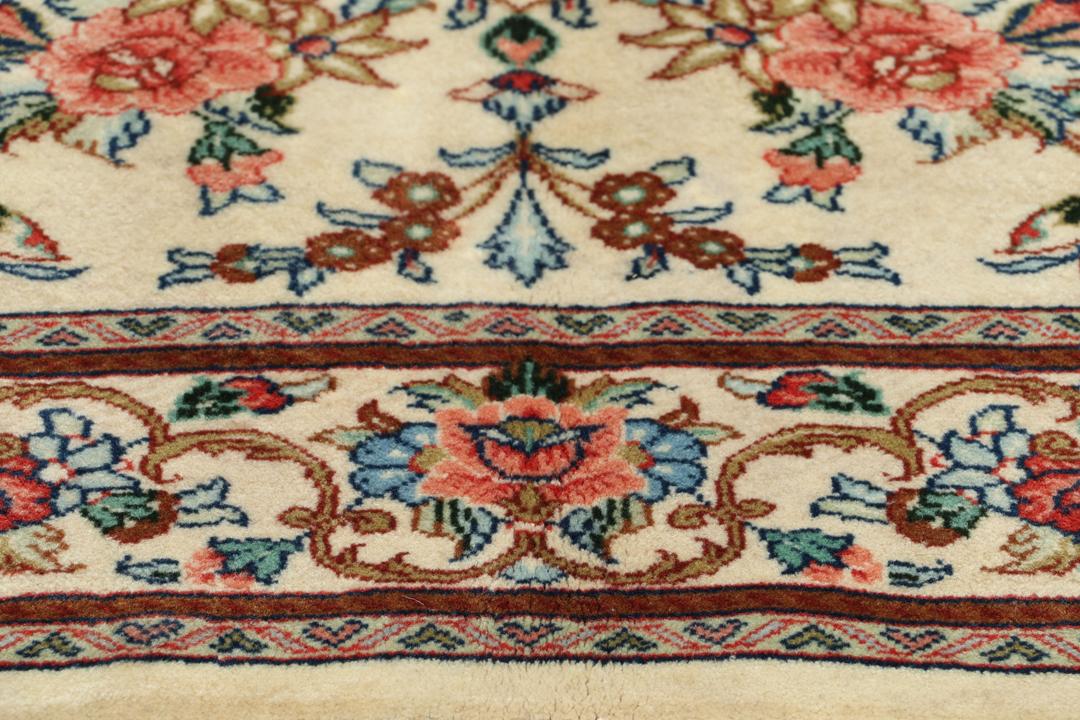
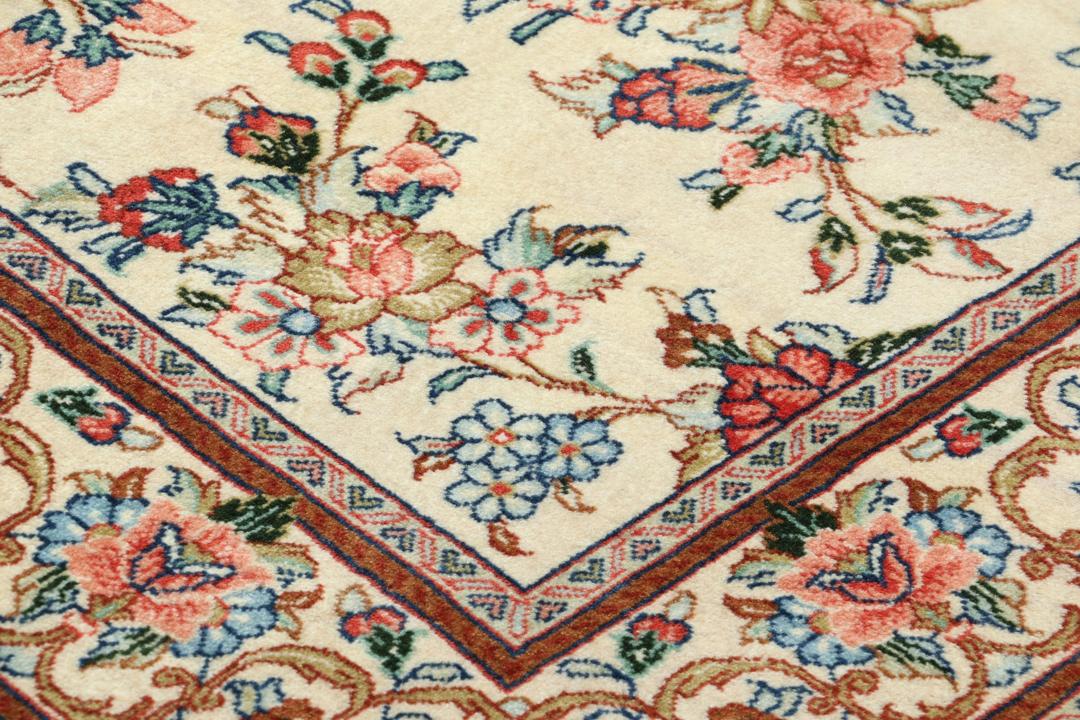
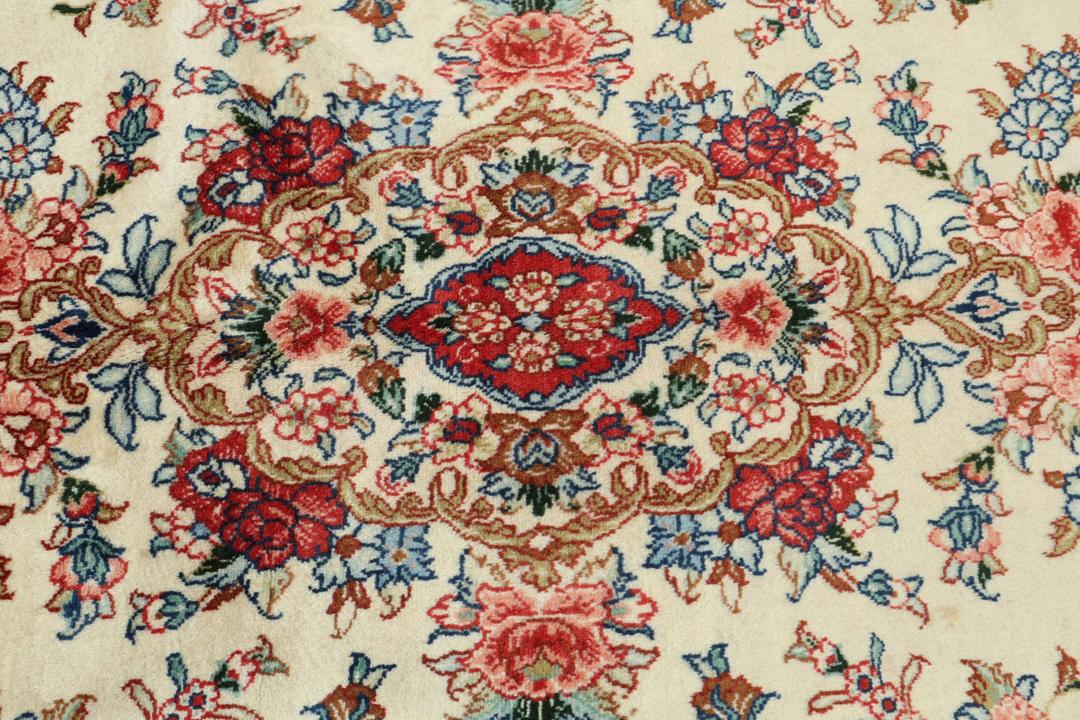
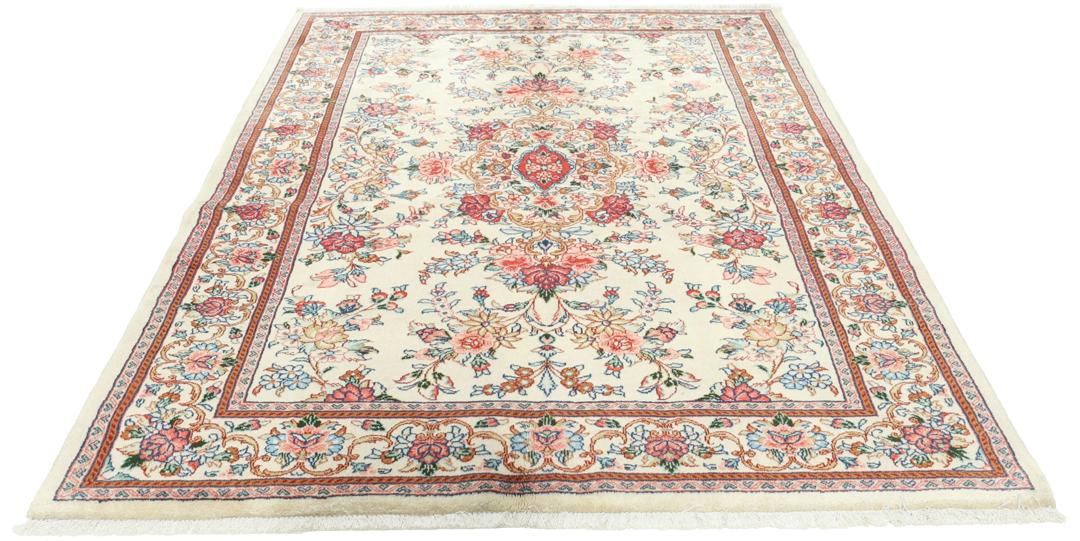
Visually, these rugs are defined by their generous, sweeping floral patterns and medallion arrangements, often set against a neutral field that allows the deeper reds and blues to pop. The borders are typically wide and ornate, framing the central field with a rhythm of vines and blossoms that reflect the natural beauty of the region's landscape.
Mahal rugs are highly sought after by collectors for their blend of rustic charm and refined artistry. Owning one is an investment in a living tradition, representing a standard of craftsmanship that has been passed down through generations. They are prized not just for their beauty, but for their ability to anchor a space with a sense of history and cultural significance.