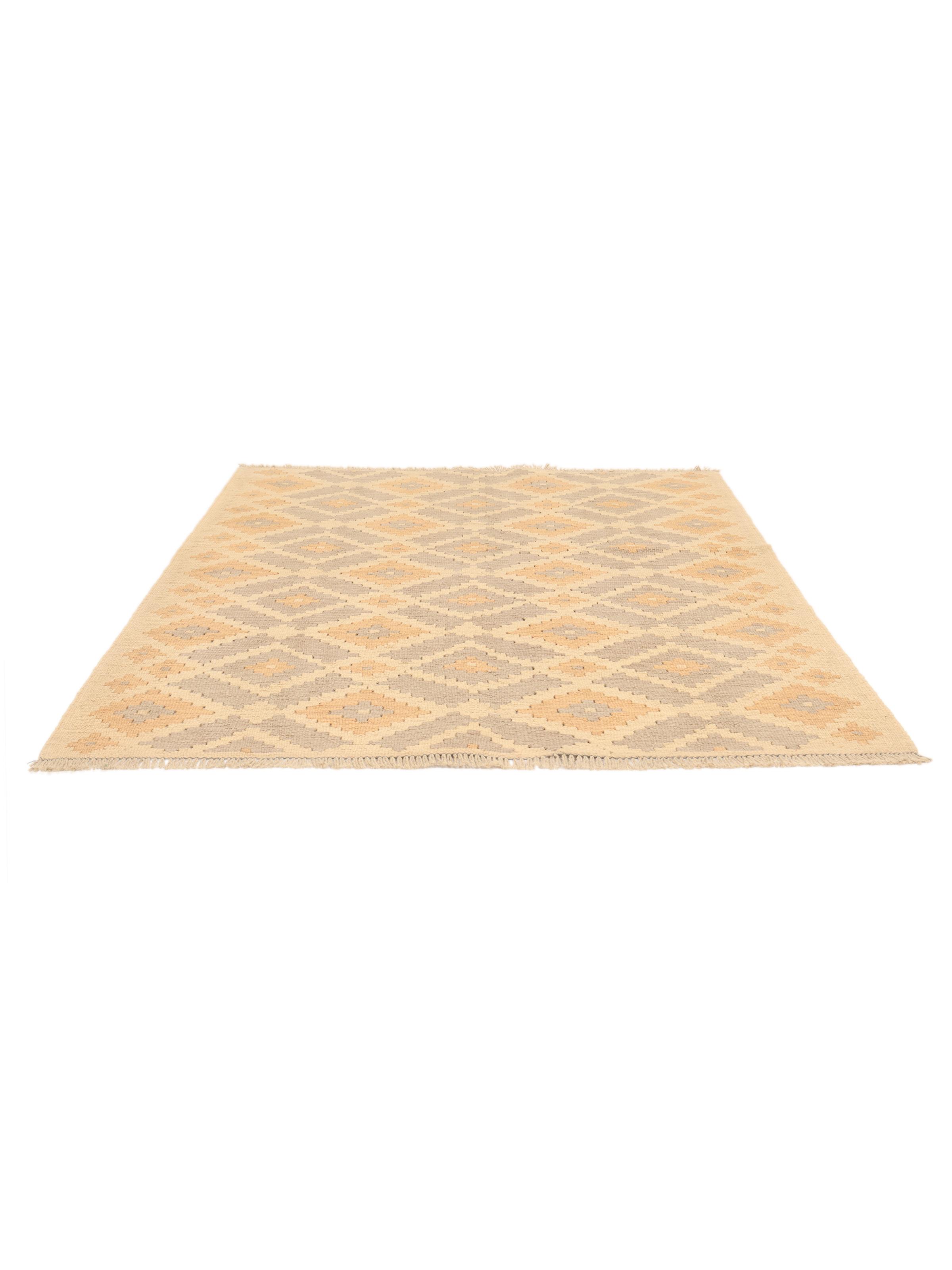
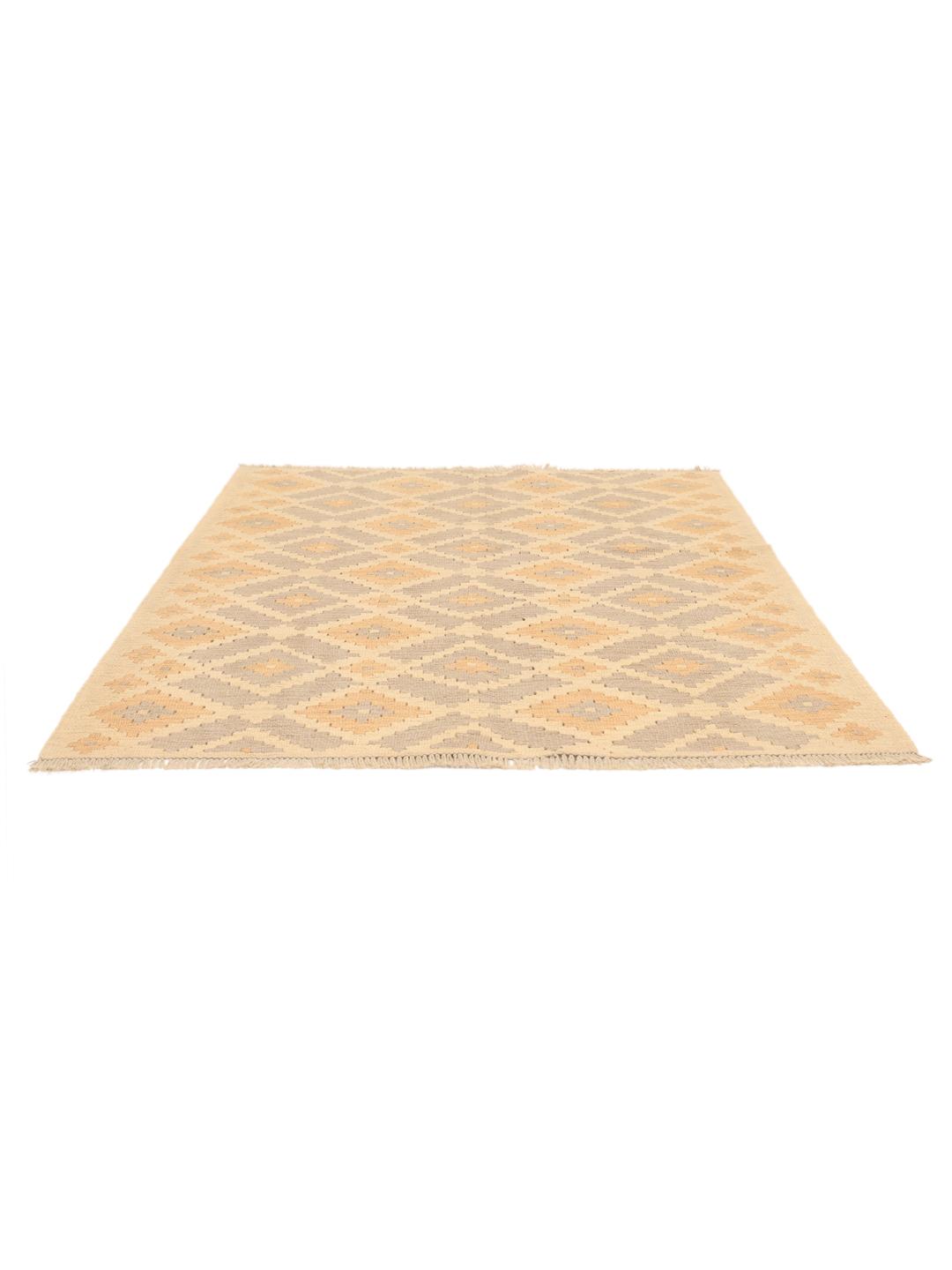
The Kilim Ghashghai is rooted in the nomadic traditions of the Middle East, where weaving has served as a central cultural expression for centuries. These rugs were originally created by tribal communities to serve as practical, portable floor coverings and blankets, designed to be moved easily across the rugged landscapes during seasonal migrations.
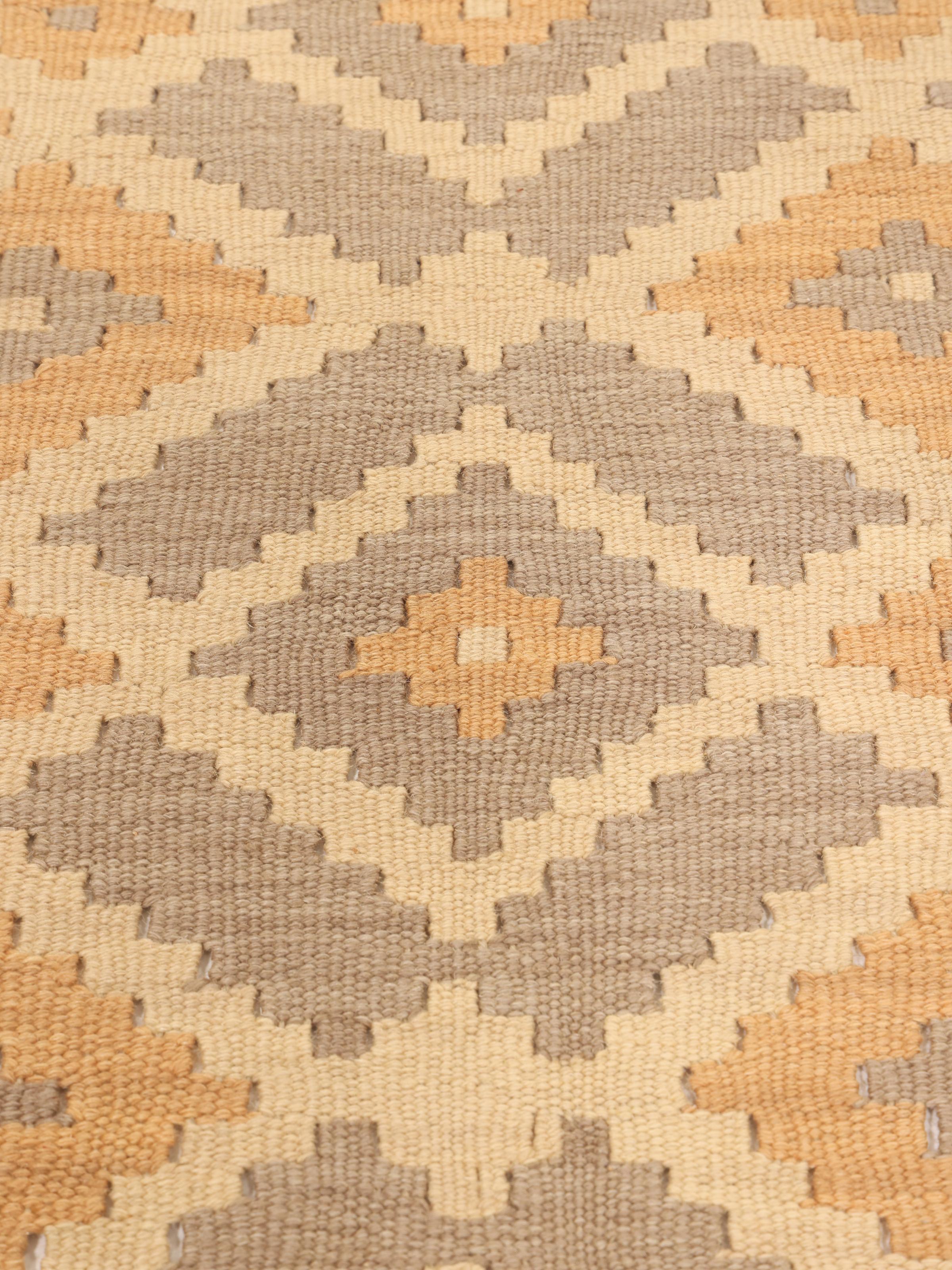
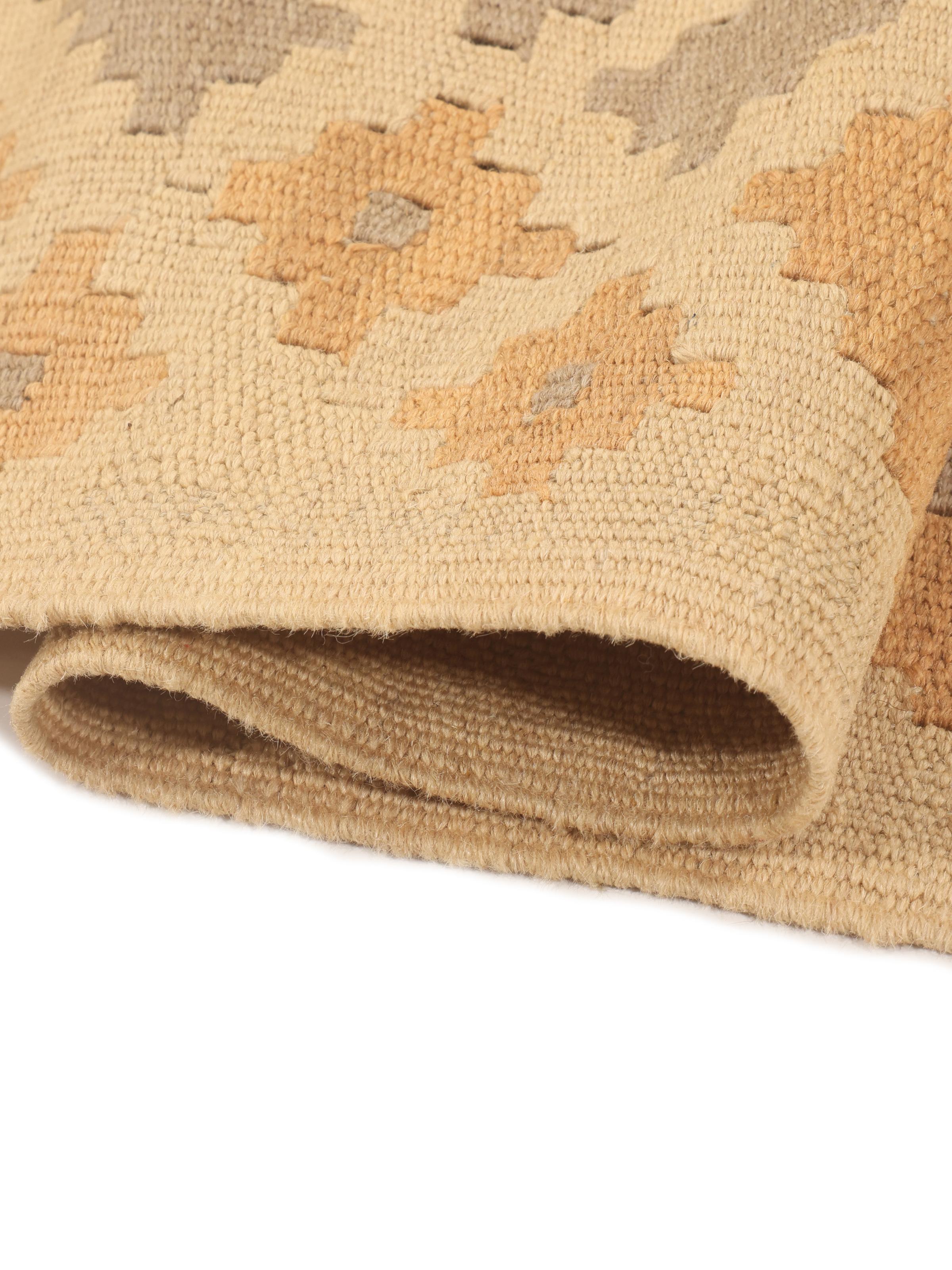
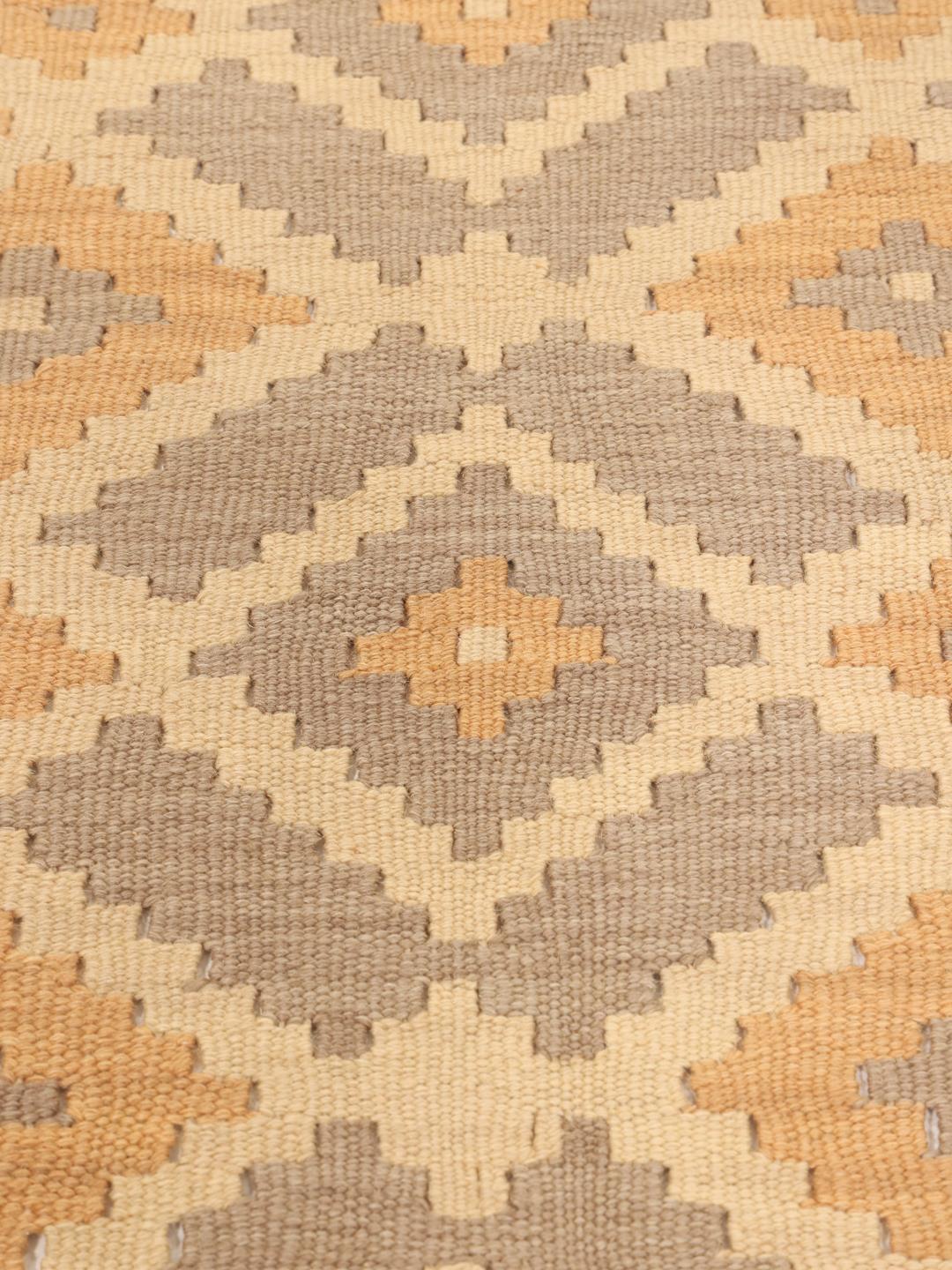
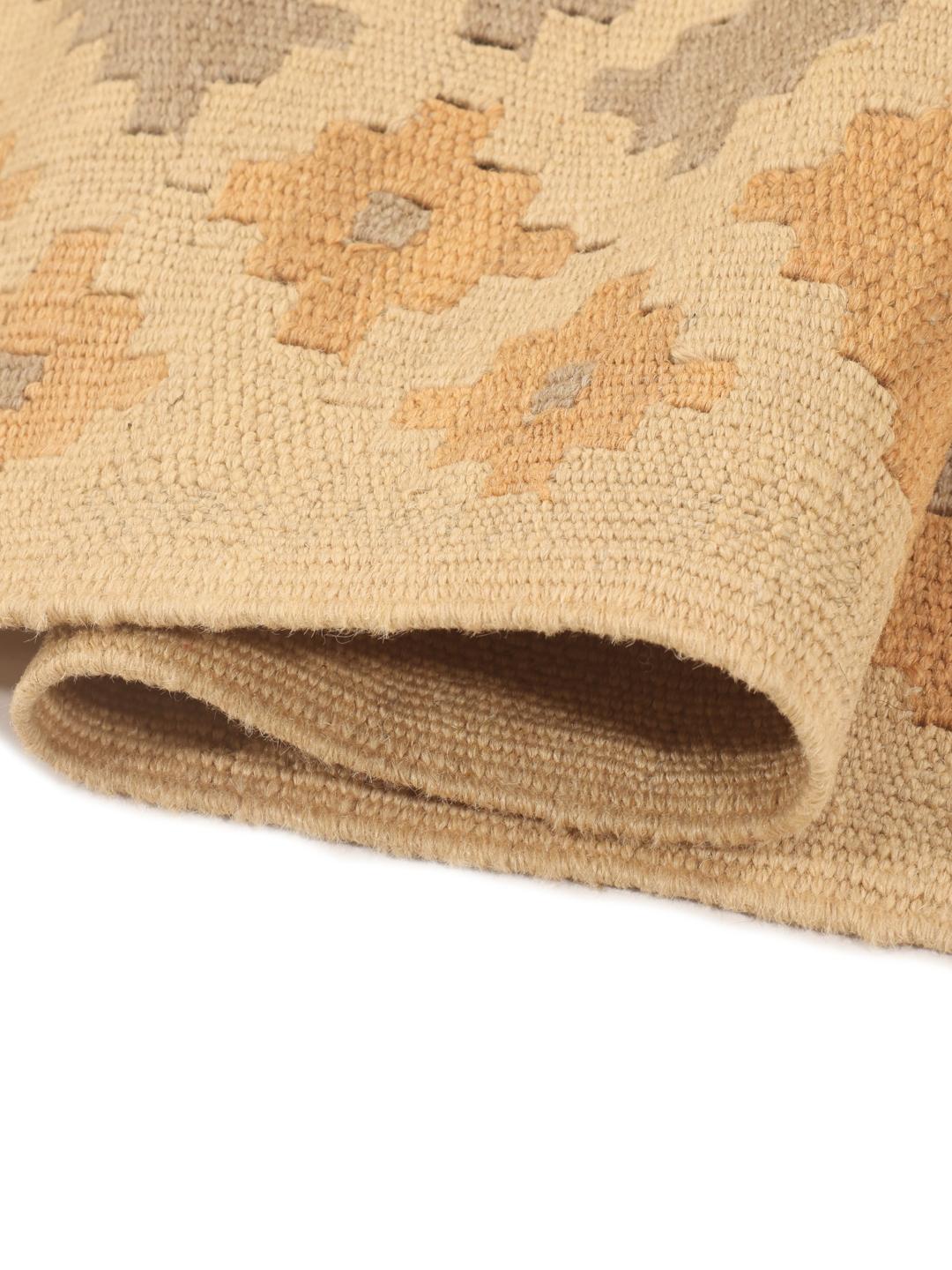
The term Kilim refers to a flat-weaving technique where the weft threads are pulled tightly over the warp to create a smooth, pileless surface. This method is highly prized for its clarity of design, as it allows for sharp, crisp geometric shapes that are clearly defined and visually striking. The durability of these rugs is a direct result of this tight, interlocking weave.
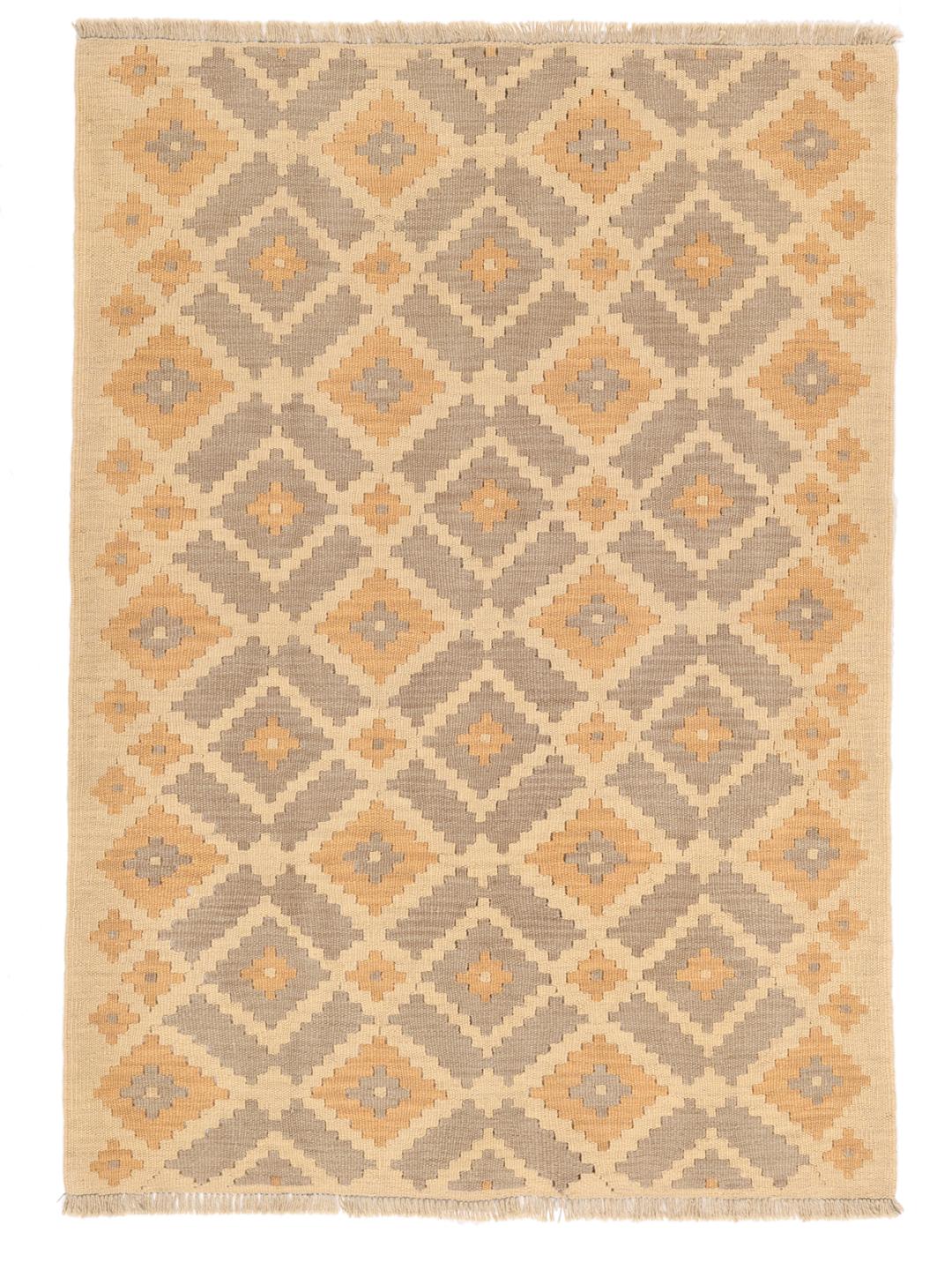
Visually, these rugs are defined by their geometric motifs, often featuring repeating diamonds and medallions that reflect the weaver's environment and cultural symbolism. While traditional palettes often lean toward deep, vibrant tones, this particular example showcases a lighter, more contemporary aesthetic with its soft beige and grey hues, highlighting the versatility of the Ghashghai style.
Owning a Kilim Ghashghai is an investment in cultural heritage and skilled craftsmanship. Each piece is an authentic representation of a nomadic history, valued by collectors not just for its visual appeal, but for the human connection and the enduring quality of the materials used in its creation.