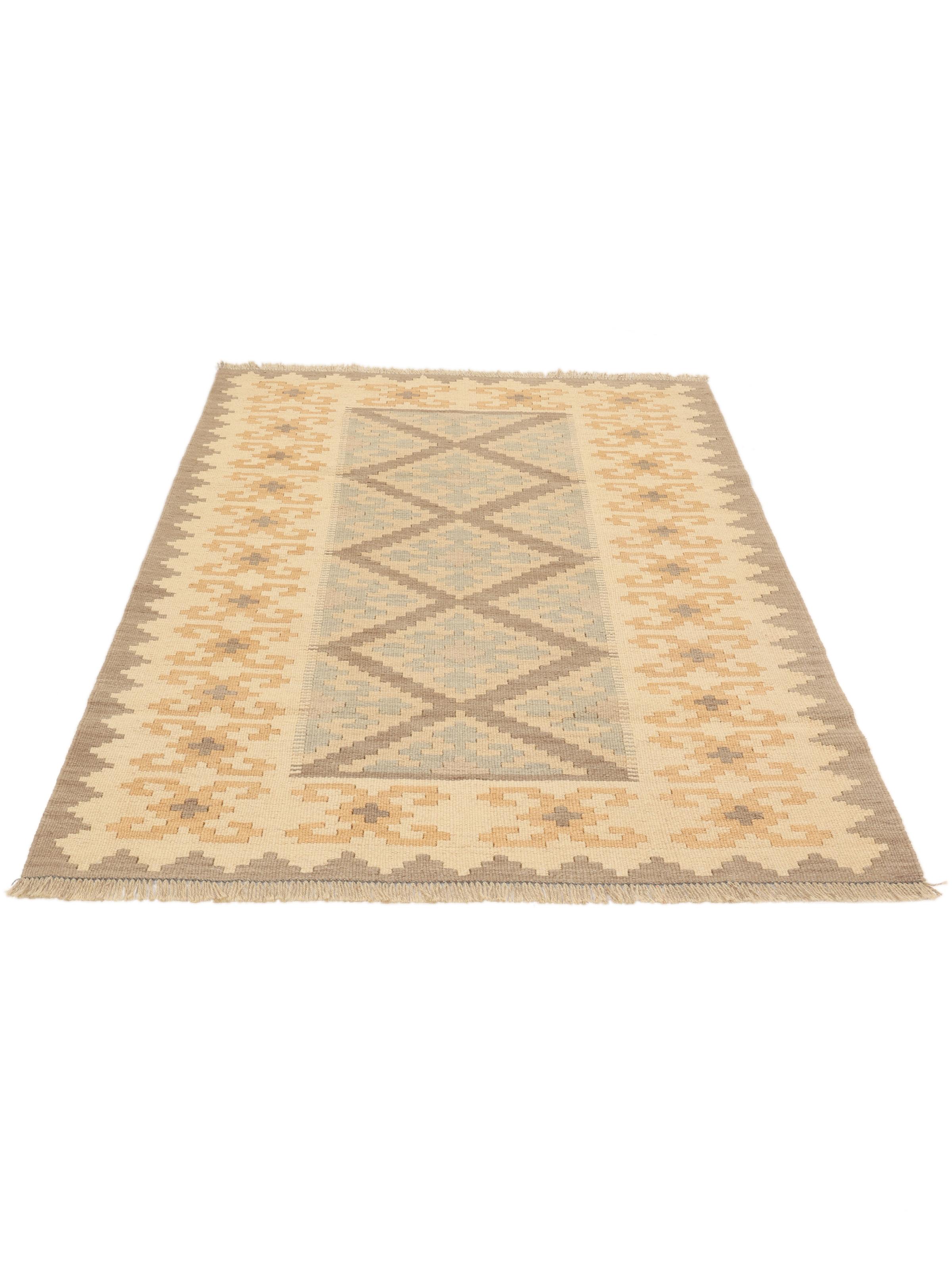
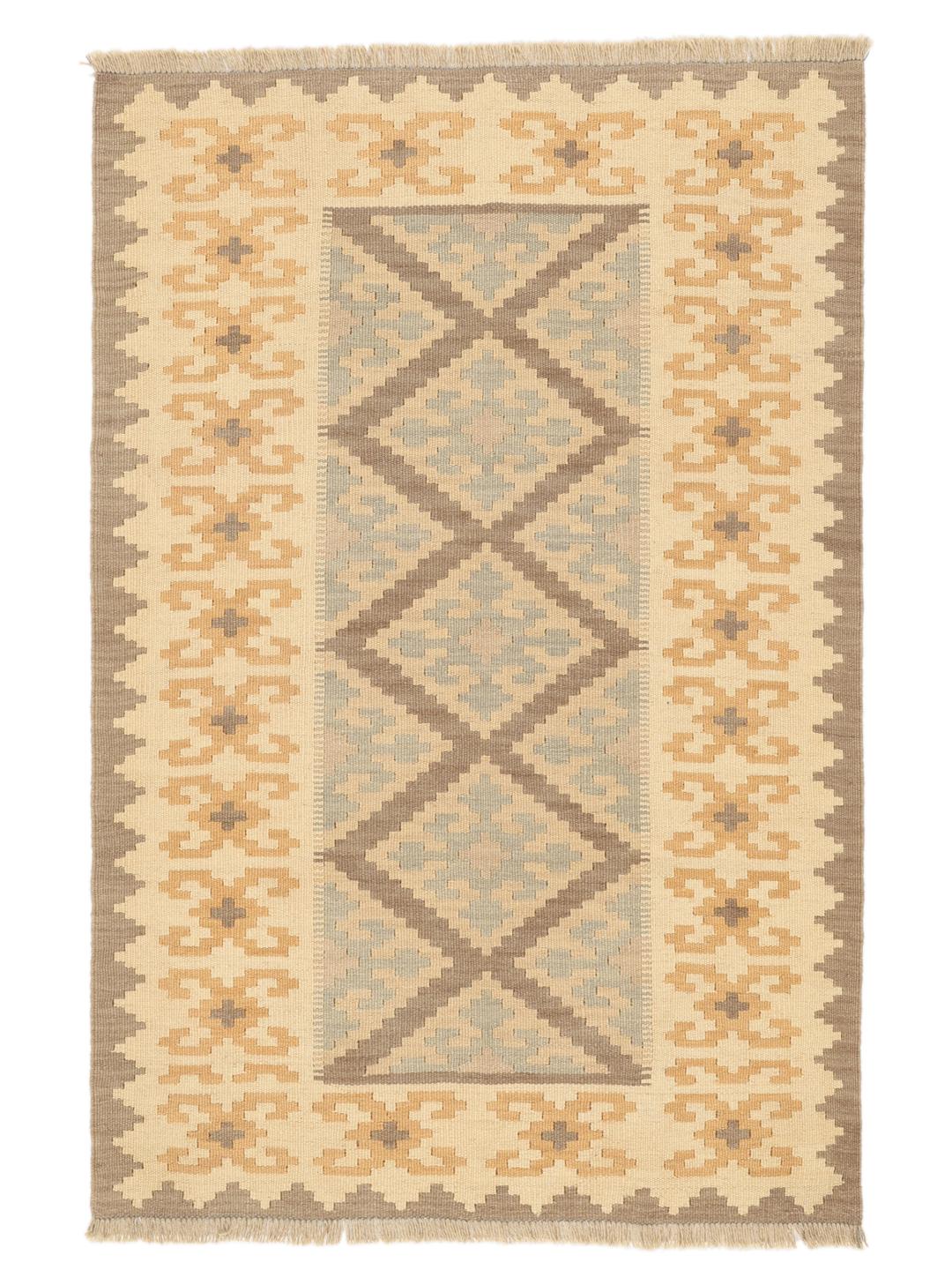
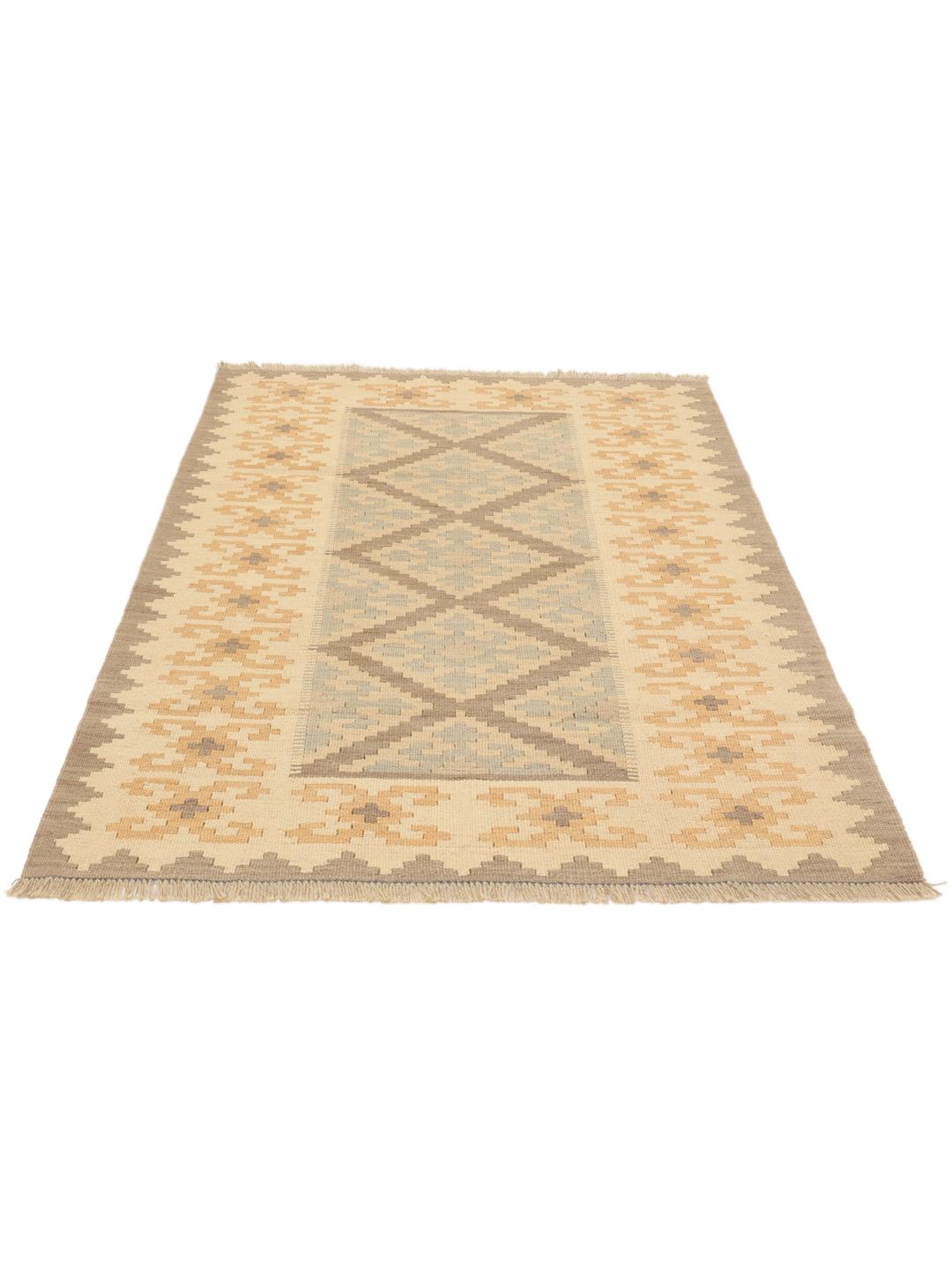
The Ghashghai people are a nomadic tribe with a rich heritage rooted in the mountainous regions of the Middle East. For centuries, they have moved across the landscape, carrying their looms with them and creating textiles that serve as both functional floor coverings and expressions of their cultural identity. These kelims are deeply connected to the rhythm of nomadic life, reflecting the environment and the traditions passed down through generations of weavers.
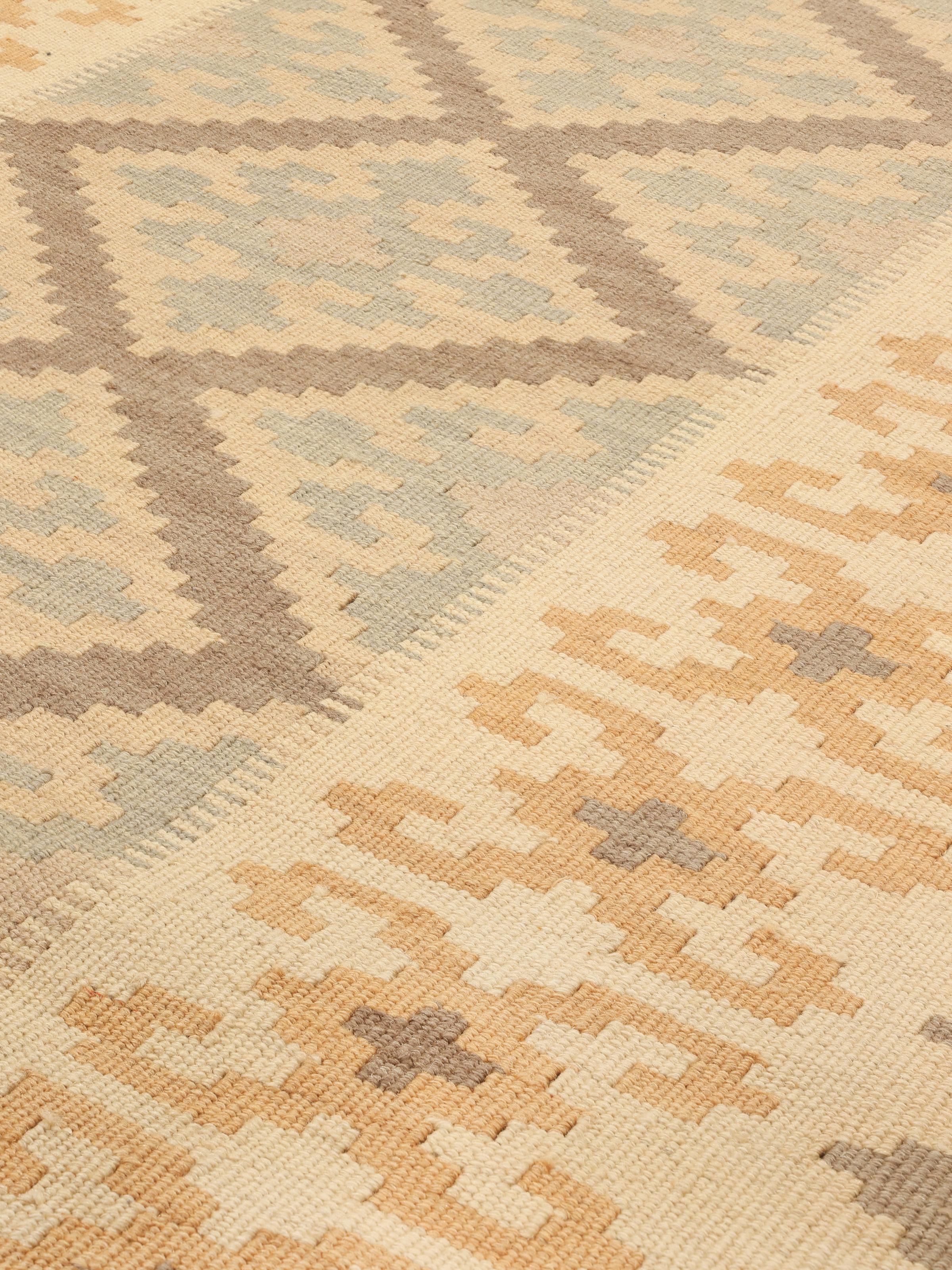
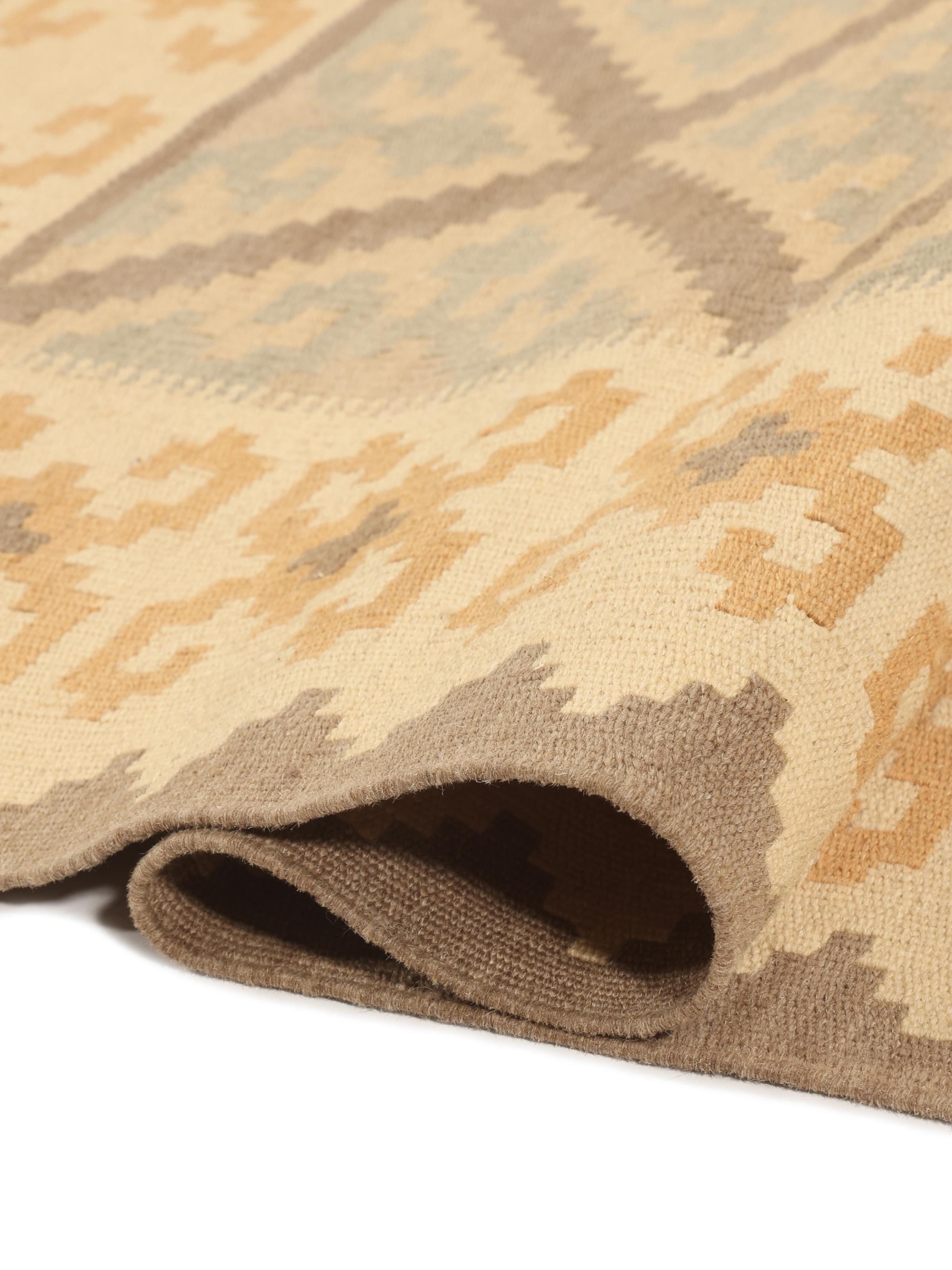
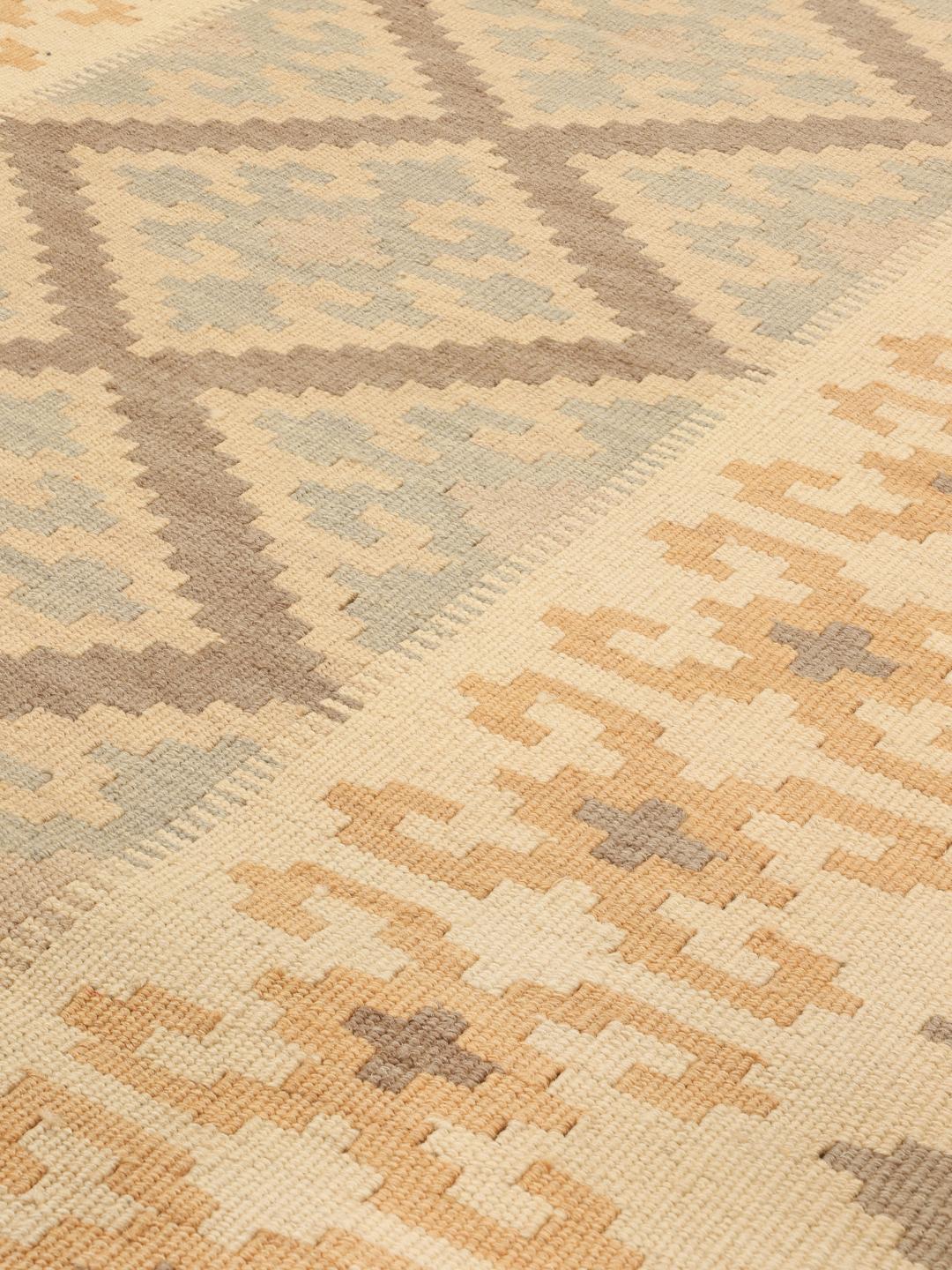
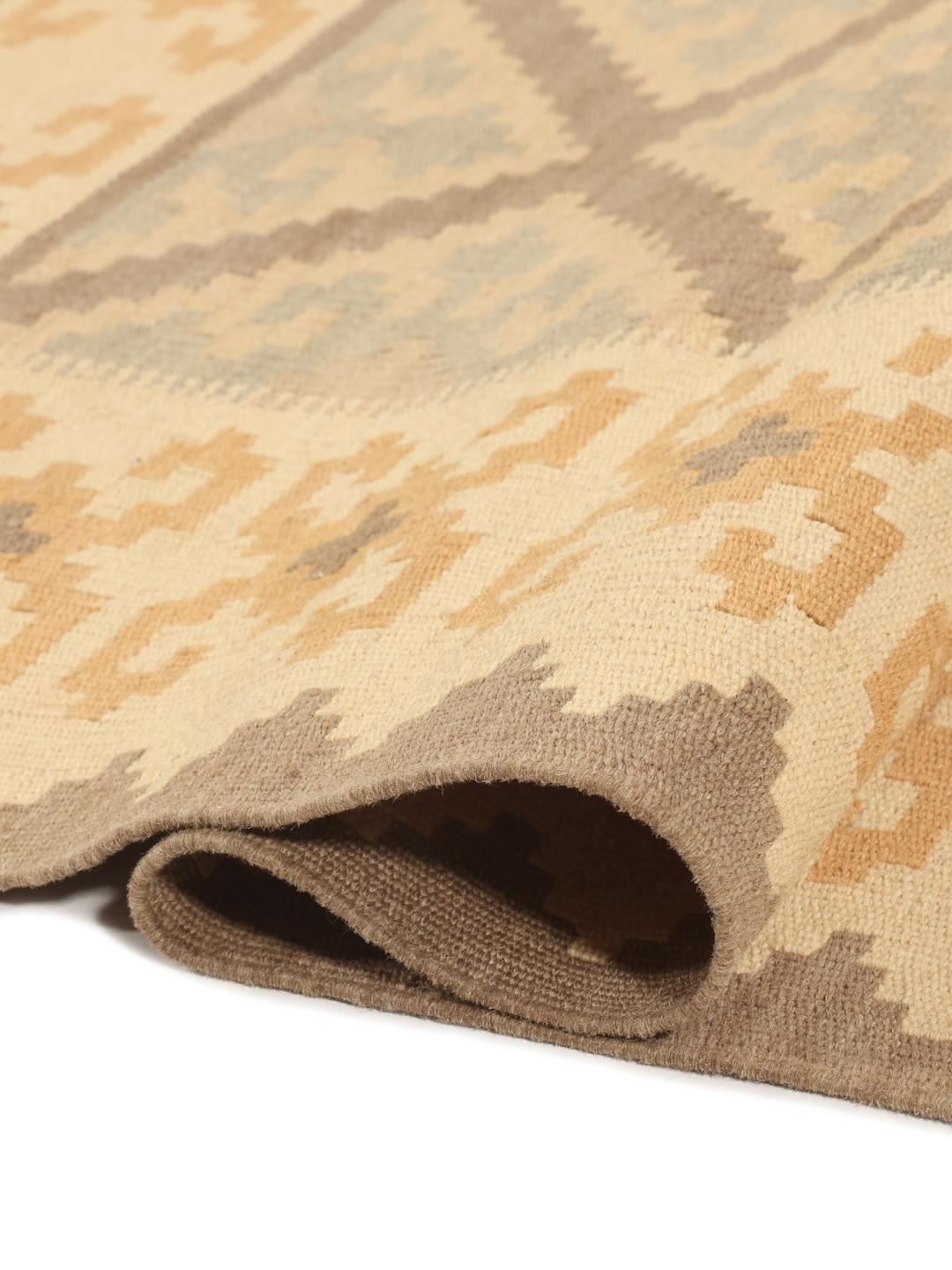
A kelim is a flat-woven rug, meaning it lacks the knotted pile found in traditional carpets. This technique involves wrapping the weft threads around the warp threads, resulting in a thin, reversible textile that is prized for its portability and intricate pattern work. The term Ghashghai refers to both the people and the distinct style of their weaving, which is known for its bold geometric shapes and vibrant, yet naturally derived, colour palettes.
The design of this rug features classic tribal motifs, such as diamonds and stylised floral elements, which are hallmark characteristics of Ghashghai artistry. These patterns are not merely decorative but often carry symbolic meanings related to the weaver's surroundings, family history, and aspirations. The use of a central medallion or repeating geometric sequence is a traditional way to balance the field, creating a harmonious visual flow that is instantly recognisable to those familiar with Middle Eastern textile traditions.
Collecting a Ghashghai kelim is an investment in a living art form. Because these pieces are made by hand without the aid of modern technology, each rug carries the signature style and personality of its maker. They are highly valued by collectors for their cultural weight and the preservation of ancient weaving techniques. Owning such a piece is a way to bridge the gap between contemporary living and a long, storied history of nomadic craftsmanship.