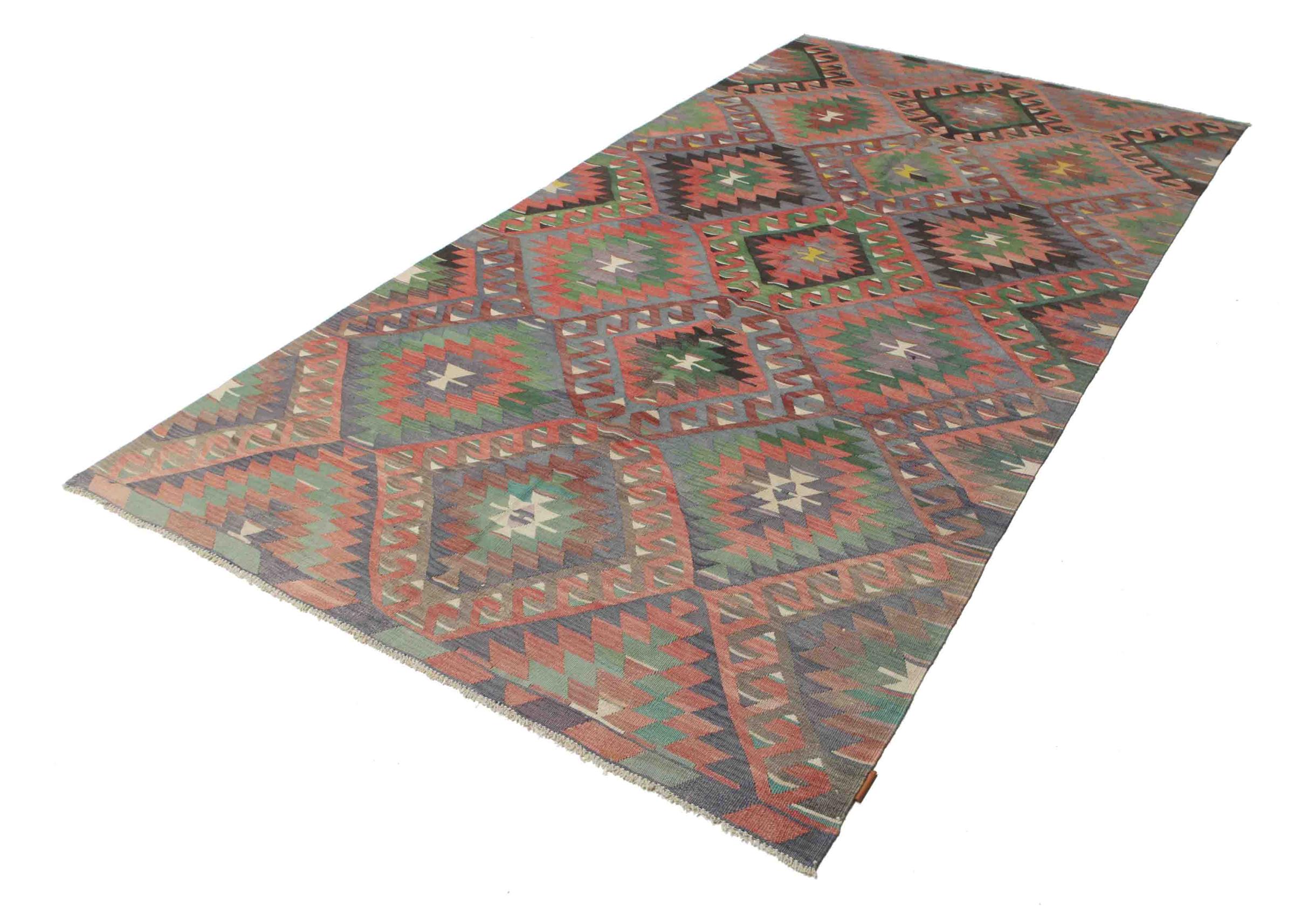
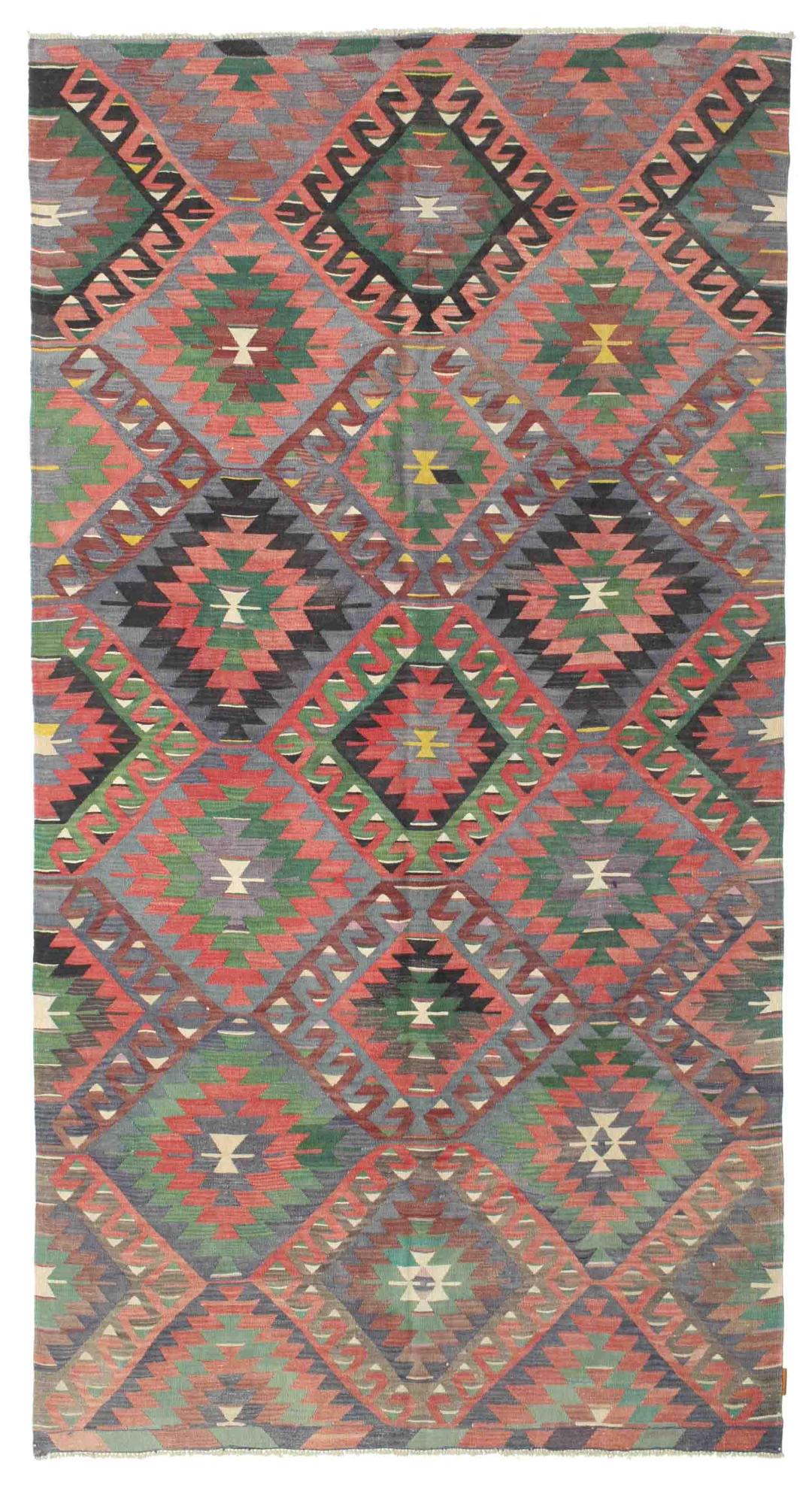
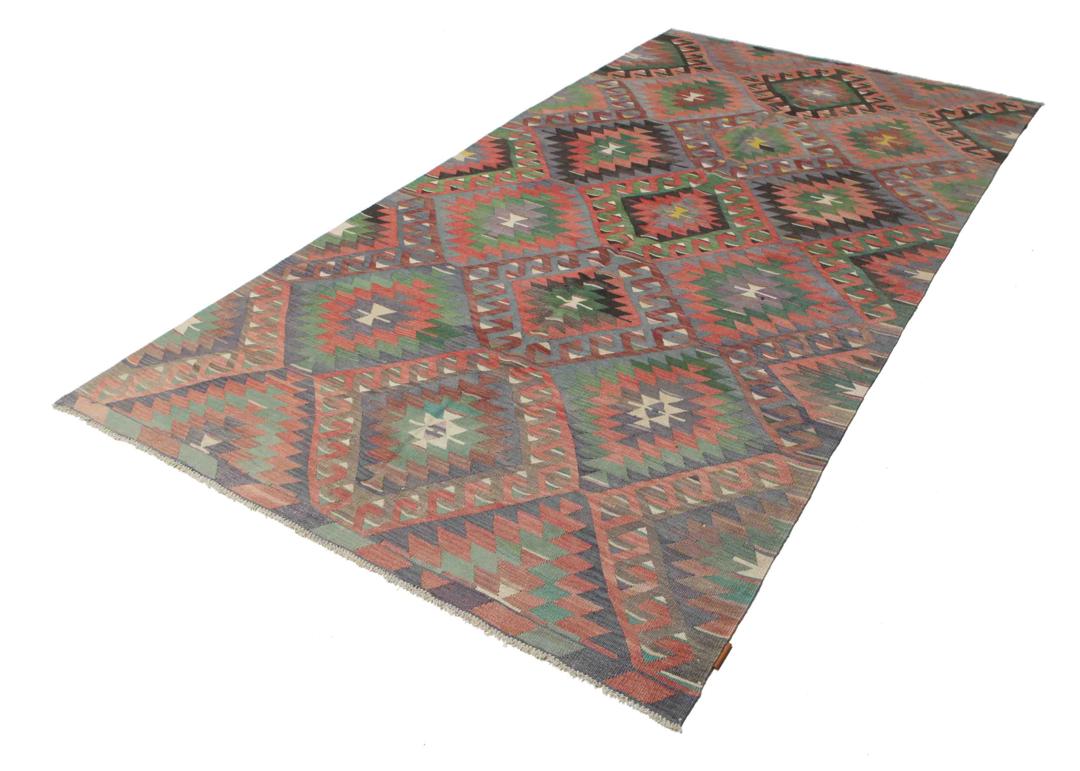
Kilim rugs are a storied tradition hailing from Turkey and the wider Middle Eastern region, where they have served as essential household items for centuries. Traditionally, these flat-woven textiles were used as floor coverings, wall hangings, and even as heavy blankets or storage sacks for nomadic tribes. Their history is deeply intertwined with the daily life and cultural identity of the people who created them.
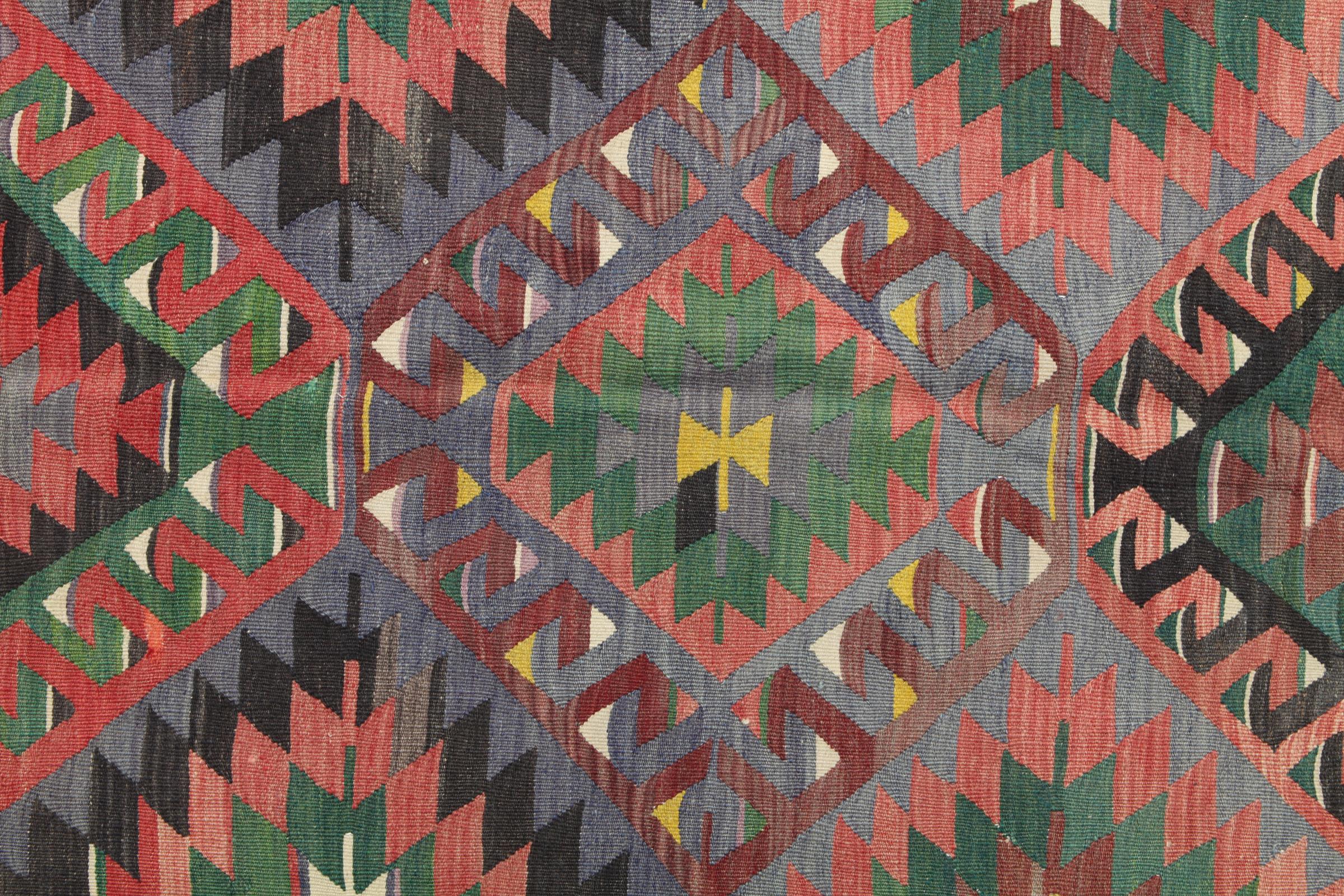
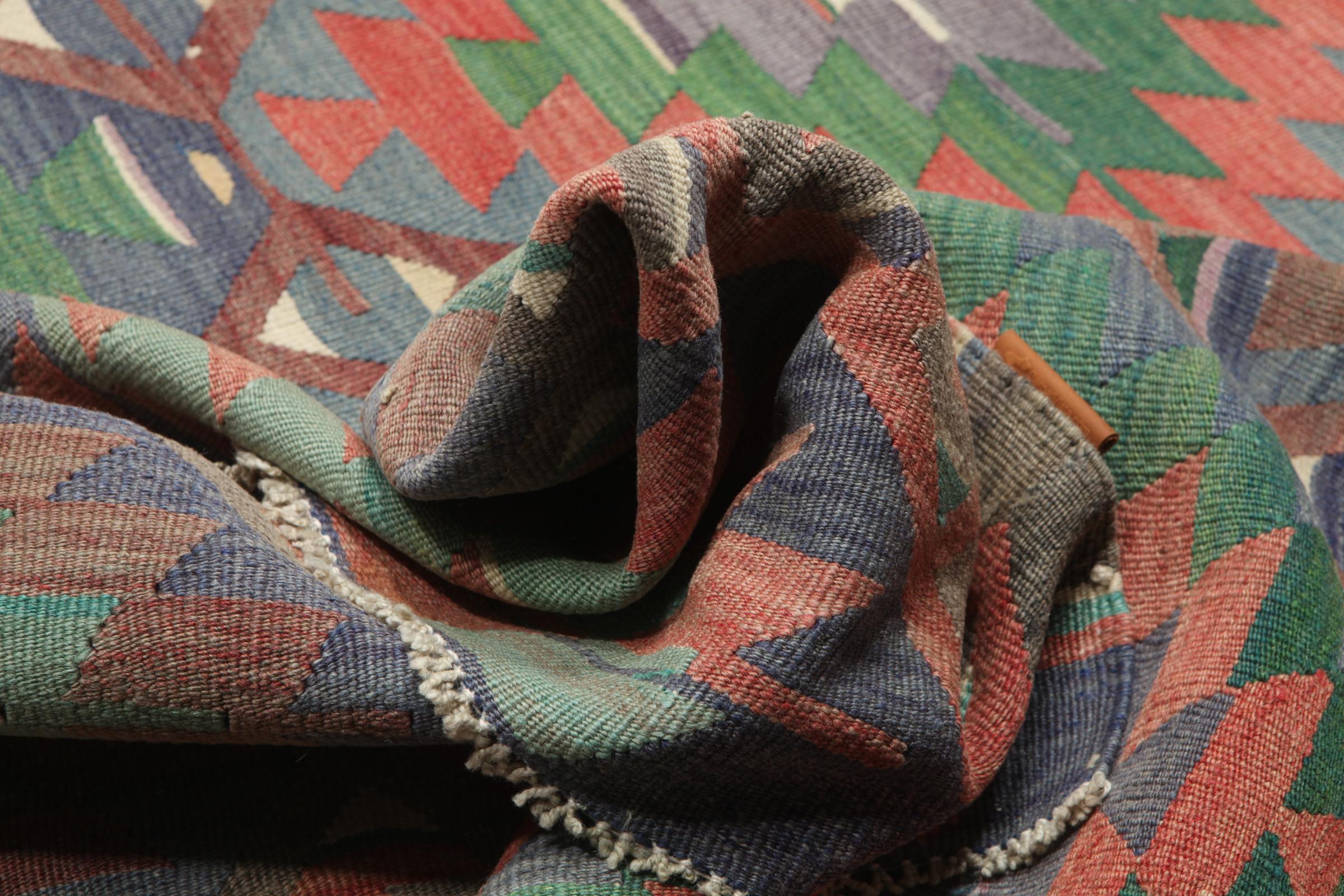
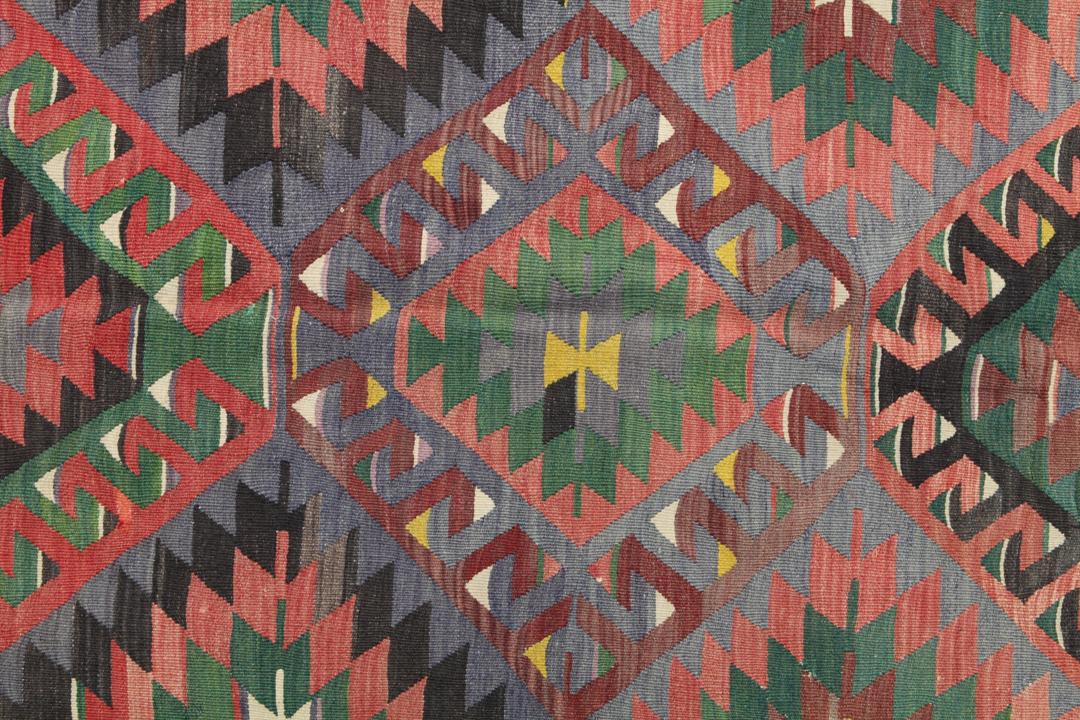
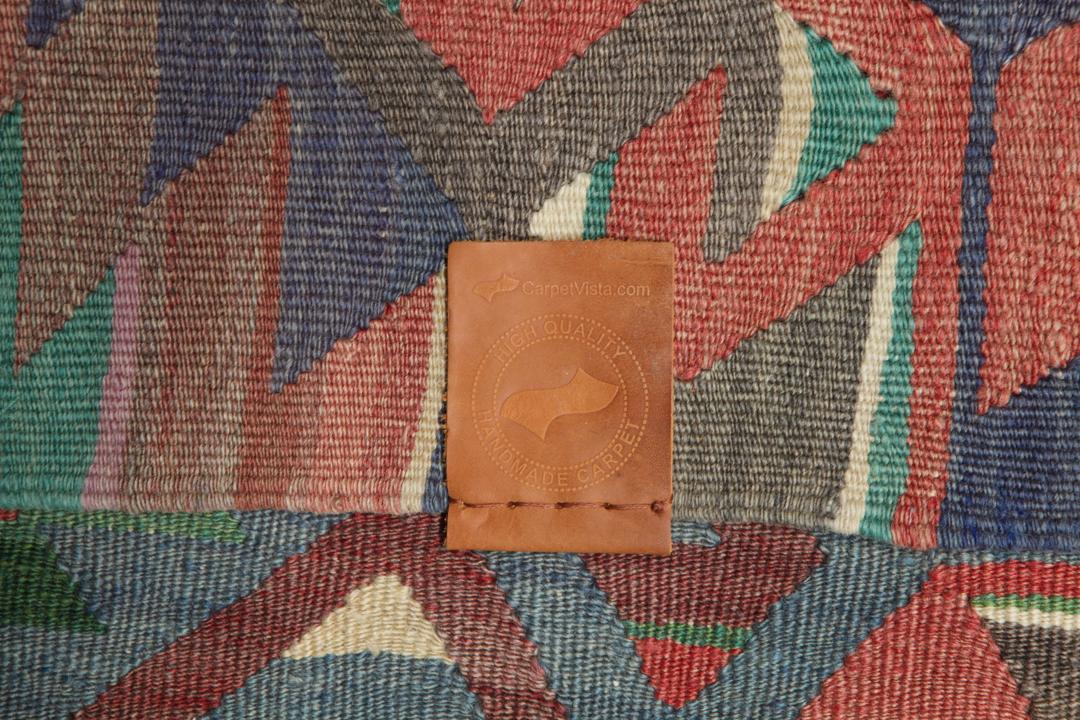
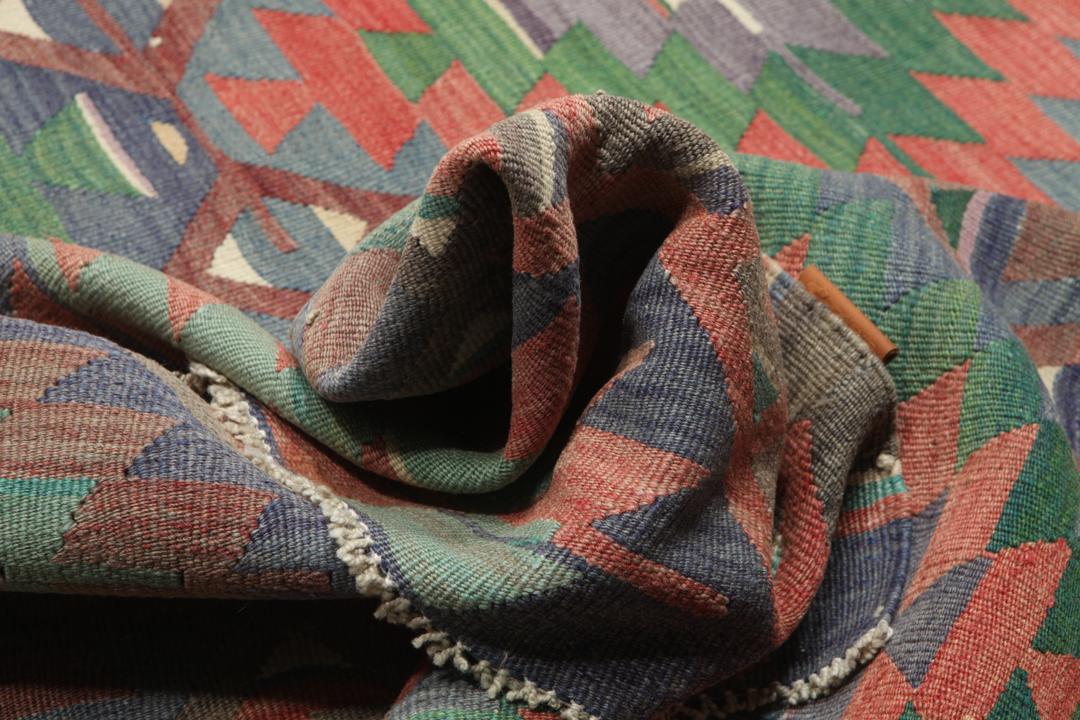
The term 'kilim' specifically refers to the tapestry-weaving technique used to create these rugs, which involves tightly interweaving the horizontal and vertical wool strands. This lack of a raised pile is what gives the kilim its characteristic thin, clean aesthetic. Because there are no knots to tie, the artisan relies on a precise 'slit-weave' technique to create the sharp, geometric patterns that define the style, requiring a high degree of technical skill.
The visual language of Turkish kilims is dominated by bold, symbolic motifs that often carry meanings related to protection, fertility, and family. Common patterns include diamonds, triangles, and stylised floral elements, all arranged in rhythmic, symmetrical compositions. The use of vibrant, natural dyes—often derived from local plants and minerals—gives these rugs their signature earthy and saturated colour palettes, which remain as striking today as they were when the rug was first woven.
Collecting vintage kilims is a way to preserve a piece of human heritage. Because each rug is a reflection of the weaver's personal expression and local tradition, they are highly valued by collectors who appreciate the rarity and the historical weight they bring to a modern home. Owning a vintage kilim is an opportunity to connect with a timeless craft and to own a functional piece of art that has truly stood the test of time.