Kilim rugs are a cornerstone of Middle Eastern textile history, with their roots deeply embedded in the nomadic cultures of Turkey. Traditionally woven by women in tribal communities, these rugs served as functional items—used as floor coverings, wall hangings, and even as storage bags during migration. They were essential to the nomadic lifestyle, providing warmth and comfort in harsh environments.
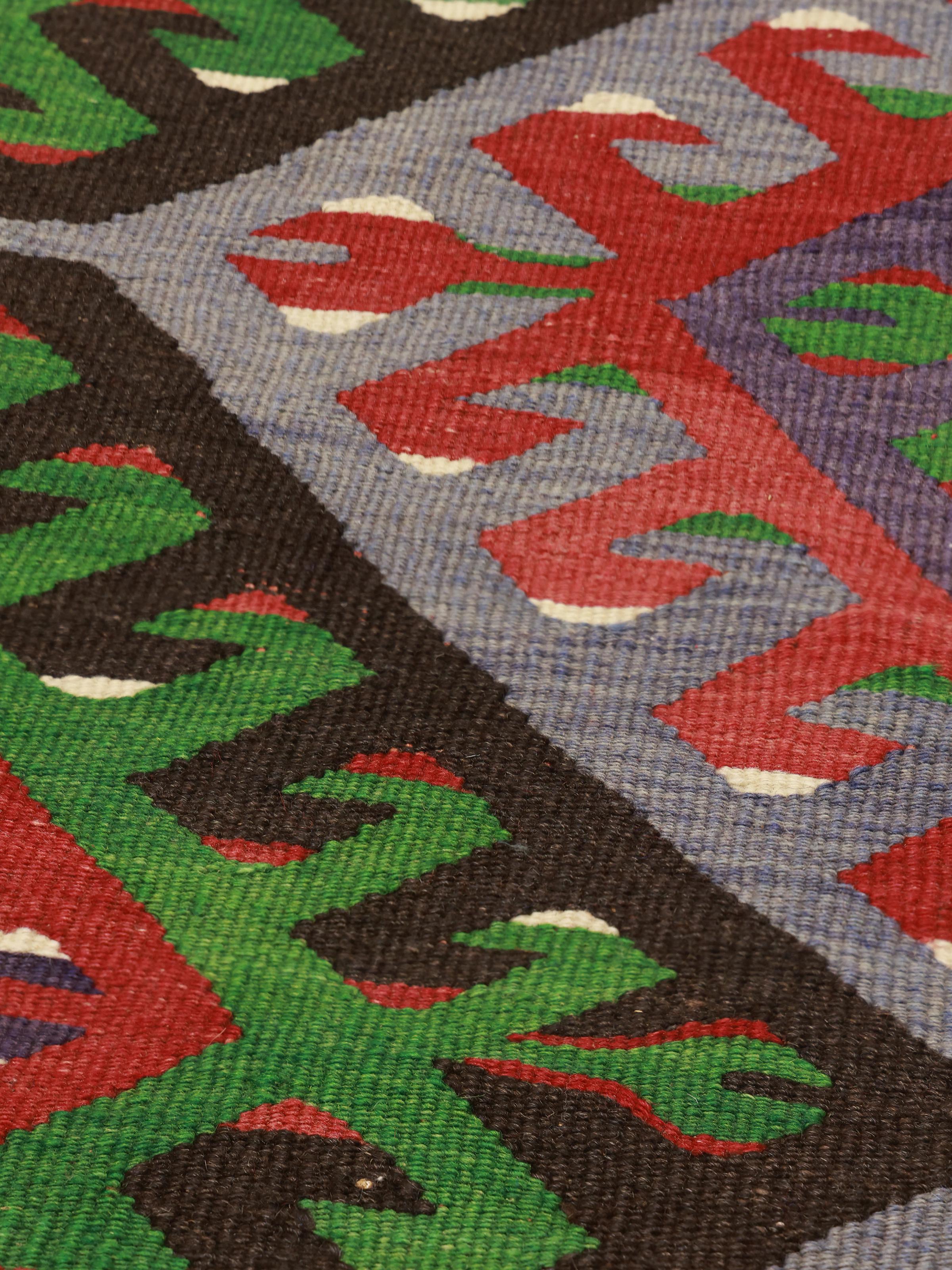
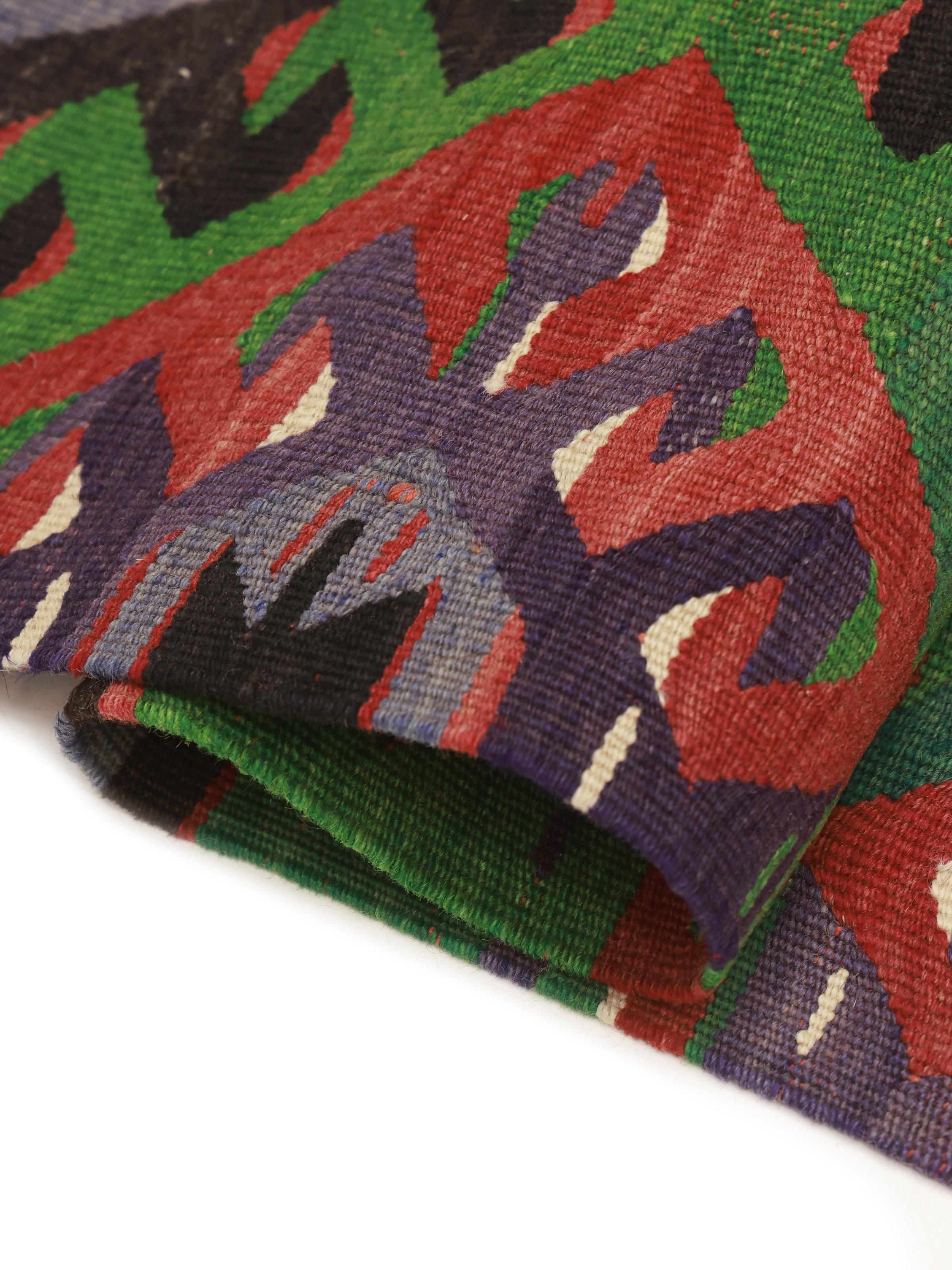
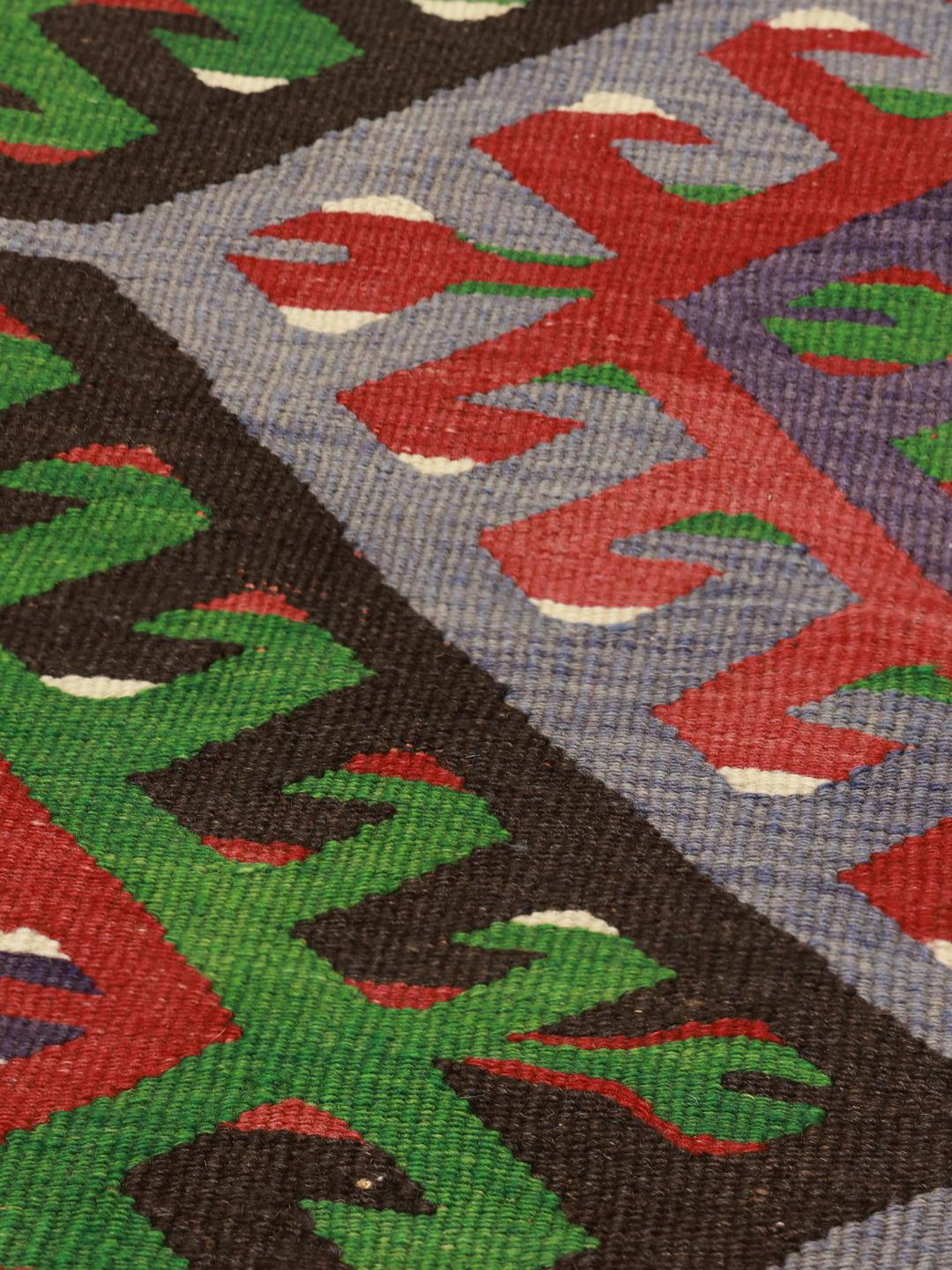
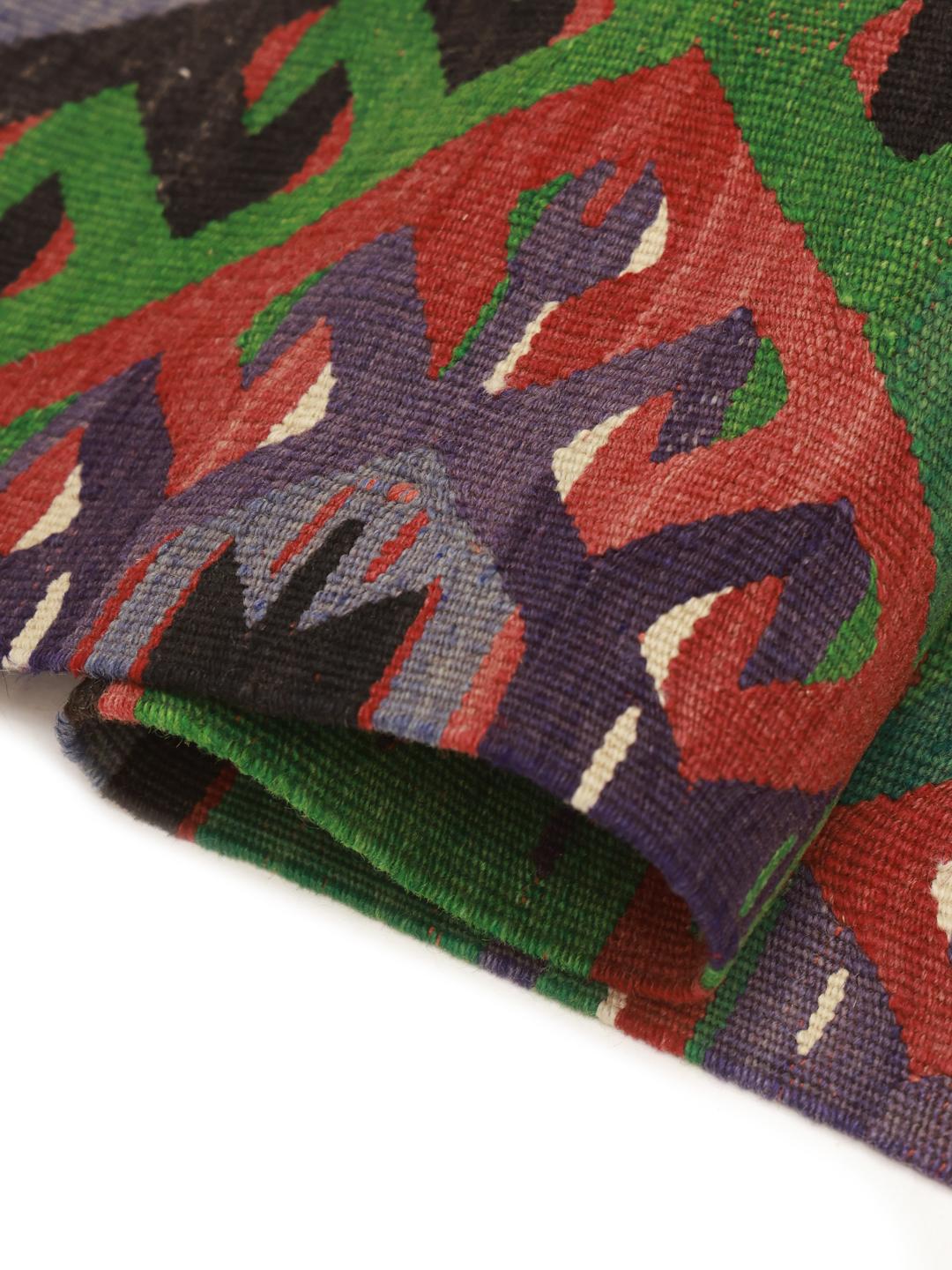
The term 'kilim' refers to the specific flat-weave technique used to create these pieces. By avoiding the use of knots, weavers create a lightweight yet robust fabric that is reversible and highly versatile. This technique requires a high level of expertise, as the weaver must manage the tension of the threads perfectly to ensure the rug remains flat and the patterns remain sharp and distinct.
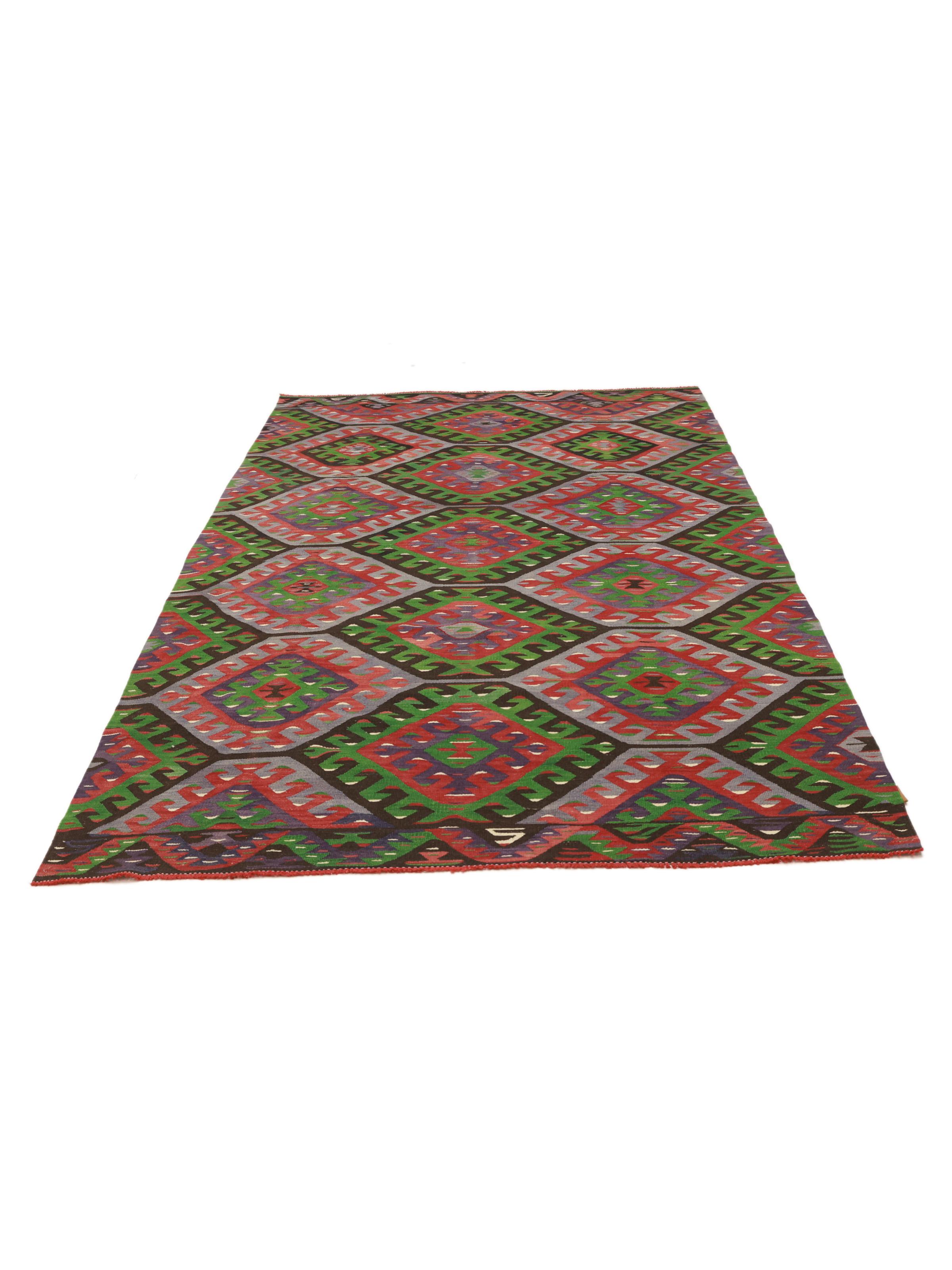
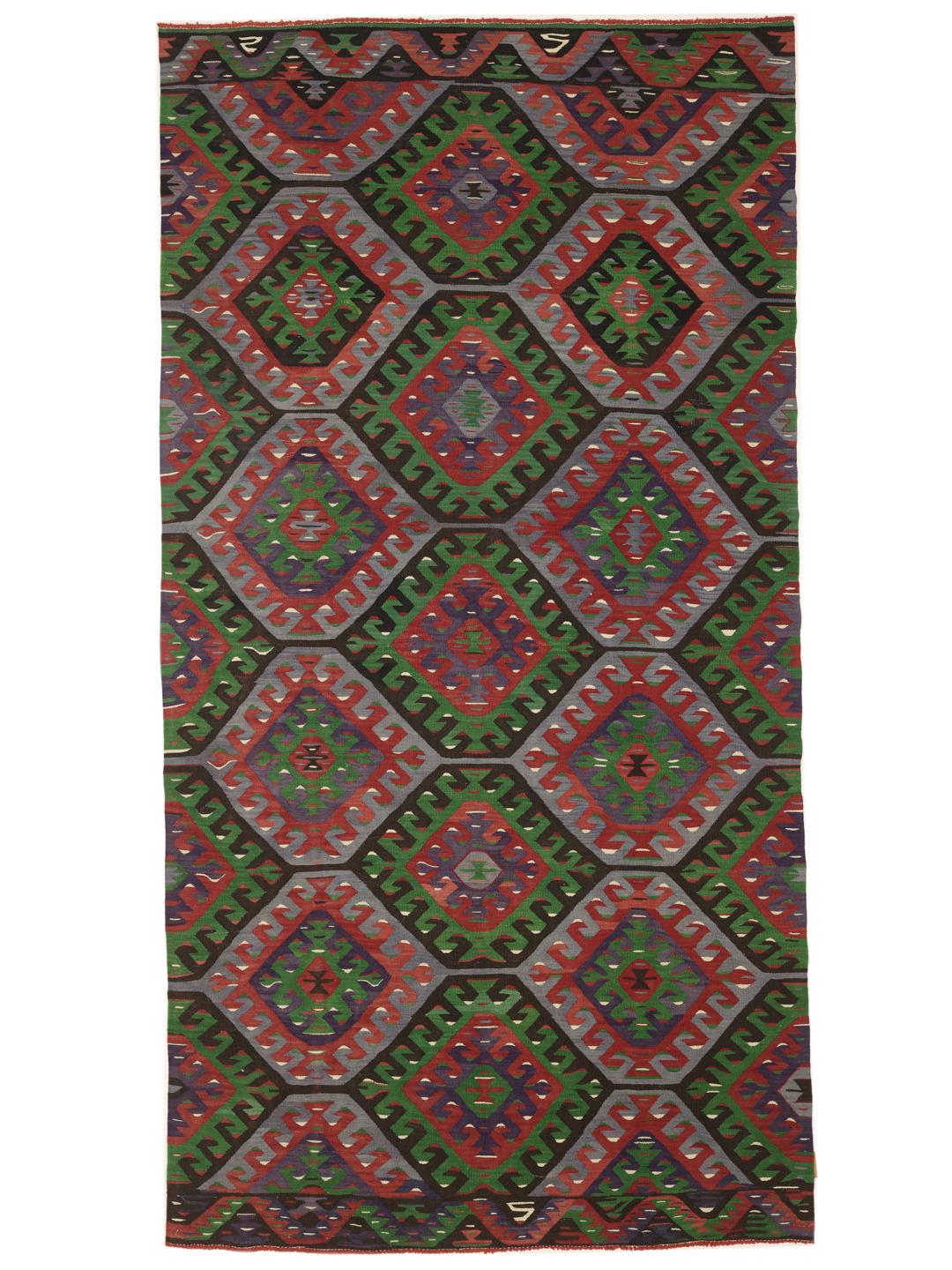
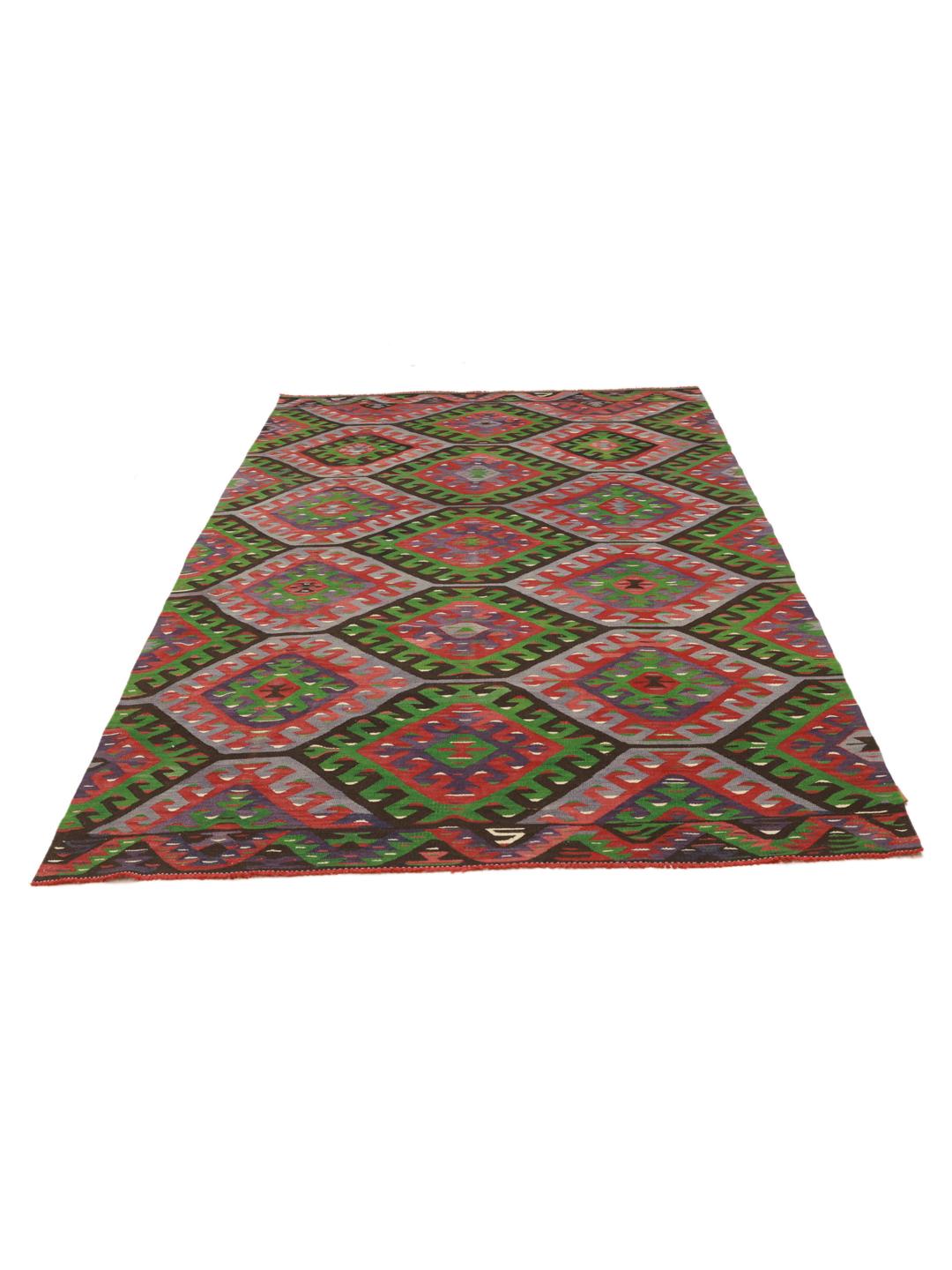
The signature design language of Turkish kilims is centred around geometric motifs that often carry symbolic meaning, representing protection, fertility, or family history. In this vintage piece, the bold, repeating diamonds create a sense of rhythm and balance. The vibrant colours are traditionally derived from natural dyes made from local plants, minerals, and insects, resulting in the rich, earthy tones that define the classic kilim look.
Collecting vintage kilims is a way to preserve a rich cultural heritage. These rugs are valued not only for their aesthetic appeal but for the stories they tell. Each rug is a narrative of the weaver's life and environment, making it a prized possession for those who value craftsmanship, history, and the human touch in their home environment.