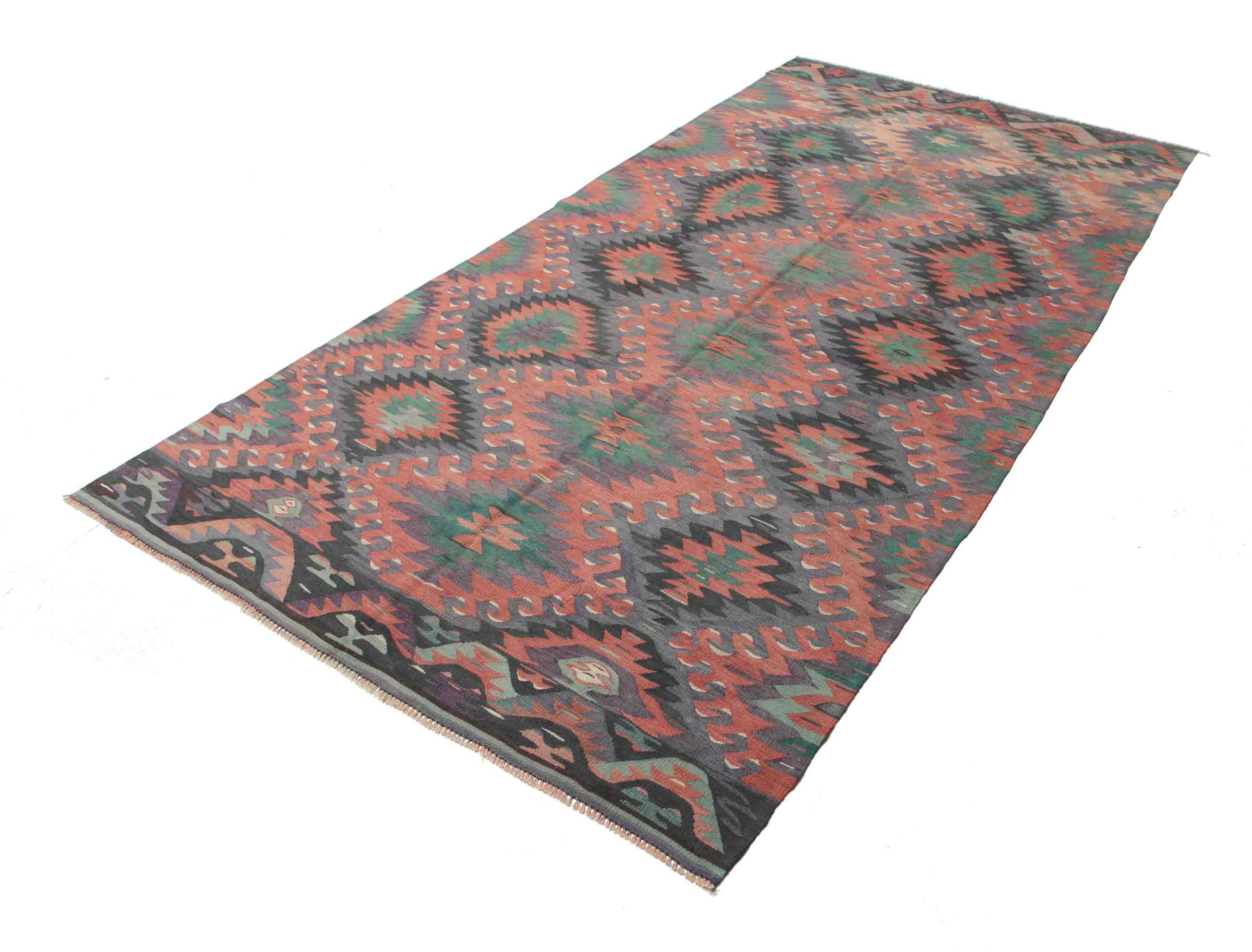
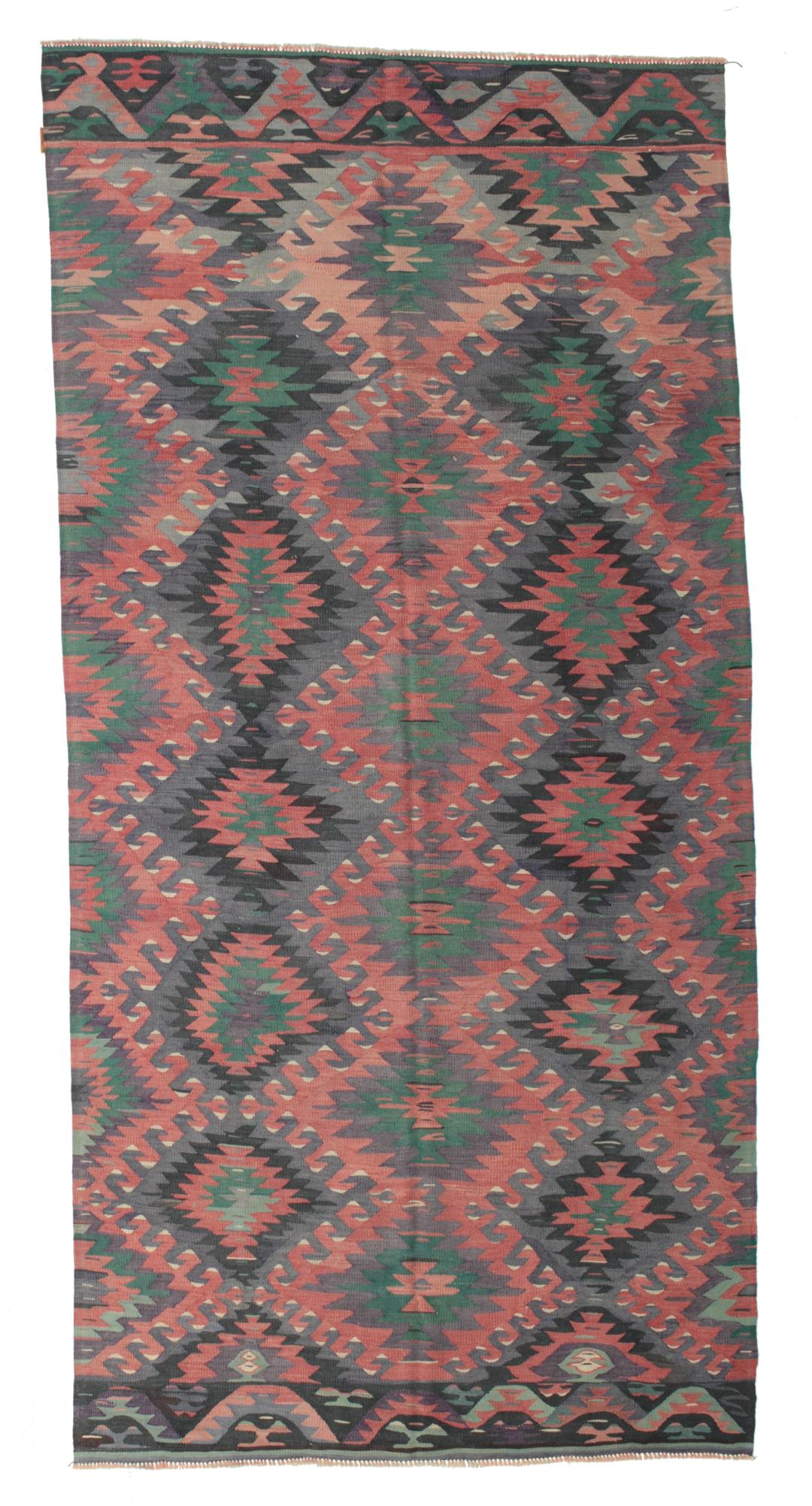
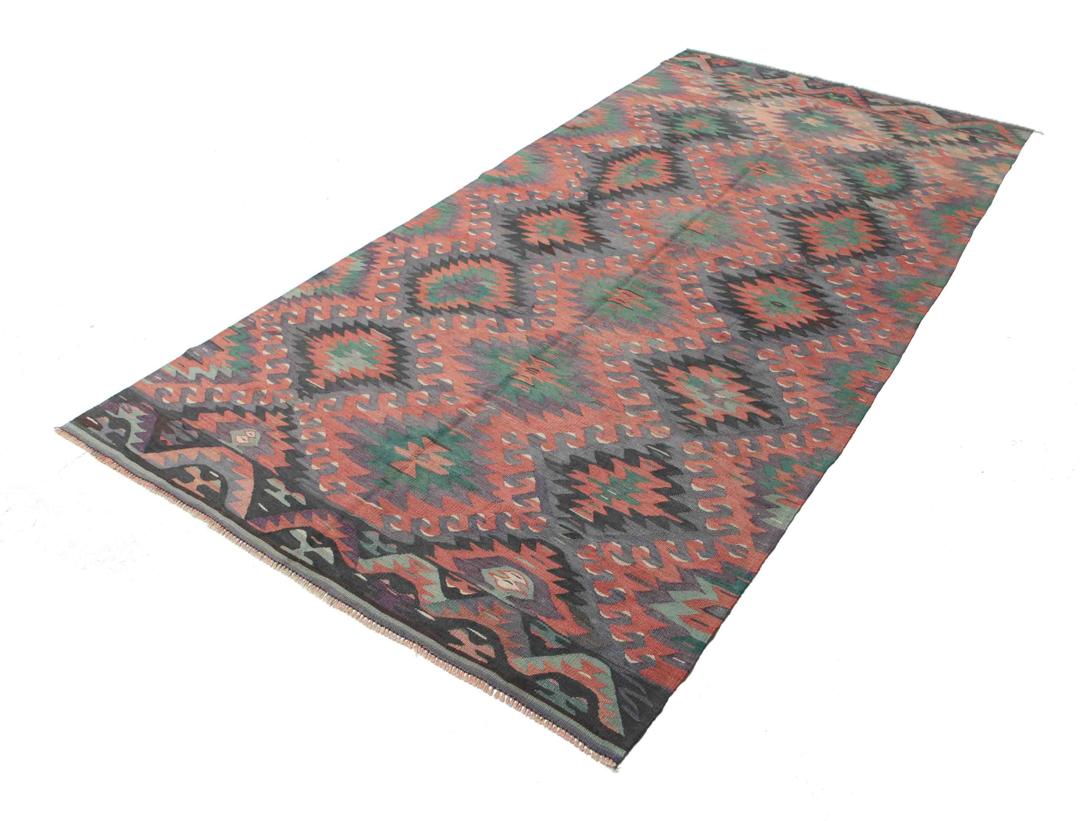
Kilim rugs are a cornerstone of textile history in the Middle East and Central Asia, with the term specifically referring to a flat-woven construction technique. Historically, these rugs were essential items for nomadic tribes, serving as floor coverings, wall hangings, and functional storage bags during seasonal migrations.
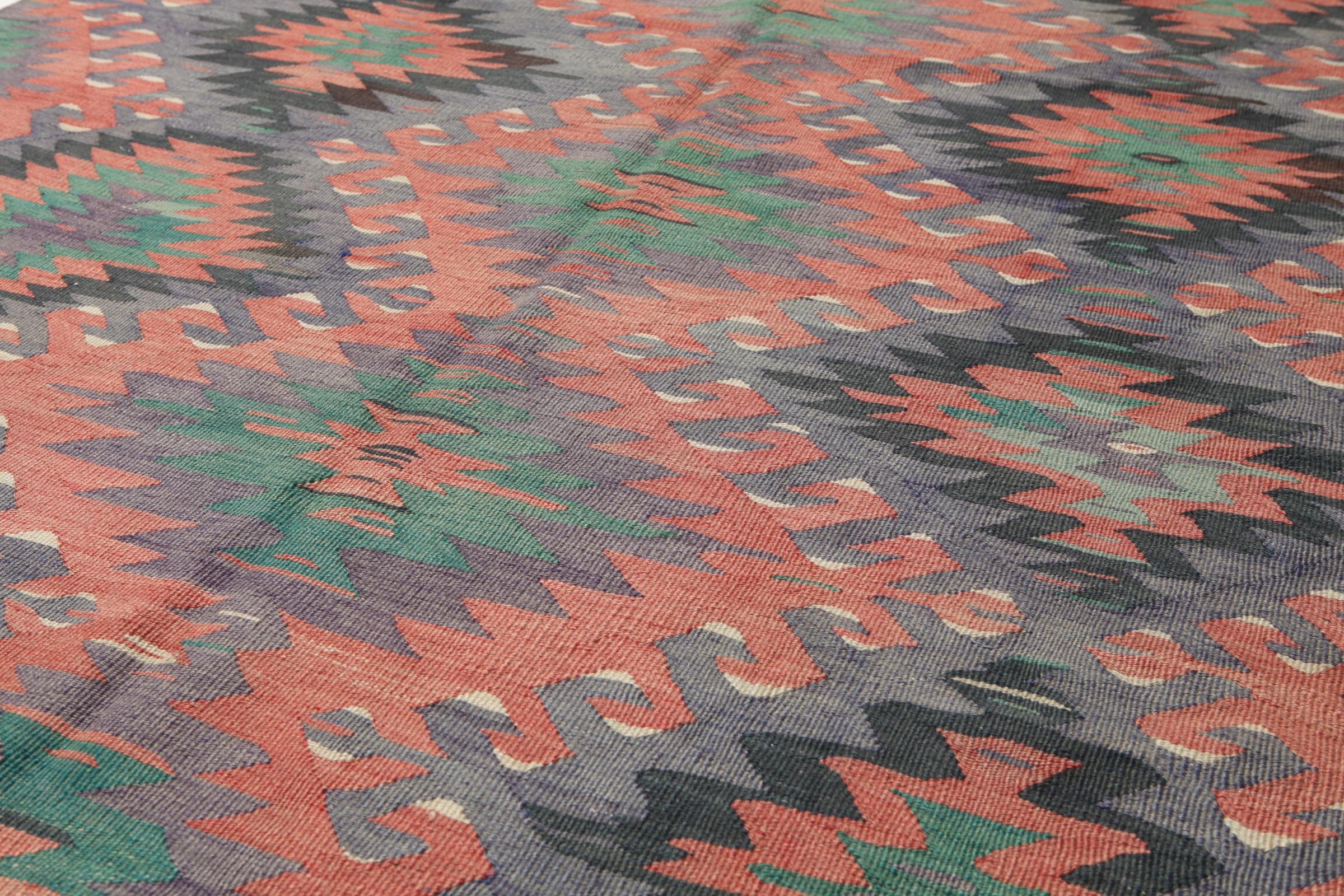
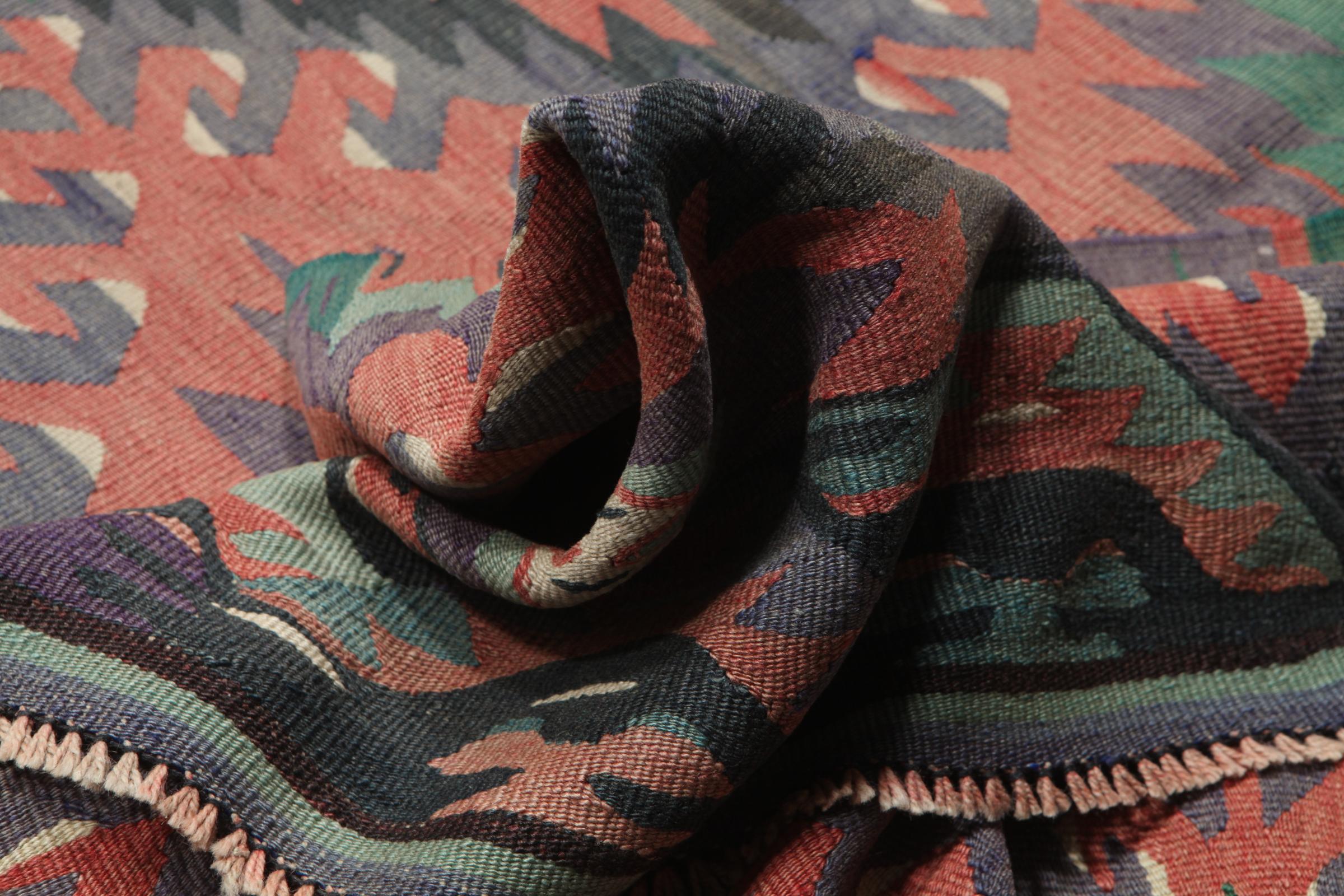
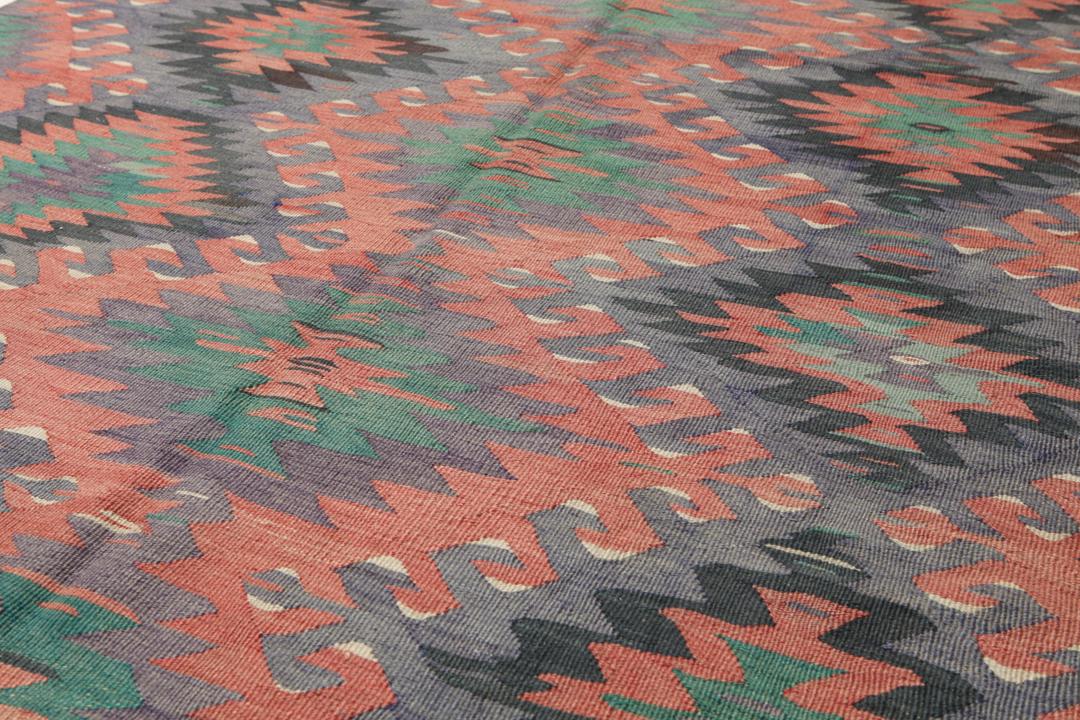
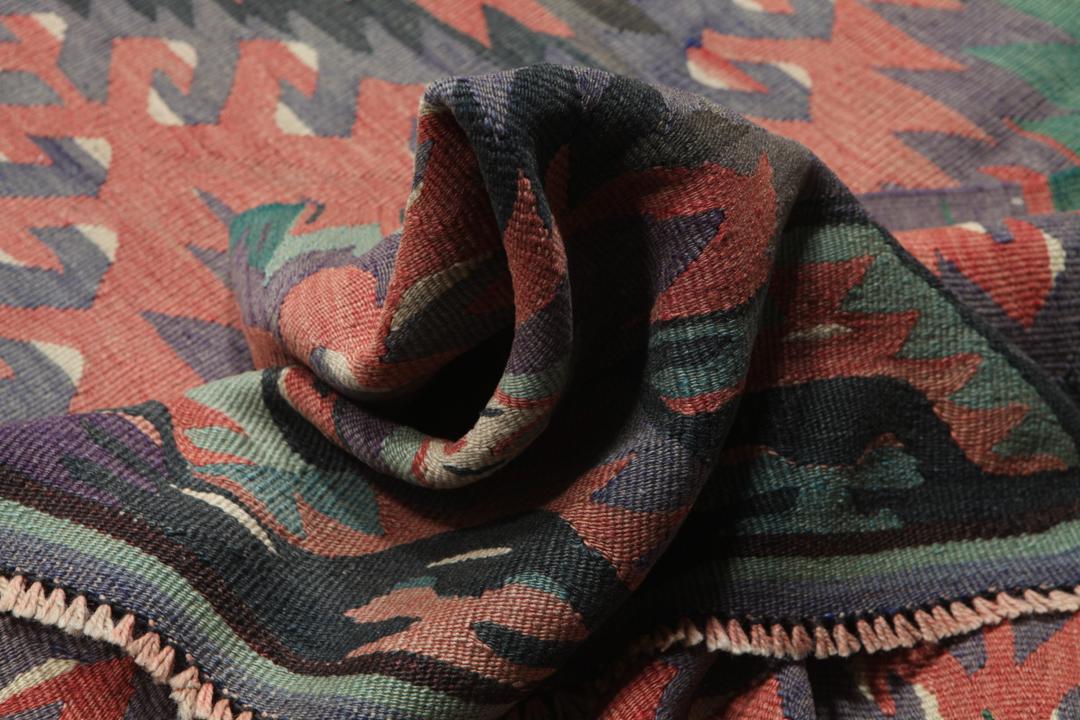
The term 'kilim' describes a tapestry weave where the coloured weft threads are pulled tightly over the warp threads to create the design. This method is what allows for the sharp, clean-edged geometric patterns that define the style, as the weaver can easily transition between colours to build complex motifs.
Signature design elements often include tribal symbols and protective motifs, which were used by weavers to tell stories or express hopes for the future. You will frequently see diamond shapes, zig-zags, and stylised floral elements, all arranged in balanced, repeating patterns that reflect the specific regional traditions of the Middle East.
Collecting vintage kilims is an act of preserving cultural heritage. These pieces are highly valued not just for their aesthetic appeal, but for the immense skill required to produce them without the aid of modern machinery. Owning one is a way to connect with a centuries-old tradition of domestic artistry.