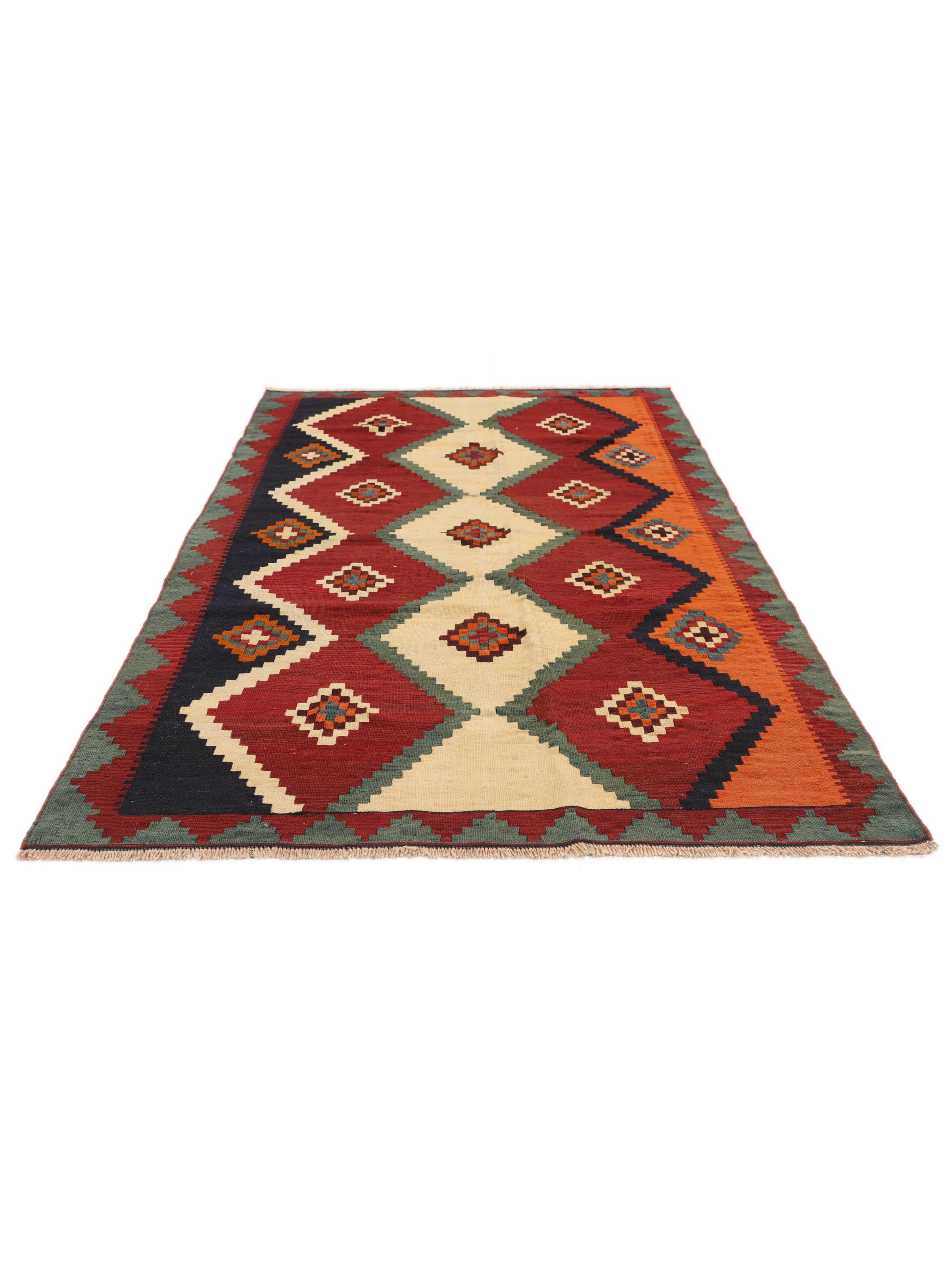
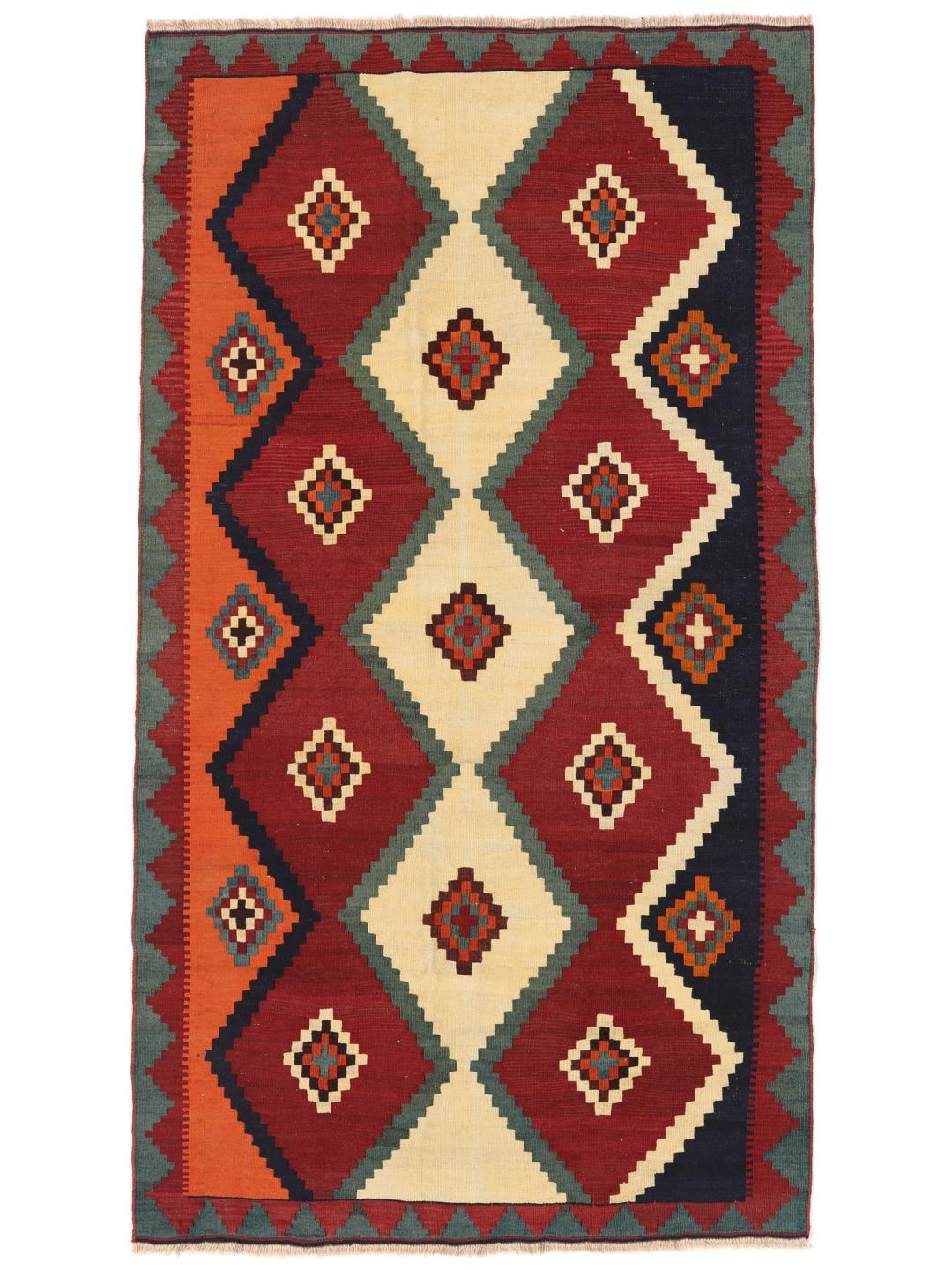
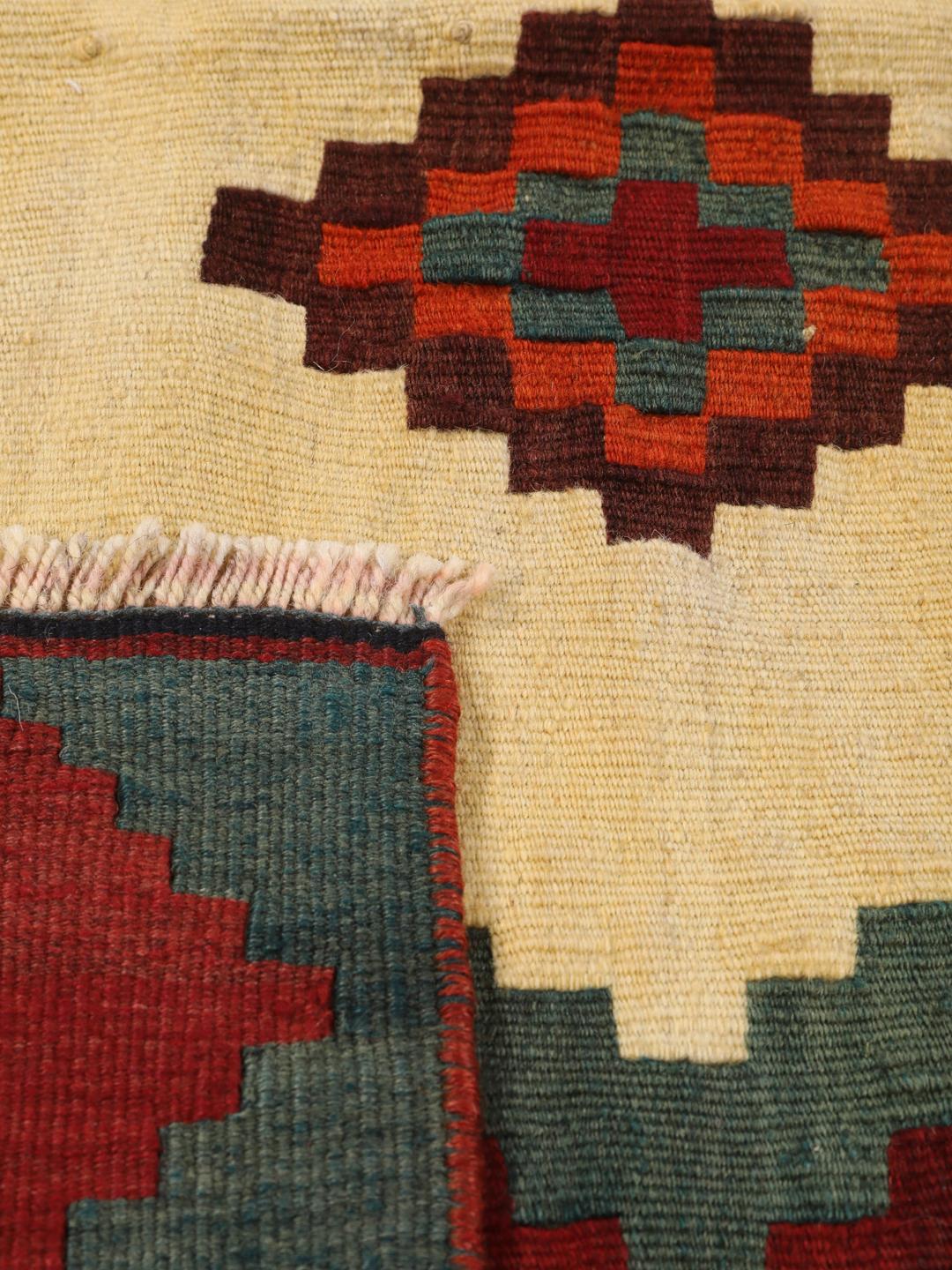
Kilim rugs are a foundational element of Middle Eastern textile history, traditionally created by nomadic and semi-nomadic tribes. These rugs were originally woven for practical purposes, serving as floor coverings, tent dividers, and storage bags, reflecting a culture that valued both utility and artistic expression.
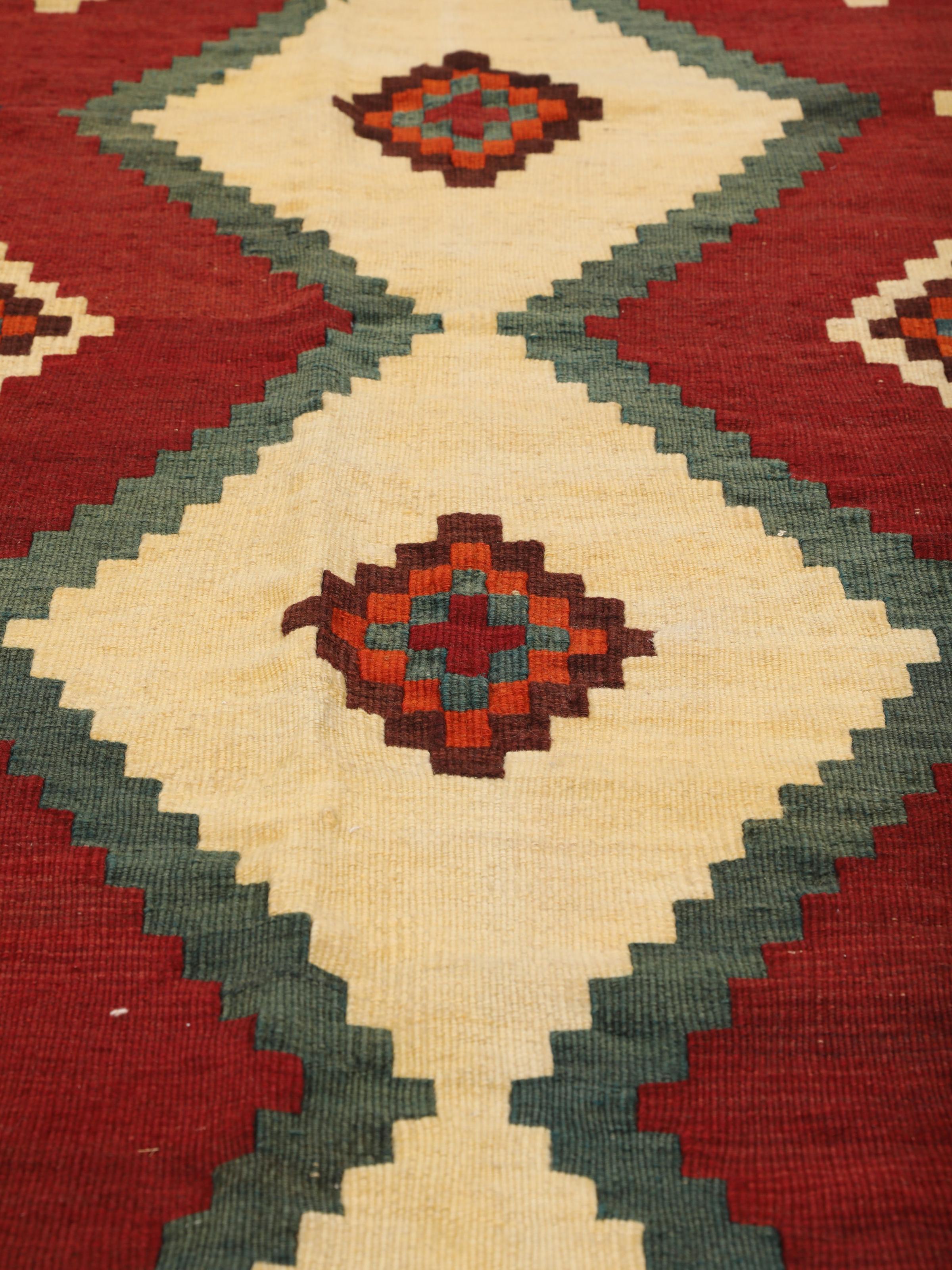
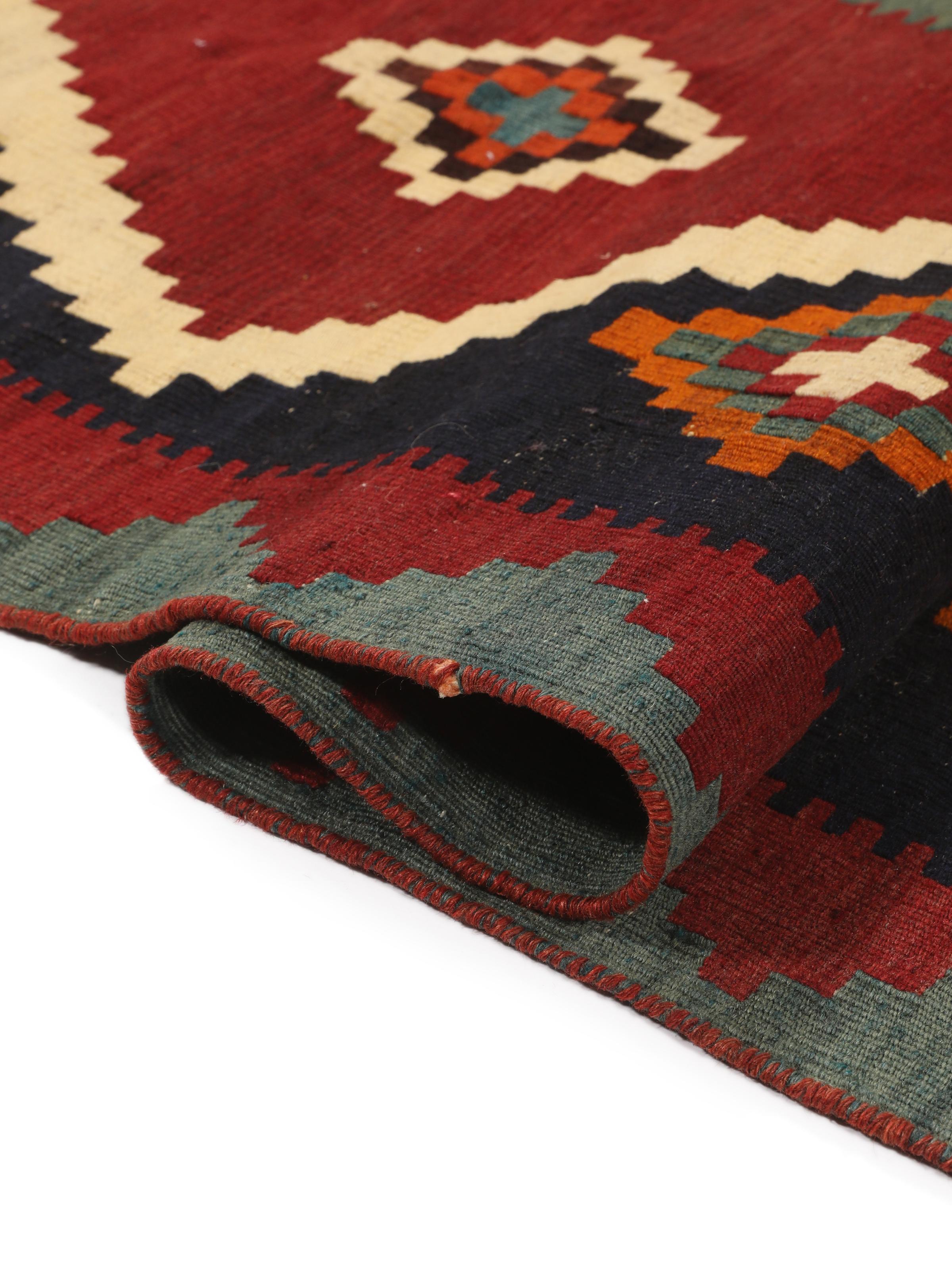
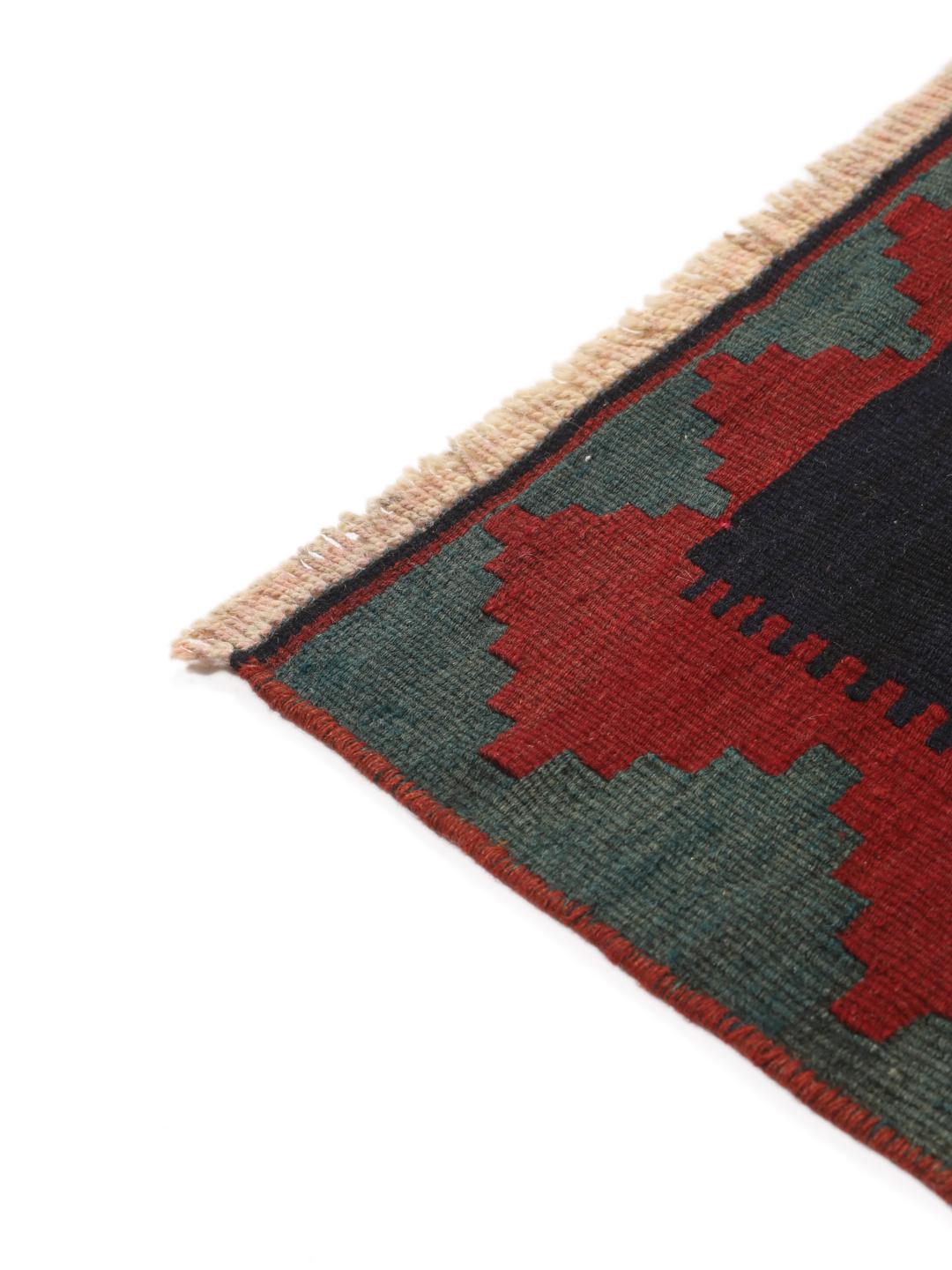
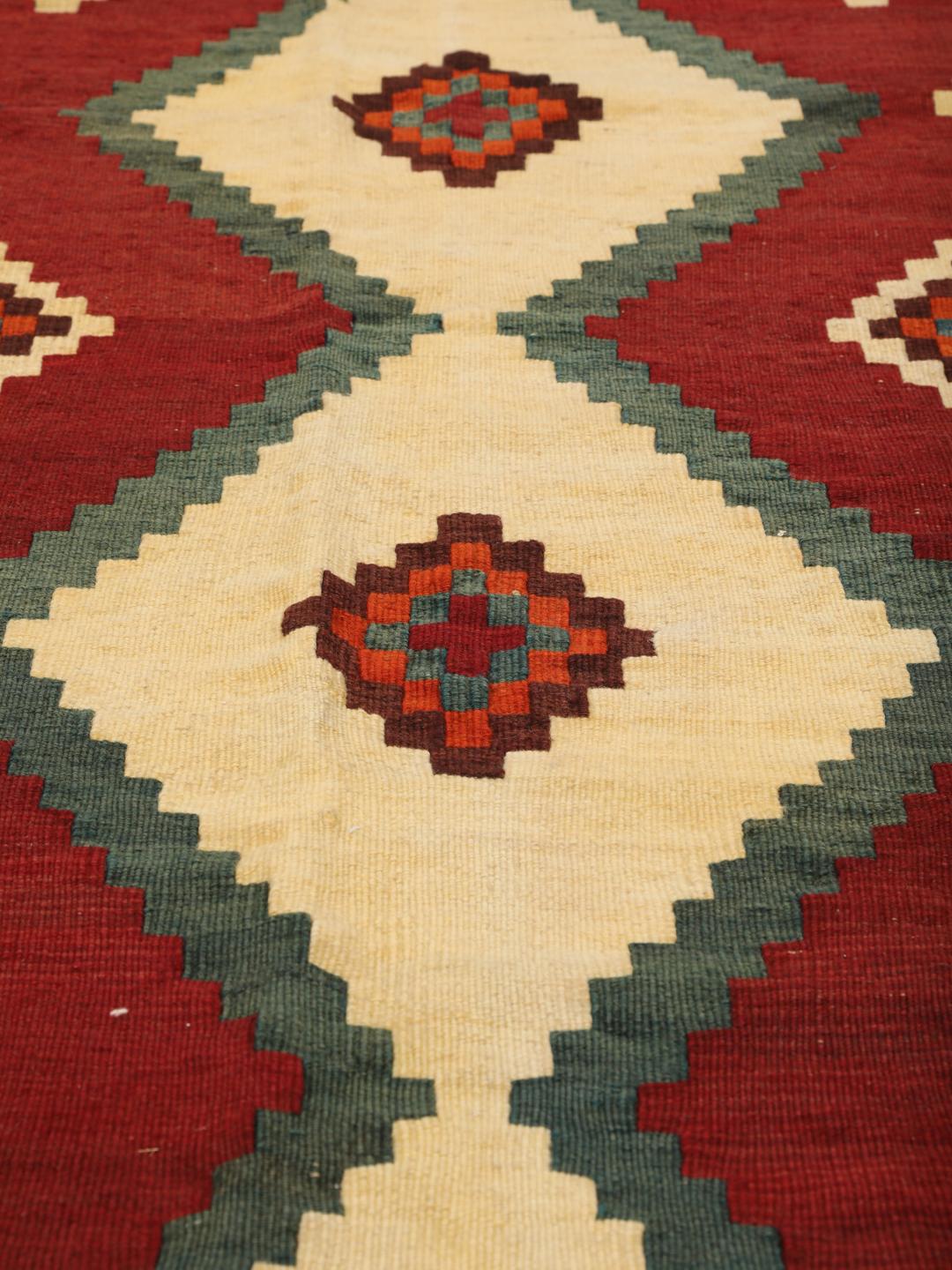
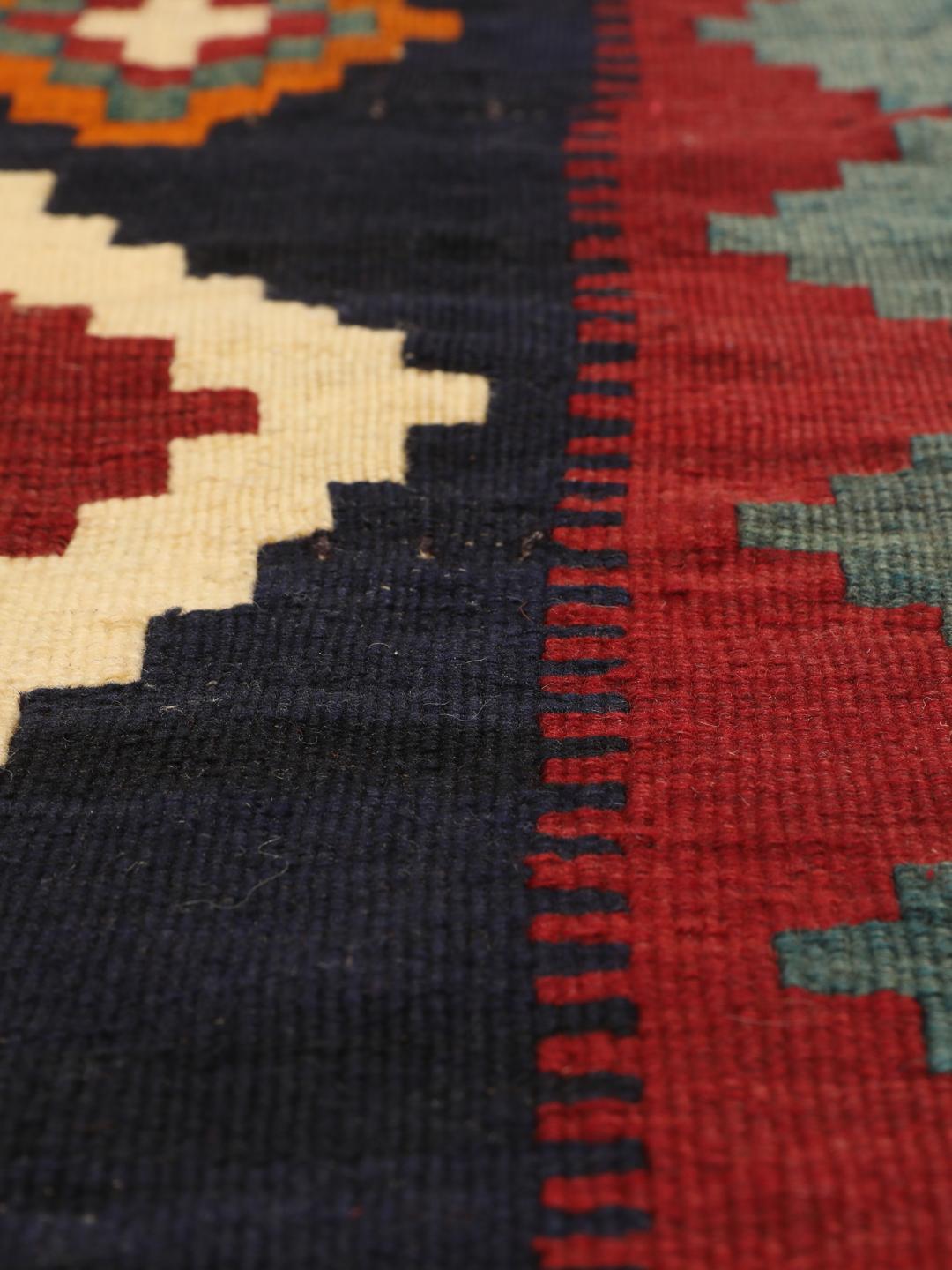
The term kilim refers specifically to the flat-weaving technique used, where the weft threads are passed over and under the warp threads to create a pattern. This method does not involve knots, which is what gives these rugs their distinctive, smooth, and durable surface that is highly prized by collectors today.
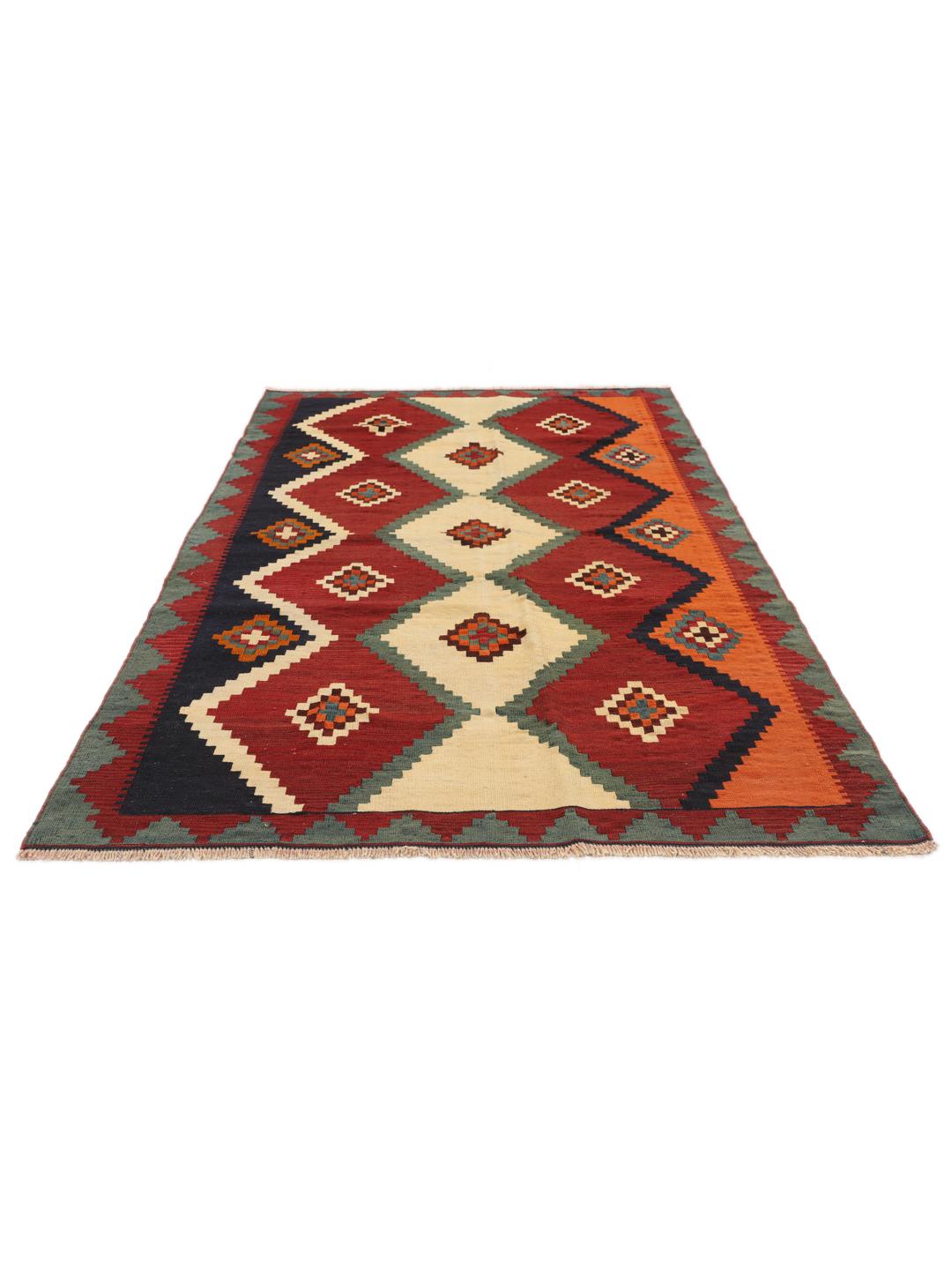
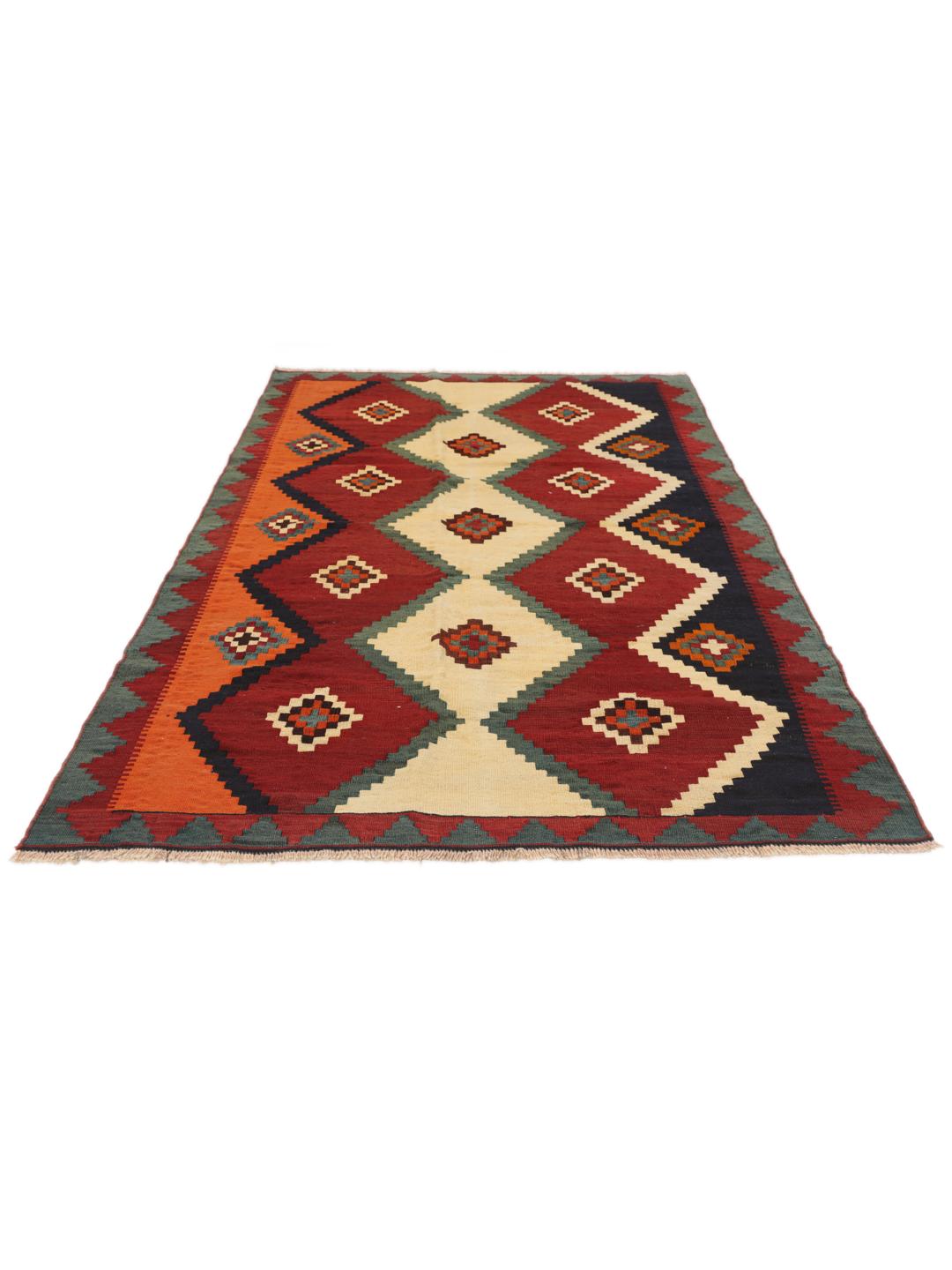
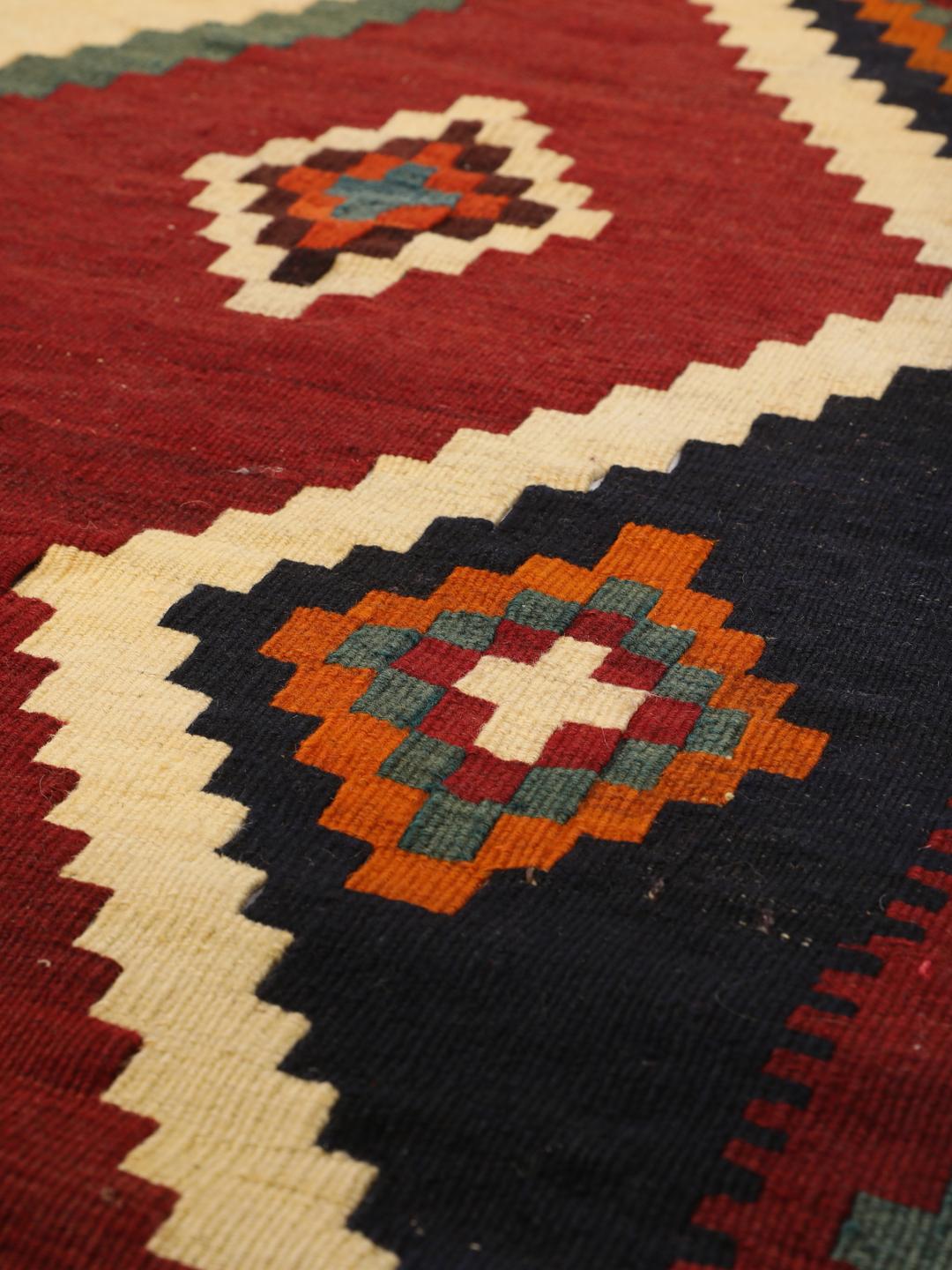
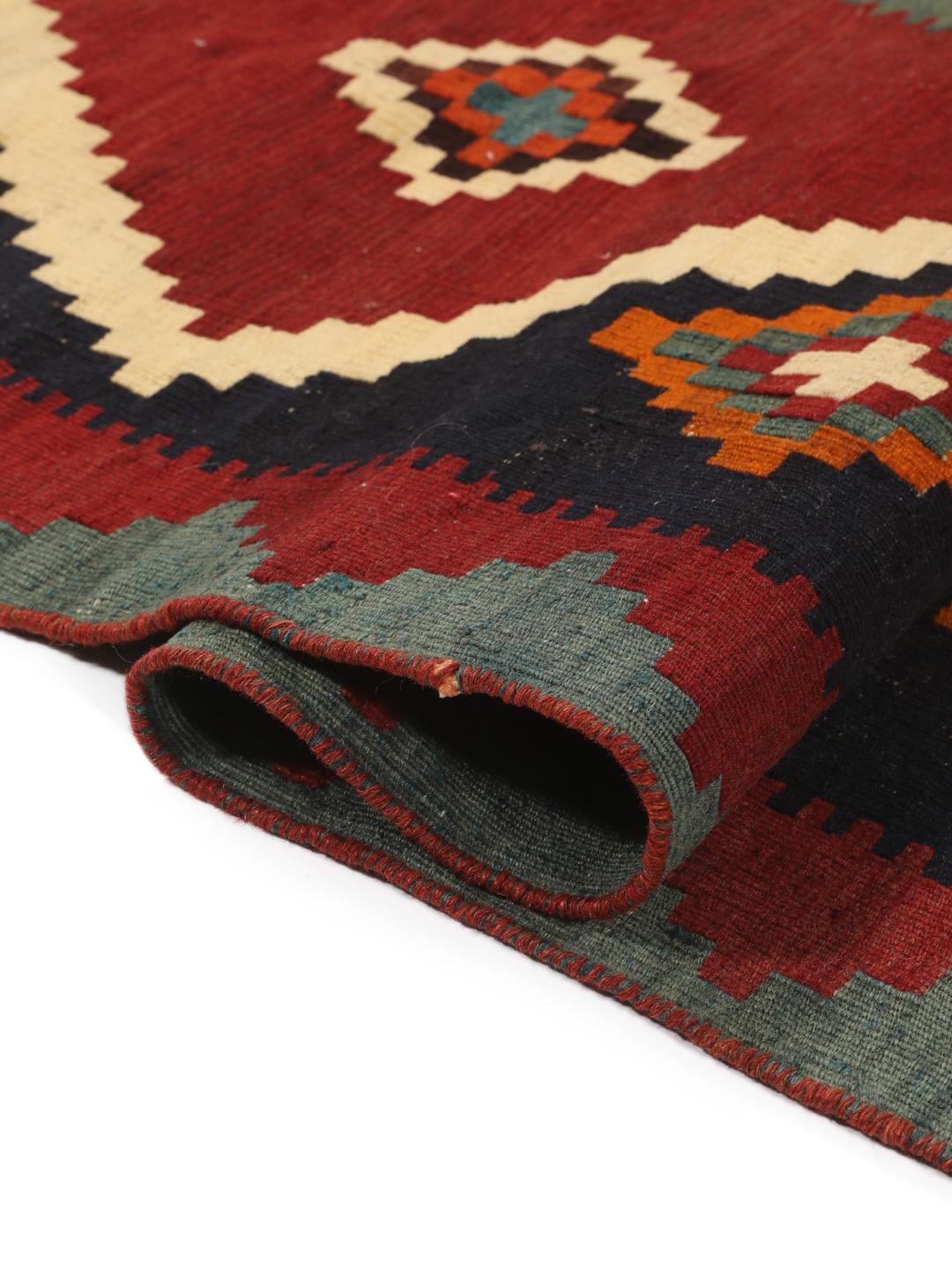
The visual language of this rug is defined by its bold geometric shapes and symmetrical composition. The diamond motifs and sharp, angular lines are classic elements of this tradition, often used to symbolise protection or tribal identity. The vibrant colours used here demonstrate the traditional use of natural dyes to create long-lasting and evocative designs.
Owning a vintage piece like this is more than just a decor choice; it is an investment in cultural heritage. These rugs are highly valued for their authenticity and the skill required to produce them, offering a connection to the centuries-old weaving traditions that continue to inspire modern design.